
Reviewed · MUSEUMS
Admission Pass to The Roman Quarter and the Museum Carnuntinum
Carnuntum gives you something most Roman sites cannot: complete reconstructed houses that show how people lived, washed, worked, and relaxed. You can see water running through a Roman bathhouse, inspect painted walls in a city palace, and walk through a garden instead of studying only scattered stones.
I like the contrast between the open-air Roman Quarter and the indoor Carnuntinum Museum. I also like that the buildings are furnished and decorated, which makes ancient life easier to picture. The main drawback is distance between parts of the site, so three hours can feel tight if you want to read every display or visit at a slow pace.
Key things to know before visiting
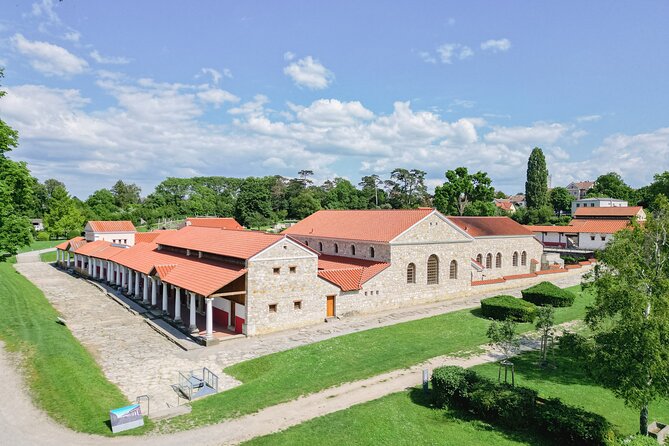
- Four working Roman houses: See a bathhouse, city palace, oil merchant’s home, and House of Lucius with furnishings, decorations, and practical details.
- Carnuntinum Museum included: The museum presents finds from about 2,000 years of Carnuntum’s past.
- Allow about three hours: The Roman Quarter takes roughly 1 hour and 20 minutes, and the museum about one hour.
- Self-guided visit: Admission covers the site and museum, but guided tours cost extra and are not included.
- Outdoor setting: Trees, meadows, a playground, and the Forum Culinarium restaurant make this more than a museum visit.
- Plan around opening hours: The stated season runs from April 23 through November 15, 2025, daily from 9 a.m. to 5 p.m.
Why Carnuntum feels different from a typical Roman ruin
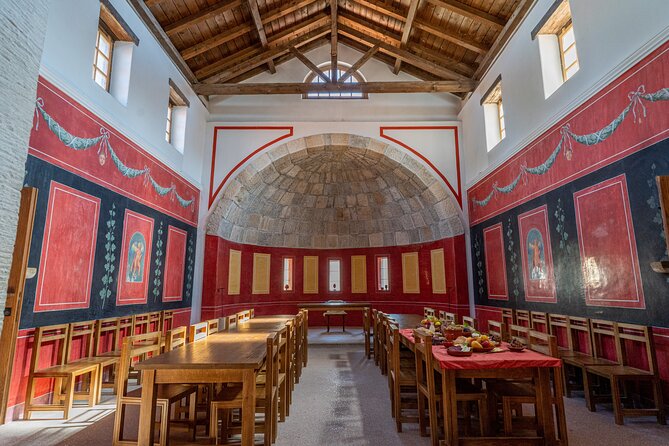
Carnuntum was an important Roman city near the Danube, and its importance is tied to the wider Roman frontier. The site is also linked with Marcus Aurelius, who wrote part of his history during the Roman period. You are not simply looking at foundations and trying to fill in the gaps. At the Roman Quarter, several buildings have been rebuilt with working features, decoration, furniture, and objects.
That changes the visit. A bathhouse becomes a place where you can understand the movement of water and the role of bathing. A private home gives you a sense of rooms, gardens, and household status. Painted walls and household goods help connect imperial history with ordinary routines.
I find this approach especially useful if you are visiting with children or with someone who does not usually enjoy archaeological sites. There are fewer bare walls to interpret, and the large outdoor area gives you room to pause. The setting also keeps the visit from feeling like a series of indoor displays.
Still, this is a reconstruction, not an untouched ancient neighborhood. You should come for the interpretation and physical recreation of Roman life, not for the feeling of walking through preserved ruins exactly as they were left. The site’s success depends on how much you value clear visual explanation.
More city cards and sightseeing passes:
- Vienna PASS: All incl. Sightseeing Pass for 85+ Attractions
★ 4.3 · 3,067 reviews - Vienna FLEXI Pass: Choose from 70+ Top Sights in one Ticket
★ 4.3 · 548 reviews - Innsbruck: City Card Including Public Transport
★ 4.7 · 437 reviews
The Roman Quarter: four houses that bring ancient life into view
The Roman Quarter is the main attraction, and you should give it the larger share of your time. About 1 hour and 20 minutes is suggested for this section, though you may need longer if you stop often, take photographs, or read every sign.
The four fully functional houses are the heart of the visit:
- The Roman Therme, or bathhouse
- The villa urbana, a refined city residence
- The house of an oil merchant
- The bourgeois House of Lucius
Each building presents a different side of Roman society. Together, they show that Carnuntum was not only a military outpost. It was also a city of homes, commerce, comfort, and social distinction.
The Roman Therme and the practical side of Roman comfort
The bathhouse is one of the easiest places to understand because it has a feature you can see and hear: water splashes through the thermal complex. That working element gives the building more impact than a diagram or a row of stones.
Roman bathing was about more than getting clean. A bathhouse was part of urban life, and the reconstructed therme helps you think about the engineering and routine behind it. You can look at the structure while imagining how water was brought in, used, and moved through the building.
For families, this may be the most engaging stop. Children can notice the water first, then ask why the Romans built such elaborate bathing spaces. Adults can focus on construction, heating, and the social role of public facilities.
The villa urbana and its painted rooms
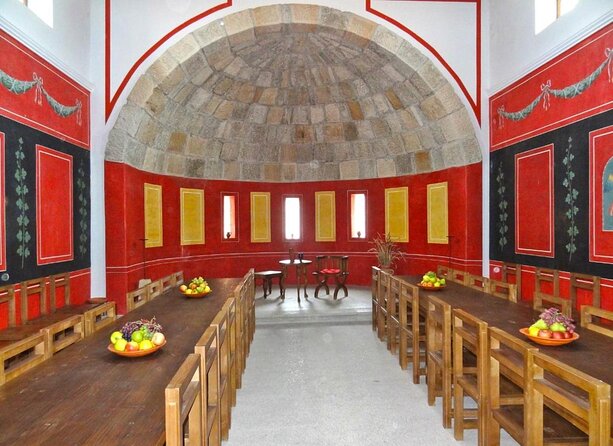
The villa urbana offers a more polished setting. Its murals are a major visual feature, and the decoration helps explain the difference between a functional home and a wealthy city residence.
Painted walls are easy to overlook in a conventional museum, where you may see fragments behind glass. Here, the scale of the room lets you consider how color and pattern shaped the atmosphere of a Roman home. The villa’s design suggests status without requiring a long lecture.
You may want to pause here rather than rush through for photographs. The decoration is one of the details that makes the reconstruction feel complete. It also helps you understand why the site appeals to people who want more than archaeological fragments.
More museums and galleries in Austria:
- Vienna: Skip-the-Line Sisi Museum, Hofburg and Gardens Tour
★ 4.8 · 5,918 reviews - Vienna Kunsthistorisches Museum Day Admission Ticket
★ 4.6 · 3,690 reviews - Tickets for the Albertina Exhibitions
★ 4.7 · 2,126 reviews - Vienna: Chocolate Workshop in Chocolate Museum w/ Tasting
★ 4.5 · 1,802 reviews
The oil merchant’s house and everyday commerce
The oil merchant’s home adds an economic angle to the visit. It is a reminder that a Roman city depended on trade and household businesses as much as on soldiers and rulers.
The house lets you picture how commerce could fit into domestic life. You may find objects and arrangements that make the connection between work and home easier to understand. It is a useful counterweight to the grander villa urbana because it shows another level of urban life.
I would not expect a detailed account of every commercial route or product from this single stop. Its value is more direct: you get a physical sense of a merchant’s place in the city and a clearer idea of how Roman households supported themselves.
The House of Lucius and its garden
The House of Lucius brings the visit down to a more personal scale. Its garden is an inviting detail, and the house helps you picture a bourgeois Roman home rather than an imperial palace.
The garden matters because outdoor space was part of domestic life. It gives you a place to slow down and consider the home as a living environment, not just a collection of rooms. The house’s furnishings and objects also help make the imagined owner feel close at hand.
This is one of the strongest parts of the Roman Quarter for anyone interested in daily life. You can think about where people gathered, where household work happened, and how a garden shaped the experience of home.
Outdoor space, the playground, and a useful break
The Roman Quarter includes trees, meadows, a large children’s playground, and the Forum Culinarium restaurant. These additions matter because the site is spread out and can involve a fair amount of walking between buildings.
The playground makes the visit easier for families, especially if children reach their limit before the adults do. It also gives you a practical pause between historical stops. The open ground provides room to sit and reset before moving on.
The restaurant offers another break, though the supplied information does not specify its menu or prices. Treat it as an on-site convenience rather than a reason to plan the whole day around dining. If you want to examine the architecture closely, protect your time for the buildings first.
One useful point is that a shuttle bus has been set up on weekends during the current season because of the distances between locations. The information does not promise a fixed schedule, so ask on arrival rather than assuming it will run at a particular time. This can be helpful if walking between areas is difficult or if you want to preserve energy for the museum.
Carnuntinum Museum: the wider story behind the buildings
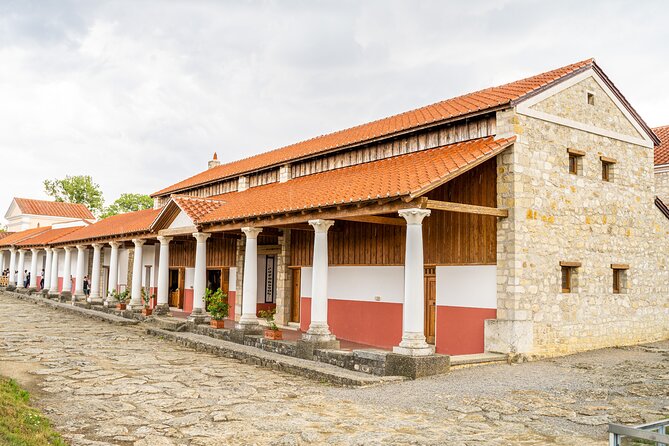
Set aside about one hour for the Carnuntinum Museum. It is included with the admission and provides the objects and historical context that the reconstructed houses cannot supply on their own.
The current exhibition is titled Weltstadt am Donaulimes, or Metropolis at the Danube Limes. It presents the history of Carnuntum, the lives of its inhabitants, and the site’s place within the UNESCO World Heritage setting near Vienna.
This is where you see finds connected with roughly 2,000 years of Roman history in Carnuntum. The museum gives you a better sense of chronology and scale. At the Roman Quarter, you focus on rooms and routines. In the museum, you can connect those rooms with objects, people, and the broader Danube frontier.
The museum has a theatrical quality in its presentation. That can work well if you prefer a clear, visually arranged story, but it may feel less traditional than a quiet display of objects in plain cases. The approach is designed to help you follow the city’s story rather than simply admire individual artifacts.
I recommend visiting both parts even if you mainly came for the reconstructed houses. Skipping the museum would leave out much of the evidence that explains the site. Likewise, seeing only the museum would miss the physical scale and atmosphere of Roman domestic life.
How to use your three hours well
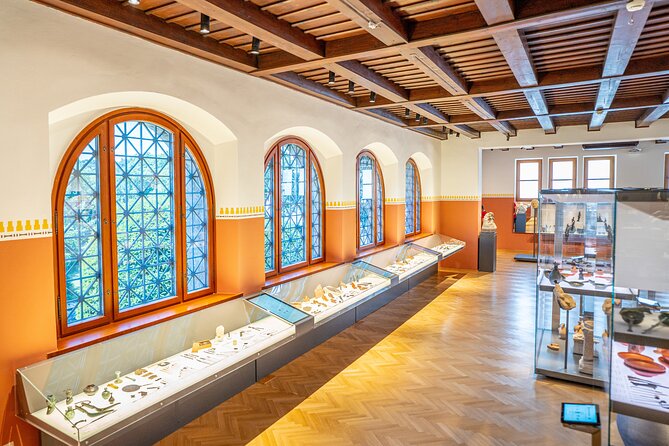
The stated duration is about three hours, which is enough for a solid visit but not necessarily enough for a slow, detailed study of everything. The suggested breakdown gives you roughly 1 hour and 20 minutes in the Roman Quarter and one hour in the museum, leaving a small cushion for walking, photographs, a break, or the playground.
A practical order is to begin with the Roman Quarter while your attention is fresh. Move through the bathhouse, villa urbana, oil merchant’s home, and House of Lucius, then pause outdoors if you need a break. Finish at the museum, where the objects and exhibition can help organize what you have just seen.
You can also reverse that order if you prefer context before reconstruction. Start at Carnuntinum to learn the basic story, then walk through the houses with a clearer idea of what you are looking at. Since no guided tour is included, your choice of order can shape the whole visit.
Do not try to rush through every room simply to claim that you saw the site. The best parts are the details: the water in the bathhouse, the murals in the villa, the furnishings, the objects, and the garden at Lucius. A shorter visit with time to notice those details is better than a hurried march through every building.
Price, guided tours, and overall value
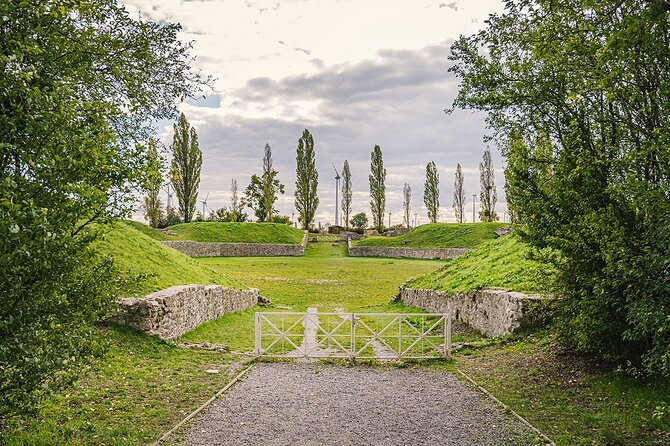
At $16.21 per person, admission covers both the Roman Quarter and Carnuntinum Museum. That is a fair price if you use the full three hours and care about Roman architecture, domestic life, or museum displays.
The value comes from the combination of experiences. You receive an outdoor archaeological presentation, reconstructed interiors, a working bathhouse, an indoor museum, and access to a broad site with family facilities. Many attractions charge separately for an open-air section and a museum, so having both under one admission makes the visit easier to plan.
The main limitation is that guided tours are not included. If you want a structured explanation, check whether an English guided visit is available separately. English tours have been offered, but the supplied information does not give a regular schedule, price, or guide name.
Self-guided visitors should be comfortable reading signs, following the layout, and building their own story from the buildings and museum displays. That freedom suits people who like to stop where they want. It is less ideal if you prefer a guide to explain every connection as you move.
The experience is booked, on average, about 17 days ahead. That figure suggests some advance planning is sensible, particularly during the open season, although the information does not state that every date sells out. Free cancellation is available up to 24 hours before the start time. Changes or cancellations inside that window are not refundable.
Who will enjoy Carnuntum most
I would recommend this experience to anyone with a serious interest in Roman life, but you do not need to be an expert. The reconstructions do much of the explaining for you.
It suits families because of the playground, outdoor space, and visible water in the therme. It also suits adults who want a more concrete picture of homes, commerce, decoration, and bathing than a conventional ruin can provide.
You should also consider it if you are staying near Vienna and want a historical outing beyond the city center. Carnuntum is in Lower Austria, near Vienna, and the site is near public transportation. The supplied information does not provide a route or travel time, so check your connection before setting out.
The visit may be less satisfying if you want only original ruins, a short stop, or a guided tour included in the price. The site is spread out, and the reconstruction style may feel too theatrical for someone who prefers minimal interpretation. It is also worth noting that the stated opening season is limited to April 23 through November 15, 2025, from 9 a.m. to 5 p.m. daily.
Should you book the Roman Quarter and Museum Carnuntinum?
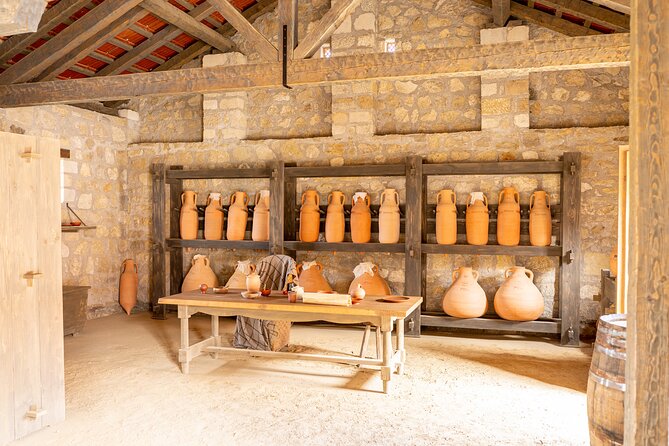
Book it if you want Roman history made visible at a reasonable price. The combination of furnished houses, painted rooms, a working bathhouse, gardens, and museum objects gives you a fuller picture than either a ruin or a museum alone.
I would especially choose it for a family day out, a Roman history enthusiast, or anyone who enjoys seeing how people lived rather than focusing only on emperors and battles. Allow the full three hours, wear comfortable shoes for the spread-out site, and ask about the weekend shuttle if walking is a concern.
Skip it only if reconstructed buildings do not appeal to you or if you need a short, highly guided visit. For most people with time near Vienna, Carnuntum offers a clear, hands-on look at Roman city life and good value for the admission price.
FAQ
What does admission to Carnuntum include?
Admission includes access to the Roman Quarter and the Carnuntinum Museum. All fees and taxes are included.
How long does the visit take?
The recommended total duration is about three hours. The Roman Quarter takes roughly 1 hour and 20 minutes, while the museum takes about one hour.
Are guided tours included?
No. Guided tours are not included in the admission pass. English guided visits may be available, but the supplied information does not give a fixed schedule or price.
When is Roman City Carnuntum open?
The stated opening period is April 23 through November 15, 2025. It is open Monday through Sunday from 9 a.m. to 5 p.m.
Is the site suitable for children?
Yes. The Roman Quarter has a large children’s playground and a spacious outdoor area with trees and meadows. Most people can participate.
Can I cancel for a full refund?
Yes. You can cancel at least 24 hours before the experience start time for a full refund. Cancellations or changes made less than 24 hours before the start time are not refunded or accepted.
Just added around Austria
- Zell am See: Schmittenhöhe Tandem Paragliding Flight★ 4.9 · 82 reviews
- Zurich: Liechtenstein, Austria and Germany Private Day Tour★ 5.0 · 6 reviews
- Vienna: UNESCO Schönbrunn Palace Guided Tour with Entry★ 4.5 · 94 reviews
- Zell am See: Paragliding Tandem Flight★ 5.0 · 31 reviews
- Zurich: Private Liechtenstein, Austria, and Germany Day Trip★ 5.0 · 16 reviews
- Villach/Ossiachersee: Paragliding “Action” Tandemflug★ 5.0 · 4 reviews
- Werfen: Hohenwerfen Castle Entrance Ticket★ 4.5 · 84 reviews
- World War II History Vienna Old Town Private Walking Tour★ 4.8 · 9 reviews
Museums, compared.

Skip-the-Line Sisi Museum, Hofburg and Gardens Tour
Read our review →
Vienna Kunsthistorisches Museum Day Admission Ticket
Read our review →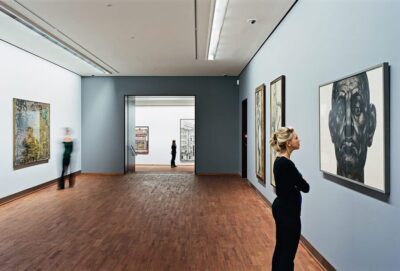
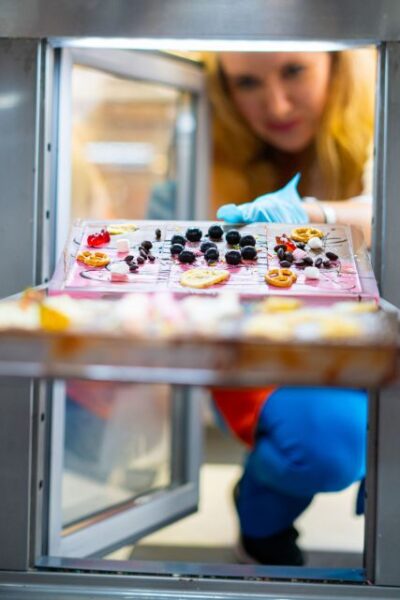
Chocolate Workshop in Chocolate Museum w/ Tasting
Read our review →

St. Stephen’s Cathedral & Dom Museum Wien Tickets
Read our review →

Browse the lists this tour appears in