
Reviewed · APPLE STRUDEL CLASSES
Cookies and Apple Strudel Cooking Class Including Lunch
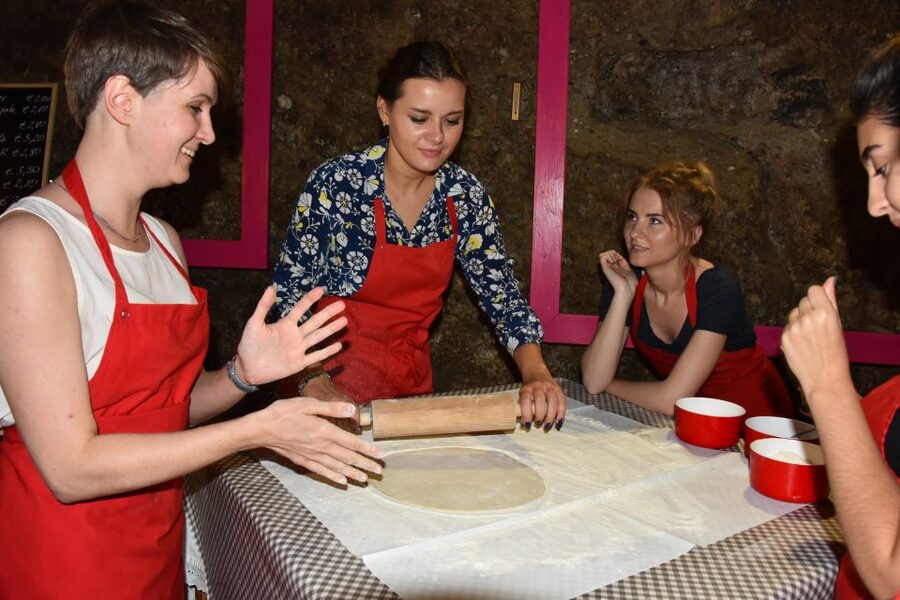
The best part of this Salzburg cooking class is that you do not simply watch someone make Austrian food. You stretch the strudel dough, season the apples, shape vanilla kipferl, and then eat what comes out of the oven. The cooking takes place in a cozy room built into the rock, which gives the 90-minute lesson an unusual setting.
I like the small-group format, with no more than 15 people and usually only two to four cooks at each table. I also like the way lunch is built into the lesson: you eat goulash soup while your pastry bakes, then taste the strudel and cookies you made yourself. The main consideration is timing. Some people find the class slightly brisk, especially when moving from strudel to cookies within a short session.
Key points to know before booking
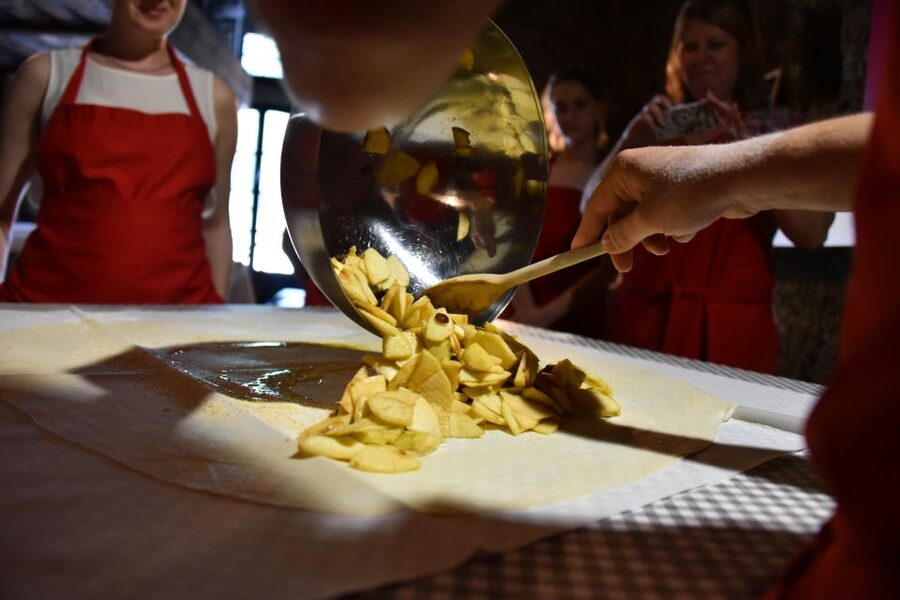
- Strudel is fully hands-on: You prepare the apples, work with the pastry, and taste the finished dessert.
- The rock-built kitchen is part of the appeal: The setting feels cozy and different from a standard cooking studio.
- Goulash soup counts as lunch: It is served while the baked desserts are still in the oven.
- Vanilla kipferl adds a second Austrian specialty: These popular Salzburg cookies are shaped during the baking wait.
- The class suits families and couples: Children can take part, and the format also works well for solo visitors.
- Drinks cost extra: Beer, wine, and schnapps are available at an additional charge, according to the information provided.
A Salzburg cooking class with dessert at the center
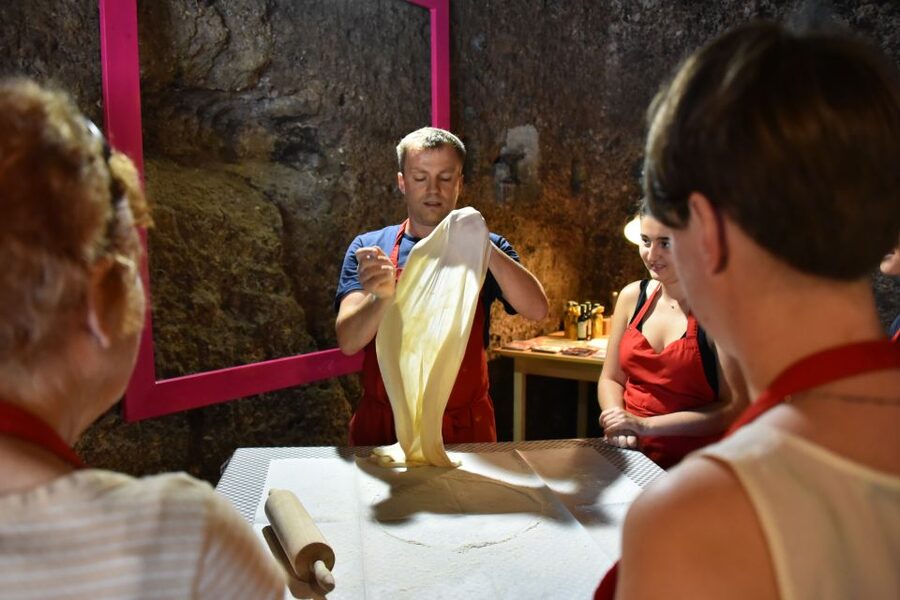
Many food classes ask you to prepare a dish and then send you home with a recipe. This one puts the reward right in front of you. Once the dough is stretched and the apples are ready, your strudel goes into the oven. You do not have to wait until dinner to find out how it turned out.
The class takes place at Edelweiss Cooking School on Ursulinenplatz 9, a roughly 10-minute walk from Mirabell Square or Mozart Square. That makes it a useful stop between sightseeing plans. You can fit it after a morning tour, before an afternoon visit, or into a day built around Salzburg’s Christmas markets.
The setting gets plenty of attention for good reason. The cooking room is built into a rock or cliff wall, giving it a warm, cave-like feel. It is not a grand historic kitchen with elaborate displays. Instead, the character comes from the stone surroundings and the pleasant smell of pastry baking nearby.
The language is English, and named instructors who have led sessions include Ishmael, Alina, Agnes, Johann, and Simone. Your particular chef may be different, but the teaching style is designed for people who do not already know Austrian baking. Demonstrations come first, followed by your own work.
More strudel and pastry classes:
- Austrian Apple Strudel Cooking Class including Lunch in Salzburg
★ 5.0 · 929 reviews - Salzburg: Apple Strudel & Salzburger Nockerl Class
★ 4.9 · 424 reviews - Salzburg Christmas Cookies and Apple Strudel Cooking Lesson
★ 5.0 · 183 reviews
Stretching dough and making your own apple strudel
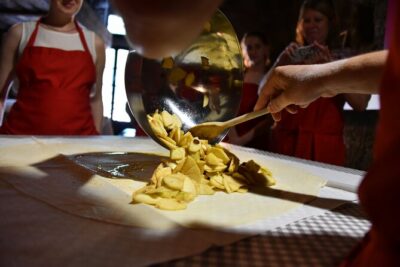
The class begins with apple strudel, Austria’s most famous pastry. You take part in the preparation rather than receiving a ready-made sheet of dough and simply adding filling. The apples are marinated, and the pastry is stretched out as part of the lesson.
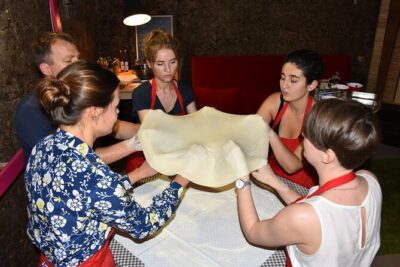
That stretching stage is the bit that makes the class worthwhile. Strudel dough needs to become thin enough to wrap the filling without turning heavy. Under the chef’s direction, you get a feel for how the dough behaves. It is a practical lesson, not just a recipe recital.
Do not worry if you are not a confident baker. The instructors demonstrate each step, and the class is set up so help is available at the tables. The maximum group size is 15, with smaller tables of two to four people. That arrangement matters because you are handling dough, apples, and shaping rather than standing at the back of a large room.
The mood is relaxed and social. Couples can work together, families can divide up tasks, and solo participants have a natural way to meet people from other countries. The activity gives everyone a shared job, which is often easier than trying to make conversation over a formal meal.
Once assembled, the strudels go into the oven. This is a good point to keep your expectations realistic. You are making your own pastry, but you are doing so within a carefully managed lesson. The dough, ingredients, equipment, and workspace are prepared in advance, so this is not a long market-to-table cooking workshop.
Vanilla kipferl while the pastry bakes
While the strudel cooks, you turn to vanilla kipferl. These crescent-shaped cookies are especially associated with Austrian baking and are described here as the most popular cookie in Salzburg. They are small, simple to shape, and well suited to the waiting period.
The cookie portion keeps the class moving. You are not left sitting around while the oven does the work. You shape your own cookies, then wait for both desserts to finish. Some sessions also include a chance to sample a little cookie dough, which adds a playful touch, especially for children.
The kipferl are also a useful contrast to the strudel. Strudel teaches you about thin pastry and fruit filling. Kipferl focuses more on shaping and the flavor of a classic Austrian cookie. You leave with two different techniques rather than one dish repeated in several forms.
The class can feel a little fast if you want detailed baking theory or plenty of time to experiment. It is best understood as an active introduction. You get clear instructions and hands-on work, but not an advanced pastry course with long pauses for questions.
Goulash soup turns baking time into lunch
The included lunch is goulash soup, served while the strudel and cookies are baking. This is a smart use of the oven time. You get a savory dish before eating two sweet desserts, and the soup gives the lesson the feel of an actual meal rather than a snack stop.
The soup is particularly welcome on a cold Salzburg day. It is hearty enough to make the class a practical lunch option, though the provided information describes it as a modest meal rather than a large multi-course feast. Your baked creations follow as dessert.
Drinks are not included. You can purchase beer, wine, or schnapps separately, but you should budget for those if you want something beyond the meal. This is a minor extra, yet it is worth knowing because the class price covers lunch but not beverages.
The order also helps the social side of the class. You sit down with the people at your table, eat soup, and talk while the food bakes. Then the desserts come out warm. That sequence makes the lesson feel less like a demonstration and more like a shared Austrian meal.
More cooking classes in Salzburg:
- Apple Strudel & Prezel Cooking Class incl. Dinner & Music
★ 5.0 · 113 reviews - Salzburg: Dinner Cooking Class and Music
★ 4.9 · 48 reviews - Original Sound of Music Tour & Edelweiss Cooking Class
★ 4.8 · 15 reviews - Nabiel’s Vienna Cooking Class
★ 5.0 · 234 reviews
What the $70 price includes
At $70 per person, the cost is reasonable if you value instruction, food, and a compact activity in central Salzburg. You are paying for a 90-minute class, ingredients, use of the cooking space, guidance from an English-speaking chef, and lunch. Taxes, fees, and handling charges are included.
The value is strongest for people who would otherwise pay separately for lunch and a dessert stop. You get the meal, but you also get the process of making the food. The finished strudel and cookies are not merely items placed before you. You helped prepare them, which makes the meal more memorable.
The value is less clear if you want a long, technical cooking course. Ninety minutes goes by quickly once you include demonstrations, strudel preparation, cookie shaping, lunch, and tasting. You will learn useful methods, but you will not cover a broad survey of Austrian cuisine.
There is also a practical bonus: you may have creations left to take home. The amount will depend on how much you eat during the class, but the format allows you to carry away what you cannot finish. That makes the activity appealing for families and anyone who wants a snack for later.
Who will enjoy this activity most
This class works especially well for couples. You can share the work at a two-person table, compare your pastry, and enjoy a meal without committing half a day to cooking.
Families also have a good reason to consider it. Children aged 5 and 8 have taken part successfully, and older children can handle even more of the shaping and preparation. The lesson gives young cooks a real task, though adults should expect to help with dough and hot food.
Solo participants can fit in easily, too. The small tables create a natural social setting, and the class includes people from different countries. If you prefer a quiet meal with no group interaction, this may feel more social than you want.
The activity is also useful for a rainy or cold day. You are indoors, working with food, and then eating a hot soup. The rock-built kitchen adds atmosphere without requiring a separate sightseeing detour.
You do not need to be an experienced cook. Clear instructions and prepared ingredients keep the process approachable. At the same time, confident home bakers will still find the pastry stretching and shaping worthwhile, even if they already know how to follow a recipe.
Timing, location, and practical planning
The meeting point is Ursulinenplatz 9 in Salzburg. From Mirabell Square or Mozart Square, allow about 10 minutes on foot. Check the start time carefully when booking, since the available sessions can vary.
The 90-minute length makes the class easy to place in a busy itinerary. A morning sightseeing tour can lead into lunch here, or you can finish the cooking and continue with afternoon plans. Avoid scheduling something immediately afterward if you dislike rushing. The class itself may feel brisk, and you will want a little time to finish your soup and baked goods.
The activity is wheelchair accessible. The teaching language is English, and the booking information lists a maximum of 15 participants. The smaller table arrangement is important because it limits the feeling of a crowded demonstration.
You can cancel up to 24 hours in advance for a full refund. The reserve-now-and-pay-later option also lets you hold a place without paying immediately, which is useful when you are still fitting Salzburg plans together.
The atmosphere and teaching style
The instructors are the heart of the lesson. Names associated with past classes include Ishmael, Alina, Agnes, Johann, and Simone. The strongest pattern is a friendly, clear teaching style, with demonstrations followed by direct participation.
That matters with strudel. A recipe can tell you to stretch dough, but seeing the motion and trying it with guidance is more useful. The same is true for shaping kipferl. You learn by doing, with help available when your dough or cookies do not look quite right.
The atmosphere is casual rather than formal. You are not expected to sit silently or produce professional pastry. The class encourages conversation, teamwork, and tasting. That makes it a good match for visitors who want an activity with a local food connection but do not want a stiff culinary lecture.
The tradeoff is that a relaxed group can vary in pace. Some people finish quickly, while others need more help. The instructors keep the class moving, but you may not get unlimited one-on-one attention. The small tables reduce this problem, and groups of six or fewer can feel especially personal.
How authentic is the Austrian food connection?
Apple strudel and vanilla kipferl are firmly tied to Austrian baking traditions, while goulash has a broader Central European history. This is not a full lesson in the history of Austrian cuisine, but the chef provides context about the dishes and their place in local food culture.
The value is in the connection between the food and the method. You are not simply sampling strudel in a café. You see how the pastry is handled, how the apples are prepared, and how a warm dessert comes together. That gives you a better sense of why strudel is so central to Austrian café culture.
The class also avoids turning local food into a museum piece. You make the dishes, sit down for soup, and share the table with other people. It feels like an approachable introduction rather than a staged performance.
If you want a wider look at Austrian cooking, this class will not cover savory main courses, regional wines, or several types of dumplings. Its focus is narrow by design: one pastry, one cookie, and a soup lunch. For many visitors, that focus is exactly what keeps the session enjoyable and manageable.
Should you book the Edelweiss Cooking School class?
I would book this if you want a hands-on Salzburg activity that fits neatly into a sightseeing day. The strongest reasons are the rock-built kitchen, the small tables, the warm goulash lunch, and the chance to eat strudel and cookies made with your own hands.
Families, couples, solo visitors, and first-time bakers can all find something here. The activity is especially appealing in winter, when hot soup, fresh pastry, and a cozy indoor setting make a welcome break from walking around town.
Skip it if you want a long technical course, a full meal with drinks included, or a broad tour of Austrian cuisine. Also keep in mind that the class can feel hurried for anyone who wants to work slowly.
For $70, the combination of instruction, lunch, dessert, and a memorable setting gives the class solid value. Book it when you want to eat Salzburg, not just look at it.
FAQ
Where does the cooking class take place?
The class meets at Ursulinenplatz 9, 5020 Salzburg. The location is about a 10-minute walk from Mirabell Square or Mozart Square.
How long does the class last?
The cooking class lasts 90 minutes.
What food will I make?
You will make an Austrian apple strudel and vanilla kipferl cookies. You will take part in preparing the apples, stretching the pastry, and shaping the cookies.
Is lunch included?
Yes. Goulash soup is included as lunch. Drinks are not included.
Are drinks available to purchase?
Yes. Beer, wine, and schnapps are available at an additional cost, according to the provided information.
Is the class taught in English?
Yes. The instructor teaches in English, and English is the listed language for the activity.
How large is the group?
Each class has a maximum of 15 people. Participants are divided into tables of two to four people.
Can I cancel the booking?
You can cancel up to 24 hours in advance for a full refund. The reserve-now-and-pay-later option allows you to book without paying at the time of reservation.
More Workshops in Salzburg
- Private Austrian Wine & Charcuterie Tasting Class with a Pro-Sommelière
★ 5.0 · 4 reviews - Vienna: Chocolate Workshop in Chocolate Museum w/ Tasting
★ 4.5 · 1,802 reviews - Chocolate workshop in Chocolate Museum Vienna “BO-YO”
★ 4.5 · 352 reviews - Vienna: Traditional Kaiserschmarrn Cooking Class & Tasting
★ 4.5 · 179 reviews
Just added around Salzburg
- Zell am See: Schmittenhöhe Tandem Paragliding Flight★ 4.9 · 82 reviews
- Zell am See: Paragliding Tandem Flight★ 5.0 · 31 reviews
- Werfen: Hohenwerfen Castle Entrance Ticket★ 4.5 · 84 reviews
- Viator Exclusive: ‘The Sound of Music’ Private Tour★ 5.0 · 28 reviews
- Zell am See Alpine Village Private Day Trip from Salzburg★ 5.0 · 3 reviews
- Private Austrian Food Tasting Tour in Salzburg’s Old Town★ 4.5 · 3 reviews
- Private transfer from Salzburg to Vienna, 2 hours for sightseeing★ 4.5 · 7 reviews
- Private Transfer from Salzburg to Munich with 2 hours for sightseeing★ 5.0 · 8 reviews
Apple Strudel Classes, compared.
Austrian Apple Strudel Cooking Class including Lunch in Salzburg
Read our review →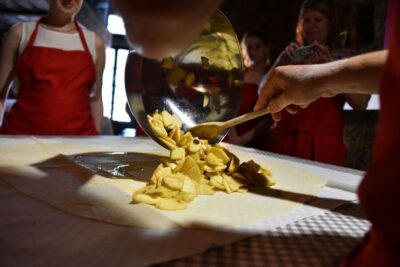
Salzburg Christmas Cookies and Apple Strudel Cooking Lesson
Read our review →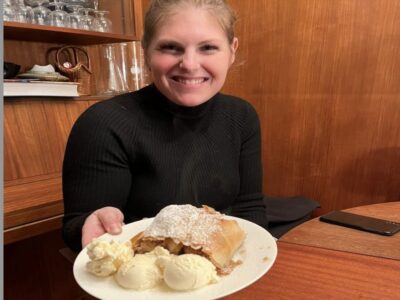
Apple Strudel & Prezel Cooking Class incl. Dinner & Music
Read our review →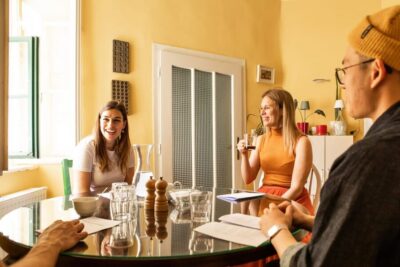
Vienna; Cooking Class: Make Schnitzel & Apple Strudel
Read our review →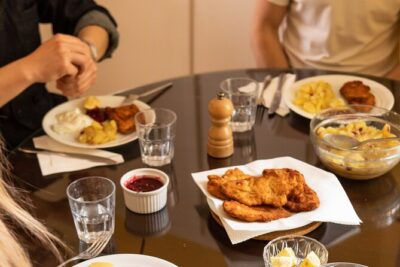
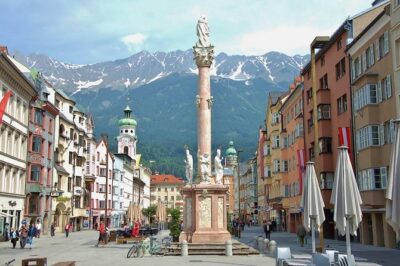
History and Strudel, get 800 years and yummy food, local guide
Read our review →Browse the lists this tour appears in