
Reviewed · TICKETS
DomQuartier Day Ticket
The DomQuartier brings Salzburg’s old power center together in one walkable museum route. You move from the prince archbishops’ grand State Rooms to the Cathedral Museum, cross the Cathedral Arches Terrace for city views, and finish among the treasures of St. Peter’s Abbey. The restored connections between these buildings are the real star: spaces closed for about 200 years are open again.
I like the clear one-way route, which makes it hard to miss major rooms, and the freedom to use your own smartphone audio guide rather than follow a fixed live group. The main catch is time. The complex covers 15,000 square meters, and arriving too close to closing can mean refused entry, so plan to arrive at least two hours before the doors shut.
Key points to know before you go
- Five major museum areas connect in one route: the Residenz, Cathedral Museum, North Oratory, Long Gallery, and Museum St. Peter.
- The Cathedral Arches Terrace gives you a rare city view from the passage between Salzburg’s secular palace and cathedral.
- Your ticket is valid all day, with multiple admissions and the option to stop and return later.
- The audio guide works on your smartphone, with no app installation required, though you need an internet connection.
- The route covers 2,000 objects across 1,300 years, so this is much more than a quick palace visit.
- The price is about $14 per person, a strong deal if you allow several hours for the full circuit.
Why the DomQuartier matters in Salzburg
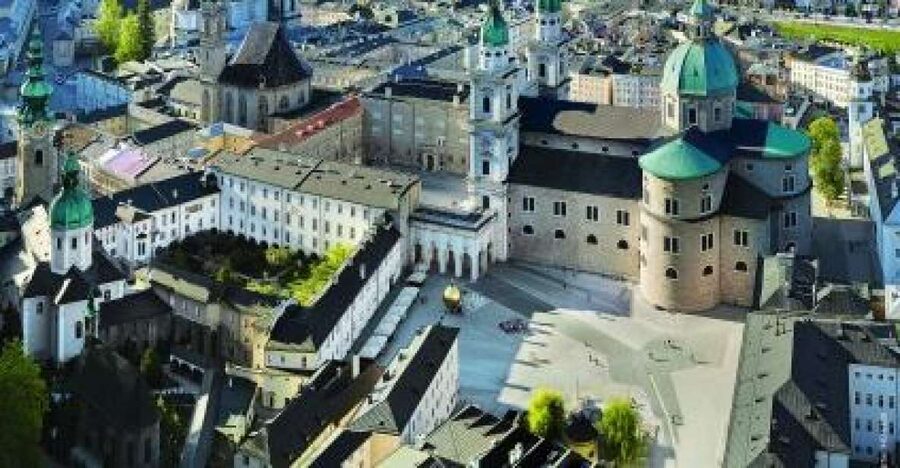
Salzburg’s cathedral and Residenz are not separate sights in the usual sense. They formed the center of power for the prince archbishops, church rulers who governed both spiritual and political life. The DomQuartier lets you see how closely those two roles were tied together.
The complex also tells a physical story. The cathedral, palace, galleries, oratories, and St. Peter’s Abbey once connected through passages and shared working spaces. After the Prince Archbishopric ended in 1803, much of that unity disappeared. The modern route restored the old connections and opened them to the public in 2014.
That matters because you are not simply walking through a set of unrelated rooms. The route shows how authority was displayed, how religious art supported that authority, and how Salzburg’s rulers linked court life with church life. The architecture makes the argument before the audio guide even explains it.
The scale is substantial: about 15,000 square meters and 2,000 objects representing 1,300 years of art and culture. You do not need to study every painting or read every label to enjoy the visit, but you should allow enough time to avoid rushing through the later museums.
A few more Salzburg days worth a look
- The Original Sound of Music Tour in Salzburg
★ 4.5 · 6,129 reviews - Salzburg: Original Sound of Music Tour
★ 4.8 · 5,059 reviews - From Salzburg: Half-Day Tour to Hallstatt
★ 4.6 · 3,596 reviews
Entering the Salzburg Residenz State Rooms
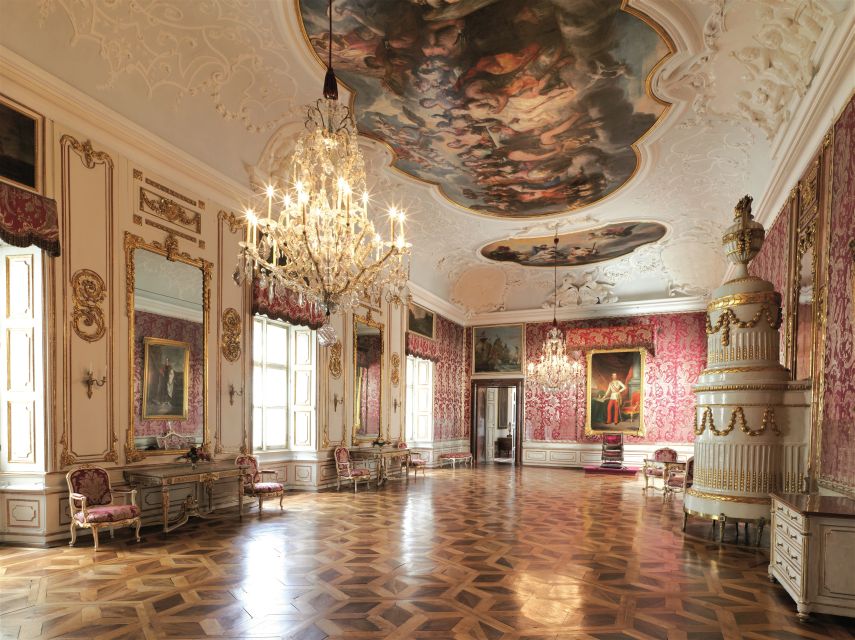
Begin with the State Rooms of the Salzburg Residenz, the former living quarters and official rooms of the prince archbishops. These rooms were built to impress. Decorative stucco, ceiling frescoes, formal layouts, and grand finishes show how the rulers wanted guests to see them.
I find this section most useful when you pay attention to function. These are not just pretty interiors. Some rooms served daily court life, while others helped stage official business and ceremonies. The scale and decoration communicate rank before you learn the details.
The interiors are a strong first stop because they establish the political side of Salzburg. The cathedral and religious collections later in the route make more sense once you have seen the secular headquarters of the men who controlled the city.
The audio guide is helpful here, especially if you want to understand what you are looking at rather than simply admire gold, plasterwork, and painted ceilings. Since there is no live guide included, you set the pace yourself. That works well if members of your group want different amounts of explanation.
Do not expect a small palace tour that takes 30 minutes. The State Rooms are only the first part of a much larger visit. If you are short on time, keep moving at a steady pace rather than spending too long on the first few chambers.
European paintings in the Residenz Gallery
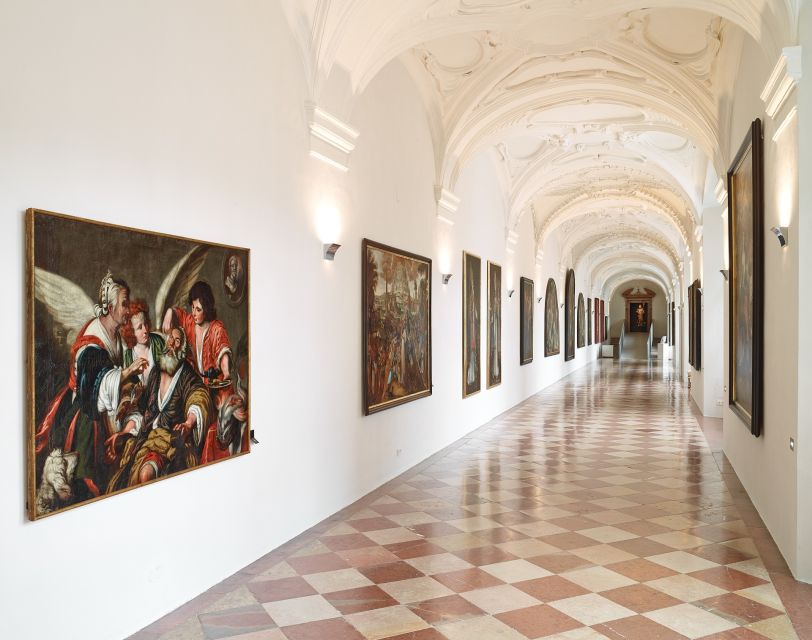
The Residenz Gallery follows the palace rooms and shifts the focus from architecture to painting. Its collection covers European works from the 16th through the 19th centuries, with a strong focus on the Baroque period.
This is a good place to slow down if you enjoy painting. The gallery adds context to the palace interiors, since the decorative program and art collection belong to the same culture of display. The rulers were not only commissioning grand rooms. They were also assembling works that reflected taste, status, religion, and political reach.
The gallery is also practical for visitors who want more variety than palace decoration alone. You get a change of pace after the formal rooms, with paintings offering smaller scenes and closer details.
You can buy drinks in the museum shop located in the Residenz Gallery on the third floor, which also provides access to the terrace. Food and drinks are not allowed inside the museum areas, so this is a useful place to plan a short pause if you need one.
The Cathedral Arches Terrace view
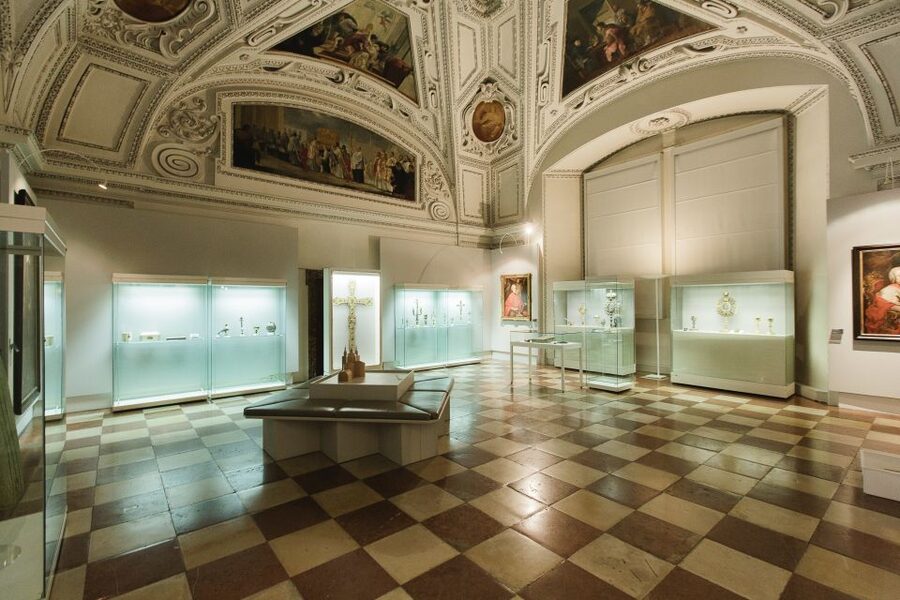
The Cathedral Arches Terrace is one of the most memorable parts of the route because it places you between Salzburg’s palace and cathedral. From here, you get a view over the city and a fresh sense of how the major buildings fit together.
The viewpoint is not a separate sightseeing platform reached from the street. It is part of the historic connection between the buildings, which makes the view more meaningful. You can look outward at Salzburg, then back toward the architecture that shaped the city’s center.
This is also the natural point to pause and reset. The route includes a lot of art, decoration, and historical information. A few minutes outside gives you a break without leaving the complex.
The terrace can close in exceptional cases, including a special event or storm warning. If the view is important to you, check conditions before arrival. The museum also warns that some sections may be closed for events or conversion work in the State Rooms or cathedral.
A completely different way to spend a day here:
- Salzburg: Mozart Concert at Mirabell Palace
★ 4.8 · 3,498 reviews - Salzburg: Hohensalzburg Fortress Admission Ticket
★ 4.6 · 2,236 reviews - Salzburg Cathedral: Organ Concert at Midday
★ 4.6 · 2,007 reviews - Salzburg: Best of Mozart Fortress Concert and Dinner
★ 4.5 · 1,424 reviews
The North Oratory and Cathedral Museum
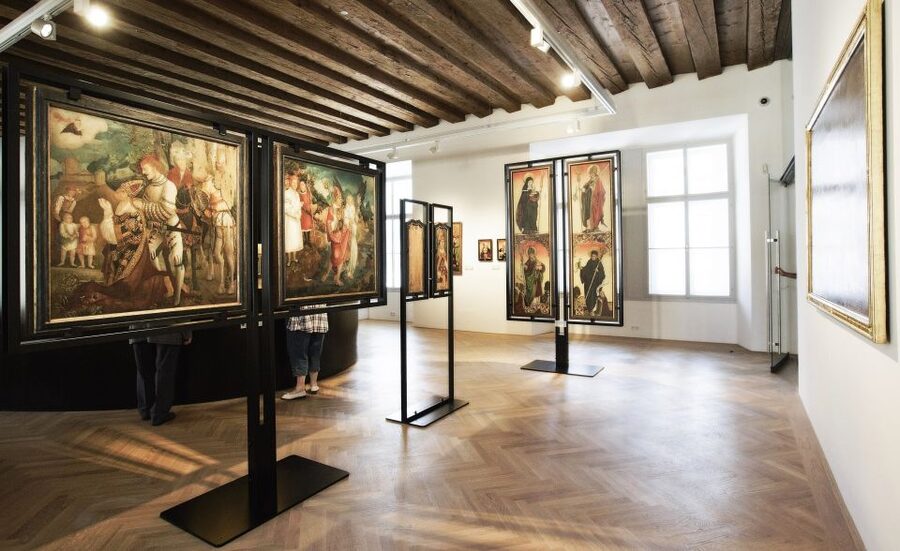
The North Oratory adds a more focused look at the cathedral’s original structure. Special exhibitions are held here, and the space can change depending on what is being shown. The Salzburg Museum, including the Rossacher collection, has been presented here as a guest exhibition.
Because exhibitions can change, this part may feel less fixed than the State Rooms or permanent collections. That is useful if you are returning to Salzburg, but it also means you should not expect exactly the same display on every visit.
The route then moves toward the Cathedral Museum. Here, you see centuries-old religious art and objects connected with Salzburg Cathedral. The collection helps explain the cathedral as more than a grand building viewed from the outside. Its art and objects show how worship, ceremony, and patronage worked together.
The Cathedral Museum is especially valuable after the State Rooms because the contrast is clear. The palace presents the rulers’ public authority. The cathedral collections show the religious setting that supported much of that authority. The route keeps those ideas connected instead of separating them into unrelated museum visits.
The organ loft and the view inside the cathedral
The organ loft offers an impressive view into Salzburg Cathedral. This is one of those moments when the route gives you a different angle on a building you may already have seen from the square.
You are not merely walking past the cathedral on the way to another museum. The elevated position helps you understand the building’s scale and interior arrangement. Look back toward the nave and take a moment before continuing into the collections.
This section can be appealing to visitors who have already toured the cathedral but want another perspective. It also gives the route a useful rhythm: palace rooms, gallery paintings, outdoor terrace, cathedral spaces, then monastic collections.
As with the terrace, access can be affected by events or temporary work. Some limited areas may be closed on certain days, so it is sensible to check ahead if your schedule is tight.
The Long Gallery and Museum St. Peter
The Long Gallery leads you toward the St. Peter section of the route. Its connection with St. Peter’s Abbey is important because the abbey played a major part in Salzburg’s cultural and intellectual life.
St. Peter’s is considered the oldest continuously operating monastery in the German-speaking countries. Its collection is estimated at about 40,000 objects, while the museum presents a selected group of the most important treasures.
You will not see all 40,000 objects, and that is a benefit rather than a problem. A museum visit works better when the strongest pieces are selected and given room. The Museum St. Peter presents monastic art and historical objects in a purpose-built permanent display, bringing treasures that had not been shown publicly in this way since 1982.
This final museum section gives the tour a different mood from the palace. The Residenz is about court ceremony and public power. St. Peter’s collection points toward monastic continuity, learning, worship, and preservation. The two sides of Salzburg’s old society are placed in the same route.
The route also gives you a look into the Gothic choir of the Franciscan Church before returning to the Residenz. The final stop is the Carabinieri Hall, a grand room in the palace that brings the circuit back to where it began.
How much time should you allow?
The ticket is valid for one day and permits multiple admissions on that day. You can interrupt the visit and return later, which is one of the best practical features of the ticket.
The information provided does not set a required tour length. In practice, the number of rooms, galleries, and museums means you should treat this as a major half-day activity if you want to see the route properly. The full visit can take longer if you listen to much of the audio guide or stop often for art and architecture.
One useful approach is to start early, follow the route through the main rooms, and use the reentry option for a meal or another nearby sight. Do not leave your visit until the last hour. At least one visitor found that arriving only an hour before closing could result in refused entry, so I would arrive two hours before closing whenever possible.
Since the complex is organized as a connected route, you are less likely to get lost or accidentally skip a major section. That makes the ticket a good fit for independent sightseeing. You can move at your own speed without needing to keep up with a group.
Using the audio guide on your phone
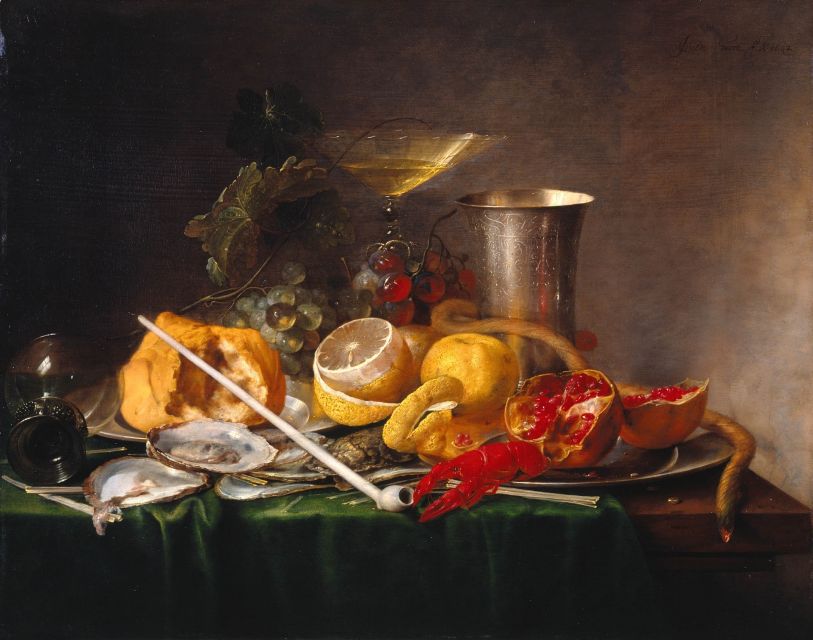
The online audio guide is included, and you can use it on your own smartphone. You do not need to install anything. You need a current web browser, an internet connection, and a charged phone.
The guide is available in German, English, Dutch, Italian, French, Spanish, Russian, Mandarin, Korean, and Japanese. A children’s version is available in German, English, and Italian, giving families a simpler way to move through the complex.
Using your own phone is convenient, but remember that you are responsible for battery life and access to the internet. Free WiFi is available in the museum, which helps. If you prefer a borrowed device, an audio guide can be rented for €2 from 2025.
There is no live tour guide included. That is a disadvantage if you enjoy asking questions or want someone to shape the visit for you. It is an advantage if you want to linger over a painting, skip a long explanation, or stop for a break without holding up a group.
Price, access, and small restrictions
At about $14 per person, the DomQuartier is good value if you spend several hours inside. The ticket covers multiple connected museums and a terrace view, rather than charging separately for the palace, cathedral collections, and St. Peter’s treasures.
It is less attractive if you only have time for a quick palace visit. The price makes sense because of the range, so plan to see more than the State Rooms.
The DomQuartier is wheelchair accessible. Large bags and luggage are not allowed, and umbrellas, cameras, selfie sticks, flash photography, smoking, pets, food, and drinks are prohibited. Assistance dogs are allowed.
Free cancellation is available up to 24 hours before the visit, and you can reserve now and pay later when that option is offered. The starting time depends on availability, but the ticket itself is valid for the full day shown.
Who will enjoy this most?
I would choose the DomQuartier if you want one ticket that explains Salzburg’s political, religious, artistic, and monastic center. It suits museum fans, architecture lovers, families using the children’s guide, and independent visitors who dislike being rushed.
It is also a smart choice after seeing Salzburg Cathedral and the exterior of the Residenz. The route adds interior detail, historical connections, and views you cannot get from the street.
You may want to skip it if you have only a short time in Salzburg, dislike audio guides, or prefer one small collection at a time. The amount of material can feel heavy if you try to absorb every label and every room.
Should you book the DomQuartier Day Ticket?
Book it if you can give the complex at least several hours and want a serious look at Salzburg’s old center. The palace rooms, terrace, cathedral collections, and Museum St. Peter work best as one connected story, and the all-day reentry makes the pace manageable.
Before booking, check the closing time, possible partial closures, and terrace access. Arrive early, bring a charged smartphone, and keep your schedule flexible. For roughly $14, this is one of Salzburg’s better-value cultural tickets, provided you use it as a full museum visit rather than a quick stop.
FAQ
Where does the DomQuartier visit start?
The visit starts at DomQuartier Salzburg and ends back at the meeting point after you complete the route.
How long is the DomQuartier ticket valid?
The ticket is valid for one day. It allows multiple admissions on the day of validity.
Can I leave and return later the same day?
Yes. You can interrupt the tour and resume it later on the same day.
Is an audio guide included?
Yes. An online audio guide is included. You can use it on your own smartphone with an up-to-date web browser and an internet connection.
Which languages are available for the audio guide?
The audio guide is available in German, English, Dutch, Italian, French, Spanish, Russian, Mandarin, Korean, and Japanese.
Is there an audio guide for children?
Yes. A children’s audio guide is available in German, English, and Italian.
Is there a live tour guide?
No. A live guide is not included with the ticket.
Can I use WiFi inside the DomQuartier?
Yes. Free WiFi is available in the museum.
Is the Cathedral Arches Terrace always open?
The terrace can close in exceptional cases, including special events or a storm warning.
Are there any items I cannot bring inside?
Food, drinks, luggage, large bags, umbrellas, cameras, selfie sticks, and pets are not allowed. Assistance dogs are permitted. Flash photography and smoking are also prohibited.
Just added around Salzburg
- Zell am See: Schmittenhöhe Tandem Paragliding Flight★ 4.9 · 82 reviews
- Zell am See: Paragliding Tandem Flight★ 5.0 · 31 reviews
- Werfen: Hohenwerfen Castle Entrance Ticket★ 4.5 · 84 reviews
- Viator Exclusive: ‘The Sound of Music’ Private Tour★ 5.0 · 28 reviews
- Zell am See Alpine Village Private Day Trip from Salzburg★ 5.0 · 3 reviews
- Private Austrian Food Tasting Tour in Salzburg’s Old Town★ 4.5 · 3 reviews
- Private transfer from Salzburg to Vienna, 2 hours for sightseeing★ 4.5 · 7 reviews
- Private Transfer from Salzburg to Munich with 2 hours for sightseeing★ 5.0 · 8 reviews
Tickets, compared.
Classic Ensemble Vienna in St. Peter’s Church Ticket
Read our review →
Vienna Kunsthistorisches Museum Day Admission Ticket
Read our review →
Tickets for Mozarthaus Vienna with Audio Guide
Read our review →
Skip-the-Line Entrance Ticket to the Danube Tower
Read our review →
St. Stephen’s Cathedral & Dom Museum Wien Tickets
Read our review →Browse the lists this tour appears in