
Reviewed · CITY CARDS & PASSES
Universalmuseum Joanneum Pass in Graz
Graz’s best museum value comes in one paper ticket. The Universalmuseum Joanneum Pass covers 12 museums and cultural sites, including the world’s largest historic weapons arsenal, the remarkable rooms of Eggenberg Palace, and the striking Kunsthaus Graz. You can build your own day around art, science, local culture, or military history.
I like the freedom to choose only the places that fit your interests, and I like that the pass reaches beyond central Graz to important sites across Styria. The main drawback is that these museums are not all next door to one another, so the 24-hour option may feel rushed if you want to visit sites outside the city.
Key points before you buy
- The Styrian Armoury contains the world’s largest historical weapons arsenal, making it one of Graz’s most unusual museum visits.
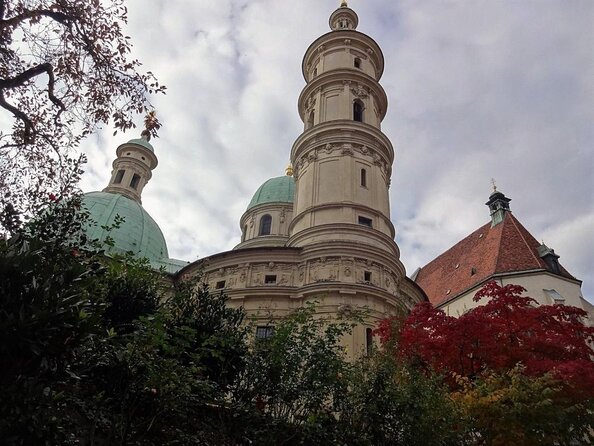
- Eggenberg Palace includes 24 state rooms, original furnishings, and more than 500 ceiling paintings.
- The 48-hour pass gives you more breathing room for museums in Graz and sites farther into Styria.
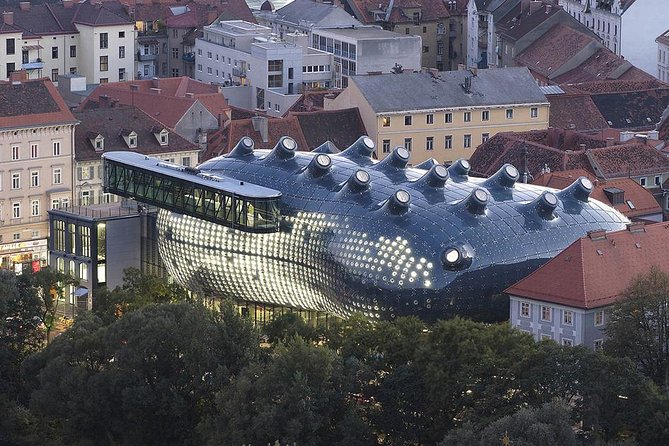
- Kunsthaus Graz offers contemporary art inside a blue, balloon-like building in the historic center.
- Guided tours and audio guides cost extra, priced at 2.50 EUR per person.
- You must print your Viator booking confirmation and show it at the cashier point to receive the paper pass.
What the Joanneum Pass really gives you
This is not a guided sightseeing tour. It is a museum pass that lets you set the pace and choose the subjects that interest you. The program links 12 museums and cultural institutions under the Universalmuseum Joanneum, covering art, science, archaeology, military history, rural life, and contemporary culture.
That range is the pass’s greatest strength. You can spend the morning with Austrian paintings, look at fossils in the afternoon, and finish with medieval weapons or modern sculpture. You are not locked into a group schedule, and you do not have to pay a separate admission fee at each included site.
The pass is available for 24 or 48 hours. At $24.08 per person, it can offer good value if you visit several locations. I would not buy it for just one museum, since a single attraction may not justify the cost. For two or three major stops, especially Eggenberg Palace and the Styrian Armoury, the calculation becomes much better.
Keep the city layout in mind. Several museums are in Graz, while others sit outside the city and require more planning. The 48-hour version is the safer choice if you want a relaxed visit or hope to include Schloss Trautenfels, Schloss Stainz, the Roman Museum Flavia Solva, or one of the Rosegger sites.
More city cards and sightseeing passes:
- Vienna PASS: All incl. Sightseeing Pass for 85+ Attractions
★ 4.3 · 3,067 reviews - Vienna FLEXI Pass: Choose from 70+ Top Sights in one Ticket
★ 4.3 · 548 reviews - Innsbruck: City Card Including Public Transport
★ 4.7 · 437 reviews
Starting in Graz’s historic center
The pass works especially well for a first look at Graz because several major institutions are close to the old town. The itinerary includes time in the Altstadt, or historic center, where you can pair museum visits with a walk through the city.
The exact order is yours to choose. You might begin with the Styrian Armoury, continue to the Natural History Museum, and then visit the Neue Galerie. Or you could focus on contemporary art at Kunsthaus Graz before crossing the city to Eggenberg Palace.
The pass does not include a personal guide. That is good news if you like to move independently, but less helpful if you want someone to explain the city as you go. Guided tours and audio guides are available for an extra 2.50 EUR per person. Audio guide languages include English, German, and partly Italian and Slovenian.
The museums are near public transportation, so you do not need to treat the day as one long walking route. Still, the pass rewards a little planning. Group nearby Graz sites together, then reserve a separate block of time for places outside the city.
The Styrian Armoury, a room-by-room arsenal
The Styrian Armoury is likely to be the most memorable stop for many people. It is known as the world’s largest historical weapons arsenal, and its appeal comes from the sheer amount of equipment preserved inside.
You will see historical weapons and military gear rather than a small display of decorative swords. Rows of armour, firearms, helmets, and other equipment show how soldiers were equipped and how warfare changed over time.
This is a strong choice for history fans, families, and anyone who wants a museum unlike the usual painting gallery. It also gives Graz a distinct identity. The collection connects directly to Styria’s position in central Europe and to the practical demands of defending a region.
The Armoury can be visually powerful even if military history is not your main interest. Its dense displays reward slow looking, but they can also feel like a lot to take in. If you are visiting with children, keep the stop focused rather than trying to study every object.
Eggenberg Palace and its 500 ceiling paintings
Eggenberg Palace sits at the edge of Graz’s city center in a park. It offers a different experience from the compact museums in the old town, with grand rooms, historic furniture, and a carefully planned interior.
The palace includes 24 state rooms and more than 500 ceiling paintings. Those numbers matter because the visit is not just about one impressive hall. You move through an entire sequence of rooms, with the interiors working together as a display of court life and political ambition.
I would make Eggenberg one of your priority stops. It gives you architecture, decorative art, furniture, and a sense of how elite life was presented in an earlier age. The surrounding park also gives you space to pause after the indoor visit.
Allow enough time to look upward. The ceiling paintings are easy to miss if you rush from room to room. If you have only 24 hours, pair Eggenberg with nearby Graz museums rather than trying to add several distant sites on the same day.
A few more Graz days worth a look
- Kunsthaus Graz Museum Entrance Ticket
★ 3.5 · 19 reviews - Graz: Old Town Highlights Private Walking Tour
★ 4.6 · 16 reviews - Fun & mobile scavenger hunt through Graz
★ 4.5 · 12 reviews - Graz city tours
★ 3.5 · 9 reviews
Neue Galerie and Austrian art from Biedermeier to modernism
The Neue Galerie covers Austrian and international painting from the Biedermeier and Jugendstil periods through expressionism, classic modernism, and Austrian and international art after 1945.
This is the pass’s main choice for visitors who want a traditional art museum. The collection lets you see changes in style over time instead of treating one period as the whole story. You can compare decorative elegance, expressive brushwork, and later modern approaches in one visit.
I like this stop for readers who want context. Graz is not only about palaces and old weapons. The Neue Galerie shows how Austrian art developed through several major movements and how local collections connect to wider European art.
The museum may appeal more to adults and serious art fans than to younger children. If your group prefers hands-on science or open-air sculpture, save your time for the Natural History Museum or Austrian Sculpture Park.
Natural History Museum, from wild cats to fossils
The Natural History Museum presents the variety of the natural world through wild cats, birds in flight, unusual plants, fossils, and other specimens.
It is a useful counterpoint to the art museums. After several rooms of paintings or historic interiors, natural history changes the pace. You can look at animal forms, geological evidence, and plant life rather than human-made objects.
Families may find this one of the easiest stops to enjoy together, though the supplied information does not specify interactive displays or a children’s program. The subject matter is broad, so you can make the visit as short or as detailed as your schedule allows.
I would include it on a mixed-interest itinerary. It helps prevent the pass from becoming a run of similar indoor visits, especially if your group has different tastes.
Kunsthaus Graz, a blue shape in the old city
Kunsthaus Graz focuses on contemporary art and occupies one of the city’s most recognizable modern buildings. Its blue, balloon-like form appears between the roofs of the historic center, creating a sharp contrast with Graz’s older architecture.
The building itself is part of the experience. You do not need to be an expert in contemporary art to appreciate the change in mood from the Armoury or Eggenberg Palace. The visit gives you a look at how Graz combines old streets with new cultural spaces.
Contemporary art can be more difficult to judge than a room full of historic objects. Some displays may appeal strongly to you, while others may not. That is not a reason to skip it, but it is a reason to keep your schedule flexible. The pass allows you to sample the museum without feeling that you have wasted a separate admission fee.
Folk Life Museum and rural Styria
The Folk Life Museum has collected, preserved, and interpreted material objects connected with social life and individual human stories since 1913.
This stop helps explain daily life rather than focusing on rulers, artists, or military leaders. Objects connected with work, home life, and community give you a closer look at how people lived in Styria.
I find museums like this useful because they add human scale to a city visit. Grand rooms and famous artworks show what institutions valued. Folk collections show what ordinary life required and remembered.
The museum is a good fit if you want local culture instead of only headline attractions. It also pairs well with the Rosegger sites, which explore rural life and the life of a major Styrian writer.
Roman Flavia Solva and the wider province
Roman Museum Flavia Solva is devoted to the only Roman city within the modern province of Styria. It presents archaeological finds, inscriptions, and reliefs from the Roman province of Noricum.
This is one of the pass’s more specialized choices. It is not simply another city museum. The site connects modern Styria to the Roman world and gives you a reason to leave Graz for a broader view of the region.
You should choose Flavia Solva if archaeology interests you or if you want to see how the province fits into a much older European story. It is not the best use of a tightly packed 24-hour city itinerary, since the included locations are spread across Styria. The 48-hour pass makes this kind of regional visit more realistic.
Rosegger’s two places in Alpl and Krieglach
The pass includes two sites connected with Peter Rosegger, the Styrian poet who lived from 1843 to 1918.
At Rosegger’s Birthplace in Alpl, you can see furnishings and household items that reflect rural life in the 19th century. The focus is direct and personal. Instead of reading only about rural society, you see the objects that shaped it.
Rosegger Museum Krieglach occupies his former country home. It traces stages in his life and work, offering a literary and biographical angle.
These sites suit readers who want a slower, more local experience. They are less obvious choices than Eggenberg Palace or Kunsthaus Graz, but they help you understand Styria beyond the city streets. They also work best when you are already exploring the wider region, not when you are trying to fit every Graz museum into one day.
Schloss Stainz and Schloss Trautenfels
Schloss Stainz houses Austria’s largest Hunting Museum. Its exhibits include historical weapons and equipment, so it offers another angle on the relationship between hunting, status, and rural power.
If you have already visited the Styrian Armoury, the subjects overlap somewhat. The setting and focus differ, but visitors with limited time may prefer the Armoury and Eggenberg Palace first.
Schloss Trautenfels covers zoological, geological, and mineralogical subjects along with archaeological finds from the region. The castle includes high-quality Baroque interiors and views of the surrounding mountains.
Trautenfels gives you the broadest combination of regional nature, archaeology, architecture, and scenery. It is a strong reason to select the 48-hour pass if your trip includes more of Styria. Just remember that a museum pass does not remove the time needed to reach these sites.
Austrian Sculpture Park for a change of pace
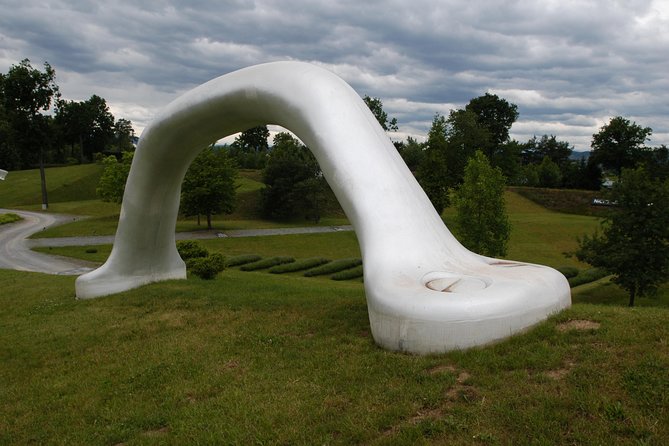
The Austrian Sculpture Park features contemporary works ranging from abstract forms and human figures to objects based on household and utilitarian items.
The outdoor setting changes the rhythm of your museum day. You can walk among the works, take a break, and let the visit feel less formal than an indoor gallery. The park is described as child-friendly and designed as a place for relaxation as well as art.
This is a smart pick for families or anyone who needs fresh air between museums. It also suits people who find traditional galleries tiring. Contemporary sculpture can be unpredictable, but the open setting makes it easier to spend only as much time as you want.
How to use 24 or 48 hours wisely
Choose 24 hours if you want a focused Graz plan. A practical shortlist could include the Styrian Armoury, Eggenberg Palace, Kunsthaus Graz, and either the Neue Galerie or Natural History Museum.
Choose 48 hours if you want to add regional sites, take longer in each museum, or build in time for the Austrian Sculpture Park, Rosegger museums, Flavia Solva, Stainz, or Trautenfels. The longer pass costs more only if the booking option prices it differently, so check the selected duration before paying. The listed price of $24.08 is per person.
The pass is most valuable when you use it for several included admissions. It is less useful for a one-museum visit, and it cannot replace transportation planning between Graz and the wider province.
Print your booking confirmation before you go. The supplied instructions specifically say that a paper confirmation must be shown at the cashier point to receive the paper pass. A poor digital setup has caused frustration when a usable QR code was not delivered within two days, so do not rely only on your phone.
Free cancellation is available up to 24 hours before the start time. Changes or cancellations made later are not accepted for a refund.
Who should buy this pass?
I recommend the Universalmuseum Joanneum Pass for independent visitors who want choice rather than a fixed tour. It suits art fans, families, history lovers, and anyone staying in Graz long enough to visit several museums.
Buy the 24-hour version for a concentrated Graz museum day. Pick 48 hours if you want to include the province’s castles, Roman remains, rural museums, or sculpture park without turning the trip into a race.
Skip it if you plan to visit only one attraction, want a guide to lead you through the city, or prefer a fully arranged itinerary. For everyone else, print your confirmation, pick two or three priority museums, and use the pass as a framework rather than a checklist.
FAQ
How long is the Universalmuseum Joanneum Pass valid?
You can select a 24-hour or 48-hour pass. The pass provides admission to 12 museums and cultural institutions.
Which museums are included?
Included sites are the Roman Museum Flavia Solva, Rosegger’s Birthplace Alpl, Rosegger Museum Krieglach, Austrian Sculpture Park, Schloss Stainz, Schloss Trautenfels, Folk Life Museum, Neue Galerie, Natural History Museum, Eggenberg Palace, Kunsthaus Graz, and the Styrian Armoury.
Are guided tours and audio guides included?
No. Guided tours and audio guides cost an additional 2.50 EUR per person. Audio guide languages include English, German, and partly Italian and Slovenian.
How do I receive the paper pass?
Print your booking confirmation from Viator and show it at the cashier point to receive the 24- or 48-hour paper pass.
Is the pass suitable for visitors with service animals?
Yes. Service animals are allowed.
Can I cancel for a full refund?
Yes, if you cancel at least 24 hours before the experience start time. Cancellations or changes made less than 24 hours before the start time are not accepted for a refund.
Just added around Graz
- Graz city tours★ 3.5 · 9 reviews
- Graz Scavenger Hunt and Sights Self Guided Tour★ 4.0 · 9 reviews
- Graz Funicular Ride and Schlossberg Picnic Experience★ 5.0 · 5 reviews
- Graz Private Walking Tour With A Professional Guide★ 5.0 · 5 reviews
- Explore Graz in 60 minutes with a Local★ 5.0 · 7 reviews
- Graz Old Town Highlights Private Walking Tour★ 5.0 · 4 reviews
- Private Photoshoot Walk Old Town of Graz★ 3.0 · 3 reviews
- Graz: Funicular Ride & Schlossberg Picnic Experience★ 4.8 · 4 reviews
City Cards & Passes, compared.
Vienna PASS: All incl. Sightseeing Pass for 85+ Attractions
Read our review →
Vienna FLEXI Pass: Choose from 70+ Top Sights in one Ticket
Read our review →
Vienna PASS Including Hop On Hop Off Bus Ticket
Read our review →
Best of Vienna Pass: Schönbrunn, Belvedere, Big Bus & Cruise
Read our review →
Admission Pass to The Roman Quarter and the Museum Carnuntinum
Read our review →Browse the lists this tour appears in