Reviewed · TICKETS
Forchtenstein Castle Admission Ticket & Optional Guided Tour
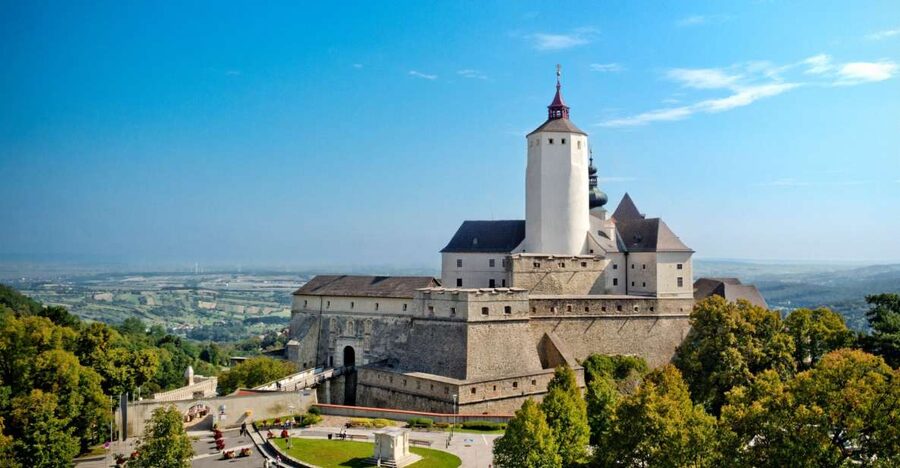
Forchtenstein Castle keeps its best surprises indoors. The first is the inner courtyard, where secco wall paintings cover the walls in what is described as the largest display of its kind north of the Alps. Then the castle turns into a treasure house of weapons, silver furniture, flags, portraits, and curious objects collected by the Esterházy family.
I like the original interior and authentic objects, especially the 400-year-old Ottoman tent and the silver furniture collection. I also like the way the visit connects grand family portraits with stranger figures, including Attila the Hun and the only known full-length portrait of Vlad the Impaler.
The main caution is practical: the visit lasts about one hour, and people with mobility impairments may find the castle difficult. One recent visitor also noted that the first level was not open during their visit, so access to every area may depend on current conditions.
Key points to know before you go
- The courtyard murals are the first major stop: Look up before heading inside for the castle’s remarkable secco paintings.
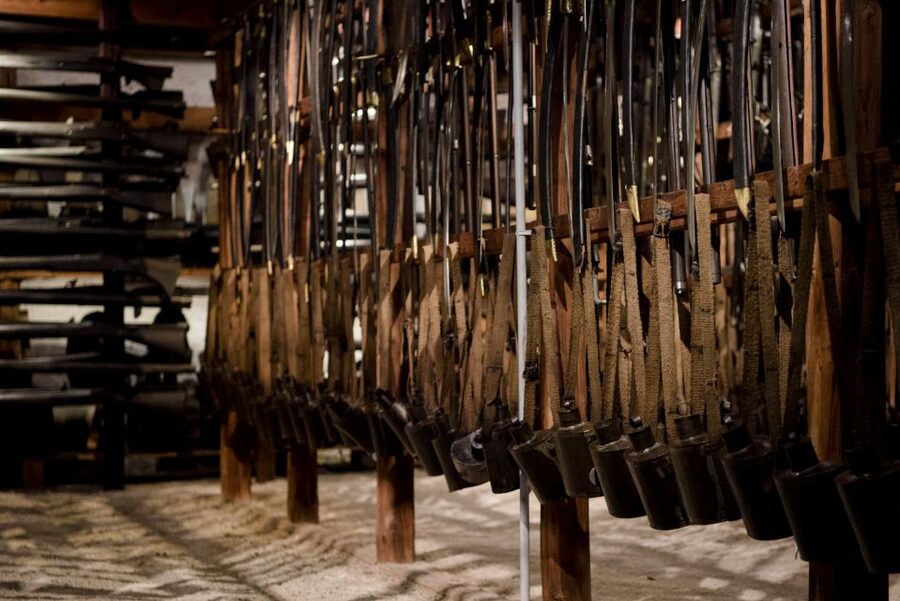
- The armory is a major highlight: The collection is described as one of Europe’s largest private armories.
- The silver furniture is unusually important: Forchtenstein holds Europe’s largest and earliest collection of silver furniture.
- The portraits are not all conventional family records: The Gallery of Ancestors includes fictional forebears such as Attila the Hun and Vlad the Impaler.
- The coronation flags are exceptionally old: The three flags from Hungary, Croatia, and Serbia date from the 17th century.
- German is the main language: A German audio guide is available for €2, while an optional guided tour may add more explanation.
Why Forchtenstein Castle feels different
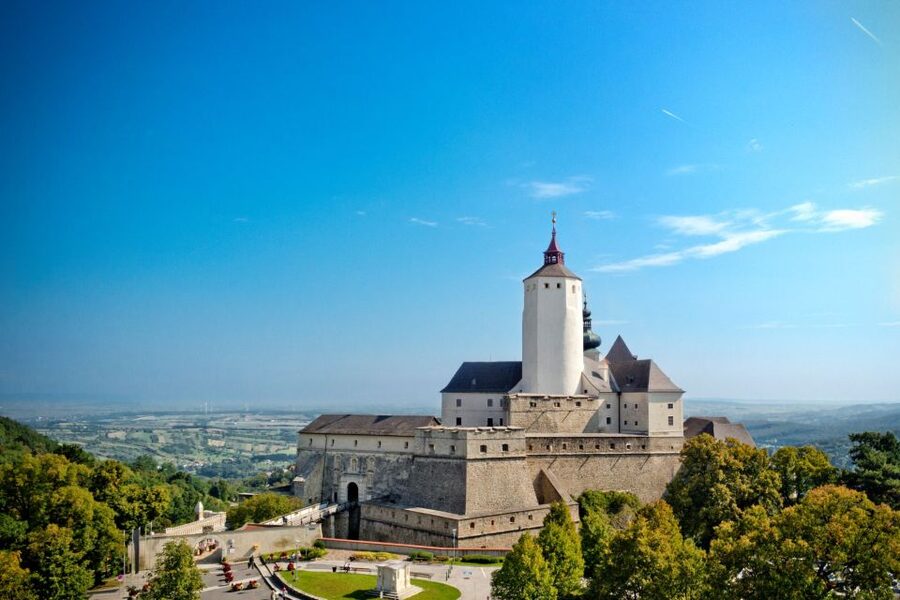
Many castles give you thick walls, a courtyard, and a view. Forchtenstein adds something more unusual: it presents itself as a family stronghold, an armory, a portrait gallery, and a private museum all at once.
That combination matters. You are not just walking through empty rooms and trying to imagine how people lived. You are seeing the objects that the Esterházy family chose to protect, display, and pass down. Weapons show military power. Portraits build a family story. The Kunstkammer reveals a taste for rare and curious things. Flags and ceremonial objects point to political ambition.
The setting in Burgenland also gives the visit a strong regional flavor. Forchtenstein is tied to the Esterházy family, one of the major noble families connected with the area. Their collecting habits shaped what you see today, from formal portraits to unusual historical objects.
At $22 per person, the ticket is not a throwaway admission fee. But the price makes sense if you enjoy castles with substantial collections rather than simple ruins or scenic viewpoints. The one-hour length also works well as part of a wider day in Burgenland.
A few more Austria days worth a look
- Vienna: Classic Ensemble Vienna in St. Peter’s Church Ticket
★ 4.7 · 4,819 reviews - Vienna Kunsthistorisches Museum Day Admission Ticket
★ 4.6 · 3,690 reviews - Vienna: Tickets for Mozarthaus Vienna with Audio Guide
★ 4.2 · 2,344 reviews
Start in the courtyard beneath the secco murals
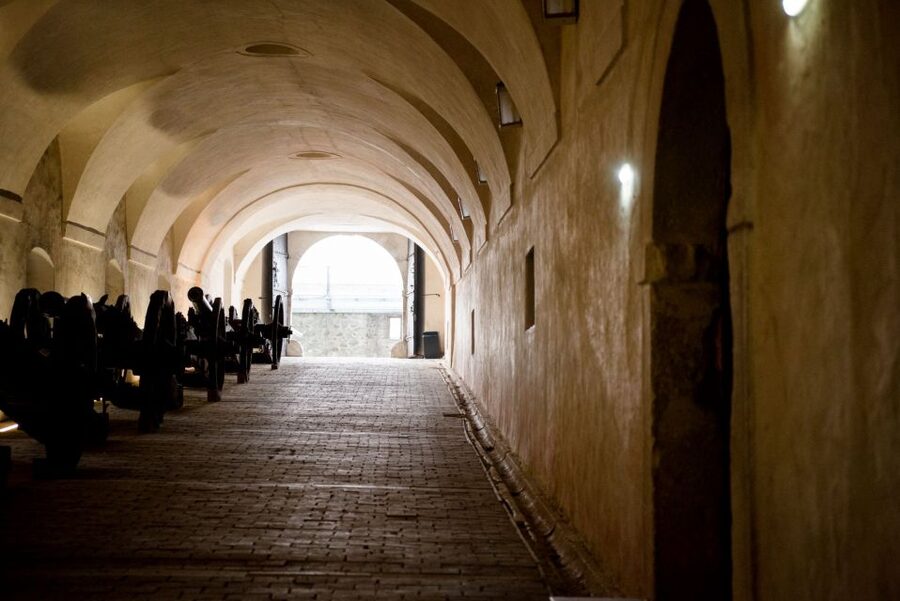
Begin in the inner courtyard. This is not just a passageway before the real visit begins. The walls themselves form one of the castle’s strongest displays.
The secco paintings are made on dry plaster, rather than wet plaster, and cover the courtyard with large decorative scenes. The collection is described as the largest display of secco wall paintings north of the Alps. That claim gives you a useful sense of scale, but the practical point is simpler: take time to look upward and around before moving on.
Courtyard displays are easy to rush. You may be thinking about the armory or trying to follow the route, but the murals give you an immediate sense of the castle’s ceremonial character. They were made to impress people entering the stronghold, and they still do that job.
I would allow a few quiet minutes here. Look for the way the paintings frame windows, doors, and upper galleries. The courtyard also helps you understand the castle as a working residence and defensive building, not only as a museum filled with later objects.
The chapel and oratory bring the family story closer
The route continues to the first floor, where you can enter the oratory and chapel. These rooms shift the mood from public display to private belief and family life.
A castle chapel can sometimes feel like a quick stop between larger rooms. Here, it helps show how religion fitted into daily life for the people who lived in a fortified noble residence. The oratory also suggests a more personal side of the family, away from the grand military collections.
Pay attention to the relationship between these rooms and the rest of the castle. The armory speaks of defense and status. The chapel speaks of ceremony and faith. Together, they show how a noble household used its building for several purposes at once.
Access can vary, so you should not assume every room will be open on every date. One visitor specifically found the first level closed during a visit. That does not erase the value of the castle, but it is worth keeping in mind if you are planning around one particular room.
The armory is the castle’s most powerful collection
The armory is likely to be the main event for anyone interested in weapons. Forchtenstein presents it as one of Europe’s largest private armories, and the scale gives the collection real weight.
You can expect an extensive display rather than a few decorative swords hung on a wall. The collection represents the military world surrounding a noble family, with weapons serving both practical and symbolic roles. In a castle, armor and arms were tools of defense, but they also announced wealth, rank, and readiness.
I like this section because it gives the building a clear purpose. The thick walls make more sense when you see the objects once connected to protection and conflict. Even if you are not a weapons enthusiast, the armory helps you read the castle as a fortified residence rather than a grand house with stone walls.
The experience is helped by original objects and interiors. A recent five-star account praised the number of authentic pieces on display, beginning with the castle itself and continuing through the armory and weapons. That is the right reason to visit: you are seeing a collection tied to the place, not a modern exhibit assembled without a connection to the building.
A completely different way to spend a day here:
- Vienna: Vivaldi’s Four Seasons Concert in Karlskirche
★ 4.7 · 14,951 reviews - Vienna: Spanish Riding School Training
★ 3.9 · 9,281 reviews - Vienna: Skip-the-cashier-desk-line Giant Ferris Wheel Ride
★ 4.5 · 7,859 reviews - Vienna: Schönbrunn Palace & Gardens Skip-the-Line Tour
★ 4.7 · 7,739 reviews
The second floor is where the collection becomes surprising
The second floor brings together the most unusual objects. This is where Forchtenstein moves beyond the expected castle formula of armor, portraits, and religious rooms.
One of the most striking objects is an ornate Ottoman tent said to be about 400 years old. Its presence points to the wider political and military world of Central Europe, where contact with the Ottoman Empire shaped the region for centuries. The tent also gives you a rare change of scale and texture after the hard surfaces of armor and stone.
Then come the three coronation flags from Hungary, Croatia, and Serbia, dating from the 17th century. These are not ordinary decorative banners. Coronation objects carry ceremony, authority, and national identity, so their survival gives the collection a strong political dimension.
The flags are especially valuable for visitors who want more than a pretty castle. They connect Forchtenstein to the formal world of monarchy and state power. Even without a long explanation, you can see why such objects would have been guarded carefully and displayed with pride.
The Gallery of Ancestors mixes fact, family pride, and legend
The Gallery of Ancestors is one of the most interesting parts of the visit because it does not present family history in a strictly modern way.
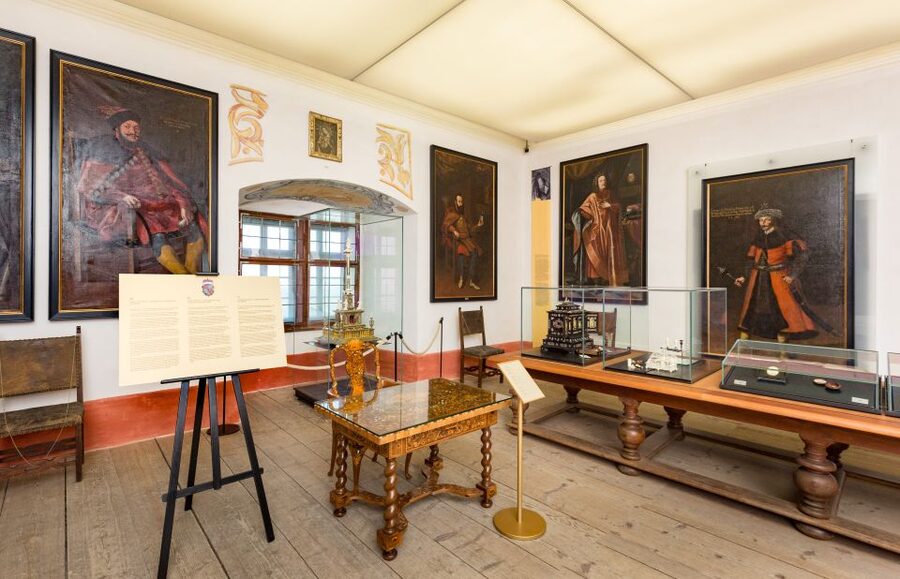
Alongside Esterházy portraits, you will see images of supposed ancestors who were not actual members of the family. Attila the Hun appears among these fictional forebears, as does Vlad the Impaler. The gallery includes the only known full-length portrait of Vlad the Impaler, a detail that gives the room extra appeal for anyone interested in Dracula lore, medieval rulers, or the way noble families shaped their public image.
This is a useful reminder that old portrait galleries were not always neutral records. A noble family could use its ancestors to claim age, importance, power, and connection to legendary figures. The point was not always historical accuracy as we understand it today. It was also about identity and prestige.
Look at the portraits as a group rather than treating each one as an isolated artwork. The arrangement creates a long family story, but the inclusion of invented ancestors shows that the story has been carefully constructed.
The silver furniture collection is a rare sight
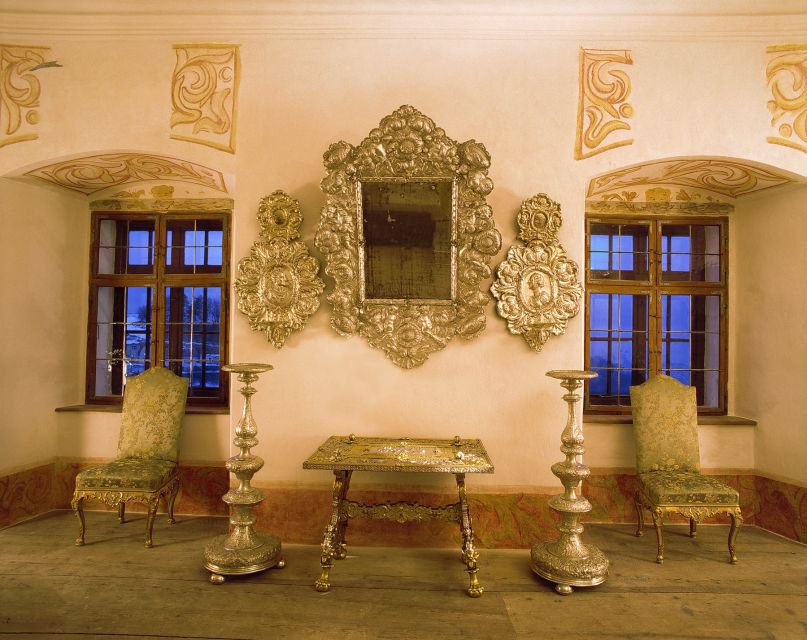
Forchtenstein’s silver furniture collection is another major reason to make the trip. It is described as Europe’s largest and earliest collection of silver furniture, which makes it far more unusual than a standard display of silver plates or ceremonial cups.
Furniture made from silver is immediately striking because it combines a basic household function with extreme wealth. A chair, table, cabinet, or other furnishing becomes a statement of rank. The material also reflects the importance of display in elite interiors, where objects were meant to impress visitors as much as serve a practical purpose.
I would give this section more time than you might expect. At first, the shine and decoration catch your eye. Then consider what the collection says about court culture and the Esterházy family’s desire to surround itself with rare objects.
This is also where the $22 ticket begins to feel more reasonable. You are not paying only for access to medieval-looking rooms. You are seeing a specialized collection with unusual European importance, alongside the castle itself.
The Kunstkammer reveals the collector behind the castle
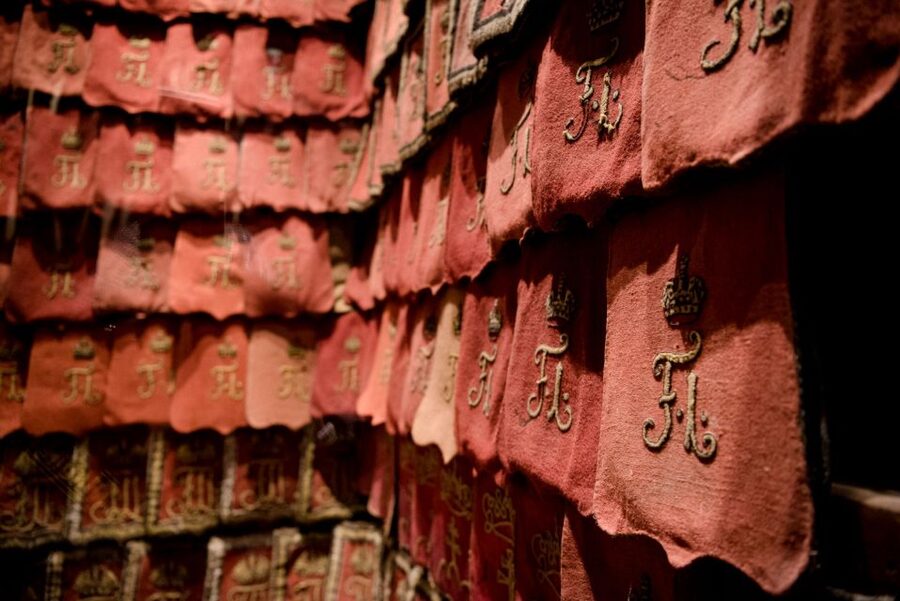
The Kunstkammer, or cabinet of curiosities, dates from the late 16th to the early 18th century. It offers a glimpse into Prince Paul Esterházy’s passion for collecting and helps explain why the castle contains such a wide range of objects.
A cabinet of curiosities was not a modern museum arranged by strict academic categories. It could bring together art, natural curiosities, historical objects, and rare items that sparked wonder. The goal was often to show reach, taste, education, and access to things that most people could never own.
That makes the Kunstkammer valuable even if you do not recognize every object. You can focus on the collecting habit itself. What did Prince Paul consider worth preserving? How did one object sit beside another? What does the collection reveal about the interests and ambitions of a powerful family?
This part of the castle works best when you resist the urge to rush. The armory gives you scale and impact. The Kunstkammer rewards slower looking.
Guided tour or audio guide?
The experience offers admission, with an optional guided tour available. The supplied information does not name individual guides, so you should not expect to book a specific person by name.
A live guide can be the better choice if you want the portraits, flags, and collecting habits explained in context. One recent visitor praised a guide for describing the castle’s story vividly, which suggests that the quality of the explanation can make a real difference.
The audio guide is in German and is listed at €2. If you do not speak German, check the language situation before booking because the available language information names German only. Without added commentary, you can still appreciate the objects, but you may miss the connections between the Esterházy family, the fictional ancestors, and the political meaning of the ceremonial pieces.
The one-hour duration is enough for a focused visit, not a slow study of every object. If you choose the guided option, arrive 15 minutes early so you are ready when the activity begins.
Who will get the most from this visit?
I would recommend Forchtenstein Castle to you if you enjoy:
- Castle interiors that remain tied to their original setting
- Arms and armor collections
- Noble family portraits and political symbolism
- Rare ceremonial objects
- Decorative arts and early collecting
- Short cultural visits with a clear route
Families with older children may also find the armory, Ottoman tent, and Vlad the Impaler portrait easier to connect with than a room of paintings alone. The castle offers several strong visual anchors, so you do not need specialist knowledge to enjoy it.
You may want to skip it if your main goal is a long outdoor walk, a fully accessible attraction, or a ruin with open views. Mobility impairments may make the visit unsuitable, and access to some areas can change. The castle’s appeal lies mainly in its collections and interiors.
Practical value at $22 per person
The ticket price is fair if you plan to look closely and care about original objects. The armory, silver furniture, coronation flags, Ottoman tent, portraits, and Kunstkammer give you several distinct collections in one visit.
The short duration is both a benefit and a limitation. You can fit the castle into a busy day, and you are unlikely to feel trapped in a long tour. But if you want to study every portrait or read every explanation, one hour may feel tight.
I would treat the visit as a concentrated cultural stop. Arrive early, begin with the courtyard murals, and save enough attention for the second-floor collections. If the first level is closed, ask what is currently available before you start so your expectations match the route.
Free cancellation up to 24 hours before the activity and a reserve-now, pay-later option make the booking flexible. The admission includes the ticket itself, while the audio guide costs €2. The experience is operated by Esterhazy Betriebe AG.
Should you book Forchtenstein Castle?
Book it if you want a castle visit with genuine collections rather than scenery alone. The armory, silver furniture, coronation flags, and unusual portraits give the hour plenty of substance, and the courtyard murals make a strong opening.
I would be more cautious if you need step-free access, want a long visit, or require extensive information in a language other than German. Also remember that room access can change.
For most culture-minded visitors in Burgenland, Forchtenstein is worth $22, especially when you value original interiors and objects with a direct link to the Esterházy family. It is a compact visit, but the collection reaches far beyond the usual castle checklist.
FAQ
How long does the Forchtenstein Castle visit last?
The stated duration is one hour. Check the available starting times when booking.
What is included in the ticket?
The admission ticket is included. The audio guide is listed separately at €2.
What language is the audio guide in?
The available audio guide language is German.
Is a guided tour available?
An optional guided tour is available. No specific guide names or other tour languages are provided.
What are the main highlights inside the castle?
Major highlights include the inner courtyard’s secco wall paintings, the private armory, the silver furniture collection, the Gallery of Ancestors, the Ottoman tent, the coronation flags, and the Kunstkammer.
Is the experience suitable for people with mobility impairments?
The experience is listed as unsuitable for people with mobility impairments. Access to individual areas may also vary, since one visit noted that the first level was closed.
Just added around Austria
- Zell am See: Schmittenhöhe Tandem Paragliding Flight★ 4.9 · 82 reviews
- Zurich: Liechtenstein, Austria and Germany Private Day Tour★ 5.0 · 6 reviews
- Zurich: Private Liechtenstein, Austria, and Germany Day Trip★ 5.0 · 16 reviews
- Vienna: UNESCO Schönbrunn Palace Guided Tour with Entry★ 4.5 · 94 reviews
- Zell am See: Paragliding Tandem Flight★ 5.0 · 31 reviews
- Villach/Ossiachersee: Paragliding “Action” Tandemflug★ 5.0 · 4 reviews
- Werfen: Hohenwerfen Castle Entrance Ticket★ 4.5 · 84 reviews
- World War II History Vienna Old Town Private Walking Tour★ 4.8 · 9 reviews
Tickets, compared.
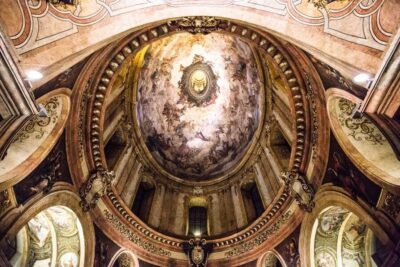
Classic Ensemble Vienna in St. Peter’s Church Ticket
Read our review →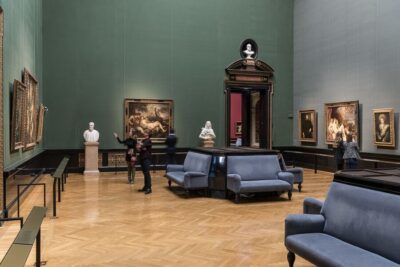
Vienna Kunsthistorisches Museum Day Admission Ticket
Read our review →
Tickets for Mozarthaus Vienna with Audio Guide
Read our review →
Skip-the-Line Entrance Ticket to the Danube Tower
Read our review →