
Reviewed · FOOD & DRINK
Guided Wine Tasting in a Hidden Wine Bar
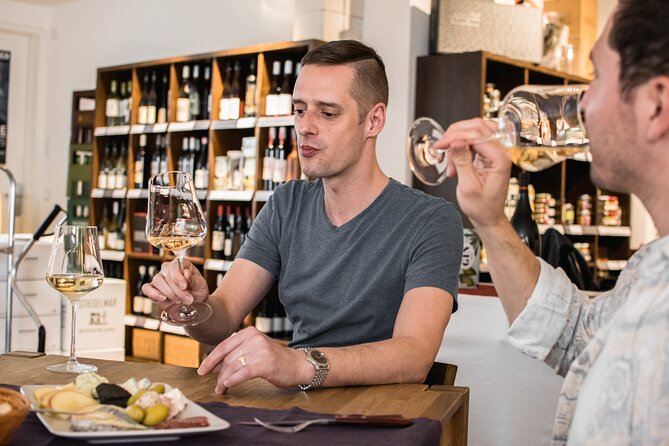
Salzburg is better known for Mozart and mountain views than for wine, but this tasting offers a useful change of pace. You’ll sample three Austrian wines with local snacks, hear some background on Austria’s long wine-growing tradition, and spend time in a small wine-shop setting near the center. I like the compact 45-minute format and the chance to try wines from beyond the usual Austrian white wine lineup.
I also like the informal social side. Several tastings have included friendly conversation with locals or other visitors, and the small food pairings can include regional spreads and unusual appetizers. The main caution is uneven hosting: some sessions offer clear explanations and a warm welcome, while others may feel more like three glasses poured in a shop than a true guided tasting.
Key points to know before booking
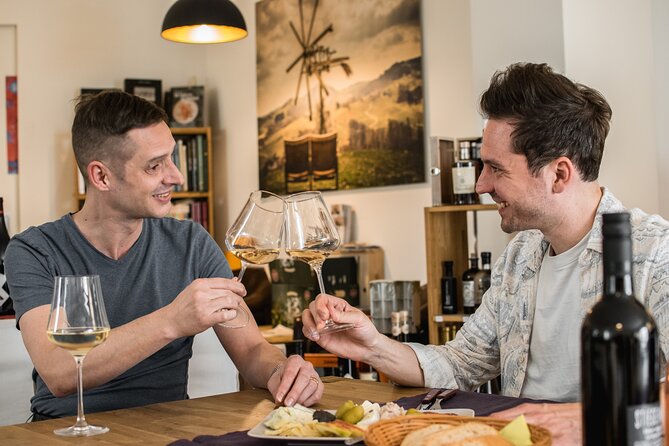
- Three Austrian wines: The standard tasting includes a sparkling wine, white wine, and red wine in some sessions, though the exact selection can vary.
- Small-group setting: The group is capped at 10 people, which can make conversation easier but may feel quiet if only two people attend.
- Local snacks included: Expect regional spreads and small appetizers served with the wines.
- Premium option available: The upgraded choice adds three more wines, more food, and wine-bar hopping.
- Central meeting point: Begin and finish at De Gustibus, Bergstraße 14, in Salzburg.
- Host quality can vary: Some sessions are well explained and welcoming, while others offer little information beyond the bottle labels.
What this Salzburg wine tasting is really like
This is a short introduction to Austrian wine, not a grand vineyard outing. You meet at the De Gustibus wine shop on Bergstraße, then settle in for a guided tasting in a local wine-bar setting. The activity lasts about 45 minutes, so it fits neatly between sightseeing stops, dinner, or an evening concert.
Austria has around 45,000 hectares of vineyards, and wine production reaches back to the Roman period. That makes the tasting more than a chance to sip three drinks. It gives you a small window into a country with a serious wine culture, even though Salzburg itself is not Austria’s main wine-growing area.
I see this as a good city activity for someone who wants a taste of Austrian wine without giving up half a day to reach a vineyard. You will not tour vines, visit a cellar, or receive a full sommelier course. Instead, you get a quick urban tasting with food and conversation.
The experience is offered in English, and the maximum group size is 10. That is small enough for questions when the host is engaged. It also means the atmosphere can change quite a bit depending on the group. A full table can feel social and festive. A session with only one or two people may feel more exposed and less lively.
More Food Tours in Salzburg
- Salzburg: Stiegl Brewery Tour with Beer Tasting
★ 4.7 · 278 reviews - Salzburg: Guided Wine Tasting in a Hidden Wine Bar
★ 4.4 · 58 reviews - Salzburg: Stiegl Brewery Museum Entry Ticket & Beer Tasting
★ 4.0 · 35 reviews
Starting at De Gustibus on Bergstraße
Your meeting point is Wine Shop De Gustibus at Bergstraße 14, 5020 Salzburg. The tour ends at the same place, which keeps the logistics simple. You do not need to arrange a taxi, find a distant village, or work out a return route after the final glass.
The setting is part of the appeal, though you should keep your expectations in check. The phrase hidden wine bar suggests a tucked-away, atmospheric place, but the shop is on a main street. It may feel more like a working wine shop or small bar than a secret cellar with special decor.
That is not necessarily a bad thing. A shop can give you a more direct connection to the bottles being poured, and it may be easier to continue browsing or order another glass afterward. If you are hoping for candlelight, historic stone walls, or a dramatic room, this experience may feel ordinary.
Arrive ready to sit down and taste. One useful point from the way the activity operates is that early arrivals may be seated and served without much fuss. That can be convenient, although it also reinforces the informal nature of the event.
The three-wine standard tasting
The basic experience centers on three Austrian wines. A typical combination can include one sparkling wine, one white, and one red, though the exact wines are not guaranteed. In another session, only white wines were served, so you should not book the standard option expecting a fixed lineup.
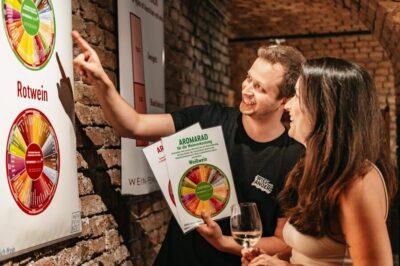
The aim is to introduce you to different styles and regions. The wines can range from classic regional bottles to other Austrian selections. A good host will explain what you are drinking, point out flavor differences, and give some background on the producer or wine region.
This is where the experience varies most. Some sessions have included clear introductions and useful comments on each wine. Other sessions have offered little beyond a pour and the information printed on the label. If wine education is your main reason for booking, this inconsistency matters.
I would ask questions as you go. Ask where the wine was made, what grape variety you are tasting, and what food the host recommends with it. That can turn a quiet tasting into a more useful conversation. If the host gives strong explanations, you may leave with a better sense of Austrian wine regions and styles. If not, you will at least have sampled several bottles you might not otherwise order.
The short duration also shapes the experience. Forty-five minutes is enough for three small pours and snacks, but not enough for a detailed lesson on Austrian viticulture. Think of it as an introduction, not a class.
Regional snacks with the wine
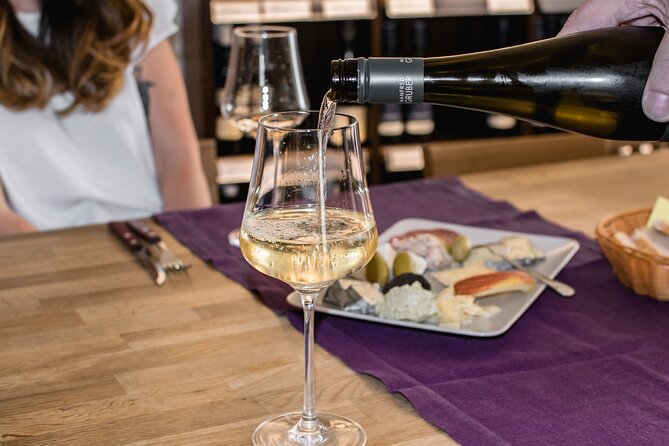
The food is one of the most consistently appealing parts of the activity. Each wine is paired with a small snack, regional spread, or local delicacy. You may find items that are unfamiliar, which adds a bit of discovery without turning the event into a full meal.
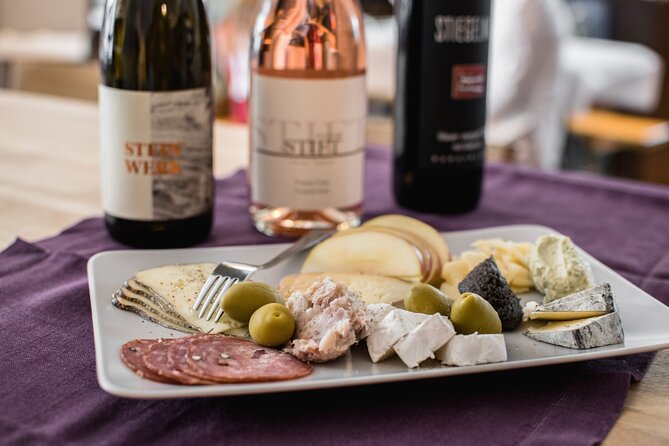
Some sessions include a neatly prepared charcuterie-style tray. Other pairings have involved appetizers that participants had not tried before but enjoyed. The portions are described as small, so you should eat beforehand if you need a full lunch or dinner.
These pairings matter because wine tastes different with food. A snack can soften acidity, bring out fruit, or make a dry wine seem rounder. Even a modest plate gives you a better way to judge the wine than tasting it alone.
The food also helps make the short session feel like an occasion. A simple pour-and-go format can feel thin for the price. Add snacks, a welcoming host, and a chance to talk, and the same 45 minutes feels more worthwhile.
Still, do not treat this as a meal. The food is an accompaniment, not the main event. Anyone with allergies or strict dietary needs should ask the provider in advance, since specific ingredients and substitutions are not provided here.
More Salzburg wine tastings worth an afternoon:
- Private Austrian Wine & Charcuterie Tasting Class with a Pro-Sommelière
★ 5.0 · 4 reviews - Wachau Valley Wine Tasting Bike Tour from Vienna
★ 5.0 · 829 reviews - Vienna: Swarovski House Tour with Champagne and Gift
★ 4.7 · 787 reviews - Countryside Half Day Wine Tour near Vienna
★ 5.0 · 545 reviews
The premium choice and wine-bar hopping
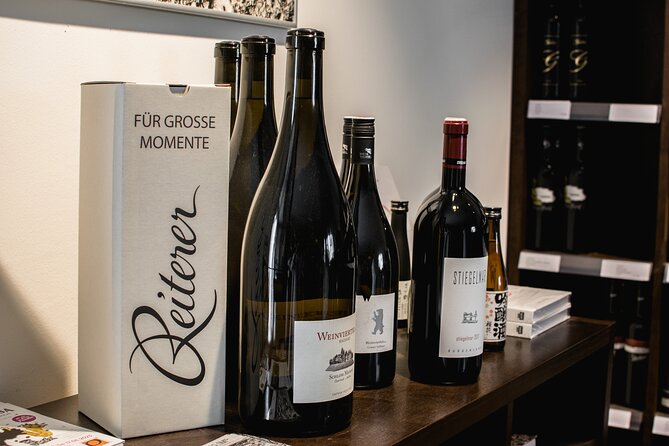
A premium option is available for those who want more than three wines. It adds three additional wines, more snacks, and wine-bar hopping. In practical terms, that means you get six wines in total and more time devoted to tasting.
This is the better choice for a serious wine fan, especially if you want to compare several Austrian styles. Six wines give the host more room to show contrasts between regions, grape varieties, or levels of sweetness and dryness. The extra food also helps keep the tasting comfortable.
The exact route and names of the additional bars are not specified, so do not book the premium option expecting a named series of famous venues. The phrase wine-bar hopping may mean moving between local stops, but the activity details do not promise a particular number of venues or a fixed route.
The upgrade also deserves a value check. At the standard price of $45.27 per person, the basic tasting is not the cheapest way to drink three glasses of wine. You are paying for the setting, service, snacks, and guided introduction. If those elements are delivered well, the price can be reasonable for a central Salzburg activity. If the host simply pours the wine with little explanation, the value drops quickly.
For the premium version, compare the extra cost with what six glasses and snacks would cost you in Salzburg on your own. The upgrade makes the most sense when you want a social evening and do not want to choose the bars yourself.
How much guidance should you expect?
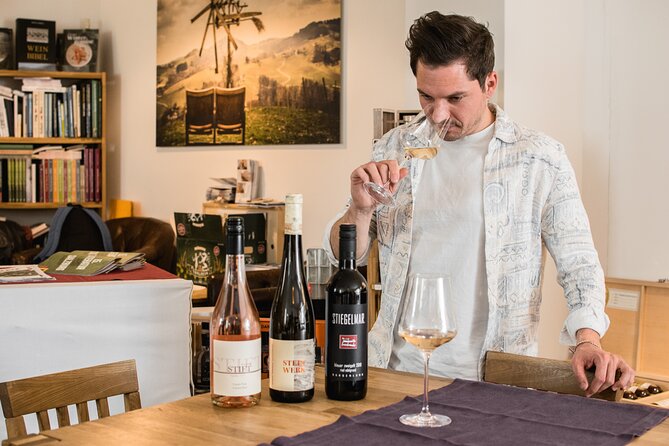
The title promises a guided tasting, so it is fair to expect more than a bottle being opened. Ideally, the host explains the wine’s origin, producer, style, and key flavors. You should also receive some context about Austrian wine regions and the country’s long history of cultivation.
That standard is met in some sessions. A good introduction can cover a sparkling wine, a white, and a red in a clear progression. The host can show you how the wines differ and suggest which foods suit each one. That is the kind of information you can use later when ordering wine at a restaurant.
The standard is not met every time. There have been sessions with little education, limited host involvement, and no useful map or wider explanation of Austrian wine. One session offered only white wine, which may disappoint you if you want variety.
This is the biggest reason I would avoid booking if you are seeking formal instruction. The experience is better suited to a casual drinker who wants a guided start but is happy to let the evening remain relaxed. Wine lovers who already know their Austrian regions may find the content too light unless the host is especially engaged.
A practical approach is to treat the tasting as partly social. Talk with the people at your table, ask direct questions, and be open to local recommendations. The informal setting has sometimes led to conversations with Salzburg locals, which can be more useful than a rehearsed lecture.
Atmosphere, group size, and the local feel
The atmosphere can be warm and easygoing. A friendly owner, a well-prepared snack tray, and good wine create a pleasant break from Salzburg’s major sights. The small setting also makes it possible to meet people rather than sit anonymously in a large tour group.
Some sessions have included locals having their own afternoon drinks. That can make the bar feel more like a real neighborhood place than a staged attraction. You may pick up ideas for restaurants or places to visit, although that depends on who happens to be there.
The same informality can work against the experience. A small wine shop is not always polished or atmospheric, and a nearly empty session may feel uncomfortable. If the host is distracted or drinks heavily without offering useful information, the event can fall below what you expect for the price.
The maximum of 10 people is still a plus. It keeps the activity personal when the host is doing the job well. You will not be lost in a crowd, and you can usually ask for clarification about a wine or food pairing.
Price, timing, and who gets good value
At $45.27 per person, the standard tasting sits in the middle range for a short food-and-drink activity. You are not paying for transport or a full meal. You are paying for three tastings, snacks, a host, and the convenience of a central Salzburg meeting point.
I would judge the price by the quality of the explanation. For a well-led tasting with three good wines, thoughtful pairings, and a pleasant welcome, it can be a fair treat. For three unremarkable pours with little context, it feels expensive.
The 45-minute length works well for a busy itinerary. You can fit it before dinner or after a museum visit without giving up an entire afternoon. It is also a manageable commitment if you are traveling with someone who likes wine but does not want a long winery tour.
The activity may suit you best if:
- You enjoy trying local drinks but do not need a formal lesson.
- You like small groups and casual conversation.
- You want snacks with your wine.
- You are curious about Austrian wine beyond the most familiar labels.
- You prefer a central city activity to a half-day trip outside Salzburg.
You may want another option if you require a guaranteed red, white, and sparkling lineup, a named expert, detailed regional instruction, or a polished bar interior.
Booking confirmation arrives at the time of booking. The minimum drinking age is 18, and service animals are allowed. The venue is near public transportation, and most people can participate. Free cancellation is available until 24 hours before the start time, with no refund for later cancellation or changes.
Should you book this Salzburg tasting?
Book it if you want a short, social introduction to Austrian wine and you are comfortable with an informal setting. The best version combines three good wines, tasty local snacks, and a host who explains what is in your glass. The chance to meet locals can add real Salzburg character.
Skip it if your priority is serious wine education or a guaranteed, polished tasting room. The activity has produced uneven sessions, including limited explanations and narrower wine choices than expected.
My practical choice would be the standard option for a first try, unless the premium price is clearly reasonable. Ask questions during the tasting, arrive with modest expectations, and view the event as a relaxed city stop rather than a formal wine course. That is when this small Salzburg experience is most likely to suit you.
FAQ
Where does the wine tasting begin?
It begins at Wine Shop De Gustibus, Bergstraße 14, 5020 Salzburg, Austria.
Where does the activity end?
The activity ends back at the meeting point.
How long does the standard tasting last?
The standard activity lasts approximately 45 minutes.
How many wines are included?
The standard option includes three Austrian wines. The premium option adds three more wines, for six in total.
Is food included?
Yes. The wines are paired with regional spreads and small local snacks. The premium option includes additional snacks.
Is the tasting offered in English?
Yes. English service is offered.
What is the minimum drinking age?
The minimum drinking age is 18 years old.
Just added around Salzburg
- Zell am See: Schmittenhöhe Tandem Paragliding Flight★ 4.9 · 82 reviews
- Zell am See: Paragliding Tandem Flight★ 5.0 · 31 reviews
- Werfen: Hohenwerfen Castle Entrance Ticket★ 4.5 · 84 reviews
- Viator Exclusive: ‘The Sound of Music’ Private Tour★ 5.0 · 28 reviews
- Zell am See Alpine Village Private Day Trip from Salzburg★ 5.0 · 3 reviews
- Private Austrian Food Tasting Tour in Salzburg’s Old Town★ 4.5 · 3 reviews
- Private transfer from Salzburg to Vienna, 2 hours for sightseeing★ 4.5 · 7 reviews
- Private Transfer from Salzburg to Munich with 2 hours for sightseeing★ 5.0 · 8 reviews
Food & Drink, compared.
Chocolate Workshop in Chocolate Museum w/ Tasting
Read our review →
Vienna for Food Lovers: Cafés, Markets & Austrian Cuisine
Read our review →
Wachau Valley Wine Tasting Bike Tour from Vienna
Read our review →
Gerstner KuK Hofzuckerbäcker Baking Show & Tasting
Read our review →
Authentic Vienna Food Tour inc. lunch, street food, 3 drinks
Read our review →
Wachau Valley Small-Group Tour and Wine Tasting from Vienna
Read our review →
Wine Tasting Experience in a Private Wine Cellar
Read our review →Browse the lists this tour appears in