
Reviewed · SCHöNBRUNN PALACE TOURS
Skip the Line:Imperial Carriage Museum by Schönbrunn Kaiserliche Wagenburg Wien
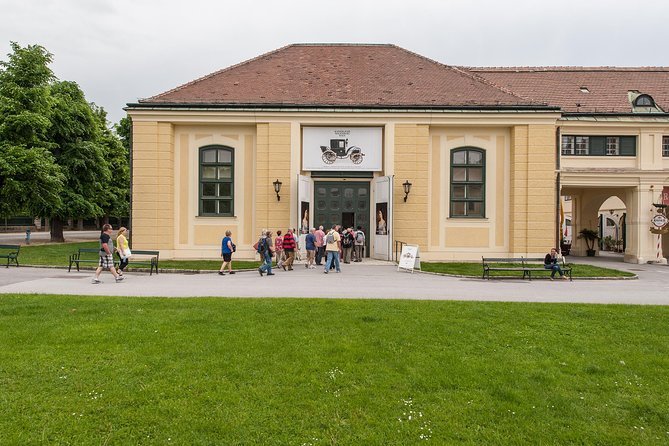
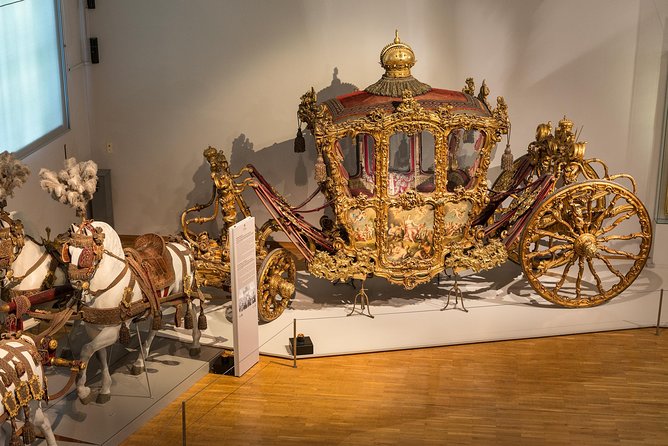
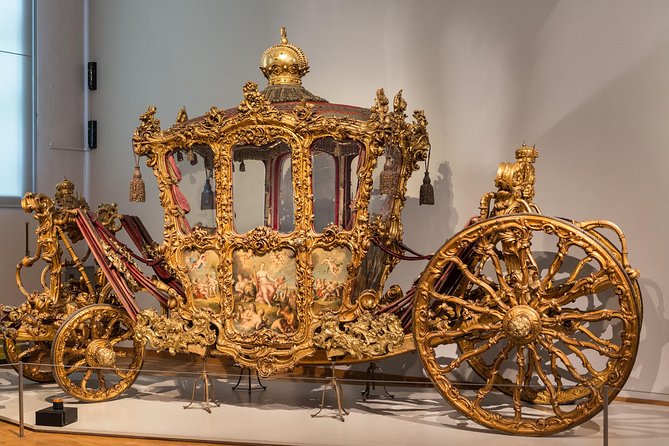
The most arresting sight here is not a palace room, but a towering royal carriage built to make an entrance. The Imperial Carriage Museum beside Schönbrunn Palace lets you see the grand coaches of Maria Theresia, Napoleon, Franz Joseph, and Empress Elisabeth, including the ornate Baroque Imperial Coach and a solemn black hearse.
I like the Sisi Trail, which follows Elisabeth from her wedding to her assassination through her carriages and personal objects. I also like the quiet, focused setting: you can study the displays without the crush found at Schönbrunn Palace. The main drawback is that the hallways are narrow, and the audio guide is not a private guide, so a crowded visit can make it harder to pause at each object.
Key points to know before you go
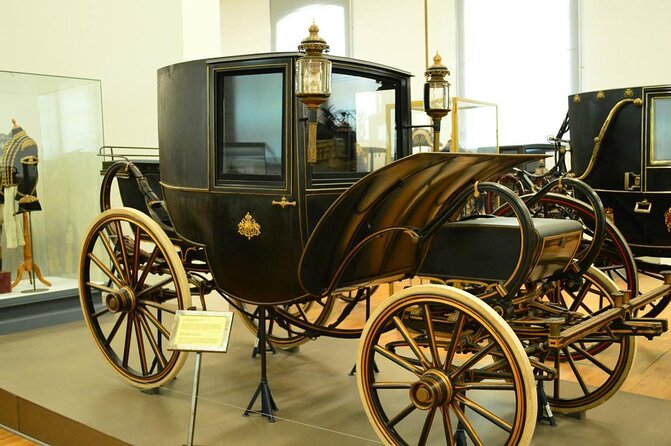
- Sisi’s story unfolds through real objects, from her imperial bride coach to the carriage she left shortly before her death.
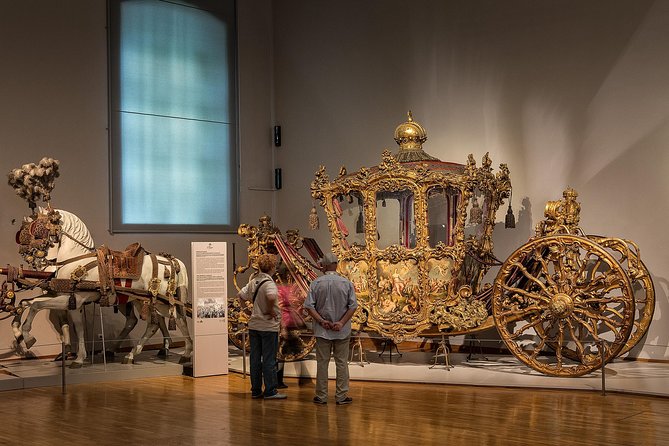
- The Baroque Imperial Coach is the main showpiece, surrounded by state carriages, travel coaches, and children’s carriages.
- Your entrance ticket is included, but transfers and a private guide are not.
- Plan 45 minutes at minimum, though an hour to an hour and a half gives the collection more justice.
- The museum sits near Schönbrunn Palace and public transportation, making it easy to add to a palace day.
- The listed price is $14.48 per person, a fair cost if you care about royal history, design, or Sisi.
Why these carriages tell Vienna’s royal story
A carriage can look like a static object behind glass. Here, it works more like a royal biography. Each coach shows how Habsburg rulers traveled, celebrated, married, ruled, and mourned.
The collection covers several kinds of transport. You will see imposing state coaches used for ceremony, practical coaches built for longer journeys, and smaller carriages made for Habsburg children. That range matters. It moves the display beyond pure pageantry and gives you a glimpse of daily life inside an imperial household.
The carriages also reveal the difference between public and private life. A coronation coach had to impress a crowd. A travel coach had to offer comfort on the road. A child’s carriage had a much more personal scale. I find this contrast more revealing than a room full of formal portraits.
Maria Theresia, Napoleon, and Franz Joseph are all represented through vehicles connected with their lives. You are not simply looking at old wheels and polished wood. You are seeing the equipment of power, ceremony, family, and movement.
More ways into Schönbrunn:
- Vienna: Schönbrunn Palace & Gardens Skip-the-Line Tour
★ 4.7 · 7,739 reviews - Vienna: Skip-the-Line Schönbrunn Palace & Gardens Tour
★ 4.8 · 5,411 reviews - Vienna: Bus & Schönbrunn Palace Skip-the-Line Guided Tour
★ 4.3 · 2,802 reviews
The Baroque Imperial Coach is the main event
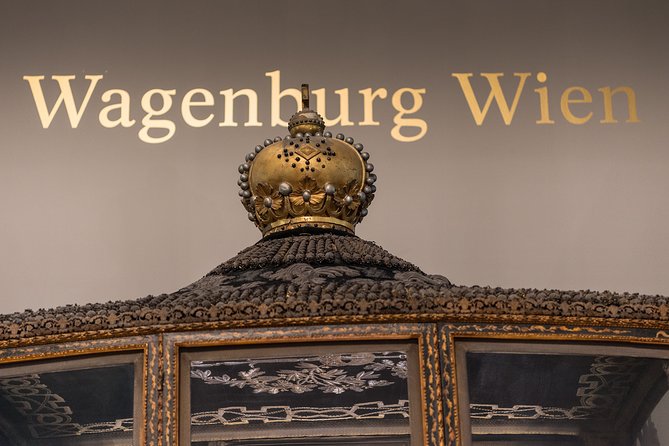
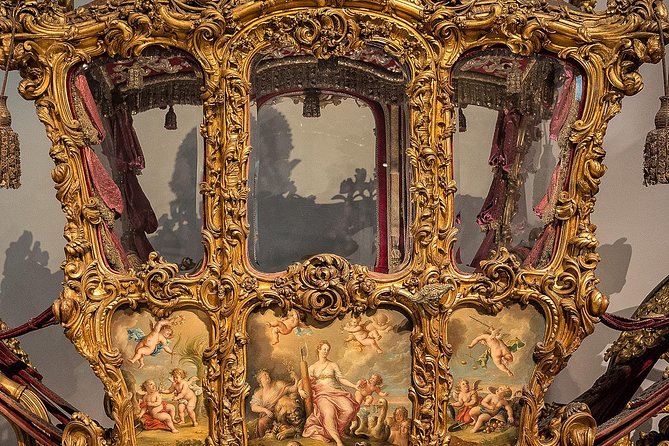
Start with the Baroque Imperial Coach. It is the object most likely to stop you in your tracks, thanks to its scale and ornamental design.
This is the sort of carriage that makes the old court system feel physically real. A monarch did not just arrive at a ceremony. The arrival was carefully staged, with a vehicle designed to display rank before a word was spoken.
Give yourself time to look at the coach from more than one angle. The size can distract you from the smaller details, so use the nearby explanations and audio material rather than rushing straight past it. If you have only 45 minutes, make this one of your first stops.
The rest of the display helps place the grand coach in context. State carriages show the formal side of court life, while the traveling coaches suggest the practical demands of ruling an empire. The smaller children’s carriages add a lighter note and help make the imperial family feel less distant.
Following Empress Elisabeth on the Sisi Trail
The Sisi Trail is the museum’s most focused route. It follows Empress Elisabeth, widely known as Sisi, from her marriage through her public life and finally to her tragic death.
The story is told through objects, not only text. You will see the coach used when Elisabeth arrived as an imperial bride, the golden Imperial Coach connected with her coronation as queen of Hungary, and carriages used by her children.
One of the most sobering objects is the carriage she left just minutes before her assassination in Geneva. Nearby, the large black hearse that carried her to her final resting place gives the final part of the route a stark tone.
This sequence makes the Sisi Trail useful even if you know little about Elisabeth. The displays provide a clear route through her life, and the carriages give each stage a physical anchor. If you already know the Sisi story, the original objects add a more personal connection than a standard palace portrait.
Look for the black robe designed for Elisabeth by Fanny Scheiner around 1885. The garment has an unusually long train and is associated with the empress’s famously slender figure. It is one of the museum’s most memorable personal objects, especially for anyone interested in the carefully managed image of Sisi.
You will also see the only surviving saddle used by Elisabeth. She was regarded as an outstanding horsewoman, and the saddle helps show a side of her life that formal coaches cannot. Her reconstructed riding chapel, filled with portraits of favorite horses, adds another personal detail.
I like this section because it avoids presenting Elisabeth only as a tragic beauty. Her life appears through travel, ceremony, riding, family, fashion, and death. The collection gives you several different Sisis, not just the romantic figure familiar from films and popular stories.
What the audio guide adds
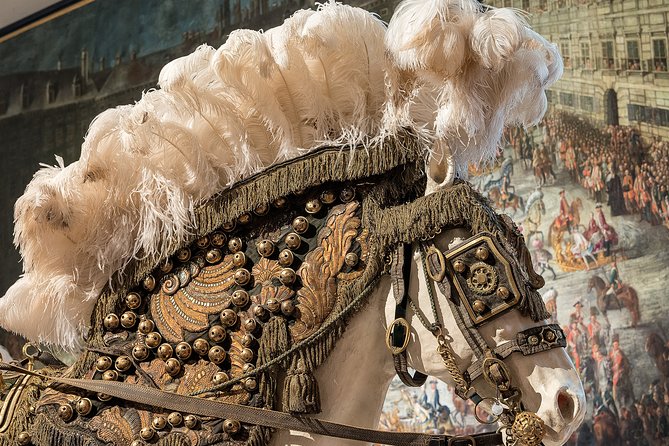
The experience includes an audio guide, while a private guide is not included. That distinction matters. You can explore at your own speed, but you should not expect a guide to lead you from carriage to carriage or answer questions throughout the visit.
The audio material gives useful context as you move around the collection. Printed explanations also appear beside the carriages, and informational films are available. If you have enough time, use all three layers: listen to the audio, read the object labels, and stop for the films.
The self-guided format works well for a museum where some people will want to linger over royal costume and others will be more interested in engineering, ceremony, or military history. You can spend longer with the Baroque Imperial Coach and move faster through objects that interest you less.
There is one practical catch. Narrow hallways can make it difficult to stand directly beside an object when another group is listening to an explanation. If you want the clearest view, avoid treating the museum like a quick moving queue. Step aside when possible, and allow extra time rather than trying to hear every detail while walking.
More skip-the-line tickets in Vienna:
- Vienna: Skip-the-Line Sisi Museum, Hofburg and Gardens Tour
★ 4.8 · 5,918 reviews - Vienna: Skip-the-Line Entrance Ticket to the Danube Tower
★ 4.5 · 2,303 reviews - Vienna: Skip the Line Schönbrunn Palace and Gardens Guided Tour
★ 4.5 · 1,540 reviews - Vienna: Schönbrunn Palace & Garden Skip-the-Line Guided Tour
★ 4.1 · 1,240 reviews
How long you should allow
The stated duration is about 45 minutes. That is enough for a brisk visit focused on the main carriages and the Sisi Trail.
I would allow an hour if you want to read the explanations and watch some of the informational films. An hour and a half is sensible if royal history is a main reason for your visit or if you want to examine the personal objects connected with Elisabeth.
A shorter visit still works. One visitor with limited time focused mostly on the signs beside the carriages and still found the collection worthwhile. That makes the museum a practical choice when your Schönbrunn schedule is tight.
The best timing depends on your pace. A 45-minute visit may feel complete to one person and rushed to another. If you have just walked through the palace and gardens, the museum makes a good final indoor stop, but remember that you may be tired and less patient with small labels by then.
Fitting the museum into a Schönbrunn day
The museum is near Schönbrunn Palace, so it is easy to pair with a palace visit and time in the gardens. It is also near public transportation, which helps if Schönbrunn is one stop in a wider Vienna sightseeing plan.
Do not treat the museum as a substitute for the palace. The palace gives you rooms, decoration, and court life from inside the residence. The Carriage Museum shows how the imperial household moved through the city and across the empire.
Taken together, the two sites answer different questions. The palace shows where the Habsburgs lived and received people. The carriage museum shows how they appeared in public, traveled, celebrated important events, and handled the rituals surrounding death.
You may be tempted to skip it after seeing the palace. I would not, especially if you enjoy objects with a clear personal story. The museum requires only a short walk from the palace area and is generally less crowded than the main palace or garden sights.
Is $14.48 good value?
At $14.48 per person, this is a reasonable ticket for a compact specialist museum. The value depends on your interests more than on the number of rooms.
You are paying for access to a collection of rare royal carriages, Sisi-related objects, printed explanations, films, and an audio guide. For someone interested in the Habsburgs, ceremonial life, fashion, or historic transport, that is a solid package.
The value is weaker if you want a fully guided tour. A private guide is not included, and the listed experience provides admission rather than transfers or a personal escort. You can bring a private guide, but that would be an extra arrangement.
The museum can also cost extra if you have a Schönbrunn pass that does not include it. That is worth checking before you buy. Even so, the additional charge can make sense if you have already walked the palace grounds and want a more focused look at the royal household.
Photos are allowed, according to the available visitor information, which is a useful bonus for anyone interested in design details. Light can be low around some objects, so do not expect every photograph to come out clearly.
Who will enjoy this museum most
I would recommend it first to history buffs, Habsburg enthusiasts, and anyone drawn to Empress Elisabeth. The Sisi Trail gives the visit a strong narrative, while the other carriages broaden the story beyond one person.
Families may also find the children’s carriages appealing, since they provide a change of scale and mood after the grand ceremonial coaches. The collection is not only for specialists. The main objects are visually striking, and the explanations help you understand what you are seeing.
You should also consider it if you enjoy fashion and personal artifacts. Elisabeth’s black robe, riding saddle, horse portraits, and carriages provide more intimate details than a standard palace tour.
I would be more cautious if your Vienna schedule is packed with major museums and you have little interest in royal ceremony. The museum is focused, and much of its appeal comes from caring about the people and rituals behind the vehicles.
Practical details that affect your visit
The museum is open daily from 10:00 a.m. to 4:00 p.m. for the stated 2026 dates, from January 1 through December 31. That closing time is fairly early, so check your schedule before spending the afternoon at Schönbrunn.
A mobile ticket is provided, and confirmation is received at booking. Keep the ticket easy to open on your phone. One booking had difficulty getting the ticket accepted at the entrance, although it was eventually admitted, so arriving with the correct ticket screen ready is sensible.
The activity has a maximum of 10 people. Inside, the narrow halls still matter more than the formal group limit. If another group is gathered around a carriage, you may need to wait briefly for a clearer view.
The museum is near public transportation, but transfers are not included. Free cancellation is available if you cancel at least 24 hours before the start time. Changes or cancellations inside that window are not accepted for a refund.
Should you book the Imperial Carriage Museum?
Book it if you are already visiting Schönbrunn and want to understand the Habsburgs through their vehicles, ceremonies, and personal belongings. The Sisi Trail, the Baroque Imperial Coach, and the large funeral carriage give the museum enough variety for a worthwhile stop.
I would plan on at least an hour if possible, even though 45 minutes covers the basics. Use the audio guide, read the labels, and do not rush past the smaller objects linked to Elisabeth.
Skip it only if your schedule is extremely tight or royal transport holds no appeal. For most people interested in Vienna’s imperial past, $14.48 buys a focused, manageable museum visit that adds useful depth to a day at Schönbrunn.
FAQ
Where is the Imperial Carriage Museum located?
The museum is near Schönbrunn Palace in Vienna, Austria. It is also near public transportation.
What does the ticket include?
The ticket includes entrance to the Imperial Carriage Museum. Transfers and a private guide are not included.
Is an audio guide included?
The museum offers an audio guide for the self-guided visit. A private tour guide is not included.
How long does the visit take?
The listed duration is approximately 45 minutes. Allowing an hour to an hour and a half gives you more time for the displays, explanations, and films.
What are the main objects on display?
You can see the Baroque Imperial Coach, state carriages, traveling coaches, children’s carriages, and vehicles connected with Maria Theresia, Napoleon, Franz Joseph, and Empress Elisabeth.
What is the Sisi Trail?
The Sisi Trail follows Empress Elisabeth from her marriage to her death through carriages, portraits, paintings, clothing, personal objects, and other original mementos.
Which Sisi objects can I see?
The collection includes her imperial bride coach, the golden coach used at her coronation as queen of Hungary, the carriage she left shortly before her assassination, her black hearse, a black robe, her surviving saddle, and a reconstructed riding chapel with portraits of her favorite horses.
What are the opening hours?
The museum is open daily from 10:00 a.m. to 4:00 p.m. for the listed 2026 dates.
Can I cancel for a refund?
Yes. You can cancel at least 24 hours before the experience start time for a full refund. Cancellations and changes made less than 24 hours before the start time are not accepted for a refund.
More Museums in Vienna
- Vienna Kunsthistorisches Museum Day Admission Ticket
★ 4.6 · 3,690 reviews - Tickets for the Albertina Exhibitions
★ 4.7 · 2,126 reviews - Vienna: Chocolate Workshop in Chocolate Museum w/ Tasting
★ 4.5 · 1,802 reviews - Sigmund Freud Museum Ticket
★ 4.6 · 1,668 reviews
Just added around Vienna
- Vienna: UNESCO Schönbrunn Palace Guided Tour with Entry★ 4.5 · 94 reviews
- World War II History Vienna Old Town Private Walking Tour★ 4.8 · 9 reviews
- Vienna: Winery and Wine Tasting Tour with a Wine Expert★ 5.0 · 5 reviews
- Vienna: Wine Tasting E-Bike Tour★ 4.9 · 46 reviews
- Vienna: Wine Tasting at Schönbrunn Palace★ 4.3 · 71 reviews
- Vienna: Wine Tasting Tour★ 4.8 · 61 reviews
- Vienna: Wachau Valley Private Kayak and Wine Tour★ 5.0 · 3 reviews
- Vienna: Wiener Schnitzel and Strudel Cooking Class★ 4.9 · 126 reviews
Schönbrunn Palace Tours, compared.
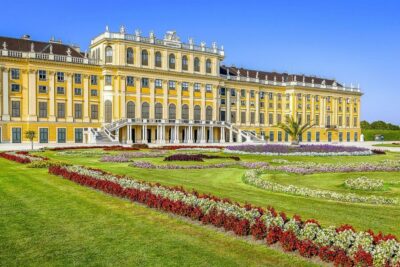
Schönbrunn Palace & Gardens Skip-the-Line Tour
Read our review →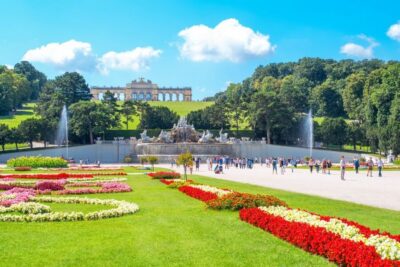
Skip-the-Line Schönbrunn Palace & Gardens Tour
Read our review →
Bus & Schönbrunn Palace Skip-the-Line Guided Tour
Read our review →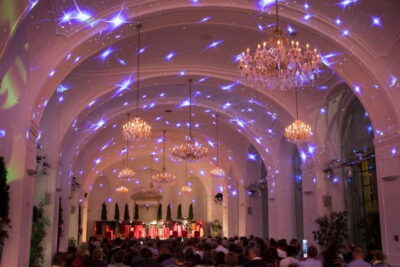
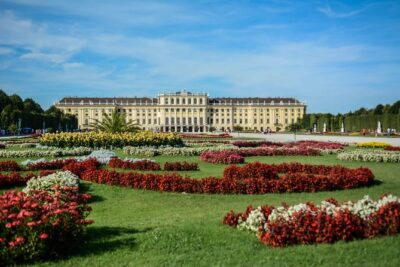
Skip the Line Schönbrunn Palace and Gardens Guided Tour
Read our review →
Schönbrunn Palace & Garden Skip-the-Line Guided Tour
Read our review →
Panorama Train Tickets to explore Schönbrunn Palace
Read our review →
Skip-the-Line Schönbrunn Palace and Gardens Tour
Read our review →Browse the lists this tour appears in