Reviewed · TICKETS
Mozarthaus Vienna Admission Ticket
Mozart’s Vienna apartment is the heart of this visit. From 1784 to 1787, he lived here during one of the most productive periods of his life, composing The Marriage of Figaro and three of his six Haydn Quartets. I especially like the chance to enter the only Mozart residence in Vienna that remains intact, and the audio guide lets you set your own pace.
I also like the way the museum links Mozart’s private life with his music, including his work with Lorenzo da Ponte on The Marriage of Figaro and Don Giovanni. The main caution is simple: this is not a fully restored apartment, and some visitors may find the limited furniture and number of copies disappointing.
Key points at a glance
- Mozart’s largest and grandest home: See the apartment he occupied from 1784 to 1787, the only one of his Vienna residences still intact.
- Three floors with different themes: Follow Mozart’s personal life, his musical circle, and his apartment in a clear top-to-bottom presentation.
- A self-guided visit: Use an audio guide in 13 adult languages or 8 children’s languages, and spend about one to two hours.
- Major works began here: Learn about the setting where Mozart wrote The Marriage of Figaro and three Haydn Quartets.
- Original material is limited: You may see original manuscripts and documents, but many displayed items are reproductions.
- Easy central location: The museum is near St. Stephen’s Church and public transportation, making it simple to add to a day in central Vienna.
Why Mozart’s Vienna years matter
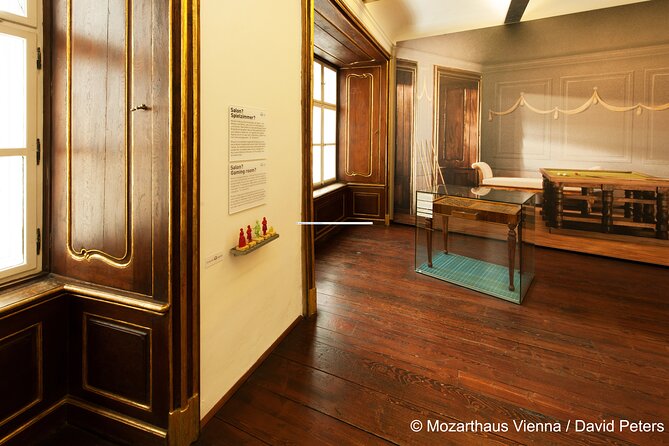
Mozart was born in Salzburg, but Vienna was where his career reached its highest point. The years from 1784 to 1787 were especially important. He had established himself in the imperial city, attracted wealthy patrons, worked with leading musicians, and produced music that remains central to the classical repertoire.
That context gives this museum more weight than a simple house visit. You are not only seeing an old address. You are looking at the place where Mozart wrote some of his best-known music while living as a successful, sought-after composer.
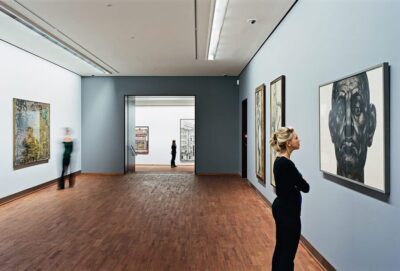
The apartment also helps correct the popular picture of Mozart as a purely carefree genius. The three floors address his personal and social situation, his professional relationships, and the practical world around his work. The result is a portrait of a working musician with colleagues, collaborators, clients, family concerns, and a demanding public life.
I would not book this admission simply to see period furniture. I would book it to connect a physical place with Mozart’s mature career.
A few more Vienna days worth a look
- Vienna: Vivaldi’s Four Seasons Concert in Karlskirche
★ 4.7 · 14,951 reviews - Vienna: Spanish Riding School Training
★ 3.9 · 9,281 reviews - Vienna: Skip-the-cashier-desk-line Giant Ferris Wheel Ride
★ 4.5 · 7,859 reviews
The first floor: Mozart’s apartment from 1784 to 1787
The first floor is the main reason to visit. This is the apartment Mozart and his family occupied from 1784 to 1787, and it was the largest, most elegant, and most expensive home he ever rented.
That detail says a great deal about his position in Vienna at the time. Mozart was not living in a cramped artist’s garret. He had reached a level of success that allowed him to occupy a prestigious home in the city center.
The rooms are important because of what happened there. Mozart composed The Marriage of Figaro in this apartment, along with three of the six string quartets dedicated to Joseph Haydn. When you move through the rooms, the connection between domestic space and musical achievement becomes the central theme.
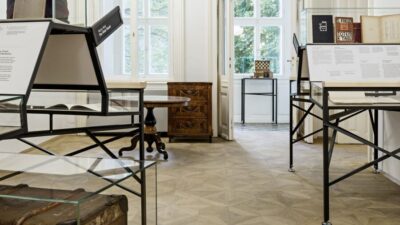
The museum does not present the apartment as a perfectly reconstructed interior. You should expect a historic space with limited furniture rather than a room-by-room recreation of Mozart’s household. That honesty is useful, but it can also affect your reaction. If you need richly furnished rooms to make the past feel real, the visit may seem spare.
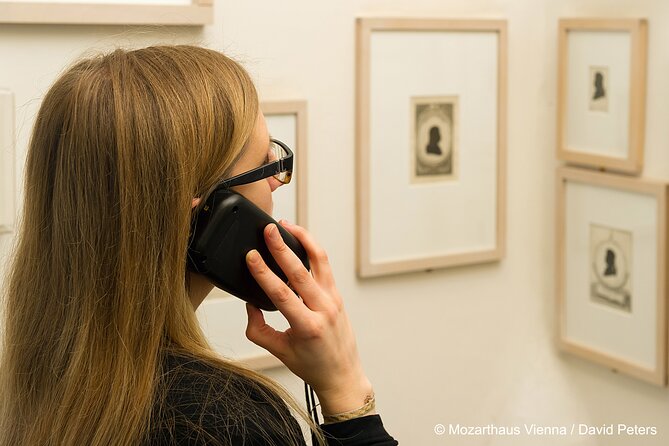
I like the freedom to linger. The audio guide means you do not have to move with a group, and you can pause when a room or piece of information catches your attention. One hour is enough for a brisk visit. Two hours gives you time to listen carefully and read the displays without rushing.
The second floor: colleagues, operas, and Lorenzo da Ponte
The second floor shifts from the apartment itself to Mozart’s musical world in Vienna. Here, the focus is on his main colleagues and his work with librettist Lorenzo da Ponte.
This is where the museum explains the partnership behind The Marriage of Figaro and Don Giovanni. A composer’s music can seem to appear by magic when you hear it in a concert hall. The displays help show the teamwork behind opera, where music, words, performers, patrons, and production all had to come together.
The material is especially useful if you know the operas mainly as famous titles. The museum gives you a chance to place them within Mozart’s Vienna years and to see how his professional relationships shaped the music.
Some displays include original manuscripts, including part of Mozart’s Requiem, while other material consists of copies or reproductions. That distinction matters. The museum is valuable for its setting and interpretation, but it is not a large collection of personal possessions.
The second floor may appeal most to listeners who already enjoy opera or chamber music. It also works for newcomers because the audio guide supplies the basic context. You do not need a specialist background to follow the story.
The third floor: Mozart’s personal and social world
The third floor looks at Mozart’s life in Vienna from a more personal and social angle. It begins with his arrival and situation in the city, then places his career within the society around him.
This section helps balance the focus on famous compositions. You see more of the person behind the scores, including the circles in which he worked and the social setting that supported his career.
The displays use documents, images, and modern presentation methods. Some visitors will appreciate the contemporary approach, especially the clips from major performances, including Metropolitan Opera material. Others may prefer a more traditional house museum with more original objects.
That contrast is worth knowing before you pay for admission. Mozarthaus Vienna is partly a historic site and partly an interpretive museum. It uses the apartment as its anchor, then builds a wider story across three floors.
I find that format helpful because it keeps the visit from becoming a quick glance at empty rooms. You receive information about Mozart’s life, work, and setting instead of only walking through an address.
A completely different way to spend a day here:
- Vienna: Schönbrunn Palace & Gardens Skip-the-Line Tour
★ 4.7 · 7,739 reviews - Vienna: Light of Creation Votive Church Immersive Light Show
★ 4.8 · 6,779 reviews - Vienna Spanish Riding School Guided Tour
★ 4.7 · 6,765 reviews - Vienna: Classical Concert in the World-Famous Musikverein
★ 4.6 · 6,673 reviews
What the audio guide adds
The included audio guide is one of the strongest practical features. It is available in 13 languages for adults and 8 languages for children, so you can follow the presentation without relying on written English alone.
Because the visit is self-guided, you control the rhythm. You can move quickly through familiar material or spend longer with Mozart’s apartment, the manuscripts, and the opera displays. That freedom is useful if one person in your party is a devoted Mozart fan and another is less familiar with classical music.
The guide also helps explain why the rooms matter. Without interpretation, a partly furnished apartment can be hard to read. With the audio commentary, you understand which period of Mozart’s career belongs to this address and why the residence is important.
You do not need to bring your own headphones, according to the practical information supplied for the visit. Still, allow time to collect and use the audio equipment before starting the three-floor route.
The audio guide does not turn the museum into a live guided tour. There is no named guide leading a group through the building. This is an independent museum visit, which suits people who like quiet and flexibility but may disappoint anyone looking for conversation or personal stories from a local guide.
Original manuscripts, copies, and the limits of the collection
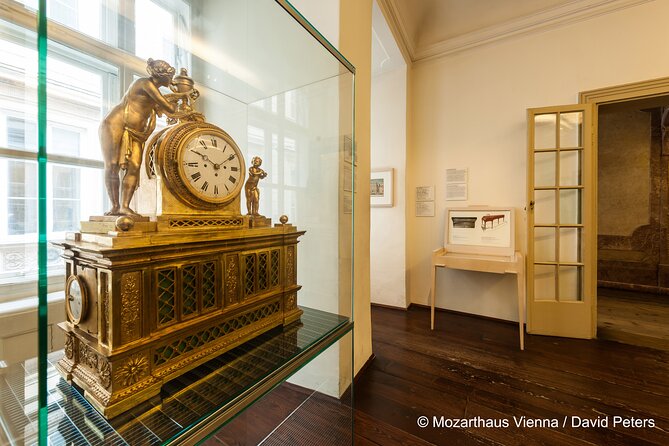
The museum’s greatest strength is the address itself. Its greatest limitation is that not everything on display is an original Mozart object.
You may see original manuscripts or parts of manuscripts, including material connected with The Requiem. Those pieces can be powerful, especially when paired with the rooms where Mozart lived and worked. At the same time, many documents are copies, and the apartment contains only a small amount of furniture from the period.
This is not unusual for a historic residence. Personal belongings disappear, buildings change, and museums must explain the past with a mixture of original objects, reproductions, images, and modern displays. Still, you should know what you are buying.
If you expect Mozart’s desk, clothing, instruments, and a complete furnished household, the admission may feel expensive. If you value the chance to enter his surviving Vienna apartment and understand the period through documents and interpretation, the visit offers better value.
The museum is also open about the difference between what survives and what has been reconstructed. I consider that a plus. You can judge the evidence for yourself rather than being given a polished but misleading recreation.
How much time should you allow?
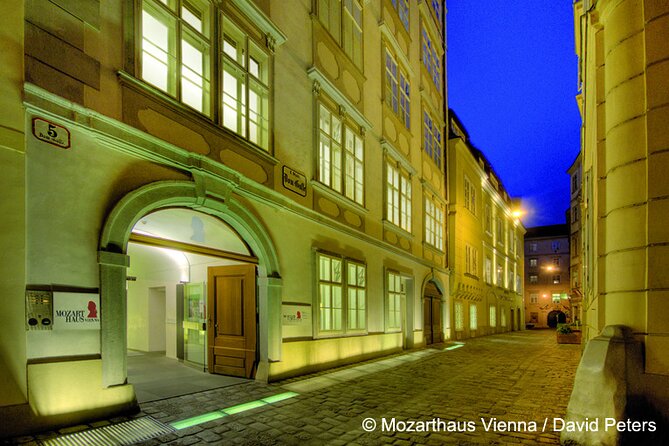
The official estimate is one to two hours. I would allow the full two hours if you care about the music or plan to listen to the audio guide in detail.
A fast visit can cover the main rooms in about an hour. That works if you are fitting Mozarthaus into a busy day near St. Stephen’s Church. A slower visit gives you time to compare the three floors, listen to the opera material, study the manuscripts, and pause in the apartment.
The museum’s presentation is arranged across three floors, so plan for some movement between sections. Most people can take part, and service animals are allowed. The experience is limited to a maximum of 10 travelers for the booking described, but the museum itself is a self-guided exhibition rather than a small private tour.
Opening hours are 10 a.m. to 7 p.m. daily for the stated 2024 through 2026 period. That broad schedule gives you useful flexibility. You can visit in the morning, stop in during an afternoon walk, or use it as an early evening cultural visit.
Location near St. Stephen’s Church
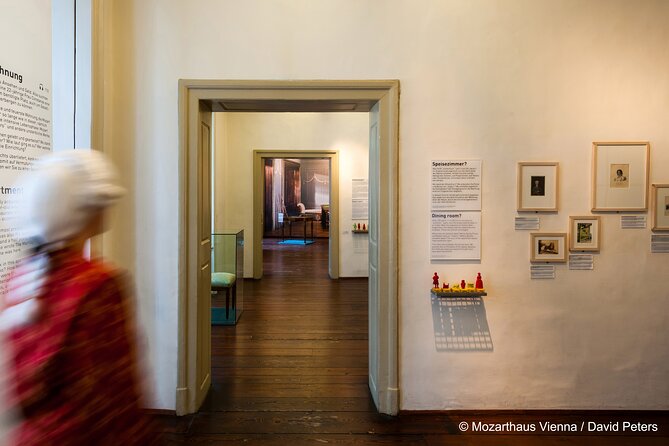
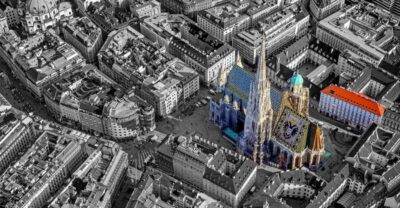
Mozarthaus Vienna is near St. Stephen’s Church, one of the easiest landmarks for orienting yourself in central Vienna. The area is close to public transportation, so you do not need a special transfer or hotel pickup.
The location makes the museum easy to combine with other central sights. You can visit the cathedral area, walk through the surrounding streets, and then spend one or two hours with Mozart. The setting also adds something to the experience because you are seeing the address within the city where he lived and worked, not in an isolated museum complex.
There is no food, drink, hotel pickup, or hotel drop-off included. That is not a problem for most people because the visit is short and central, but you should plan your own meal and transport.
One useful practical tip is to bring your booking confirmation on your phone. An admission issue has occasionally caused a short delay when an advance ticket was not recognized immediately at the entrance. It was resolved, but having the confirmation ready can save time.
Is $19.27 a fair price?
At about $19.27 per person, this is not the cheapest museum stop in Vienna. The value depends on what you want from a Mozart site.
The price makes sense if you care about Mozart, opera, or the history of music and will use the audio guide across all three floors. You are paying for access to his only surviving intact Vienna apartment, not just a general composer exhibition.
The value is weaker if you are looking for a large collection of original objects or a fully restored home. The museum has relatively few period furnishings, and much of the documentary material is reproduced. In that case, you may finish quickly and feel the admission is high for the amount of physical material.
I would compare the price with your own interest level. For a dedicated Mozart fan, the apartment and manuscript material can justify the fee. For someone with only a passing interest, the nearby location and one-hour option help, but the museum may not be a top priority.
Who will enjoy Mozarthaus Vienna most?
I would recommend this visit most strongly to:
- People who already listen to Mozart’s operas, quartets, or sacred music.
- Visitors who want a historic address tied directly to major compositions.
- Families who can use the children’s audio guide in one of the eight available languages.
- Independent sightseers who prefer to explore without a fixed group schedule.
- Anyone building a central Vienna walking day around St. Stephen’s Church.
It may be less satisfying for people who want a lively live guide, a large collection, or rooms filled with original furniture. The presentation is thoughtful and informative, but it is also museum-like and partly contemporary.
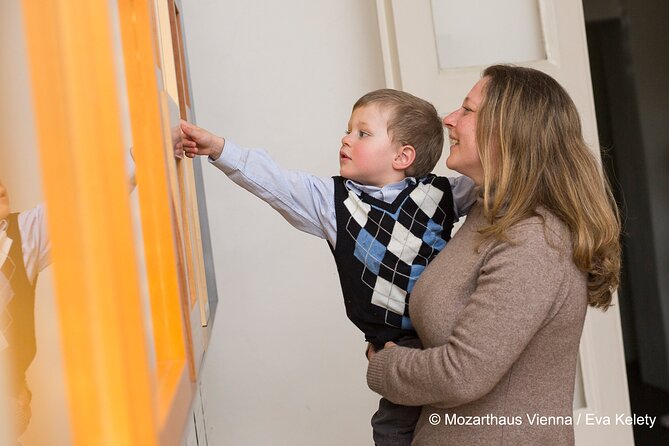
The visit can work for children if they enjoy music, visual displays, or short cultural stops. The child audio guide is a useful feature, though the best length will depend on attention span.
Booking, cancellation, and practical details
You receive confirmation at the time of booking, and the ticket is mobile, so you can keep it on your phone. The experience is offered in English, while the audio guide itself covers 13 adult languages and 8 children’s languages.
Free cancellation is available up to 24 hours before the scheduled start time for a full refund. Cancellations or changes made less than 24 hours before the start time are not accepted for a refund, and the cut-off follows local Vienna time.
The museum is open daily from 10 a.m. to 7 p.m. The visit is suitable for most people, and service animals are allowed. Since there is no hotel pickup, you should make your own way to the central location.
Should you book Mozarthaus Vienna?
Book it if you want to stand in Mozart’s only surviving intact Vienna apartment and connect that space with The Marriage of Figaro, the Haydn Quartets, and his work with Lorenzo da Ponte. The multilingual audio guide, flexible one to two-hour format, and central location make it easy to fit into a Vienna sightseeing day.
Skip it if your main goal is a fully furnished historic home or a large collection of Mozart’s personal belongings. The museum has original manuscripts and strong background material, but it also uses copies and contemporary displays.
For most music lovers, I think the visit earns its place on a Vienna itinerary. Go with the right expectation: you are entering an important surviving address and a carefully explained museum, not walking into a complete recreation of Mozart’s household.
FAQ
Where is Mozarthaus Vienna located?
Mozarthaus Vienna is in central Vienna, near St. Stephen’s Church and public transportation.
How much does admission cost?
The listed price is $19.27 per person.
How long does a visit take?
The expected visit lasts about one to two hours.
What are the opening hours?
Mozarthaus Vienna is open daily from 10 a.m. to 7 p.m. for the stated 2024 through 2026 period.
Is the ticket mobile?
Yes. The admission ticket is available as a mobile ticket.
Is an audio guide included?
Yes. An audio guide is included, with 13 language options for adults and 8 language options for children.
Is the audio guide available in English?
Yes. English is one of the languages offered for the audio guide and experience.
What did Mozart compose in this apartment?
Mozart wrote The Marriage of Figaro and three of his six Haydn Quartets while living in the apartment from 1784 to 1787.
Is the apartment fully furnished as it was in Mozart’s time?
No. The apartment is not presented as a complete period reconstruction, and the museum contains limited furniture from that era.
Can I cancel for a refund?
Yes. You can cancel at least 24 hours before the experience start time for a full refund. Changes or cancellations made less than 24 hours before the start time are not refunded.
Is hotel transportation included?
No. Hotel pickup and drop-off are not included.
Are service animals allowed?
Yes. Service animals are allowed.
Just added around Vienna
- Vienna: UNESCO Schönbrunn Palace Guided Tour with Entry★ 4.5 · 94 reviews
- World War II History Vienna Old Town Private Walking Tour★ 4.8 · 9 reviews
- Vienna: Winery and Wine Tasting Tour with a Wine Expert★ 5.0 · 5 reviews
- Vienna: Wine Tasting E-Bike Tour★ 4.9 · 46 reviews
- Vienna: Wine Tasting at Schönbrunn Palace★ 4.3 · 71 reviews
- Vienna: Wine Tasting Tour★ 4.8 · 61 reviews
- Vienna: Wachau Valley Private Kayak and Wine Tour★ 5.0 · 3 reviews
- Vienna: Wiener Schnitzel and Strudel Cooking Class★ 4.9 · 126 reviews
Tickets, compared.
Classic Ensemble Vienna in St. Peter’s Church Ticket
Read our review →
Vienna Kunsthistorisches Museum Day Admission Ticket
Read our review →
Tickets for Mozarthaus Vienna with Audio Guide
Read our review →
Skip-the-Line Entrance Ticket to the Danube Tower
Read our review →