
Reviewed · CYCLING TOURS
Vienna: Guided E-Bike Tour
Vienna’s grand boulevards and imperial buildings make a lot more sense from an e-bike. You can cover the Opera, Hofburg, Parliament, Rathaus, Stephansplatz, and Belvedere in one compact ride without spending your morning changing trains or walking long stretches between sights. The small group, limited to six people, is a real strength, and guides such as Winfried and Tamour have earned praise for clear explanations and useful suggestions.
I especially like the chance to keep the bike after the guided portion. You can head toward the Prater, Donauinsel, or the vineyards around Vienna, and past riders have even taken the bikes to Grinzing for food and a beer. The main caution is responsibility: you are liable for theft, damage, and breaking Austrian traffic rules, and this activity is not suitable for people with mobility impairments.
Key points to know before you ride
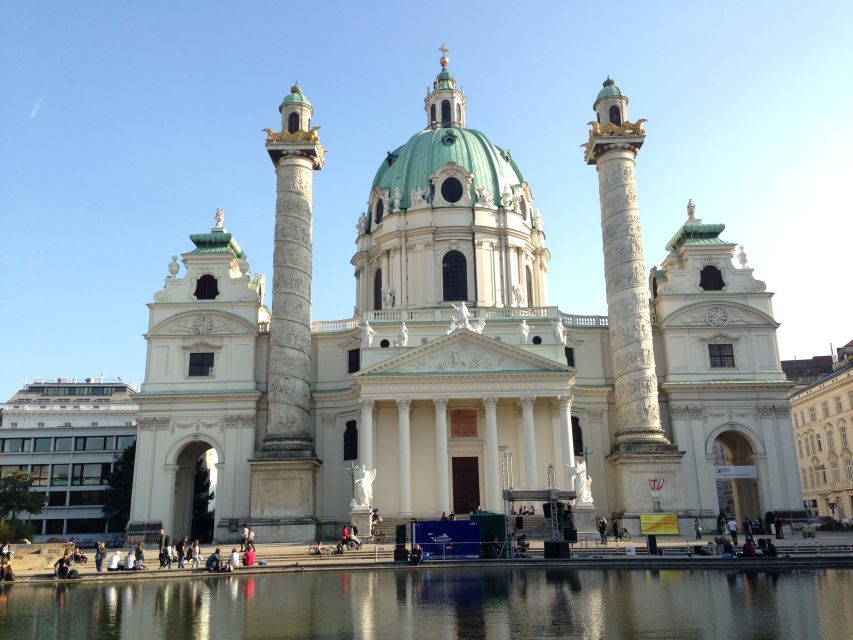
- A compact route through central Vienna: Start at Karlsplatz and pass the Opera, Hofburg, Parliament, Rathaus, Stephansplatz, Stadtpark, and Belvedere.
- A genuinely small group: The tour is limited to six people, making it easier to ask questions and keep a comfortable pace.
- A useful guide-led introduction: Winfried and Tamour are among the guides praised for explaining Vienna’s past and offering ideas for the rest of your visit.
- Extra riding time may be available: The e-bike can be used for the day, with possible drop-off at Karlsplatz or near Schönbrunn.
- Good value for active sightseers: At $49 per person, the tour combines a guided ride with bike access beyond the formal route.
- Plan for city cycling: Bring comfortable shoes, sunglasses, and a passport or ID card, and take responsibility for the bike seriously.
Why an e-bike works well in central Vienna
Vienna is easy to walk in, but its key sights are spread across a wide central area. Karlsplatz, the Hofburg, Parliament, Rathaus, Stephansplatz, and Belvedere are not impossibly far apart, yet walking between all of them takes time and energy. Public transport works well, but it can interrupt the visual flow of a first look at the city.
An e-bike gives you another option. You can move from one major building to the next quickly, while still seeing the streets between them. The electric assistance matters most when you want to keep your attention on the city instead of worrying about pace or tired legs.
This is not a countryside bike outing. It is a city sightseeing ride, built around Vienna’s grand architecture and famous addresses. You will stop at major landmarks rather than spending long stretches on quiet cycle paths. One rider particularly valued the city’s cycle lanes and reported hardly ever needing to ride on a road, though you should still expect normal urban traffic and follow Austrian rules carefully.
The group size is limited to six. That changes the feel of the tour. A guide can respond to your questions, adjust the pace, and notice if you need help with the bike. This is especially useful if you are new to e-bikes. A past rider described Winfried as setting the right pace for two people in their fifties who had never used an e-bike before.
A few more Vienna days worth a look
- Vienna: Guided E-Bike Tour
★ 4.8 · 86 reviews - Vienna: Wine Tasting E-Bike Tour
★ 4.9 · 46 reviews - E-Bike Wine Culture Tour
★ 5.0 · 28 reviews
Starting at Karlsplatz, Vienna’s grand opening scene
The meeting point is near Karlsplatz, about a two-minute walk from Karlskirche toward Argentinierstrasse. You can also use the U1 underground line to Taubstummengasse, which is about a one-minute walk from Argentinierstrasse 28.
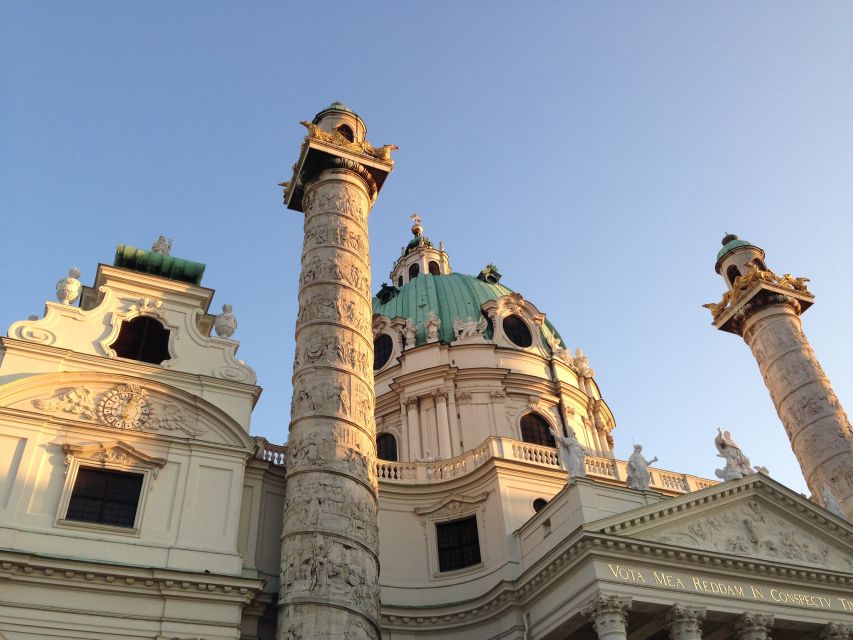
Karlsplatz is a strong place to begin. Karlskirche gives you an immediate taste of Vienna’s imperial scale, while the surrounding streets lead naturally toward the Ringstrasse and the central sights. Starting here also makes the route feel like a loop rather than a one-way transfer. You return to the same area at the end.
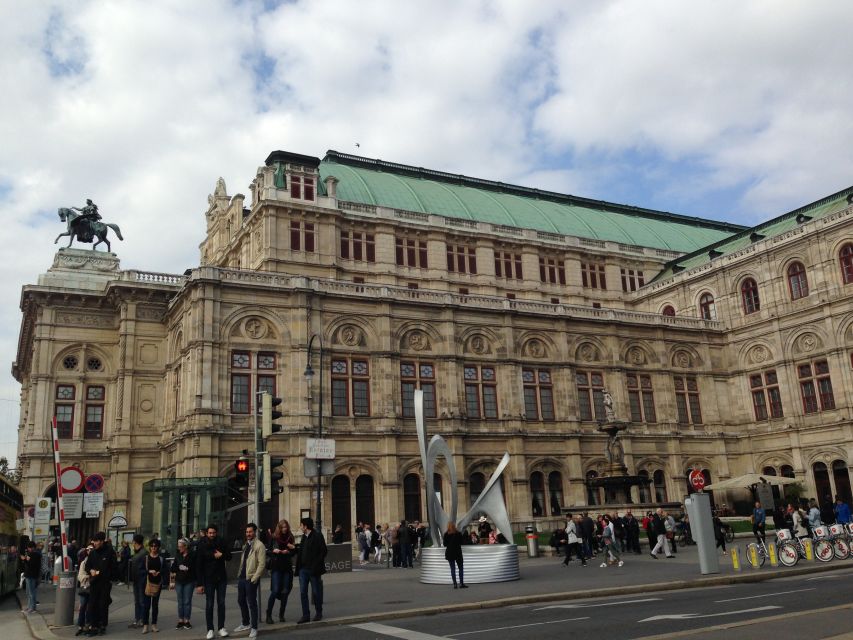
The first part of the ride takes you past the Musikvereinshaus, one of Vienna’s key concert halls, then toward the Opera House. These are places where the city’s musical identity and monumental architecture meet. The tour does not include admission to attractions, so think of these stops as guided exterior visits and photo opportunities rather than indoor tours.
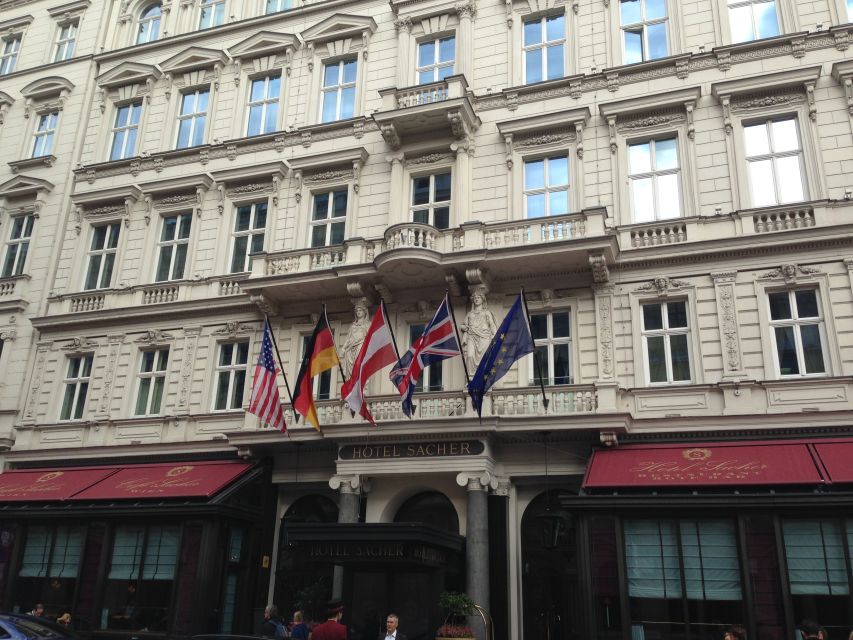
You will also pass Hotel Sacher and the Albertina. Hotel Sacher is closely linked with Vienna’s famous chocolate cake, while the Albertina is one of the city’s best-known art institutions. Seeing them together gives you a quick sense of how Vienna mixes high culture, old cafés, luxury, and daily city life within a few blocks.
From the Hofburg to Heldenplatz
The route then reaches the Hofburg, the former imperial center of Vienna. This is one of the most important parts of the ride because the buildings here help explain the scale and reach of the Habsburg court.
Nearby Heldenplatz opens the view. The square is framed by major museums and monumental buildings, and it gives you a better sense of Vienna as a ceremonial capital. This is a place where your guide’s explanation adds real value. A quick photograph shows the architecture, but a short account of what happened here helps you understand why the square matters.
You should not expect a long museum visit during this tour. The appeal is the connected sequence of landmarks. You get a broad first look, then you can decide which interiors deserve more of your own time later.
The guide can also ask what parts of Vienna’s past interest you most. One rider appreciated that Winfried adjusted the explanation around specific interests instead of delivering a fixed speech. That is the kind of small-group advantage you should look for here.
Parliament, Rathaus, and the Ringstrasse
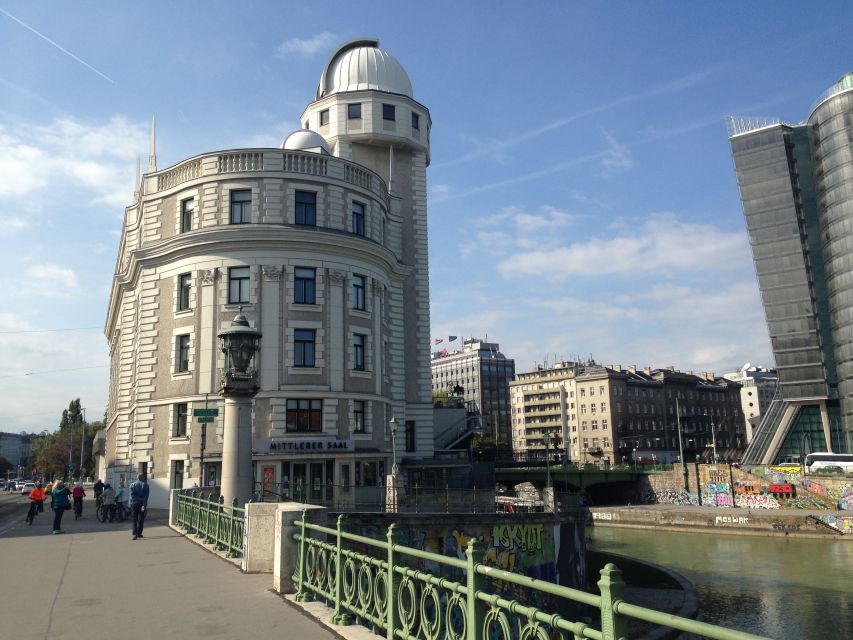
From Heldenplatz, the ride continues to the Parliament House and Rathaus. These buildings sit along the Ringstrasse, the broad ceremonial road that replaced Vienna’s old fortifications in the nineteenth century.
Parliament is notable for its grand classical design, while Rathaus has the ornate Gothic look often associated with Vienna’s public buildings. Together they show two different sides of the city’s civic architecture. You also pass the Burgtheater, one of the major German-language theaters, and then the Stock Exchange.
This stretch is especially good for understanding Vienna’s urban planning. You are not simply checking off isolated buildings. You are riding through a planned ring of public institutions, theaters, government offices, and museums. An e-bike helps here because the stops come one after another, with less walking between them.
The exact timing can vary. The advertised guided portion is 75 minutes, while the activity is listed as 90 minutes overall. One guide extended the ride to nearly two hours because the group was comfortable and interested. Another account described a longer outing of about three hours. Treat the schedule as a guide rather than a guarantee, but do not assume every departure will run long.
More bike days around Vienna:
- Classic Vienna: 3-Hour Guided Bike Tour
★ 4.7 · 1,846 reviews - Wachau Valley Wine Tasting Bike Tour from Vienna
★ 5.0 · 829 reviews - Vienna City Bike Tour
★ 4.5 · 599 reviews - Vienna: City Highlights Guided Bike Tour
★ 4.6 · 496 reviews
Stephansplatz and the heart of old Vienna
Stephansplatz is the tour’s central urban moment. St. Stephen’s Cathedral dominates the square with its patterned roof and tall Gothic tower, and the surrounding streets form the historic core of Vienna.
This is where the contrast with the Ringstrasse becomes clear. Earlier, you see grand nineteenth-century institutions arranged along broad avenues. Here, the city feels older and more tightly packed. You will have a chance to see the cathedral from outside, but admission is not included, so plan a separate visit if you want to go inside.
For a first visit, this stop is valuable because it gives you a strong sense of orientation. From Stephansplatz, you can return later to explore the pedestrian streets, cafés, shops, and church interior at your own pace. The guided ride keeps moving, so you should not count on extended free time at the square.
Stadtpark, Schwarzenbergplatz, and the Belvedere
The route continues toward Stadtpark by Schwarzenbergplatz and then the Belvedere. This part gives the ride a change of rhythm after the dense center.
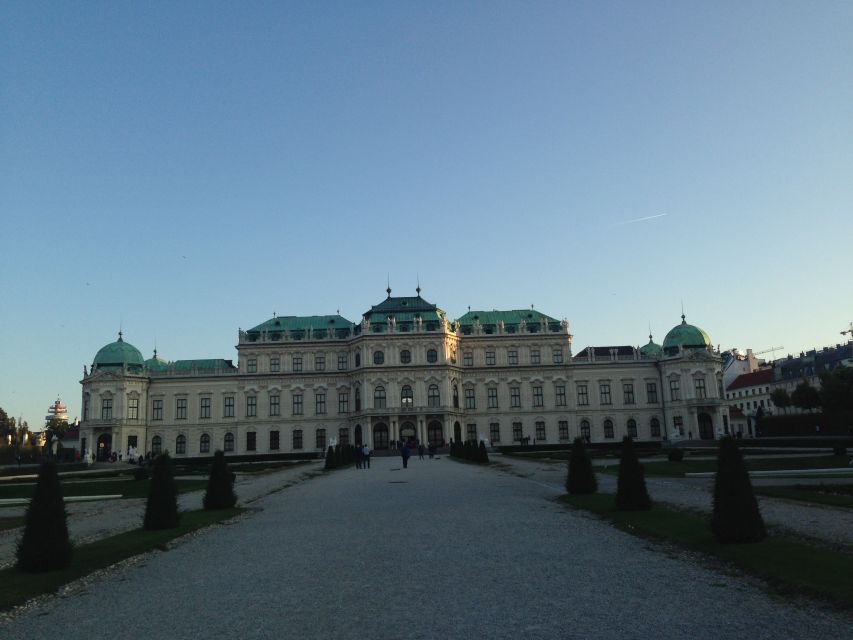
Stadtpark offers a more open setting and is associated with some of Vienna’s best-known monuments. Schwarzenbergplatz is another grand urban space, with broad views and formal architecture. The Belvedere then adds one of Vienna’s most recognizable palace settings.
The Belvedere is also an art museum, and admission is not included. If you want to see its collections, you will need to arrange a separate visit. The bike tour is useful for showing you where the complex sits in relation to the center and for letting you see the exterior without spending the entire day there.
The return to Karlsplatz completes a practical loop. You finish near the starting point, which makes it easy to continue sightseeing on foot or use the e-bike for additional riding if that option is available for your booking.
The best extra use of the bike after the tour
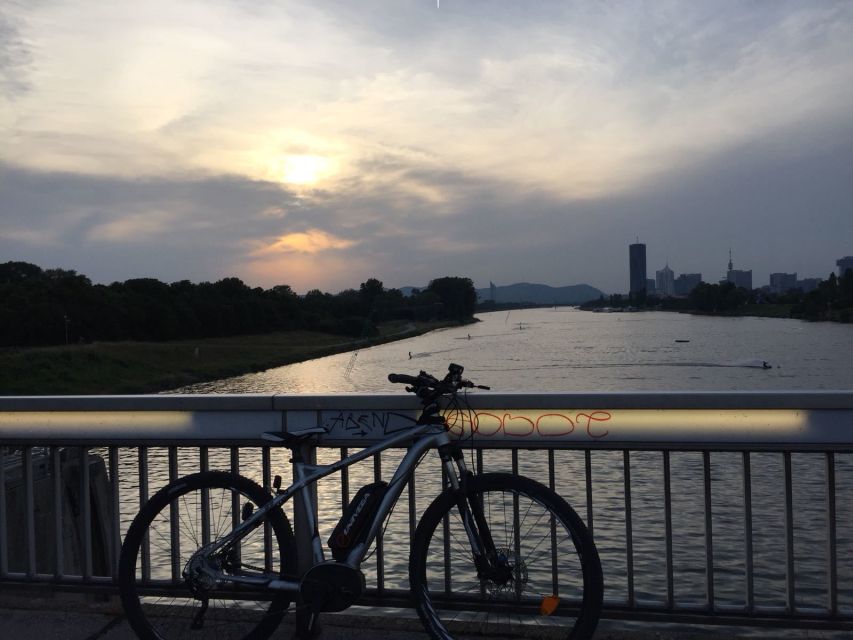
The possibility of keeping the e-bike for the day is one of the strongest reasons to consider this experience. A short guided ride can show you the center, but the extra hours let you choose your own direction.
The operator identifies Donauinsel, the Prater, and the vineyards around Vienna as possible destinations reachable in about 20 minutes. These places offer a different side of the city from the imperial center.
The Prater is the obvious choice if you want a famous recreational area. Donauinsel gives you a long open route along the Danube. The vineyards offer a hillier outing and a chance to see the edges of Vienna beyond its formal center.
Past riders used the extra time in different ways. One rode along the canal and around town, using only a small part of the battery. Another went to Grinzing, stopping at Figls for beer and food. One person also highlighted the Danube graffiti path. These examples show why the all-day option can turn a short sightseeing activity into a fuller day outdoors.
Confirm the return arrangement before setting off. The bike may be returned at Karlsplatz or at the company headquarters near Schönbrunn, and hotel pickup may be possible. Those details matter if you plan to ride far from the center.
Guides, bikes, and the pace of the ride
The experience is offered in English or German. Guide quality matters here because the route passes many famous buildings quickly. Winfried is praised for being friendly, flexible, and good at answering questions. Tamour is also described as a strong source of information during a longer city ride.
The bikes have received positive comments for being in good condition and fully charged. Riders also liked the electric boost, especially when moving between distant sights or riding for several extra hours. Still, an e-bike is not an automatic pass on city safety. You are responsible for the bike, including theft, damage, and negligence of Austrian traffic rules.
Wear comfortable shoes even though the bike does much of the work. Bring sunglasses and a passport or ID card. The activity is not suitable for people with mobility impairments, and the operator does not include food, drinks, or attraction admissions.
Is $49 a fair price?
At $49 per person, the value is good if you want both a guided introduction and access to a bike beyond the formal route. A standard 75-minute sightseeing ride would already give you a quick orientation, but the optional full-day use changes the calculation.
You are paying for a live guide, a small group, an e-bike, and the ability to see a large number of central sights without organizing the route yourself. If you use the bike only for the guided circuit and return it immediately, the value is still reasonable for a first look at Vienna. If you continue to the Prater, Donauinsel, canal, or vineyards, it becomes a stronger deal.
The main limitation is that the tour does not include entry to the Opera, Albertina, Hofburg museums, Belvedere, or other attractions. If your priority is indoor art and palace visits, you may get more from a walking tour paired with museum tickets. If your priority is orientation, architecture, and efficient movement, the e-bike earns its price.
Free cancellation up to 24 hours before departure and reserve-now, pay-later booking add flexibility. Starting times vary, so check availability for your date.
Who should book this Vienna e-bike tour?
I would choose this for a first visit, a short stop in Vienna, or any day when you want to cover the main central sights before deciding where to return. It suits active adults, couples, friends, and small families with riders who can manage city cycling.
It is also a good fit if you like asking questions. The group of six is small enough for a guide to tailor the conversation, and the route gives you many useful follow-up ideas.
I would think twice if you dislike bikes, want long indoor visits, or need a fully accessible activity. The schedule can also be less predictable than a strict 75-minute tour, since some guides spend extra time when the group is engaged.
FAQ
How long does the Vienna e-bike tour last?
The activity is listed as 90 minutes, with a guided portion of 75 minutes. Actual timing can vary, and some rides may last longer if the group and guide agree.
What sights does the route include?
The route starts at Karlsplatz and passes the Musikvereinshaus, Opera House, Hotel Sacher, Albertina, Hofburg, Heldenplatz, Parliament, Rathaus, Burgtheater, Stock Exchange, Stephansplatz, Stadtpark, Schwarzenbergplatz, and Belvedere before returning to Karlsplatz.
Is the e-bike available after the guided tour?
The provided information says the e-bike is available for the day, subject to the operator’s arrangements. Possible destinations include Donauinsel, the Prater, and the vineyards around Vienna.
Where do I meet the guide?
The meeting point is at Argentinierstrasse 28, about a two-minute walk from Karlskirche. Taubstummengasse on the U1 line is about a one-minute walk away.
What languages are available?
The live tour guide is available in English or German.
What does the price include?
The $49 price includes the e-bike and guided tour. Attraction admissions, food, and drinks are not included.
Should you book it?
Book this tour if you want a fast, friendly introduction to Vienna’s central sights and like the idea of continuing on two wheels afterward. The small group, strong guides, charged bikes, and broad route make it especially useful early in a Vienna stay.
Skip it if you mainly want museum interiors, cannot comfortably ride an e-bike, or prefer a fixed, tightly timed itinerary. For most active first-time visitors, though, this is a practical way to see the city’s grand center, get your bearings, and still have time for your own Vienna adventure afterward.
Just added around Vienna
- Vienna: UNESCO Schönbrunn Palace Guided Tour with Entry★ 4.5 · 94 reviews
- World War II History Vienna Old Town Private Walking Tour★ 4.8 · 9 reviews
- Vienna: Winery and Wine Tasting Tour with a Wine Expert★ 5.0 · 5 reviews
- Vienna: Wine Tasting E-Bike Tour★ 4.9 · 46 reviews
- Vienna: Wine Tasting at Schönbrunn Palace★ 4.3 · 71 reviews
- Vienna: Wine Tasting Tour★ 4.8 · 61 reviews
- Vienna: Wachau Valley Private Kayak and Wine Tour★ 5.0 · 3 reviews
- Vienna: Wiener Schnitzel and Strudel Cooking Class★ 4.9 · 126 reviews
Cycling Tours, compared.
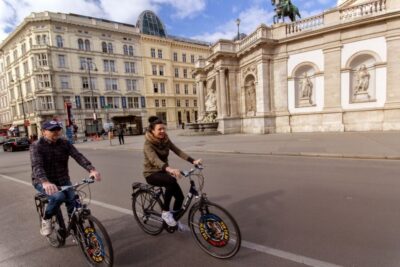
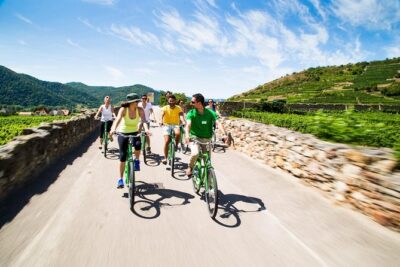
Wachau Valley Wine Tasting Bike Tour from Vienna
Read our review →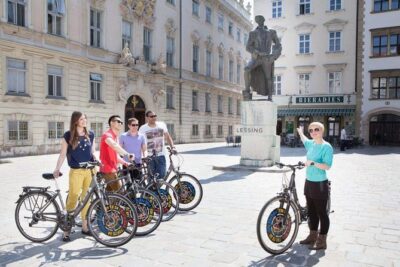
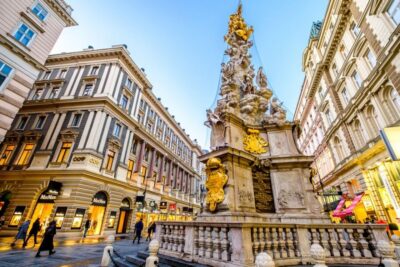
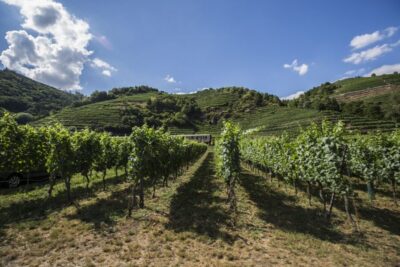
Grape Grazing: Wachau Valley Winery Biking Tour
Read our review →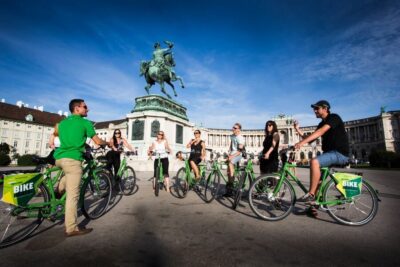
Vienna by Bike 3-Hour All-In-One City Bike Tour in English
Read our review →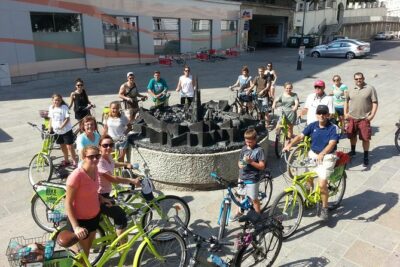
Browse the lists this tour appears in