
Reviewed · HOP-ON HOP-OFF TOURS
Big Bus Vienna Hop-On Hop-Off Sightseeing Tour
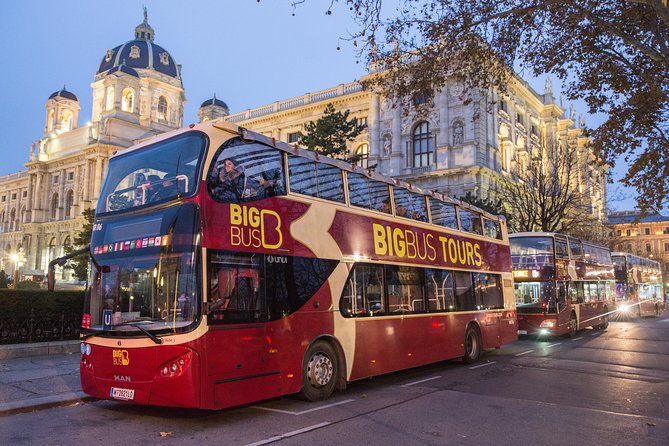
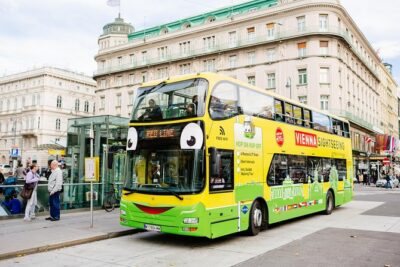
Vienna’s Big Bus is most useful as a city orientation ride. In roughly 1 hour 50 minutes for a full loop, you can see imperial palaces, grand museums, the Danube and the Prater without wearing out your shoes. I like the freedom to hop off near the Hofburg or Schönbrunn, and I like the covered upper deck, which helps on cold or rainy days.
The two routes also give you a practical way to connect central Vienna with sights farther out. The catch is traffic and one-way routing. A loop that looks short on paper can take two or even three hours, and you may need to ride farther than expected before reaching the stop you want.
Key points to know before boarding
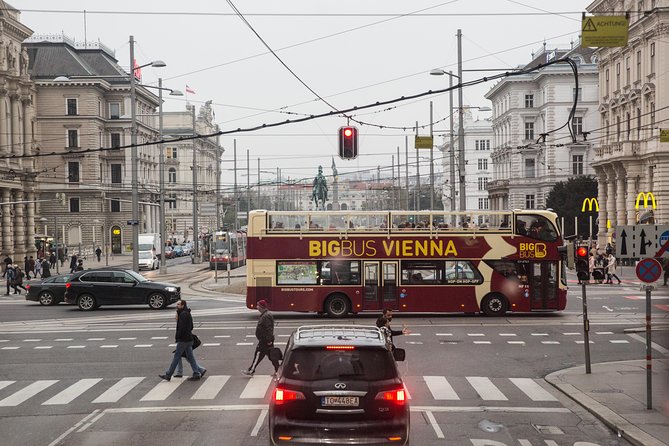
- Two routes cover different sides of Vienna: the central route reaches the Hofburg, Prater, Danube and Hundertwasser House, while the second route heads toward Schönbrunn and Belvedere.
- The bus is useful for tired legs: you can see major sights without long walks, making it a good choice for older visitors or anyone with mobility limits.
- The 90-minute walking tour leaves daily at 11:30 a.m.: it starts at Stop 1, Opera, and is included with selected tickets.
- A 48-hour ticket gives you breathing room: selected 48-hour tickets also include a Viennese sausage plate at Zum Kaiser near the Opera stop.
- Traffic affects the timetable: use the Big Bus app’s stop finder and live tracking rather than relying only on printed times.
- The river cruise is not guaranteed to run: heavy rain, high water or other conditions can change departures.
What the Vienna Big Bus experience is really like
The tour is designed less as a formal guided excursion and more as a moving introduction to Vienna. You board with a mobile ticket, take an audio headset, and choose between remaining on board or getting off at the sights that interest you.
The full ride is advertised at about 1 hour 50 minutes, but that is not a promise of a fast trip. Vienna has many traffic lights, busy roads and sections affected by roadworks. If you have only a few hours in the city, plan conservatively.
I would use the bus in two ways. First, take one partial or full ride early in your visit to understand the layout. Then use the ticket as transport between sights, rather than treating it as a single sightseeing ride. That makes the 24-hour option more useful.
The 48-hour ticket is better if you want to visit several museums and palaces at a calm pace. It also gives you another chance to ride if traffic, weather or a closed attraction disrupts your first day.
More hop-on hop-off routes in Vienna:
- Vienna: Hop-On Hop-Off Sightseeing Bus Tour in 19 Languages
★ 4.2 · 4,518 reviews - Vienna: Big Bus Hop-On, Hop-Off Tour by Open-Top Bus
★ 4.4 · 3,529 reviews - Vienna Hop On Hop Off City Tour
★ 3.5 · 884 reviews
Route one: from the Opera to the Danube
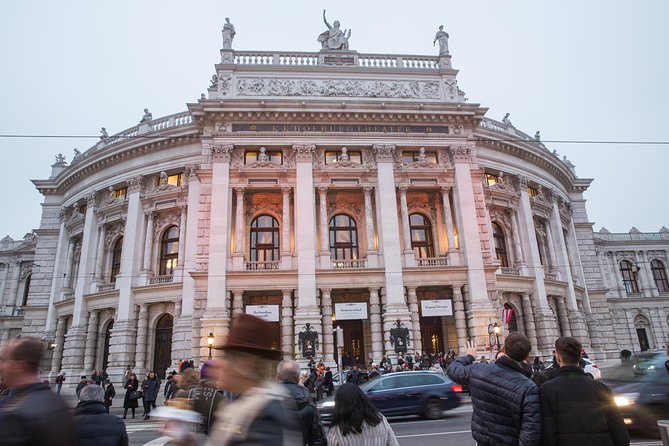
The central route begins at the Vienna State Opera, listed as Opera or Walfischgasse. This is a sensible starting point because the Opera sits beside the historic center and close to the Albertina, Kärntner Straße and Hofburg area.
From here, the bus reaches the House of Music, an interactive music museum. Even if you do not enter, the stop puts you near Vienna’s strong musical identity and the compact old-town streets around it.
The next stop, Babenbergerstraße 9, serves the MuseumsQuartier and Mariahilferstraße. The MuseumsQuartier combines major museums, courtyards and places to sit, while Mariahilferstraße is one of the city’s main shopping streets. This is a useful stop if you want museums on one side and a livelier commercial street on the other.
At Burgring 7, you are near the Museums and Hofburg stop. This is one of the most valuable places to get off. The Hofburg was the former residence of the Habsburg dynasty, and the surrounding area brings together the Imperial Apartments, museums, formal squares and grand ceremonial buildings.
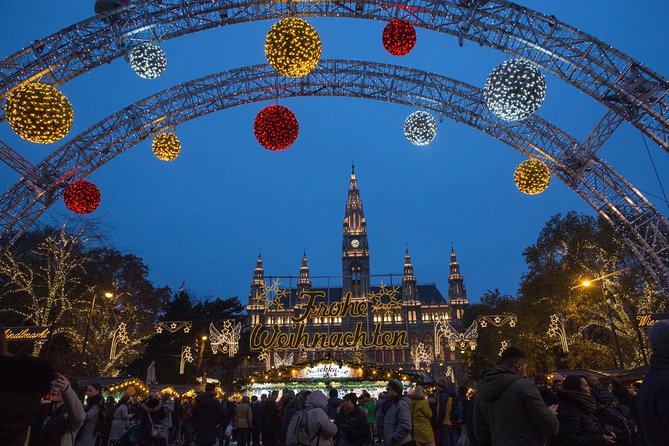
The bus then heads to Vienna City Hall. Rathaus is an impressive Gothic-style building, and the stop also puts you near the Austrian Parliament, the Burgtheater and the Ringstrasse. Seasonal events and markets can make this area especially useful, but allow extra time if road closures affect the route.
The Votive Church stop brings you to one of Vienna’s most striking church exteriors. The tall twin towers are easy to spot, and the nearby university quarter gives this part of the ride a different feel from the palace district.
At Schwedenplatz, the tour reaches the Danube Canal. This is one of the better stops for a meal, a canal-side walk or a connection toward a river cruise. Check the day’s cruise details before getting off. Departures can change with heavy rain, high water or other conditions.
Prater, the Danube and modern Vienna
Stop 8 serves the Viennese Giant Ferris Wheel at the Prater. The wheel is one of Vienna’s most recognizable sights, while the Prater gives you a change from imperial buildings and museums. If you want to ride the wheel, allow time beyond the bus schedule.
The next stops serve City Cruises Vienna and DDSG Blue Danube piers. These are practical points for anyone adding a river cruise to the day, though the bus ticket does not automatically guarantee that a cruise will be operating. Ask Big Bus staff for current departure information before arranging your schedule around it.
The Danube Tower stop takes you toward Donauturm, a tall observation tower in the city’s larger Danube-side area. This section is less central and less compact than the Hofburg district, so the bus is particularly useful here. You avoid a long cross-city trip by public transport or on foot.
Alte Donau, or Old Danube, offers a different view of Vienna’s waterways. It is separate in character from the canal and central riverfront, and it makes the blue route worthwhile for anyone who wants to see more than the old center.
The Vienna International Centre, Uno City and DC Tower show modern Vienna rather than imperial Vienna. The Reichsbrücke stop reaches Danube Island, a long recreation area between waterways. These stops are not essential for a short first visit, but they help explain the scale and variety of the city.
The final central-route stop is Hundertwasser House on Kegelgasse. Its irregular lines, bright colors and playful surfaces make it one of the easiest places to recognize from the bus. Get off if you want photographs and a closer look at the surrounding buildings.
The route returns through Stadtpark, Vienna’s City Park. This is a pleasant place to leave the bus for a short walk, with paths, greenery and the well-known gilded Strauss monument nearby. From there, the bus heads back toward the Opera.
Route two: Schönbrunn and the Belvedere
The second route begins at Albertina near the Opera. Albertina is known for its art collection and central position above the historic city center. It is also a useful starting point if your day begins around the Opera, Kärntner Straße or Hofburg.
The route again reaches Babenbergerstraße and the MuseumsQuartier, then continues to Hofburg. This overlap is helpful if you are changing routes, but it also means you should check the direction carefully before boarding.
The Mariahilfer Gürtel stop serves Mariahilfer Straße and the Ibis Hotel area. The next stop at Mariahilfer Straße 212 is near the Museum of Science and Technology Vienna. That museum can be a good choice for families or anyone who wants a break from art and palace interiors.
The major stop is Schönbrunn Palace and Zoo. Schönbrunn was the Habsburg summer residence and is one of Vienna’s biggest sights. The palace grounds and zoo require real time, so do not plan a quick hop off and hop back on if you intend to visit properly.
This is where the hop-on hop-off format can save effort. You can ride out from the center, leave the bus at Schönbrunn, visit the palace, and continue later. Still, keep an eye on the final bus times. A delayed ride can matter more here because Schönbrunn sits away from the old center.
The route then reaches Vienna’s Main Train Station. This stop is mainly useful as a transport link or as a way to connect the sightseeing route with another part of your trip.
Next comes the Upper Belvedere. Its palace setting and art collection make it one of Vienna’s key stops, especially for anyone interested in Gustav Klimt and Austrian art. The Lower Belvedere follows on the route and gives you access to another part of the palace complex.
If your main goals are Schönbrunn and Belvedere, the second route is the one to prioritize. If you have only a short stay, do not assume you can comfortably fit both palaces, the Hofburg and several museums into one loop. Vienna’s traffic makes ambitious plans fragile.
A few more Vienna days worth a look
- Vienna: Vivaldi’s Four Seasons Concert in Karlskirche
★ 4.7 · 14,951 reviews - Vienna: Spanish Riding School Training
★ 3.9 · 9,281 reviews - Vienna: Skip-the-cashier-desk-line Giant Ferris Wheel Ride
★ 4.5 · 7,859 reviews - Vienna: Schönbrunn Palace & Gardens Skip-the-Line Tour
★ 4.7 · 7,739 reviews
Audio commentary, walking tour and staff help
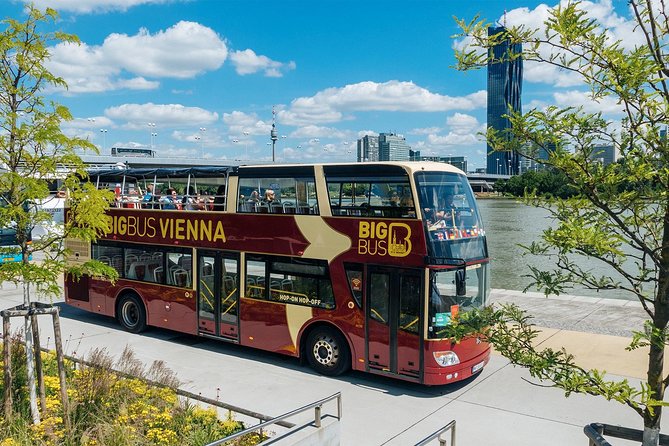
The onboard commentary is available in eight languages, with free WiFi and a VOX digital walking tour download. The English booking option does not mean the audio is limited to English, so check the headset choices when you board.
The commentary gives useful background as the bus passes buildings, but its quality can depend on the audio equipment and the recording itself. Some sections may feel sparse, with music or pauses where you expected more detail. I would treat it as an introduction, not a replacement for a museum guide or a detailed history tour.
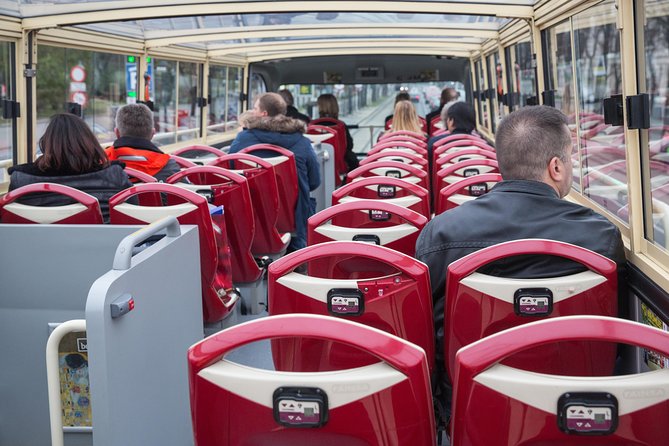
Headsets have occasionally caused trouble, including sound working in only one ear. Test yours early and ask staff for another pair if needed. The bus itself is generally a comfortable way to see the city, and the upper deck can be covered in cold weather while still allowing views through the roof and sides.
Selected tickets include a live guided city walking tour. The English tour starts daily at 11:30 a.m. from Stop 1 at the Opera and lasts 90 minutes. This is a strong addition because walking gives you the close-up details a bus cannot provide.
The walking tour is especially useful around the historic center, where lanes, courtyards and palace façades are close together. If you choose a ticket with this feature, build your morning around the 11:30 start instead of treating it as an afterthought.
Price and the question of value
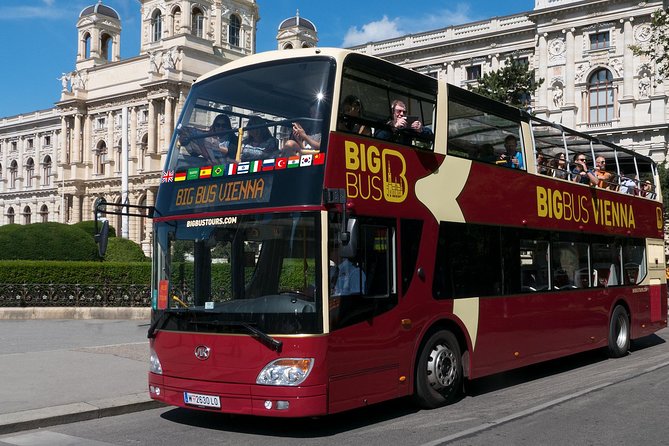
At about $36.67 per person, the tour is not the cheapest way to move around Vienna. The regular city transit system can cost less, especially if you are comfortable reading maps and changing lines.
The Big Bus earns its price when you use it for sightseeing as well as transport. A 24-hour ticket can make sense if you want a broad first look, need to reduce walking, or plan stops at sights spread across the city. A 48-hour ticket is easier to justify if you want Schönbrunn, Belvedere, the Hofburg and the Danube area without rushing.
The selected 48-hour package adds a Viennese sausage plate at Zum Kaiser, a one-minute walk from the Opera stop. That is a small benefit, but it gives you a simple local meal near the main starting point.
You should not buy the ticket expecting every minute to be efficient. The one-way loops can force you to remain on the bus for many stops before reaching the correct place. If you are starting at Stop 7 but want an attraction near Stop 4, you may need to ride around much of the loop.
Who will get the most from this tour
I would recommend the bus to first-time visitors who want a broad view before choosing where to spend their limited time. It is also a practical choice for older people, families managing tired legs, and anyone who wants to see Vienna without walking between every major sight.
It works well for a longer stay, too. With 48 hours, you can use one day for the historic center and another for Schönbrunn, Belvedere or the Danube route.
I would be more cautious if you have only one free afternoon and a fixed list of indoor sights. Traffic, long loops and waiting times can eat into that window. In that case, walking and public transport may get you between central attractions faster.
The bus is also weather-friendly in a useful way. The upper deck may be covered in winter or rain, so you can still see out without sitting fully exposed. On a bright day, the upper level gives better views, but seats can fill up, especially at busy stops.
Small details that make the day easier

Use the app’s Find a Stop feature before setting off. Stops can be easy to miss, and the app may provide photos or map help. Live tracking is also worth checking because printed schedules cannot account for heavy traffic.
Start early if you want to combine the bus with the walking tour. The English walk leaves at 11:30 a.m., and the 90-minute duration means your day will already have a fixed block before you continue.
Ask a Big Bus staff member about the river cruise before walking to a pier. Water conditions can change departures, and you do not want to lose sightseeing time on a trip that is not running.
The mobile voucher is confirmed at booking, but it may need to be exchanged for the operating ticket at a stop. Keep the QR code ready, and allow a little extra time for that first boarding step.
Service animals are allowed, the stops are near public transportation, and most people can take part. Hotel pickup and drop-off are not included, so you make your own way to the route.
Cancellation is free up to 24 hours before the start time. Within 24 hours, changes and refunds are not accepted.
Should you book the Vienna Big Bus?
Book it if you want an easy overview of Vienna, need to limit walking, or plan to spread major sights across 24 or 48 hours. The strongest plan is to use the bus for orientation, get off at one or two major sights, and add the walking tour if your ticket includes it.
Skip it if your visit is very short and you already know exactly which central sights you want. Vienna’s trams, metro and compact historic center may serve you better.
For most first visits, I would choose the 48-hour option if the price difference is reasonable for your dates. It leaves room for traffic, weather and palace visits, while the sausage plate and walking tour can add useful value. Just remember: this is a flexible sightseeing platform, not a fast taxi and not a full replacement for exploring Vienna on foot.
FAQ
How long does the full Vienna Big Bus loop take?
The full ride is listed at approximately 1 hour 50 minutes. Traffic, roadworks and long stops can make the actual journey take two or even three hours.
Can I choose between 24-hour and 48-hour tickets?
Yes. You can choose a 24-hour or 48-hour ticket, with the ticket validity beginning when you first use it.
Is a walking tour included?
A live guided city walking tour is included with selected tickets. The English tour starts daily at 11:30 a.m. from Stop 1 at the Opera and lasts 90 minutes.
Does the ticket include a Viennese sausage?
The selected 48-hour ticket with the sausage option includes a Viennese sausage plate at Zum Kaiser Sausage Stand, about one minute from Big Bus Stop 1.
Is the river cruise included and guaranteed to operate?
The route includes stops for river cruise operators, but departures can change because of heavy rain, high water or other conditions. Ask Big Bus staff for current information.
Is hotel pickup included?
No. Hotel pickup and drop-off are not included, so you need to reach one of the Big Bus stops yourself.
Just added around Vienna
- Vienna: UNESCO Schönbrunn Palace Guided Tour with Entry★ 4.5 · 94 reviews
- World War II History Vienna Old Town Private Walking Tour★ 4.8 · 9 reviews
- Vienna: Winery and Wine Tasting Tour with a Wine Expert★ 5.0 · 5 reviews
- Vienna: Wine Tasting E-Bike Tour★ 4.9 · 46 reviews
- Vienna: Wine Tasting at Schönbrunn Palace★ 4.3 · 71 reviews
- Vienna: Wine Tasting Tour★ 4.8 · 61 reviews
- Vienna: Concert by the Vienna Baroque Orchestra★ 4.6 · 56 reviews
- Vienna: Wachau Valley Private Kayak and Wine Tour★ 5.0 · 3 reviews
Hop-On Hop-Off Tours, compared.

Hop-On Hop-Off Sightseeing Bus Tour in 19 Languages
Read our review →
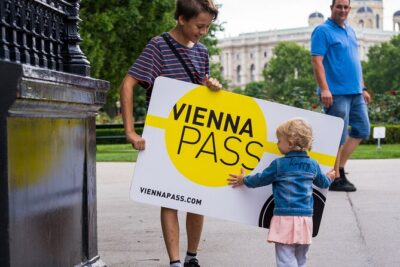
Vienna PASS Including Hop On Hop Off Bus Ticket
Read our review →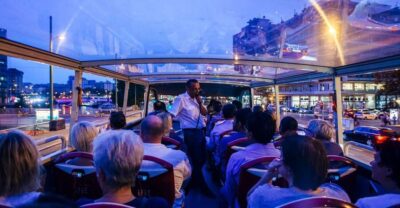
Big Bus City Highlights Night Tour with Live Guide
Read our review →
Browse the lists this tour appears in