Reviewed · TICKETS
Day Ticket for Klosterneuburg Abbey
Klosterneuburg Abbey packs 900 years of Austrian history into a visit just outside Vienna. You can move from priceless church art to imperial rooms, then look across the Danube toward Vienna and finish beside Austria’s oldest winery. It is a fine choice when you want more than another city-center museum.
I like the Verdun Altar, one of the abbey’s great artistic treasures, and the chance to see the grand Marble Hall and Imperial Apartments in one visit. I also like the flexible length: you can make this a focused one-hour stop or give it up to three hours. The main thing to check is the language format, since English is offered, but one guided visit used German with English audiotapes.
Key points to know before you go
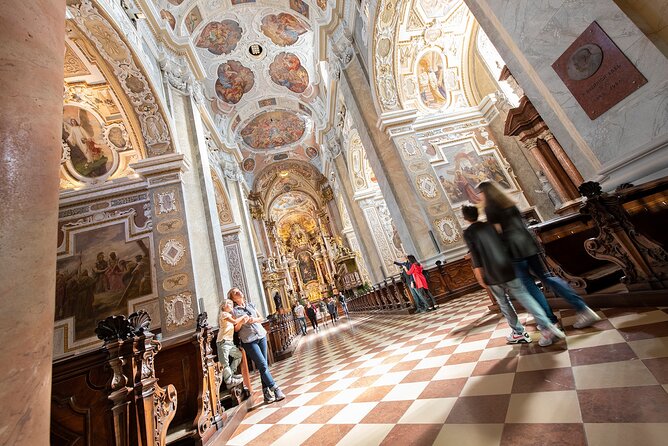
- 900 years in one abbey complex: See sacred art, imperial rooms, the Treasury, and historic architecture in one visit.
- The Verdun Altar is the artistic highlight: Plan enough time to look closely at this famous work rather than rushing past it.
- The Marble Hall adds grandeur: Its scale and decoration give the visit a distinctly imperial feel.
- Views reach toward Vienna: The abbey’s high position gives you a broad view over the Danube River and the city.
- Wine is part of the story: Austria’s oldest winery includes a striking Baroque cellar and selected local wine tasting.
- Seasonal hours affect your plan: Hours run from 10 a.m. to 4 p.m. from January through April, then expand to 9 a.m. to 6 p.m. from May through November 15.
Why Klosterneuburg makes a good break from Vienna
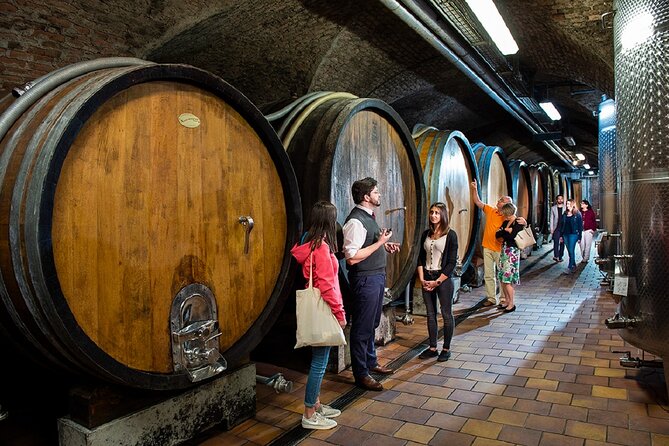
Vienna has no shortage of palaces, churches, and museums. Klosterneuburg Abbey gives you a different kind of day out, one where religious power, court life, fine art, river views, and wine production meet in the same setting.
The abbey is only minutes from Vienna, according to the supplied information, and sits near public transportation. That makes it practical for a short visit rather than a full-day expedition. You can fit it into a wider Vienna itinerary, though the abbey deserves more attention than a quick photo stop if you care about art and architecture.
The visit is also useful for putting Austrian history into physical form. Instead of seeing isolated objects behind glass, you move through rooms and buildings that were shaped by centuries of worship, wealth, and political influence. The result feels more grounded than a standard collection of museum labels.
I would allow at least two hours if you want to see the main rooms, spend time with the Verdun Altar, enjoy the views, and include the winery. The stated duration is about one to three hours, so the experience can work for both careful sightseers and people with a tighter schedule.
A few more Vienna days worth a look
- Vienna: Vivaldi’s Four Seasons Concert in Karlskirche
★ 4.7 · 14,951 reviews - Vienna: Spanish Riding School Training
★ 3.9 · 9,281 reviews - Vienna: Skip-the-cashier-desk-line Giant Ferris Wheel Ride
★ 4.5 · 7,859 reviews
Entering the Treasury and meeting the abbey’s art
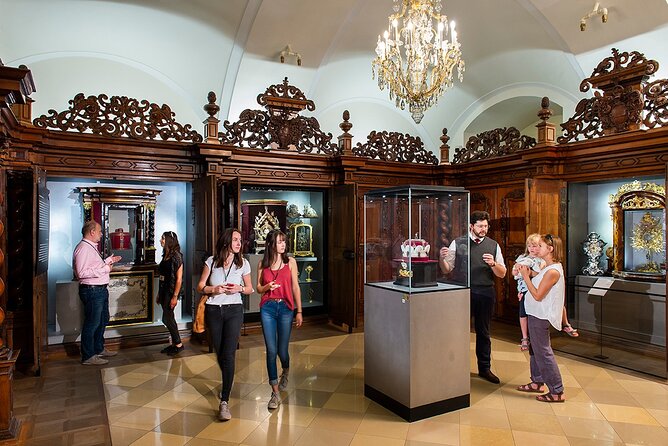
The Treasury is one of the strongest reasons to buy admission. It contains priceless works of art, giving you a concentrated look at the objects that made the abbey an important religious and cultural center.
This is not simply a room to pass through on the way to grander architecture. The Treasury provides the detail. You see the workmanship and precious materials up close, while the wider abbey supplies the setting and historical scale. I would take your time here, especially if your interests lean toward church art, medieval craftsmanship, or Austrian history.
The visit also includes access to the famous abbey church. Churches can sometimes blur together during a busy European trip, but the church matters here because it connects the art collection with the living purpose of the complex. The building is not just a backdrop for objects. It explains why these works were made, protected, and displayed.
The supplied information does not specify how much time a particular guided departure spends in each room. That makes it sensible to treat the day ticket as your foundation and follow the route at a pace that suits you.
Taking your time with the Verdun Altar
The Verdun Altar is the clear artistic centerpiece. It is specifically highlighted among the abbey’s major sights, and one detailed account singled it out along with the surviving glass windows and the sheer size of the complex.
You should not expect the altar to make its full impression in a few seconds. Its importance comes from both its artistic quality and its place within the abbey’s long story. Give yourself time to examine the panels and details, then step back to take in the complete work.
The mention of the remaining glass windows is also worth noting. They add another layer to the church experience, especially if you pay attention to how light, color, and religious art work together. The abbey is at its best when you look beyond the headline object and notice these supporting details.
If you have visited major European churches before, the Verdun Altar still gives this visit a strong point of focus. It prevents the experience from becoming a general tour of old rooms. You have a specific masterpiece to seek out, then a larger architectural setting to understand around it.
Marble Hall and the Imperial Apartments
The Marble Hall supplies the grand architectural moment. Its name tells you what to expect: scale, formal decoration, and a room designed to impress. It is the kind of space where the abbey’s power becomes visible rather than merely explained.
I would slow down here and look at the proportions. The value is not only in identifying materials or decorative features. The hall helps you understand how the abbey presented itself to important visitors and how religious institutions could also operate as centers of wealth and ceremony.
The Imperial Apartments add a different mood. They connect the abbey with Austria’s ruling world and offer a look at how high-ranking occupants used the complex. Together, the apartments and Marble Hall make the visit broader than a church tour.
You should keep your expectations measured. The supplied details do not list individual rooms, furnishings, or rulers connected to the apartments. What you can count on is access to the historic Imperial Apartments as part of the abbey’s guided highlights. The exact depth of interpretation may depend on the tour format and language available that day.
A completely different way to spend a day here:
- Vienna: Schönbrunn Palace & Gardens Skip-the-Line Tour
★ 4.7 · 7,739 reviews - Vienna: Light of Creation Votive Church Immersive Light Show
★ 4.8 · 6,779 reviews - Vienna Spanish Riding School Guided Tour
★ 4.7 · 6,765 reviews - Vienna: Classical Concert in the World-Famous Musikverein
★ 4.6 · 6,673 reviews
Looking over the Danube toward Vienna
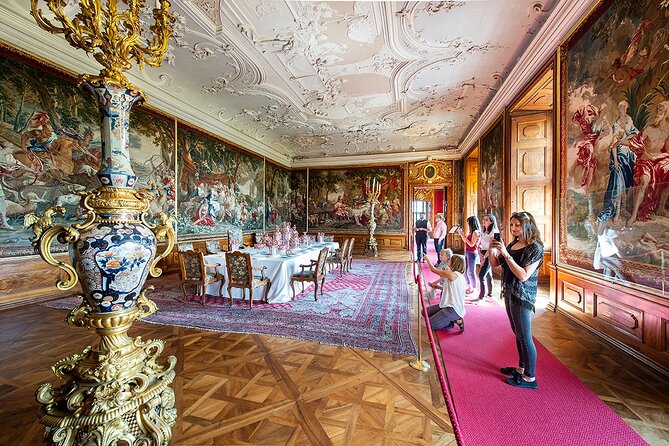
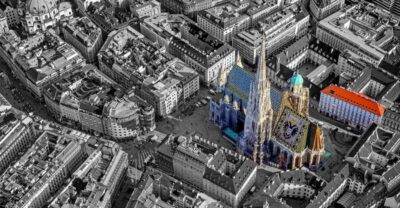
The views are one of the simplest pleasures here. From the abbey, you can look over the Danube River toward Vienna, giving you a useful sense of the region beyond the rooms and objects.
I like this kind of viewpoint because it breaks up an indoor visit. After the Treasury, church, halls, and apartments, the river panorama gives your eyes a rest and places the abbey in its wider setting. You are not viewing the complex as an isolated monument. You can see its relationship to Vienna and the Danube corridor.
Try to save a few minutes for the view rather than treating it as an accidental bonus. The information promises views stretching all the way to Vienna, but it does not provide a particular viewing platform or guarantee conditions on a given day. Weather and visibility will affect what you see.
Austria’s oldest winery and the Baroque cellar
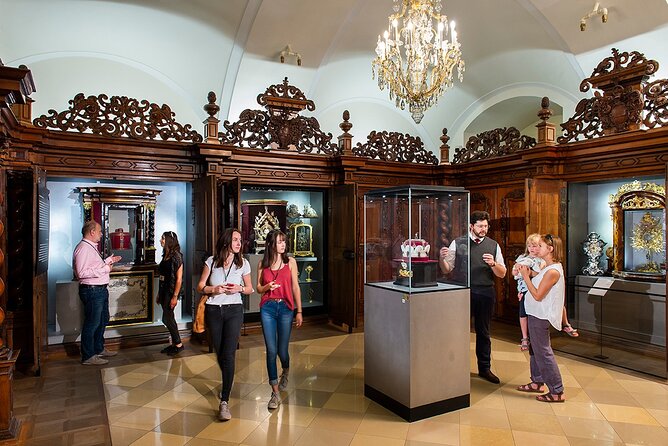
The winery gives Klosterneuburg a character that many abbeys lack. This is not only a place of prayer and art. It is also home to Austria’s oldest winery, with a Baroque wine cellar and selected local wine tasting.
The cellar is particularly appealing because it links architecture with everyday production. A polished hall can tell you about status, while a winery shows how the institution also used its land and resources. The wine element makes the visit feel tied to local life rather than sealed inside a museum.
The tasting can be a pleasant final chapter, especially if you enjoy regional wine and want a slower finish after the formal rooms. The supplied information does not name the wines or describe the tasting size, so you should think of it as a sample of local production rather than a full wine tour.
Wine is also one reason to allow closer to three hours. If you rush through the Treasury and church, then add the cellar and tasting, you may feel as if you are checking boxes. A little extra time lets the visit develop at a better pace.
English access and the guided-tour question
English is offered, but you should pay attention to how that offer works on your chosen visit. One detailed account described joining a German-language tour with English audiotapes. The guide added details beyond the audio, which can be useful if you understand some German or are comfortable combining recorded information with visual interpretation.
This is a practical point, not a minor footnote. The abbey contains art and rooms whose meaning may not be obvious from appearance alone. If you want a fully live English explanation, confirm the available format before booking or arriving.
The supplied information does not provide guide names, group sizes, or exact departure times. I would not assume that every guided visit follows the same language arrangement. The day ticket still gives you access to the core sights, but your level of spoken explanation may vary.
For independent visitors, the audio option can be enough to make the experience worthwhile. For visitors who want a lecture-style tour with every detail explained in English, the language setup deserves careful attention.
Price, timing, and who gets good value
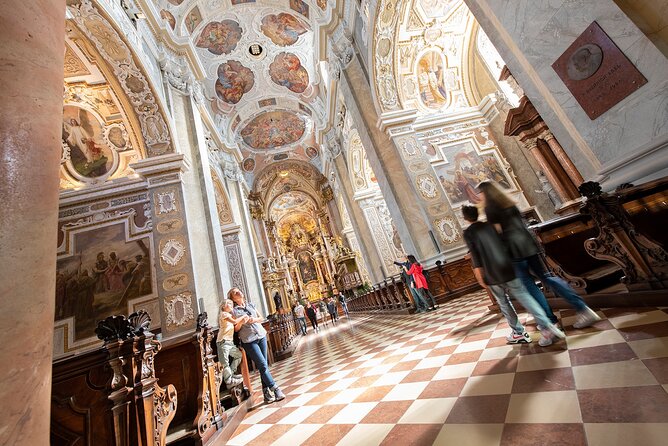
At $24.06 per person, this is not a throwaway admission, but it can offer solid value if you use the full range of access. You are paying for more than one room: the Treasury, Marble Hall, abbey church, Verdun Altar, Imperial Apartments, views, winery, cellar, and tasting all contribute to the experience.
The value is strongest for visitors who enjoy several subjects at once. If you like art, architecture, history, religious sites, and wine, the ticket gives you a varied visit without needing separate stops. If you only want a quick look at the exterior, the admission may feel harder to justify.
Opening hours change with the season. From January 1 through April 30, the abbey is open daily from 10 a.m. to 4 p.m. From May 1 through November 15, it is open daily from 9 a.m. to 6 p.m. The longer warm-season schedule makes it easier to combine the abbey with other plans.
The experience is booked around 40 days ahead on average. That suggests you should not leave planning until the last moment if the abbey is important to your schedule. Free cancellation is available until 24 hours before the start time, with no refund for cancellations or changes inside that window.
Practical fit for different visitors
You should have a moderate level of physical fitness. The information does not list exact stair counts, distances, or special routes, so I cannot promise that every part of the visit will be equally easy to navigate. Plan for a museum and historic-building visit rather than a flat, modern gallery.
Service animals are allowed, and the site is near public transportation. Those are useful advantages for a visit outside Vienna’s central sights, even though the available details do not identify the specific transport lines or stops.
This experience suits:
- Art lovers who want the Verdun Altar and Treasury
- Architecture fans drawn to the Marble Hall and historic church
- History-minded visitors interested in Imperial Apartments and centuries of continuity
- Wine enthusiasts who want a Baroque cellar and local tasting
- Vienna visitors looking for a substantial nearby outing
- People who prefer a flexible one to three-hour visit
It may be less suitable if you need a fully specified English guided tour, dislike historic interiors, or have very limited time. The language format and physical demands are the two points I would check most carefully.
Should you book Klosterneuburg Abbey?
Book it if you want a layered cultural visit close to Vienna. The Verdun Altar, surviving glass windows, Marble Hall, Imperial Apartments, Danube views, and old winery give you several strong reasons to go, and the $24.06 price makes more sense when you plan to stay two or three hours.
I would be especially keen to include it on a repeat Vienna visit, when you have already seen the central palaces and want a setting with a different rhythm. First-time visitors can also enjoy it, provided they understand that English access may involve audio rather than a live English guide.
Skip it if your schedule allows only a rushed hour or if you want a narrowly focused wine tasting. For everyone else, this is a well-rounded abbey visit with enough art, architecture, history, and local flavor to earn its place on a Vienna itinerary.
FAQ
Where is Klosterneuburg Abbey?
Klosterneuburg Abbey is in Klosterneuburg, near Vienna, Austria. It is described as being just minutes from Vienna and near public transportation.
How long does the visit take?
Plan for approximately one to three hours. A shorter visit can cover the main highlights, while a longer visit gives you more time for the Treasury, views, winery, and tasting.
What are the abbey’s opening hours from January through April?
From January 1 through April 30, the abbey is open daily from 10 a.m. to 4 p.m.
What are the opening hours from May through November?
From May 1 through November 15, the abbey is open daily from 9 a.m. to 6 p.m.
Is the experience offered in English?
English is offered. A German-language guided visit may also use English audiotapes, so check the language format available for your visit.
What major sights are included?
The visit includes the Treasury, Marble Hall, abbey church, Verdun Altar, Imperial Apartments, Danube views, and the winery area.
Is wine tasting included?
The abbey’s winery features a Baroque wine cellar and tasting of selected local wines.
Is the site suitable for service animals?
Yes. Service animals are allowed.
Can I cancel for a full refund?
Yes, if you cancel at least 24 hours before the experience start time. Cancellations or changes made less than 24 hours before the start time are not refunded.
Just added around Vienna
- Vienna: UNESCO Schönbrunn Palace Guided Tour with Entry★ 4.5 · 94 reviews
- World War II History Vienna Old Town Private Walking Tour★ 4.8 · 9 reviews
- Vienna: Winery and Wine Tasting Tour with a Wine Expert★ 5.0 · 5 reviews
- Vienna: Wine Tasting E-Bike Tour★ 4.9 · 46 reviews
- Vienna: Wine Tasting at Schönbrunn Palace★ 4.3 · 71 reviews
- Vienna: Wine Tasting Tour★ 4.8 · 61 reviews
- Vienna: Concert by the Vienna Baroque Orchestra★ 4.6 · 56 reviews
- Vienna: Wachau Valley Private Kayak and Wine Tour★ 5.0 · 3 reviews
Tickets, compared.
Classic Ensemble Vienna in St. Peter’s Church Ticket
Read our review →
Vienna Kunsthistorisches Museum Day Admission Ticket
Read our review →
Tickets for Mozarthaus Vienna with Audio Guide
Read our review →
Skip-the-Line Entrance Ticket to the Danube Tower
Read our review →