
Reviewed · MUSEUMS
Leopold Museum Vienna Entrance Ticket
The biggest draw here is the world’s largest Egon Schiele collection, housed in a bright modern museum at the center of Vienna’s MuseumsQuartier. You also get important works by Gustav Klimt, Oskar Kokoschka, Richard Gerstl, Koloman Moser, and Otto Wagner, all tied to the city’s leap into modern art.
I like the freedom to set my own pace, and I like that the ticket includes the permanent collection and exhibitions. The windows bring a second reward: broad views toward Maria Theresa Square and the Hofburg Palace.
The main caution is expectation. This is not a vast, all-purpose art museum, and visitors hoping for room after room of Klimt may find the Klimt selection focused rather than large. Allow about two hours for a careful visit, or up to three if you read labels and take a café break.
Key points before you go
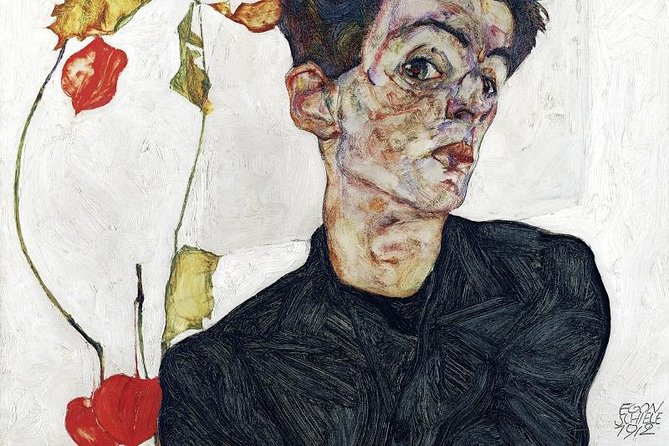
- Schiele takes center stage: The museum holds the largest collection of Egon Schiele works in the world.
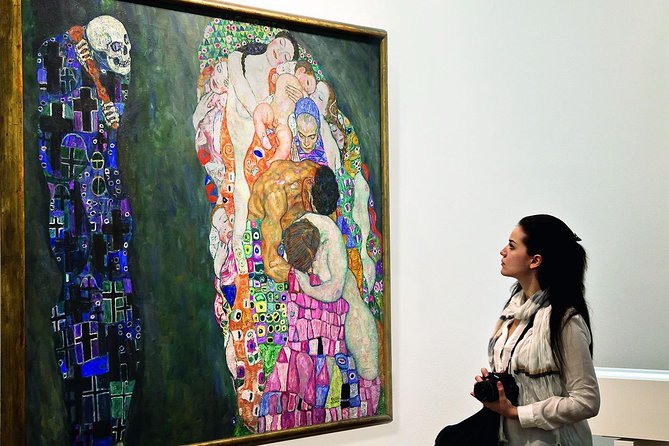
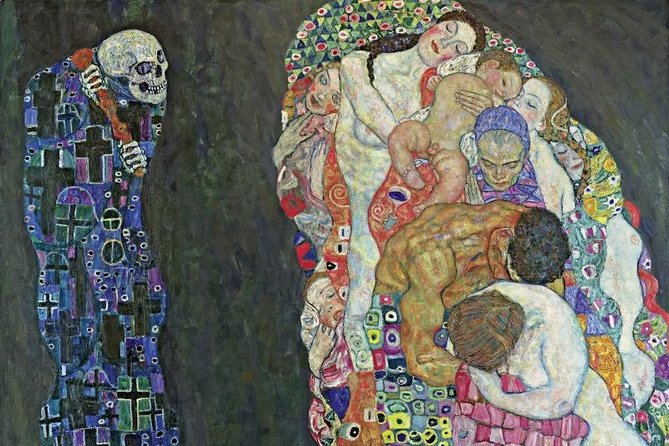
- Klimt is represented by major work: Gustav Klimt’s Death and Life is a key highlight, but the museum does not contain a large number of Klimt paintings.
- Your visit is self-guided: There is no guide included, so you choose the route, pace, and pauses.
- The collection explains Vienna’s modern turn: See Jugendstil, Wiener Werkstätte design, Expressionism, and the art of fin-de-siècle Vienna.
- Plan on two to three hours: The art occupies several floors, with additional space for photographs, design, and the museum shop.
- Book ahead if your date matters: Prepaid admission helps avoid arriving to find the museum or a time-sensitive visit unavailable.
Why the Leopold Museum matters in Vienna
The Leopold Museum is not simply a room full of famous names. It tells the story of how Austrian art changed from nineteenth-century academic painting into the daring style associated with Vienna around 1900.
That shift happened quickly. Historicism gave way to softer Impressionist influences, then to the Wiener Moderne, the broad Viennese movement linked with Klimt, Schiele, Kokoschka, Gerstl, Moser, and others. The collection lets you follow that change instead of seeing isolated masterpieces with no connection between them.
Rudolf and Elisabeth Leopold built the collection over five decades. More than 5,000 objects are associated with the collection, including paintings, drawings, furniture, decorative objects, and other works from Austrian art. You will not see every object in one visit, but the range gives the museum a clear identity.
I find that useful for first-time visitors to Vienna. If you already plan to see the city’s palaces, churches, and grand nineteenth-century buildings, this museum shows what was happening beneath that formal surface. It presents the artistic arguments that helped turn Vienna into a center of modern European culture.
More museums and galleries in Vienna:
- Vienna: Skip-the-Line Sisi Museum, Hofburg and Gardens Tour
★ 4.8 · 5,918 reviews - Vienna Kunsthistorisches Museum Day Admission Ticket
★ 4.6 · 3,690 reviews - Tickets for the Albertina Exhibitions
★ 4.7 · 2,126 reviews
Entering the MuseumsQuartier
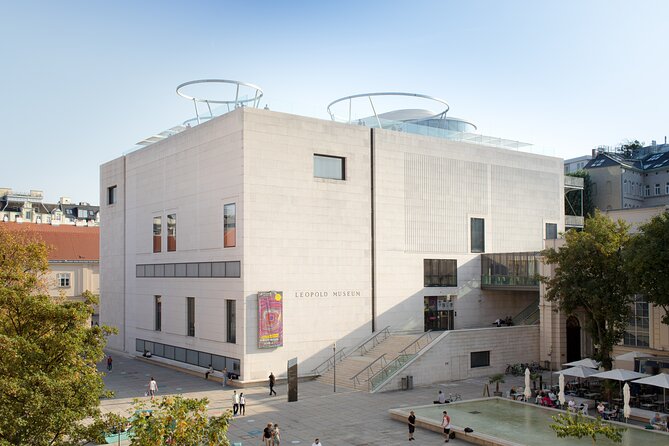
The museum sits in Vienna’s MuseumsQuartier, a cultural district rather than a single gallery building. The Leopold Museum’s white exterior has a strong modern shape, and the building may feel somewhat cool or severe from the outside.
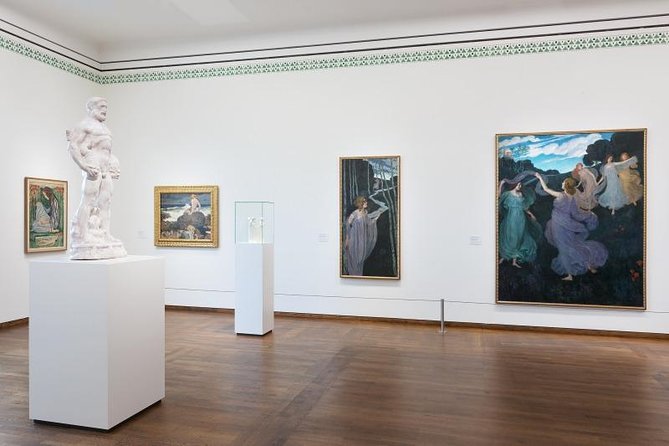
Inside, the mood changes. The museum is designed to let in plenty of light, and the galleries provide a calmer setting for the paintings and drawings. That contrast is worth noticing. The architecture does not try to imitate an old palace, yet the museum is surrounded by historic Vienna and looks directly toward some of its most recognizable monuments.
You can arrive at a time that suits your plans, then move through the building without a group leader setting the pace. That matters if you want to spend ten minutes with one Schiele drawing or move quickly through a section that interests you less.
A practical point deserves attention. The experience is described as using a mobile ticket, but the arrival instructions also say to present the Viator voucher at the cashier desk and advise printing it. Check the current instructions before leaving your hotel. That small bit of preparation may prevent an irritating start.
Following Vienna from Historicism to the Wiener Moderne
The collection is most rewarding when you treat it as a story of change. Earlier Austrian works by artists such as Ferdinand Georg Waldmüller, Friedrich Gauermann, August von Pettenkofen, Anton Romako, Emil Jakob Schindler, and Carl Schuch provide a reference point.
These works belong to an Austria still tied to nineteenth-century traditions. From there, the museum moves toward artists who questioned those traditions. The subject matter, brushwork, color, and treatment of the human figure begin to feel less obedient to old rules.
The term Jugendstil is useful here. It refers to the decorative Art Nouveau style associated with flowing lines, plant forms, and a desire to bring art into everyday life. The Wiener Werkstätte pushed that idea into furniture, objects, interiors, and graphic design.
You can see the role of Otto Wagner, Adolf Loos, Dagobert Peche, Josef Hoffmann, and Koloman Moser in this part of the collection. These objects matter because the Viennese modern movement was not limited to paintings. Its artists wanted chairs, buildings, tableware, posters, and rooms to belong to the same new visual world.
That section can be especially helpful if you have already seen Vienna’s architecture. It gives you a way to connect the city’s buildings and interiors with the paintings in the galleries.
The Egon Schiele rooms
Schiele is the reason many people put the Leopold Museum on their Vienna plans, and the collection earns that attention. The museum has the largest Egon Schiele collection in the world, with a broad range of paintings and drawings.
Schiele’s work is often uncomfortable by design. Bodies bend, faces look strained, and human relationships can feel exposed rather than polite. You may find the pictures powerful, but you may also find them grim or emotionally demanding. One of the museum’s strengths is that it does not smooth away that tension.
Give the drawings proper time. A quick glance at a Schiele portrait can make it seem merely angular or distorted. A longer look reveals the force of the line, the fragile poses, and the way a few marks can suggest a whole body or mood.
You do not need a guide to appreciate the collection, but the lack of a guide also means you will need to read the labels and make your own connections. An audio guide is available in German, English, French, and Italian for an additional €4. If you want more explanation than the wall text provides, that modest extra cost may be worthwhile.
A few more Vienna days worth a look
- Vienna: Vivaldi’s Four Seasons Concert in Karlskirche
★ 4.7 · 14,951 reviews - Vienna: Spanish Riding School Training
★ 3.9 · 9,281 reviews - Vienna: Skip-the-cashier-desk-line Giant Ferris Wheel Ride
★ 4.5 · 7,859 reviews - Vienna: Schönbrunn Palace & Gardens Skip-the-Line Tour
★ 4.7 · 7,739 reviews
Klimt’s Death and Life
Gustav Klimt’s Death and Life is one of the museum’s major works. It is also an important reminder that the Leopold Museum is not the same as a museum devoted entirely to Klimt.
You will see other Klimt material, but the collection is especially strong in Schiele and in the wider story of Austrian modern art. If your main goal is to see a large number of Klimt paintings, you may leave feeling that the selection is smaller than expected.
Still, Death and Life deserves a deliberate pause. Its subject gives the picture a direct emotional charge, while Klimt’s decorative surface connects it to the Secession style and the visual culture of Vienna around 1900. It works best when you consider it beside the Schiele rooms rather than as an isolated famous painting.
That comparison is one of the pleasures of the museum. Klimt’s surfaces can feel controlled and ornamental, while Schiele’s figures often appear raw and unsettled. Both belong to the same period, but they show very different answers to the problem of modern life.
Kokoschka, Gerstl, Moser, and the wider collection
The Leopold Museum gives you more than the two biggest names. Oskar Kokoschka and Richard Gerstl help show how Austrian Expressionism could become more direct, psychological, and restless.
Koloman Moser connects painting with design, while Otto Wagner represents the architectural side of the same cultural moment. Herbert Boeckl adds another important voice to the story of Austrian art.
The museum also covers the Austrian interwar period, including artists such as Albin Egger-Lienz, Anton Kolig, and Herbert Boeckl. This material prevents the visit from ending neatly in 1918, as if modern Austrian art stopped with the collapse of the Habsburg Empire.
Some of the postwar material and occasional nineteenth-century displays may appeal more to dedicated art lovers than to visitors focused only on Klimt and Schiele. That is a fair trade. The museum is trying to show a national artistic story, not simply assemble a greatest-hits room.
Special exhibitions can change the balance of your visit. Admission includes the permanent collection and exhibitions, but the exact display depends on the date. Check the museum’s current program if a particular temporary exhibition matters to you.
How long to spend inside
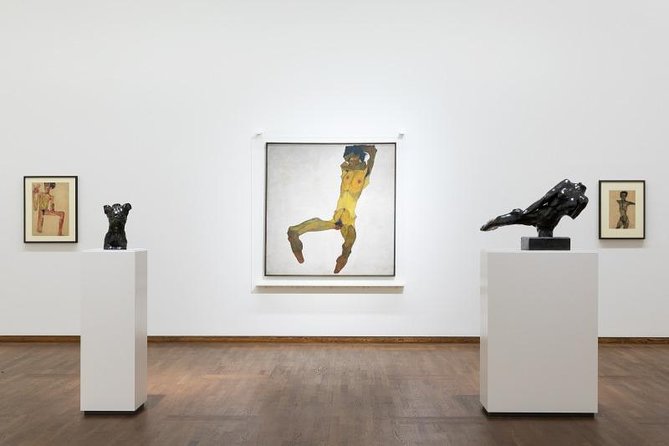
The suggested visit lasts about two to three hours. I think that is a sensible range.
With two hours, you can see the main art floors, focus on Schiele and Klimt, and get a general sense of the Austrian modern movement. With three hours, you can read more labels, look carefully at the drawings, spend time with design objects, and pause at the café.
The museum is not enormous. Some visitors may find that the art can be covered in about two hours, especially if they move quickly. Other areas include photographs and the museum shop, so do not assume every floor is packed with paintings.
That smaller scale can be an advantage. You are less likely to feel that you have merely marched through a famous collection. It also makes the Leopold Museum a practical choice between larger Vienna sights, particularly if you want serious art without giving up half a day.
The views and Café Leopold
Before leaving, look out toward Maria Theresa Square and the Hofburg Palace. These views add useful context to the art inside. You can see the grand imperial city that the modern artists were responding to, then return to the galleries and look again at their break with old conventions.
Café Leopold provides a place to rest and review what you have seen. Food and drinks are not included in the ticket, so budget separately if you want refreshments.
A café stop also helps if Schiele’s work feels intense. The museum’s modern art can be emotionally heavy, and a short pause lets you reset before moving on to another sight in Vienna.
Is $22.98 a fair price?
At $22.98 per person, the ticket is reasonable if you plan to spend two or three hours with the collection and care about Austrian modern art. The value comes from the combination of the Schiele collection, Klimt’s Death and Life, the wider Wiener Moderne material, and admission to exhibitions.
It is less attractive if you only want a quick Klimt sighting. The museum does not offer a large Klimt selection, and its focus is broader than the most famous name on the wall.
Prebooking has practical value when your Vienna schedule is tight. It gives you an admission arrangement in advance and reduces the risk of disappointment on arrival. The ticket is also flexible in the most important way: once inside, you are not tied to a group or fixed commentary.
Free cancellation is available if you cancel at least 24 hours before the experience start time. Cancellations made less than 24 hours ahead are not refunded, and late changes are not accepted.
Who should book this museum visit?
I would choose this experience for anyone interested in Schiele, Klimt, Expressionism, Viennese design, or the cultural life of Vienna around 1900. It is also a good choice if you prefer to study art alone instead of following a guide.
Families can visit, but children must be accompanied by an adult. Reduced child tickets require the relevant identification card, so bring the required proof if you are using that fare.
I would be more cautious if you dislike difficult or somber art. Some displays may feel austere, and not every picture is gentle or decorative. A water bottle inside a bag may also draw staff attention, so follow the museum’s instructions and avoid turning a small rule into a distraction.
Should you book the Leopold Museum ticket?
Book it if you want a focused look at Austrian modernism, especially Schiele, and if you value the freedom to choose your own pace. The museum’s best feature is not sheer size. It is the way the collection connects painting, drawing, architecture, and design during one of Vienna’s most important artistic periods.
Skip it if your only goal is a large Klimt collection or a guided art lesson. In that case, the Leopold Museum may feel smaller than expected. For the right visitor, though, two quiet hours with Schiele, Klimt, and the Wiener Moderne, followed by views of the Hofburg, make this a strong and practical Vienna stop.
FAQ
How long does a visit to the Leopold Museum take?
The visit lasts approximately two to three hours. The art collection itself can be seen in about two hours if you take your time, while a longer visit allows for more reading, exhibitions, the museum shop, and a café stop.
What does the Leopold Museum ticket include?
The ticket includes admission to the Leopold Museum, its permanent collection, and exhibitions. Food, drinks, and the audio guide cost extra.
Is a guide included?
No. This is a self-guided admission ticket. An audio guide is available in German, English, French, and Italian for an additional €4.
What is the museum’s main collection?
The Leopold Museum holds the largest collection of Egon Schiele works in the world. It also presents important Austrian art by Gustav Klimt, Oskar Kokoschka, Richard Gerstl, Koloman Moser, Herbert Boeckl, Otto Wagner, and others.
Can children visit the museum?
Yes. Children must be accompanied by an adult. A reduced child price is available only with the relevant identification card.
Do I need to print my voucher?
The experience is described as offering a mobile ticket, but the arrival instructions advise presenting the Viator voucher at the cashier desk and printing it. Check the current instructions before your visit and bring the voucher in the requested format.
Can I cancel for a refund?
Yes. You can receive a full refund if you cancel at least 24 hours before the experience start time. Cancellations or changes made less than 24 hours before the start time are not accepted for a refund.
Just added around Vienna
- Vienna: UNESCO Schönbrunn Palace Guided Tour with Entry★ 4.5 · 94 reviews
- World War II History Vienna Old Town Private Walking Tour★ 4.8 · 9 reviews
- Vienna: Winery and Wine Tasting Tour with a Wine Expert★ 5.0 · 5 reviews
- Vienna: Wine Tasting E-Bike Tour★ 4.9 · 46 reviews
- Vienna: Wine Tasting at Schönbrunn Palace★ 4.3 · 71 reviews
- Vienna: Wine Tasting Tour★ 4.8 · 61 reviews
- Vienna: Concert by the Vienna Baroque Orchestra★ 4.6 · 56 reviews
- Vienna: Wachau Valley Private Kayak and Wine Tour★ 5.0 · 3 reviews
Museums, compared.
Skip-the-Line Sisi Museum, Hofburg and Gardens Tour
Read our review →
Vienna Kunsthistorisches Museum Day Admission Ticket
Read our review →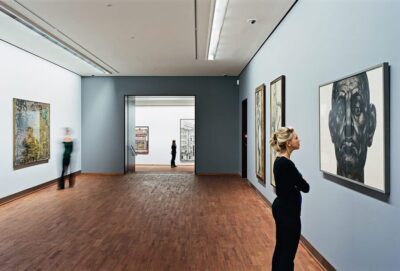
Chocolate Workshop in Chocolate Museum w/ Tasting
Read our review →
St. Stephen’s Cathedral & Dom Museum Wien Tickets
Read our review →
Browse the lists this tour appears in