
Reviewed · ESCAPE GAMES & SCAVENGER HUNTS
Mystery rally Vienna: The secrets of the old town
Vienna’s old town becomes a giant puzzle board in this two-hour rally. Starting at Stephansplatz, you work in small teams through medieval streets, legendary buildings, and Roman camp remains, using clues to uncover stories and crack a final code.
I like the active format and the local focus. You are not simply following someone with an umbrella. You read the map, study the puzzle book, and make decisions together. I also like that the activity works for mixed groups, from company teams to children celebrating an eighth birthday. The main caution is that the demanding difficulty and brisk pace may leave you less time to admire Vienna’s sights.
Key points at a glance
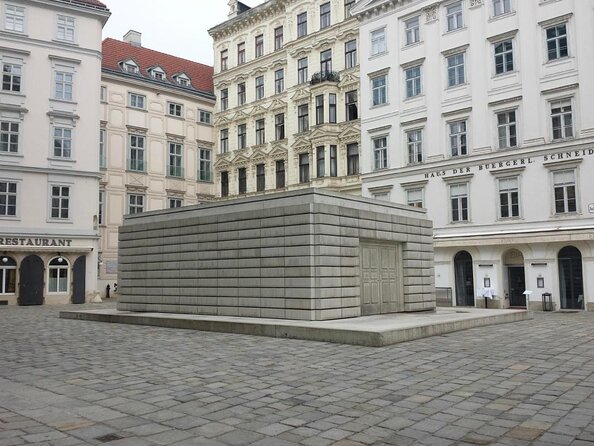
- Stephansplatz starting point: The rally begins at Stephansplatz 4, in Vienna’s central first district.
- A puzzle kit is provided: You receive a map, puzzle book, and bag of mysterious clues.
- History becomes the game: The route connects old buildings, narrow medieval lanes, and Roman military remains.
- Small-team format: You solve tasks together rather than follow a conventional guided walk.
- About two hours: The activity finishes back at the meeting point.
- A demanding challenge: It suits groups that enjoy problem-solving more than a slow sightseeing stroll.
Turning Vienna’s old town into a puzzle board
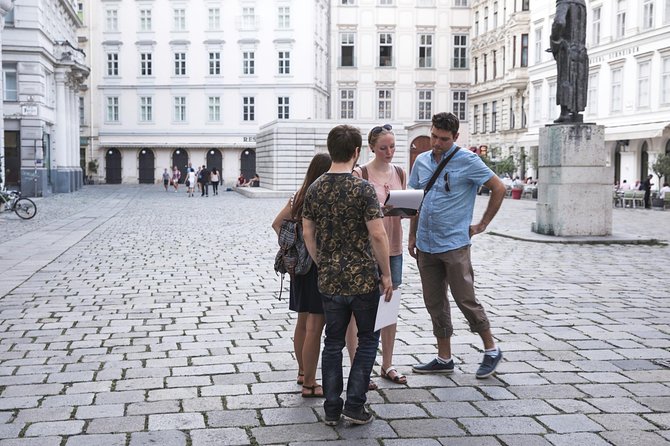
The appeal here is simple: Vienna’s center already feels like a history book, and the rally gives you a reason to look closely. Instead of moving from one famous sight to the next for a quick photograph, you search for clues in the city itself.
The setting is Vienna’s first district, one of the best areas in the city for a compact walking activity. The rally begins at Stephansplatz, a natural place to gather a group and get oriented. From there, the route leads into old Vienna, where the clues connect visible places with stories from earlier centuries.
The exact order of the stops is not specified, so you should not expect a fixed sightseeing script with a guide explaining every building. The point is to work out the route and answers as a team. That distinction matters. This is a self-directed history game, not a standard walking tour.
The supplied material includes a map, a puzzle book, and a bag of clues. That gives you the tools to play without needing to prepare in advance. It also means your group has to share information, compare ideas, and decide what deserves attention.
I find that format particularly useful for people who have already seen the obvious sights in Vienna. A familiar street can feel different when you are looking for a detail connected to a riddle. The activity asks you to pay attention to doorways, buildings, street patterns, and traces of the past that might otherwise pass unnoticed.
More Escape Games in Vienna
- Vienna: Scavenger Hunt Self-Guided Tour
★ 4.7 · 83 reviews - Vienna: The Great Plague Exploration Game
★ 4.5 · 60 reviews - Mystery rally Vienna: The scary city
★ 4.5 · 23 reviews
Stephansplatz and the first challenge
Stephansplatz is the start and finish point, so the activity has a clear base. It is also a sensible choice for a city puzzle. The square places you in the heart of Vienna’s first district, with layers of architecture and history close together.
You should arrive ready to begin working rather than expecting a long introduction. The kit supplies the map and written material, and the team format gets the group involved from the start. If you are booking for a company outing or birthday, give everyone a role early. One person can hold the map, another can read the puzzle book, and someone else can keep track of the clues.
That small bit of organization can make a real difference. A puzzle rally becomes frustrating when one person takes control of every answer. It becomes much more enjoyable when the group shares the work.
Stephansplatz is also convenient for public transportation, which helps when you are fitting the activity into a day in Vienna. You do not need to arrange a separate transfer to an outlying meeting point. At the end, you return to the same place, making the rally easy to combine with another central-city plan.
Medieval lanes, famous buildings, and Roman remains
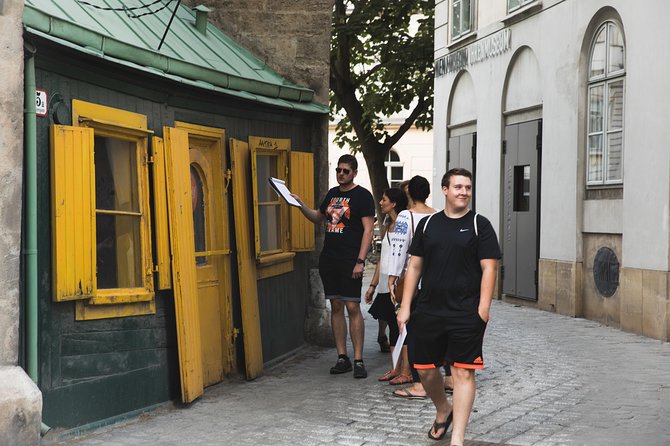
The route draws on three different layers of Vienna’s past. You may encounter legendary buildings, narrow medieval streets, and remains linked to the Roman legionary camp. Each setting changes the kind of observation the puzzle demands.
The grand buildings offer a sense of Vienna’s public and imperial image. They are the places most people expect to see in the first district, but the game encourages you to inspect them as clues rather than scenery alone. Look for architectural details and connections that the puzzle book points you toward.
The narrow medieval lanes provide a different mood. These streets are less about broad views and more about orientation. A map becomes useful here, especially when the group needs to match written clues to the shape and position of the streets.
The Roman remains add an older layer still. Vienna grew from the Roman settlement of Vindobona, and the rally uses surviving traces of the legionary camp as part of its story. You should not expect a museum visit or a full archaeology lesson. Instead, the Roman material works as one piece of the puzzle, linking present-day streets to a much earlier city.
This mixture is one of the activity’s strongest features. The old town is not treated as a single period. You move between different chapters of Vienna’s past, and the clues ask you to connect what you see with the story behind it.
How the puzzle hunt actually works
Your team receives the materials needed to play on site. The map helps with orientation, the puzzle book supplies the tasks, and the clue bag adds the extra pieces needed to solve them.
The goal is not simply to reach the end. Teams try to reveal the greatest number of secrets and then crack the hidden code that opens the mysterious treasure chest. That gives the walk a clear finish line and keeps the group focused.
The listed difficulty is demanding. Take that seriously. The activity is designed for people who want to solve problems, not for those who prefer to stroll without a schedule. You may need to read carefully, check details more than once, and talk through competing answers.
The two-hour length also creates a time limit. That can make the game exciting, particularly for a company group or friends who enjoy a little pressure. It can also make the experience feel rushed if your main goal is to stop often and study every sight.
I would treat the rally as a city game with historical content, rather than a history tour that happens to include puzzles. You will learn about Vienna through the questions and places, but the experience depends on your group doing the work.
A completely different way to spend a day here:
- Vienna: Vivaldi’s Four Seasons Concert in Karlskirche
★ 4.7 · 14,951 reviews - Vienna: Spanish Riding School Training
★ 3.9 · 9,281 reviews - Vienna: Skip-the-cashier-desk-line Giant Ferris Wheel Ride
★ 4.5 · 7,859 reviews - Vienna: Schönbrunn Palace & Gardens Skip-the-Line Tour
★ 4.7 · 7,739 reviews
Why the format suits team events
This activity was created with company outings, team-building programs, birthday events, and casual group occasions in mind. That is reflected in the way the game works. You need to communicate, divide tasks, and reach decisions together.
For a work group, the format gives people a reason to interact outside the office without forcing them into a formal workshop. Someone who is not interested in standard sightseeing may still enjoy the challenge. Someone who knows Vienna well may help with local orientation, while someone new to the city may spot a clue that others miss.
The same qualities help with birthdays. An eight-year-old group has used the map to find its way and enjoyed solving the riddles, which suggests that children can take an active role. At the same time, another children’s birthday booking found the program less satisfying because the children expected more direct guidance.
That is an important distinction for parents. The staff accompany and support the teams along the route, but this is not a show where someone gives children every answer. Kids should be willing to read, search, discuss, and solve. For younger groups, an adult should be ready to help with organization and reading without taking over the game.
The activity can also work well with local residents. The clues are not only for first-time visitors. The historical material may remind you of places you already know while pointing out details you have missed.
The walking pace and the sightseeing tradeoff
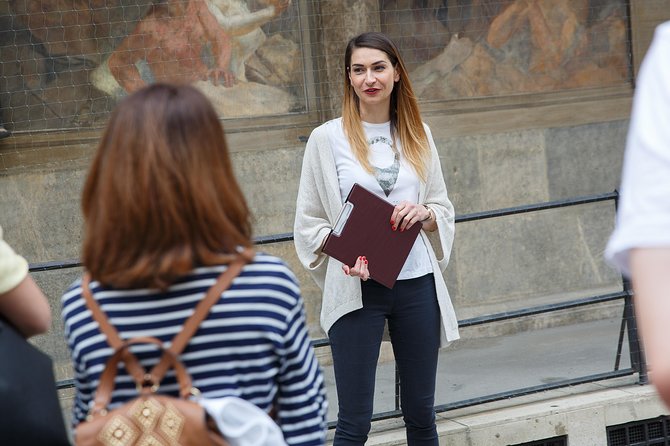
A two-hour rally in central Vienna is a compact experience, but it is not necessarily a relaxed one. You are solving tasks while moving from place to place, and the group may need to retrace a short section or pause to compare answers.
That pace is part of the fun. The time limit gives the route energy and makes the final code feel earned. It also creates the main drawback: you may not have enough time to stop for a long look at every building.
I would not book this as your only introduction to Vienna. If you have just arrived and want a calm explanation of the city’s main sights, a conventional guided walk may fit better. The rally is most useful as a second activity, a group event, or a fresh way to explore the center after you have seen some of the major landmarks.
Wear comfortable shoes and keep your attention on the map and streets. The activity takes place outdoors and requires good weather. If poor weather forces a cancellation, you are offered another date or a full refund, but you should still plan with the forecast in mind.
Is $41.35 a fair price?
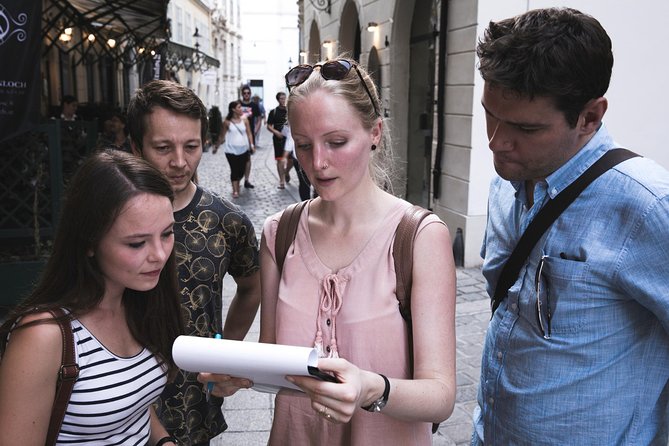
The listed price is $41.35 per person. That is not a minor expense, particularly for students or families paying for several children. The value depends on what you want from the outing.
You are paying for a prepared activity, the puzzle materials, on-site support, and a structured way to spend about two hours in central Vienna. For a company event, the price may make sense because the game gives the group a shared task and a clear finish. For a birthday, the prepared format can save the organizer from designing clues and managing the route alone.
The value is harder to justify if you only want information about Vienna. There are plenty of ways to walk around the first district without paying an activity fee. You should choose this rally because you want the game, not simply because you want to see Stephansplatz or old Vienna.
The price also covers an experience rather than a souvenir. At the end, the reward is solving the code and opening the treasure chest, not taking home a large collection of physical items. One disappointed participant felt the cost was high for an activity that did not leave a tangible keepsake. That criticism is fair to consider, especially on a tight budget.
On the other hand, the strongest part of the purchase is the structure. You are buying a reason for a group to explore, cooperate, and stay engaged. If that is what your group needs, the cost is easier to defend.
Group size, support, and practical limits
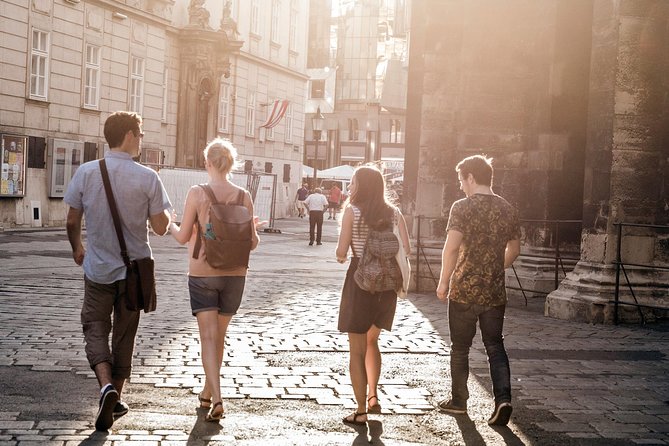
The activity can accept a maximum of 70 participants, but the actual game is played in small teams. That makes it suitable for larger company groups, provided everyone is divided into manageable teams.
Do not assume that a large booking means one giant group solving a single puzzle together. The small-team setup is central to the format. It lets several groups work at once and creates a friendly contest over who can reveal the most secrets.
On-site support is available, but the staff do not remove the challenge by explaining every clue. That balance is good for adults who want an independent game. It may be less suitable for children who need constant instruction or for anyone expecting a fully guided walk.
Service animals are allowed, and the meeting point is near public transportation. Most people can participate, according to the supplied practical information, though the demanding nature of the puzzle and the walking pace are worth considering before booking.
Confirmation is sent within 48 hours, subject to availability. The booking is non-refundable and cannot be changed for any reason. If the minimum number of participants is not reached, you are offered a different date or experience, or a full refund.
Who will enjoy the Secrets of the Old Town rally?
I would recommend it most strongly to:
- Company groups that want a cooperative activity in the city center.
- Friends and families who enjoy riddles, maps, and a little competition.
- Children’s birthday groups whose participants can read, follow clues, and work independently.
- Repeat visitors to Vienna who want to look at the first district in a different way.
- History-curious people who prefer discovering facts through a game rather than listening to a long explanation.
I would hesitate if you want a slow walk, detailed commentary at every stop, or plenty of free time for photographs. I would also think twice for a very young children’s group unless adults are prepared to help with the puzzle process.
The overall rating is 4.1 from seven published ratings, which fits the mixed picture. The activity has a clear following among team groups, local participants, and children who enjoy the format. The main weakness is not the setting. It is the difference between expecting a guided tour and receiving a demanding puzzle hunt.
Should you book it?
Book this rally if your ideal Vienna outing includes a map, a challenge, and a group trying to beat the clock. The combination of old buildings, medieval lanes, and Roman remains gives the puzzles a strong setting, while the return to Stephansplatz keeps the logistics simple.
Skip it if you want a traditional tour with a guide doing most of the talking. At $41.35 per person, the activity earns its price through the game and teamwork, not through a long list of included extras.
For the right group, this is a lively way to see familiar parts of Vienna with sharper eyes. Just arrive ready to solve, move, and share the work.
FAQ
Where does the Vienna mystery rally begin?
It begins at Stephansplatz 4, 1010 Vienna, Austria.
Where does the activity finish?
The rally ends back at the meeting point at Stephansplatz.
How long does the experience last?
The activity lasts approximately two hours.
What is included?
You receive a map, a puzzle book, and a bag of mysterious clues.
Are alcoholic beverages included?
No. Alcoholic beverages are not included.
How difficult is the puzzle rally?
The listed degree of difficulty is demanding.
Is the activity guided like a normal walking tour?
No. It is a puzzle hunt in small teams. On-site staff provide support, but participants are expected to solve the clues themselves.
How many people can participate?
The activity has a maximum capacity of 70 participants.
Is the meeting point near public transportation?
Yes. The meeting point is near public transportation.
What happens if bad weather cancels the rally?
You are offered a different date or a full refund if poor weather causes the activity to be canceled.
Just added around Vienna
- Vienna: UNESCO Schönbrunn Palace Guided Tour with Entry★ 4.5 · 94 reviews
- World War II History Vienna Old Town Private Walking Tour★ 4.8 · 9 reviews
- Vienna: Winery and Wine Tasting Tour with a Wine Expert★ 5.0 · 5 reviews
- Vienna: Wine Tasting E-Bike Tour★ 4.9 · 46 reviews
- Vienna: Wine Tasting at Schönbrunn Palace★ 4.3 · 71 reviews
- Vienna: Wine Tasting Tour★ 4.8 · 61 reviews
- Vienna: Concert by the Vienna Baroque Orchestra★ 4.6 · 56 reviews
- Vienna: Wachau Valley Private Kayak and Wine Tour★ 5.0 · 3 reviews
Escape Games & Scavenger Hunts, compared.
Private City Discovery walk – Historical Treasure hunt
Read our review →
Vienna Scavenger Hunt and Highlights Self Guided Audio Tour
Read our review →Browse the lists this tour appears in