
Reviewed · ESCAPE GAMES & SCAVENGER HUNTS
The Vienna Augmented Reality Puzzle Rally
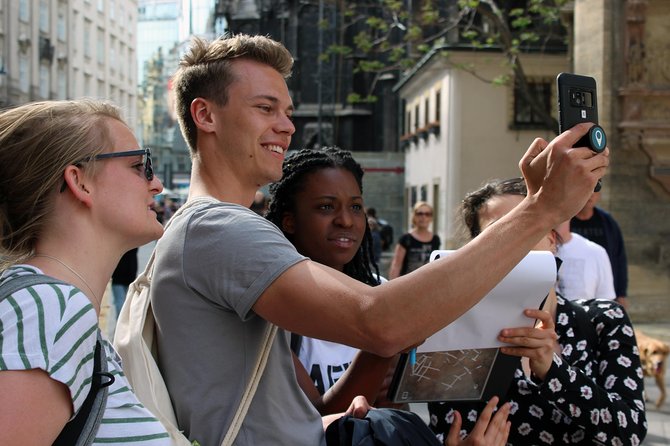
Vienna’s past becomes part of the game on this two-hour augmented reality puzzle rally. You use a special smartphone to see vanished buildings, work through a historical murder case, and follow clues tied to Mozart and the Hofburg area. It is a clever way to make the city’s story active rather than something you only read on a plaque.
I like the mix of paper puzzles and digital clues, and I like that the activity works for both first-time visitors and people who already know Vienna. The main drawback is that you need decent weather, and the non-refundable booking policy leaves little room for a last-minute change of plans.
Key points at a glance
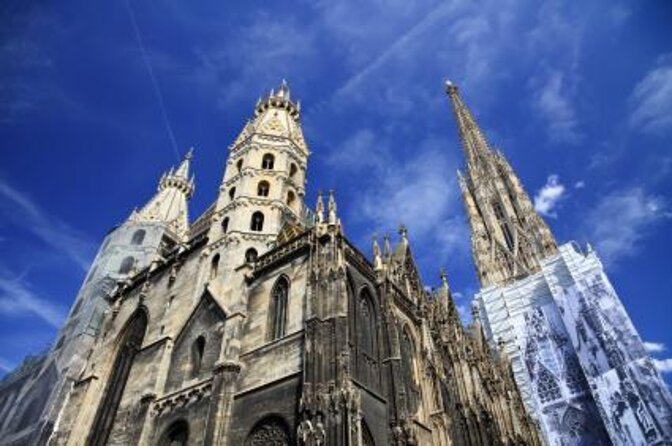
- AR views of old Vienna: The supplied smartphone shows lost buildings and scenes from earlier centuries.
- A historical murder to solve: Your team follows clues and pieces together a case as you move around the city.
- A physical puzzle kit: You receive a map, puzzle sheet, special smartphone, and bag of mysterious clues.
- Hofburg and Mozart connections: The rally ties its challenges to Vienna’s imperial past and Mozart’s time in the city.
- Small-team competition: Teams try to solve the most secrets and crack the code to open a treasure chest.
- Simple central meeting point: The activity begins and ends at Stephansplatz 5, near public transportation.
Why this Vienna puzzle rally feels different
Many city tours ask you to look, listen, and keep walking. This one asks you to investigate. You are not simply shown a building or told a date. You use a device, a clue sheet, and your own team’s reasoning to work out what happened and what comes next.
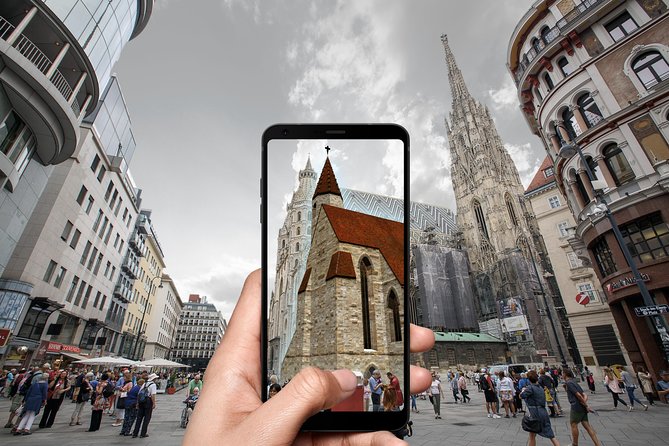
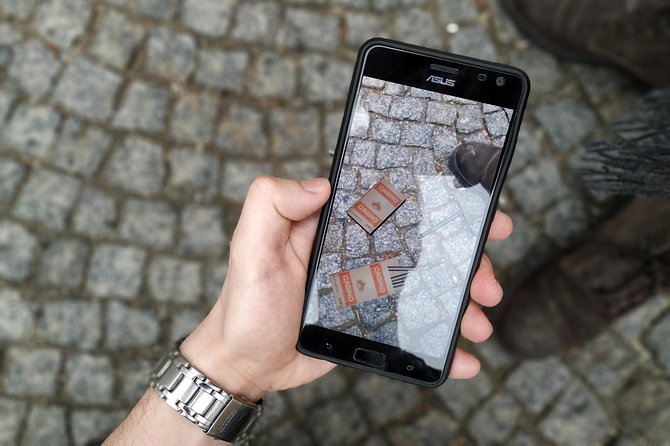
The key feature is augmented reality. The special smartphone acts like a window onto earlier Vienna. At selected points, you can see reconstructions and animations connected with buildings that no longer exist or have changed over time. That gives the city a second layer. You are looking at modern Vienna, but the screen adds a version of the place from centuries earlier.
I find that especially useful in a city as polished and orderly as Vienna. The old center can sometimes feel finished and formal. AR adds a sense of change. Buildings appear, disappear, and take on new meaning as part of the puzzle.
The activity is operated by ArchäoNOW e.U., and its wider style combines archaeology, city exploration, and play. You do not need to bring special equipment. The smartphone, card, puzzles, and clue bag are supplied at the start.
More Escape Games in Vienna
- Vienna: Scavenger Hunt Self-Guided Tour
★ 4.7 · 83 reviews - Vienna: The Great Plague Exploration Game
★ 4.5 · 60 reviews - Mystery rally Vienna: The scary city
★ 4.5 · 23 reviews
Starting at Stephansplatz 5
Your meeting point is Stephansplatz 5, 1010 Vienna, in the city center. That is a practical place to begin because it is near public transportation and easy to connect with a day of sightseeing in central Vienna.
At the start, you receive the materials needed for the game:
- An augmented reality-enabled smartphone
- An interactive map
- A puzzle sheet
- A bag containing mysterious clues
The equipment matters because this is not a phone app that you download and operate alone. The special device is part of the experience, and the organizers provide the physical pieces that make the hunt feel like a real investigation.
You then form small teams. The maximum group size for the whole activity is 24 people, so the rally is not designed as a large sightseeing crowd. The exact number of teams depends on the booking, but the format is built around cooperation and comparison between groups.
Before setting out, make sure everyone in your team understands the basic task. You are trying to solve secrets, connect clues, and reach the final hidden code. Keep the map and puzzle sheet together. If one person carries every item, the rest of the group can easily miss important details.
Seeing vanished Vienna through the smartphone
The best part of the rally is the way the phone changes your view of familiar places. The screen can show old buildings and animations linked to Vienna’s earlier centuries. This is more memorable than a standard explanation because you can compare the present-day setting with what once occupied the same space.
The technology is not there simply for decoration. You need to use what appears on the screen to help solve the puzzles. One particularly useful feature is the display of Hofburg structures from past centuries. These images provide information needed for certain challenges, so you are encouraged to pay attention instead of treating the AR scenes as a quick novelty.
That balance is important. A technology-based tour can become a gadget demonstration, with the city pushed into the background. Here, the device supports the story. You still need to observe your surroundings, read the puzzle materials, and discuss possible answers with your team.
You should also expect some trial and error. The puzzles are intended to be challenging, and some require careful attention. If you prefer a tour where every fact is explained immediately, this may feel demanding. If you enjoy working things out, the difficulty gives the walk a clear purpose.
The historical murder case
The rally gives you a historical murder to investigate. That creates a strong reason to keep moving from one clue to the next. Rather than following a loose list of sights, you are trying to understand a case and use the information around you to progress.
The murder story also gives the historical material a human scale. Dates, buildings, and famous names can blur together on a normal city tour. A mystery gives you a question to hold in your mind. Each clue becomes part of a larger problem.
You will work on some puzzles on paper and others through the virtual or augmented reality elements. That variety helps prevent the activity from becoming repetitive. One moment you may be studying the clue sheet, and the next you may be using the smartphone to inspect a historical reconstruction.
I like this setup for mixed groups. A person who enjoys technology can take the lead with the phone, while someone else may be better at spotting patterns on the map or reading the printed clues. It gives different people a useful role.
Still, the competitive format will not suit everyone. If your group becomes too focused on winning, you may rush past the places and historical details. The best approach is to treat the final code as the goal, but not the only reward. Pause long enough to understand why the clue matters.
A completely different way to spend a day here:
- Vienna: Vivaldi’s Four Seasons Concert in Karlskirche
★ 4.7 · 14,951 reviews - Vienna: Spanish Riding School Training
★ 3.9 · 9,281 reviews - Vienna: Skip-the-cashier-desk-line Giant Ferris Wheel Ride
★ 4.5 · 7,859 reviews - Vienna: Schönbrunn Palace & Gardens Skip-the-Line Tour
★ 4.7 · 7,739 reviews
The Hofburg and Mozart connections
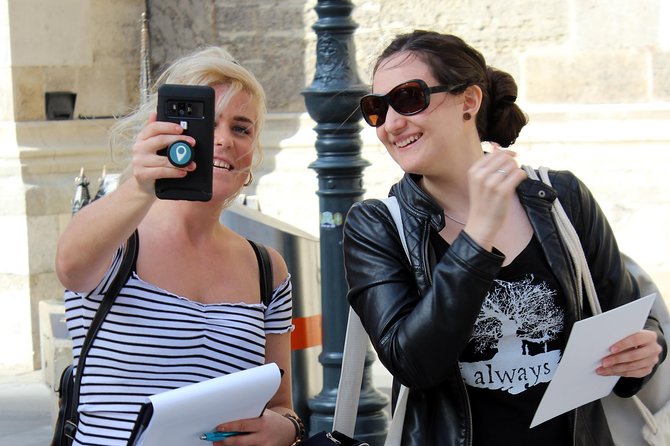
The experience follows in Mozart’s footsteps and includes material connected with the Hofburg. These are useful anchors because both subjects are central to Vienna’s identity, but the rally approaches them through questions and tasks rather than a standard lecture.
The Hofburg is particularly well suited to augmented reality. It has changed over time, and its buildings carry layers of political and cultural history. Seeing earlier versions of the complex on the smartphone helps explain that the imperial center you see today was not fixed in one form.
The Mozart connection adds a different tone. Mozart is one of Vienna’s most recognizable figures, but a puzzle rally can make his connection feel like part of a route rather than a name on a souvenir. You follow clues tied to his presence and use them within the wider investigation.
The supplied information does not promise entry into every building connected with the route, so you should think of this as an outdoor city game with AR views, not a museum admission or a full interior tour of the Hofburg. That distinction matters when comparing it with a guided palace visit.
How the team format affects your visit
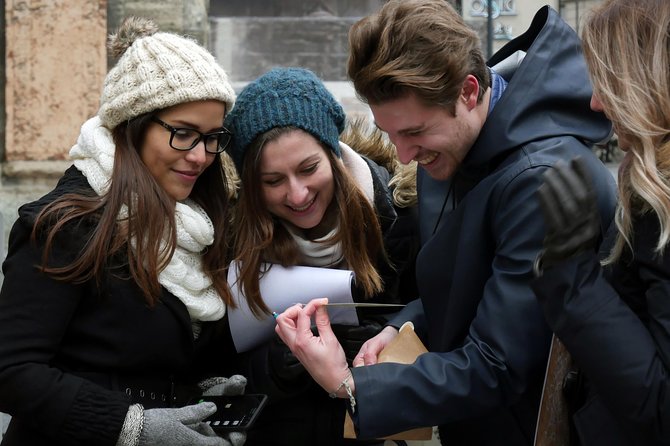
This activity works best with two or more people who are willing to talk through problems. The team format is central. You are not simply receiving answers from a guide. You are deciding what to inspect, which clue to trust, and how to combine information.
The group can also make the experience more social than a normal walking tour. It suits a family celebration, a bachelor party, a city break with friends, or a local group that wants to see Vienna in a new way.
For families, the main question is the age and patience of the children. The activity is presented as suitable for most participants, but the puzzles are described as sometimes quite tricky. Younger children may enjoy the phone and treasure chest more than the historical reasoning. Older children and teenagers may appreciate having a real role in the investigation.
It also suits people who have already visited Vienna. The AR elements can reveal details and earlier versions of places you may have passed before. You do not need to know the city in advance, but prior familiarity may make some locations easier to recognize.
The maximum of 24 participants keeps the total activity from becoming huge, though it is still possible for a popular time to include several teams. The important point is that you work in a small team, not as one large group trying to hear a guide from the back of a crowd.
What the two hours are really worth
The price is $57.32 per person. That is more than a basic self-guided walk, but it includes the special smartphone, map, printed puzzles, clue bag, and a structured two-hour activity.
To judge the value, compare it with what you are buying. You are not paying only for transport or entry to a single monument. You are paying for a prepared game, technology that would be difficult to recreate on your own, and a route that turns central Vienna into a puzzle board.
The value is strongest if you enjoy group activities. Four people splitting into one team can make the cost feel reasonable for a memorable afternoon or evening plan. It is less attractive if you mainly want a quiet explanation of Vienna’s architecture or a traditional guided walk.
The experience also avoids some usual city-tour costs. Alcoholic drinks are not included, but none are promised. Bring your own refreshments if needed, while keeping your attention on the map, phone, and clues.
Two hours is a useful length. It is long enough to build a story and reach a final challenge, but short enough to fit around other central Vienna plans. You should not expect a full survey of the city. The point is a focused route with selected historical material.
Weather, clothing, and practical planning
Good weather is required. If poor weather causes the activity to be canceled, you are offered another date or a full refund. That protection applies when the organizer cancels, but the standard booking itself is non-refundable and cannot be changed for any reason.
Plan this as an outdoor activity. Wear shoes you can walk in and clothing suited to the forecast. The route information does not specify a sheltered alternative, so a rainy day could affect both your comfort and your ability to concentrate on the phone and printed clues.
The activity begins and ends at the same meeting point, Stephansplatz 5. That makes planning easier. You can continue sightseeing from the center afterward, return to your accommodation, or arrange another nearby activity without needing to find a separate finishing location.
Confirmation is sent within 48 hours of booking, subject to availability. The experience requires a minimum number of participants, and if that minimum is not reached, you are offered another date or experience, or a full refund.
Service animals are allowed, and most people can participate. The supplied information does not give detailed accessibility information about every part of the route, so contact the provider before booking if you need specific mobility arrangements.
Who will enjoy it most
I would recommend this for people who like solving problems while they sightsee. It is a particularly good match for:
- Families looking for a shared activity rather than a quiet museum visit
- Friends planning a celebration or bachelor party
- Couples who enjoy mysteries and technology
- Visitors who want a different way to approach the Hofburg and central Vienna
- Vienna residents who think they already know the old center
- Groups with a mix of history fans and people who prefer interactive entertainment
It may not be the right choice if you want a slow, highly detailed historical lecture, a food-focused tour, or guaranteed indoor shelter. The game asks you to participate. You need to read, compare, discuss, and sometimes try an answer that may not be right the first time.
The strongest feature is the blend of old and new. The historical material is not separated from the modern city. It appears on your screen while you are standing in the present-day streets, and the puzzles give you a reason to pay attention.
Should you book the Vienna AR puzzle rally?
Book it if you want Vienna to feel like a mystery rather than a checklist. The combination of lost buildings, Hofburg scenes, Mozart connections, a murder case, and a final treasure chest gives you a clear story to follow.
I especially recommend it for a group that likes friendly competition and does not mind a few difficult puzzles. The $57.32 price is fair when you value the supplied technology and the two-hour team format, but less compelling if you would rather spend that money on a conventional guided tour or museum admission.
Check the weather before booking, remember that ordinary cancellations are non-refundable, and choose teammates who will share the work. With those points in mind, this is a smart way to see central Vienna through a playful historical lens.
FAQ
Where does the Vienna Augmented Reality Puzzle Rally begin?
It begins at Stephansplatz 5, 1010 Vienna, Austria.
Where does the activity finish?
The rally ends back at the meeting point.
How long does the experience last?
The activity lasts approximately two hours.
What is included?
You receive special augmented reality-enabled smartphones, a card, puzzles, and a bag of clues.
Are alcoholic beverages included?
No. Alcoholic beverages are not included.
What will I do during the rally?
You will work in a small team, use an interactive map and clues, view historical material through augmented reality, solve a historical murder case, and follow in Mozart’s footsteps.
Does the experience include augmented reality technology?
Yes. Special AR smartphones are provided, and the displays show historical scenes such as earlier versions of buildings in the Hofburg area.
How many people can take part?
The activity has a maximum of 24 participants.
Is the experience suitable for most people?
The supplied information states that most people can participate. Service animals are also allowed.
What happens if bad weather cancels the activity?
You will be offered a different date or a full refund if the activity is canceled because of poor weather.
Just added around Vienna
- Vienna: UNESCO Schönbrunn Palace Guided Tour with Entry★ 4.5 · 94 reviews
- World War II History Vienna Old Town Private Walking Tour★ 4.8 · 9 reviews
- Vienna: Winery and Wine Tasting Tour with a Wine Expert★ 5.0 · 5 reviews
- Vienna: Wine Tasting E-Bike Tour★ 4.9 · 46 reviews
- Vienna: Wine Tasting at Schönbrunn Palace★ 4.3 · 71 reviews
- Vienna: Wine Tasting Tour★ 4.8 · 61 reviews
- Vienna: Wachau Valley Private Kayak and Wine Tour★ 5.0 · 3 reviews
- Vienna: Wiener Schnitzel and Strudel Cooking Class★ 4.9 · 126 reviews
Escape Games & Scavenger Hunts, compared.
Private City Discovery walk – Historical Treasure hunt
Read our review →
Vienna Scavenger Hunt and Highlights Self Guided Audio Tour
Read our review →Browse the lists this tour appears in