
Reviewed · MUSEUMS
Vienna: Heidi Horten Collection Museum Entry Ticket
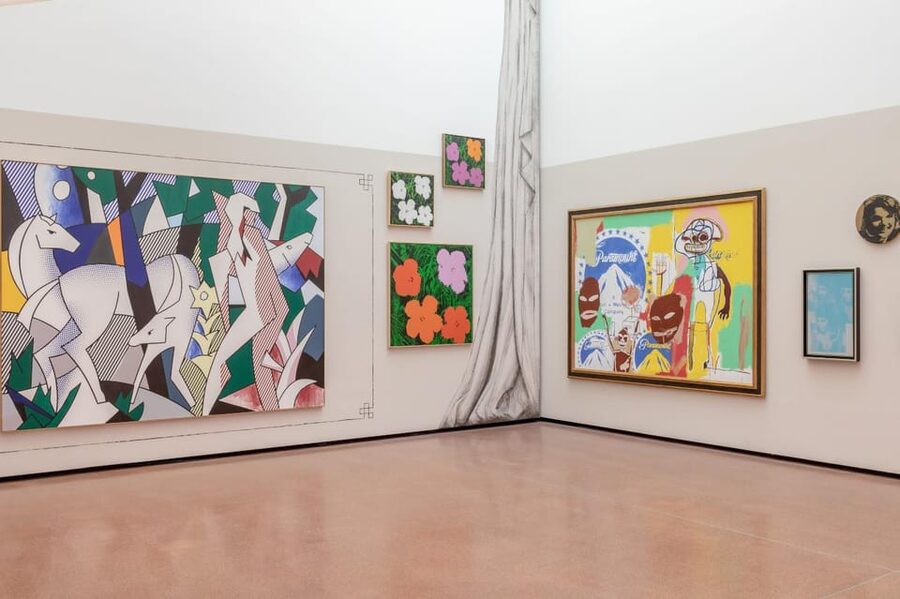
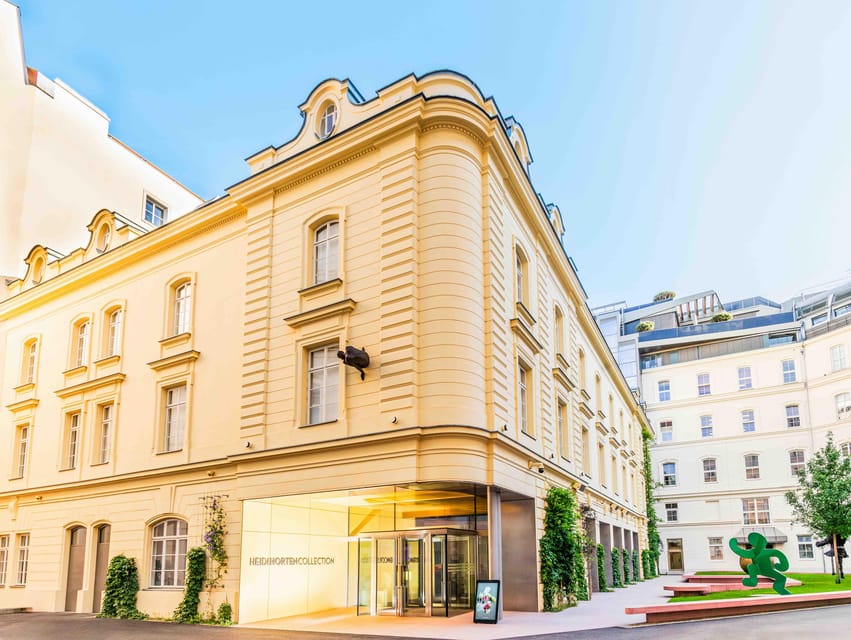
The most surprising part of the Heidi Horten Collection is the building itself. This former Habsburg city palace has been reworked into a modern art setting, with striking interiors, a sculpture garden, and a first-floor Tea Room that feels part sitting room, part cabinet of curiosities. You are not simply walking into a white-walled gallery.
I like the strong pairing of Gustav Klimt and Andy Warhol, which gives the main display a clear hook without limiting it to two artists. I also like the free English or German Smartify audio guide, since it lets you set your own pace. The main consideration is practical: large bags, luggage, umbrellas, pets, and flash photography are not allowed, and from March 9 to 26, 2026, only one floor is open at a reduced price.
Key points to know before you go
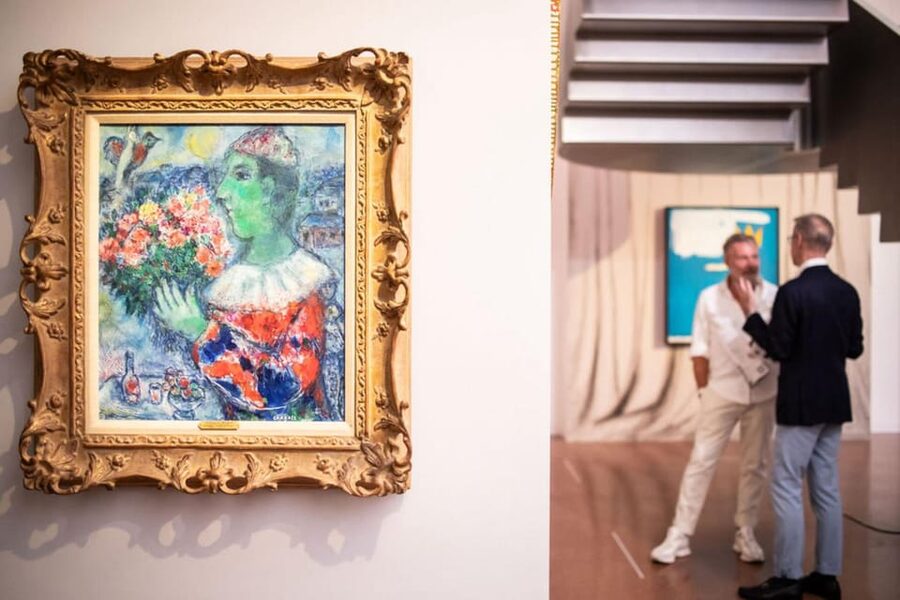
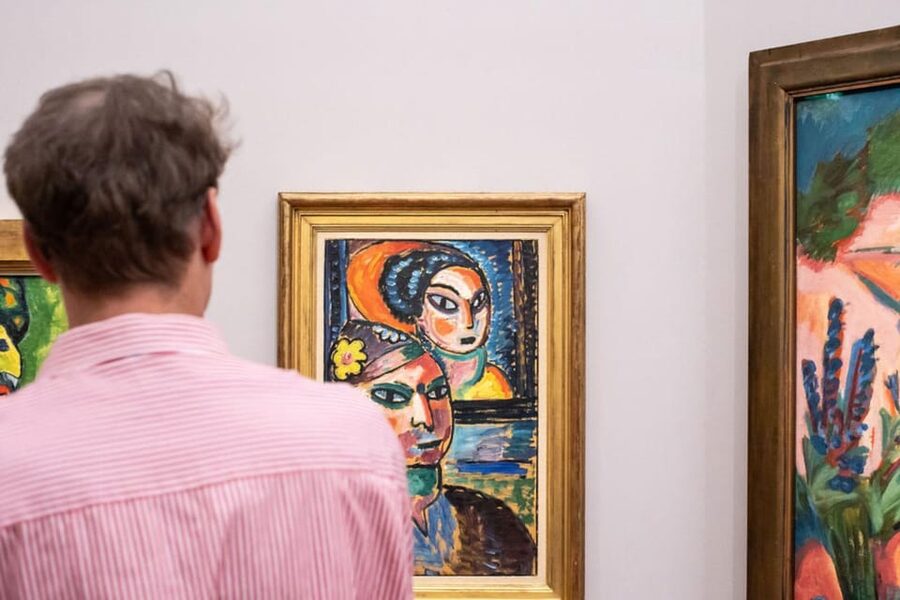
- Klimt meets Warhol: The main exhibition links icons of modern and contemporary art, including Klimt, Warhol, Picasso, Rothko, Matisse, Basquiat, and many others.
- The palace is part of the experience: A former Habsburg city palace now contains an intentionally theatrical museum interior.
- Start outside: The sculpture garden sits directly in front of the museum and gives you an easy first look before entering.
- The Tea Room is unusual: Markus Schinwald and Hans Kupelwieser transformed a classicist room into a display of objects and handicrafts from three centuries.
- The Line adds another layer: This temporary exhibition traces the many uses of the line, from Vienna around 1900 to the present day.
- Your phone is your guide: The free Smartify audio guide works in English and German, but keep your ticket easy to scan. One booking note reports that a phone ticket was difficult to read.
A modern collection inside a former palace
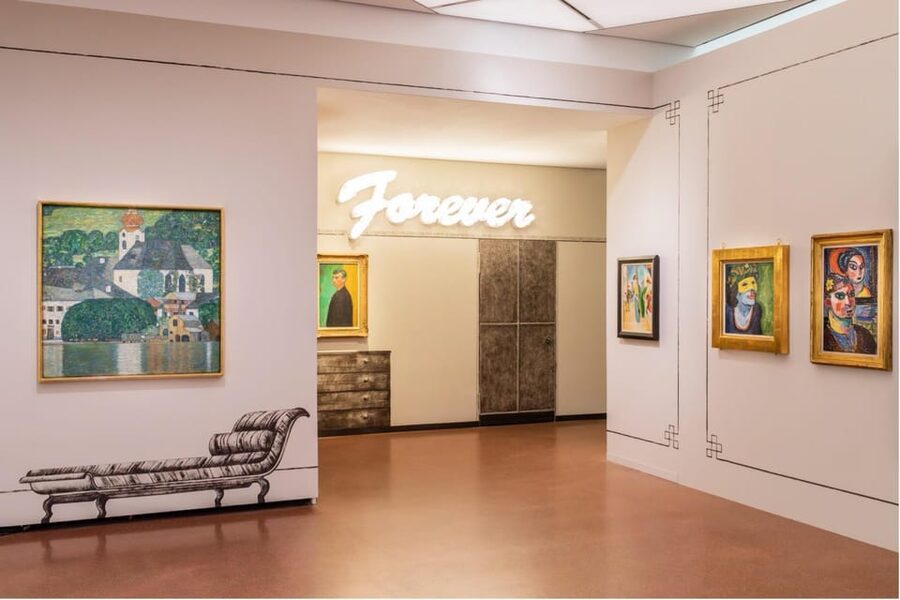
The Heidi Horten Collection sits in the heart of Vienna’s historic center, where grand old buildings are part of the daily street scene. That setting matters. You get a compact art visit in an old imperial quarter, but the museum itself does not try to imitate a palace in every room.
Instead, the building treats architecture as part of the artwork. The interior was designed to make the collection feel theatrical and highly considered. You might find bold color, unusual room transitions, and displays that make you look at the walls, ceilings, and cases as carefully as the paintings.
Before you pass through the entrance, take a moment in the sculpture garden. It is directly in front of the museum, so it requires no separate planning. This is a useful place to get your bearings and to see how three-dimensional works relate to the former palace facade.
The garden is also a good choice if your museum companions have different levels of interest in modern art. You can spend a few minutes outside before committing to the full interior visit. Since the ticket is valid for one day, you are not pushed into a timed, rushed circuit.
More museums and galleries in Vienna:
- Vienna: Skip-the-Line Sisi Museum, Hofburg and Gardens Tour
★ 4.8 · 5,918 reviews - Vienna Kunsthistorisches Museum Day Admission Ticket
★ 4.6 · 3,690 reviews - Tickets for the Albertina Exhibitions
★ 4.7 · 2,126 reviews
The Tea Room and the museum’s unusual personality
The first-floor Tea Room is one of the collection’s most distinctive spaces. Markus Schinwald and Hans Kupelwieser designed it as a blend of a traditional parlour and a cabinet of curiosities.
The room presents valuable handicrafts and other treasures from three centuries. That gives your visit a useful pause from the paintings and sculptures. Instead of moving from one large canvas to the next, you get a room built around objects, decoration, and the pleasure of looking closely.
I would treat the Tea Room as more than a quick stop on the way to the main galleries. Its classicist setting creates a deliberate contrast with the museum’s modern display ideas. The result is a museum experience that shifts between palace atmosphere, contemporary design, and historical objects.
The exact route through the building can vary with the exhibitions, so follow the signs on the day of your visit. The important point is that the building is not a neutral container. Its architecture and room design are part of what you pay to see.
KLIMT ⇄ WARHOL: a broad tour of 20th-century art
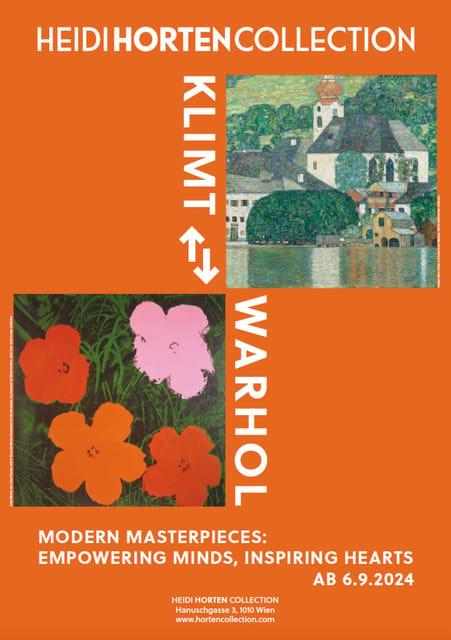
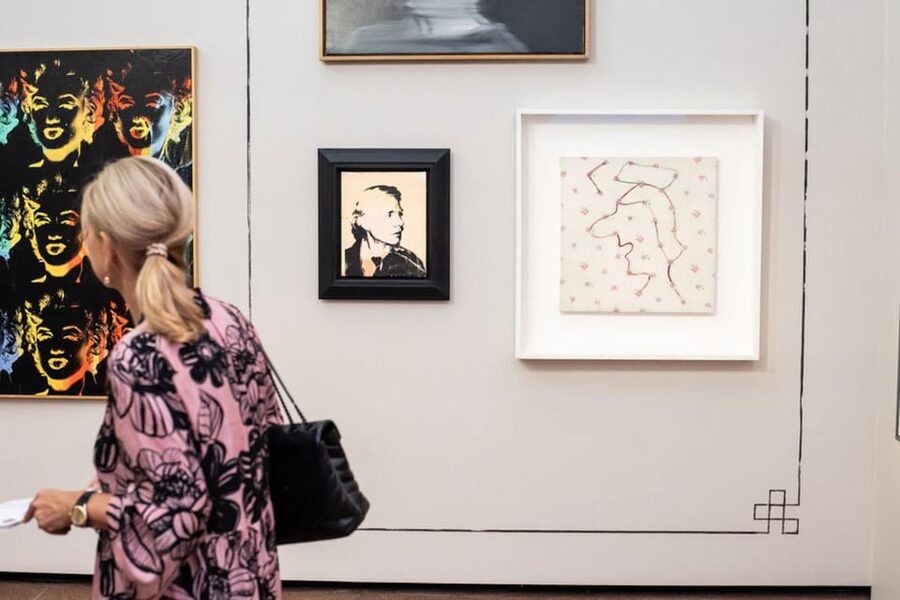
The central exhibition, KLIMT ⇄ WARHOL. Modern Masterpieces, brings together paintings, drawings, and sculptures from modern and contemporary art. Klimt and Warhol provide the headline, but the display reaches far beyond them.
You can expect works connected with:
- Francis Bacon
- Georg Baselitz
- Jean-Michel Basquiat
- Marc Chagall
- Kees van Dongen
- Lyonel Feininger
- Lucio Fontana
- Keith Haring
- Damien Hirst
- Ernst Ludwig Kirchner
- Paul Klee
- Yves Klein
- Gustav Klimt
- Roy Lichtenstein
- René Magritte
- Franz Marc
- Henri Matisse
- Joan Miró
- Emil Nolde
- Pablo Picasso
- Robert Rauschenberg
- Gerhard Richter
- Mark Rothko
- Andy Warhol
That list tells you what kind of visit this is. You are not coming for a single artist study or a tightly focused historical argument. You are getting a wide look at major directions in 20th-century art, with familiar names placed near artists who may be less familiar to you.
The Klimt and Warhol pairing is useful because it sets up a conversation between two very different kinds of image-making. Klimt is associated with ornament, pattern, and the human figure, while Warhol is tied to repetition, popular imagery, and the visual language of mass culture. The surrounding artists widen that conversation into abstraction, expressionism, surrealism, color-field painting, Pop Art, and later contemporary work.
The display was designed by Austrian artist Markus Schinwald. That detail matters because the exhibition is not just a sequence of famous works hung in chronological order. The rooms are intended to create visual connections, and you may notice that the arrangement itself asks you to compare color, line, scale, or subject.
This approach has a benefit and a tradeoff. You get variety and plenty of visual impact in one visit. On the other hand, you may want more historical explanation if you prefer a strict timeline or detailed background on every artist. The audio guide helps with that, but it cannot turn a broad collection display into a full art-history course.
The Line follows one simple idea across many eras
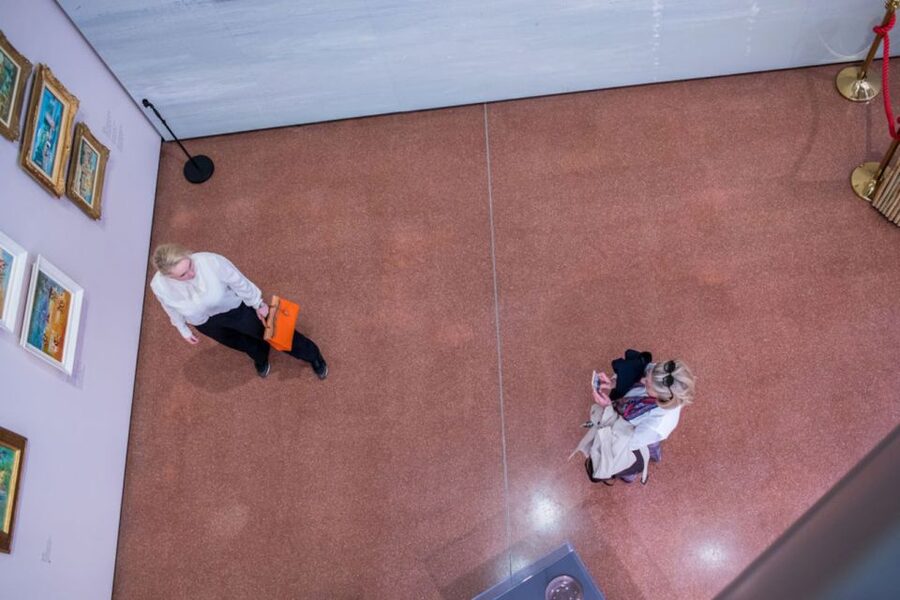
The temporary exhibition The Line, also presented as Die Linie, runs until March 8, 2026. It focuses on the line as one of art’s most basic tools, then shows how much can be done with it.
The exhibition takes you from Vienna around 1900 through the art of the 1960s and on to the present. That route creates a useful link between artists who used lines to describe the visible world and those who treated line as an independent form.
Works are included by Paul Klee, Lucio Fontana, Roy Lichtenstein, Egon Schiele, Jackson Pollock, Agnes Martin, Andy Warhol, Chiharu Shiota, and others. The artists come from Europe, Africa, Asia, North America, and South America.
For you, the appeal is simple: the subject is easy to understand, but the answers are varied. A line can outline a body, mark a surface, suggest movement, divide a picture, or become the entire subject. You do not need specialist art vocabulary to start noticing those differences.
The Line also gives the collection a second point of entry. If Klimt and Warhol sound familiar but you want a more focused exhibition idea, this show may be the part that gives your visit structure. If you are visiting after March 8, 2026, check the current program because this particular temporary exhibition may no longer be available.
A few more Vienna days worth a look
- Vienna: Vivaldi’s Four Seasons Concert in Karlskirche
★ 4.7 · 14,951 reviews - Vienna: Spanish Riding School Training
★ 3.9 · 9,281 reviews - Vienna: Skip-the-cashier-desk-line Giant Ferris Wheel Ride
★ 4.5 · 7,859 reviews - Vienna: Schönbrunn Palace & Gardens Skip-the-Line Tour
★ 4.7 · 7,739 reviews
Use the Smartify audio guide at your own pace
Entry includes a free Smartify audio guide on your mobile phone, in English or German. That is a real value at this price, especially if you like context but do not want to join a group.
Use it selectively. You do not need commentary for every work. I would choose a few artists you already know, then listen to the pieces that seem less familiar. This keeps the visit from becoming a long session of staring at your phone instead of the art.
The audio guide also gives you flexibility. You can pause, skip, and return to a work without holding up anyone else. That suits a collection with many artists and several exhibition ideas better than a fixed talk would.
A private guided tour is available, but it is not part of this ticket. Creative workshops in the museum studio are also separate. If you want a specialist to lead the visit or you are looking for a hands-on activity, budget for those as additional options rather than assuming they are included.
One practical point deserves attention. A verified booking note says the ticket on a phone was not readable. That does not mean every phone voucher will fail, but you should open the ticket before reaching the turnstile and make sure the code is bright and ready to scan. Proceed directly to the museum turnstile to validate the ticket.
How much time should you allow?
The ticket is valid for one day, and availability shows the starting times when you book. The supplied details do not set a fixed visit length, so you can choose your own pace within the museum’s operating schedule.
For a short visit, focus on the sculpture garden, the Tea Room, and the main rooms of KLIMT ⇄ WARHOL. Add The Line if it is still running during your visit.
If you like to read wall text, listen to audio commentary, and look closely at drawings, allow more time. The number of artists alone makes this more than a quick photo stop. Paintings, drawings, sculpture, decorative objects, and the architecture all compete for your attention.
The one-day validity is helpful if you are building a flexible Vienna schedule. It gives you room to visit the museum without treating it like a timed attraction. Still, the ticket does not promise unlimited access to every floor in every period. The March 2026 reduction is a clear example of why you should check the current exhibition setup before paying.
Is $18 a fair price?
At $18 per person, the ticket is reasonably priced if you plan to see both the main collection display and the temporary exhibition. You are paying for entry to a central Vienna museum, a sculpture garden, an architecturally distinctive interior, and a phone audio guide in two languages.
The value is weaker if you only want a quick look at one famous Klimt or Warhol. The collection is broad, and its strength comes from the full combination of art, design, and temporary exhibitions. If you are not interested in modern or contemporary art, the ticket may feel less worthwhile.
The local price information also lists a reduction from EUR 16 to EUR 12 from March 9 through March 26, 2026, because only one floor will be accessible. The stated online price is $18, so check the amount shown for your date before booking. During that limited-access period, you should expect a smaller visit and a lower price.
Free cancellation up to 24 hours before the visit and a reserve-now, pay-later option make this easier to fit into a changing Vienna plan. Those policies are useful, but they do not change the main value question: book it if you want a compact survey of major modern artists in an unusual setting.
Who will enjoy this museum most?
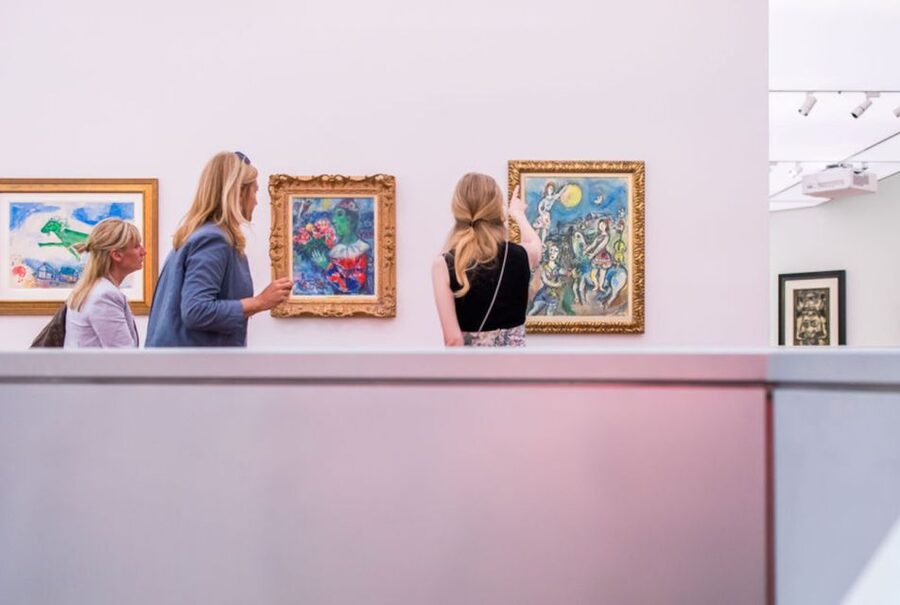
I would recommend this experience to you if you want famous names in one place but do not want to spend half a day in a huge museum complex. The selection includes enough major artists to reward an art enthusiast, while the audio guide helps a first-time modern-art visitor find a way in.
It also suits people who care about interiors and presentation. The former palace, sculpture garden, Tea Room, and Schinwald-designed exhibition display give you more than a standard gallery circuit.
Families and mixed-interest groups may appreciate the flexible format. You can move at different speeds, take in the sculpture garden, and choose which audio stops deserve your attention. The ticket is wheelchair accessible, though the temporary one-floor arrangement in March 2026 is worth checking if access to particular exhibition areas matters to you.
I would be more cautious if you are carrying luggage or large bags. They are not allowed, and umbrellas are also prohibited. Pets cannot enter, apart from assistance dogs. Flash photography is not permitted, so plan to look rather than use the museum as a photo session.
Should you book the Heidi Horten Collection?
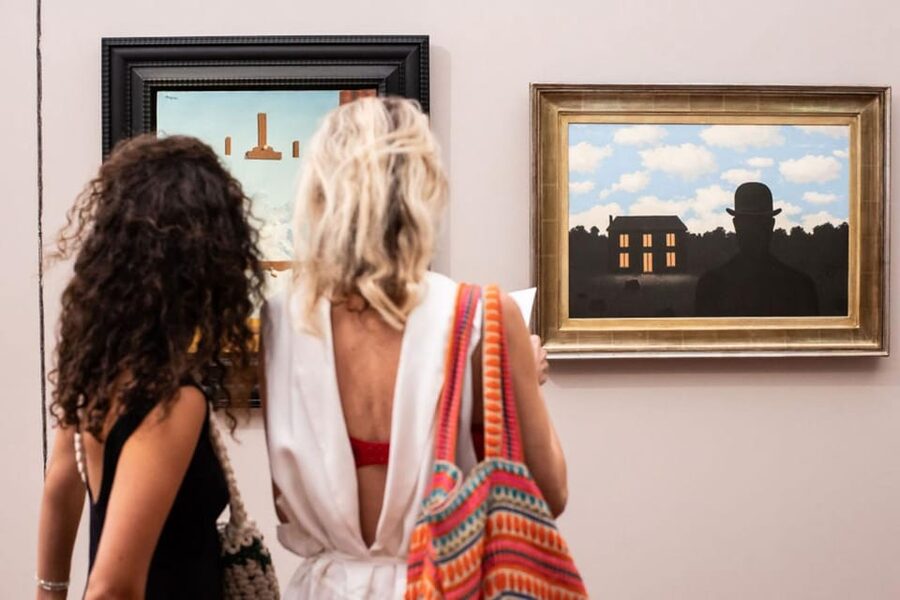
Book this ticket if you want a well-located Vienna art stop with Klimt, Warhol, Picasso, Schiele, Basquiat, Rothko, and many other major names, plus a building that deserves attention on its own. The free English or German audio guide and one-day validity add useful flexibility.
Skip it if your Vienna schedule is already full of traditional imperial sights and you have little interest in modern or contemporary art. Also check the date carefully if you are visiting March 9 to 26, 2026, when only one floor is accessible.
For most art-curious visitors, the combination of broad collection, unusual rooms, sculpture garden, and temporary exhibition makes $18 a fair buy. Just arrive with a scannable phone ticket, no large bag, and enough time to look beyond the headline names.
FAQ
Where is the Heidi Horten Collection?
The museum is in the historic center of Vienna, in Vienna State, Austria.
How long is the ticket valid?
The entry ticket is valid for one day.
What does the ticket include?
It includes entry to the Heidi Horten Collection and a free Smartify audio guide on your mobile phone.
Is the audio guide available in English?
Yes. The audio guide is available in English and German.
Is a guided tour included?
No. A guided tour is not included. Private guided tours are available as a separate option.
Is the museum wheelchair accessible?
Yes, the activity is listed as wheelchair accessible.
Can I bring luggage or a large bag?
No. Luggage and large bags are not allowed.
Are pets permitted?
No. Pets are not allowed, although assistance dogs are permitted.
Can I take photographs with flash?
No. Flash photography is not allowed.
What is The Line exhibition?
The Line is a temporary exhibition about the many uses of the line in art. It includes works by Paul Klee, Lucio Fontana, Roy Lichtenstein, Egon Schiele, Jackson Pollock, Agnes Martin, Andy Warhol, Chiharu Shiota, and others, and is scheduled to run until March 8, 2026.
Just added around Vienna
- Vienna: UNESCO Schönbrunn Palace Guided Tour with Entry★ 4.5 · 94 reviews
- World War II History Vienna Old Town Private Walking Tour★ 4.8 · 9 reviews
- Vienna: Winery and Wine Tasting Tour with a Wine Expert★ 5.0 · 5 reviews
- Vienna: Wine Tasting E-Bike Tour★ 4.9 · 46 reviews
- Vienna: Wine Tasting at Schönbrunn Palace★ 4.3 · 71 reviews
- Vienna: Wine Tasting Tour★ 4.8 · 61 reviews
- Vienna: Wachau Valley Private Kayak and Wine Tour★ 5.0 · 3 reviews
- Vienna: Wiener Schnitzel and Strudel Cooking Class★ 4.9 · 126 reviews
Museums, compared.

Skip-the-Line Sisi Museum, Hofburg and Gardens Tour
Read our review →
Vienna Kunsthistorisches Museum Day Admission Ticket
Read our review →

Chocolate Workshop in Chocolate Museum w/ Tasting
Read our review →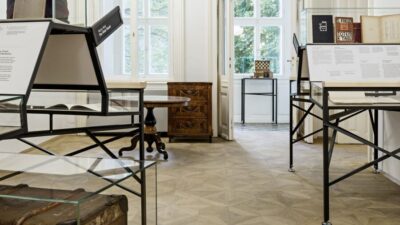
St. Stephen’s Cathedral & Dom Museum Wien Tickets
Read our review →

Browse the lists this tour appears in