Reviewed · TICKETS
Vienna House of Music Entrance Ticket
Vienna’s House of Music turns sound into something you can touch, shape, and even conduct. You can test the physics of hearing, create a sound creature in the new Virtual Reality Sound Lab, and wave a baton at a video of the Vienna Philharmonic while the system grades your performance.
I like the mix of serious musical history and hands-on play. The Vienna Philharmonic archive gives the visit real weight, while the composer rooms make Beethoven, Mozart, Schubert, Mahler, and the Strauss family easier to understand. One consideration: afternoon crowds can make the interactive stations less comfortable, so I would aim for the morning if your schedule allows.
Key points to know before you go
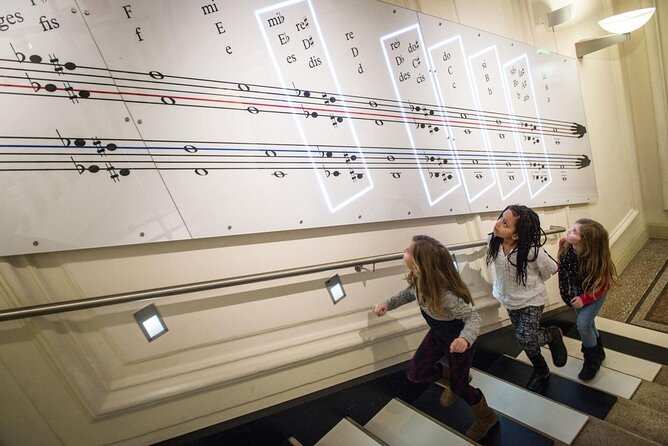
- Conduct the Vienna Philharmonic: Follow the orchestra with a virtual baton and receive feedback on your timing.
- Build a sound creature: The new Sonotopia Universe includes a VR Sound Lab where you create your own audio character.
- Meet Vienna’s composers: Learn about Beethoven, Mozart, Schubert, Mahler, and the Strauss family through themed exhibits.
- Use your phone as a guide: The free HdM Museums Guide is available in eight languages, with a family version in German and English.
- Plan for 90 minutes to two hours: Music fans and families who try every station may want more time.
- Visit for about $22.93: The ticket offers good value if you enjoy interactive museums, classical music, or family activities.
Why the House of Music is different from a standard museum
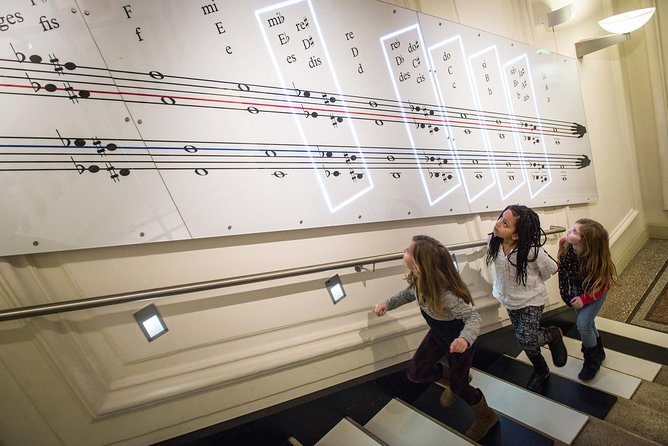
Vienna has no shortage of grand concert halls, composer statues, and formal music exhibits. The House of Music takes another route. It explains how sound works, then asks you to experiment with it.
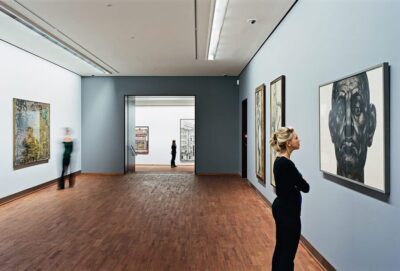
That makes the museum useful even if you cannot tell Mozart from Mahler. You are not expected to spend the whole visit reading long panels. Instead, you can listen, move, conduct, build, and compare. The experience works as both a music museum and a science museum.
I especially like that the building does not treat classical music as something only experts can enjoy. A child can have fun with the sound stations, while an adult can spend time with the archives and composer material. The result is lively without losing the musical substance.
The ticket is for independent entry. There is no guide, hotel pickup, food, or drink included, so you control the pace and choose which exhibits deserve extra time. The free smartphone guide helps fill that gap if you want more background as you go.
A few more Vienna days worth a look
- Vienna: Vivaldi’s Four Seasons Concert in Karlskirche
★ 4.7 · 14,951 reviews - Vienna: Spanish Riding School Training
★ 3.9 · 9,281 reviews - Vienna: Skip-the-cashier-desk-line Giant Ferris Wheel Ride
★ 4.5 · 7,859 reviews
Start with sound science on the second floor
The second floor, known as the Sonotopia Universe, focuses on the physical side of sound. This is a smart opening because it gives you a basic sense of how sound travels and how people and animals experience it before the museum shifts to famous composers.
You might explore stations that show how sound is created, shaped, and heard. The exhibits also touch on how animals and even a fetus perceive noise and music. These displays give younger children something to do while adults pick up useful facts about hearing.
The new Virtual Reality Sound Lab adds a more modern layer. Here, you can create your own sound creature. That is a memorable idea because it turns an abstract subject into a personal project. You are not just listening to an explanation of sound. You are making something from it.
Allow enough time to try the interactive stations more than once. The museum can be completed in about 90 minutes, but rushing through the Sonotopia Universe would miss much of what makes the House of Music special. If you are visiting with children, expect them to linger at the controls and repeat the activities.
Listen to the Vienna Philharmonic archives
The museum also houses historical archives of the Vienna Philharmonic. This section connects the playful exhibits with the musical institution that has helped define Vienna’s international reputation.
You can listen to the orchestra’s famous New Year’s Eve concert. That gives the visit a direct link to a familiar Viennese tradition, rather than presenting the orchestra as a name on a wall. The archive is especially worthwhile if you already enjoy classical music or plan to attend a concert during your stay.
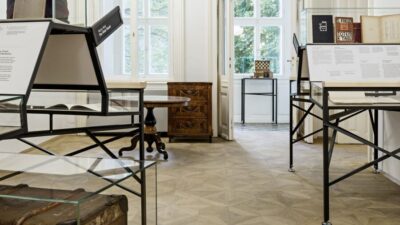
I would not hurry through this area. The sound science floors are active and colorful, but the archive offers a quieter pause. You can listen, read, and consider how Vienna’s concert tradition fits into the city’s identity.
The archive may be less exciting for a young child than the VR lab or conducting station. That is not a flaw, but it helps to plan your route around your group. Adults can spend time listening while children return to a nearby interactive exhibit.
Meet Mozart, Beethoven, Schubert, Mahler, and Strauss
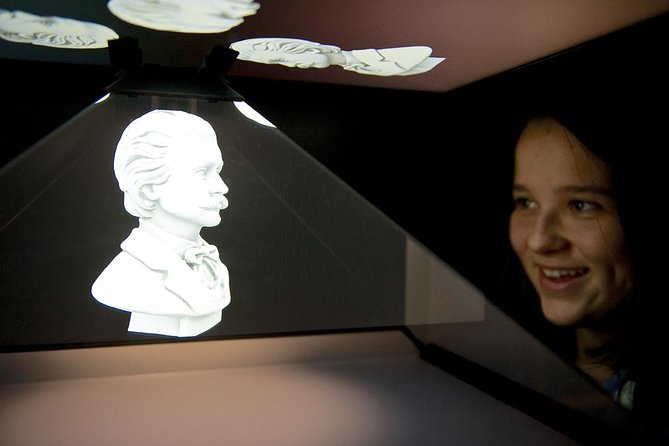
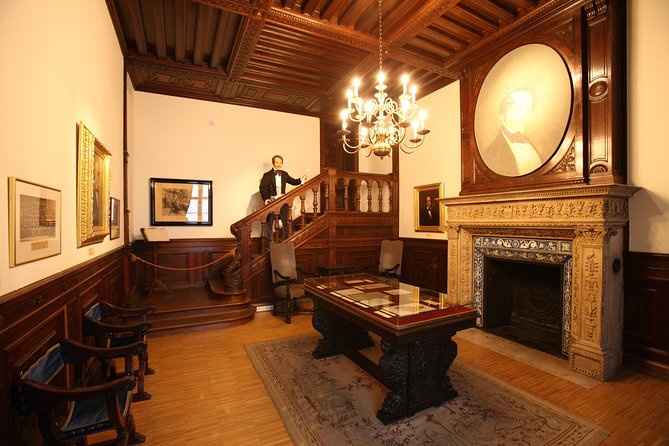
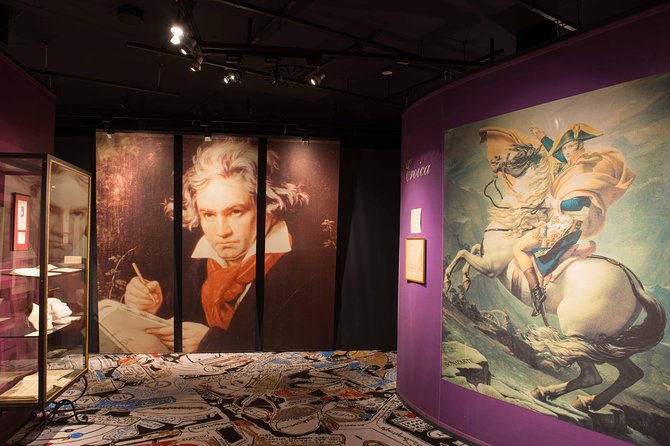
The third floor focuses on composers connected with Vienna. You can learn about Beethoven, Mozart, Schubert, Mahler, and the Strauss family, along with the music they created and their lives in the city.
This is not simply a row of portraits. The museum uses different forms of presentation, so you can approach each composer through sound, images, objects, and interactive material. That variety helps prevent the composer rooms from feeling like a school lesson.
Mozart’s area receives particular praise from the people who enjoy this museum most, and it is a natural favorite for many first-time visitors to Vienna. Still, I would give the other rooms a fair chance. The Strauss family connects especially well with Vienna’s concert and dance traditions, while Beethoven and Mahler offer a different sense of musical scale and personality.
You do not need specialist knowledge to enjoy this floor. If you know only the most famous names, the exhibits give you a starting point. If you already listen to classical music, you can use the rooms to place familiar works within the composers’ lives in Vienna.
A completely different way to spend a day here:
- Vienna: Schönbrunn Palace & Gardens Skip-the-Line Tour
★ 4.7 · 7,739 reviews - Vienna: Light of Creation Votive Church Immersive Light Show
★ 4.8 · 6,779 reviews - Vienna Spanish Riding School Guided Tour
★ 4.7 · 6,765 reviews - Vienna: Classical Concert in the World-Famous Musikverein
★ 4.6 · 6,673 reviews
Take the virtual conductor’s test
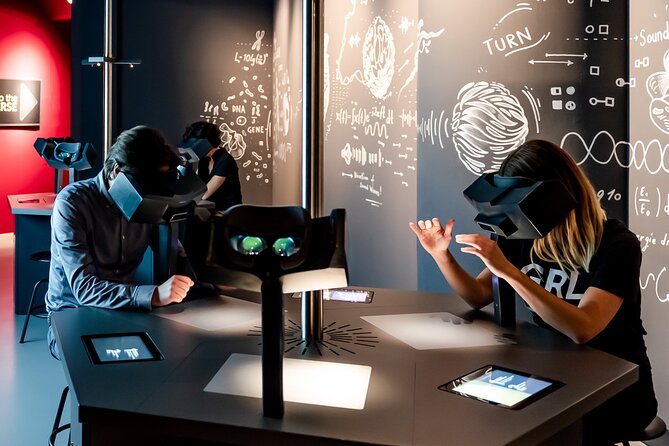
The grand finale is on the fourth floor, where you can try conducting the Vienna Philharmonic. You wave a baton in time with a video of the orchestra, and the exhibit gives you feedback after your attempt.
This is one of the museum’s strongest features because it turns passive listening into a physical challenge. You quickly discover that keeping an orchestra together is not as simple as waving your arm in a dramatic fashion. Timing, control, and attention matter.
The station suits adults and children alike. Parents can take a turn after their children, and the activity gives everyone a shared story from the visit. It is also a good choice for people who love classical music but have never had a direct role in making it.
Expect this to be a popular stop, especially later in the day. If you see a short wait, it may be worth taking your turn then rather than assuming you will return to an empty station. The museum can attract many people in the afternoon and evening.
How long to stay and when to visit
The stated visit time is about one hour and 30 minutes to two hours. That is enough for a solid visit if you keep moving and sample each floor. I would allow more time if you want to hear archive recordings, read the composer material, repeat the sound stations, or visit with children.
The House of Music is open from 10:00 a.m. to 10:00 p.m. on the listed regular dates. On December 24, the hours are shorter, from 10:00 a.m. to 6:00 p.m. It is listed as open daily during the surrounding December dates.
Morning is the practical choice if you want more room at the interactive exhibits. The museum remains useful later in the day, and its long hours make it an easy addition after sightseeing or dinner, but the popular stations may be busier in the afternoon.
The museum is near public transportation, so you do not need a car or a special transfer. Hotel pickup and drop-off are not part of the ticket. Service animals are allowed, and most people can take part in the experience.
Is the $22.93 ticket good value?
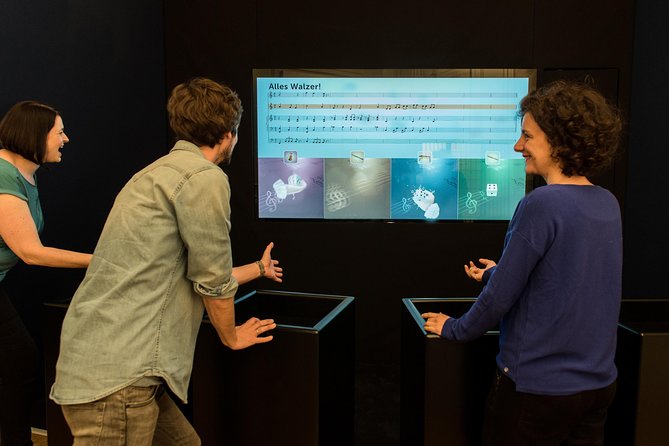
At about $22.93 per person, the ticket costs more than a quick single-room museum visit, but you are paying for several distinct experiences. The price covers sound science, the Vienna Philharmonic archive, composer exhibits, the VR Sound Lab, and the virtual conductor station.
I see the best value for families, curious first-time visitors, and classical music fans who want more than a traditional display of paintings or instruments. A family can spend time at different activity levels, while a solo visitor can move at a faster pace and focus on the archive or composer rooms.
The value is weaker if you want only a quiet museum about Mozart or a formal classical music history collection. The House of Music is built around participation. If you dislike touch screens, experiments, or interactive stations, you may finish quickly and feel that the ticket is less worthwhile.
The free smartphone guide adds useful value. It is available in eight languages, and the family version is offered in German and English. Since there is no live guide included, download it before or at the start of your visit if you want added explanations.
Who will enjoy this most?
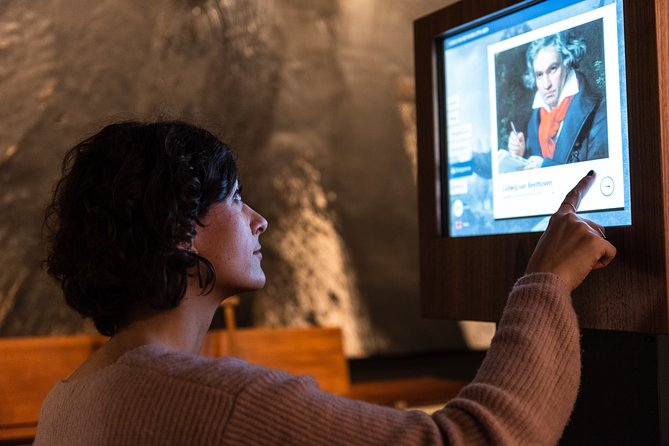
I would recommend the House of Music to families with children, couples looking for an unusual indoor activity, solo visitors with an interest in music, and anyone attending a Mozart, Vivaldi, or other classical concert in Vienna.
It also works well before a concert. The museum gives you context for Vienna’s musical culture without asking you to sit through a lecture. You can visit at your own pace, then move on to an evening performance.
Children aged eight, 12, and 15 can all find something to do here, though the exact appeal will vary. Younger children may prefer the sound and VR stations. Older children and teenagers may enjoy the conductor challenge and the technology. Adults get the composer stories and Philharmonic material.
The museum is not dependent on knowing German. The smartphone guide is offered in eight languages, and most of the appeal comes from visual, audio, and hands-on exhibits. Still, the family guide is specifically available in German and English, so check the available language option that best suits your group.
A practical route through the building
If you want a simple plan, begin with the sound science and Sonotopia Universe on the second floor. Try the VR Sound Lab and the stations that explain hearing and sound before moving into the composer material.
Next, spend time with the Vienna Philharmonic archive. Listen to the New Year’s Eve concert and use this quieter section to connect the science of sound with the performance tradition that Vienna is known for.
Continue to the third floor for Mozart, Beethoven, Schubert, Mahler, and the Strauss family. Take your time here if you want personal stories and musical context, not just quick facts.
Finish on the fourth floor with the virtual conductor station. If the exhibit is crowded, you can return later, but it makes a satisfying final stop because it lets you use your ears, eyes, and arm together.
This route is not mandatory. The ticket lets you explore independently, and the long opening hours make it easy to adjust your pace. I would simply avoid treating the museum as a quick walk-through. The interactive displays are the point, so give yourself time to try them.
Booking and cancellation details
Confirmation is provided at booking, and the experience is commonly reserved about 21 days ahead. You do not need to book a guided tour because this is an admission ticket for an independent visit.
Free cancellation is available up to 24 hours before the experience start time. Cancel at least 24 hours ahead for a full refund. Cancellations or changes made less than 24 hours before the start time are not accepted for a refund, and the cut-off follows local Vienna time.
Should you book the House of Music?
Book it if you want an indoor Vienna activity that combines classical composers with playful technology. The VR Sound Lab, Vienna Philharmonic archive, and virtual conductor station give the visit more variety than a standard composer museum.
It is an especially good pick for families and for anyone planning a classical concert. Go in the morning if possible, download the free guide, and allow two hours rather than trying to squeeze the museum into a short gap.
Skip it if your main goal is a silent, object-focused museum or if you have little interest in sound experiments and interactive displays. For most visitors who want to understand Vienna’s musical world in an active way, the $22.93 ticket is a sensible use of time and money.
FAQ
Where is the House of Music located?
The House of Music is in central Vienna, Austria.
How long does a visit take?
The expected visit lasts about one hour and 30 minutes to two hours. You may want longer if you plan to try every interactive station or spend extra time with the composer exhibits and archives.
Is a guide included?
No. A live guide is not included. You can download the free HdM Museums Guide for your smartphone.
In how many languages is the smartphone guide available?
The smartphone guide is available in eight languages. A family version is available in German and English.
What can I do in the Virtual Reality Sound Lab?
You can create your own sound creature in the new VR Sound Lab, part of the Sonotopia Universe on the second floor.
Can I conduct an orchestra?
Yes. On the fourth floor, you can use an interactive display to conduct a video of the Vienna Philharmonic with a baton. The exhibit provides feedback after your attempt.
Which composers are featured?
The composer exhibits include Beethoven, Mozart, Schubert, Mahler, and the Strauss family.
What are the opening hours?
On the listed regular dates, the House of Music is open daily from 10:00 a.m. to 10:00 p.m. On December 24, it is open from 10:00 a.m. to 6:00 p.m.
Can I cancel for a full refund?
Yes. You can cancel at least 24 hours before the experience start time for a full refund. Cancellations and changes made less than 24 hours ahead are not accepted for a refund.
Just added around Vienna
- Vienna: UNESCO Schönbrunn Palace Guided Tour with Entry★ 4.5 · 94 reviews
- World War II History Vienna Old Town Private Walking Tour★ 4.8 · 9 reviews
- Vienna: Winery and Wine Tasting Tour with a Wine Expert★ 5.0 · 5 reviews
- Vienna: Wine Tasting at Schönbrunn Palace★ 4.3 · 71 reviews
- Vienna: Wine Tasting Tour★ 4.8 · 61 reviews
- Vienna: Wine Tasting E-Bike Tour★ 4.9 · 46 reviews
- Vienna: Concert by the Vienna Baroque Orchestra★ 4.6 · 56 reviews
- Vienna: Wachau Valley Private Kayak and Wine Tour★ 5.0 · 3 reviews
Tickets, compared.

Classic Ensemble Vienna in St. Peter’s Church Ticket
Read our review →
Vienna Kunsthistorisches Museum Day Admission Ticket
Read our review →
Tickets for Mozarthaus Vienna with Audio Guide
Read our review →
Skip-the-Line Entrance Ticket to the Danube Tower
Read our review →