
Reviewed · HOFBURG PALACE TOURS
Vienna: Imperial Treasury in the Hofburg Palace
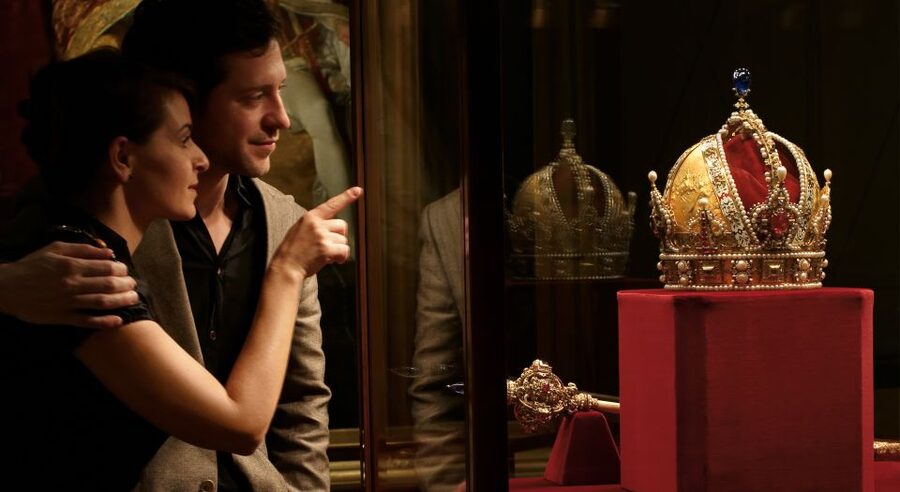
The most striking thing here is the sheer concentration of royal power in a few rooms. Inside the Swiss Wing of the Hofburg, you see the Austrian Imperial Crown, Holy Roman Empire regalia, dazzling jewels, religious relics, and objects so strange that they sound pulled from a medieval storybook.
I like two things especially: the collection is compact enough for an hour or two, and it gives you more than glitter. The robes, keys, tabards, cradles, relics, and ceremonial objects show how the Habsburgs presented authority. The main drawback is the ticket process. A printed voucher is required, and several people found they still had to exchange a voucher for a paper ticket at the counter.
Key points at a glance
- See the Austrian Imperial Crown: One of the Treasury’s most important pieces, alongside the crown of the Holy Roman Empire.
- Look for the giant emerald and agate bowl: The collection includes one of the largest cut emeralds in the world and an agate bowl known as the Holy Grail.
- Allow one to two hours: You can move through quickly in about an hour, but labels and an audio guide can extend the visit.
- Expect more than jewelry: Religious relics, Golden Fleece regalia, Burgundian treasures, keys, tabards, and Napoleon II’s cradle add variety.
- Plan for a ticket exchange: Bring the required printed voucher and allow time at the desk, even if you booked ahead.
- Choose your level of guidance: A guided tour is not included, and the audio guide is also listed separately. You may come with your own guide.
Entering the Hofburg’s Swiss Wing
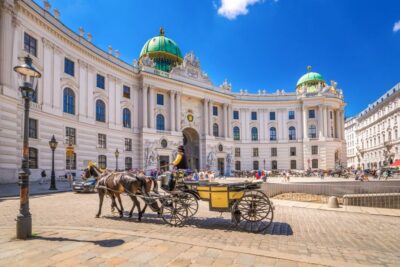
The Imperial Treasury occupies the oldest part of the Hofburg Palace, the Swiss Wing. That setting matters. You are not walking into a modern jewelry showroom. You are entering a former imperial complex where these objects were kept, used, and brought out for ceremonies.
The entrance point is the Swiss Wing in the Vienna Hofburg Palace. The wider Hofburg can feel confusing at first, so give yourself a little time to find the right entrance. One practical snag is that the booking voucher may not work as your final admission ticket. The instructions require a printed voucher, and you may need to exchange it at the ticket counter.
That detail takes some shine off the advance booking. If you are expecting a quick scan and immediate entry, you might be disappointed. The price is about $18 per person, and children and young people under 19 generally enter free. For adults, the fee is reasonable for a major royal collection, but the ticket exchange means the booking is not necessarily a skip-the-line arrangement.
The visit is valid for one day, with starting times depending on availability. The experience is wheelchair accessible. The advertised group size is limited to 10 participants, though the museum visit itself is largely a self-guided experience unless you arrange a guide separately.
More Hofburg and imperial apartments:
- Vienna: Skip-the-Line Sisi Museum, Hofburg and Gardens Tour
★ 4.8 · 5,918 reviews - Vienna: Hofburg and Empress Sisi Museum Guided Tour
★ 4.7 · 1,460 reviews - Vienna: Skip-the-Line Hofburg and Empress Sisi Museum Tour
★ 4.8 · 801 reviews
The crowns that define the collection
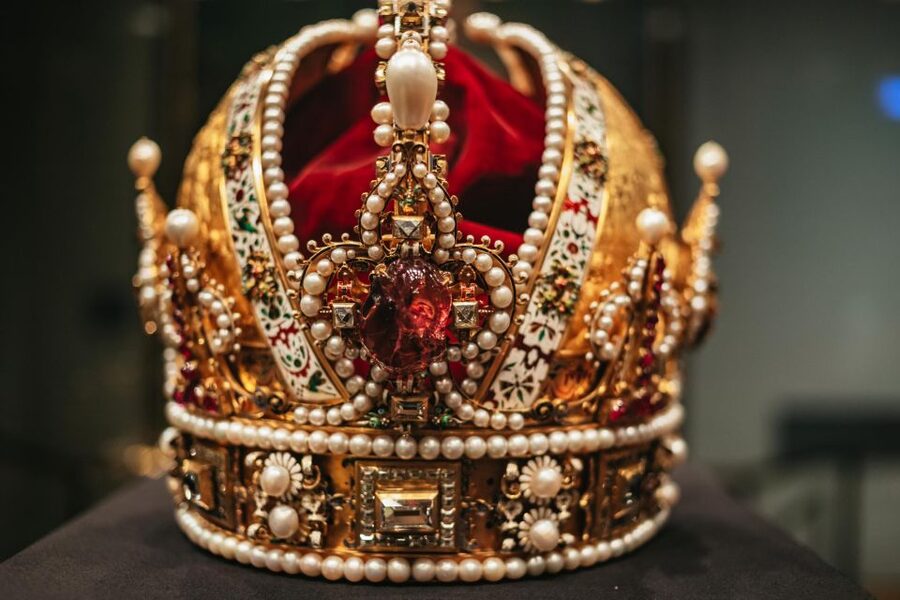
The grandest objects arrive early in your attention: the crowns and regalia connected with the Habsburg rulers and the Holy Roman Empire. The Austrian Imperial Crown is the headline piece, and rightly so. Its shape, stones, and ceremonial role make it more than a beautiful object. It was a public statement about who had the right to rule.
You also see the Imperial Crown associated with the Holy Roman Empire. These objects can blur together if you simply look for sparkle, so I suggest taking time with the labels. Notice the difference between personal jewelry and items made for coronations, ceremonies, or religious display.
The Treasury works best when you read it as a display of political theater. A crown did not merely sit on a royal head. It helped create an image of continuity, divine approval, and inherited power. The stones were part of the message.
The lighting has received mixed reactions. Some objects can be difficult to see clearly, especially darker pieces and highly detailed metalwork. Move slowly and give your eyes time to adjust. If you are keen on photography, do not expect every object to show at its best from the first viewing position.
Emeralds, diamonds, and Habsburg jewelry
The jewelry rooms offer the easy visual pleasure. You will see precious stones, ceremonial pieces, and jewels connected with Habsburg empresses and princesses. Parts of the original jewelry belonging to Empress Elisabeth, known as Sisi, add a more personal link to the dynasty.
Sisi is one of Vienna’s most familiar historical figures, but the jewelry here helps place her in the larger imperial world. The collection is not simply a display of fashionable accessories. It shows how court clothing and jewelry marked rank, family ties, and public identity.
A particularly memorable object is the enormous emerald, described as one of the largest in the world. The exact scale is hard to grasp until you see it beside ordinary objects in the case. Large stones like this also reveal the practical side of imperial collecting: rulers wanted objects that were rare, costly, and impossible to ignore.
You may find the jewels easier to appreciate than the religious items because their purpose is immediately clear. Still, do not rush past the smaller pieces. The workmanship in clasps, settings, and ceremonial details rewards a closer look.
The Golden Fleece and the language of ceremony
The Treasury holds the treasures of the Order of the Golden Fleece, one of Europe’s most important chivalric orders. Here the emphasis shifts from imperial crowns to membership, loyalty, and court ritual.
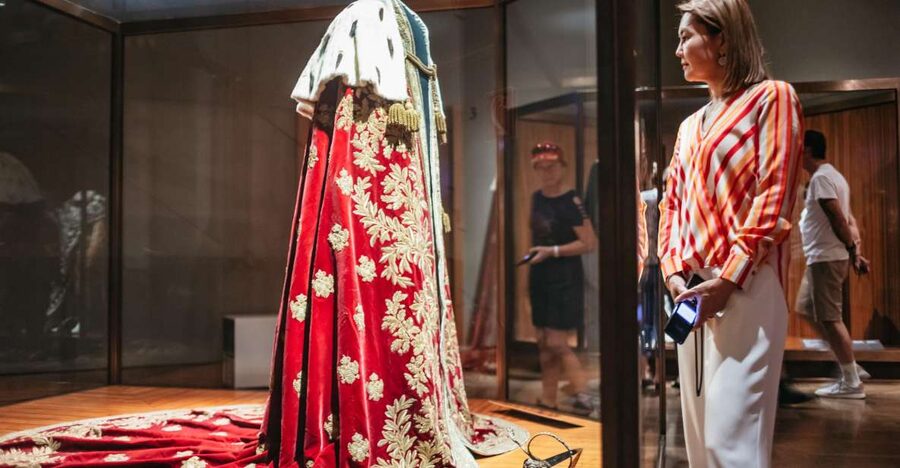
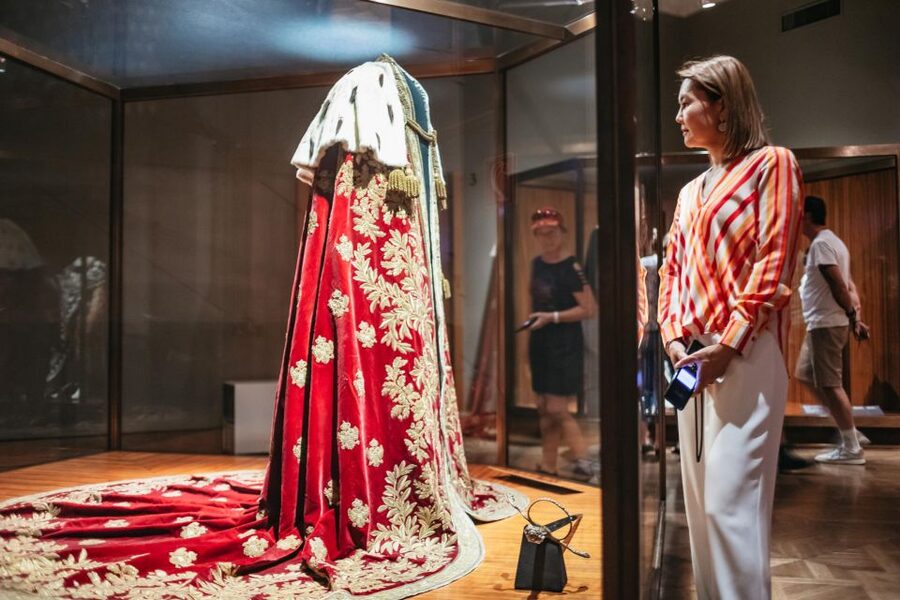
The regalia and clothing help explain how power operated among the ruling class. A tabard, key, or insignia might look modest beside a crown, but each object had a job in the language of ceremony. One visitor found the chamberlains’ keys and the various tabards especially interesting, and I understand why. These pieces make the court feel more human and practical.
The keys suggest access and rank. The tabards identify office or affiliation. Together, they show that an imperial court depended on a large system of people, not just one family wearing jewels.
This section is also useful for anyone who finds crown displays repetitive. If you have already seen several royal collections, look here for the social machinery behind the throne. The visual drama is quieter, but the information can be just as revealing.
A few more Vienna days worth a look
- Vienna: Vivaldi’s Four Seasons Concert in Karlskirche
★ 4.7 · 14,951 reviews - Vienna: Spanish Riding School Training
★ 3.9 · 9,281 reviews - Vienna: Skip-the-cashier-desk-line Giant Ferris Wheel Ride
★ 4.5 · 7,859 reviews - Vienna: Schönbrunn Palace & Gardens Skip-the-Line Tour
★ 4.7 · 7,739 reviews
Burgundy, relics, and objects of faith
The collection includes treasures from 15th-century Burgundy, along with religious objects and relics. This is where the visit becomes less familiar to modern eyes. The value of an object may not depend on its size or diamonds. Age, sacred association, and dynastic ownership can matter just as much.
The Holy Lance, described as dating from the 8th century, is one of the legendary relics on display. You will also encounter objects linked with medieval belief and imperial devotion. The Treasury presents these pieces alongside secular royal possessions, which gives you a sense of how closely faith and government were connected.
The famous agate bowl is known as the Holy Grail. The horn identified as a unicorn’s horn is another unusual highlight. Modern science may make you question the old labels, but that is part of the point. These objects tell you what earlier societies believed, valued, and wanted to preserve.
I find this part strongest when you resist the urge to judge the objects only by modern standards. Ask instead why a ruler would protect a relic, why a strange natural object might become a sacred treasure, and how such items gained authority over time.
Napoleon II’s cradle and the personal side of empire
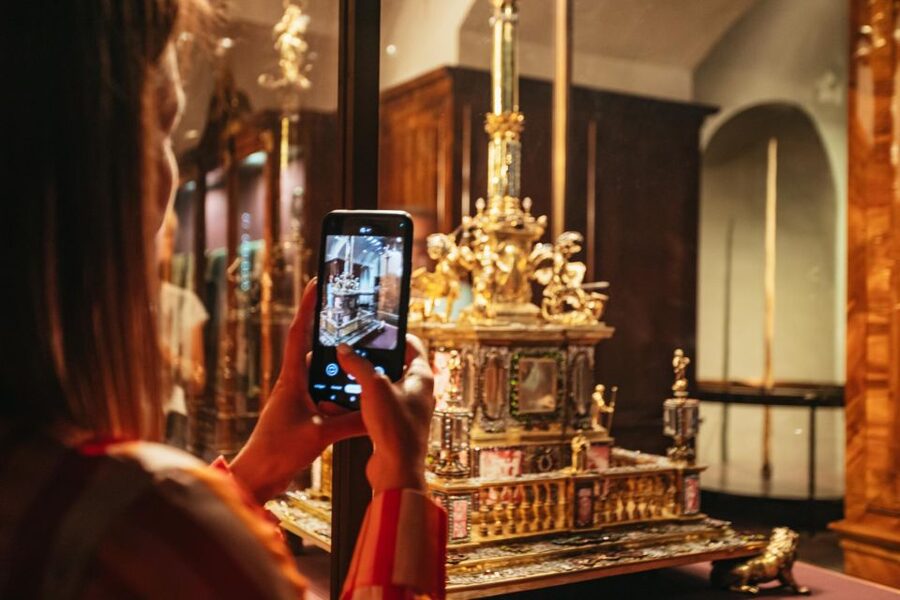
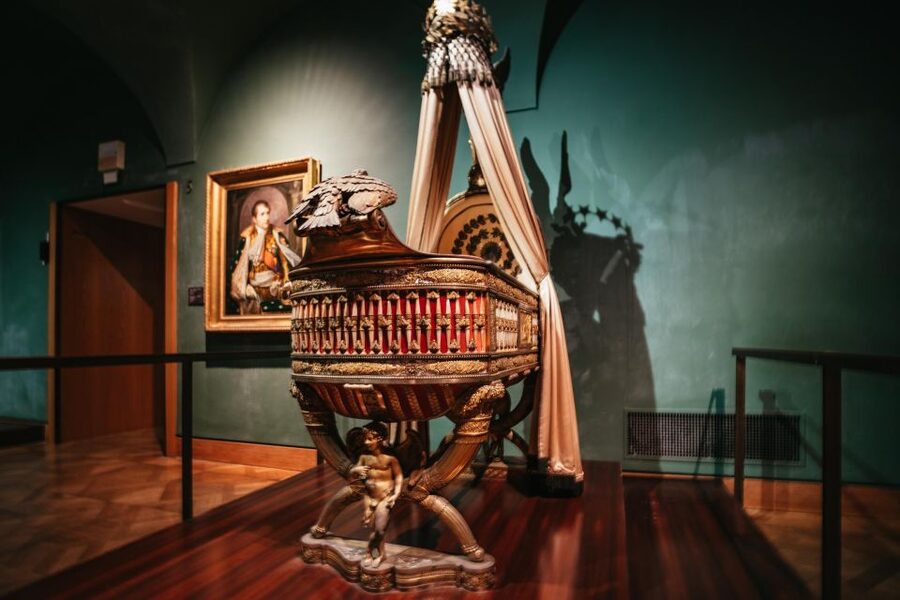
Among the grand regalia, the cradle of the King of Rome, Napoleon II, offers a welcome change of scale. It brings imperial politics down to one child.
Napoleon II was the son of Napoleon Bonaparte and Marie Louise of Austria. In the Treasury, the cradle connects the Habsburg family with the Napoleonic world and reminds you that dynastic politics involved marriages, births, inheritance, and carefully managed public images.
This is one of the collection’s quieter but more affecting objects. A crown tells you about office. A cradle tells you about hopes for the future. It also helps prevent the visit from becoming a parade of anonymous gold and gemstones.
Look for these smaller human details as you move through the rooms. They give the collection a better rhythm and help you remember that these objects belonged to actual ceremonies, families, and ambitions.
How long you should spend inside
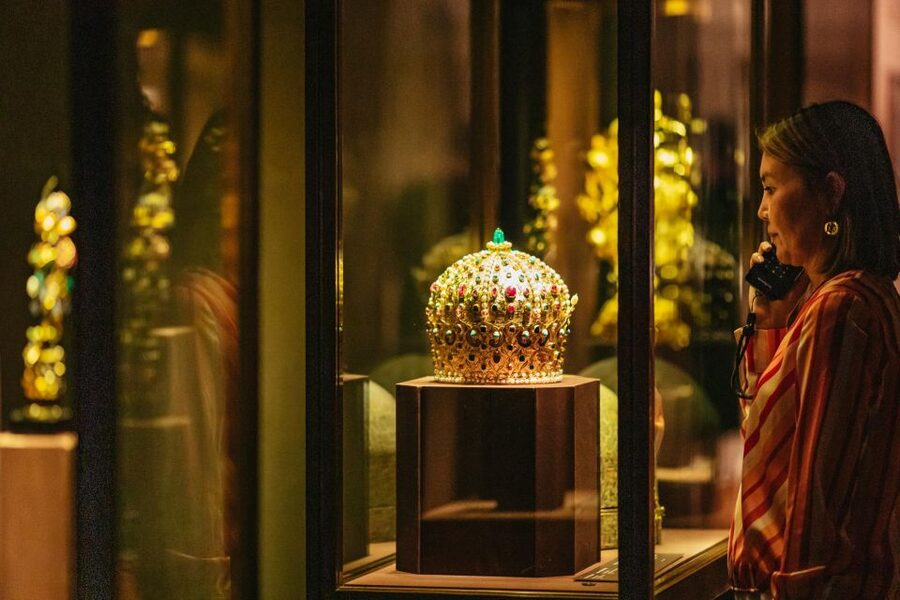
The museum is not enormous. If you move briskly, you can see the main displays in about an hour. That makes the Treasury easy to fit into a busy day at the Hofburg.
I would plan on 90 minutes to two hours if you want to read labels, compare the regalia, and pause at the religious objects. An audio guide can extend the visit considerably, especially if you listen to every explanation. One person reported spending hours viewing the displays while following the audio material.
The layout is generally manageable, though it can feel confusing at first. Clear exhibit labels help, but the order may not always tell a strong story from beginning to end. If you need a break, staff have allowed people to leave and return later with ease, but confirm the current procedure at the desk before exiting.
A useful approach is to make two passes. On the first, take in the crowns, jewels, and largest objects. On the second, return to the pieces that explain court life, religion, or family connections. This keeps the visit from turning into a blur of gold cases.
Audio guide or human guide?
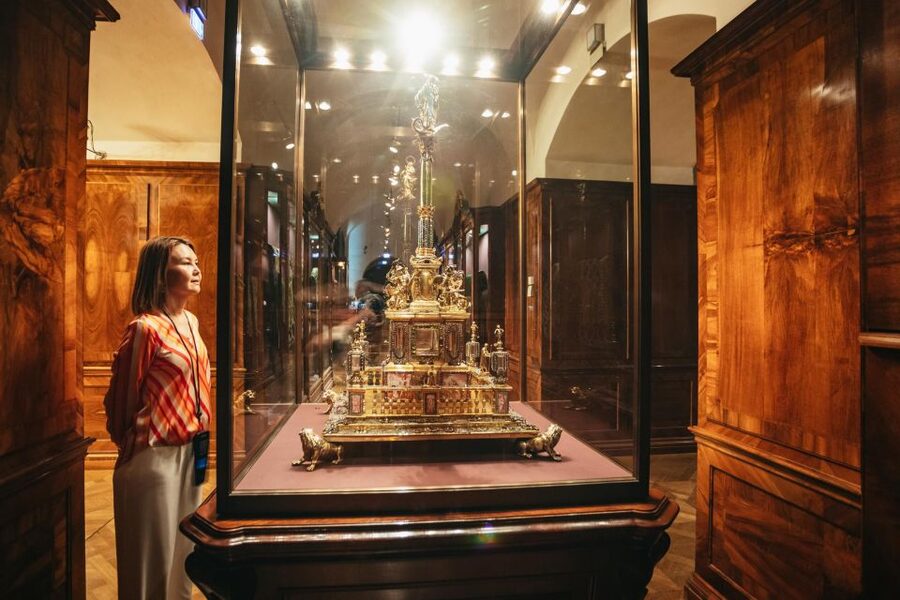
The basic admission does not include an audio guide or a guided tour. That is important because the collection is full of objects whose meaning is not obvious at a glance.
An audio guide can add much-needed context, particularly in the sections on the Habsburg dynasty, the Holy Roman Empire, religious relics, and Sisi. However, the information about audio equipment has not been entirely consistent. Some people used headsets or received an audio guide at no extra charge, while the booking details list it as not included. Ask at the entrance rather than assuming it comes with your ticket.
A human guide can make the visit more focused. Guides named Petee and Alex received strong praise for explaining the Habsburgs, Franz Joseph, and Sisi, and for answering questions. The admission itself does not include a guide, but you may come with your own guide.
For a first visit, I would choose an audio guide if one is available and the cost is clear. If you already know imperial history or prefer to set your own pace, the labels may be enough. If your group enjoys questions and discussion, arrange a guide separately.
Is the $18 admission good value?
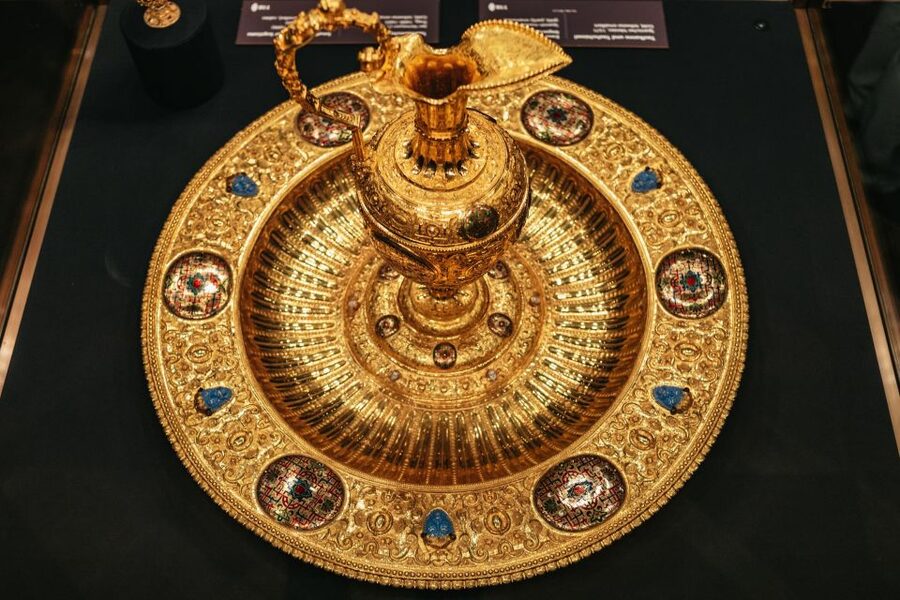
At roughly $18 for an adult, the Imperial Treasury offers solid value if you care about royal objects, religious art, or European dynasties. The collection is substantial without requiring half a day, and it sits in the Hofburg, making it easy to pair with other central Vienna sights.
The value drops a little if you want a fully explained tour included in the price. You pay for entry, not for a guided narrative. An audio guide may or may not be included depending on the arrangement at the desk, so budget and plan accordingly.
Children and young people under 19 generally enter free, which makes this a practical choice for families. School groups under 19 must register through the museum’s booking department. For adult groups of more than 10, one accompanying guide can receive free admission under the stated group rules. Groups smaller than 10 do not receive that free guide place.
The free cancellation option up to 24 hours before the visit and the reserve-now, pay-later option add flexibility. Still, those conveniences do not remove the need to bring the required printed voucher.
Who will enjoy this visit most?
I recommend the Treasury to you if you like:
- Crowns, jewelry, and ceremonial objects
- Habsburg and Holy Roman Empire history
- Religious relics and medieval beliefs
- Sisi and the imperial family
- Compact museums that fit into a larger city day
- Collections where labels and context matter as much as visual beauty
It is less ideal if you want a lively, guide-led tour from start to finish. It may also feel demanding if you have little interest in monarchy, church history, or court ceremony. Many objects are precious because of their age and meaning, not because they are instantly beautiful.
Families can make it work, especially with the free admission for those under 19, but younger children may not stay engaged through every case. I would point out the crown, emerald, unicorn horn, and cradle first, then decide how long to continue.
Final call: book it if you want Vienna’s imperial story in one compact visit
You should book the Imperial Treasury if you want to see the Habsburgs’ power in physical form, from the Austrian Imperial Crown and Holy Roman Empire regalia to Sisi’s jewelry and the strange relics once treated as priceless. It is one of the most efficient ways to add serious imperial history to a day at the Hofburg.
Go early in your Vienna stay if possible. The objects and symbols appear in other palace sites and city museums, and seeing them here can make later visits easier to understand.
Book it with realistic expectations: the collection is excellent, but the basic ticket is not a guided experience, and the voucher exchange can be awkward. Print your voucher, allow extra time at the entrance, ask about the audio guide, and give yourself at least 90 minutes. With those small preparations, the $18 admission earns its place on a Vienna itinerary.
FAQ
Where is the Imperial Treasury located?
It is in the Swiss Wing of the Vienna Hofburg Palace, the oldest part of the Hofburg complex.
How much does admission cost?
The listed price is $18 per person. Children and young people under 19 generally receive free admission.
How long is the visit?
The ticket is valid for one day. Most people can see the collection in about an hour, while a slower visit with labels or an audio guide can take 90 minutes to two hours or longer.
Is a guided tour included?
No. Guided tours are not included in the admission ticket. You may come with your own guide.
Is an audio guide included?
The activity details list the audio guide as not included. Some people have used audio equipment at the museum, so ask at the entrance about current availability and cost.
Do I need a printed voucher?
Yes. A printed voucher is required. You may also need to exchange it for an admission ticket at the ticket counter.
Is the Imperial Treasury wheelchair accessible?
Yes, the experience is listed as wheelchair accessible.
Can adult guides enter for free?
One guide accompanying a group of more than 10 people can receive free admission under the stated group rules. Groups of fewer than 10 do not receive free guide places, and state-certified tourist guides generally enter free.
Just added around Vienna
- Vienna: UNESCO Schönbrunn Palace Guided Tour with Entry★ 4.5 · 94 reviews
- World War II History Vienna Old Town Private Walking Tour★ 4.8 · 9 reviews
- Vienna: Winery and Wine Tasting Tour with a Wine Expert★ 5.0 · 5 reviews
- Vienna: Wine Tasting E-Bike Tour★ 4.9 · 46 reviews
- Vienna: Wine Tasting at Schönbrunn Palace★ 4.3 · 71 reviews
- Vienna: Wine Tasting Tour★ 4.8 · 61 reviews
- Vienna: Wiener Schnitzel and Strudel Cooking Class★ 4.9 · 126 reviews
- Vienna: Concert by the Vienna Baroque Orchestra★ 4.6 · 56 reviews
Hofburg Palace Tours, compared.

Skip-the-Line Sisi Museum, Hofburg and Gardens Tour
Read our review →
Skip-the-Line Hofburg and Empress Sisi Museum Tour
Read our review →
Imperial Treasury & New Hofburg Palace Combo Ticket
Read our review →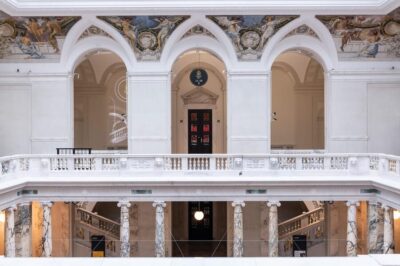
New Hofburg Palace Audio-Guided Tour & Entry Ticket
Read our review →
Skip-the-Line Sisi Museum, Hofburg and Gardens Tour Vienna
Read our review →
Hofburg Palace and Sisi Museum Skip-the-Line Tour
Read our review →Browse the lists this tour appears in