
Reviewed · STRAUSS CONCERTS
Vienna: Johann Strauss 200th birthday anniversary exhibition
Johann Strauss’ music is so closely tied to Vienna that it can be easy to forget the man behind the waltzes. This exhibition brings that man into focus, with the original score of Die Fledermaus as its star object and the grand Palais Lobkowitz as its setting.
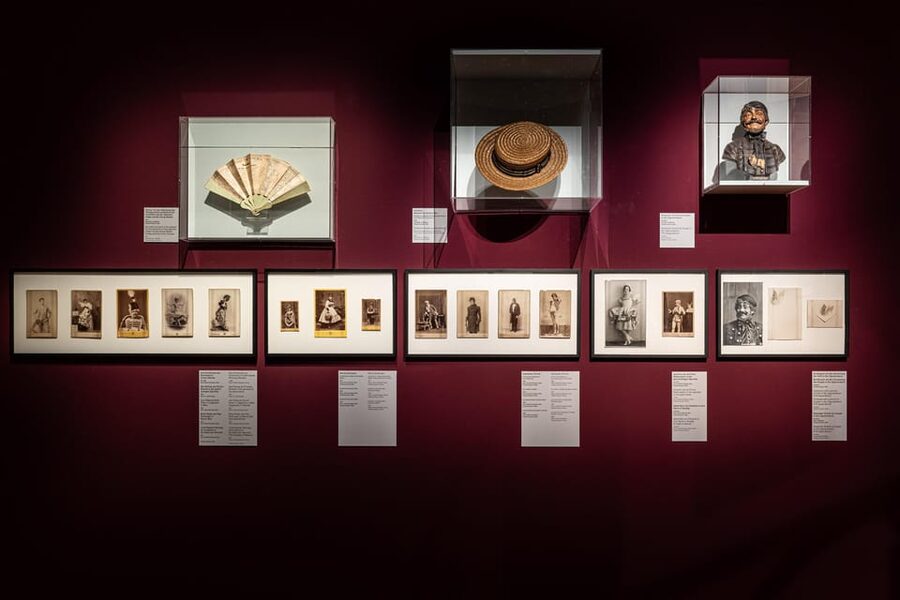
I like two things right away: the show connects Strauss’ music with the city that made him famous, and it uses original objects rather than relying only on text panels. The music examples also help you hear why his dance and theater works traveled so well.
The main drawback is that some of the film and music material may not line up perfectly. One part of the presentation has music that is not synchronized with the films, which can be distracting. An audio guide is also not included, so you should allow time to read and listen at your own pace.
Key points to know before you go
- The original Die Fledermaus score is the exhibition’s most important single object.
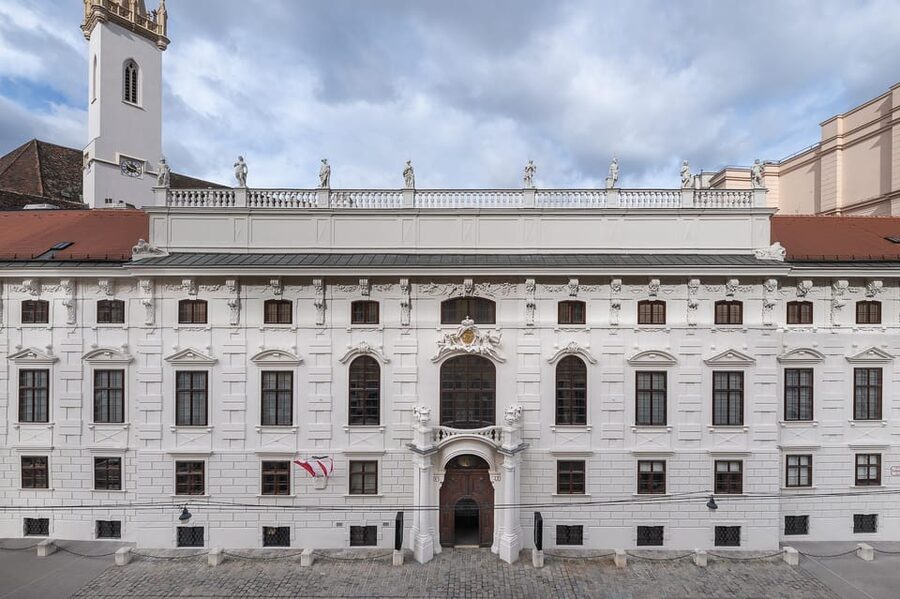
- Palais Lobkowitz gives the Theater Museum a grand historic setting in central Vienna.
- Strauss’ life away from the concert hall includes his family, three wives, love affairs in Russia, and demanding work schedule.
- Music examples and films make the exhibition more than a display of documents.
- The Boston connection shows how Strauss’ fame reached far beyond Austria.
- The $18 ticket includes museum admission and the Johann Strauss anniversary exhibition, with free cancellation up to 24 hours before the visit.
Meeting the Waltz King at Palais Lobkowitz
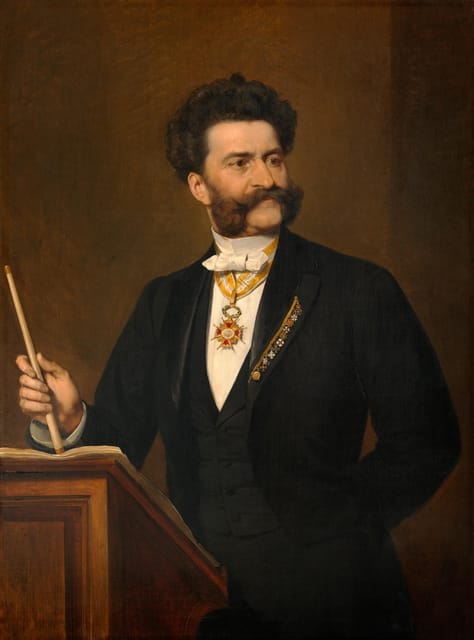
The exhibition marks the 200th anniversary of Johann Strauss’ birth, focusing on Johann Strauss Sohn, the composer most people mean when they speak of the Waltz King. It is presented at Vienna’s Theater Museum in Palais Lobkowitz, a setting that suits a composer linked with imperial balls, concert halls, operettas, and the social life of 19th-century Vienna.
I like the choice of location because the building gives you a sense of the world Strauss occupied. You are not seeing his work in a plain modern gallery. You are entering a museum devoted to theater and performance, in a palace connected with Vienna’s artistic life.
The exhibition is organized jointly with the Vienna Library in City Hall. The Theater Museum concentrates on Strauss’ artistic output, while the wider presentation follows his life and personal world. That division matters. You get both the public composer and the private man, rather than a simple parade of famous melodies.
The show is not only for dedicated Strauss fans. If you know The Blue Danube and little else, you can still follow the story. If you already know his waltzes and operettas, the original documents and performance objects give you a closer look at how those works existed in their own time.
More Strauss evenings in Vienna:
- Vienna: Mozart and Strauss Concert at Schönbrunn
★ 4.5 · 2,364 reviews - Vienna: Mozart & Strauss Classical Concert at Börse Palace
★ 4.5 · 810 reviews - Vienna: Johann Strauss Dinner Show at the Prater
★ 4.5 · 730 reviews
The original Die Fledermaus score
For many visitors, the key moment will be seeing the original score of Die Fledermaus. This is the sort of object that changes a familiar work from an abstract musical title into something made by hand, revised, performed, and preserved.
Die Fledermaus is especially useful here because it represents Strauss’ work in music theater, not only his dance music. The exhibition places his waltzes and concert pieces beside his operetta work, showing the range of a composer who could write for dancing, listening, and the stage.
You should not expect to read every note or follow the entire score. The value is in seeing the physical document and understanding its place in Strauss’ working life. Original scores carry evidence of process in a way that a printed reproduction cannot.
If you have a strong interest in music, give this display time. If you are visiting with someone less interested in notation, it still works as a visual centerpiece, especially when paired with the music examples elsewhere in the exhibition.
Strauss beyond the famous waltzes
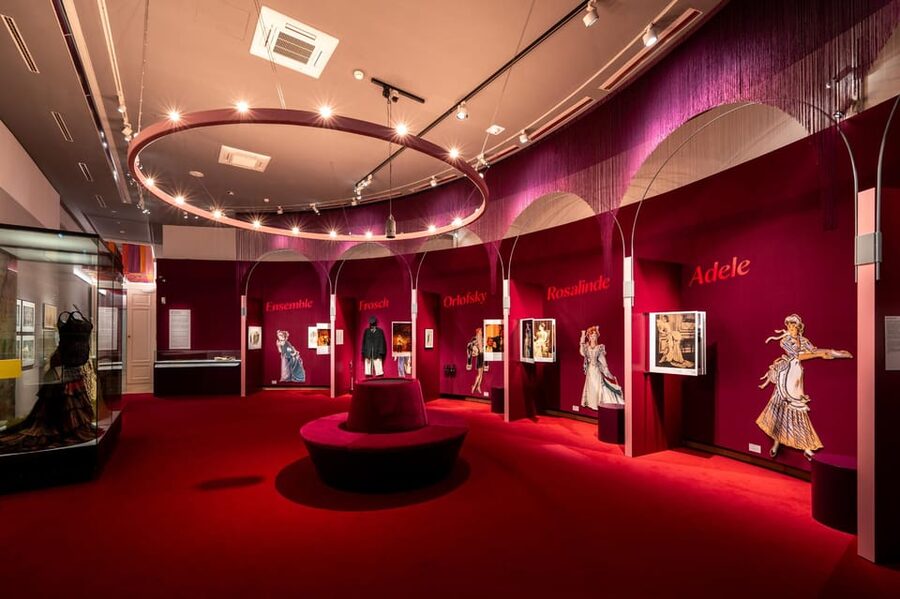
The exhibition gives attention to the music that made Strauss popular around the world, but it does not reduce him to one or two concert favorites. You see his dance music, concert music, and theater works treated as parts of one career.
That broader approach is useful because Strauss’ fame can seem deceptively simple. His music sounds effortless, but the exhibition also points to the demands of his working life. His schedule was grueling, and his success depended on constant production, performance, and public attention.
The display also places his work in the historical and political setting of his time. The available information does not promise a full political history, so you should think of this as context around the objects rather than a separate academic study. Still, those connections help explain why Strauss’ music was more than pleasant background sound. It belonged to public celebrations, social dances, theaters, and the public image of Vienna.
The music examples are an important part of this section. You can hear the lively quality of Strauss’ work instead of trying to imagine it from written labels. One presentation also uses films. The sound and pictures may not always be synchronized, so pay attention to what is happening before assuming every image is matched to the music you hear.
Following the music to Boston
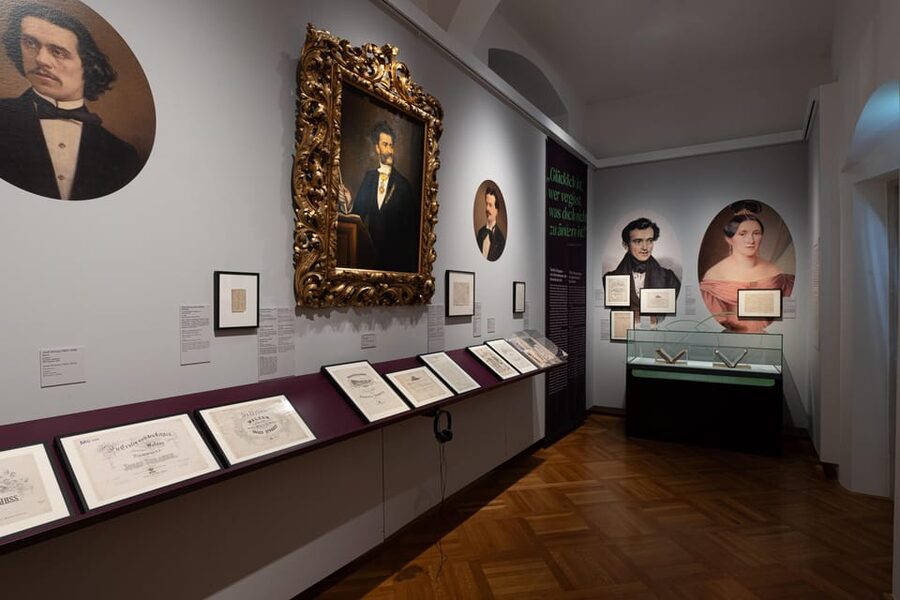
One of the exhibition’s more unusual features is its look at Strauss’ world tour to Boston. This widens the story beyond Vienna and Austria, showing how his music became an international product and a symbol that could travel across the Atlantic.
The Boston connection gives you a helpful counterpoint to the palace setting. At Palais Lobkowitz, Strauss can feel like a figure of old Vienna. The world tour shows him as an international performer whose work had an audience far from home.
You will not simply be looking at local memorabilia. The exhibition uses the journey to explain the scale of Strauss’ fame and the practical reach of his music. His compositions could move from Viennese dance floors and concert halls into a much wider world of performance.
For visitors interested in cultural exchange, this may be one of the strongest parts of the exhibition. It asks how a composer’s work changes meaning when it leaves its original city. Vienna remains central, but Boston shows that the Strauss phenomenon was never confined to Vienna.
More museums and galleries in Vienna:
- Vienna: Skip-the-Line Sisi Museum, Hofburg and Gardens Tour
★ 4.8 · 5,918 reviews - Vienna Kunsthistorisches Museum Day Admission Ticket
★ 4.6 · 3,690 reviews - Tickets for the Albertina Exhibitions
★ 4.7 · 2,126 reviews - Vienna: Chocolate Workshop in Chocolate Museum w/ Tasting
★ 4.5 · 1,802 reviews
A personal story with family complications
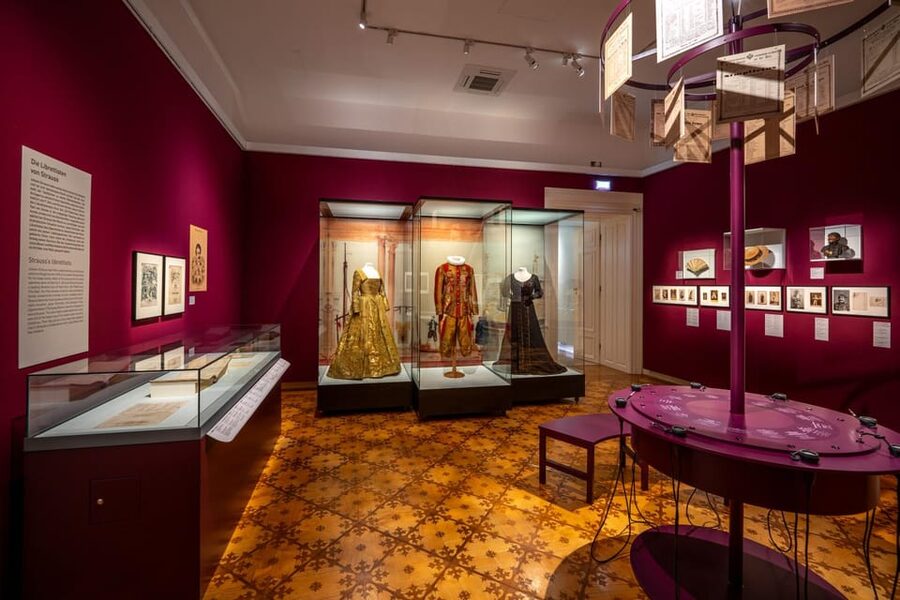
The exhibition also follows Strauss’ relationships with his parents, brothers, three wives, and love affairs in Russia. This gives the show a more personal edge, though the central focus remains his creative work.
The family story matters because Johann Strauss did not work in isolation. His name was part of a musical dynasty, and his relationships with his parents and brothers shaped the world around him. The exhibition uses this personal material to show the pressures and connections behind his public career.
His three marriages and affairs in Russia add another layer. You get a portrait of a man whose professional life was demanding and whose private life was complicated. That material helps prevent the usual picture of Strauss as a smiling figure attached only to elegant waltzes.
I would not treat this section as gossip. Its value is that it explains the human circumstances around the music. The show makes clear that the Waltz King’s life included work, family expectations, public success, and personal difficulties.
Original performance objects and written material
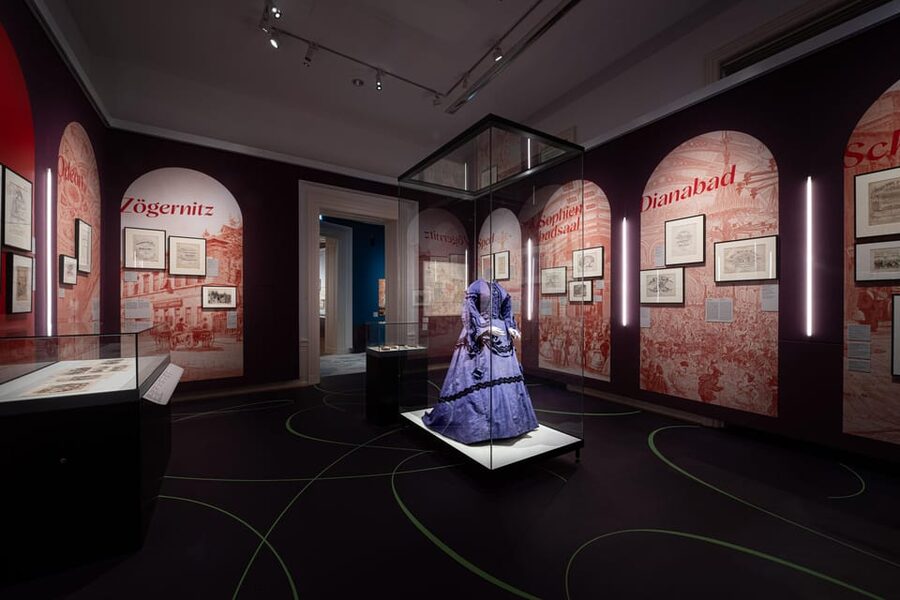
The Theater Museum’s strength is its attention to performance. Here, original objects from productions and items from Strauss’ written legacy help you see how music functioned as part of a larger theatrical world.
The objects may include material connected with performances and exhibitions, but the supplied information does not provide a complete object-by-object inventory. That means you should arrive ready for a varied display rather than expecting a fixed list of famous costumes or stage props.
This approach is valuable because performance disappears quickly. A concert ends, an operetta closes, and a dance moves on. Objects, scores, and written documents preserve traces of those events and show how Strauss’ work was presented to an audience.
I like that the exhibition gives equal weight to what Strauss made and how his work circulated. A score tells you about composition. A performance object tells you about presentation. Together, they make the composer’s career easier to understand.
Music, film, and the limits of the presentation
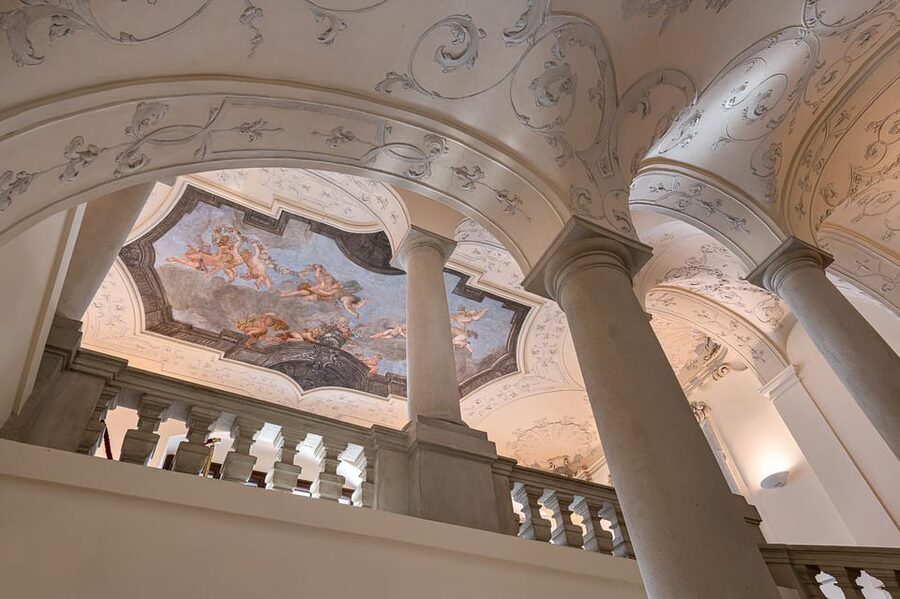
The lively sound examples are one of the exhibition’s best features. They give the displays energy and help you connect documents with the music you already know, or with works you may be hearing for the first time.
The language used in the presentation is also described as very good, which should help you follow the material without an audio guide. Still, the lack of an included audio guide is worth noting. If you prefer spoken explanations, check in advance to see if a separate guide or language option is available. It is not part of this ticket.
The film displays add motion and atmosphere, but they are not flawless. Music that is out of sync with film footage can interrupt the effect. This is a small issue, but it matters because the exhibition asks you to listen and watch at the same time.
I would approach the audio-visual sections with reasonable expectations. The original score, documents, and objects are the foundation. The films and music examples add life, but they may not always work as one perfectly timed presentation.
What the $18 ticket gives you
At $18 per person, the ticket includes admission to the Theater Museum in Palais Lobkowitz and the Johann Strauss anniversary exhibition. That is fair value if you want both the permanent museum setting and the special exhibition, rather than paying only for a small temporary display.
The value is strongest for three types of visitors. First, Strauss fans get original material and a focused look at his working life. Second, music lovers get a connection between scores, performances, and sound. Third, visitors looking for a cultural stop in Vienna get a manageable indoor activity tied closely to the city.
The value is weaker if you want a large-scale concert or a long guided tour. This is a museum visit, not a live Strauss performance. The music examples can set the mood, but they do not replace hearing an orchestra play in a concert hall.
The ticket is valid for one day, with starting times shown when you check availability. You should allow enough time to read the displays and listen to the examples, though the available information does not give a fixed visit length. Since the ticket includes museum admission, you may want to plan the exhibition as part of a broader Theater Museum visit instead of rushing in for only one object.
Free cancellation is available up to 24 hours in advance, and you can reserve now and pay later. Wheelchair access is available. These details make the visit easier to fit into a changing Vienna schedule.
Who will enjoy this exhibition most
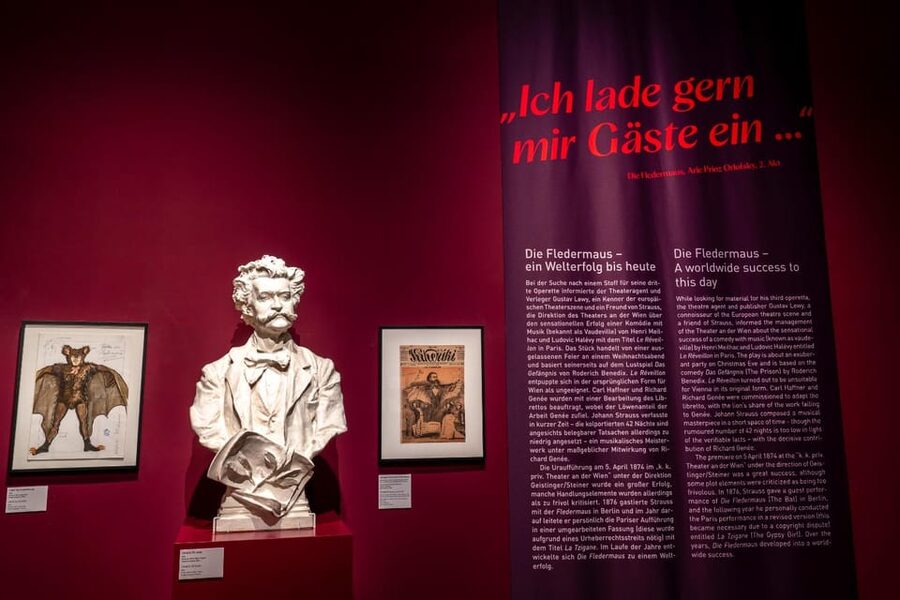
I would recommend it most to anyone who already enjoys Strauss, operetta, classical music, or the cultural story of Vienna. The original Die Fledermaus score alone gives serious music fans a reason to go.
It also suits first-time visitors who want a break from major palaces and art museums. You get a focused subject, a historic setting, sound, films, and personal stories without needing to know a great deal before arriving.
Families and mixed-interest groups may find it works unevenly. The sound examples and visual objects can hold attention, but the written material and personal history may appeal more to adults. Since the audio guide is not included, younger visitors may need help connecting the displays.
If you want a strictly chronological biography, this may feel less direct. The exhibition moves between artistic work, personal life, performance, and international fame. Its strength is the combination of those subjects, but it may not read like a simple life story from beginning to end.
Practical advice for your visit
Check the available starting times before booking, since the ticket is valid for one day but the experience has scheduled availability. I would avoid placing it between two tightly timed activities until you know how long you want to spend inside.
Read the labels around the original score rather than treating it as a quick photo stop. The score is the object that best connects Strauss’ composition with the finished work heard on stage.
Use the music examples as part of the visit, not as background noise. The show is strongest when you look at an original object and then listen to the kind of work it represents.
Keep the film synchronization issue in mind. If a sequence feels confusing, it may be the presentation rather than your attention. Move on to the written material and original objects, which carry the exhibition even when the audio-visual material is less polished.
Should you book the Johann Strauss exhibition?
Book it if you want a focused look at Vienna’s most famous musical export, especially if the original Die Fledermaus score, operetta, and performance history interest you. The $18 price is reasonable because it includes the Theater Museum as well as the anniversary show.
Skip it if you are hoping for a full concert, a live waltz performance, or a guided tour with a named expert. This is a museum exhibition with music examples, not a stage event. For the right visitor, though, it offers a thoughtful look at how Strauss lived, worked, performed, and reached audiences as far away as Boston.
FAQ
Where does the Johann Strauss exhibition take place?
It takes place at the Theater Museum in Palais Lobkowitz in Vienna, Austria.
What does the ticket include?
The ticket includes admission to the Theater Museum in Palais Lobkowitz and entry to the Johann Strauss anniversary exhibition.
How much does admission cost?
The listed price is $18 per person.
How long is the ticket valid?
The ticket is valid for one day. You should check availability for the starting times.
Is the original Die Fledermaus score on display?
Yes. The original score of Die Fledermaus is one of the exhibition’s main highlights.
Does the exhibition include music?
Yes. The exhibition includes lively music examples connected with Strauss’ work.
Does it include films?
Yes. Film material is part of the presentation. Some music is not synchronized with the films, which may affect the viewing experience.
Is an audio guide included?
No. An audio guide is not included with the ticket.
Is the exhibition wheelchair accessible?
Yes. The activity is listed as wheelchair accessible.
Can I cancel the booking?
Yes. You can cancel up to 24 hours in advance for a full refund. You can also reserve now and pay later.
Just added around Vienna
- Vienna: UNESCO Schönbrunn Palace Guided Tour with Entry★ 4.5 · 94 reviews
- World War II History Vienna Old Town Private Walking Tour★ 4.8 · 9 reviews
- Vienna: Winery and Wine Tasting Tour with a Wine Expert★ 5.0 · 5 reviews
- Vienna: Wine Tasting E-Bike Tour★ 4.9 · 46 reviews
- Vienna: Wine Tasting at Schönbrunn Palace★ 4.3 · 71 reviews
- Vienna: Wine Tasting Tour★ 4.8 · 61 reviews
- Vienna: Wachau Valley Private Kayak and Wine Tour★ 5.0 · 3 reviews
- Vienna: Wiener Schnitzel and Strudel Cooking Class★ 4.9 · 126 reviews
Strauss Concerts, compared.
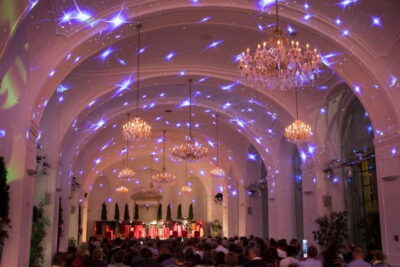
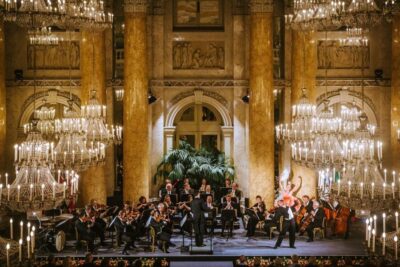
Mozart & Strauss Classical Concert at Börse Palace
Read our review →
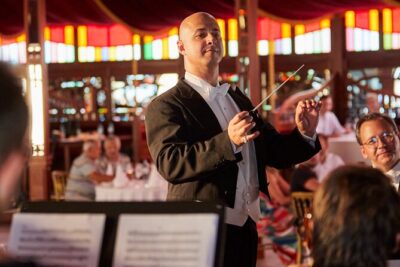
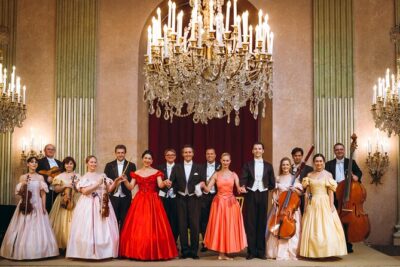
Vienna Residence Orchestra: Mozart and Strauss Concert
Read our review →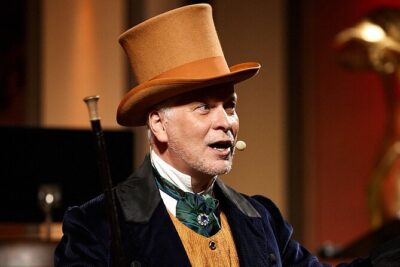
Vienna Classical Concert – Strauss in Historic 1837 Hall
Read our review →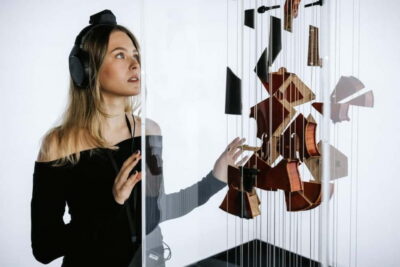
Johann Strauss – Immersive Audiovisual Experience Ticket
Read our review →Browse the lists this tour appears in