
Reviewed · 2-HOUR EXPERIENCES
Vienna: Romantic Old Town 2-Hour Discovery Tour
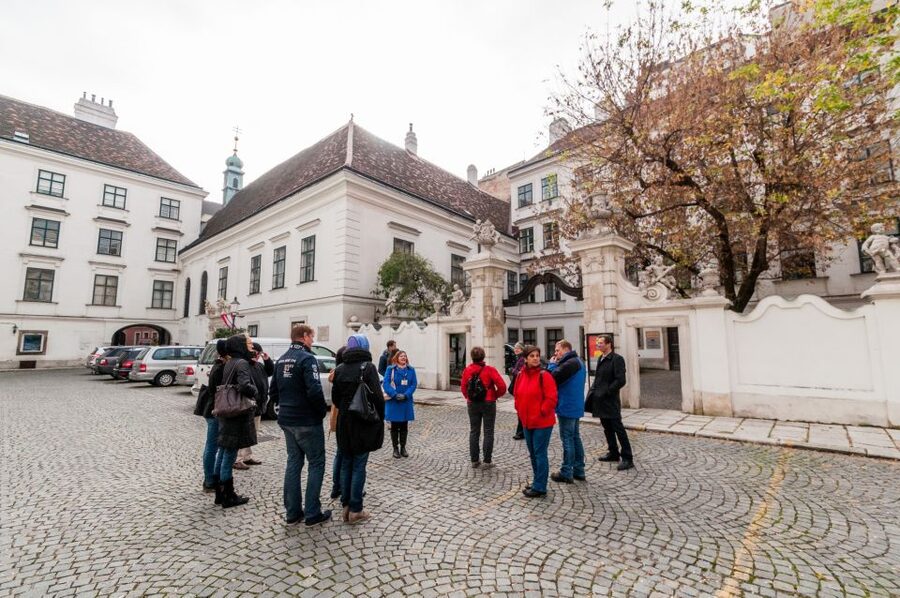
Vienna’s old town reveals its best secrets in the spaces between the famous sights. This two-hour walk moves from the Anchor Clock and Hoher Markt through the Greek Quarter, the old university district, narrow lanes, and tucked-away courtyards. The focus is on the city beneath the postcard view, including trade, religion, architecture, and old legends.
I like the small-group private format, which gives you a better chance to ask questions and follow the parts of Vienna that interest you most. I also like the architectural range: Gothic towers, Renaissance courtyards, Baroque palaces, Rococo houses, Gründerzeit buildings, and Art Nouveau details all appear within a compact area.
The main drawback is time. Two hours is enough for a lively introduction, but not enough for long interior visits or a slow look at every stop. One German-language booking described a guide as charming but a little too talkative, so your experience may depend on whether you prefer colorful local stories or a tighter history lesson.
Key points to know before you book
- Anchor Clock meeting point: Begin at Hoher Markt, one of Vienna’s oldest and most layered squares.
- Six themes in two hours: The route covers Roman, Jewish, Greek, trading, religious, architectural, and legendary sides of the city.
- Private guide included: The price covers a group of up to seven people, not one individual ticket per person.
- Architecture is a major feature: Look for details from the Gothic, Renaissance, Baroque, Rococo, Gründerzeit, and Art Nouveau periods.
- A quieter side of central Vienna: The old university quarter and narrow back streets offer a break from the main sightseeing route.
- Many language choices: English, German, French, Spanish, Italian, Portuguese, Russian, Dutch, Chinese, Japanese, Arabic, and Korean are available, though you should contact the operator to arrange some languages.
Starting at Vienna’s Anchor Clock
Your meeting point is the Anchor Clock at Hoher Markt, in Vienna’s first district. Arrive 10 minutes early. This is a sensible place to begin because the square gathers several centuries of the city into one view, rather than presenting only one grand monument.
Hoher Markt has drawn politicians, architects, and tradespeople over the centuries. The walk points out the oldest building in Vienna, the city’s first public waterworks, and the famous Anchor Clock. The clock itself is not just a quick photo stop. It has surprises built into its design, and your guide can explain why it matters to the square.
This opening section sets the tone for the rest of the tour. You are not simply moving from one landmark to another. You are learning how power, commerce, water, religion, and public display shaped the center of Vienna.
The location also makes practical sense. You are already in the old town, and the route stays focused on the central area rather than spending time on a long transfer. If you have only a short visit to Vienna, that concentration gives you a useful first look at the city.
A few more Vienna days worth a look
- Vienna: 2 Hours Sightseeing Walking Tour
★ 4.8 · 332 reviews - Vienna: 2-Hour Historical Crimes Guided Walking Tour
★ 4.8 · 130 reviews - Vienna: Jewish Life in Leopoldstadt 2-Hour Walking Tour
★ 4.9 · 109 reviews
Roman, Jewish, and trading Vienna at Hoher Markt
The first theme brings together three groups that helped shape the square: Romans, Jews, and traders. This is one of the stronger parts of the walk because it helps you see Vienna as a working city, not merely an imperial stage.
The Roman layer gives you a sense of the city’s early foundations. The Jewish and trading connections add another side to Vienna’s story, one tied to movement, money, craft, and urban life. Your guide can connect these strands to the buildings and public features around the square.
The exact value of this stop depends on the guide’s delivery. A strong guide will help you notice details that would otherwise pass as ordinary stonework or decoration. The experience is less about entering a major museum and more about learning how to read the streets.
The Anchor Clock is also useful as a visual marker. It gives the group a clear place to gather and helps anchor the early part of the route. If you enjoy understanding why a square looks the way it does, rather than simply photographing it, this section should suit you.
The Greek Quarter beside the Danube channel
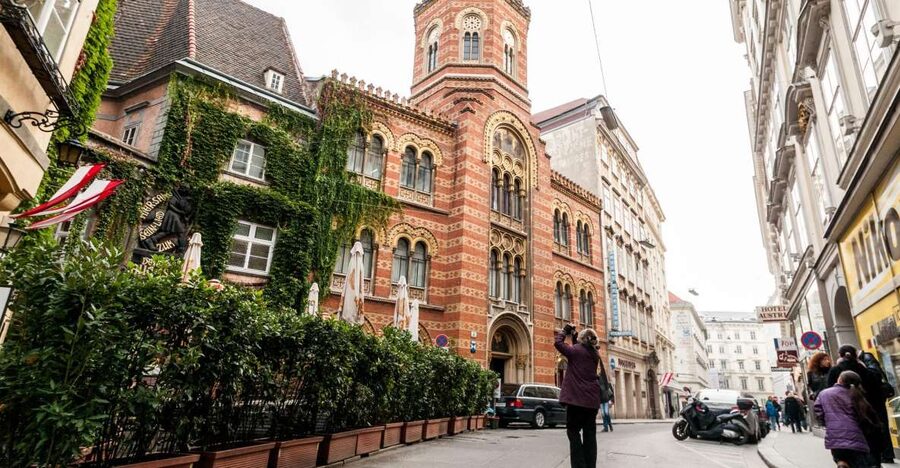
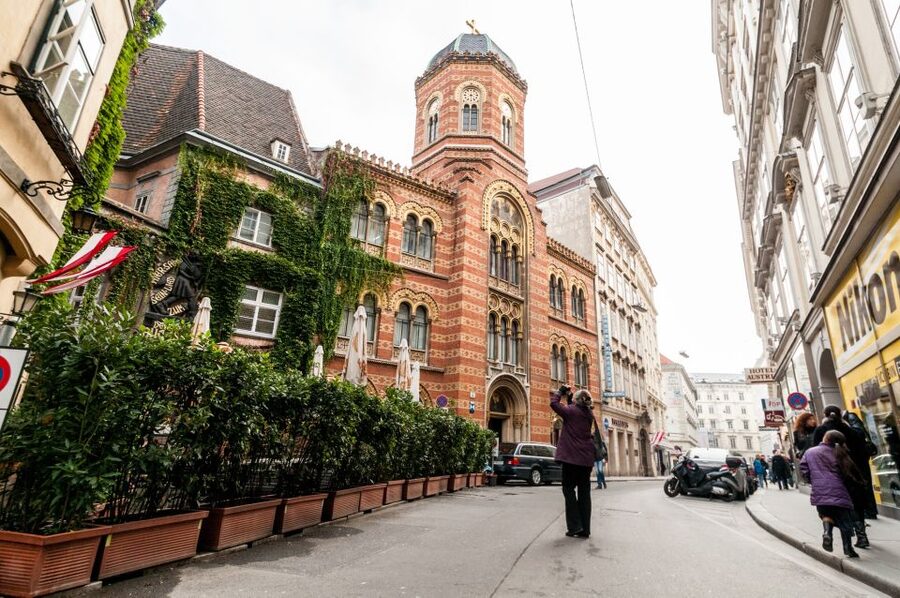
The route then turns toward Vienna’s Greek Quarter, located beside the innermost arm of the Danube River. This neighborhood has been shaped by trade and by the movement of people between Vienna and the wider eastern Mediterranean world.
The area carries several historical associations. Turks fought here, while Greeks prepared their struggle for independence here. Those facts give the neighborhood a political edge that is easy to miss when you see it only as a group of old streets and buildings.
I like this part because it expands your picture of Vienna. The city is often presented through Habsburg palaces, classical music, and grand ceremonial buildings. The Greek Quarter points instead to merchants, migration, political activity, and the city’s position at a meeting point between regions.
The word hectic is used to describe this neighborhood, so do not expect a quiet, museum-like setting. Streets may feel tight and active, and the value comes from the stories attached to them. Your guide helps connect the physical setting with the people who lived, traded, and organized here.
Vienna’s architectural layers from Gothic to Art Nouveau
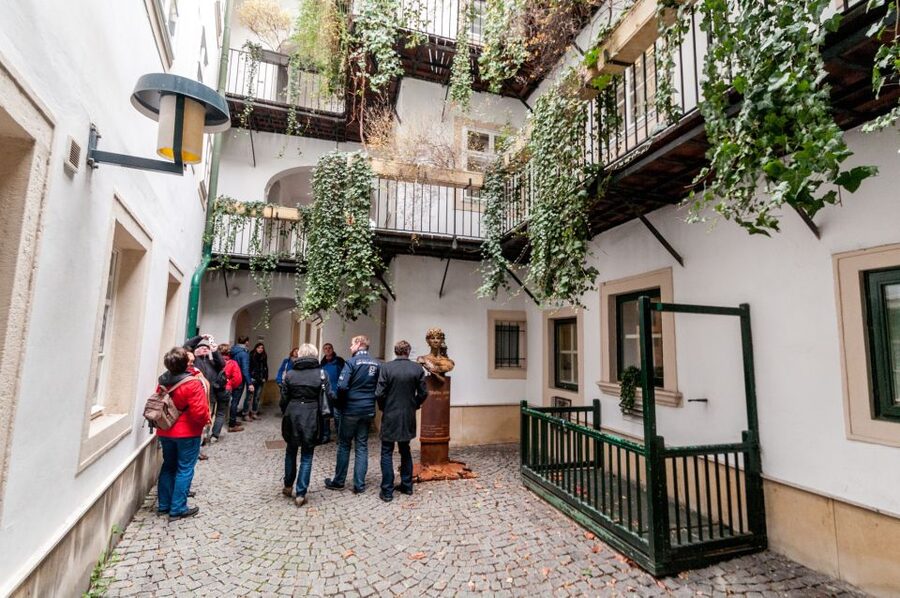
Architecture is one of the clearest reasons to choose this tour. The old town contains a long sequence of styles within a walkable area, and the guide draws your attention to details that can blur together when you explore alone.
You may see or discuss:
- Gothic residential towers, which point to the medieval city and its defensive, domestic character
- Medieval paving, a reminder that the street surface itself can carry age and meaning
- Renaissance back courtyards, often less obvious than the main facades
- Baroque city palaces, built to show wealth, status, and religious or political influence
- Rococo rows of houses, with decorative designs that create a more unified street front
- Gründerzeit buildings, linked to Vienna’s later expansion and urban growth
- Art Nouveau houses, with a more elegant and stylized approach to decoration
This is where a guide can make a real difference. On your own, you might identify a palace or a church, but miss the contrast between the building beside it and the one across the street. The tour encourages you to compare facades, paving, courtyards, and street plans.
Do not expect a full architectural lecture on every style. There are too many subjects packed into two hours. Instead, think of this section as a practical introduction to reading Vienna’s old town. You leave with a better eye for details, which is useful during the rest of your stay.
A completely different way to spend a day here:
- Vienna: Vivaldi’s Four Seasons Concert in Karlskirche
★ 4.7 · 14,951 reviews - Vienna: Spanish Riding School Training
★ 3.9 · 9,281 reviews - Vienna: Skip-the-cashier-desk-line Giant Ferris Wheel Ride
★ 4.5 · 7,859 reviews - Vienna: Schönbrunn Palace & Gardens Skip-the-Line Tour
★ 4.7 · 7,739 reviews
Myths, animals, and the stories on Vienna’s facades
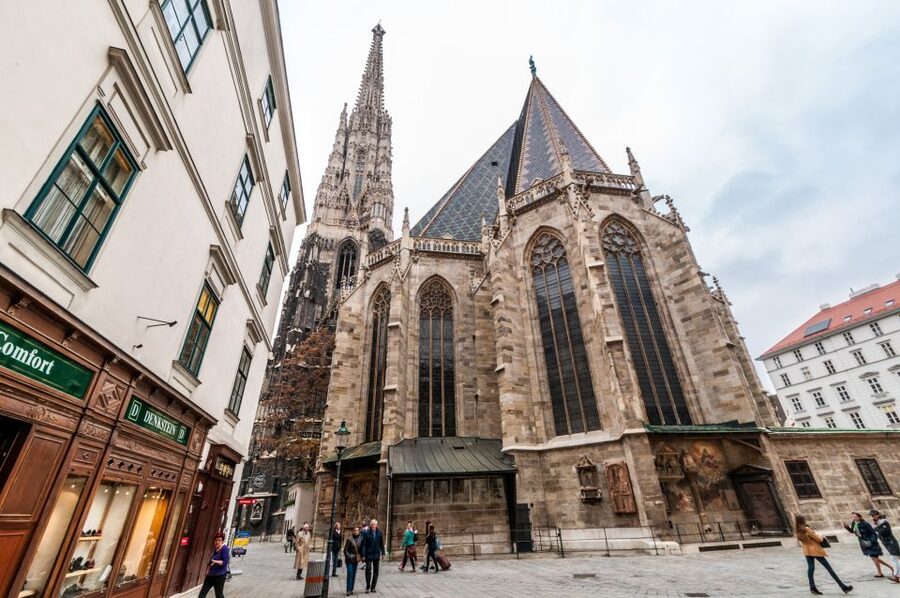
The fourth theme concerns myths and legends. Vienna’s old buildings carry stories that try to explain unusual features, local names, religious symbols, and decorative figures.
Animals play an important part in this mythology. You may see them carved into facades or placed on fountains, where they serve as more than decoration. The guide explains how legends and fact sometimes overlap, giving you a sense of how people once made meaning from the city around them.
This section adds humor and color to the walk, but it also needs a little judgment. A legend is not the same as a verified historical event. The useful approach is to enjoy the story while keeping an eye on the difference between what people believed and what historians can confirm.
For families and visitors who prefer storytelling to dates, this may be one of the most memorable parts. For serious architecture fans, it is a lighter pause between the more factual sections. The balance will depend on your guide. One recent German-language booking praised a tour for its charm and local Viennese humor but felt it offered less solid history than expected.
The old university quarter and Jesuit Church
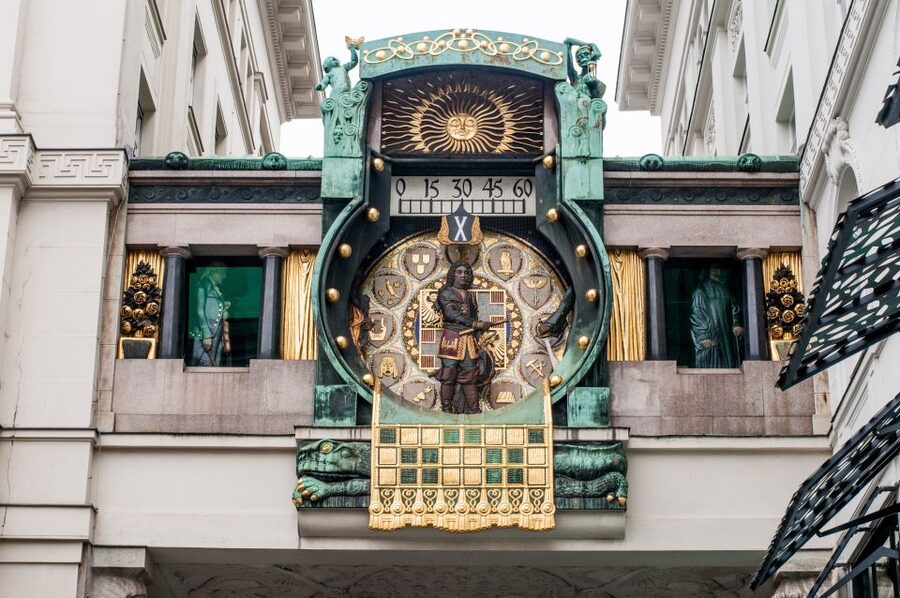
The route continues into the old university quarter, also called the Jesuit quarter. This area is sealed off from traffic, giving it a different feel from the more active streets around Hoher Markt and the Greek Quarter.
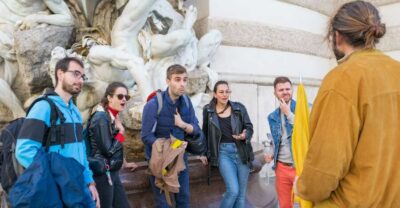
A fountain in the square provides a place to pause and look toward the Jesuit Church. The church interior is described as a strong example of Baroque exuberance, church power, and competition between painters and architects in Vienna.
That combination makes this more than a church stop. You are looking at how religious buildings were designed to influence the senses and communicate authority. The decoration, layout, and visual richness reflect a period when art and architecture were closely tied to institutional power.
The stop is especially valuable if you are not planning to spend hours visiting every church in Vienna. A guide can point out what to notice before you step inside or look toward the interior. Still, keep your expectations measured. The supplied details promise a look into the church, not an extended guided interior visit or a full religious-art tour.
The traffic-free setting also offers a welcome change of pace. After the tighter streets and active trading district, the square gives you room to stop, listen, and look upward.
Narrow lanes and back courtyards
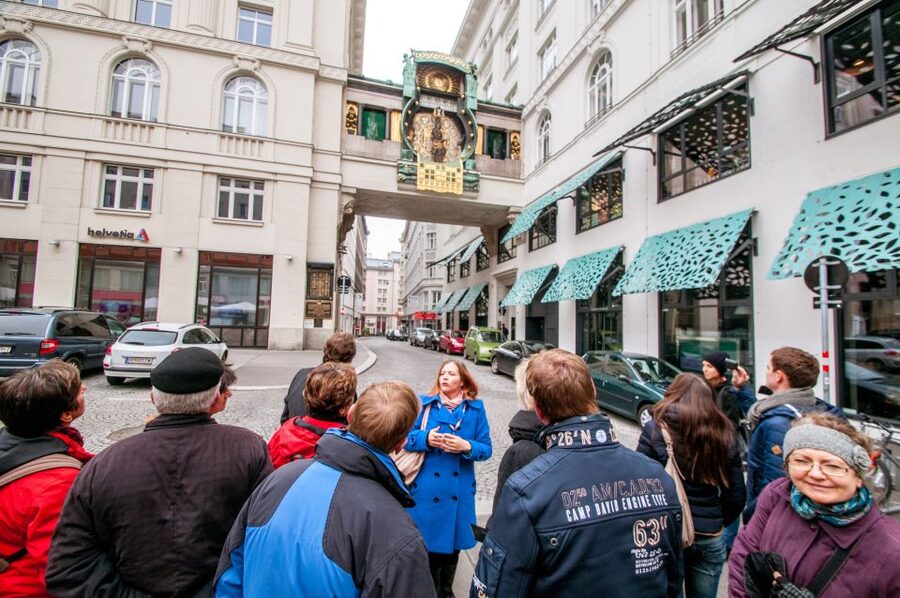
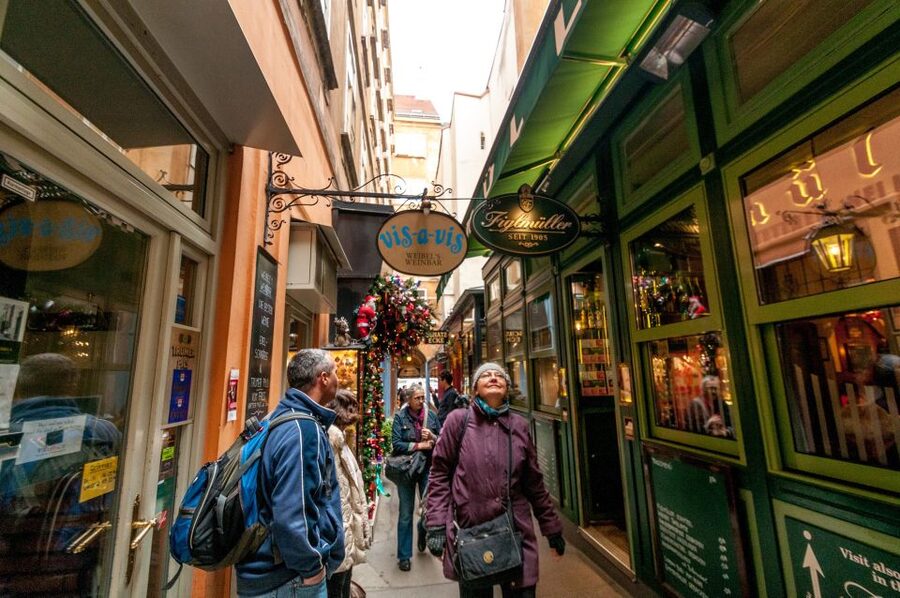
The final theme turns to Vienna’s narrow streets and inner courtyards. Many lanes in the old town wind, tighten, and refuse to follow a neat straight line. That irregular plan is part of what makes the historic center feel old rather than newly arranged for sightseeing.
The guide uses these spaces to explain everyday conditions in the Middle Ages. Hygiene was poor, streets were cramped, and even opening a window could bring an unpleasant surprise. The point is not to make the past sound quaint. It is to remind you that these beautiful old buildings were once practical, crowded places where daily life could be uncomfortable.
Back courtyards are particularly useful for understanding how buildings functioned beyond their public fronts. The main facade might suggest wealth and order, while the courtyard reveals how much activity was packed behind it. Since these areas can be easy to miss when you walk independently, this part gives the tour a genuine sense of discovery.
The route does not promise access to every courtyard, and you should not assume that every private passage will be open. The value lies in seeing the street pattern and learning what to look for as you continue exploring Vienna on your own.
What the private format is worth at $352
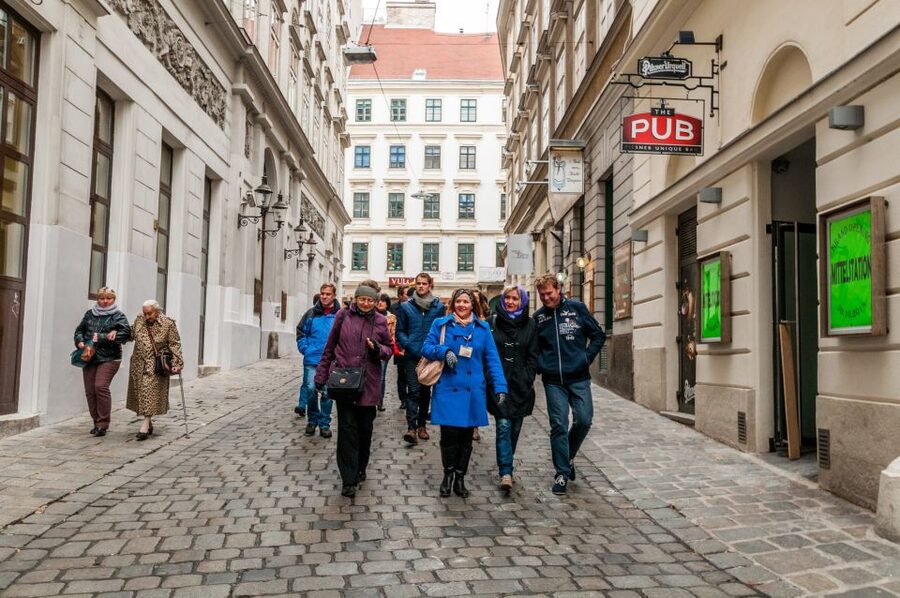
The listed cost is $352 for a group of up to seven people. That works out to about $50 per person if you fill all seven places, but the value changes sharply for smaller groups. Two people would effectively pay $176 each, so couples should compare this with a regular group walking tour before booking.
The price includes a private guide. It does not include food or refreshments. You are paying for focused attention and a tailored walking experience, not admission to a meal or a series of paid attractions.
For a family or group of friends, the price can make reasonable sense. You share the guide fee, stay together, and can ask questions without competing with a large crowd. A private group also gives you more control over the pace, although the exact flexibility should be confirmed with the operator.
For a couple, the decision is less obvious. Choose it if you care about privacy, a specific language, or a guide-led introduction that reaches beyond the main sights. Skip it if you mainly want a quick orientation and are happy to join a larger, less expensive walk.
The 4.7 rating from 816 reviews suggests a consistently positive experience, but the individual comments show why you should set the right expectation. Wolfgang Auinger was praised for a charming and engaging introduction to Vienna, while Max was described as competent, motivated, and clear in his presentation. Another booking praised the chance to reach places that were hard to find alone. At the same time, one person wanted more firm historical detail and less local humor.
Languages, timing, and practical planning
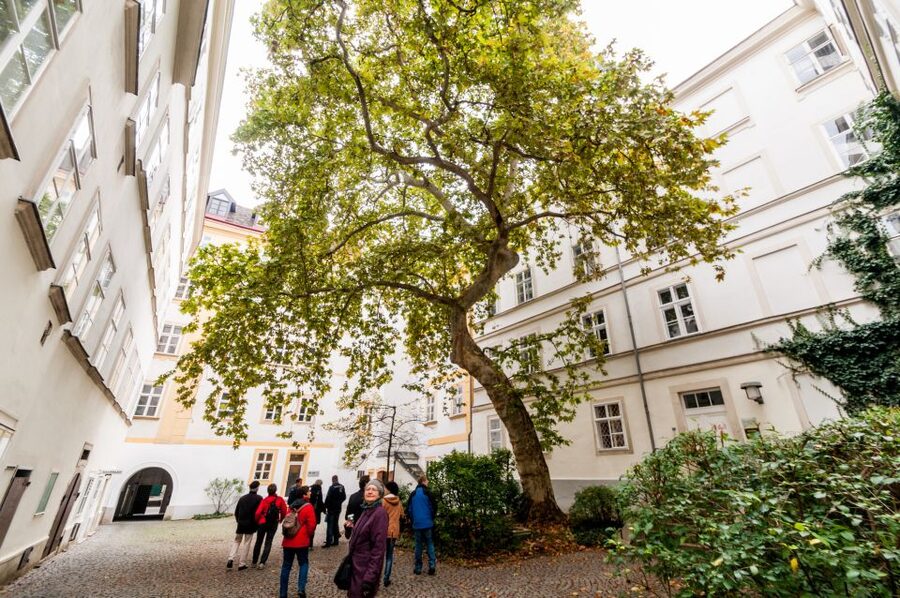
The walk lasts two hours, with starting times available according to the booking calendar. That length fits well on your arrival day, before dinner, or between other first-district plans.
English is listed among the available guide languages, along with German, Spanish, Chinese, Dutch, French, Italian, Japanese, Portuguese, and Russian. Group tours also list Arabic and Korean. If you want a language other than the standard options shown at booking, contact the operator in advance rather than assuming it will be available on the day.
Arrive at the Anchor Clock 10 minutes before the start. The tour includes a live guide and is available as a private group. The listing also identifies skip-the-ticket-line access, though this is mainly a walking experience and does not present the tour as a series of major ticketed attractions.
You can cancel up to 24 hours before the start for a full refund. The reserve-now, pay-later option is useful if your Vienna schedule is still shifting. These terms matter most when you are arranging a short city break with several moving parts.
Wear comfortable shoes. The route includes narrow lanes and old-town streets, and the itinerary is built around walking rather than sitting in one place. Food and drinks are not included, so plan your coffee or meal separately.
Who will get the most from this Vienna walk?
I would recommend this tour to first-time visitors who want a fast but thoughtful introduction to central Vienna. It is also a good fit for repeat visitors who have already seen the big imperial sights and now want the city’s smaller stories, trade connections, old lanes, and architectural contrasts.
Families may appreciate the myths, animals, and unusual street details. Architecture fans will like the range of styles, especially if they enjoy comparing buildings rather than visiting one major monument. History-minded visitors should ask for a guide who places more weight on documented events than on local legends.
The tour is less suitable if you want a long church visit, museum interiors, or a detailed study of one period. The six themes are broad by design. You get a quick look at many sides of Vienna, but each subject receives only part of the two-hour route.
Should you book the Romantic Old Town Discovery Tour?
Book it if you want a private, story-led walk through the old town and value details that are easy to miss alone. The Greek Quarter, Jesuit quarter, Hoher Markt, old courtyards, and architectural mix give you a fuller picture than a route limited to Vienna’s headline attractions.
Think carefully about the price if your group is small. With five to seven people, the cost becomes easier to justify. With one or two people, you are paying a premium for privacy and a dedicated guide.
I would also make your priorities clear at the start. Ask for strong historical context if that matters most, or invite more legends and local humor if you prefer a lighter walk. With the right guide, this is a smart way to get your bearings and learn how to keep reading Vienna after the two hours are over.
FAQ
Where does the tour meet?
The meeting point is the Anchor Clock at Hoher Markt, 1010 Vienna. You should arrive 10 minutes before the tour begins.
How long does the tour last?
The walking tour lasts two hours. Starting times depend on availability.
Is the tour private?
A private group is available, and the price is listed as $352 for a group of up to seven people. A private guide is included.
What languages are available?
Listed languages include German, Spanish, Chinese, Dutch, English, French, Italian, Japanese, Portuguese, and Russian. Group tours also list Arabic and Korean. Contact the operator if you want to arrange another language.
Is food included?
No. Food and refreshments are not included in the tour price.
Can I cancel the booking?
You can cancel up to 24 hours in advance for a full refund. Reserve-now, pay-later booking is also available.
Just added around Vienna
- Vienna: UNESCO Schönbrunn Palace Guided Tour with Entry★ 4.5 · 94 reviews
- World War II History Vienna Old Town Private Walking Tour★ 4.8 · 9 reviews
- Vienna: Winery and Wine Tasting Tour with a Wine Expert★ 5.0 · 5 reviews
- Vienna: Wine Tasting E-Bike Tour★ 4.9 · 46 reviews
- Vienna: Wine Tasting at Schönbrunn Palace★ 4.3 · 71 reviews
- Vienna: Wine Tasting Tour★ 4.8 · 61 reviews
- Vienna: Concert by the Vienna Baroque Orchestra★ 4.6 · 56 reviews
- Vienna: Wachau Valley Private Kayak and Wine Tour★ 5.0 · 3 reviews
2-Hour Experiences, compared.
Jewish Life in Leopoldstadt 2-Hour Walking Tour
Read our review →
Private transfer in a Sanitized Car Prague to Vienna with 2h stop Cesky Krumlov
Read our review →Browse the lists this tour appears in