
Reviewed · CHRISTMAS
Wien: Tour with locals on the trails of the Christmas Tree
Vienna’s Christmas trees have a surprisingly tangled story. This two-hour walk follows that story through the illuminated center, moving from the Anker Clock past palaces and grand squares to the Albertina and Rathausplatz. Guide Nicole also uses historical pictures to connect the trees with 19th-century Viennese society.
I like the small-group format, limited to 10 people, and the way the tour links a simple holiday custom with Vienna’s architecture and social life. I also like that you can finish near an Advent market and choose between Am Hof and Rathausplatz. The drawback is that the subject can feel less clear if you want a pure Christmas-market walk, since a good part of the tour covers wider Viennese history.
- The Christmas tree’s arrival in Vienna: Follow the places tied to the city’s first known Christmas tree.
- Nicole’s local storytelling: Hear the holiday tradition alongside stories about 19th-century Viennese society.
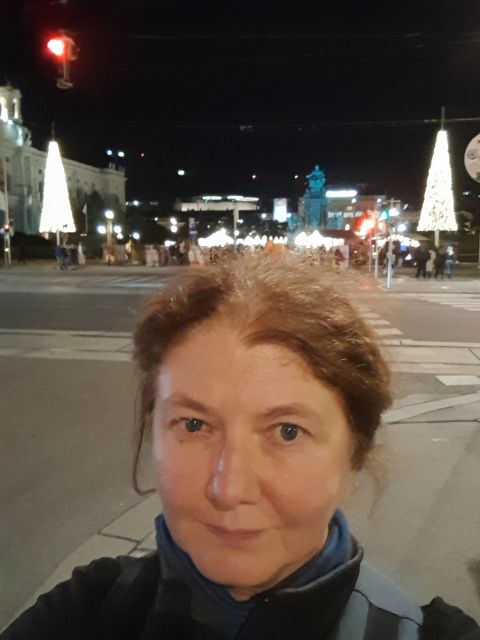
- Illuminated historic center: Walk between palaces, squares, and major landmarks after dark.
- Small groups of up to 10: A useful size for questions and personal requests.
- Advent-market finish: End with time for a seasonal punch and a look at market goods.
- English, Italian, and German: Choose from three tour languages.
Why Vienna’s Christmas Tree Story Makes a Good Tour
At first glance, the Christmas tree may seem like a narrow subject. In Vienna, it opens a door into changing customs, class life, religion, and the way people used their homes and public spaces in the 19th century.
The tour explains how the tree tradition reached Vienna and how local people reacted to it. You learn where an early tree was displayed, then connect that event with the city around you. The subject is not just decorations and holiday shopping. It is about how a new custom became part of Viennese life.
That wider angle is the tour’s main strength. You are not simply shown a decorated square and told when the lights switch on. You hear how the Christmas tree became fashionable, why it caught the imagination of Viennese residents, and why it created tension with Catholic church traditions.
The religious part is handled with a particular limit. Churches are not included as formal stops unless you specifically want to hear about Peter’s Church, which lies along the route. That suits you if you prefer architecture, civic history, and social customs over a church-focused walk.
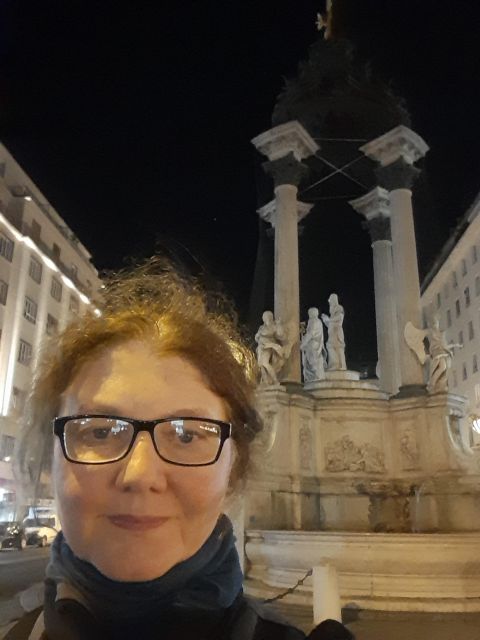
Starting Between the Anker Clock and Marriage Fountain
The meeting point is between the Anker Clock and the marriage fountain in central Vienna. The Anker Clock is a practical place to begin because it is a clear landmark, but give yourself enough time to find the exact position between the two points.
From here, the walk enters Vienna’s historic center. You should expect city streets, decorated façades, grand public buildings, and illuminated holiday displays rather than a countryside stroll. Comfortable shoes matter, and warm clothing matters even more because the tour runs outdoors in December conditions.
The activity takes place rain, snow, or shine. That is useful to know before booking. A dry evening may make the walk easy, but snow or cold wind can change the mood and the amount of time you want to spend browsing a market afterward.
A few more Vienna days worth a look
- Vienna: Christmas & New Year’s Concert in St. Peter’s Church
★ 4.6 · 516 reviews - Christmas and New Year Concert at St. Peter’s Church in Vienna
★ 4.5 · 155 reviews - Vienna: Christmas Markets Tour
★ 4.3 · 99 reviews
A 90-Minute Walk Through Vienna’s Historic Center
The main portion lasts about an hour and a half. This gives Nicole enough time to explain the Christmas tree tradition while also placing it within Vienna’s streets and architecture.
The walking route moves from palace to palace and between notable central landmarks. The supplied details do not provide a complete list of every building, so you should not expect a fixed palace-by-palace sightseeing program with interior visits. The value comes from seeing the places connected with the story while the guide explains what they meant to Viennese people.
I like this format because Vienna can look like a grand collection of façades unless someone gives you a reason to notice them. A story about Christmas customs makes the city feel more personal. You start looking at residences, public squares, and decorated streets as parts of a society that was changing.
The history may be detailed. One American participant found it hard to connect the broader Viennese material with the Christmas tree theme, while an Austrian participant enjoyed learning new historical facts even after living in Vienna for years. That gives you a fair warning: this is best for people who enjoy context and conversation, not for anyone wanting a brisk march from one market stall to the next.
Nicole’s English was praised by an Australian participant, who also valued her grasp of the topic and her friendly manner. The tour is also offered in Italian and German. As with any walking tour, the experience depends partly on the language you select and the pace of the guide.
The First Vienna Christmas Tree and 19th-Century Society
One of the most interesting parts is the visit to the place connected with the first Christmas tree displayed in Vienna. The exact power of this stop comes from the explanation around it. You are not just given a date and a location. You learn about the people involved and the society that first encountered the custom.
The tree’s arrival offers a useful way to think about social change. A Christmas tradition that now feels ordinary was once new, fashionable, and even controversial. Nicole connects the tree with the people who lived in Vienna at the time, explaining how they discovered its appeal and how it became part of community life.
The tour also explores the conflict between the Christmas tree and Catholic church traditions. This does not mean the walk becomes a religious tour. Instead, you get a look at the friction that can appear when a household custom enters a society with established religious practices.
Historical pictures are included to show the people and places linked with the story. These images should help you picture Vienna before and during the spread of the tradition. For me, this is one of the strongest reasons to choose the tour over a standard city-center walk. The pictures give the explanations a human scale.
Albertina Museum and the Palace-to-Palace Route
The Albertina Museum is listed as a guided stop lasting about 15 minutes. The information provided does not say that admission to the museum is included, so you should treat this as an exterior or nearby sightseeing stop rather than a museum visit with indoor gallery time.
The Albertina area suits the tour well because it places you among Vienna’s major architecture and palace settings. You get a short, focused explanation rather than spending half the tour inside one attraction. That keeps the Christmas tree theme moving.
Still, do not book this activity expecting a full Albertina visit. If you want the museum’s art collections, plan a separate visit and allow extra time. The same advice applies to the grand buildings seen along the walk. The tour is about their place in the story and the city, not about detailed interior tours.
A completely different way to spend a day here:
- Vienna: Vivaldi’s Four Seasons Concert in Karlskirche
★ 4.7 · 14,951 reviews - Vienna: Spanish Riding School Training
★ 3.9 · 9,281 reviews - Vienna: Skip-the-cashier-desk-line Giant Ferris Wheel Ride
★ 4.5 · 7,859 reviews - Vienna: Schönbrunn Palace & Gardens Skip-the-Line Tour
★ 4.7 · 7,739 reviews
Rathausplatz and the Evening Advent Atmosphere
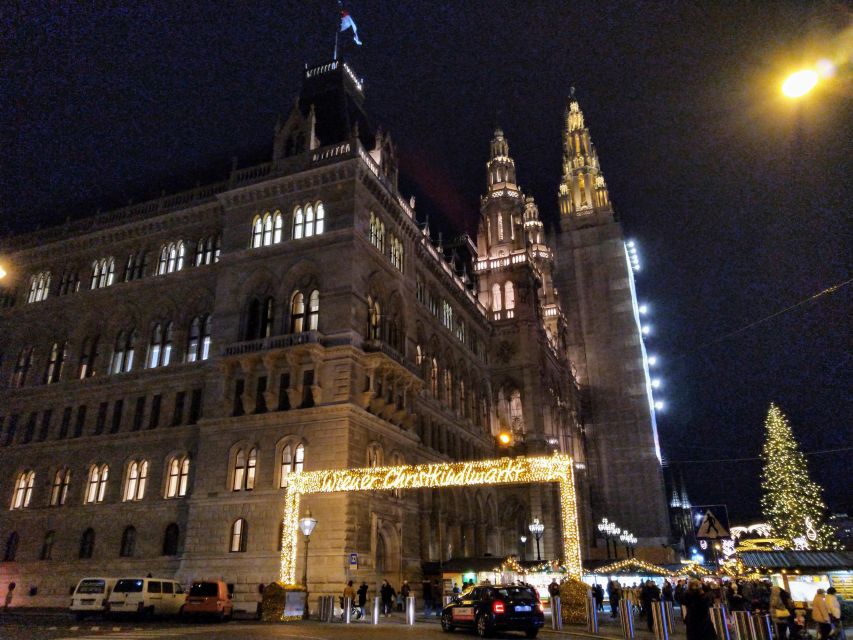
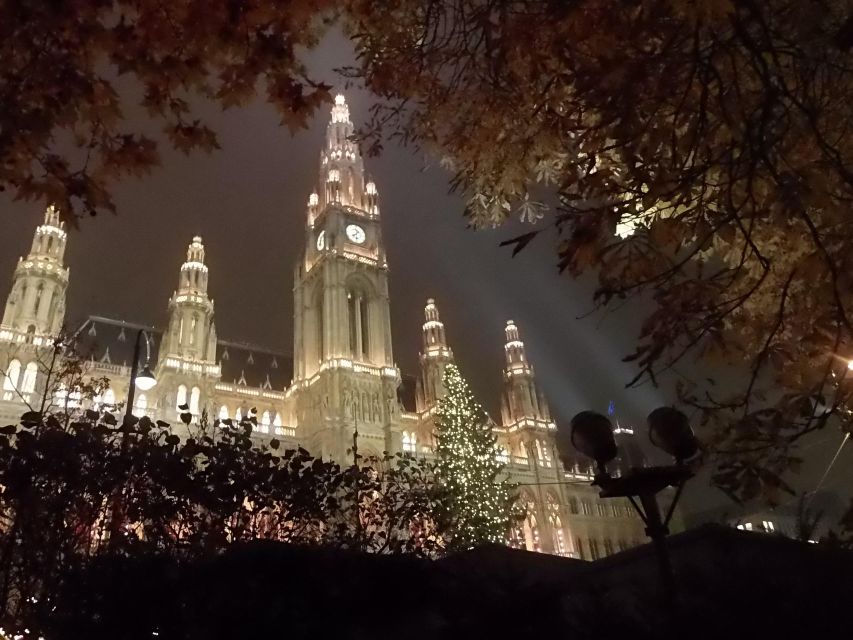
Rathausplatz is another 15-minute guided stop. During Advent, the square is one of the places where you can continue the evening among Christmas lights, market stalls, and seasonal products.
The tour allows time at an Advent market at the end, including the option to have a punch. Food and drinks are not included in the price, so bring money for anything you want to buy. This is a sensible arrangement. You pay for the guide and historical walk, then choose how much to spend on drinks, food, or gifts.
Rathausplatz is also one possible ending point. The information gives you a choice between finishing at Rathausplatz or Am Hof, while the stated finish address is Am Hof, 1598/1, 1010 Vienna. Confirm your preferred ending with the provider when arranging the tour, especially if you are meeting someone afterward.
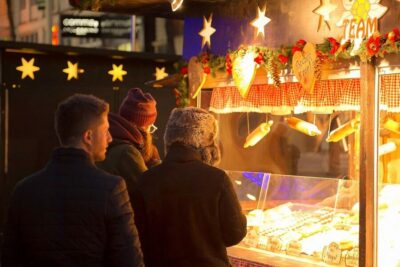
The market portion is not a separate food tour. Think of it as a pleasant extra at the end of a history walk. You can browse magical seasonal products, order a punch, and stay in the holiday mood after the formal guiding finishes.
Ending at Am Hof and Keeping the Evening Flexible
Am Hof provides another central ending point. Finishing here can work well if you want to continue walking through the old center, find a nearby café, or reach another Advent market.
The ability to shape the final part of the walk is helpful for couples and small groups with different plans. You might want a punch and more market time, while someone else may prefer to head straight to dinner. A guide who responds to individual wishes can make the final moments more useful.
One German-speaking participant appreciated being able to ask for personal suggestions for the next days in Vienna. That is worth remembering. The two-hour route may give you a broad sense of the center, but the extra recommendations can help you plan the rest of your stay.
What the Two-Hour Length Really Means
Two hours is enough for a focused introduction, not a full tour of Vienna. The listed timing adds up to about 90 minutes in the historic center, 15 minutes near the Albertina, and 15 minutes at Rathausplatz.
That pace is reasonable for a cold-weather evening. You get a proper story without committing to a half-day walk in winter. On the other hand, the tour can feel full if the guide speaks continuously. One local participant found the information interesting but felt mentally tired because there were too few pauses.
I would choose this tour early in your Vienna visit if you enjoy history. It can help you recognize the center and give you ideas for later visits. If you have already spent several hours on another detailed city walk that day, the amount of explanation may feel heavy.
There is no recorded food or drink included, and hotel pickup is not offered. You need to reach the meeting point on your own and dress for outdoor conditions. The walk is wheelchair accessible, but winter weather and central-city surfaces can still affect comfort, so contact the provider with any specific access question.
Price, Group Size, and Overall Value
At $62 per person, the tour costs more than a casual self-guided walk through Vienna’s decorated center. The price makes more sense if you value a live guide, a focused historical theme, old images, and the chance to ask questions in a group of no more than 10 people.
The small size is important here. A Christmas tree story depends on details, names, places, and connections. In a large group, it would be harder to hear or interrupt with questions. A group of 10, or even only your own group, gives the guide more room to adapt.
Value also depends on your interest. If you mainly want market stalls, punch, and Christmas lights, you can find those without paying for a guided history walk. If you want to understand how a familiar tradition took root in Vienna, the fee buys more than sightseeing. It buys a particular way of reading the city.
The historical focus also gives the tour a longer shelf life. Market decorations change each year, but the story of how the custom reached Vienna remains useful whenever you return.
Who Will Enjoy This Walk Most
I would recommend this experience to you if you enjoy small, focused subjects that reveal a larger city story. It suits first-time visitors who want a gentle introduction to central Vienna, as well as residents who enjoy learning unexpected facts about familiar streets.
It is also a good match for anyone interested in social history, holiday customs, architecture, or the relationship between public traditions and religious life. The tour works well for families with older children who can handle a two-hour outdoor walk, though no child-specific activities are listed.
You should think twice if you want a fast-moving sightseeing tour with many interiors, or if your main aim is shopping at Advent markets. The route includes holiday atmosphere, but the guide’s explanations are the main event.
Choose your language carefully. English, Italian, and German are available. If you want to discuss a personal interest, such as Peter’s Church or specific places in Vienna, raise it with the guide at the start.
Practical Tips for a Cold Evening in Vienna
Wear warm layers and shoes that can handle two hours outdoors. The tour runs in rain, snow, or clear weather, so do not rely on the lights and markets to make poor clothing comfortable.
Arrive at the meeting point between the Anker Clock and the marriage fountain with a little spare time. Keep your phone available for the provider’s contact details, but do not plan to record the guide’s explanations. Recording is strictly prohibited because the tour’s spoken material is protected by copyright.
Bring some money or a payment method for a punch, food, or market purchases. These are extra costs, and the tour price does not cover them.
The tour offers free cancellation up to 24 hours before the start, and you can reserve now and pay later. Those terms are useful if your Advent plans depend on weather or changing arrival times.
Should You Book the Christmas Tree Trails Tour?
Book it if you want a thoughtful Christmas-themed walk with a strong local-history angle. Nicole’s storytelling, historical images, small groups, and the chance to connect the first Vienna Christmas tree with 19th-century society give the experience a clear purpose.
Skip it if you want a simple market crawl or a tour built around church interiors and museum admissions. The history can be dense, and the pace may feel demanding if you need frequent pauses.
For the right audience, $62 is fair for a two-hour, small-group walk in central Vienna, especially when you add the seasonal atmosphere at the end. Bring warm clothes, arrive ready to listen, and treat the Advent market as a flexible finale rather than the main attraction.
FAQ
How long does the Vienna Christmas tree tour last?
The tour lasts two hours.
Where does the tour meet?
The meeting point is between the Anker Clock and the marriage fountain in Vienna.
Where does the tour finish?
You can choose to finish at Am Hof or Rathausplatz. The stated finish address is Am Hof, 1598/1, 1010 Vienna, Austria.
Is the tour offered in English?
Yes. The live guide can conduct the tour in English, Italian, or German.
How large is the group?
The tour is limited to 10 participants and may also be arranged for just your own group.
Is food or drink included?
No. Food and drinks are not included. During Advent, you may buy a punch at one of the markets after the walk.
What should I bring?
Bring comfortable shoes, warm clothing, and comfortable clothes. The tour operates in rain, snow, or clear weather.
Just added around Vienna
- Vienna: UNESCO Schönbrunn Palace Guided Tour with Entry★ 4.5 · 94 reviews
- World War II History Vienna Old Town Private Walking Tour★ 4.8 · 9 reviews
- Vienna: Winery and Wine Tasting Tour with a Wine Expert★ 5.0 · 5 reviews
- Vienna: Wine Tasting E-Bike Tour★ 4.9 · 46 reviews
- Vienna: Wine Tasting at Schönbrunn Palace★ 4.3 · 71 reviews
- Vienna: Wine Tasting Tour★ 4.8 · 61 reviews
- Vienna: Wachau Valley Private Kayak and Wine Tour★ 5.0 · 3 reviews
- Vienna: Wiener Schnitzel and Strudel Cooking Class★ 4.9 · 126 reviews
Christmas, compared.
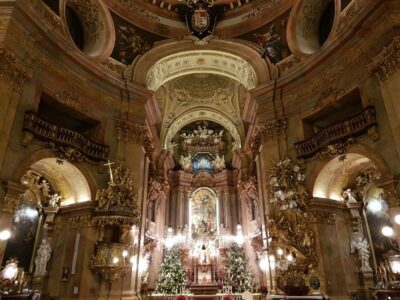
Christmas & New Year’s Concert in St. Peter’s Church
Read our review →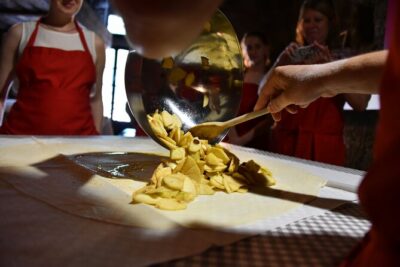
Salzburg Christmas Cookies and Apple Strudel Cooking Lesson
Read our review →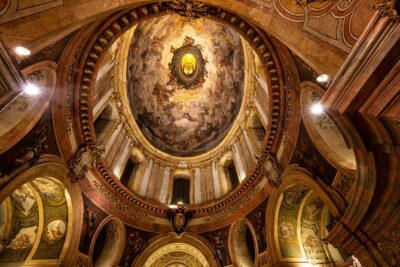
Christmas and New Year Concert at St. Peter’s Church in Vienna
Read our review →
Christmas/Advent Concert at Fortress Hohensalzburg
Read our review →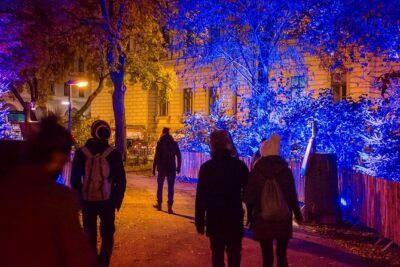
Browse the lists this tour appears in