
Reviewed · BELVEDERE PALACE TOURS
Private Klimt & Vienna Art Walk — From Baroque to Secession
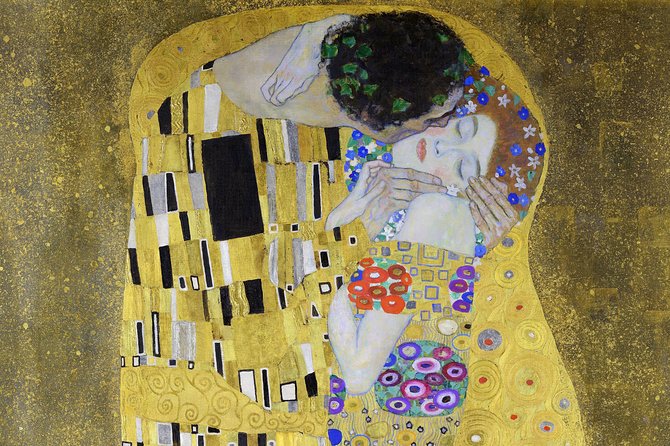
Klimt’s The Kiss is the star here, but this private Vienna walk gives you much more than a quick museum visit. You’ll link Belvedere’s Baroque palace gardens with the Secession Building, where Klimt’s Beethoven Frieze offers a stranger, bolder side of his work. Along the way, Vienna’s imperial past gives way to the artistic rebellion of around 1900.
I like the door-to-door pickup and the freedom of a private group of up to eight. I also like the way the route uses two Klimt works to explain the city itself, from Prince Eugene’s palace world to Otto Wagner’s modern Vienna. The main drawback is cost: at $372.47 per group, the tour is good value for a larger party, but less so for one or two people once museum admission and transport are added.
Key points to know before you book
- Klimt’s two Kisses: See The Kiss at the Belvedere and the symbolic climax of the Beethoven Frieze at the Secession.
- Private guiding for up to eight: Your group gets a licensed Austria Guide rather than a large coach-tour format.
- Pickup across Vienna: Meet at your hotel, vacation rental, train station, or the Reichsbrücke pier.
- A four-hour city lesson: The route moves from Baroque gardens and churches to Art Nouveau stations and market life.
- Tickets are separate: Skip-the-line service is included, but admissions to the Upper Belvedere and Secession are not.
- Expect a fair amount of walking: A moderate level of fitness is advised, and public transport is not included.
Why this private Klimt walk works
This tour is built around a useful idea: Vienna’s art did not appear out of nowhere. The city moved from grand Baroque display to imperial confidence, then toward the clean lines and artistic revolt of the Secession movement. You see that shift with your own eyes in a compact half-day.
The guide does not simply point at Klimt’s gold leaf and send you onward. The route sets his work against Vienna’s buildings, politics, music, and social changes. That broader frame is the main reason to choose this experience instead of visiting the Belvedere alone.
The private format matters. Your guide can answer questions, adjust the pace, and spend more time on the subjects that interest you. One past group needed a slower walking speed, and the guide adapted. That flexibility is hard to count on in a large group.
The usual guides include Walter and Wolfgang. Walter is especially associated with the art-focused walks and has decades of experience guiding in Vienna and beyond. His style is closer to a lecture than to a constant stream of jokes, which suits you if you like background and interpretation. It may not suit you if you want a quiet walk with only brief comments.
More Walking Tours in Vienna
- Vienna: Guided Walking Tour of City Center Highlights
★ 4.7 · 4,989 reviews - Vienna: Vienna Central Cemetery Guided Walking Tour
★ 4.8 · 3,307 reviews - Vienna: Guided Walking Tour of City Highlights & Hidden Gems
★ 4.9 · 2,180 reviews
Starting at the Belvedere and Klimt’s Kiss
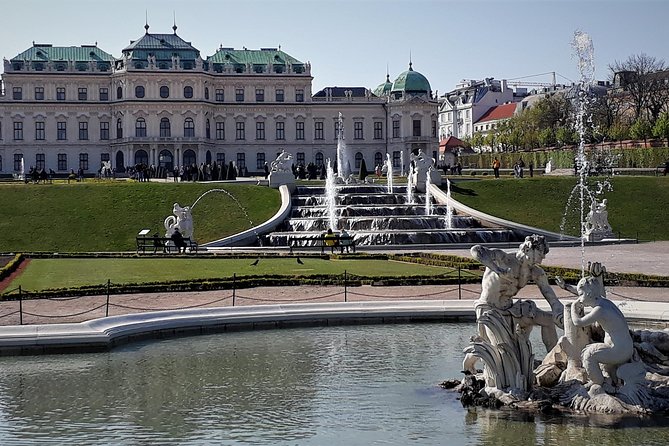
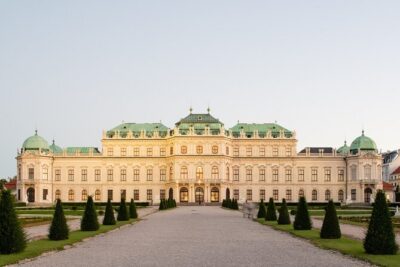
The tour begins at the Belvedere, where wrought-iron gates open toward one of Vienna’s finest Baroque palace settings. The palace was built for Prince Eugene of Savoy, a powerful military commander whose taste ran to Versailles-style ceremony, grand gardens, and carefully arranged views.
The gardens are not just a pleasant approach to the museum. They are part of the lesson. Their three levels use steps, pools, terraces, and sight lines to make the palace appear even more imposing. As you walk downhill, your guide explains how visual tricks helped create a sense of power.
The Upper Belvedere holds Gustav Klimt’s The Kiss, Austria’s most famous painting. This is the emotional center of the visit. The painting’s gold surface is easy to admire, but the guide can help you look past the familiar image and consider Klimt’s place in Vienna’s artistic circles, his treatment of pattern, and the contrast between the couple’s ornamental clothing and their exposed faces.
The scheduled time at the Belvedere is about 40 minutes. That is enough for a focused visit, especially if your main goal is Klimt, but it is not a full museum day. The collection includes more than The Kiss, and you should not expect to study every room at leisure.
Admission to the Upper Belvedere is not included in the tour price. The experience includes skip-the-line service, but you still need to pay the museum admission separately. Clarify the ticket arrangements when booking so you know exactly what your guide is handling and what you must purchase.
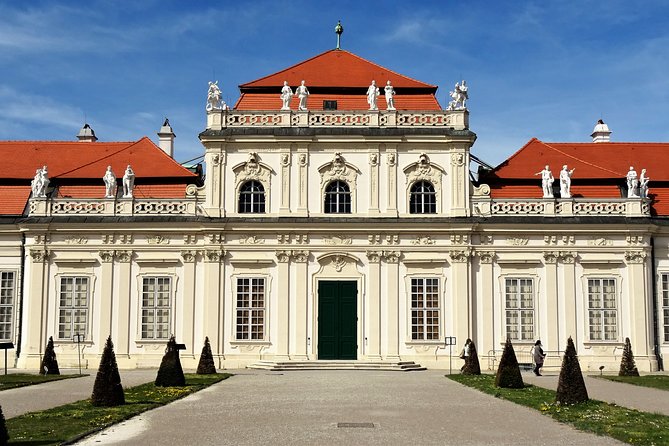
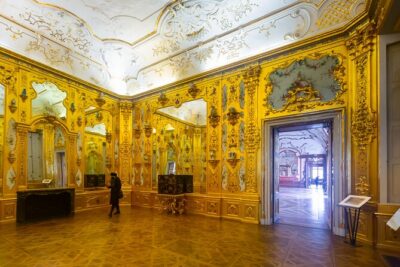
The route may also touch on the Lower Belvedere, its garden room, and the honor court. These spaces help explain what Prince Eugene brought to Vienna from the French court style, but the stated museum admission applies separately to the Upper Belvedere and Secession. The important point is that the Belvedere portion combines art with the palace setting, rather than treating the museum as an isolated stop.
Schwarzenbergplatz and Vienna’s changing face
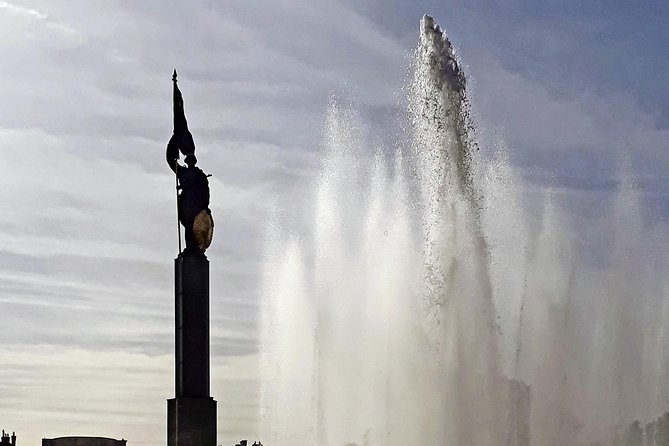
From the Belvedere, the walk heads toward Schwarzenbergplatz. The square is marked by the Soviet Memorial, a reminder that Vienna’s story did not end with imperial splendor or Klimt’s golden period.
The surrounding buildings reflect Vienna’s rapid growth in the late 1800s. This is where the tour’s historical sweep becomes useful. Instead of moving directly between famous sights, you get a sense of how the city’s expansion created the setting for new architecture, new cultural institutions, and new arguments about art.
The Soviet Memorial also gives the guide a chance to discuss the city’s 20th-century experience. Walter’s approach includes personal views on Austria’s relationship with Russia, NATO, and political neutrality. That can add texture to a private tour, but it is worth knowing in advance that the guiding may include opinion as well as established historical detail.
If you prefer a strictly neutral presentation, ask about the guide’s approach before departure. If you enjoy discussing how history shapes present-day Austria, this may be one of the more memorable parts of the walk.
Baroque drama at Karlskirche
Karlskirche provides one of the route’s strongest examples of Baroque Vienna. The church was built to impress from a distance, with a broad facade, large columns, and a dome that dominates its setting.
You do not need to be an art specialist to understand the point here. Baroque architecture was designed to create emotion and authority. It makes the church seem larger than life and presents the era as confident, wealthy, and closely tied to imperial power.
The stop helps prepare you for the Belvedere discussion. Both belong to a Vienna that wanted to display status through grand design. Later, the Secession artists would push back against that established taste. Seeing these places in one sequence makes the change easier to grasp.
The tour is not a church-only visit, so do not book it expecting a long interior study of Karlskirche. Its role is to show you the city’s Baroque character as the route moves toward 1900.
More Belvedere and Klimt visits:
- Entry Ticket Upper Belvedere, Klimt’s Kiss & Permanent Collection
★ 4.5 · 831 reviews - Vienna: Lower Belvedere Entry Ticket & Temporary Exhibitions
★ 4.1 · 275 reviews - Vienna: Belvedere Palace Skip-the-Line Tour
★ 4.9 · 197 reviews - Skip-the-line Upper Belvedere Tickets and Guided Tour Vienna
★ 4.8 · 185 reviews
Otto Wagner, Karlsplatz, and the Art Nouveau turn
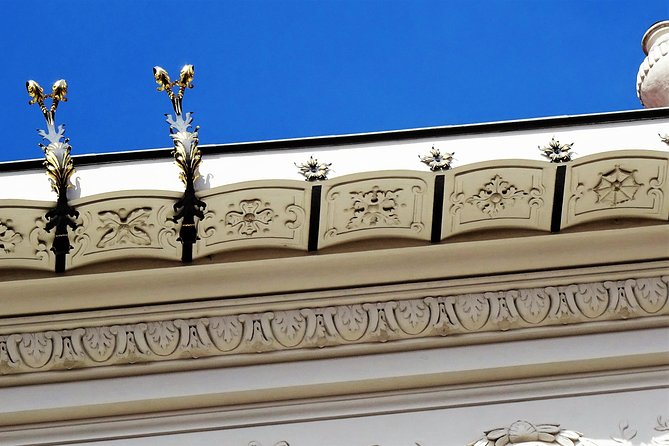
At Karlsplatz, the Otto Wagner metro station offers a smaller but telling example of Vienna around 1900. It is practical transport design, but it is also decorated with the elegant lines and ornamental details associated with Art Nouveau.
The station shows how the new style entered daily life. Art Nouveau was not limited to paintings in galleries. It appeared in public buildings, furniture, posters, entrances, and transit systems. Here, form and function meet in a way that feels very different from the heavy ceremonial style of the palace and church.
This is also where the tour can help you understand why the Secession movement mattered. The artists were not simply choosing a new color scheme. They were arguing for a broader idea of art, one that could break from old institutions and combine architecture, painting, design, and public life.
The route also passes the Musikverein, home of the Vienna Philharmonic. Its Great Hall, often called the Golden Hall, is celebrated for its acoustics. The building connects visual art with Vienna’s musical identity, a useful reminder that the city’s cultural life around 1900 was not confined to museums.
The Musikverein is viewed as part of the city walk rather than presented as a full concert-hall visit. If you want to attend a performance or take an interior tour, that requires a separate plan.
The Secession Building and Klimt’s Beethoven Frieze
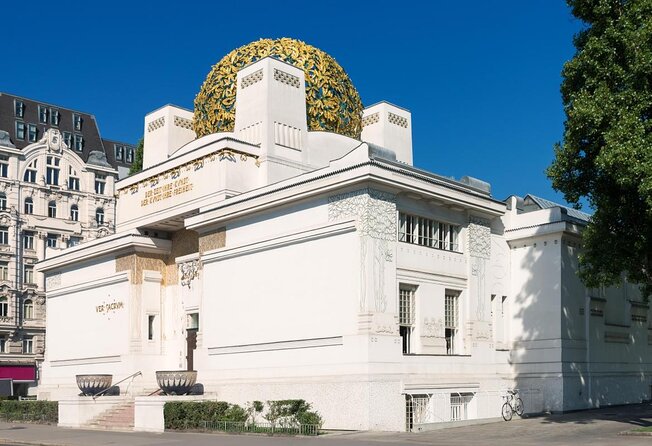
The Secession Building is the clearest architectural statement on this route. Its pale facade, unusual dome, and stripped-down decorative language announced that a group of artists had broken away from Vienna’s established fine-art institution.
The building is not just a container for art. It is part of the argument. The artists wanted a place where modern work could be shown on its own terms. That makes the Secession an important counterpoint to the formal palace world of the Belvedere.
Inside, Klimt’s Beethoven Frieze is the key work. It was made for an exhibition honoring Beethoven and was intended to be temporary. Klimt painted it directly onto the walls using light materials, giving the work an unusual relationship to the room.
The frieze follows a symbolic journey toward happiness and fulfillment. Its final image, a kiss to the world, connects neatly with The Kiss at the Belvedere. The two works are not identical, but viewing them together lets you compare Klimt’s approach to love, ornament, myth, and human desire.
The Secession visit is scheduled for about 30 minutes. That is enough for an introduction and a careful look at the Beethoven Frieze, though art lovers may want extra time. Admission is not included, so add that cost to your planning.
Naschmarkt, where the art lesson becomes everyday Vienna
The walk ends near Naschmarkt, a long-running food and market area whose current form dates to 1915. It is a practical finish after several hours of palaces, churches, museums, and monuments.
Naschmarkt offers a more ordinary side of Vienna. You can browse food stalls, find an international meal, or stop for a snack. It is a good place to continue on your own because the tour leaves you near a useful city destination rather than returning you to a museum entrance.
The market is described as being in a transitional stage, so do not expect a perfectly preserved old-world market frozen in time. Its appeal is the mix of food, local routine, and changing city life. You might find it best for a late-afternoon bite, or for lunch if you take the morning departure.
How the four-hour schedule feels
The tour starts at 9:30 a.m. or 2 p.m. and lasts about four hours. The morning option ends around lunchtime, making Naschmarkt a natural place to eat. The afternoon option works well if you want a slower morning before meeting your guide.
You cover a lot of ground. The route includes palace gardens, museum interiors, public squares, a church, a metro station, the Musikverein, the Secession, and Naschmarkt. Some movement may involve Vienna’s metro, but public transport is not included in the price.
The schedule is best for someone who wants a strong first look at several parts of Vienna. It is not ideal if you want to linger over every artwork or take long breaks. One person described the pace as slow, while another noted that the walk was substantial. The practical reading is simple: the guide may adjust to your group, but you should still arrive ready to walk.
Wear comfortable shoes and avoid scheduling another long walking tour immediately beforehand. A moderate fitness level is recommended, and the route can feel demanding if your feet are already tired.
Is $372.47 a fair price?
The listed price is $372.47 for a private group of up to eight. For six to eight people, that works out to a reasonable per-person price for four hours with a licensed guide and pickup. For one or two people, the cost is much harder to justify unless personal attention and door-to-door service are especially important to you.
You must also budget for museum admissions and any public transport. Since those are not included, compare the final total with a standard museum visit plus a group walking tour.
The value is strongest when you want interpretation, not just entry. A guide can connect the two Klimt works, explain the Baroque garden design, adjust the pace, and answer questions as the city changes around you. The private format also helps if your group has a particular interest in Klimt, architecture, Austrian history, or Art Nouveau.
Who should book this Vienna art walk?
I would choose this tour if you want Klimt but do not want to spend your whole day inside one museum. It suits first-time visitors who want a fast, well-organized introduction to several major sights, as well as returning visitors who want a stronger art-history thread.
It is especially useful for families or mixed-age groups because the private guide can slow down, explain unfamiliar terms, or shift attention between art and city history. It also suits people arriving by train or cruise ship, since pickup is available at Vienna Hauptbahnhof, Vienna West, and the Reichsbrücke pier.
You should think twice if you dislike extended commentary, political discussion, or a tour that covers ground at a measured pace. One low rating raised concerns about the guide’s personal opinions and dated humor. That experience does not define the whole tour, but it is a fair reminder to ask about guiding style if that matters to you.
The tour is offered in English. Service animals are allowed, but pets are not permitted in some areas visited. Free cancellation is available up to 24 hours before the start time, which gives you some protection while planning.
Should you book it?
Book this private Klimt and Vienna Art Walk if you want context and convenience in equal measure. The Belvedere and The Kiss alone justify a visit, but the route becomes more useful when you connect them with Karlskirche, Otto Wagner’s station, the Musikverein, and the Secession’s Beethoven Frieze.
For a large group, the price can be sensible. For a couple, compare it carefully with separate museum tickets and a less costly walking tour. You should also confirm the guide’s style and the ticket arrangements before paying.
If you like art explained through buildings, politics, music, and daily life, this is a strong half-day choice. If you want a quiet museum visit or a purely neutral, fact-only guide, choose with more care.
FAQ
How long does the private Klimt and Vienna Art Walk last?
The tour lasts approximately four hours. It starts at either 9:30 a.m. or 2 p.m.
Where can pickup take place?
Pickup is available from hotels and vacation rentals in Vienna, the Reichsbrücke pier, and Vienna Hauptbahnhof or Vienna West train stations. Other meeting points can be arranged.
Are museum admissions included?
No. Admission to the Upper Belvedere and the Secession Building is not included. Public transportation and personal expenses are also separate.
Does the tour include skip-the-line access?
Yes. Skip-the-line service is included, although you still need to pay the relevant admission fees.
How many people can join the private tour?
The price covers one private group of up to eight people. Only your group participates.
What happens if I need to cancel?
You can receive a full refund if you cancel at least 24 hours before the experience begins. Cancellations or changes made less than 24 hours before the start time are not accepted for a refund.
Just added around Vienna
- Vienna: UNESCO Schönbrunn Palace Guided Tour with Entry★ 4.5 · 94 reviews
- World War II History Vienna Old Town Private Walking Tour★ 4.8 · 9 reviews
- Vienna: Winery and Wine Tasting Tour with a Wine Expert★ 5.0 · 5 reviews
- Vienna: Wine Tasting E-Bike Tour★ 4.9 · 46 reviews
- Vienna: Wine Tasting at Schönbrunn Palace★ 4.3 · 71 reviews
- Vienna: Wine Tasting Tour★ 4.8 · 61 reviews
- Vienna: Wachau Valley Private Kayak and Wine Tour★ 5.0 · 3 reviews
- Vienna: Wiener Schnitzel and Strudel Cooking Class★ 4.9 · 126 reviews
Belvedere Palace Tours, compared.
Entry Ticket Upper Belvedere, Klimt’s Kiss & Permanent Collection
Read our review →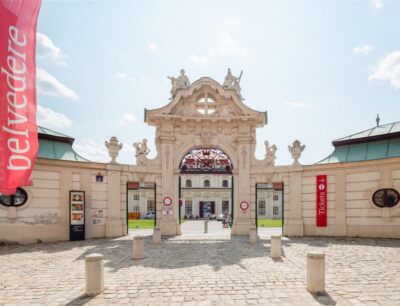
Lower Belvedere Entry Ticket & Temporary Exhibitions
Read our review →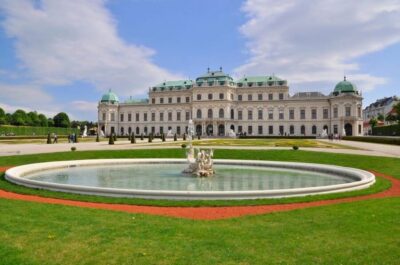
Skip-the-line Upper Belvedere Tickets and Guided Tour Vienna
Read our review →
Schönbrunn, Belvedere, Big Bus, Giant Wheel & Cruise
Read our review →
Skip-the-line Upper Belvedere Tickets and Guided Tour Vienna
Read our review →
Klimt Villa (Gustav Klimt Atelier & Museum) Ticket
Read our review →Browse the lists this tour appears in