
Reviewed · WALKING TOURS
Salzburg Introduction Walking Tour
Salzburg’s story is far bigger than Mozart, and this 150-minute walking tour makes that clear. You move from Mirabell Gardens into the UNESCO-listed center while your guide connects music, medieval salt wealth, medicine, religion, architecture, and local customs. It is a smart way to get your bearings before exploring on your own.
I like the historian-led format, especially for travelers who want more than a quick list of dates. I also like the route, which takes in Gothic churches, Baroque squares, Mozart’s birthplace, and St Peter’s Abbey in one compact outing. The main drawback is the price: at $176 per person, it is costly for a walking tour, and Mozart residence admission is not included.
Key points to know before booking
- A full old-town route in 2.5 hours: You visit Mirabell Gardens, Mozart’s birthplace, Alter Markt, Residenzplatz, Domplatz, and St Peter’s Abbey.
- The guide is the main attraction: Guides may be professors, doctoral students, historians, journalists, art critics, or published authors.
- Salzburg beyond Mozart: The discussion covers salt commerce, medical innovations, religion, architecture, local customs, and the city’s musical past.
- Private and small-group choices: A smaller setting should make it easier to ask questions and keep the discussion focused on your interests.
- Mozart admission costs extra: The Mozart residence ticket is not part of the tour price, so budget for it separately if you want to go inside.
- An easy meeting point: You meet outside Coffeehouse Salzburg at Linzergasse 39.
Why this walk gives Salzburg more depth
Salzburg can look almost too pretty at first glance. Church domes, formal squares, ornate facades, and mountain views can turn the center into a postcard parade unless someone explains how the pieces fit together.
That is where this tour earns its keep. You are not simply led from one famous building to the next. The guide discusses Salzburg as a place shaped by church power, salt trading, music, medicine, and the movement of people through the Alps. The city’s UNESCO designation, awarded to the historic center in 1997, makes more sense when you understand how much of its medieval and Baroque fabric remains together.
I especially like the promise of a spirited discussion rather than a one-way speech. The tour is designed for questions, and one guide, Liza, was praised for answering questions from a mixed-age group and explaining the history behind squares, churches, shops, and buildings. Liza is from Salzburg, which gives her a useful personal connection to the city, though your assigned guide may be someone else.
The guide credentials also matter at this price. You may be led by a professor, doctoral student, historian, journalist, art critic, or published author. That does not guarantee the same style from one guide to another, but it tells you this is aimed at people who want interpretation, not just photo stops.
More Walking Tours in Salzburg
- Salzburg 2.5-Hour Walking Tour: Mozart, Old Town & More
★ 4.2 · 987 reviews - Salzburg: Old Town, Mozart, & Mirabell Gardens Walking Tour
★ 4.8 · 461 reviews - Salzburg Oldtown: Sightseeing Walking Tour with Licensed Local Guide
★ 5.0 · 392 reviews
Starting at Linzergasse 39 and entering Mirabell Gardens
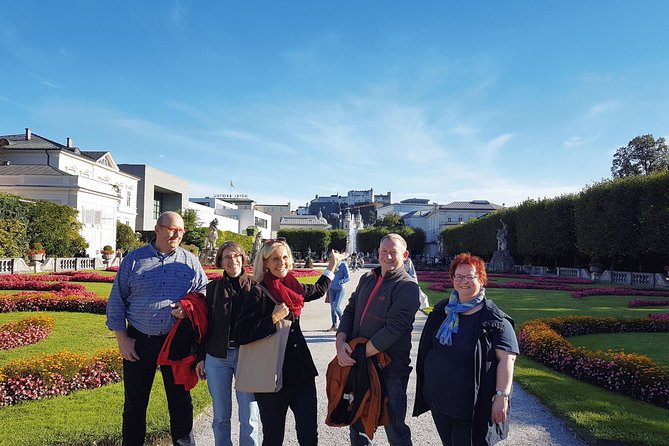
The walk begins outside Coffeehouse Salzburg at Linzergasse 39. This is a practical starting point because it places you on the approach to Mirabell Gardens and lets the tour move naturally toward the old town.
Mirabell Gardens is a strong opening stop. Its formal design introduces you to Salzburg’s Baroque side before the route gets denser. The guided visit should help you read the gardens as part of the city’s larger story, rather than treating them as a quick place for photographs.
You will want comfortable shoes. The activity lasts two and a half hours, and much of its value comes from walking through several connected areas instead of standing in one interior. The provided details do not promise seating, shade, or a particular pace, so ask about those points if they matter to you.
Starting here also gives you a useful orientation. Salzburg’s center can feel compact, but the historic sights are packed into a sequence of streets, squares, churches, and courtyards. Seeing them with a guide at the beginning of your stay can help you return later with a better sense of direction.
Mozart’s birthplace and the city’s musical identity
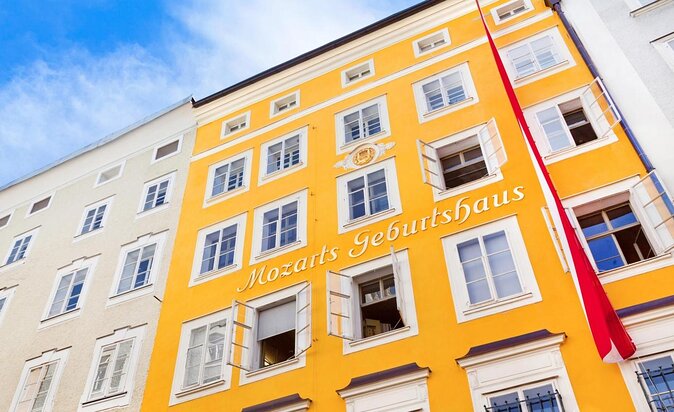
Mozart is Salzburg’s most famous name, and Mozart Geburtshaus is the natural stop for understanding that connection. The tour includes a guided stop at Mozart’s birthplace, but the Mozart residence admission ticket is not included in the price.
That distinction matters. You should not assume that the walking tour automatically provides entry to the museum or residence. If going inside is important to you, confirm the admission arrangements and set aside extra money. The tour can still provide useful context from the outside and place Mozart within Salzburg’s wider musical tradition.
I appreciate that music is treated as one part of Salzburg’s identity, not the entire story. The city’s musical heritage is a major theme, but the guide also discusses architecture, religion, commerce, and local life. That balance should suit you if you want to understand why Mozart matters without spending the whole walk on Mozart trivia.
The route also has a practical advantage for first-time visitors. You can hear the musical story while standing in the actual center where Salzburg’s famous buildings and public spaces surround it. That connection between person and place is more useful than a detached lecture.
Alter Markt and the everyday side of old Salzburg
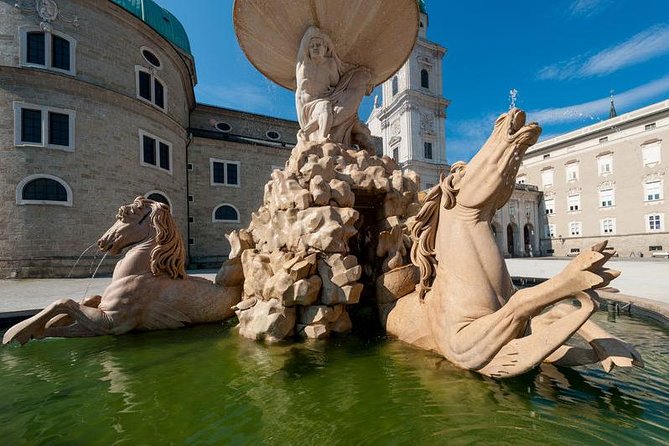
Alter Markt brings the tour into one of the old center’s important public spaces. Here, the focus shifts from a single famous figure to the way Salzburg functioned as a city.
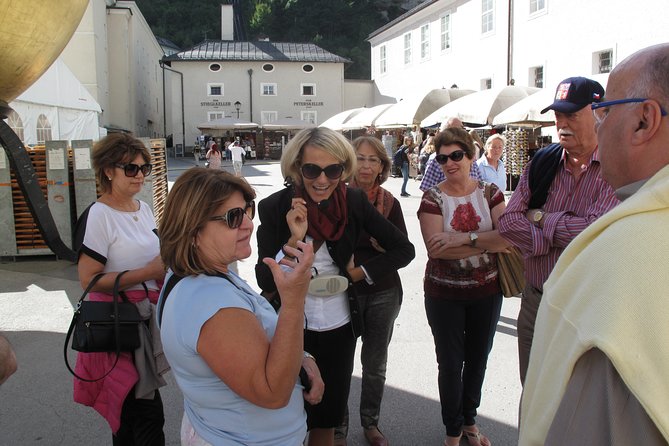
The guide discusses the history behind the square, nearby buildings, shops, and churches. This is the sort of explanation that helps you look up from the prettiest facade and notice how the center was organized. Medieval salt commerce is part of the wider story, and it provides a key clue to Salzburg’s wealth and influence.
The name Salzburg itself points toward salt, but the useful part of the tour is not simply learning a fact. You get a sense of why trade mattered to the city’s development and why the center could support such elaborate religious and civic buildings.
This stop should appeal to you if you like urban history at street level. You are not only studying rulers and composers. You are also learning how markets, shops, churches, and public squares shaped daily life. The exact amount of time spent here will depend on the guide and the group’s questions.
A completely different way to spend a day here:
- The Original Sound of Music Tour in Salzburg
★ 4.5 · 6,129 reviews - Salzburg: Original Sound of Music Tour
★ 4.8 · 5,059 reviews - From Salzburg: Half-Day Tour to Hallstatt
★ 4.6 · 3,596 reviews - Salzburg: Mozart Concert at Mirabell Palace
★ 4.8 · 3,498 reviews
Residenzplatz and Domplatz, where Salzburg turns grand
Residenzplatz is one of the places where Salzburg’s Baroque character becomes hard to miss. The open square gives the guide room to discuss the buildings around it and the power that shaped the city’s appearance.
Domplatz continues that lesson. The cathedral and surrounding architecture present Salzburg as a major religious center, not merely a pretty town with a famous musician. Gothic and Baroque design are both part of the promised focus, and these squares are well suited to explaining the change from medieval forms to the grander style that followed.
I like this section because it makes architecture readable. A guide can point out how a square frames a church, how buildings relate to one another, and how religious authority affected the city center. You may already admire the facades, but context helps you understand why they look the way they do.
This is also where the tour’s price needs a close look. If you are happy to take photographs and read basic guidebook descriptions, $176 per person may feel too high. If you want a specialist to connect the buildings with politics, religion, art, commerce, and music, the expense becomes easier to defend, especially in a private or very small group.
St Peter’s Abbey and Salzburg’s older spiritual roots
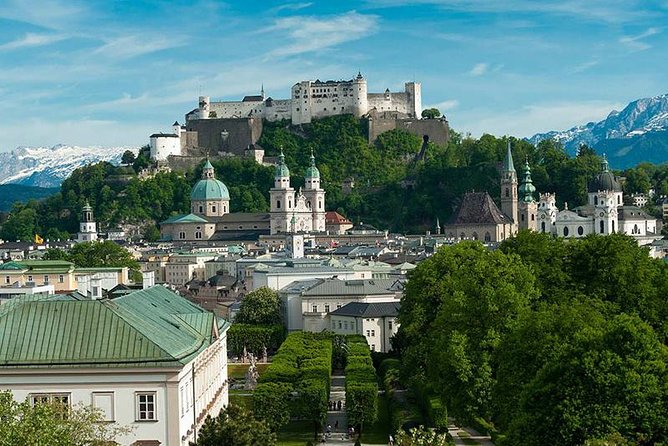
The final listed stop is St Peter’s Abbey, one of Salzburg’s key religious sites. The guided visit adds another layer to the city’s story and keeps the tour from ending with only the most obvious Mozart and Baroque highlights.
The abbey is especially useful as a counterweight to the grand public squares. It reminds you that Salzburg’s identity was shaped by religious institutions over a long period. The discussion of Gothic and Baroque architecture can take on more meaning here, since you are seeing how different periods and purposes meet within the historic center.
The supplied details do not promise entry into every building or a special interior visit at St Peter’s Abbey. Think of it as a guided stop within the walking route, and confirm access if seeing a particular interior is essential to you.
By the end, you should have a clear framework for exploring independently. You will know the major squares, understand the basic links between Salzburg’s salt wealth and its architecture, and have a stronger sense of how music fits into the city’s wider past.
How the guide style affects the experience
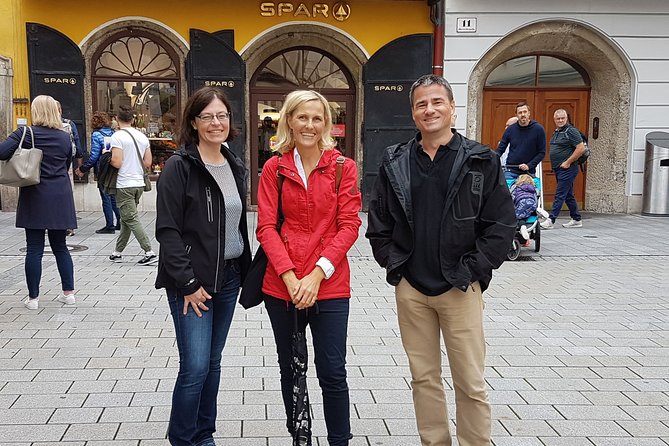
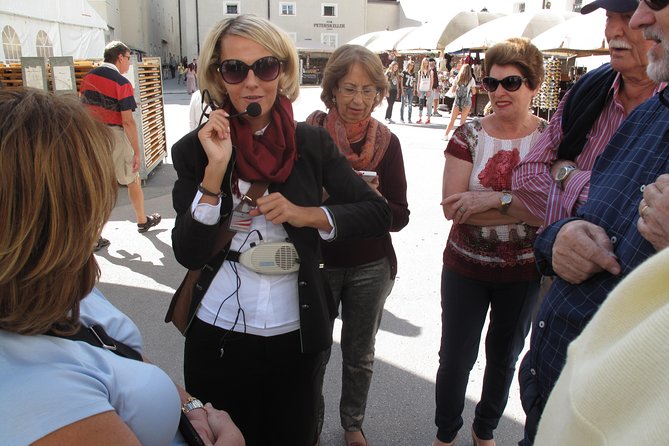
This is not a recorded audio walk. You have a live English-speaking guide, which gives you the chance to ask about subjects that interest you and skip past topics that do not.
That flexibility matters in Salzburg. One person may want more Mozart. Another may care about church architecture, the Sound of Music connection, medical innovations, or the practical customs of local life. A good guide can adjust the emphasis, while a fixed audio route cannot.
The guide background is a real selling point, but it also creates an expectation. At $176, you should expect careful explanations and a discussion that goes beyond memorized dates. The available feedback includes strong praise for punctuality, friendliness, enthusiasm, and clear answers. One older comment raised a fair concern about paying a high price for a guide who was not a historian, so I would confirm the guide’s credentials if that detail is central to your decision.
The small-group and private options should also shape your choice. A private walk gives you the best chance to control the pace and ask detailed questions. A small group may cost less than a private booking, though the exact group size and price difference are not specified here.
Price, timing, and who gets the best value
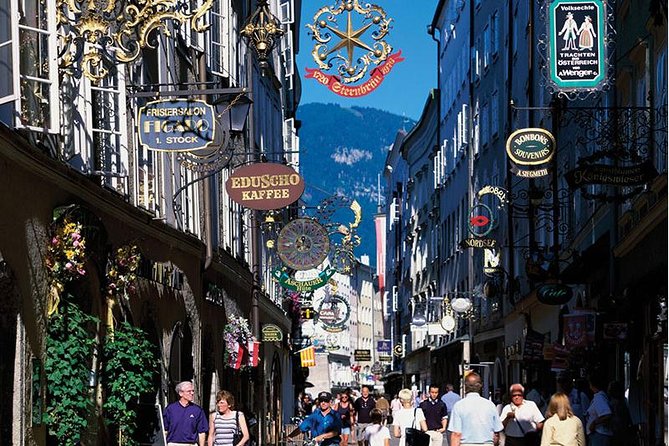
At $176 per person, this is not a budget introduction to Salzburg. The walk lasts 150 minutes, so you are paying for the guide’s time, preparation, and specialist approach rather than for transport, a meal, or a long list of admissions.
I would consider it good value for three types of people:
- You are visiting Salzburg for a short time and want a strong historical overview in one morning or afternoon.
- You care about architecture, music, religion, and urban history, and you prefer asking questions to reading signs.
- You are booking a private or small-group tour where the guide can shape the conversation around your interests.
I would hesitate if you mainly want a quick orientation or a low-cost stroll. Salzburg’s center is walkable, and you can see many of these exterior sights without paying for a guide. The value depends on how much interpretation you want.
The 2.5-hour length is well judged for a first introduction. It is long enough to cover the major stops but short enough to leave room for your own museum visits and meals. You should check the available starting times before booking, since the schedule is not fixed in the information provided.
Cancellation is flexible up to 24 hours before the tour for a full refund, and you can reserve now while paying later. Confirmation is sent within 48 hours, subject to availability. Those terms are useful if your Salzburg plans are still shifting.
What to know about the Mozart ticket and route
The biggest practical point is the admission exclusion. Mozart residence admission is not included, so do not treat this as a combined walking tour and museum ticket.
The route includes the main historic center, but the details do not state how long the guide remains at each stop or which buildings you enter. If you have a particular priority, such as seeing a specific Mozart room or entering a church, ask before booking.
The meeting point is outside Coffeehouse Salzburg, Linzergasse 39. Arrive with the address ready on your phone, and allow enough time to find the exact meeting spot. The tour is in English, and private or small-group formats are available.
Should you book the Salzburg Introduction Walking Tour?
I would book it if you want Salzburg explained rather than simply displayed. The route covers the city’s essential historic center, and the best part is the range of subjects: Mozart, music, salt commerce, medical developments, religious power, Gothic and Baroque architecture, local customs, and the city’s film connection.
I would choose the private or small-group option if the $176 price fits your budget and you value conversation. I would also confirm the guide’s background and ask how the Mozart birthplace stop works, since admission is extra.
Skip it if your main goal is an inexpensive orientation or if you plan to spend most of your time inside museums. But for a short visit, a history-minded couple, a family with mixed interests, or anyone who wants to see the old town with an expert at hand, this is a well-focused introduction to Salzburg.
FAQ
How long does the Salzburg Introduction Walking Tour last?
The tour lasts 150 minutes, or 2.5 hours.
Where does the tour meet?
You meet outside Coffeehouse Salzburg at Linzergasse 39.
What language is the tour conducted in?
The live tour guide speaks English.
Which Salzburg sights are included in the route?
The route includes Mirabell Gardens, Mozart Geburtshaus, Alter Markt, Residenzplatz, Domplatz, and St Peter’s Abbey.
Is admission to Mozart’s residence included?
No. The Mozart residence admission ticket is not included in the tour price.
Can I book a private or small-group tour?
Yes. Private and small-group options are available.
Can I cancel the tour for a refund?
Yes. You can cancel up to 24 hours in advance for a full refund. You can also reserve now and pay later.
Just added around Salzburg
- Zell am See: Schmittenhöhe Tandem Paragliding Flight★ 4.9 · 82 reviews
- Zell am See: Paragliding Tandem Flight★ 5.0 · 31 reviews
- Werfen: Hohenwerfen Castle Entrance Ticket★ 4.5 · 84 reviews
- Viator Exclusive: ‘The Sound of Music’ Private Tour★ 5.0 · 28 reviews
- Zell am See Alpine Village Private Day Trip from Salzburg★ 5.0 · 3 reviews
- Private Austrian Food Tasting Tour in Salzburg’s Old Town★ 4.5 · 3 reviews
- Private transfer from Salzburg to Vienna, 2 hours for sightseeing★ 4.5 · 7 reviews
- Private Transfer from Salzburg to Munich with 2 hours for sightseeing★ 5.0 · 8 reviews
Walking Tours, compared.

Guided Walking Tour of City Center Highlights
Read our review →
Guided Walking Tour of City Highlights & Hidden Gems
Read our review →
Vienna Historic Center Small Group Walking Tour
Read our review →
Browse the lists this tour appears in