
Reviewed · WALKING TOURS
Vienna: Viennese Underworld Guided Walking Tour
Vienna has a second city below street level: dark cellars, old corridors, shelter rooms, and private basement spaces with stories far removed from the polished imperial center above. This Viennese Underworld tour takes you into that rougher, stranger side of the city.
I like the choice of tour lengths, since you can pick a quick one-hour look or spend two hours seeing more sites. I also like the personal style of guides such as Bella, whose lively explanations and willingness to answer questions help keep the subject from turning into a dry history lecture. The main drawback is the physical setting: expect stairs, uneven ground, dirt, and tight spaces.
Key points
- Three tour lengths: Choose a 1, 1.5, or 2-hour route, with different basements and themes on each option.
- Wartime traces: Selected routes include World War II relics and former air raid shelters.
- Unusual medical history: Some options visit a historical pharmacy laboratory and medicine cellar.
- German guide, English audio support: The live tour is in German, with an optional phone-based audio guide in English.
- Real underground conditions: Bring a flashlight, wear sturdy closed-toe shoes, and expect several stairways with no elevator.
- Strong guide-led experience: Bella is noted for making the stories clear, friendly, and entertaining.
Why Vienna’s basement world is worth your time
Most first visits to Vienna focus on palaces, churches, concert halls, and grand coffeehouse streets. Those sights show the city at its most formal. Underground Vienna offers something less polished and often more unsettling.
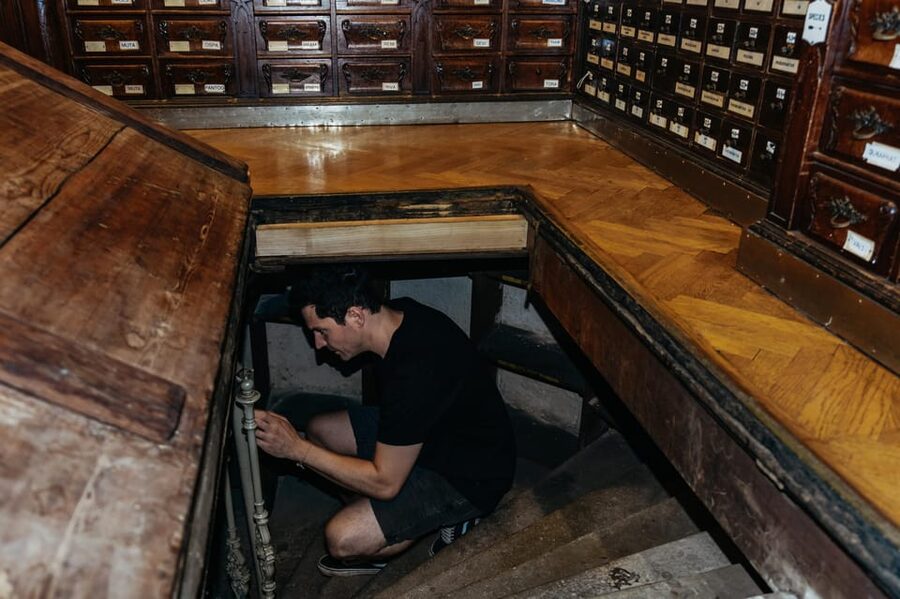
The tour enters old private basements in the heart of the city. These rooms were not built as a museum display, so the experience has a raw quality. You walk through spaces that have had different uses over time, and the guide explains how they fit into Vienna’s past.
The attraction is not simply going underground. It is the contrast between the calm city above and the murky stories below. A neat street can conceal a cellar used for medicine, shelter, storage, or refuge. The tour gives you a reason to look at Vienna’s old buildings differently after you return to street level.
You should also keep your expectations sensible. This is not a grand underground palace or a large archaeological complex. It is a guided walk through selected basement spaces, with the appeal coming from the unusual setting and the stories attached to it.
More Walking Tours in Vienna
- Vienna: Guided Walking Tour of City Center Highlights
★ 4.7 · 4,989 reviews - Vienna: Vienna Central Cemetery Guided Walking Tour
★ 4.8 · 3,307 reviews - Vienna: Guided Walking Tour of City Highlights & Hidden Gems
★ 4.9 · 2,180 reviews
Choosing between the 1, 1.5, and 2-hour routes
The basic decision is simple: the longer you spend below Vienna, the more varied your visit can be. Each option has its own focus and access points, so the meeting place may change with the route you select.
The one-hour option suits you if you want an unusual break from the main sights without giving up much of your day. It should be your pick if you are curious about Vienna’s cellars but are not sure how comfortable you will feel underground.
The 1.5-hour option gives you more room for stories and additional basement spaces. This is likely the best middle choice for many people. You get more than a quick sample, but the activity still fits neatly into a morning or afternoon of sightseeing.
The two-hour option is for you if the subject itself is the reason you are booking. A longer route may include more private cellars and a wider range of objects or former uses. It also gives the guide more time to explain how the spaces changed over the years.
Read the option details carefully before paying. You are not simply choosing a time slot. You are choosing which set of basements, relics, and stories you will see.
Descending into Vienna’s private cellars
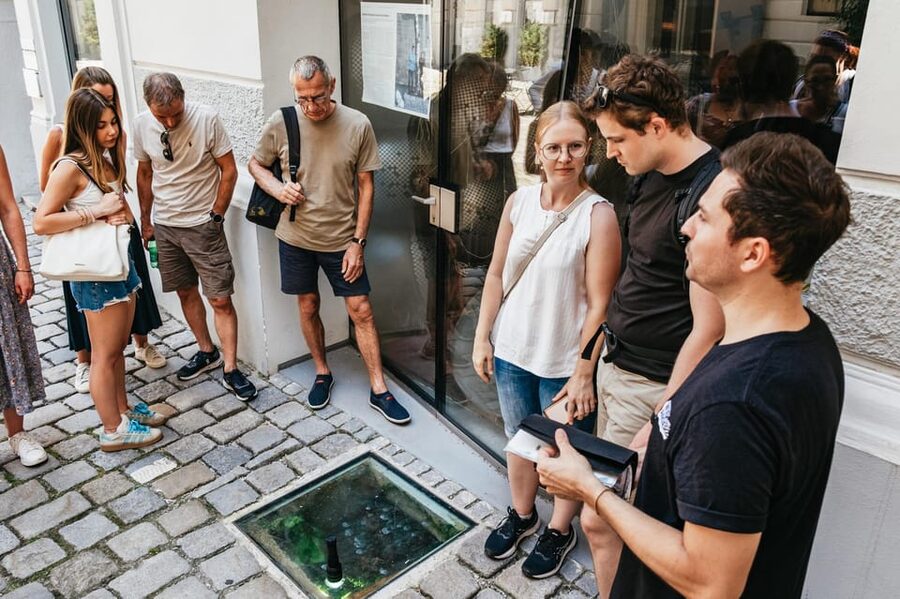
The tour starts with a walk to the selected meeting point, which depends on your booking. From there, your guide leads the group into basement rooms beneath central Vienna.
The transition is part of the fun. One moment you are in the city center, and the next you are negotiating stairways into a darker, colder-feeling environment. The route is not designed for easy access, so you should be ready to bend, step carefully, and keep your light pointed at the ground.
The cellars have their own character. Some may feel bare and practical. Others carry traces of former work or storage. Their value comes from the fact that they were used spaces, not purpose-built attractions. You are seeing the kind of rooms that usually remain locked behind ordinary doors.
The guide gives the spaces meaning. Without explanation, an old basement can look like a pile of walls and stone. With a clear story, a small room can become a place tied to medicine, war, fear, or survival.
World War II relics and air raid shelters
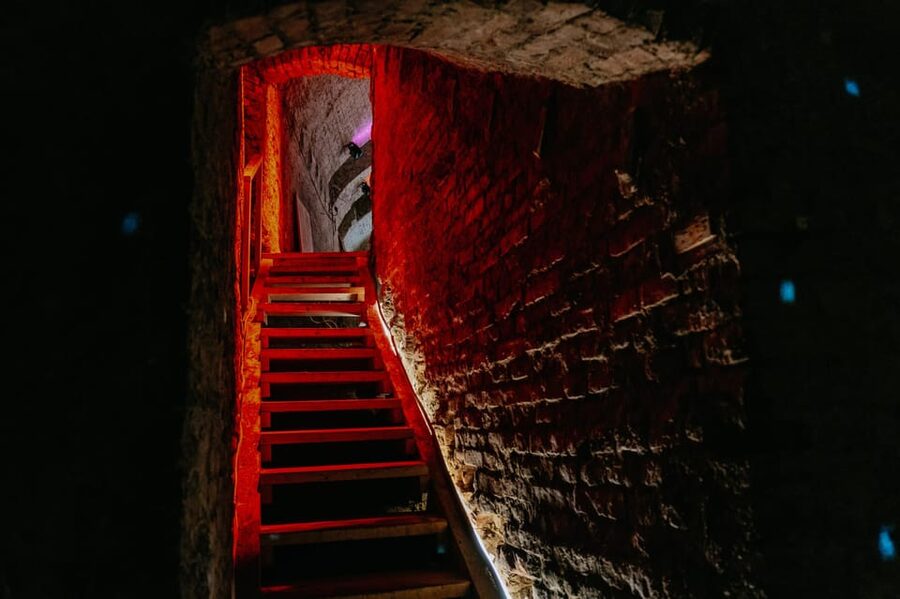
Depending on the selected route, the tour includes relics from World War II and former air raid shelters. These are among the most serious parts of the visit.
An air raid shelter is not just another underground room. It shows how war changed daily life beneath the city. People needed protection, and existing basement spaces could take on a new purpose. The underground setting makes that history feel immediate without requiring a large formal museum.
You may see objects or structural remains connected with that period. The exact items depend on the route, so do not book expecting one fixed collection. The appeal is the chance to encounter wartime traces in the place where they had a practical function.
This section may also affect the tone of the tour. The experience can be amusing when the guide explains odd former uses, but wartime material brings a darker weight. I appreciate that contrast. Vienna’s past was not only palaces and music. Ordinary people also had to find shelter and make use of whatever space was available.
A completely different way to spend a day here:
- Vienna: Vivaldi’s Four Seasons Concert in Karlskirche
★ 4.7 · 14,951 reviews - Vienna: Spanish Riding School Training
★ 3.9 · 9,281 reviews - Vienna: Skip-the-cashier-desk-line Giant Ferris Wheel Ride
★ 4.5 · 7,859 reviews - Vienna: Schönbrunn Palace & Gardens Skip-the-Line Tour
★ 4.7 · 7,739 reviews
The old pharmacy laboratory and medicine cellar
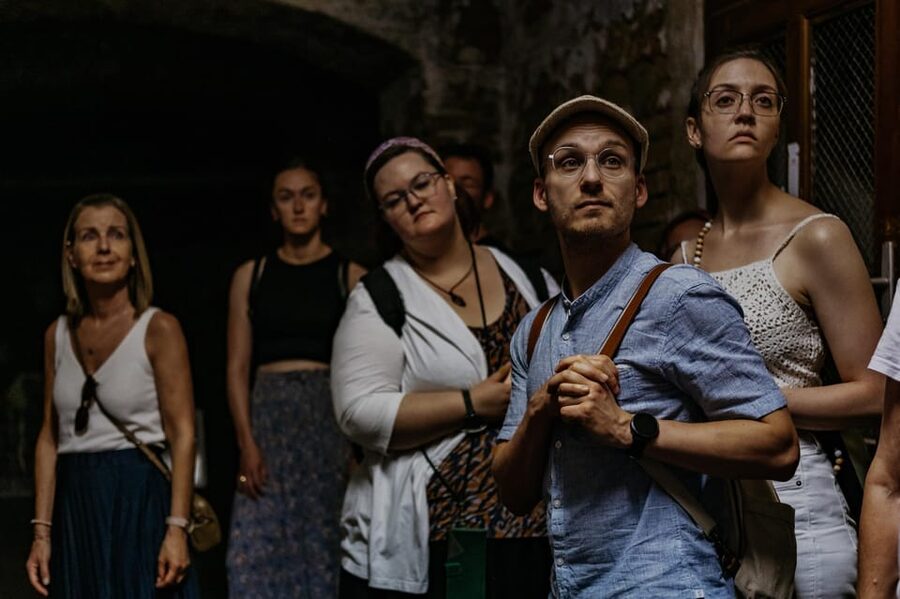
Some routes focus on a historical pharmacy laboratory and medicine cellar. This is a particularly unusual angle on Vienna because it connects the underground setting with the history of treatment and preparation.
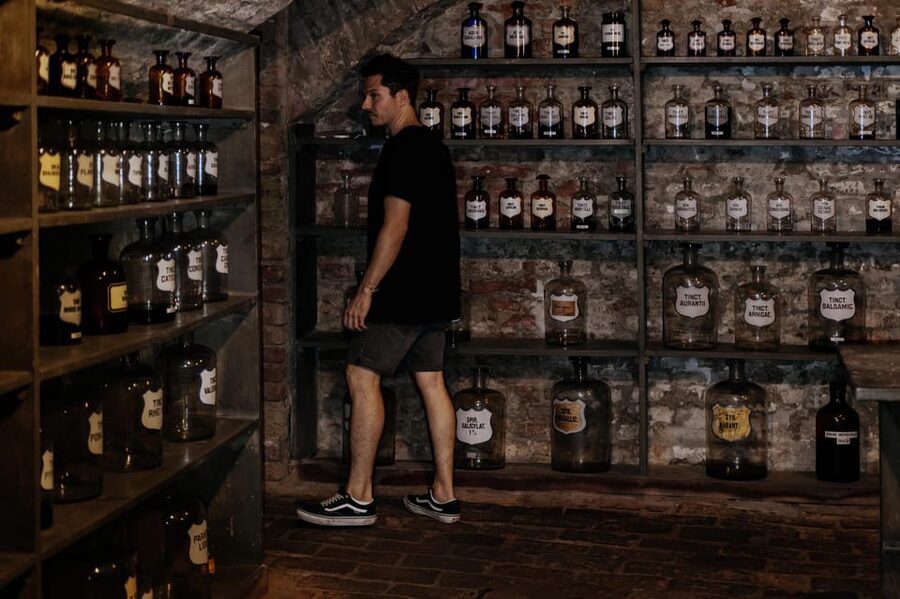
A pharmacy laboratory suggests work rather than display. You may see a space associated with the preparation or storage of medicines, along with objects or traces linked to that purpose. The point is not to expect a modern medical museum. It is to understand how a basement could support a very different kind of city life.
The medicine cellar adds another layer. Cellars provide stable, enclosed storage, which made them useful for materials that needed protection from ordinary conditions. Your guide explains the former role of these rooms and helps you read details that could otherwise seem unimportant.
This part should appeal to you if you like small-scale history. It is less about famous people and major monuments, and more about the work that kept a city functioning.
Refuge spaces and the people pushed to the margins
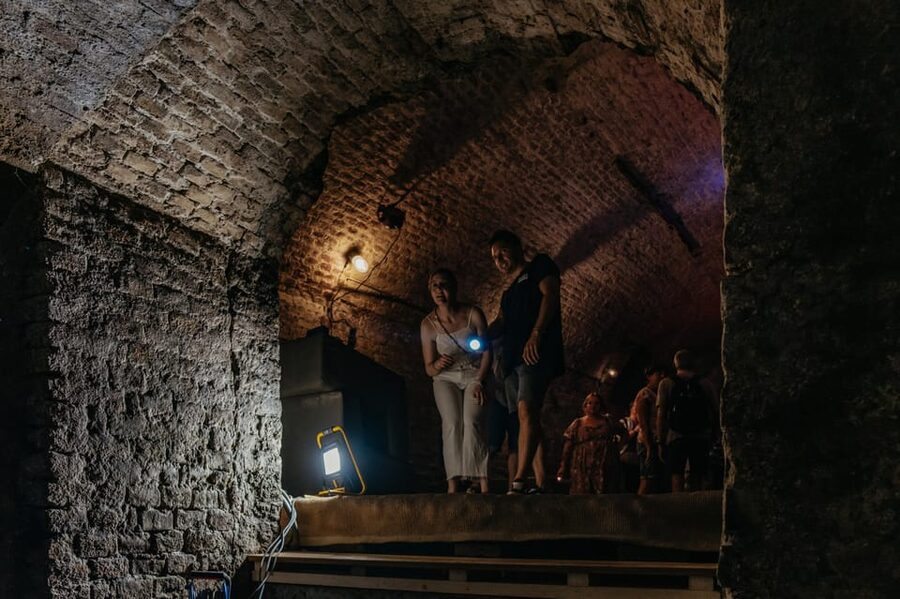
Another possible focus is on former places of refuge for outcasts. This gives the tour a human side that is easy to miss when you think of underground sites only as wartime shelters or storage rooms.
The phrase outcasts covers people who had little place in the formal city above. The basement becomes a setting for questions about who could find safety, who was shut out, and how hidden spaces served people living on the edge of society.
The guide’s role matters here. These subjects need context, and the stories can quickly become confusing if you are left to inspect a room without explanation. Bella is praised for clear, entertaining storytelling and for taking time with questions. That kind of guide makes a difference in a small, dark space where the mood can otherwise become heavy.
Do not expect every route to cover every theme. The cellar selection varies, which is why checking your chosen option matters.
What the guide adds to the experience
The live guide speaks German. An optional audio guide in English is available through your phone, so you should bring a charged smartphone and your own headphones if you want the best sound.
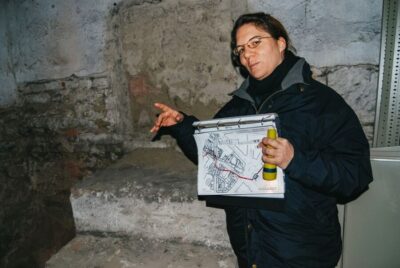
If you understand German, the live presentation is likely to be the strongest part of the tour. Bella, in particular, is described as friendly, energetic, and good at making the time pass quickly. She responds to questions rather than simply delivering a fixed speech, which helps the tour feel personal.
If you do not speak German, the English audio guide gives you a way to follow along. Still, you should understand the tradeoff. The atmosphere, timing, and personal exchanges come from the live guide, while the audio option gives you language support. Bring headphones because they are not included.
Small-group availability is another plus. A smaller group makes it easier to hear in echoing rooms and easier to stay close to the guide on stairs. Group size can vary, so do not assume every departure will be tiny.
Practical conditions below the city
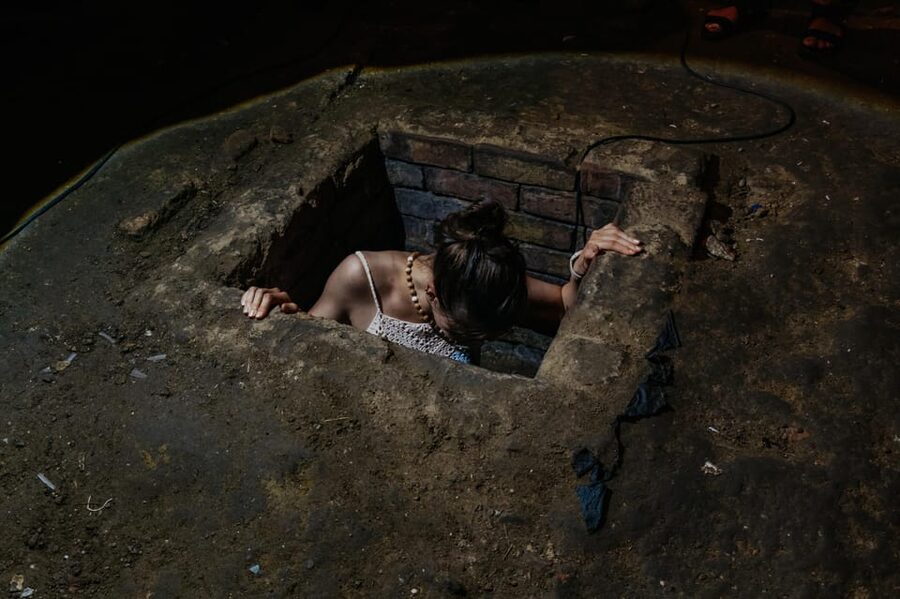
Wear sports shoes or other sturdy closed-toe shoes. The ground can be uneven, and the activity warns of a risk of tripping or injury. Comfortable clothes are a good idea, and you should wear something that can get dirty.
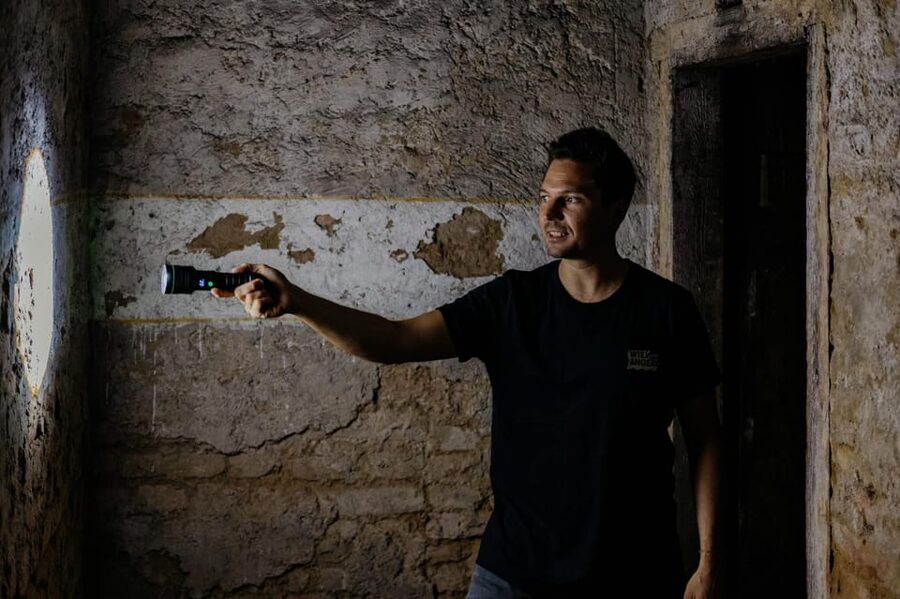
Bring your own flashlight. Your phone light can work, but a separate flashlight leaves your hands free for climbing stairs and holding onto whatever support is available. The tour does not provide flashlights or headphones.
There are several stairways, and no elevators. This makes the activity unsuitable for wheelchair users and people with limited mobility. It is also not recommended for anyone with claustrophobia. Children under 10 are not permitted.
Participation is at your own risk. That wording is important here, since this is not a smooth, modern attraction with wide paths and polished floors. Move slowly, keep an eye on the ground, and follow the guide’s instructions.
The meeting point changes with the option you book, so check the exact location before setting out. Allow enough time to find it, especially if your route begins in an unfamiliar part of central Vienna.
Is $37 a fair price?
At $37 per person, this tour costs more than a normal city walk but includes admission to the selected underground attraction, the guide, and the chosen route through private basement spaces.
The value comes from access. You are not paying only for a talk about Vienna. You are entering places you would not normally find or visit on your own, with the guide providing the background that turns odd rooms into meaningful sites.
The price makes the most sense if you choose a route that matches your interests. Pick the shorter option if you want a taste of the subject. Choose 1.5 or two hours if you want more stories and a wider range of cellar uses.
It is less compelling if you dislike stairs, dirt, tight rooms, or history with a grim edge. In that case, Vienna offers many easier ways to spend $37. For the right audience, though, the unusual access makes the cost reasonable.
You can cancel up to 24 hours before the activity for a full refund, and a reserve-now, pay-later option is available. Those policies give you some flexibility while you settle your sightseeing plans.
Who will enjoy this underground walk?
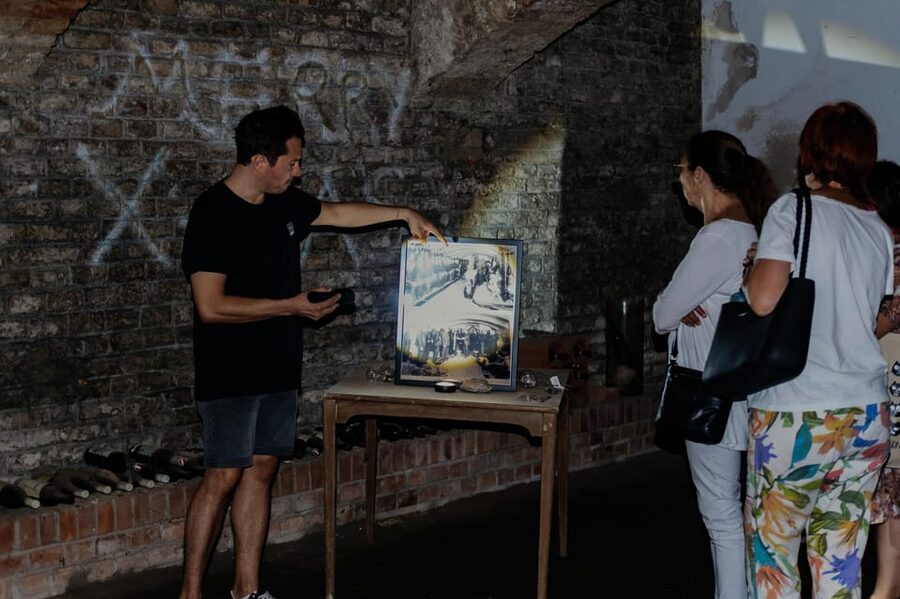
I would recommend it most to you if you have already seen some of Vienna’s major sights and want a different angle on the city. It is also a good match for people who enjoy local history, old buildings, wartime traces, medical history, and places that are not part of the standard sightseeing circuit.
The tour works well for couples, friends, and small groups who like discussing what they have seen. The unusual setting gives you plenty to talk about after you return upstairs.
It is not a good fit for young children, wheelchair users, people with mobility impairments, or anyone who feels uneasy in confined spaces. It may also disappoint you if you expect a highly polished museum with a fixed display of famous objects.
The strongest match is someone who values access and storytelling over comfort. You should be willing to get a little dirty, use your phone or flashlight, and take the stairs in exchange for a look at a less familiar side of Vienna.
Should you book the Viennese Underworld tour?
Book it if you want Vienna to feel stranger and more layered than the usual palace-and-coffeehouse itinerary. The combination of private cellars, wartime remnants, old medical spaces, and refuge sites gives the city a darker human dimension.
Choose the route carefully, bring a real flashlight and sturdy shoes, and select the longer option only if the subject genuinely interests you. If you want a smooth, accessible walk, skip it. If you like unusual places and a guide who can tell a lively story, this is one of Vienna’s more memorable short tours.
FAQ
How long does the Viennese Underworld tour last?
You can choose a 1, 1.5, or 2-hour option. Starting times vary, so check availability for your preferred date.
What language is the live tour in?
The live guide speaks German. An optional English audio guide is available through a phone download.
What sites might I see underground?
Depending on your selected option, you might visit private basements, World War II relics, former air raid shelters, a historical pharmacy laboratory, a medicine cellar, and former refuge spaces.
Is the meeting point always the same?
No. The meeting point may vary depending on the tour option you book.
What should I bring?
Bring comfortable clothing, sports shoes, closed-toe shoes, a flashlight, and a smartphone for the audio guide. Clothes that can get dirty are recommended.
Are headphones included?
No. Headphones are not included. You should bring your own if you plan to use the audio guide.
Is the tour suitable for people with limited mobility?
No. The route includes several stairs, has no elevators, and may include uneven ground. It is not suitable for wheelchair users or people with mobility impairments.
Can children join the tour?
Children under 10 years old cannot participate. The tour is also not recommended for people with claustrophobia.
Just added around Vienna
- Vienna: UNESCO Schönbrunn Palace Guided Tour with Entry★ 4.5 · 94 reviews
- World War II History Vienna Old Town Private Walking Tour★ 4.8 · 9 reviews
- Vienna: Winery and Wine Tasting Tour with a Wine Expert★ 5.0 · 5 reviews
- Vienna: Wine Tasting E-Bike Tour★ 4.9 · 46 reviews
- Vienna: Wine Tasting at Schönbrunn Palace★ 4.3 · 71 reviews
- Vienna: Wine Tasting Tour★ 4.8 · 61 reviews
- Vienna: Concert by the Vienna Baroque Orchestra★ 4.6 · 56 reviews
- Vienna: Wachau Valley Private Kayak and Wine Tour★ 5.0 · 3 reviews
Walking Tours, compared.

Guided Walking Tour of City Center Highlights
Read our review →
Guided Walking Tour of City Highlights & Hidden Gems
Read our review →

Vienna Historic Center Small Group Walking Tour
Read our review →
Ghosts and Legends Guided Nighttime Walking Tour
Read our review →Browse the lists this tour appears in