
Reviewed · WALKING TOURS
Salzburg Introduction Walking Tour
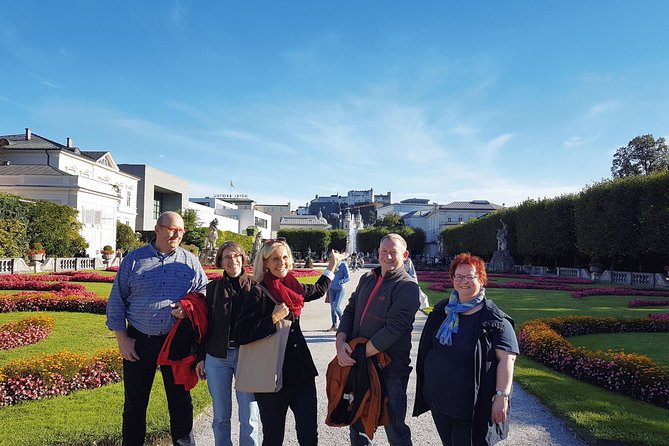
Salzburg makes a strong first impression, but its polished churches and pretty lanes tell a complicated story. This small-group walk connects the city’s medieval salt trade, archbishops, Mozart family, and von Trapp family instead of treating each sight as an isolated photo stop. You move from crooked lanes to grand squares, then into the musical and political story of the city.
I like the small scale, with a maximum listed as six people in one description and eight in another. I also like the guides’ range of backgrounds. Lisa, Liza, Claudia, and Astrid have been singled out for clear English, local insight, humor, and thoughtful pacing. The main consideration is the price, $180.21 per person. That is a serious sum for a walking tour, so this makes the most sense if you want history and conversation rather than a quick list of sights.
Key points to know before booking
- Getreidegasse gives you Salzburg’s medieval core: Narrow lanes, passageways, and old commercial buildings show how the city grew before the grand squares appeared.
- Mozart and the von Trapps receive real context: You hear about Wolfgang and Nannerl Mozart, Michael Haydn, and the actual refugee story behind The Sound of Music.
- A small group changes the experience: Guides can answer questions, adjust the pace, and sometimes tailor the route to your interests.
- The guides bring serious subject knowledge: The team includes professors, doctoral students, historians, journalists, art critics, and published authors.
- You cover a lot on foot: Plan on roughly two and a half hours, with some descriptions calling it a three-hour walk and one participant recording more than 10,000 steps.
- It is an orientation walk, not an admission tour: Mozart’s Residence is not included, and food, drinks, and hotel transfers are also excluded.
Starting near Linzer Gasse and finding Salzburg’s shape
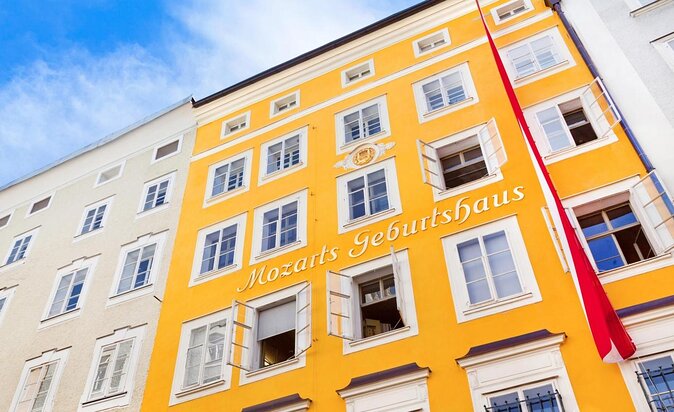
The walk begins at Linzer Gasse 39, a practical starting point near public transportation. The listed start time is 9:30 a.m., though morning and afternoon departures are available. Confirm your exact time when booking, since the details describe both a 2.5-hour experience and a three-hour walk.
I value the route’s basic structure. You begin in the Burgher Town, where narrow, slightly crooked streets and covered passageways create a clear picture of everyday Salzburg. This side of the city feels more practical and commercial than the grand squares across the river. The contrast helps you understand that Salzburg was not built as one sweeping baroque stage set.
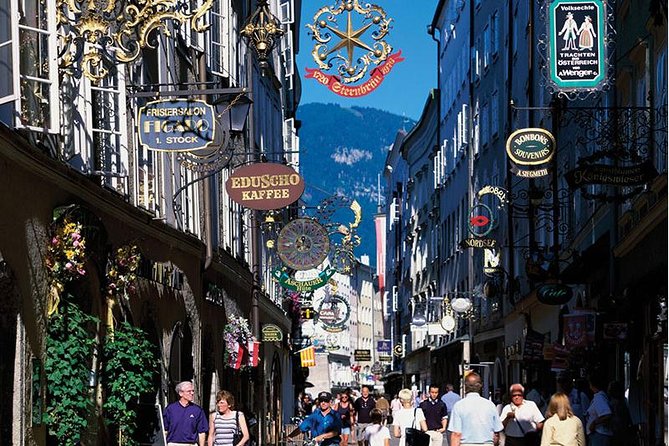
Getreidegasse is the star here. Today it is a busy shopping street, but its layout still reflects the medieval city. Look up as you walk. The signs, courtyards, and linked passageways are part of the experience, and a guide can point out details that are easy to miss when you are focused on shop windows.
The route does not simply recite dates. It connects the city’s wealth to salt, then connects that wealth to the authority of the archbishops. You also hear about medical innovations and local customs. That combination gives the walk more range than a standard introduction built only around Mozart and music.
More Walking Tours in Salzburg
- Salzburg 2.5-Hour Walking Tour: Mozart, Old Town & More
★ 4.2 · 987 reviews - Salzburg: Old Town, Mozart, & Mirabell Gardens Walking Tour
★ 4.8 · 461 reviews - Salzburg Oldtown: Sightseeing Walking Tour with Licensed Local Guide
★ 5.0 · 392 reviews
Crossing from merchant lanes to archbishop squares
Salzburg’s old town becomes more spacious as the route reaches the baroque district. Here, the archbishops shaped the city through their Residence, churches, public spaces, and court culture. The broad squares feel very different from Getreidegasse, and that change is one of the most useful visual lessons of the tour.
Your guide explains how religious and political power worked in Salzburg. The archbishops were not only church leaders. They presided over a territory and used architecture to display authority. You do not need a specialist background to follow this, but the tour suits you best if you enjoy learning why a city looks the way it does.
The churches and buildings are major visual highlights. One participant described seeing more than 10,000 steps during the walk, although the pace was comfortable. That gives you a useful warning: this is not a short stroll between two or three landmarks. Wear sensible shoes and expect to spend the morning or afternoon on your feet.
The guides also appear willing to adapt. Claudia has been praised for keeping a structured route while leaving room for questions. Lisa and Liza have adjusted stops for shade and sitting during hot weather. That matters in Salzburg, where bright sun on open squares can make a long walking talk tiring.
Mozart’s birthplace and the city’s musical story
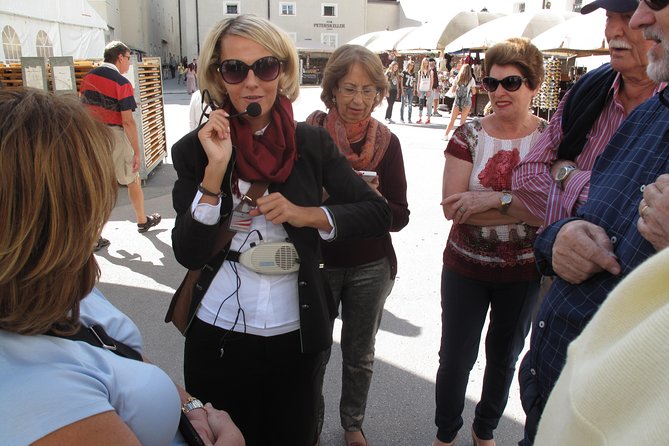
Mozart’s Birthplace is one of the most recognizable stops on Getreidegasse. The tour passes the building and uses it as a starting point for the story of Wolfgang Mozart’s childhood in Salzburg. You hear about his sister Nannerl as well, which helps move the focus beyond the familiar image of the child prodigy.
This is an exterior visit, not a house admission. The tour does not include entry to the Mozart Residence, so budget separately if you want to tour an interior museum. The value here is the surrounding story and the chance to place Mozart within the city that shaped his early life.
The musical discussion also includes Michael Haydn, the city’s other major musical son. That is a worthwhile addition. Salzburg’s musical identity can easily shrink into one famous name, but the walk gives you a wider view of the people, institutions, and church culture that made music central to local life.
A guide such as Liza may bring photographs to help explain the past. Other guides have used local stories and personal perspective to make the history easier to picture. If you are interested in music, ask questions about the difference between Salzburg’s festival identity and its older church and court traditions.
The Festival Halls and Salzburg’s public stage
The Festival Halls are another key stop. They connect the old city’s musical heritage with the modern Salzburg Festival, giving you a useful bridge between Mozart’s era and the city’s present cultural life.
You should not expect a performance or backstage visit. This is a walking tour, so the emphasis is on the buildings, their place in the city, and the history attached to them. The stop works best as part of the larger route, since your guide can explain how Salzburg’s performance culture grew from court and religious traditions.
The guide may also point out locations connected with The Sound of Music. The film is a major part of how many English-speaking visitors first imagine Salzburg, but this tour tries to separate movie memory from local history. That approach is helpful. You get the recognizable places without allowing the film to swallow the rest of the city.
A completely different way to spend a day here:
- The Original Sound of Music Tour in Salzburg
★ 4.5 · 6,129 reviews - Salzburg: Original Sound of Music Tour
★ 4.8 · 5,059 reviews - From Salzburg: Half-Day Tour to Hallstatt
★ 4.6 · 3,596 reviews - Salzburg: Mozart Concert at Mirabell Palace
★ 4.8 · 3,498 reviews
St. Peter’s Abbey and 696 years of continuity
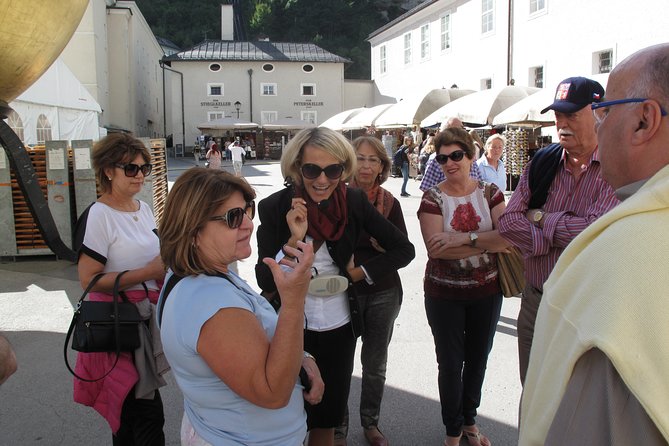
The walk continues to St. Peter’s Abbey, the Benedictine monastery traditionally dated to 696. It is one of the oldest and most important religious sites in Salzburg, and its presence helps explain why the city developed as a center of church power and learning.
The stop is more than a church photograph. It brings together religion, education, music, and the long continuity of Salzburg’s institutions. The guide may explain how the abbey fits into the wider development of the city and why the archbishops were able to exercise such influence.
The route can also include smaller places that you might not find alone. One memorable example described a visit to the chapel of Nonnberg Abbey while a choir rehearsed. That sort of moment cannot be promised, but it shows the benefit of walking with someone who pays attention to local life rather than racing between famous facades.
Do not expect admission to every building. The supplied details specifically exclude Mozart Residence admission, and no general interior admissions are promised. The strength of the walk is the guided setting and explanation, not a package of museum tickets.
The Sound of Music, with the real story included
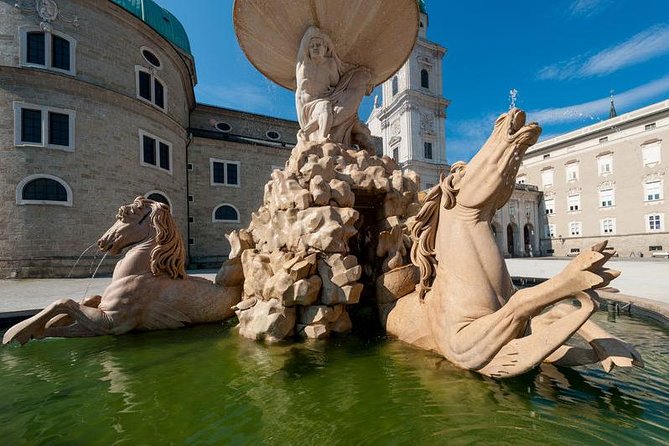
The von Trapp family section is a useful reason to choose this tour over a purely architectural walk. You learn about the real family behind The Sound of Music and the family’s refugee story during the Second World War.
That distinction matters. The film is beloved, but it reshapes events for drama and romance. A local guide can explain what belongs to the movie and what belongs to the historical record. Liza has been praised for offering an Austrian perspective on the von Trapps and for suggesting good places to stand in the gardens connected with the film.
The tour is not advertised as a full Sound of Music filming-location excursion. It is an introduction to Salzburg that includes the movie’s local connections. If your main goal is to visit every filming site, you may want a dedicated film tour instead. If you want the film placed inside a broader account of Salzburg, this format is more balanced.
Small groups, named guides, and the human side of the walk
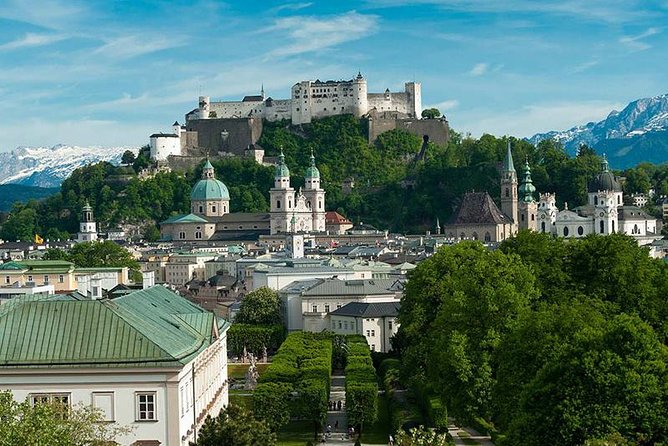
The strongest part of this experience is the guide. The provider describes its staff as professors, doctoral students, historians, journalists, art critics, and published authors. In practice, that means you are paying for interpretation and conversation, not just directions between landmarks.
Several guides have earned specific praise. Claudia has been described as relaxed, organized, clear, and funny. Lisa has been valued for excellent English, careful attention to shade, and a warm manner. Liza has been praised for her local lore, photographs, patience with a delayed train, and practical tips for snacks and ice cream.
Astrid brings another useful angle as a local who grew up and still lives in Salzburg. Gabe has led an educational walk focused on the city’s churches. These examples show why the exact guide can shape the feel of the tour. The subject matter remains similar, but the storytelling style may differ.
Small group size is important at this price. One booking ended up with only two people, allowing the guide to shape the entire route around their interests. Another guide tailored the walk to the group while keeping the route organized. The listed maximum varies between six and eight, so do not assume a private tour, but the group should remain much smaller than a standard city excursion.
There is one useful caution. One account found the narration broken and felt that the larger story of Salzburg was missing, despite many individual details. That is a fair concern with an academic-style walk. If you prefer a simple, tightly plotted overview, tell your guide early that you want the big picture first, then the smaller facts.
What the $180.21 price buys you
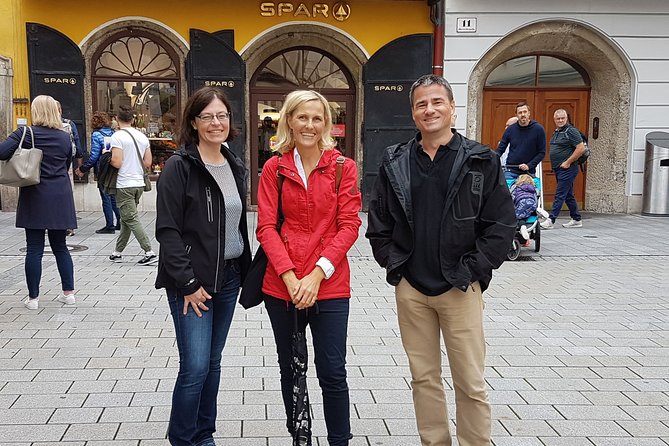
At $180.21 per person, this is not a bargain sightseeing walk. The price can make sense for a couple or small group that values a private-feeling conversation with a specialist, especially if you want to use the tour to shape the rest of your stay.
You are paying for about two and a half hours of a professional guide’s time, a small group, and a route that links architecture, religion, music, politics, and local stories. The tour may also help you avoid wasting time later. Several guides have pointed out places worth returning to, and the walk can give you a working map of the old town before you explore independently.
The value drops if you only want a quick introduction or a series of photo stops. You also pay extra for food, drinks, transport to and from your hotel, and Mozart Residence admission. Compare the cost with a larger group tour if your main goal is basic orientation.
The free cancellation policy is useful: you can cancel for a full refund up to 24 hours before the start time. Changes or cancellations made less than 24 hours ahead are not accepted for a refund.
How to prepare for the 9:30 start
Start with comfortable shoes. The route covers a large part of the old town, and one account recorded more than 10,000 steps. The pace is described as comfortable, but comfortable does not mean short.
Bring water, especially in warm weather. The guides have moved groups into shade or offered sitting breaks during intense heat, but open baroque squares can still feel hot. A morning departure may be easier for you if you want cooler conditions and more energy for the rest of the day.
The meeting point is Linzer Gasse 39, and the tour ends in Salzburg rather than returning you to a hotel. Public transportation is nearby. Since the walk begins in the old city, leave enough time to find the exact starting point without rushing.
Most people can take part, but this is an active walking experience. If you have concerns about long periods on foot, ask for practical details before booking. The available information does not promise a fully step-free route or list specific accessibility arrangements.
Who should book this Salzburg walking tour?
I would choose this tour if you are staying in Salzburg for at least a day and want the city to make sense before you explore it alone. It suits people who enjoy history, architecture, music, local customs, and thoughtful questions.
It is especially useful for:
- First-time visitors who want an organized introduction to the old town
- History and music fans who want Mozart placed in a wider setting
- People interested in the real von Trapp family, not only the film
- Couples or small parties who value an intimate guide-led walk
- Visitors who want practical suggestions for later stops, food, and photo locations
I would look elsewhere if you want a low-cost group tour, a dedicated Sound of Music route, or guaranteed entry into Salzburg’s major interiors. This walk is about seeing the city and understanding it, not collecting admission tickets.
Should you book it?
Book it if the guide matters more to you than the bargain price. The combination of Getreidegasse, baroque squares, Mozart, St. Peter’s Abbey, the Festival Halls, and the true von Trapp story gives you a well-rounded introduction. Guides such as Lisa, Liza, Claudia, and Astrid have shown the warmth and flexibility that make a small group worthwhile.
Before you commit, accept two limits: the walk can run close to three hours and cover many steps, and the storytelling may be detailed rather than neatly packaged. Ask for the broad outline at the start, wear good shoes, and use the guide’s suggestions to plan the rest of your Salzburg stay. For a history-minded visitor, that can justify the high price.
FAQ
How long does the Salzburg Introduction Walking Tour last?
The experience is listed as approximately 2 hours 30 minutes, while the included description calls it a 3-hour walk. Plan for roughly two and a half to three hours.
Where does the tour start?
The listed starting point is Linzer Gasse 39, 5020 Salzburg, Austria. It is near public transportation.
What sights are included?
The route includes Getreidegasse, Salzburg’s baroque squares, Mozart’s Birthplace, the Festival Halls, and St. Peter’s Abbey. It also covers Salzburg’s salt trade, local customs, Mozart’s family, Michael Haydn, and the von Trapp family.
Is Mozart Residence admission included?
No. Admission to the Mozart Residence is not included. Food, drinks, and hotel pickup and drop-off are also excluded.
How large is the group?
The tour is described as a small-group experience. One description lists a maximum of six people, while the additional information lists a maximum of eight travelers. Confirm the current group limit when booking.
Can I cancel for a full refund?
Yes. You can cancel at least 24 hours before the local start time for a full refund. Cancellations or changes made less than 24 hours before the tour are not accepted for a refund.
Just added around Salzburg
- Zell am See: Schmittenhöhe Tandem Paragliding Flight★ 4.9 · 82 reviews
- Zell am See: Paragliding Tandem Flight★ 5.0 · 31 reviews
- Werfen: Hohenwerfen Castle Entrance Ticket★ 4.5 · 84 reviews
- Viator Exclusive: ‘The Sound of Music’ Private Tour★ 5.0 · 28 reviews
- Zell am See Alpine Village Private Day Trip from Salzburg★ 5.0 · 3 reviews
- Private Austrian Food Tasting Tour in Salzburg’s Old Town★ 4.5 · 3 reviews
- Private transfer from Salzburg to Vienna, 2 hours for sightseeing★ 4.5 · 7 reviews
- Private Transfer from Salzburg to Munich with 2 hours for sightseeing★ 5.0 · 8 reviews
Walking Tours, compared.

Guided Walking Tour of City Center Highlights
Read our review →
Guided Walking Tour of City Highlights & Hidden Gems
Read our review →
Vienna Historic Center Small Group Walking Tour
Read our review →
Browse the lists this tour appears in