Reviewed · TOURS
Hotrod Vienna Daylight Tour The most famous & fastest Tour Vienna
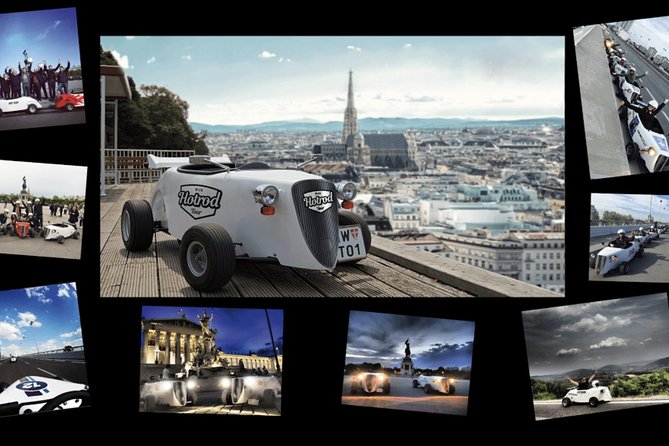
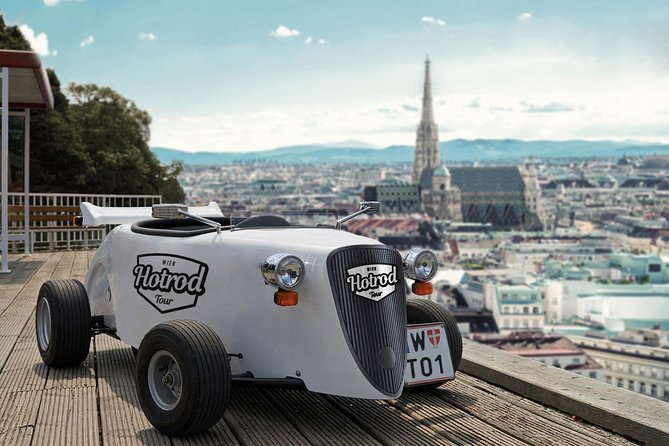
Vienna’s most unusual sightseeing ride puts you behind the wheel of a tiny hot rod and sends you into the real city traffic. You pass trams, grand imperial buildings, and curious pedestrians while your guide leads the group by headset. It feels less like a standard city tour and more like a supervised go-kart outing on public roads.
I like the one-driver-per-car setup, since nobody is stuck watching from the passenger seat. I also like the friendly, careful guiding reported from Alan, Rufat, Ryan, Martin, Mari, Mary, Patrick, Lela, and others. The main drawback is clear: you must concentrate on driving, so the commentary and sightseeing come second.
What makes this tour worth considering
- You drive through central Vienna, not around it in a bus, with trams and ordinary traffic nearby.
- The hot rods attract attention, so expect smiles, waves, photos, and plenty of public curiosity.
- The route covers major Ringstraße sights, including Stadtpark, the State Opera, Hofburg, Heldenplatz, City Hall, and Schottentor.
- A safety briefing and practice session come first, with helmets, headsets, and walkie-talkie communication.
- One photo stop is built into the ride, but this is not a stop-heavy sightseeing tour.
- Sunday or a low-traffic time may be more comfortable, especially if you are new to driving a small vehicle in city traffic.
Vienna sightseeing with your hands on the wheel
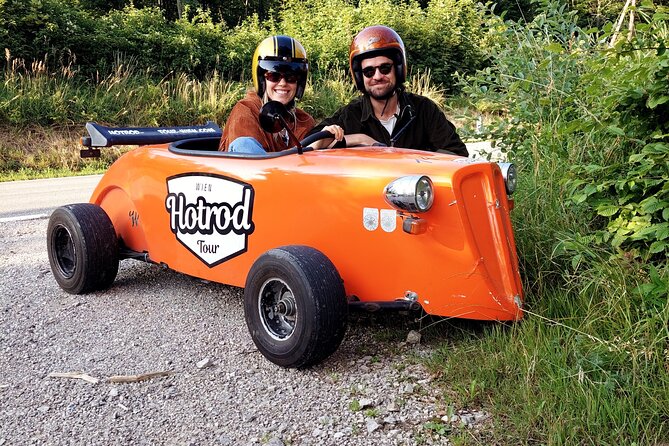
The Hotrod Vienna Daylight Tour is aimed at people who want motion, noise, and a little attention. You do not sit back while a guide points out buildings. You drive a small, low vehicle through Vienna’s central streets, keeping your place in the group and watching the road.
That difference matters. If you want detailed explanations of Habsburg politics, opera history, or architectural styles, book a walking tour or museum visit as well. If you want a memorable way to cover several central sights while grinning at people on the pavement, this tour offers something quite different.
The experience lasts about 90 minutes, though the actual driving time is shorter because you need time for the briefing, equipment, and walk to the vehicles. The group can have up to 10 people. Each driver gets a hot rod, so you are not waiting for someone else to finish a turn.
A few more Vienna days worth a look
- Vienna: Vivaldi’s Four Seasons Concert in Karlskirche
★ 4.7 · 14,951 reviews - Vienna: Spanish Riding School Training
★ 3.9 · 9,281 reviews - Vienna: Skip-the-cashier-desk-line Giant Ferris Wheel Ride
★ 4.5 · 7,859 reviews
Starting at Judengasse 4 near the Anchor Clock
The meeting point is Judengasse 4 in Vienna’s first district, a few minutes from the famous Anchor Clock. This is a useful central location for a tour that stays close to the old city.
You begin with instructions on operating the car and handling the route. The team provides a helmet and headset, then connects the group by communication equipment. A short practice period in a car park helps you get used to the controls before you face normal city streets.
That preparation is important. The cars are small and low, and you need to be comfortable with the gas and brake pedals. One driver who was 5 feet 7 inches tall found the pedals just reachable, while a 6-foot-2-inch driver said the fit was tight. A 6-foot-1-inch driver fit comfortably, so body shape and leg length both matter.
You must be at least 18 and carry a valid physical driving license. A digital image may not be enough, since the license is checked before you drive. You also need a moderate level of physical fitness, mainly because of the low seating position and the practical demands of getting in, out, and driving.
Schwedenplatz and the first change of scenery
The route moves toward Schwedenplatz, where Vienna’s old center meets the Danube Canal. This area gives you an early contrast between historic streets and the more modern, social side of the city.
You may see street art, bars, and canal views here, but do not expect time to stop and explore. Your job is to keep pace and watch the road. The canal area works best as part of the moving picture rather than as a separate attraction.
The hot rods are noisy. That is part of the fun, but it also affects communication. Headsets help you hear the guide, and the walkie-talkie system helps keep the group together, yet engine noise and surrounding traffic can make some commentary hard to follow.
From city roads to the Ringstraße
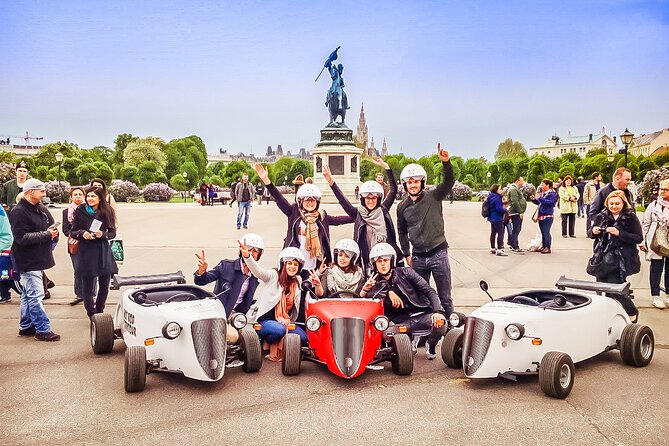
The route then shifts toward the Ringstraße, Vienna’s grand boulevard around the old city. This is where the tour becomes a quick introduction to imperial Vienna.
You will see the change from regular city roads to a line of monumental public buildings. Because you are driving, your view is brief and divided. You might catch a fine façade at a traffic light, then need to focus on the next turn a moment later.
This is one of the tour’s central trade-offs. You get close to the sights and cover ground quickly, but you do not have time to study them. Think of this ride as a first look that can help you decide where to return on foot later.
A completely different way to spend a day here:
- Vienna: Schönbrunn Palace & Gardens Skip-the-Line Tour
★ 4.7 · 7,739 reviews - Vienna: Light of Creation Votive Church Immersive Light Show
★ 4.8 · 6,779 reviews - Vienna Spanish Riding School Guided Tour
★ 4.7 · 6,765 reviews - Vienna: Classical Concert in the World-Famous Musikverein
★ 4.6 · 6,673 reviews
Stadtpark and the Johann Strauss memorial
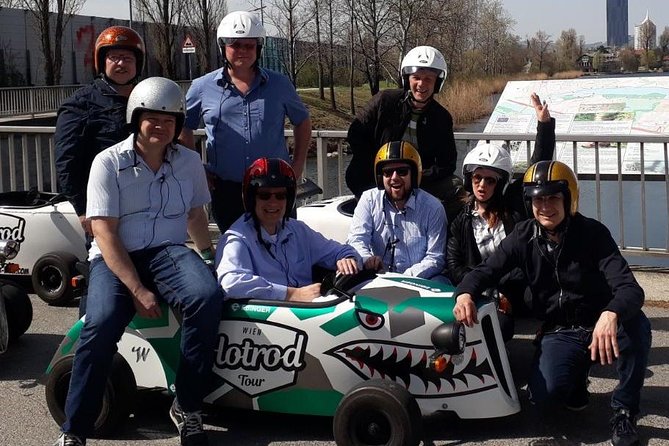
Stadtpark offers a pause from the stone façades of the Ring. The park is known for the Golden Johann Strauss Memorial, one of Vienna’s most recognizable monuments.
This is an appealing section of the route because it shows a softer side of the city. The park’s greenery contrasts with the grand architecture nearby, and the memorial gives you a strong photo subject if traffic and the group’s movement allow a view.
Do not expect a long park visit. The tour has one main photo stop, and the published route describes this as a drive through the sights rather than a series of walks. If you want to photograph the memorial properly, note its location and return later.
The State Opera and Vienna’s musical identity
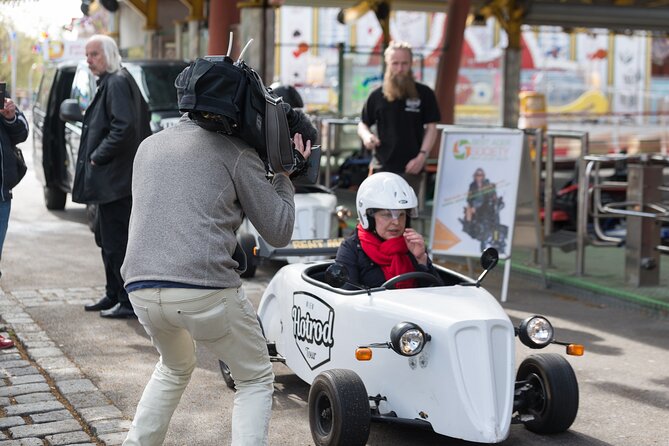
The Vienna State Opera is one of the city’s best-known buildings and a major symbol of its music and theatre culture. The route brings you along the Ring near this landmark, making it easy to connect Vienna’s grand architecture with its long opera tradition.
You may get a good look while passing, but you are unlikely to absorb much detail while managing the car. The headset commentary can add context, though several people found it difficult to hear clearly when the engines and traffic were loud.
I would treat this part as a visual preview. If the opera interests you, come back for an exterior look or a performance rather than expecting the hot rod ride to explain the building in depth.
Hofburg, Heldenplatz, and the imperial center
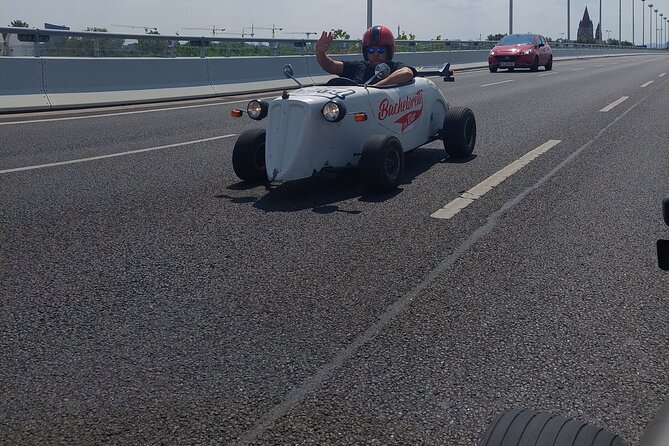
The Hofburg and Heldenplatz form the historical core of the route. The Hofburg served as the Habsburg winter residence and now contains major attractions such as the Spanish Riding School and Sisi Museum.
The group makes a photo stop in this area, giving you a better chance to take pictures of the imperial setting. This is the most useful pause for anyone who wants a clear image of the tour and Vienna behind it.
Even here, the stop is brief. You will not tour the palace interiors, visit the riding school, or enter the Sisi Museum. The value is the overview: you see where these attractions are, then return later if you want the full experience.
City Hall, Burgtheater, and Schottentor
The route continues past Vienna City Hall, Burgtheater, and the University of Vienna. City Hall provides a striking Gothic contrast to the classical and imperial buildings seen earlier.
This stretch is especially good for people who enjoy architecture. The buildings belong to the 19th-century Ringstraße project, when Vienna expanded and created a grand public face around the old city.
Again, your attention is split. You are not standing across the street with time to compare façades. You are moving through traffic in a small car. That gives you a lively sense of the city, but it is not the best format for careful architectural study.
What driving beside trams is really like
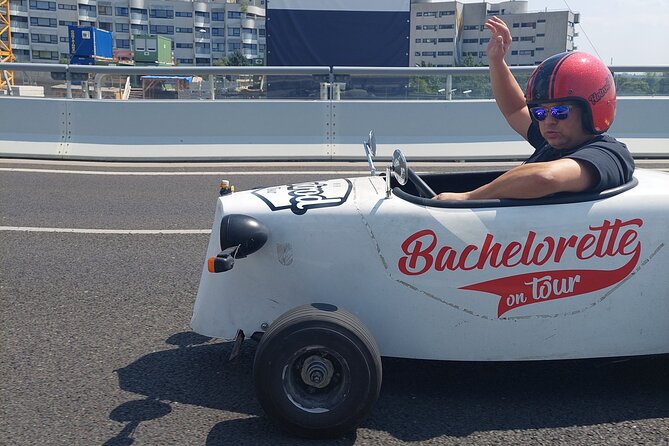
The distinctive part of this outing is not simply the vehicle. It is being in that vehicle among ordinary Vienna traffic.
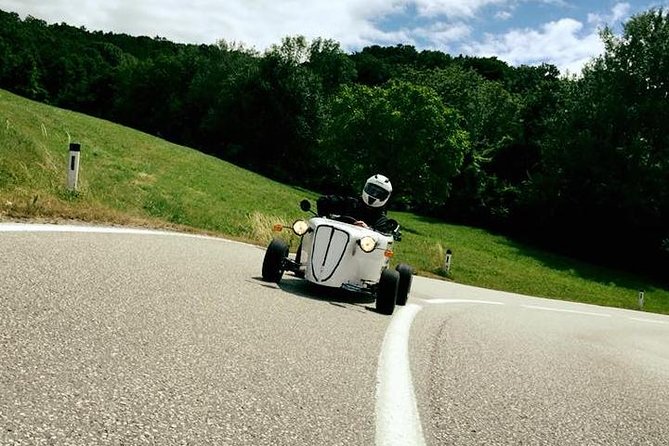
The cars sit low, and some people feel uneasy at first about being beside larger vehicles and trams. The guides give safety instructions and keep the group together, which helps. Still, you need to feel comfortable making decisions on public roads and staying alert at traffic lights and turns.
Previous go-kart experience can help, but it is not presented as a formal requirement. The guide also gives practice time before the city portion. If you are nervous, tell the guide during the briefing rather than waiting until you are in traffic.
A Sunday or another period with less traffic may make the ride calmer. One rider specifically found Sunday preferable. The tour operates in daylight, so you get a clear look at the streets, but weather remains important.
The people, photos, and public reaction
The hot rods are attention magnets. People smile, wave, and take pictures as the group passes. Several riders described feeling like a celebrity, and that public reaction is one of the most repeated pleasures of the outing.
You should enjoy being seen. If you prefer to move quietly and blend into the city, this is not your kind of sightseeing. The cars make noise, and people will notice you before you reach them.
The social side also gives the tour a playful feel. You are not just looking at Vienna. You become part of a small moving display that pedestrians react to. That sounds minor, but it turns an ordinary route into a shared public moment.
Headsets, guides, and the limits of commentary
The guides are a real part of the experience. Alan helped cautious drivers feel at ease, Rufat was praised for a clear safety briefing and keeping the group together, and guides including Ryan, Martin, Mari, Mary, Patrick, Lela, and others were singled out for friendly handling.
The headset lets the guide speak while you drive, and the system can help if the group becomes separated. But do not expect perfect audio. Engine noise, traffic, and the open-air setting can make words hard to catch.
The best approach is to focus first on safe driving. Listen when you can, but do not strain to catch every sentence while handling the car. If you are in a private group, you may be able to tell the guide directly when you cannot hear.
Price, insurance, and overall value
At $181.48 per person, this is an expensive way to see city landmarks. You are paying for the vehicle, the guide, the novelty, the equipment, and the chance to drive rather than simply ride.
The price makes more sense if you value the driving itself. A person who wants a detailed sightseeing lesson may find the cost hard to justify, especially with only one main stop and limited commentary. A car enthusiast, a couple seeking an unusual activity, or a family looking for a memorable shared outing may find the experience worth the premium.
Fully comprehensive insurance is included, but the deductible is €500. You can pay an extra $10 to reduce it to €250. That is a detail you should consider before booking, since the cars share public roads and the operator notes that accidents can happen.
Food, drinks, and hotel transfers are not included. You meet and finish at Judengasse 4, so plan your own way there and back.
Weather, timing, and what to wear
The tour requires good weather. If poor weather cancels the ride, you are offered another date or a full refund. You can also cancel for a full refund up to 24 hours before the start time, but changes or cancellations inside that window are not refunded.
Rain can delay the experience, as one group discovered in July. The operator waited until conditions were safe and then ran the tour at the first suitable chance. Even so, I would avoid booking this as the one activity that must happen at a precise hour.
Wear practical clothing and expect the ride to be exposed to city conditions. The information provided does not promise rain gear, so check the forecast and ask the operator if conditions look doubtful.
Who should book the Hotrod Vienna Daylight Tour?
You should consider it if you:
- Enjoy driving and want to operate the vehicle yourself.
- Like go-karts, unusual cars, and a little adrenaline.
- Want to see several central sights quickly.
- Enjoy attention from pedestrians and taking photos.
- Are comfortable driving in traffic.
- Can accept brief sightseeing and imperfect audio.
You might skip it if you:
- Want detailed historical explanations.
- Need frequent stops for photographs.
- Feel anxious beside trams and larger vehicles.
- Are very tall or have difficulty with low seating.
- Want a quiet, relaxed look at Vienna’s buildings.
- Expect a high-speed track experience rather than city driving.
Should you book it?
Book this tour for the driving, not for a full history lesson. The best parts are the tiny hot rods, the sense of moving through real Vienna traffic, the waves from pedestrians, and the chance to cover the Ringstraße in a way no walking tour can copy.
At $181.48, it is a splurge. I would choose it for a special afternoon, a car-focused trip, or a return visit to Vienna when the major museums are already familiar. Pick a lower-traffic time if possible, bring your physical license, consider the deductible, and keep your expectations centered on fun. If that sounds right, this is a memorable two hours. If you want to study Vienna, walk instead.
FAQ
How long is the Hotrod Vienna Daylight Tour?
The experience lasts approximately 1 hour and 30 minutes. This includes preparation, equipment, and the guided drive.
Where does the tour start?
It starts at Judengasse 4, 1010 Vienna, Austria, a few minutes from the Anchor Clock.
Where does the tour finish?
The activity ends back at the starting point on Judengasse.
How many people can join the tour?
The maximum group size is 10 people.
Is each person allowed to drive?
Yes. The experience provides one driver per car, so each participant can take part in the driving.
What sights does the route pass?
The route includes Schwedenplatz, Stadtpark, the Golden Johann Strauss Memorial, the Vienna State Opera, Hofburg, Heldenplatz, City Hall, Burgtheater, the University of Vienna, and Schottentor.
Is there a photo stop?
Yes. The route includes a photo stop near Hofburg and Heldenplatz, and the tour ends with another chance to take pictures of the hot rods.
What documents do I need?
You must be at least 18 years old and have a driving license. Bring the physical license, since it is checked before participation.
Is insurance included?
Fully comprehensive insurance is included with a €500 deductible. For an additional €10, you can reduce the deductible to €250.
What happens if the weather is bad?
The tour requires good weather. If poor weather causes cancellation, you can choose another date or receive a full refund.
Just added around Vienna
- Vienna: UNESCO Schönbrunn Palace Guided Tour with Entry★ 4.5 · 94 reviews
- World War II History Vienna Old Town Private Walking Tour★ 4.8 · 9 reviews
- Vienna: Winery and Wine Tasting Tour with a Wine Expert★ 5.0 · 5 reviews
- Vienna: Wine Tasting E-Bike Tour★ 4.9 · 46 reviews
- Vienna: Wine Tasting at Schönbrunn Palace★ 4.3 · 71 reviews
- Vienna: Wine Tasting Tour★ 4.8 · 61 reviews
- Vienna: Concert by the Vienna Baroque Orchestra★ 4.6 · 56 reviews
- Vienna: Wachau Valley Private Kayak and Wine Tour★ 5.0 · 3 reviews
Tours, compared.
Schönbrunn Palace & Gardens Skip-the-Line Tour
Read our review →
Skip-the-Line Sisi Museum, Hofburg and Gardens Tour
Read our review →
Skip-the-Line Schönbrunn Palace & Gardens Tour
Read our review →
Guided Walking Tour of City Center Highlights
Read our review →