
Reviewed · WALKING TOURS
Linz Private Walking Tour
Linz’s best surprise is how much fits into a short walk. In two hours, you move from the broad Hauptplatz and Danube to grand churches, baroque buildings, and the Renaissance home where Mozart wrote major works at remarkable speed. Mozart’s Linz connection gives the tour a strong hook, while the city’s churches and public squares add plenty of visual weight.
I like the private format, which lets your guide adjust the pace and answer the questions your group actually has. I also like the blend of music, architecture, religion, and food, especially the stop connected with Linzer Torte, whose recipe dates to 1653.
The main consideration is time. Two hours is enough for an excellent introduction, but not enough for extended museum visits or a slow exploration of every church interior. Entrance fees are not included, so think of this as a guided orientation walk rather than a full sightseeing pass.
Key points to know before you book
- Mozart’s three-day Linz connection: Visit the Renaissance residence where he wrote his Linz Symphony and Linz Sonata in only three days.
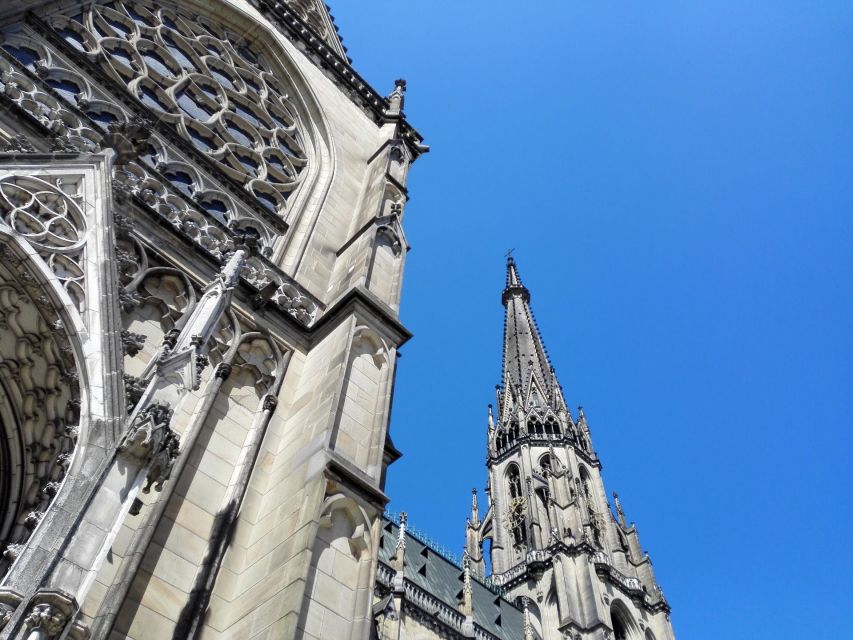
- Austria’s largest church: See the neo-Gothic New Cathedral, known as the Mariendom, with a 134-meter tower and room for 20,000 people.
- A private group for up to 15: Your guide is with your party only, making it easier to shape the conversation around your interests.
- A square full of meaning: Begin at the 20-meter Trinity Column in Hauptplatz, built in thanks for protection from fire, war, and plague.
- Linz beyond the postcard: Connect the Danube, baroque Old Town, music, religion, and the city’s modern cultural life in one compact route.
- A useful first look: The tour suits a first visit, a short stay, or anyone wanting local orientation before exploring alone.
Why this Linz walk works so well
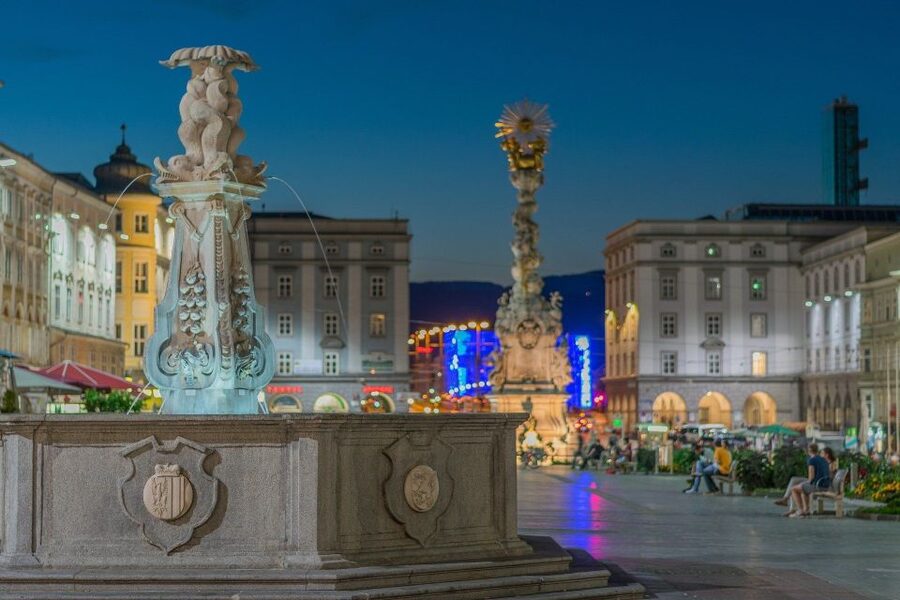
Linz is easy to underestimate. It is not usually the first Austrian city people name, yet its center brings together a grand river, handsome squares, historic churches, museums, and a clear sense of change from old to new. The result is a city walk with more variety than its two-hour length suggests.
I like the way this tour uses several threads instead of treating Linz as a string of photo stops. You hear about Mozart, then see the place tied to his work. You look at the Trinity Column, then learn why it was built. You admire the New Cathedral, then understand its scale and place in Austrian religious architecture.
The private setup is important here. Groups can include up to 15 people, but you are not mixed with strangers. That gives you room to ask about a detail, pause for a photograph, or tell the guide what interests you most. Feedback from the German-speaking participants repeatedly highlights guides who were friendly, clear, and responsive to group wishes. Sandra is named as an especially engaging and capable guide.
The tour carries a 4.8 rating from 11 verified bookings, with all of the supplied ratings at five stars. That is a small sample, so I would not treat it as a guarantee. Still, the consistent praise points to the tour’s strongest feature: a guide who can make the city understandable without turning the walk into a dry lecture.
More Walking Tours in Austria:
- Vienna: Guided Walking Tour of City Center Highlights
★ 4.7 · 4,989 reviews - Vienna: Vienna Central Cemetery Guided Walking Tour
★ 4.8 · 3,307 reviews - Vienna: Guided Walking Tour of City Highlights & Hidden Gems
★ 4.9 · 2,180 reviews
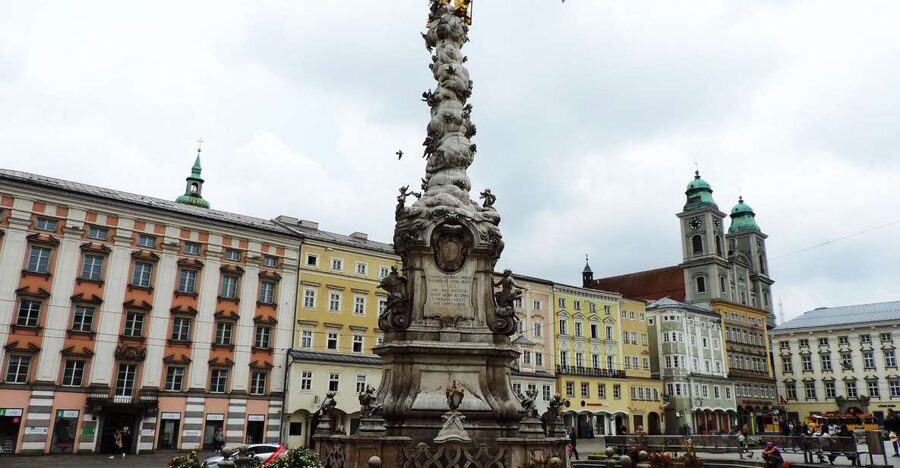
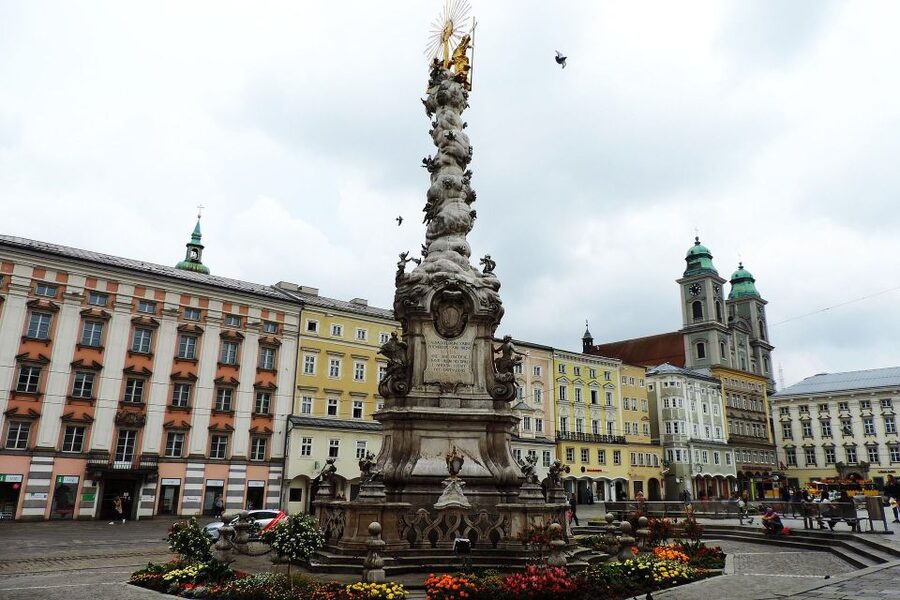
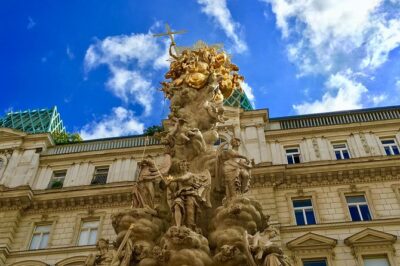
Starting beneath the Trinity Column in Hauptplatz
The meeting point is directly in front of the Trinity Column in Hauptplatz, Linz’s main square. This is a practical place to begin because you are already in the heart of the Old Town, surrounded by important buildings and broad urban views.
The column rises 20 meters and is made of white marble. Its purpose is more than decoration. It was built in gratitude to the Holy Trinity for protection against fire, war, and plague, giving the square a clear link between public art, faith, and the dangers that shaped older European cities.
Your guide can use the column to set up Linz’s story before the walking begins in earnest. That is useful because the city’s past is not limited to one period. The center brings together baroque architecture, religious buildings, music, and present-day cultural life.
Hauptplatz also gives you a quick sense of scale. It is not a cramped starting point hidden down a side street. From here, you can begin to understand how the old city relates to the Danube and to the hills beyond it. If you are arriving in Linz for the first time, this orientation makes the rest of your visit easier.
City Hall, baroque streets, and Linz’s old center
From Hauptplatz, the walk takes in major sights in the old town, including City Hall and the surrounding baroque architecture. The value here is not only in seeing attractive façades. A guide can explain how the public buildings, religious sites, and open square fit together as parts of a working city.
I prefer this kind of walking tour to a route that rushes from one famous building to another. Linz’s appeal comes from the connections between its sights. A square looks different once you know its religious purpose. A church feels more significant once you understand its size. A Mozart reference has more weight when it is tied to an actual residence.
The information supplied for this tour does not promise interior visits to every building. Entrance fees are not included, so you should expect the focus to be on outdoor viewing and guided explanation, with any paid entry handled separately. That keeps the price and schedule straightforward, but it also means you should not book this expecting a series of long indoor tours.
For architecture fans, the old center offers a useful contrast between decorative baroque forms and the towering neo-Gothic presence of the New Cathedral. For everyone else, the guide’s explanations help turn those styles into something more than labels.
Following the Danube through Linz
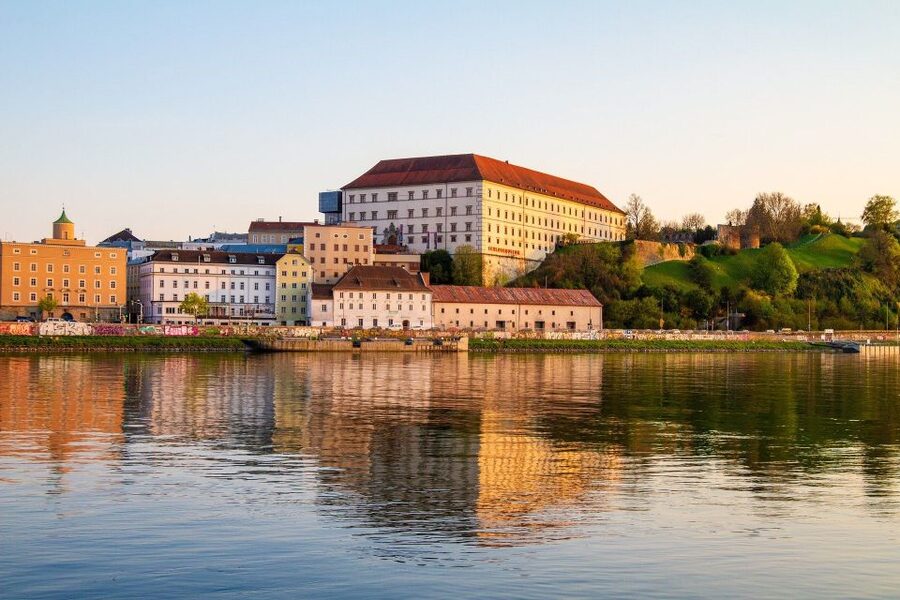
The Danube is one of the defining features of Linz, and the tour includes a look at the river. This matters because the city is not simply an inland collection of squares and churches. Its position along the Danube has shaped its identity, movement, and connection to the wider region.
A river stop also gives the route some breathing room. After the details of Hauptplatz and the old buildings, the water provides a broader view of the city. You can consider how Linz combines an urban center with green hills and open surroundings.
The exact amount of time spent at the river is not specified, so I would treat it as part of the guided route rather than a dedicated riverside excursion. If you want a long walk along the Danube, a cruise, or a separate river activity, you would need to make room for that outside this tour.
Still, the inclusion is valuable. A good city introduction should show not only the famous buildings but also the physical setting that helps explain the place. The Danube does that in a simple, memorable way.
A few more Austria days worth a look
- Linz: Harbor Cruise
★ 4.3 · 204 reviews - Customized Private Tour to Salzburg for Cruise Guests from Linz or Passau
★ 5.0 · 19 reviews - KZ Mauthausen Private Trip from Linz
★ 4.5 · 15 reviews - CITY QUEST LINZ: uncover the secrets of this city!
★ 4.5 · 6 reviews
The Old Cathedral and Linz’s religious story
The Old Cathedral adds another layer to the walk. Along with the New Cathedral, it shows how Linz’s religious architecture developed across different periods and scales.
The tour description does not specify a full interior visit or a detailed architectural program inside the Old Cathedral. You should therefore expect your guide to discuss and point out the building as part of the walking route, rather than plan on a long, formal church tour.
That said, the pairing of the Old Cathedral and New Cathedral is one of the itinerary’s most useful ideas. You get to compare a more compact historic church with the city’s giant neo-Gothic landmark. The contrast makes both buildings easier to appreciate.
Religious history can sometimes feel detached from a modern city. Here, it is tied to the Trinity Column, the city’s public spaces, and the buildings that still shape the center. If you enjoy learning why a city looks the way it does, this part of the tour should reward your attention.
The New Cathedral and its 134-meter tower
The New Cathedral, or Mariendom, is the visual star of the walk. It is Austria’s largest church, with a 134-meter tower and room for 20,000 people. Those figures are worth hearing, but the real point is scale. You do not need to be a church specialist to understand that this is a major building.
The neo-Gothic style gives the cathedral a strong vertical presence. Its tower draws your eye upward, while the size of the structure changes your sense of the surrounding streets. This is the sort of stop where a guide adds real value because numbers alone cannot explain how the building dominates the city center.
The tour does not include entrance fees, and no interior admission is promised. If entering the cathedral matters to you, ask about current entry arrangements when you book or speak with your guide. The walking experience still works from the outside, but visitors who want stained glass, interior details, or quiet time inside may need to plan extra time.
I would allow yourself a few minutes after the guide’s explanation simply to look. The New Cathedral is not a building to race past. Its size is one of the tour’s clearest reminders that Linz has a larger cultural and religious story than its relaxed street life first suggests.
Mozart’s Linz residence and a remarkable burst of music
The Mozart Residence is one of the tour’s most distinctive stops. It is a Renaissance building where Mozart wrote his Linz Symphony and Linz Sonata in only three days.
That detail gives the stop energy. You are not hearing only that Mozart passed through Linz. You are connecting specific compositions with a specific building and a remarkably short period of work. Music lovers will appreciate the context, while people with little background in classical music can still grasp the drama of composing major pieces so quickly.
The route also highlights Beethoven’s compositions and Linz’s broader musical legacy. The city’s connection to music is therefore not reduced to one Mozart anecdote. It becomes part of the larger cultural picture.
Again, this is not presented as a concert or music museum visit. The guide’s explanation is the main event. If you want to hear the works performed, you will need to arrange that separately. For a two-hour city walk, however, the Mozart stop gives the tour a strong sense of place and a story you are likely to remember.
Linzer Torte, the edible history lesson
Linz has a famous answer to the question of what to eat after sightseeing: Linzer Torte. The recipe is said to date from 1653, making it the world’s oldest cake recipe.
That claim is a fun detail, but it is also a useful reminder that local culture is not found only in museums and churches. Food carries memory, trade, family habits, and regional identity. The tour introduces the cake as part of Linz’s story, giving you a reason to look for it during the rest of your stay.
The supplied details do not say that a tasting is included. Do not assume you will receive a slice during the walk. Instead, treat the Linzer Torte reference as a local recommendation and a prompt to sample it on your own.
I like that the food element is woven into the route rather than used as a separate sales pitch. After a church, a residence, and a city square, a famous pastry gives the experience a lighter finish. It also helps make Linz feel like a place where people live, eat, and create, not simply a set of monuments.
What the two-hour format means for you
Two hours is a good length for a first look at Linz. You can cover the main center without committing half a day, which is useful if you are visiting on a short schedule or fitting the city between other plans.
The tradeoff is depth. The route includes many important sights, but the time allows only a brief look at each. You will not get long museum visits, extended café time, or a leisurely examination of every church.
The private format helps offset that limit. Your guide can focus on your group instead of delivering a fixed speech to a large crowd. Several comments describe an easy mix of information and flexibility, with the guide responding well to the group’s interests. That is especially useful if your party includes both serious architecture fans and people who mainly want a clear, enjoyable introduction.
The walk is available in English or German. The guide is local and accompanies your group only. Since no transport is included or needed for the listed route, you should expect to spend the full two hours on foot in the central Linz area.
Is the $289 group price good value?
The price is $289 per group of up to 15 people, not per person. That distinction changes the calculation.
For a full group, the per-person cost can be quite reasonable. For two people, the same price feels much steeper, since you are paying for private attention rather than a low-cost shared tour. The value comes from the guide’s time, the ability to shape the conversation, and the convenience of seeing several key sights in one organized walk.
You should also remember that entrance fees are not included. Since the tour is mainly an outdoor orientation, that may not add much expense unless you choose to enter paid attractions afterward.
I would consider the price strongest for families, friends, or small groups who want a private introduction and do not want to follow a fixed large-group schedule. Solo visitors and couples who are focused on keeping costs low may prefer a shared walk, if one is available elsewhere.
Who should book this Linz walking tour?
This tour is a good match for a first visit, especially if you want the city explained rather than simply photographed. It also suits anyone with a short stay, since the main route fits into two hours and covers the core sights.
Music fans have a clear reason to book, thanks to Mozart’s Linz Symphony and Linz Sonata, along with the wider references to Beethoven. Architecture lovers will appreciate the contrast between baroque streets, the Old Cathedral, and the huge New Cathedral.
Families and private groups may value the adjustable pace. The supplied feedback repeatedly points to guides who are friendly, inventive, and attentive to group wishes. Sandra is specifically praised for her ability and warm manner.
You may want to skip it if you already know central Linz well, dislike guided interpretation, or want a long interior visit at the cathedral. It is also not the right choice if your priority is a food tasting, since the Linzer Torte is discussed but not listed as an included sample.
Should you book it?
Book this walk if you want Linz to make sense quickly. The strongest reasons are the private guide, the clear two-hour route, Mozart’s unusually specific connection to the city, and the chance to place the New Cathedral, Danube, Hauptplatz, and Old Town in one story.
Before booking, be realistic about the format. This is a guided introduction, not an all-day cultural program, and entrance fees are extra. For a group of several people, the $289 price can offer good value. For a couple watching every euro, it is a more serious splurge.
If that balance works for you, this is a smart way to begin in Linz. You get the major sights, useful context, and a few local details, including the city’s famous cake, before setting off on your own.
FAQ
Where does the Linz private walking tour meet?
The meeting point is in front of the Trinity Column in Hauptplatz, 4020 Linz, Austria.
How long does the walking tour last?
The tour lasts two hours.
What languages are available?
The live guide is available in English or German.
Is this a private tour?
Yes. It is a private group tour, and the guide is with your group only.
How many people can join one group?
The price covers a group of up to 15 people.
Are entrance fees included?
No. Entrance fees are not included in the tour price.
What is the cancellation policy?
You can cancel up to 24 hours in advance for a full refund. You can also reserve now and pay later.
Just added around Austria
- Zell am See: Schmittenhöhe Tandem Paragliding Flight★ 4.9 · 82 reviews
- Zurich: Liechtenstein, Austria and Germany Private Day Tour★ 5.0 · 6 reviews
- Vienna: UNESCO Schönbrunn Palace Guided Tour with Entry★ 4.5 · 94 reviews
- Zell am See: Paragliding Tandem Flight★ 5.0 · 31 reviews
- Zurich: Private Liechtenstein, Austria, and Germany Day Trip★ 5.0 · 16 reviews
- Villach/Ossiachersee: Paragliding “Action” Tandemflug★ 5.0 · 4 reviews
- Werfen: Hohenwerfen Castle Entrance Ticket★ 4.5 · 84 reviews
- World War II History Vienna Old Town Private Walking Tour★ 4.8 · 9 reviews
Walking Tours, compared.

Guided Walking Tour of City Center Highlights
Read our review →
Guided Walking Tour of City Highlights & Hidden Gems
Read our review →
Vienna Historic Center Small Group Walking Tour
Read our review →
Browse the lists this tour appears in