
Reviewed · CONCERTS
Mozarthaus Concert in Vienna – Piano Trio
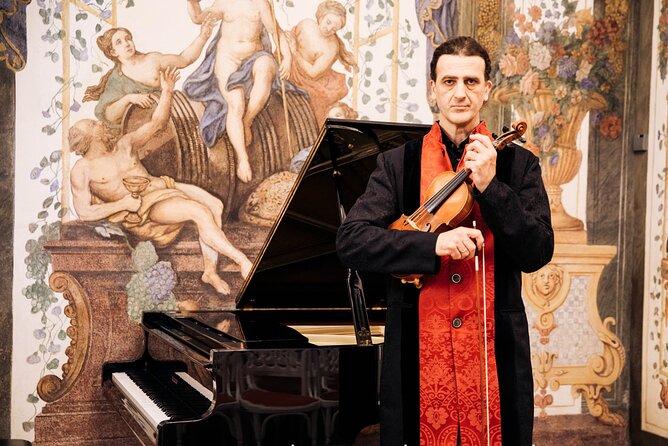
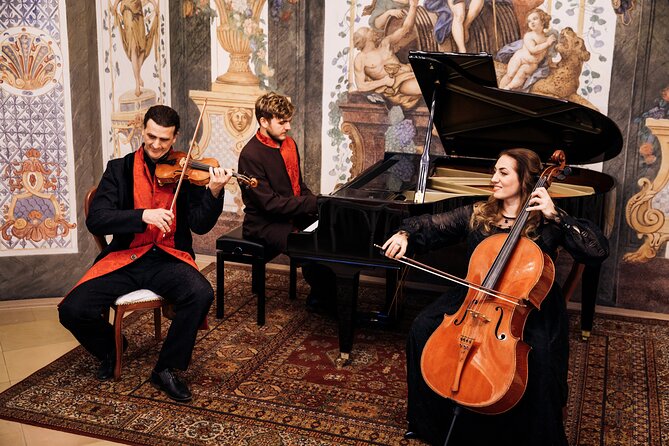
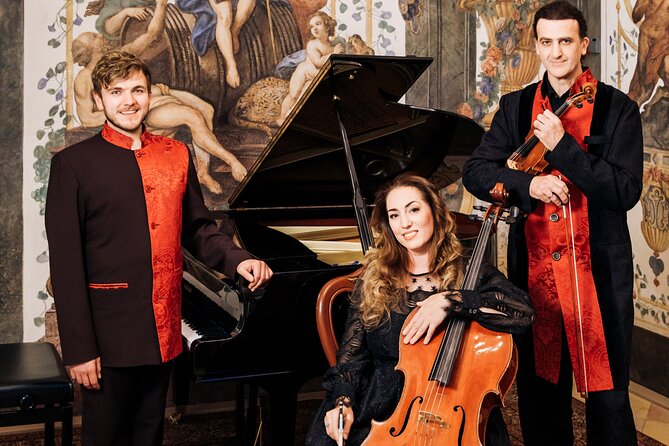
Mozart’s former Vienna apartment is now home to an intimate evening of chamber music. In the Sala Terrena, part of the German Teutonic Order complex, a pianist, violinist, and cellist perform Mozart, Beethoven, Schubert, Chopin, Haydn, and other familiar names just a few steps from where Mozart lived and worked in 1781.
I like two things right away: the small hall, which lets you see and hear the musicians at close range, and the well-balanced program, which mixes solo pieces with full piano trios. The setting feels more personal than a large concert hall, and the 90-minute length fits neatly into a Vienna evening.
The main drawback is practical rather than musical. The exact venue address is important, and it has caused confusion for some ticket holders. Use Deutschordenshaus, Singerstraße 7, 1010 Wien, and arrive at least 15 minutes early to collect your ticket.
Key points to know before booking
- Mozart’s former home: The concert takes place in the building where Mozart lived and worked for Archbishop Colloredo in 1781.
- Piano trio format: Expect piano, violin, and cello, with solo works and ensemble pieces rather than a full orchestra.
- Historic Sala Terrena: This is one of Vienna’s oldest concert halls, with a small, intimate room and close sightlines.
- Haydn and Schubert finale: The program can finish with Haydn’s Rondo all’Ongarese and Schubert’s Trio Op. 100.
- Useful seating choice: Category A covers rows 1 to 3, Category B covers rows 4 to 6, and student tickets are valid in all rows.
- Plan for the box office: The mobile booking confirmation is not the final seat pickup. Collect the held ticket at the theater box office before the 8:00 pm performance.
Why the Sala Terrena changes the concert
Vienna has no shortage of classical music performances. The appeal here is not simply hearing famous composers in the city associated with them. It is hearing chamber music in a room tied directly to Mozart’s life.
The concert takes place in the house of Mozart’s first apartment in Vienna, within the monastery complex of the German Teutonic Order. Mozart lived and worked there in 1781 while serving Archbishop Colloredo. That connection gives the evening a sense of place that a modern concert venue cannot match.
The Sala Terrena is also a much smaller setting than the grand halls used for symphonies and opera. The room seats roughly 40 people according to the available visitor description, though the maximum group size for the activity is 50. That difference matters. You are not watching tiny figures on a distant stage. You can follow the musicians’ expressions, hand movements, and exchanges as they play.
The room itself is part of the experience. It is historic, attractive, and acoustically suited to chamber music. One minor visual issue has been noted: the violinist may be backlit, depending on the seating and stage arrangement. That will not affect the sound, but it can make one musician harder to see clearly.
More Concerts in Vienna
- Vienna: Vivaldi’s Four Seasons Concert in Karlskirche
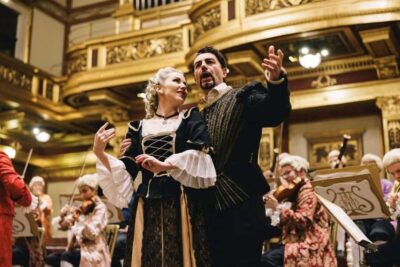
★ 4.7 · 14,951 reviews - Vienna: Classical Concert in the World-Famous Musikverein
★ 4.6 · 6,673 reviews - Vienna: Classical Concert at St. Stephen’s Cathedral
★ 4.1 · 4,177 reviews
What the piano trio program includes
A piano trio normally brings together piano, violin, and cello, and that is the format described for this concert. The Mozart Ensemble presents major works by Mozart, Beethoven, Schubert, Chopin, and other well-known composers.
You can expect a changing program rather than one long work from a single composer. Piano solos give the pianist room to perform alone. Violin and cello selections add contrast, while the full trio pieces bring all three musicians together.
That variety is useful if you enjoy classical music but do not want a highly specialized program. You might hear a familiar melody, a virtuosic piano passage, and a slower chamber work in the same evening. The format also gives each musician a chance to lead.
The announced finale is especially appealing. Haydn’s piano trio Rondo all’Ongarese has a lively Hungarian character, while Schubert’s Trio Op. 100 is one of the best-known works in the piano trio repertoire. The exact running order can vary, so treat these pieces as planned highlights rather than a guaranteed full program in a fixed sequence.
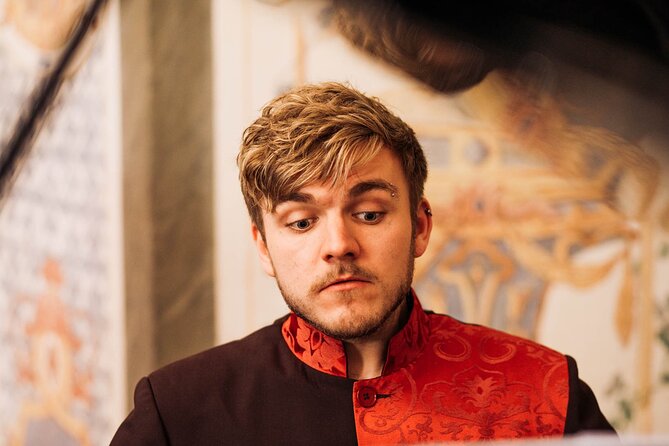
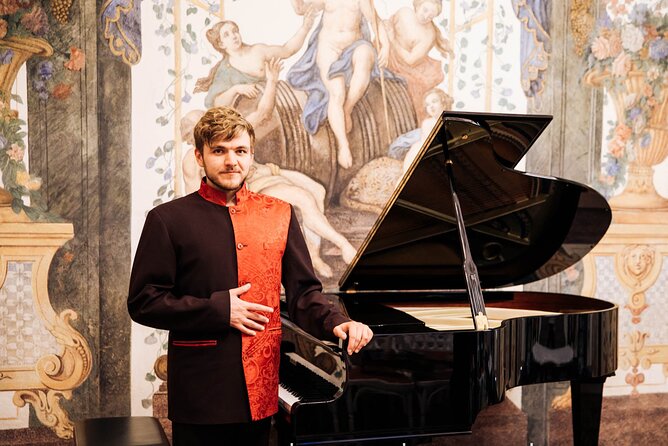
The musicians have been praised for playing together with precision and for presenting the program with energy and humor. The pianist receives particularly strong praise, but the violinist and cellist are also described as accomplished performers who blend well as a group.
A 90-minute evening that feels easy to fit into Vienna
The performance begins at 8:00 pm and lasts about one hour and 30 minutes. That timing works well after a day of sightseeing. You have time for dinner beforehand, and the concert ends early enough to return to your accommodation using Vienna’s public transportation.
The performance is live entertainment, and the program is provided in German and English. You do not need to understand German to follow the music, but the bilingual program can help you identify the composers and pieces.
The concert has a formal cultural setting, but the room size keeps it from feeling stiff or distant. The musicians’ humor and personable presentation add warmth. You are still attending a classical concert, so quiet and respectful behavior is expected, but the mood is not described as overly solemn.
The short format also makes this a sensible choice for first-time classical concertgoers. A full opera or symphony can demand several hours and more preparation. Here, you get a concentrated program with historical context and no need to commit an entire night.
Getting to Deutschordenshaus, Singerstraße 7
The most important arrival tip is to use the full address: Deutschordenshaus, Singerstraße 7, 1010 Wien, Austria. The booking details may not make the location clear enough, and asking a taxi driver for the local address can lead you to the wrong place.
The venue is near public transportation, so you can reach it without relying on a taxi. Still, allow extra time to locate the entrance, find the box office, and collect your ticket. The instructions ask you to arrive 15 minutes before the start, and I would treat that as the minimum rather than a suggestion to arrive at 7:59 pm.
Your ticket is held at the theater box office for pickup on the day of the performance. Bring the booking confirmation on your mobile device. The experience includes a mobile ticket, but the ticket collection step still matters.
The 8:00 pm start makes punctuality important. Late entry can be awkward in a small room, where opening doors or moving to seats may disturb the music. Arriving early also gives you a moment to appreciate the historic setting before the performance begins.
A completely different way to spend a day here:
- Vienna: Spanish Riding School Training
★ 3.9 · 9,281 reviews - Vienna: Skip-the-cashier-desk-line Giant Ferris Wheel Ride
★ 4.5 · 7,859 reviews - Vienna: Schönbrunn Palace & Gardens Skip-the-Line Tour
★ 4.7 · 7,739 reviews - Vienna: Light of Creation Votive Church Immersive Light Show
★ 4.8 · 6,779 reviews
Choosing between Category A, Category B, and student seating
Tickets are divided into three options:
- Category A covers rows 1 to 3.
- Category B covers rows 4 to 6.
- Student tickets are valid in all rows.
Because the room is small, the seating difference may be less important than it would be in a large concert hall. Even from the back rows, you should remain relatively close to the performers. One visitor specifically found no strong reason to pay more for the front because the room provides good views throughout.
Category A makes sense if you want to sit as close as possible to the musicians and watch their technique at close range. Category B may offer better value if your main goal is listening rather than being in the first few rows. Since the room is intimate, paying extra for the front is not essential for everyone.
Student tickets are available across all rows, though the supplied information does not state the eligibility rules or required proof. If you plan to use that option, check the booking conditions before purchase.
Is $70.89 a fair price?
At $70.89 per person, this is not the cheapest way to hear classical music in Vienna. You are paying for more than the notes on the page, though. The price includes admission to the Mozarthaus concert, live music, the historic room, and a program that runs about 90 minutes.
The strongest value comes from the combination of setting and scale. A large orchestra can provide greater volume and spectacle, but it cannot offer the same close view of three musicians working together. If you already plan to visit Vienna’s major sights and want one evening centered on chamber music, this price can be reasonable.
The value is less clear if you mainly want to see Mozart’s original apartment museum. This experience is a concert in the building, not a full guided museum visit described as part of the ticket. You should choose it for the music and historic venue, not assume that it replaces a separate Mozarthaus museum visit.
The 4.7 rating from 43 reviews and the 91 percent recommendation figure suggest a strong overall response, but those numbers should not replace your own priorities. If you dislike small rooms, prefer large orchestral forces, or want drinks included, this may not be the right match. Drinks are not included.
The program’s broad selection improves the value for many people. Mozart fans get the location and repertoire. Those who enjoy Romantic music get Schubert and Chopin. Haydn’s lively finale can add a lighter finish. You are not limited to one composer or one musical style.
Who will enjoy this concert most?
I would recommend this experience to anyone who wants a manageable evening of classical music with a clear connection to Vienna. It suits couples, solo visitors, and first-time concertgoers who want a more personal room than a grand performance venue.
It is also a good fit for serious music fans. The close seating lets you watch the trio communicate as they play, and the mix of solo and ensemble works gives the evening enough variety. The pianist’s role is especially prominent, so piano enthusiasts may find the program particularly rewarding.
History-minded visitors will appreciate the setting, but the historical connection is brief rather than a full lesson about Mozart’s life. The useful context is that Mozart lived and worked here in 1781. If you want a long guided explanation, this concert alone may feel too focused on the performance.
Families and mixed-interest groups can also consider it, provided everyone can sit quietly for about 90 minutes. The program is shorter than many major classical performances, and the musicians’ personable style can make the evening approachable.
This is less suitable if you want a large-scale Vienna concert with dozens of musicians, grand staging, or opera singers. It is chamber music in a small room, and that is both its strength and its limit.
Booking ahead and cancellation terms
The experience is booked an average of 49 days in advance, so I would not leave it until the last few days of a short Vienna stay. That is especially true if you want a particular evening or Category A seating.
Confirmation is provided when you book. Tickets are collected at the box office on the performance day, and you should plan to arrive at least 15 minutes before the 8:00 pm start.
Free cancellation is available if you cancel at least 24 hours before the local start time. Cancellations or changes made less than 24 hours ahead are not accepted for a refund. That policy gives you some flexibility, but not much once the final day begins.
Should you book the Mozarthaus piano trio?
Book it if you want close-up chamber music in a real Mozart location, not a large concert spectacle. The small Sala Terrena, strong piano trio format, 90-minute length, and mix of Mozart, Haydn, Schubert, Beethoven, and Chopin make this an easy cultural evening to add to a Vienna itinerary.
I would choose Category B unless sitting in the first three rows matters to you. The hall is small enough that front-row seating is not required for a good view. Most important, use the correct address, collect your ticket early, and arrive ready for a focused performance in a historic room.
FAQ
Where does the Mozarthaus concert take place?
The concert takes place at Deutschordenshaus, Singerstraße 7, 1010 Wien, Austria, in the historic Sala Terrena.
What time does the concert begin?
The performance begins at 8:00 pm.
How long does the concert last?
The concert lasts approximately one hour and 30 minutes.
Which musicians perform in the piano trio?
The performance features a pianist, violinist, and cellist from the Mozart Ensemble.
What seating categories are available?
Category A includes rows 1 to 3, Category B includes rows 4 to 6, and student tickets are valid in all rows.
Can I cancel for a refund?
Yes. You can receive a full refund if you cancel at least 24 hours before the experience start time. Changes or cancellations made less than 24 hours before the start are not accepted.
Just added around Vienna
- Vienna: UNESCO Schönbrunn Palace Guided Tour with Entry★ 4.5 · 94 reviews
- World War II History Vienna Old Town Private Walking Tour★ 4.8 · 9 reviews
- Vienna: Winery and Wine Tasting Tour with a Wine Expert★ 5.0 · 5 reviews
- Vienna: Wine Tasting E-Bike Tour★ 4.9 · 46 reviews
- Vienna: Wine Tasting at Schönbrunn Palace★ 4.3 · 71 reviews
- Vienna: Wine Tasting Tour★ 4.8 · 61 reviews
- Vienna: Wachau Valley Private Kayak and Wine Tour★ 5.0 · 3 reviews
- Vienna: Wiener Schnitzel and Strudel Cooking Class★ 4.9 · 126 reviews
Concerts, compared.
Vivaldi’s Four Seasons Concert in Karlskirche
Read our review →
Classical Concert in the World-Famous Musikverein
Read our review →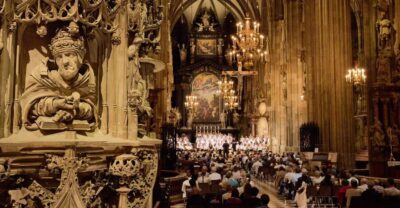
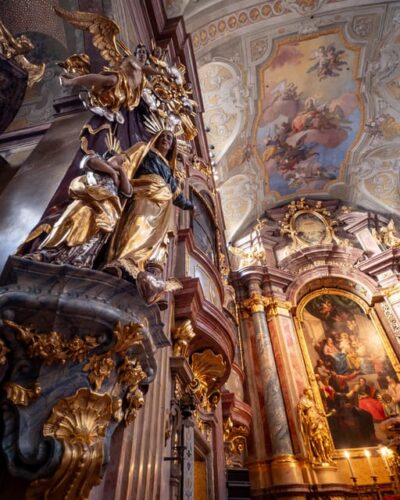
Classical Concert in St. Anne’s Church (Annakirche)
Read our review →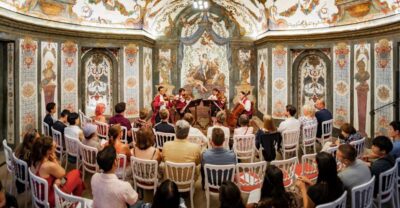
Browse the lists this tour appears in