
Reviewed · WALKING TOURS
Private Walking Tour of Salzburg
Salzburg reveals itself quickly on foot, but its stories are less obvious. This private two-hour walk links Mozart sites, grand squares, churches, the river, and the Salzburg Festival into one useful first look at the city. You get your bearings without spending half a day indoors or being pushed along in a large group.
I especially like the start-of-stay value. Guides such as Sonja, Leo, and Johannes are described as warm, funny, interactive, and full of practical suggestions for the rest of your visit. I also like the route’s variety, from Mirabell Garden and the love-lock bridge to the cathedral and St. Peter’s courtyard.
The main consideration is pace. Twelve stops in about two hours means several visits are brief, and this is an orientation walk rather than a slow, detailed tour of every building. Some interiors are also conditional or excluded, so you should plan to return to Mirabell Garden, St. Peter’s cemetery, and other sights later.
Key points at a glance
- A useful first-day route: Start at the Spirit of Mozart and finish beside the cathedral and main old-town squares.
- Private format for up to 15 people: Your party has the guide’s attention, with no unrelated group setting the pace.
- Mozart appears throughout: See the Mozart Residence, walk Getreidegasse toward his birthplace, and hear the story behind Mozartplatz.
- Several major interiors are covered: The University Church and Salzburg Cathedral may be entered when open.
- The route mixes famous sights with smaller details: Expect the Makartsteg bridge, canal system, university quarter, festival buildings, and St. Peter’s courtyard.
- Good practical payoff: Guides are praised for restaurant and sightseeing advice that can help shape the rest of your day.
Why this Salzburg walk works best at the start
Salzburg is compact, but the old town can feel like a set of handsome streets with no clear order. This walk gives you a map in your head. You cross the river, follow the main shopping street, pass through the festival district, and finish around the cathedral and Residenzplatz.
That route matters because it connects the city’s main themes. You move from Mozart and Mirabell to Salzburg’s archbishops, Catholic institutions, music festivals, public squares, and medieval foundations. I would book it early in your stay, then use the remaining days to return to the places that deserve more time.
The guides add much of the value. Sonja, Leo, and Johannes are the names associated with the experience, though your guide will depend on the date and assignment. The strongest descriptions point to a style that mixes facts with stories, questions, humor, and, in Leo’s case, even occasional singing.
That interaction can make a difference. A guide who asks questions and brings local details into the conversation gives you more than a list of dates. You can also ask for advice during the walk, then use those suggestions for the rest of the afternoon.
More Walking Tours in Salzburg
- Salzburg 2.5-Hour Walking Tour: Mozart, Old Town & More
★ 4.2 · 987 reviews - Salzburg: Old Town, Mozart, & Mirabell Gardens Walking Tour
★ 4.8 · 461 reviews - Salzburg Oldtown: Sightseeing Walking Tour with Licensed Local Guide
★ 5.0 · 392 reviews
The route from the Mozart Residence to Mirabell Garden
The meeting point is by the Spirit of Mozart at Imbergstraße 33A, near the river. The first stop is the Mozart Residence, the house where Wolfgang Amadeus Mozart lived from age seventeen. You view and discuss the building from the opposite side of the square rather than taking a full museum visit.
That distinction is important. If you want to see rooms and exhibits inside the residence, this walk is not a substitute for spending time there independently. On the tour, the building is a short opening chapter that places Mozart in the city before the route moves on.
Mirabell Garden receives about 15 minutes. You’ll get an explanation of what the palace and garden meant in Salzburg’s past and what the site is used for now. The guide specifically treats this as a glance, so return later if you want to wander the garden properly.
I think that is a sensible choice. Mirabell Garden rewards a slow stroll, photographs, and time among its formal plantings, while a walking tour needs to keep moving. You see where it is and learn why it matters, then decide how much time to give it on your own.
Crossing the Makartsteg and entering Getreidegasse
The Makartsteg is Salzburg’s love-lock bridge, and it provides one of the route’s lighter moments. You’ll hear about the locks, the river, and the buildings lining the water rather than simply crossing without context.
The bridge is also a practical turning point. Once you cross, the route moves into the old town and toward Getreidegasse, Salzburg’s best-known street. Its signs, narrow passageways, and busy storefronts make it one of the city’s most recognizable scenes, but the walk gives it a historical frame instead of treating it as only a shopping street.
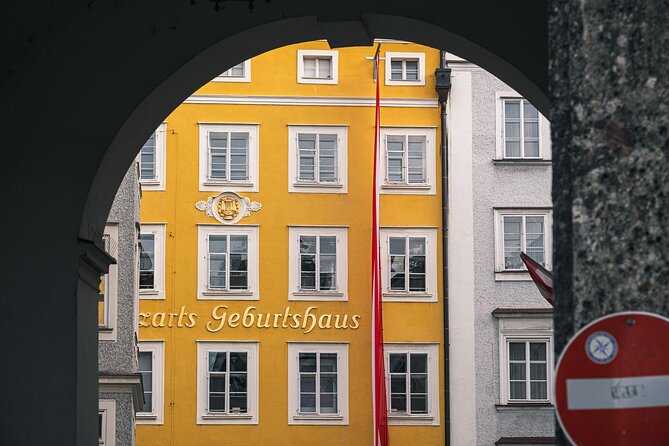
You walk along Getreidegasse toward Mozart’s birthplace. The time here is short, around ten minutes, so expect an exterior introduction rather than a full museum visit. If Mozart’s early life is a major reason for your trip, plan a separate visit to the birthplace.
This portion suits first-time visitors particularly well. You learn the basic direction of the old town and see how the riverfront, commercial street, and Mozart story fit together. The route also helps you avoid wasting time later trying to locate the key streets and squares.
University Church and Furtwängler Garden
The Universitätskirche, or University Church, is one of the more unusual stops. It is no longer used as a church, and the group may enter when it is open. The tour allows you to see the interior as part of the walk, although access can change if the building is closed.
After that, the route reaches Wilhelm-Furtwängler-Garten. This former monastery garden is now part of the Salzburg University setting. Here the guide connects the university, modern art, and Salzburg’s canal system before leading you toward the concert halls.
This stretch broadens the tour beyond the standard Mozart circuit. You get a look at how Salzburg functions as a university city and how older religious spaces now share room with modern uses. The canal discussion also gives you a detail many quick city walks would likely skip.
The drawback is that the stop is brief, about five minutes. You are getting context and orientation, not a long examination of the garden or university buildings. Still, it is a useful change of pace before the grand festival district.
A completely different way to spend a day here:
- The Original Sound of Music Tour in Salzburg
★ 4.5 · 6,129 reviews - Salzburg: Original Sound of Music Tour
★ 4.8 · 5,059 reviews - From Salzburg: Half-Day Tour to Hallstatt
★ 4.6 · 3,596 reviews - Salzburg: Mozart Concert at Mirabell Palace
★ 4.8 · 3,498 reviews
The Salzburg Festival at the Grosses Festspielhaus
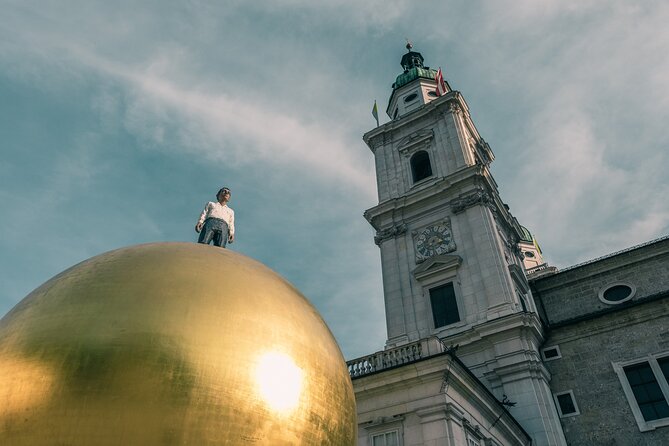
The Grosses Festspielhaus is the route’s music-focused stop. The Salzburg Festival is one of the leading classical music festivals in the world, and this concert hall hosts much of the summer program, including concerts and opera during the six-week festival season.
You will hear how the building fits into Salzburg’s cultural identity. That is more useful than simply seeing a large performance venue, especially if you are visiting during festival time and want to understand why the city’s music calendar affects prices, crowds, and availability.
The tour does not promise a performance or a backstage visit. It is an exterior and historical stop, listed at about ten minutes. If you have tickets for a concert or opera, this walk can give you context before the event, but it does not replace checking the venue’s own arrangements.
I like this part because it shows that Salzburg is not only a preserved old town and a Mozart brand. Music remains part of the city’s present life, and the festival buildings make that visible.
St. Peter’s courtyard and Salzburg Cathedral
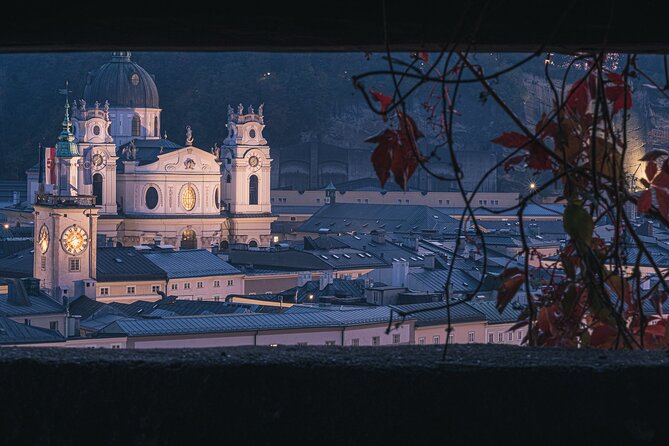
St. Peter’s Abbey is where Salzburg was founded in 696, and it is the oldest monastery in the German-speaking region. The route visits the monastery courtyard, where the guide explains its importance, but it does not enter the church or the famous cemetery.
That limitation is deliberate. St. Peter’s remains active, and guided groups are not allowed inside the church and cemetery on this experience. You should return separately if those interiors or the cemetery are high on your list.
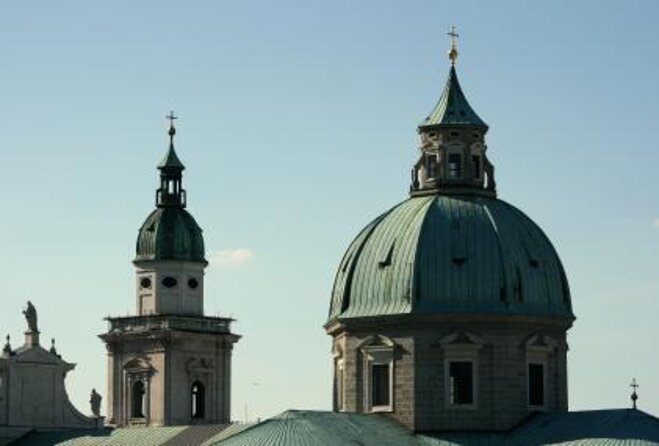
The next stop is Salzburg Cathedral, the city’s most significant church. Unlike St. Peter’s, guided tours are allowed here, so the group can enter and hear about the cathedral’s history. The planned visit lasts about ten minutes.
Again, ten minutes is an introduction, not a full study. You can expect the guide to point out the important features and explain the building’s place in Salzburg, but anyone interested in architecture, music, or church art should return for a longer look.
This is one of the strongest sections of the route because it puts two major religious institutions side by side. One is visited from its courtyard because it remains active; the other permits a guided entry. The contrast helps you understand that access rules are part of sightseeing in Salzburg, not a minor inconvenience.
Kapitelplatz, Residenzplatz, and Mozartplatz
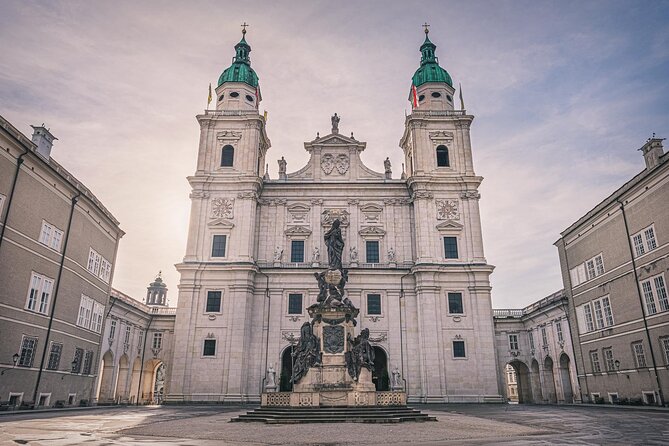
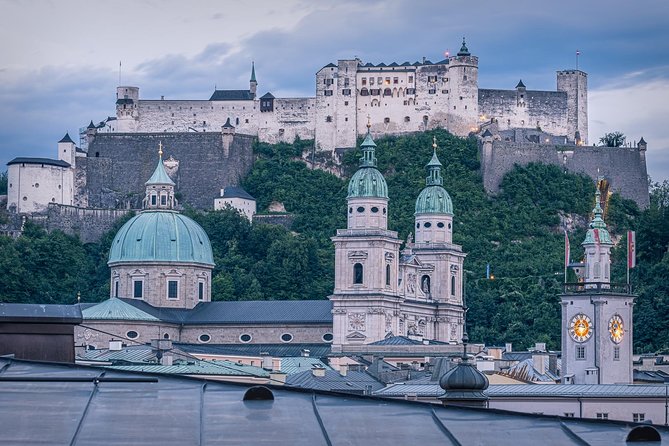
Kapitelplatz gives you a clear view toward Hohensalzburg Fortress. The square also brings in modern art and the city’s oldest bakery, creating a quick snapshot of Salzburg’s old and new sides.
You do not go up to the fortress on this walk. That is useful to know before booking, since the fortress requires its own visit and more time. The guide can help you understand its position above the city, but the route remains at street level.
Residenzplatz follows. This is the main square and the heart of the old town, named for the archbishop’s residence that once shaped the area. It is a good place to pause and understand Salzburg’s political and religious power structure.
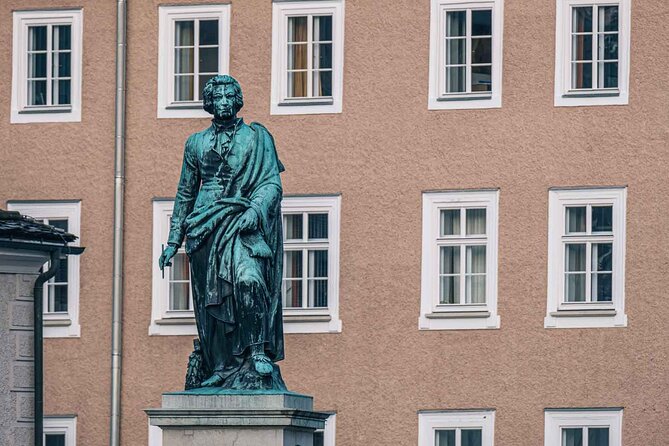
The final stop is Mozartplatz, beside the Mozart statue. The square marks the rise of the Mozart cult in the 19th century, when the statue was erected. The guide uses the monument to discuss Mozart’s image and some of the mystery that grew around him.
This ending works well. You finish in a central part of town, close to the cathedral, Residenzplatz, and tourist information. You can continue sightseeing from there, ask a final question, or walk back toward the river and the starting point, which takes about five minutes.
What the private format is worth at $263.67
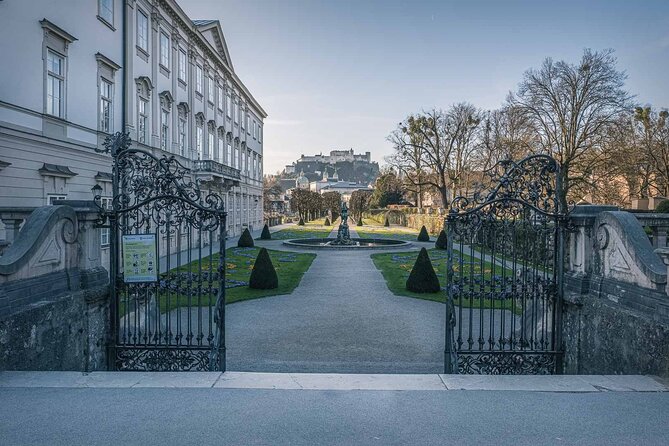
The listed price is $263.67 per group, with up to 15 people. That is not a cheap individual walking tour, but the calculation changes if you have a family or a group of friends. Split among 10 people, it is roughly $26 per person; split among 15, it is about $18 per person.
The private setup also changes the experience. You are not sharing the walk with strangers, and the guide can focus on your group rather than a broad public audience. That gives you more room to ask questions and adjust the emphasis, though the published route still has a planned sequence and approximate timing.
For a couple, the price is harder to justify unless you place a high value on privacy and personal attention. For a larger group, it can compare well with several separate paid tours, especially since the walk covers many central sights without separate admission charges.
The value is strongest if you use the tour as a city briefing. You are paying for organization, local interpretation, and a route that helps you decide what deserves a second visit. You are not paying for long interior visits, entry to Hohensalzburg Fortress, or a full Mozart museum experience.
Who should book this walk

I would choose this for a first visit to Salzburg, particularly if you arrive with only a few days. It is also useful on a return visit after many years, since the route covers familiar landmarks while adding context about the university, festival buildings, canal system, and Mozart’s later public image.
Families can benefit from the short stops and changing scenery. One family described an age range from 10 to 50, and the guide’s interactive style helped keep different ages involved. The route is also suitable for people who prefer conversation and stories over a formal lecture.
Dog owners should note that service animals are allowed. The information also says most people can participate and that the meeting area is near public transportation, but it does not provide a detailed accessibility assessment, so ask the provider about your specific needs before booking.
You may want something else if your priority is a slow architectural study, a long visit inside each church, or a dedicated Mozart museum tour. The walk covers a lot of ground quickly. Its strength is breadth, orientation, and the guide’s ability to connect the stops.
The experience offers free cancellation up to 24 hours before the 11 a.m. start. Changes or cancellations inside that window are not accepted for a refund, so keep the local cut-off time in mind when making plans.
Should you book the Private Walking Tour of Salzburg?
Book it if you want a private first look at Salzburg and intend to use the rest of your trip well. The route covers the city’s central landmarks, the guide adds stories and practical advice, and the finish at Mozartplatz puts you in a perfect position to continue exploring.
I would be more cautious if you are seeking a detailed museum tour or dislike brisk sightseeing. In that case, use this as a short orientation only and schedule separate visits to Mirabell Garden, Mozart’s birthplace and residence, St. Peter’s, the cathedral, and the fortress.
For groups, the price becomes much more reasonable. For solo visitors or couples, the choice depends on how much you value a private guide. If you book, schedule it near the beginning of your stay and save the final part of the afternoon for returning to the places that caught your eye.
FAQ
How long does the private Salzburg walking tour last?
The tour lasts approximately two hours. The route includes 12 stops, with short visits at most locations and time spent walking between them.
How many people can join the private tour?
The price covers one private group of up to 15 people. Only your group participates with the guide.
Where does the tour start and finish?
The tour starts at Spirit of Mozart, Imbergstraße 33A, Salzburg, at 11 a.m. It finishes at Mozartplatz, beside Salzburg Cathedral and Residenzplatz.
Can you enter Salzburg Cathedral during the tour?
Yes. Guided visits are allowed in Salzburg Cathedral, and the group is scheduled to enter and hear about its history.
Do you enter St. Peter’s Church and cemetery?
No. The route visits the courtyard of St. Peter’s Abbey, but it does not enter the church or cemetery because the monastery and church remain active and guided tours are not allowed there.
What is the cancellation policy?
You can cancel up to 24 hours before the experience for a full refund. Cancellations or changes made less than 24 hours before the start time are not accepted for a refund.
Just added around Salzburg
- Zell am See: Schmittenhöhe Tandem Paragliding Flight★ 4.9 · 82 reviews
- Zell am See: Paragliding Tandem Flight★ 5.0 · 31 reviews
- Werfen: Hohenwerfen Castle Entrance Ticket★ 4.5 · 84 reviews
- Viator Exclusive: ‘The Sound of Music’ Private Tour★ 5.0 · 28 reviews
- Zell am See Alpine Village Private Day Trip from Salzburg★ 5.0 · 3 reviews
- Private Austrian Food Tasting Tour in Salzburg’s Old Town★ 4.5 · 3 reviews
- Private transfer from Salzburg to Vienna, 2 hours for sightseeing★ 4.5 · 7 reviews
- Private Transfer from Salzburg to Munich with 2 hours for sightseeing★ 5.0 · 8 reviews
Walking Tours, compared.

Guided Walking Tour of City Center Highlights
Read our review →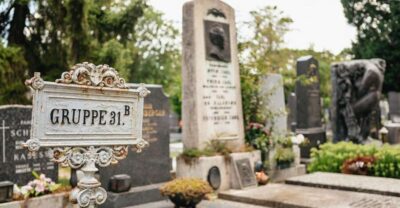
Guided Walking Tour of City Highlights & Hidden Gems
Read our review →
Vienna Historic Center Small Group Walking Tour
Read our review →
Browse the lists this tour appears in