Reviewed · TOURS
The best of Vienna – Exclusive Tour (Max 9 people)
Vienna’s center packs imperial power, wartime memory, grand cafés, and church towers into a very walkable stretch. This tour gives you that story in about two hours, with a private group capped at nine people, so you can hear the guide without joining a moving crowd.
I like the route for two reasons: it connects famous buildings to real events, and it ends at St. Stephen’s Cathedral, right in the heart of town. The main consideration is price: at $211.19 per person, this makes sense mainly if you value a small private group and a specialist guide. Entrance fees, food, drinks, and gratuity are extra.
Key points at a glance
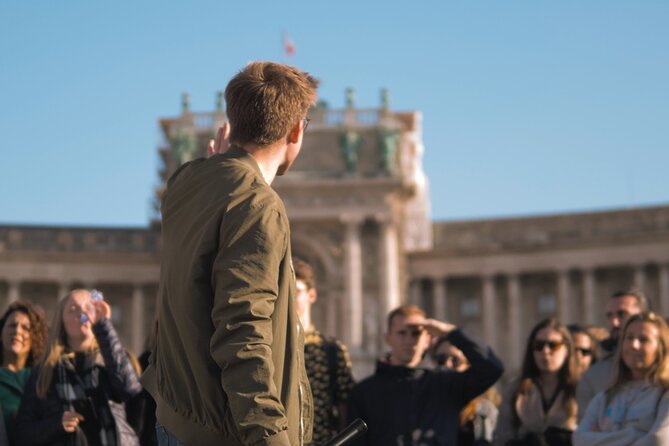
- A compact route through central Vienna: You visit the Albertina, Hofburg, Heldenplatz, Graben, Kohlmarkt, and St. Stephen’s Cathedral in roughly two hours.
- Small private format: Only your group participates, with no more than nine people.
- Strong historical range: The walk covers the Habsburg monarchy, Sisi and Emperor Josef, the Anschluss, World War II, and modern Austria.
- A taste of Viennese coffee culture: Your guide explains the Melange, local café customs, and why coffeehouses matter in Vienna.
- Licensed specialist guiding: The experience includes a professional art historian and licensed Austria guide.
- Useful first-day orientation: The route ends at Stephansplatz, a handy place to continue exploring central Vienna on your own.
What this two-hour Vienna walk is really for
This is an orientation tour, not a museum visit or a deep tour of any single palace. You move from one major sight to the next while the guide supplies the connections that can be easy to miss when you explore alone.
The route is especially good at showing how Vienna’s past still shapes its streets. You begin with a memorial to war and fascism, pass through the ceremonial world of the Habsburgs, hear about the Nazi annexation of Austria, and finish among the cafés and shops of the old center.
That range gives the walk more weight than a simple parade of pretty façades. You are not only looking at palaces. You are also considering how Vienna remembers violence, how monarchy shaped the city, and how everyday coffeehouse life became part of local identity.
The tour is offered in English and is listed at approximately two hours. The scheduled stops add up to about 105 minutes, leaving some time for walking between them, questions, and adjustments to the route.
A few more Vienna days worth a look
- Vienna: Vivaldi’s Four Seasons Concert in Karlskirche
★ 4.7 · 14,951 reviews - Vienna: Spanish Riding School Training
★ 3.9 · 9,281 reviews - Vienna: Skip-the-cashier-desk-line Giant Ferris Wheel Ride
★ 4.5 · 7,859 reviews
Meeting the guide at Helmut-Zilk-Platz
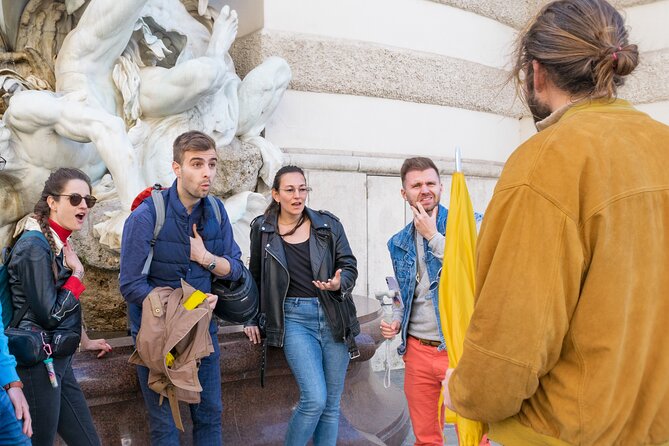
The walk begins at the Memorial Against War and Fascism on Helmut-Zilk-Platz. This is a sensible meeting point because it starts the tour with a serious subject rather than easing you into Vienna through architecture alone.
Allow yourself enough time to identify the memorial before the start. The meeting point is in Vienna’s first district, near public transportation, and the tour remains in the central area from there.
The memorial gives the guide a chance to frame Vienna’s 20th-century story. That is useful because many first-time visitors see the imperial buildings but do not immediately understand the city’s experience under fascism and during World War II.
The stop lasts about 10 minutes and has no admission charge. It is brief, but it sets the tone for a tour that treats Vienna as more than a postcard city.
Albertina, opera, and your first look at Vienna
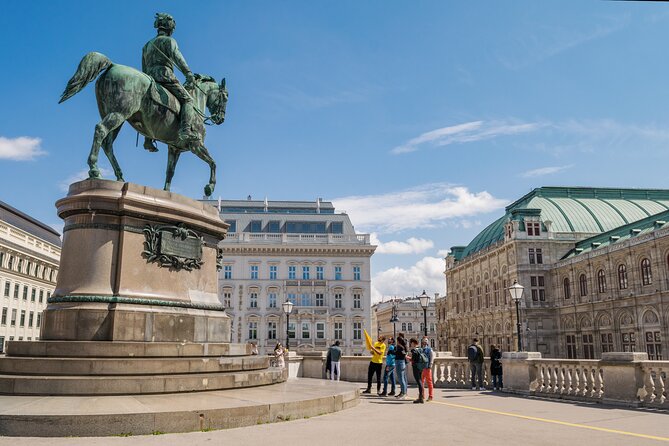
The next stop is the Albertina, where the guide discusses the gallery, the Vienna State Opera area, and the city in general. You do not enter the museum as part of the tour, so think of this as an exterior introduction and orientation rather than an art collection visit.
The Albertina is one of the central district’s most recognizable cultural addresses. The nearby opera setting also helps explain Vienna’s long connection with music, court life, and public ceremony.
This is where a good guide can make the city easier to read. You may hear how the buildings around you relate to imperial Vienna, artistic life, and the modern capital. The scheduled time is about 15 minutes, so the explanation needs to stay focused.
If you want to visit the Albertina afterward, plan that separately. The entrance ticket is not included, and the walking tour does not provide time for a full museum visit.
The Hofburg and the Habsburg family
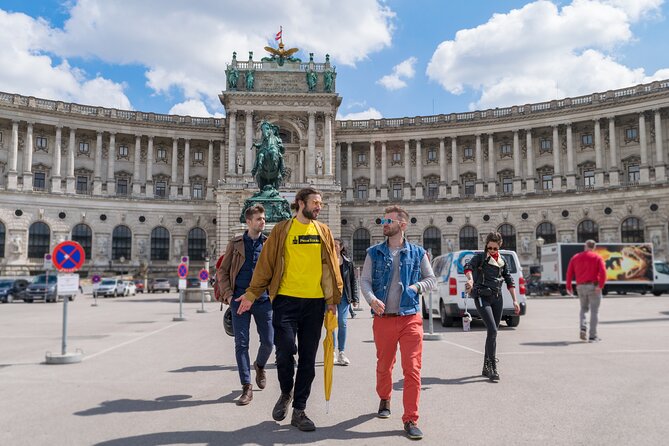
The Hofburg receives about 20 minutes, making it one of the most substantial stops. Here you learn about the Habsburgs, the imperial palace, Empress Elisabeth, better known as Sisi, and her husband, Emperor Josef.
The Hofburg can feel confusing at first because it is not one isolated palace. It is a large collection of buildings and courtyards shaped over centuries. A guide helps you understand why the complex looks so varied and why it mattered as the center of royal power.
The focus on Sisi and Emperor Josef gives the story a human angle. Their names are familiar, but the tour places them within the larger political system of the Habsburg monarchy. You also hear about the modern Austrian state, which helps bridge the gap between imperial Vienna and the country you see today.
The guide does not take you inside as part of the ticketed experience. Entrance fees are not included, so you should treat this section as an exterior explanation. If the Hofburg interests you, you can return later for one of its museums or palace attractions.
A completely different way to spend a day here:
- Vienna: Schönbrunn Palace & Gardens Skip-the-Line Tour
★ 4.7 · 7,739 reviews - Vienna: Light of Creation Votive Church Immersive Light Show
★ 4.8 · 6,779 reviews - Vienna Spanish Riding School Guided Tour
★ 4.7 · 6,765 reviews - Vienna: Classical Concert in the World-Famous Musikverein
★ 4.6 · 6,673 reviews
Heldenplatz and the difficult 20th century
Heldenplatz is one of the most important stops on the route. The guide points out the large gate and explains how Adolf Hitler announced the Anschluss, the Nazi annexation of Austria, from this area.
That history changes the way you see the grand open square. Heldenplatz is designed to project imperial power, yet it is also tied to one of Austria’s most painful political moments. A short explanation here gives the square a meaning that architecture alone cannot provide.
The stop lasts about 15 minutes. This is not enough time for a full study of Austrian fascism or World War II, but it gives you a clear starting point. If you want a longer treatment of the subject, you will need a dedicated museum or history tour.
I appreciate that the route includes this material alongside the imperial sights. Vienna is more honest and more interesting when you see both sides of its public story.
Café Landtmann and the Melange
At Café Landtmann, the subject shifts from rulers and war to daily life. The guide explains what a Melange is, how Viennese coffee is served and enjoyed, and why coffeehouse culture matters to local people.
Food and drinks are not included, so you are not promised a café stop with a beverage. Instead, this is a cultural explanation outside or around the café. That distinction matters if you are expecting time to sit down and order coffee.
Still, the stop adds welcome variety. A city is not only its palaces, and Viennese coffee culture gives you a practical way to understand local habits. After the tour, you can return to a café and try the experience at your own pace.
The scheduled time is about 10 minutes. It is enough for an introduction, but not a full coffeehouse afternoon. Think of it as a useful lesson in what to order and how to recognize the local tradition.
Graben, Kohlmarkt, and Demel
The route continues along Graben and Kohlmarkt, two of the best-known streets in Vienna’s center. The guide points out Demel, the famous former royal café, and helps you understand the elegant commercial heart of the city.
These streets are ideal for showing how Vienna’s imperial past survives in ordinary city life. Today you find shops, cafés, pedestrians, and historic façades. The route also gives you a pleasant change of pace after the heavier discussion at Heldenplatz.
The scheduled stop is about 15 minutes. You will not have time for a leisurely shopping trip, and the tour does not include food or drinks. If Demel interests you, note it as a place to return after the walk.
The guide can also adapt the route to your needs. That may help if your group wants more attention on architecture, royal history, coffee culture, or the city’s wartime past. Any change still has to fit the short duration.
St. Stephen’s Cathedral and the end at Stephansplatz
The final stop is St. Stephen’s Cathedral, called Stephansdom by locals and often shortened to Steffl. The guide covers its legends, stories, and unusual facts, with about 20 minutes set aside for the cathedral and nearby streets.
Ending here works well. Stephansplatz is one of Vienna’s clearest central landmarks, and you finish close to public transportation, restaurants, shops, and more sights. You can continue exploring without having to find your way back to the starting point.
The tour focuses on the cathedral from the outside and does not include an entrance ticket. If you want to see the interior or explore other paid areas, those costs are separate.
The final walk along Graben also gives you a chance to enjoy central Vienna at a relaxed pace. After several historical explanations, the city becomes easier to navigate because you now recognize its main streets and major buildings.
The guide makes the difference
The experience includes a local guide, a professional art historian guide, and a licensed Austria guide. That combination suggests a tour built around explanation rather than simple directions from one sight to another.
Guides named in the tour feedback include Anita, Michael, Roderick, Stefan, Christopher, Patrick, Florian, Sven, and Elizabeth. The descriptions of these guides point to a range of styles, from humorous and lively to strongly focused on historical detail.
That variety can be a plus, but it also means the tone may depend on who leads your departure. One guide may emphasize jokes and stories, while another may spend more time on dates, politics, and architecture.
The strongest pattern is clear: the tour works best when the guide brings the history to life and keeps the pace moving. The route covers a lot, so you want someone who can explain difficult subjects in plain language without getting stuck in long lectures.
Small group size versus the price
At $211.19 per person, this is not a budget walking tour. You are paying for a private experience with a maximum of nine people, not merely for access to Vienna’s streets.
That small size has practical value. You can hear the guide more easily, ask questions without holding up a large group, and request some adjustment to the route. The private format also avoids the uncertainty that can come with open free walks, where attendance may grow beyond the advertised size.
A past complaint about groups of more than 50 people relates to a separate free walking format, not this private tour. It is still useful context: if avoiding a large crowd matters to you, confirm that you are booking this exclusive product rather than a free group departure.
The price makes the most sense for a family, couple, or small group that wants a private introduction and would rather not organize several separate visits. If you are happy walking with a large group and doing your own research, the cost will feel high.
You should also budget for any museum or cathedral admission you choose to pay separately, plus food, drinks, and a tip for the guide. None of those are included.
Pace, accessibility, and practical planning
You walk for about two hours through central Vienna. The route includes streets, public squares, and exterior stops, so comfortable shoes are a sensible choice.
Most people can participate, and the experience is near public transportation. Service animals are allowed. The operator also says the route can be adapted to guest needs, which is helpful if your group wants a slightly different emphasis.
The tour requires good weather. If poor weather causes cancellation, you are offered another date or a full refund. Otherwise, you can cancel for a full refund up to 24 hours before the start time. Changes or cancellations inside that window are not accepted.
The meeting point is Helmut-Zilk-Platz, and the tour ends near Stephansdom at Stephansplatz. That point-to-point layout is useful on your first day because you do not have to retrace the route.
Who should book this Vienna tour?
I would choose this walk if you want a quick, private introduction before exploring Vienna on your own. It suits first-time visitors who want the major sights explained in context, especially the Hofburg, Heldenplatz, and St. Stephen’s Cathedral.
It is also a good fit if your group values a professional art historian and a licensed local guide. The route covers architecture, monarchy, war, café culture, and modern Austria, so you get a broad first look rather than a single-theme tour.
I would think twice if you want interior visits, a sit-down coffee, or detailed time at each attraction. The Albertina, Hofburg, café, and cathedral are mainly exterior stops, and all entrance fees are extra.
Should you book it?
Book this tour if the small private group is the main draw and $211.19 per person fits your budget. You get a clear route through central Vienna, a strong mix of imperial and modern history, and an ending at Stephansplatz that makes the rest of the city easier to explore.
Skip it if you prefer a low-cost group walk or want to spend serious time inside museums and palaces. For the right visitor, this is a polished orientation tour that helps Vienna make sense quickly, with enough flexibility to shape the experience around your interests.
FAQ
How long does the Vienna tour last?
The tour lasts approximately two hours.
How many people can join the private tour?
The group is limited to a maximum of nine people, and only your group participates.
What language is the tour offered in?
The tour is offered in English.
Where does the tour begin?
It begins at the Memorial Against War and Fascism on Helmut-Zilk-Platz, 1010 Vienna.
Where does the tour end?
The tour ends near St. Stephen’s Cathedral at Stephansplatz, 1010 Vienna.
Are museum and attraction entrance tickets included?
No. Entrance tickets are not included in the tour price.
Are food and drinks included?
No. Food, drinks, and alcoholic beverages are not included.
Can the route be changed?
Yes. The route can be adapted to guest needs.
What happens if bad weather cancels the tour?
You will be offered a different date or a full refund if the experience is canceled because of poor weather.
Just added around Vienna
- Vienna: UNESCO Schönbrunn Palace Guided Tour with Entry★ 4.5 · 94 reviews
- World War II History Vienna Old Town Private Walking Tour★ 4.8 · 9 reviews
- Vienna: Winery and Wine Tasting Tour with a Wine Expert★ 5.0 · 5 reviews
- Vienna: Wine Tasting E-Bike Tour★ 4.9 · 46 reviews
- Vienna: Wine Tasting at Schönbrunn Palace★ 4.3 · 71 reviews
- Vienna: Wine Tasting Tour★ 4.8 · 61 reviews
- Vienna: Concert by the Vienna Baroque Orchestra★ 4.6 · 56 reviews
- Vienna: Wachau Valley Private Kayak and Wine Tour★ 5.0 · 3 reviews
Tours, compared.
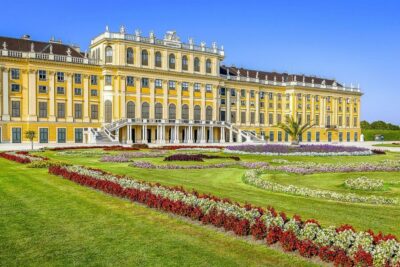
Schönbrunn Palace & Gardens Skip-the-Line Tour
Read our review →

Skip-the-Line Sisi Museum, Hofburg and Gardens Tour
Read our review →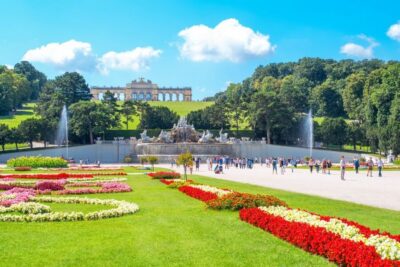
Skip-the-Line Schönbrunn Palace & Gardens Tour
Read our review →
Guided Walking Tour of City Center Highlights
Read our review →