
Reviewed · CONCERTS
Vienna: Romantic Classics Piano, Violin, and Cello Concert
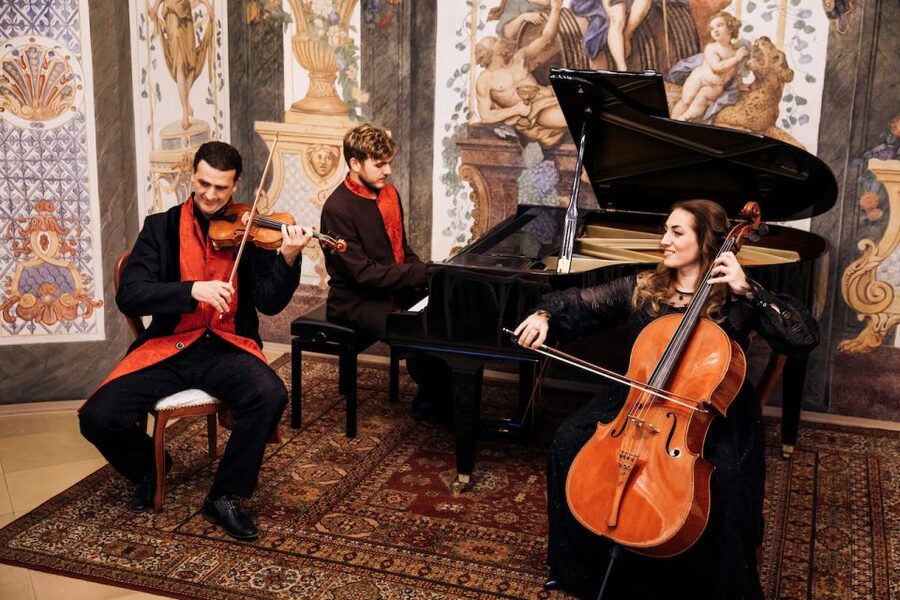
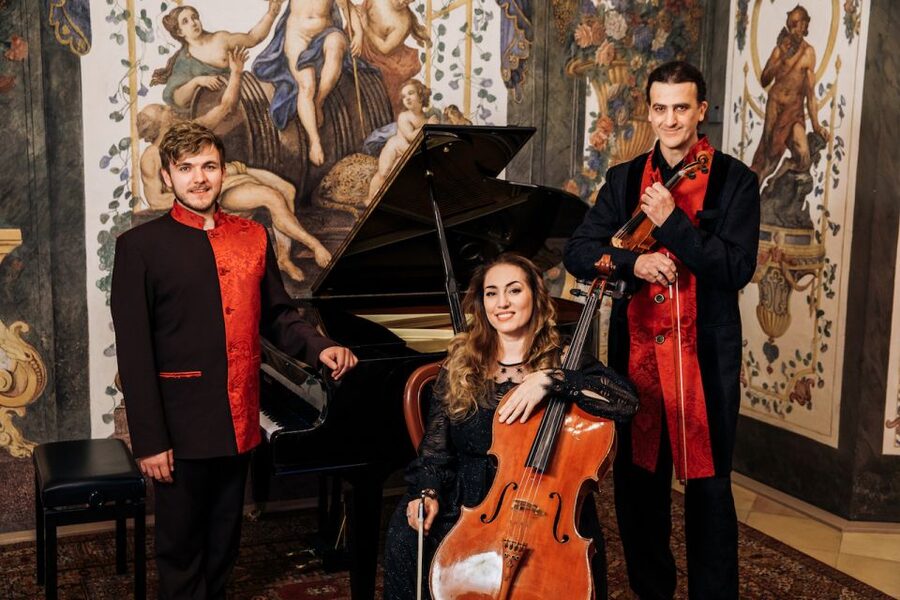
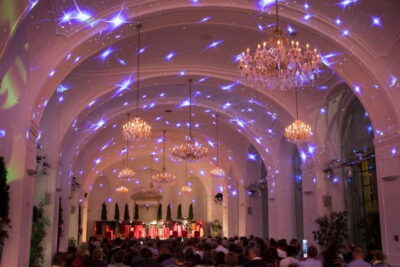
Vienna’s Romantic Classics concert puts you close to the performers in the frescoed Sala Terrena, a small historic room just 150 meters from St. Stephen’s Cathedral. The program moves from Beethoven’s Moonlight Sonata and Liszt’s Un sospiro to Chopin, Schubert, Bach, and Saint-Saëns, so you get a broad taste of beloved European music in one 90-minute sitting.
I like the intimate setting and clear acoustics, which help the piano, violin, and cello sound detailed rather than distant. I also like the range of seating, from student and back-row tickets to places closer to the musicians. The main thing to consider is that refreshments are not included, and any drinks sold during the break require cash.
Key points to know before booking
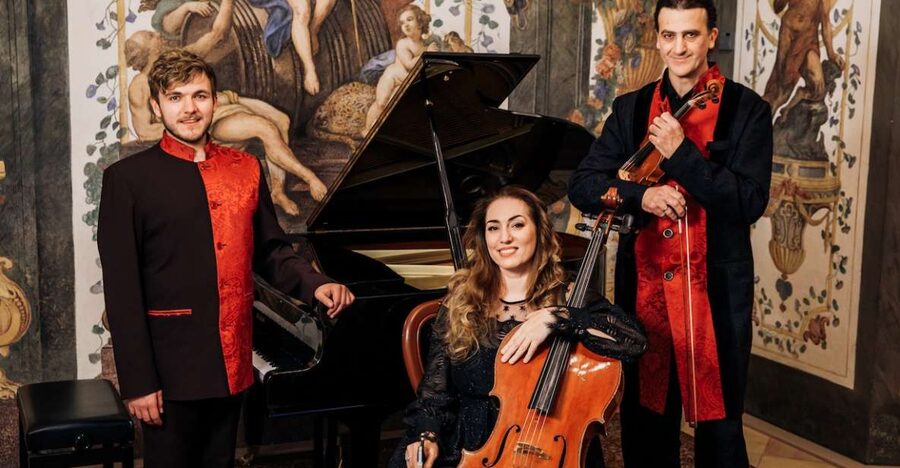
- Sala Terrena setting: Hear the concert among expressive frescoes in a historic room near St. Stephen’s Cathedral.
- Three-instrument program: Piano, violin, and cello cover major works from Beethoven, Mozart, Chopin, Liszt, Schubert, Brahms, and others.
- Named performers: Violinist Claudio Bentes, pianist Dushan Sretovic, and cellist Teodora Miteva are part of the advertised performance lineup.
- Several ticket levels: Choose student seating, the back row, or seats closer to the performers.
- Simple central location: Enter through the Deutschordenskirche gate and look for the concert poster stand.
- Flexible booking: You can cancel up to 24 hours before the concert for a full refund and reserve without paying immediately.
A small concert room with a Viennese sense of place
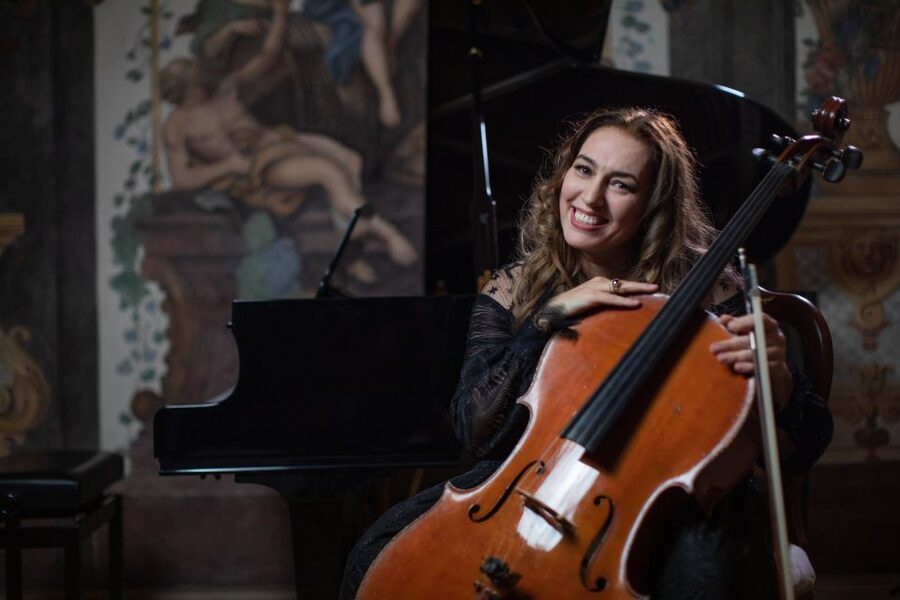
The Sala Terrena gives this performance its character. You are not sitting in a large modern hall with the musicians far away. Instead, the room’s frescoes and close seating put the instruments within easy reach of your eyes and ears.
That matters with chamber music. You can follow the change from a light piano phrase to a stronger cello line, or watch the violinist shape a long melodic passage. The setting is part of the experience, not just a container for the music.
The venue is near the heart of Vienna’s pedestrian center. Since it is only 150 meters from St. Stephen’s Cathedral, it fits neatly into an evening around the cathedral, Stephansplatz, and the surrounding old streets. You still need to arrive at the correct entrance, though. Go to the gate at Deutschordenskirche, where a poster stand for concerts at Mozarthaus helps identify the way in.
Arrive 15 minutes before the start. That gives you time to find the entrance, check your coat, and get seated without rushing into the opening notes. A cloakroom is included, which is useful in Vienna’s colder months when a bulky coat can get in the way of a small concert seat.
More Concerts in Vienna
- Vienna: Vivaldi’s Four Seasons Concert in Karlskirche
★ 4.7 · 14,951 reviews - Vienna: Classical Concert in the World-Famous Musikverein
★ 4.6 · 6,673 reviews - Vienna: Classical Concert at St. Stephen’s Cathedral
★ 4.1 · 4,177 reviews
What the 90-minute program gives you
The program is built as a musical sampler rather than a single long work. It opens with Joseph Haydn’s Trio all’ungarese, Hob XV:25, including its Andante, Poco Adagio, and Rondo finale. That gives the piano, violin, and cello an early chance to work as a group.
The Haydn is followed by Beethoven’s Moonlight Sonata, specifically the famous Adagio. You probably know this slow, floating movement already, but hearing it in a close room changes the effect. The quiet opening benefits from good acoustics, and the piece creates a calm pause before the program becomes more varied.
Mozart’s La tartine de beurre, also known as Das Butterbrot, brings a lighter touch. Its playful title and short form offer a welcome change after the seriousness of Beethoven. You then hear Beethoven’s Sonata Op. 2, with its Allegro con brio, a faster and more energetic work that shows a different side of the composer.
Liszt’s Un sospiro adds one of the evening’s most lyrical piano moments. The title means a sigh, and the piece is known for its flowing, singing quality. It suits a romantic-themed program, though you should expect the whole concert to include plenty of musical contrast rather than only soft love songs.
Chopin, Bach, and the most expressive solo pieces
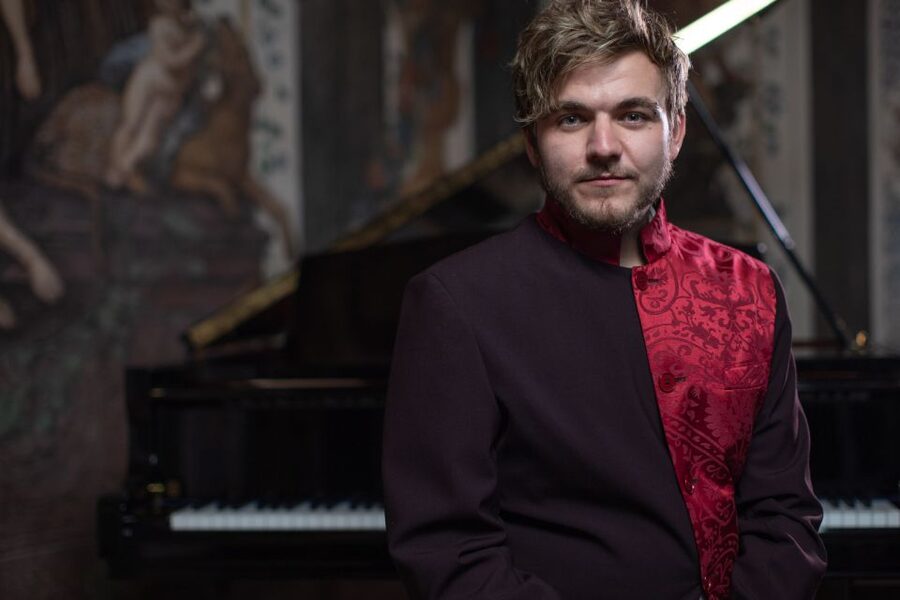
Chopin receives two important places in the program. The Nocturne in C minor, Op. 48 No. 1, brings the polished, emotional piano style many people associate with his music. It begins with a reflective character and develops into something more forceful, giving the pianist room to show both control and feeling.
The Etude Op. 10 No. 1 in C major is very different. This is a demanding virtuoso study, with broad, fast-moving piano patterns that can sound almost orchestral when played well. Dushan Sretovic is presented as an award-winning piano soloist known for Chopin interpretations, so these two works are likely to be a major reason for choosing this concert.
The cello then takes a turn with the Allegro from Bach’s Cello Suite in G major, BWV 1007. Bach’s music strips away the color of a full ensemble and places the musical line directly in the hands of one player. The result can feel spare and focused, especially in an intimate room.
Paganini’s Caprice 13 adds another virtuoso moment, this time for violin. Claudio Bentes is named as the violinist for the concert, and this selection gives the violin a chance to show speed, precision, and character. It is a useful contrast to the longer, more flowing piano works.
The program’s romantic center
Camille Saint-Saëns’s The Swan is one of the most familiar cello pieces in the program. Its slow melody and gentle accompaniment make it an easy work to settle into, even if you do not usually attend classical concerts.
Jules Massenet’s Meditation from Thaïs gives the violin a similarly expressive moment. It is graceful and reflective, with a melody that carries the emotional weight. These two pieces help explain the Romantic Classics title better than the program’s faster studies do.
The concert closes with Schubert’s Trio in E-flat major, Op. 100, specifically the Andante con moto. This is one of the program’s most substantial ensemble selections. Rather than giving you only short, famous excerpts, the closing trio lets piano, violin, and cello interact over a longer musical arc.
Teodora Miteva is described as an award-winning soloist with international competition experience, and the trio format gives the cello more room to take part in the musical conversation. If you prefer chamber music to a series of unrelated solo pieces, this final work may be the most satisfying part of the evening.
A completely different way to spend a day here:
- Vienna: Spanish Riding School Training
★ 3.9 · 9,281 reviews - Vienna: Skip-the-cashier-desk-line Giant Ferris Wheel Ride
★ 4.5 · 7,859 reviews - Vienna: Schönbrunn Palace & Gardens Skip-the-Line Tour
★ 4.7 · 7,739 reviews - Vienna: Light of Creation Votive Church Immersive Light Show
★ 4.8 · 6,779 reviews
The musicians and the close view
The advertised lineup gives each instrument a clear role. Claudio Bentes handles the violin, Dushan Sretovic performs the piano selections and takes a leading role in Chopin, and Teodora Miteva brings the cello into both solo and trio works.
Because the room is relatively small, your seat can affect how much you notice the performers. The closer tickets make sense if you enjoy watching technique and facial expression. A back-row ticket may be enough if you mainly want the sound and the frescoed room, while the student option offers a lower-cost way to attend if you qualify.
The small scale is also helpful for first-time concertgoers. You do not need to know every composer or understand formal concert etiquette to follow the program. Each work is short enough to offer a new mood, and the famous selections give you familiar entry points.
At the same time, this is not the best choice if you want a full symphony orchestra, a large theatrical production, or a concert built around one composer. The instruments here are piano, violin, and cello, and the pleasure comes from their detail and conversation.
What the venue does well, and where it falls short
The strongest practical feature is the combination of historic atmosphere and good acoustics. A small room can sometimes make music sound cramped, but the available feedback points to clear sound with enough depth to hear every note. That is especially useful for Bach, Chopin, and the quieter Beethoven and Massenet selections.
The frescoes also add visual interest during slower passages. You are not simply waiting for the next movement in a plain hall. The Sala Terrena gives you something to look at, and its historic character helps the performance feel tied to Vienna rather than interchangeable with a concert room in any city.
The drawbacks are modest but worth knowing. The venue is small, so seating position matters more than it would in a large auditorium. Also, refreshments are not part of the ticket. Drinks may be available for cash outside during the break, but the toilet signage could be clearer, so take care of practical needs before the concert starts if you prefer not to search around during the interval.
Is 69 dollars a fair price?
At 69 dollars per person, this sits above the price of a casual music performance but below the cost of many large, formal classical events. The value depends on what you want from a Vienna evening.
I think the price is reasonable if you care about the venue, want an intimate setting, and would otherwise pay for a concert as a central part of your night. You are getting 90 minutes of live music, a cloakroom, a central location, and a program filled with composers whose works are easy to recognize.
The price is less appealing if you only want a short tourist stop or plan to attend several concerts during your stay. In that case, compare the seating levels carefully. A student ticket or back-row seat may make the experience easier to fit into your budget, while a closer seat is a better choice for someone who values a near view of the musicians.
The lack of an included drink is a small but real point. Bring cash if you want to buy something during the break, and do not assume the ticket includes a beverage.
Who will enjoy this concert most?
I would choose this for you if you want a cultured evening without committing to a three-hour opera or a full symphony program. The 90-minute length is easy to fit between dinner and a night walk through central Vienna.
It also suits couples, solo visitors, and first-time classical listeners. The romantic works by Liszt, Chopin, Massenet, Saint-Saëns, and Schubert give the evening an emotional thread, while Haydn, Mozart, Beethoven, Bach, and Paganini keep the program from becoming too soft or predictable.
Families should check the ticket details for student eligibility, but the availability of student tickets may help younger audience members attend at a lower cost. The venue is listed as wheelchair accessible, which removes one common concern when planning a concert in a historic central building.
You may want to choose something else if you need a large stage, strong theatrical effects, or a full orchestra. This is a chamber concert, and its strength is close musical detail rather than spectacle.
Getting there without a last-minute scramble
The venue is very easy to place on a Vienna sightseeing map, but the entrance is specific. Head to the Deutschordenskirche gate, about 150 meters from St. Stephen’s Cathedral. Look for the poster stand connected with concerts at Mozarthaus.
Give yourself at least 15 minutes before the listed start time. The extra time is not just polite. It helps you find the gate, check your coat, use the facilities, and choose your place without interrupting the opening piece.
English and German are available from the host or greeter, and the activity information is provided in both languages. That makes the arrival process easier for international visitors who may not speak German.
Booking is flexible: you can reserve now and pay later, and cancellation is free up to 24 hours before the concert for a full refund. Those terms are useful if your Vienna schedule depends on weather, dinner reservations, or another timed sight.
Should you book the Romantic Classics concert?
Book it if you want recognizable classical music in a small, atmospheric Vienna room. The mix of Beethoven, Chopin, Mozart, Liszt, Schubert, Bach, and Brahms gives you plenty of familiar names, while the frescoed Sala Terrena and close seating make the night feel more personal than a large concert hall.
Choose a closer seat if watching the musicians matters to you. Pick the back row or student option if you mainly want the music at a lower cost. Bring cash for any break-time drink, arrive 15 minutes early, and enter through the Deutschordenskirche gate.
Skip it only if you are looking for an orchestra, opera, or a long single-composer program. For a compact evening of piano, violin, and cello near St. Stephen’s Cathedral, this is a practical and appealing choice.
FAQ
How long does the concert last?
The concert lasts 90 minutes.
Where does the concert take place?
It takes place in the Sala Terrena, about 150 meters from St. Stephen’s Cathedral in Vienna.
How do I find the entrance?
Enter through the gate at Deutschordenskirche. A poster stand for concerts at Mozarthaus is located there.
How early should I arrive?
You should arrive 15 minutes before the concert begins.
Which musicians perform?
The advertised performers are violinist Claudio Bentes, pianist Dushan Sretovic, and cellist Teodora Miteva.
Which composers are included?
The program includes Haydn, Beethoven, Mozart, Liszt, Chopin, Bach, Paganini, Saint-Saëns, Massenet, and Schubert.
Are different ticket types available?
Yes. You can choose student tickets, back-row tickets, or tickets closer to the performers.
Is the venue wheelchair accessible?
Yes, the activity is listed as wheelchair accessible.
Are drinks included?
No. Refreshments are not included. Drinks may be available during the break for cash outside the concert area.
Can I cancel my booking?
Yes. You can cancel up to 24 hours before the concert for a full refund. You can also reserve now and pay later.
Just added around Vienna
- Vienna: UNESCO Schönbrunn Palace Guided Tour with Entry★ 4.5 · 94 reviews
- World War II History Vienna Old Town Private Walking Tour★ 4.8 · 9 reviews
- Vienna: Winery and Wine Tasting Tour with a Wine Expert★ 5.0 · 5 reviews
- Vienna: Wine Tasting E-Bike Tour★ 4.9 · 46 reviews
- Vienna: Wine Tasting at Schönbrunn Palace★ 4.3 · 71 reviews
- Vienna: Wine Tasting Tour★ 4.8 · 61 reviews
- Vienna: Wachau Valley Private Kayak and Wine Tour★ 5.0 · 3 reviews
- Vienna: Wiener Schnitzel and Strudel Cooking Class★ 4.9 · 126 reviews
Concerts, compared.
Vivaldi’s Four Seasons Concert in Karlskirche
Read our review →
Classical Concert in the World-Famous Musikverein
Read our review →
Classical Concert in St. Anne’s Church (Annakirche)
Read our review →
Browse the lists this tour appears in