Reviewed · TOURS
Vienna: Time Traveling Virtual Reality Sightseeing Tour
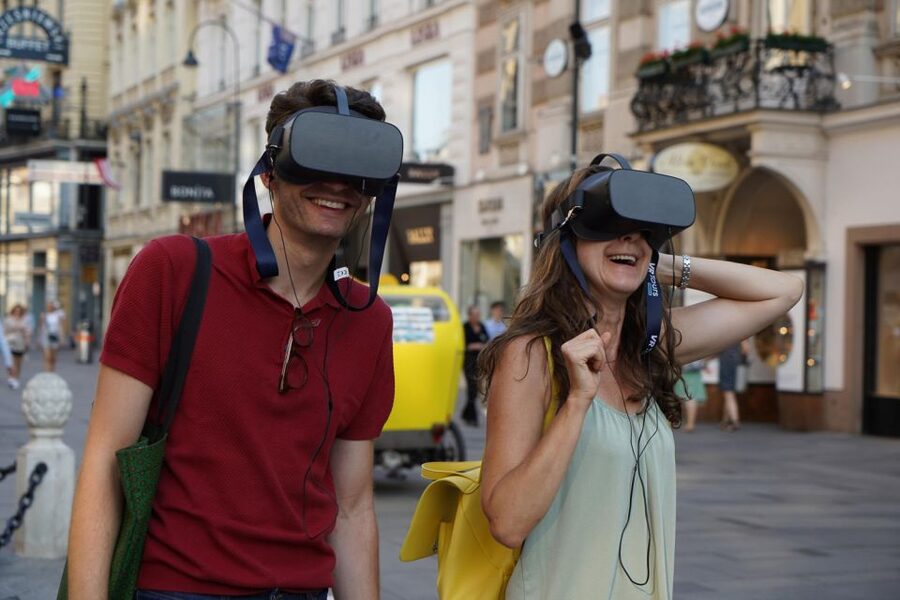
Vienna’s past comes alive in six short virtual-reality scenes placed around the old town. You might watch an Ottoman bombardment from inside the city, glimpse Empress Sisi on a carriage ride, or see St. Stephen’s Cathedral burning near the end of World War II. It is a history walk with a modern trick: you put on the headset at each stop and look around in every direction.
I like the clear link between place and past. You are not watching a random film in a dark room. You stand near the Hofburg, the Opera, and St. Stephen’s Square, then see those same places in another era. I also like the easy 3.2-kilometer route, which stays flat and gives you a useful first look at central Vienna.
The main drawback is that the VR scenes can feel rough in places. One visitor found the images blurry and the faces indistinct, while another felt the 1920s scene needed more action. The walking and spoken commentary make up much of the tour, so book this for the mix of city sightseeing and technology, not for nonstop headset time.
Key points at a glance
- Six time-travel scenes: Move from a 1483 religious procession to the plague, the 1683 Ottoman siege, the Habsburg era, the 1920s, and World War II.
- A real old-town walk: Cover 3.2 kilometers on flat streets between Neuer Markt and Albertina.
- Live guidance plus audio: English and German guides lead the tour, with audio available in English, Spanish, Dutch, French, Italian, and Russian.
- A strong first-day activity: You get an introduction to central Vienna and the events that shaped it.
- Technology with limits: The 360-degree view is engaging, but some images may look dated or slightly blurry.
- Practical restrictions: The tour is not suitable for children under eight or people with epilepsy.
A history walk that puts the headset in the street
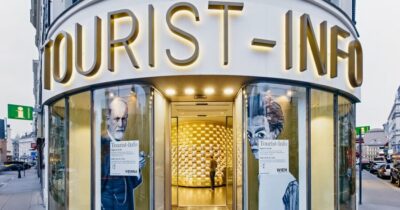
The tour begins at Neuer Markt 6, close to Vienna’s central sights. Arrive 15 minutes early and look for the turquoise entrance. You wait indoors rather than standing outside, which matters on a cold Vienna morning or during a damp spell.
The guide explains the glasses and earphones before the walk starts. English and German are the live tour languages. Julian has led the tour in both languages, and Dr. Reiner has also been praised for clear explanations and practical help with the equipment.
Once the group sets off, the route links several well-known parts of central Vienna. The total distance is 3.2 kilometers over flat ground, and the advertised duration is about 100 minutes, with the guided route sometimes listed at 105 minutes. That makes this a manageable introduction, not a full-day history lesson.
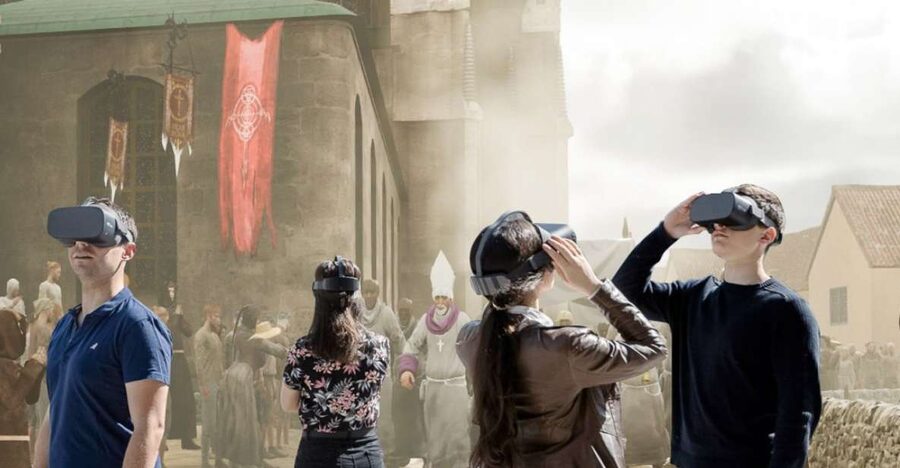
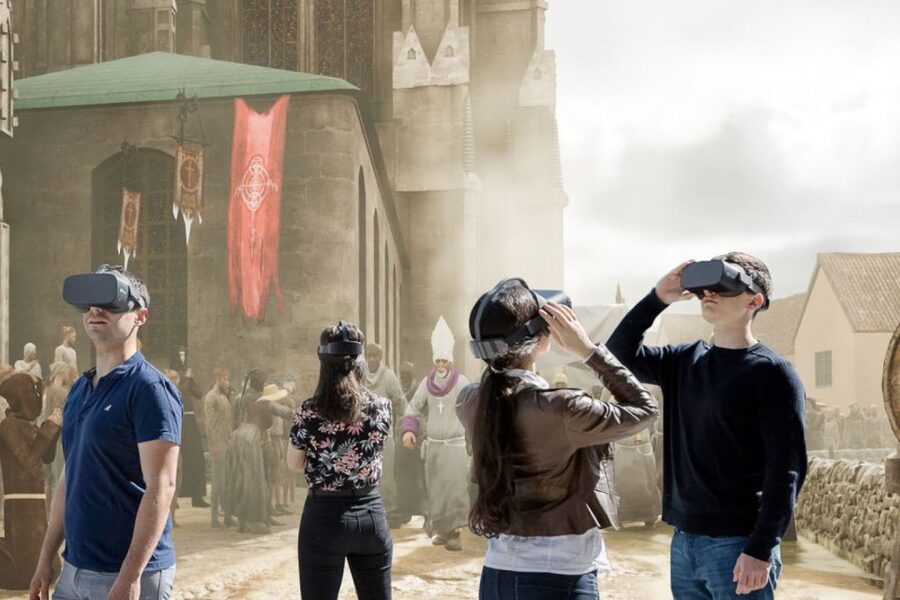
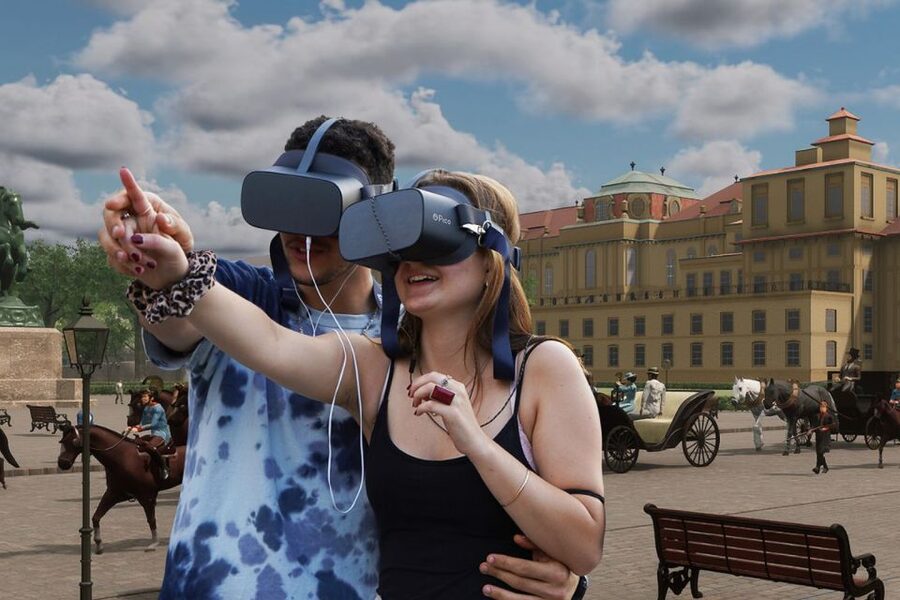
The headset is not worn for the entire walk. You listen to the audioguide and the guide while moving through the streets, then stop at selected points to view a virtual scene. This rhythm is important. If you expect constant VR action, you may find the walking sections slow. If you want time to look at the real city, the balance works well.
A few more Vienna days worth a look
- Vienna: Vivaldi’s Four Seasons Concert in Karlskirche
★ 4.7 · 14,951 reviews - Vienna: Spanish Riding School Training
★ 3.9 · 9,281 reviews - Vienna: Skip-the-cashier-desk-line Giant Ferris Wheel Ride
★ 4.5 · 7,859 reviews
Neuer Markt and the 1483 White Sunday procession
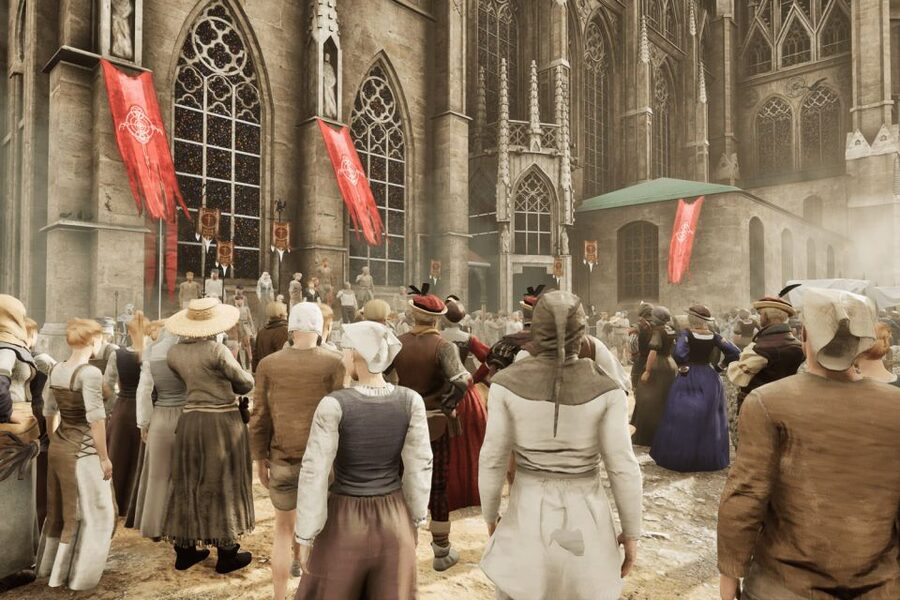
The first historical scene takes you to White Sunday in 1483. On this rare occasion, religious ornaments were brought out and shown to the public, and the virtual view places you inside the procession.
This scene helps explain how public religious life once filled the city center. Instead of hearing only dates and names, you see a crowd moving through the same urban core that you are walking through today. The 360-degree format lets you look around rather than stare at a fixed screen.
The scene also sets the pattern for the rest of the tour: a real location, a short historical event, and a visual reconstruction. The effect is strongest when you first remove your modern surroundings and then return to the present street.
The 1683 Ottoman siege and Vienna under attack
The next stop takes you into the second Ottoman siege of Vienna in 1683. You take cover as the Ottoman Empire attacks the city, a sharp change from the ceremony of the opening scene.
The value here is scale. A normal walking tour can point toward a street or building and explain what happened nearby. The headset gives you a view of the city under pressure, with the scene arranged around you. You can look in different directions and get a sense of the danger rather than simply hearing a military date.
The technology is not likely to satisfy anyone expecting modern cinema-quality effects. Some faces may appear indistinct, and the picture can look slightly soft. Still, the scene gives a useful visual break from standard commentary, especially if you have trouble picturing old battles from words alone.
The plague, Augustin, and Vienna’s dark humor
The plague section changes the mood again. You experience the darkness of the epidemic that killed half of Europe and hear about Augustin, a singer whose music and humor offered a way for Vienna to endure terrible times.
This is one of the more human scenes in the program. Siege scenes show public danger, while the plague section focuses on fear, loss, and the role of music in ordinary life. Augustin gives the story a local character, and his presence keeps the episode from becoming just another grim statistic.
The scene may feel more atmospheric than action-packed. That is not a weakness for everyone. If you enjoy stories about how people respond to disaster, this stop adds emotional weight. If you want the headset to show constant movement, the quieter presentation may feel limited.
A completely different way to spend a day here:
- Vienna: Schönbrunn Palace & Gardens Skip-the-Line Tour
★ 4.7 · 7,739 reviews - Vienna: Light of Creation Votive Church Immersive Light Show
★ 4.8 · 6,779 reviews - Vienna Spanish Riding School Guided Tour
★ 4.7 · 6,765 reviews - Vienna: Classical Concert in the World-Famous Musikverein
★ 4.6 · 6,673 reviews
The Hofburg, Sisi, and Franz Joseph
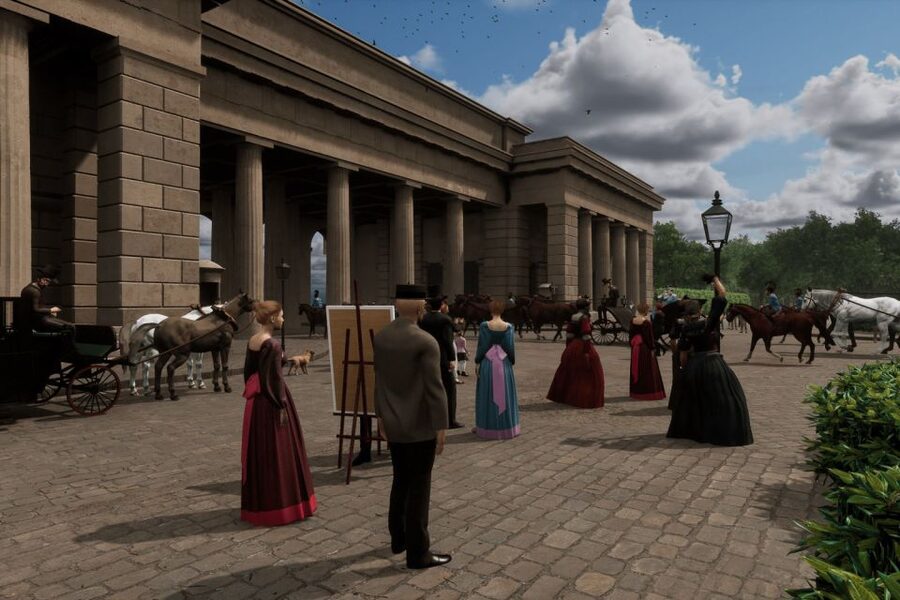
Near the Hofburg, the tour shifts to the Habsburg era. On a sunny day, you see Empress Sisi and Emperor Franz Joseph II on a hunting trip. The scene places you close to the road, with a playful invitation to wink as they pass.
This is a lighter moment after the siege and plague. It also gives you a glimpse of imperial Vienna as performance and public image. The road is not just a route from one palace building to another. It becomes a place where rulers could be seen by the public.
The Sisi section will appeal to anyone curious about Vienna’s imperial identity, but it is brief. Do not expect a full biography of the empress or an extended palace tour. Think of it as a moving snapshot that adds personality to the city’s formal Habsburg image.
The Opera and Vienna in the 1920s
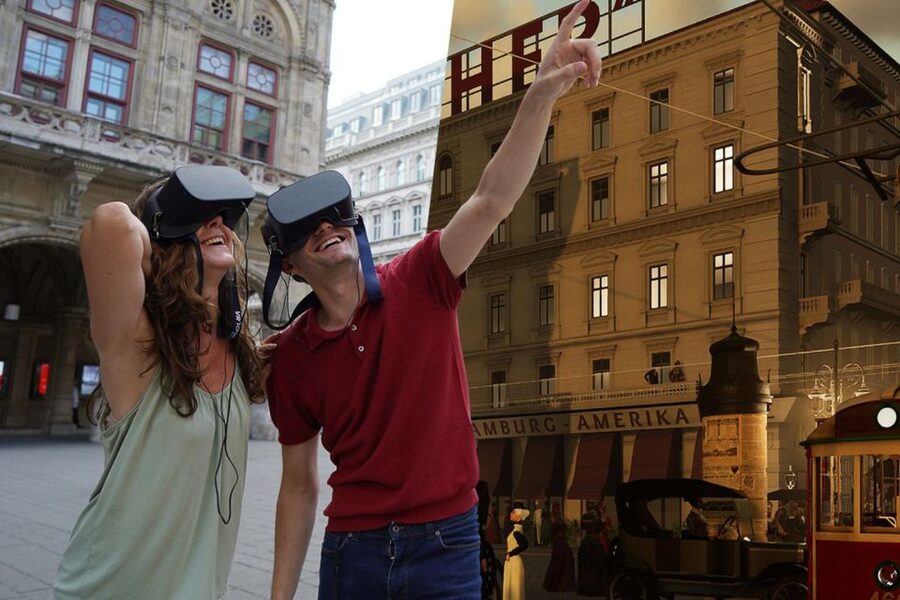
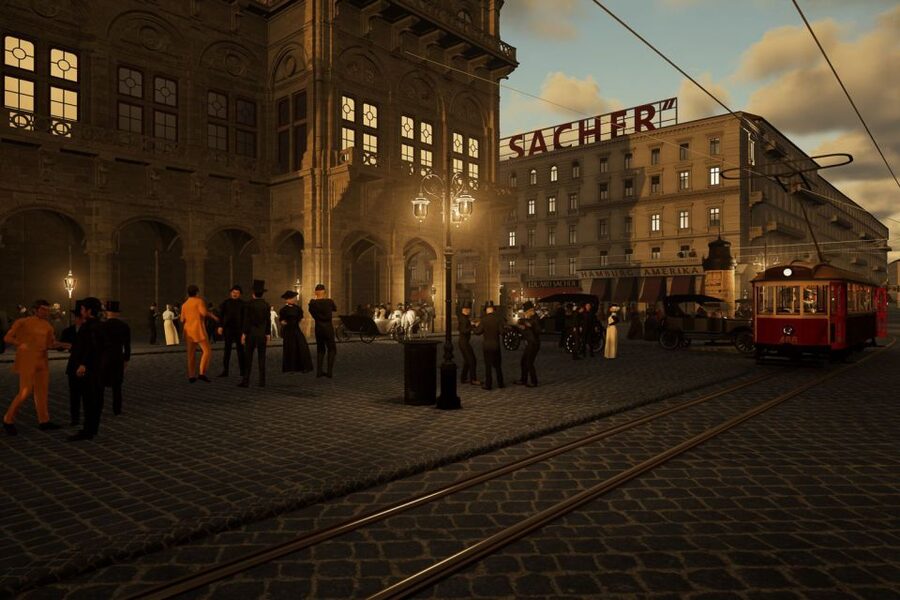
At the Opera, you enter Vienna during the golden 1920s and see preparations for an opera performance. This is the most recent prewar scene in the sequence, and it brings the city into a period of fashion, theater, and public entertainment.
The location does much of the work. The Opera is already one of Vienna’s key landmarks, so seeing its surroundings in another era helps you connect the building to daily cultural life. The audio commentary fills in the broader setting while the VR scene supplies the visual change.
This part has drawn the clearest criticism. One visitor felt it did not show enough dancing or period clothing, and another thought the VR content overall could be more engaging. I would keep expectations modest: you get a short historical street scene, not a fully populated theatrical production.
St. Stephen’s Square and the final wartime scene
The final scene takes place at St. Stephen’s Square during the last month of World War II. You see St. Stephen’s Cathedral burn and watch Soviet forces drive the last German soldiers out.
It is a powerful ending because the location is so familiar and central to modern Vienna. The cathedral is one of the city’s defining sights, and the scene reminds you that this square has also carried the marks of destruction and political upheaval.
The wartime sequence gives the tour a clear arc. You begin with a religious procession, pass through siege and disease, visit imperial Vienna and the 1920s, then finish with a city damaged by war. The tour does not treat Vienna as a place frozen in palace elegance. It shows a capital repeatedly reshaped by crisis.
You finish at the Albertina, so the route works well as a starting point for further sightseeing. You can continue toward the Hofburg, the Opera, or other central sights after the tour, depending on your plans.
What the guides and audio add
The technology gets the attention, but the human guidance determines how useful the tour feels. The live guide handles the equipment, keeps the group moving, and explains what you are seeing. Julian has guided in both English and German, and Dr. Reiner has been singled out for being helpful and clear.
The group may include more than one language. One visitor found that switching between German and English made the presentation harder to follow. If you understand both languages, this may not bother you. If you speak only one, listen carefully at the start and confirm which audio option you should use.
The included audio guide covers English, Spanish, Dutch, French, Italian, and Russian. That makes the tour more accessible for international visitors, while the live guide remains available in English or German. Earphones are included with the VR glasses, so you do not need to bring special equipment.
Is $45 a fair price?
At $45 per person, this is more expensive than a basic self-guided walk and likely more than a simple old-town orientation. You are paying for the guide, the equipment, the audio content, and the historical reconstructions.
The value is strongest if you want an unusual introduction to Vienna and learn best through images. In about 100 minutes, you cover several central landmarks and six time periods without arranging separate visits. The flat route also saves your energy for museums or evening plans.
The price is less convincing if you mainly want detailed architectural explanations or a long visit inside major buildings. This is not a palace admission, an opera tour, or a traditional specialist lecture. Much of the route takes place on public streets, and the VR scenes are short.
I would consider it good value on your first day, especially if you want the city’s basic layout before exploring on your own. It is also a sensible option for families with older children, provided everyone meets the age requirement and is comfortable with the equipment.
Who will enjoy this most?
I would recommend the tour to first-time visitors who want a quick orientation with a clear storyline. It gives you names, places, and major turning points, then leaves you in the center of Vienna with the rest of the day still free.
It also suits people who enjoy new technology but do not want to spend the whole day indoors. You walk through the actual city, then use the headset at specific points. That mix keeps the experience connected to Vienna rather than turning it into a generic VR attraction.
History fans should enjoy the range of subjects, from medieval religion to World War II. The tour is less suitable for someone seeking deep detail on one period. Six scenes in 100 minutes means each topic gets only a short treatment.
Children under eight cannot take part, and the tour is not suitable for people with epilepsy. The route is wheelchair accessible and flat, which makes the street portion easier for visitors with limited mobility. Weather can still affect the activity. Heavy rain or storms may lead to cancellation, sometimes at short notice.
How to decide before you book
Book this tour if you like visual storytelling, want a first look at Vienna, and are happy with a blend of walking and short VR stops. The best reason to choose it is the way familiar places shift between past and present.
Skip it if your main goal is polished, cutting-edge computer graphics or a long traditional lecture. The scenes can look dated, and the 1920s section in particular may feel underdeveloped. You should also choose a dry period of the day if possible, since bad weather can affect the route.
At the end, you will not know every chapter of Vienna’s past. You will know why several central places matter, and you will have a visual memory of the city under siege, under imperial rule, at the Opera, and during wartime. For many first visits, that is a useful start.
FAQ
Where does the tour begin?
The tour begins at Neuer Markt 6 in Vienna. Look for the turquoise entrance and arrive 15 minutes before the start time.
Where does the tour finish?
The tour finishes at the Albertina.
How long is the experience?
The duration is about 100 minutes. The guided route may take about 105 minutes, and it covers 3.2 kilometers.
What languages are available?
The live tour guide speaks English or German. The included audio guide is available in English, Spanish, Dutch, French, Italian, and Russian.
What does the tour include?
The tour includes the virtual reality glasses and earphones for the audio guide. Food and drinks are not included.
Is the route suitable for wheelchair users?
Yes. The activity is listed as wheelchair accessible, and the route covers flat terrain.
Who should not take this tour?
The tour is not suitable for children under eight or people with epilepsy. It can also be canceled because of poor weather, including heavy rain or storms.
Just added around Vienna
- Vienna: UNESCO Schönbrunn Palace Guided Tour with Entry★ 4.5 · 94 reviews
- World War II History Vienna Old Town Private Walking Tour★ 4.8 · 9 reviews
- Vienna: Winery and Wine Tasting Tour with a Wine Expert★ 5.0 · 5 reviews
- Vienna: Wine Tasting E-Bike Tour★ 4.9 · 46 reviews
- Vienna: Wine Tasting at Schönbrunn Palace★ 4.3 · 71 reviews
- Vienna: Wine Tasting Tour★ 4.8 · 61 reviews
- Vienna: Wachau Valley Private Kayak and Wine Tour★ 5.0 · 3 reviews
- Vienna: Wiener Schnitzel and Strudel Cooking Class★ 4.9 · 126 reviews
Tours, compared.
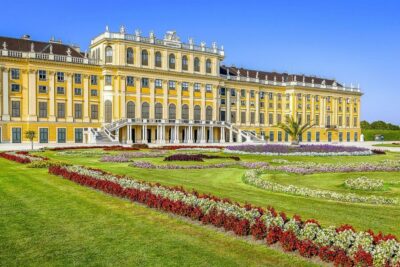
Schönbrunn Palace & Gardens Skip-the-Line Tour
Read our review →

Skip-the-Line Sisi Museum, Hofburg and Gardens Tour
Read our review →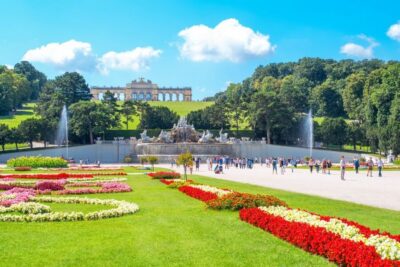
Skip-the-Line Schönbrunn Palace & Gardens Tour
Read our review →
Guided Walking Tour of City Center Highlights
Read our review →