
Reviewed · 2-HOUR EXPERIENCES
Vienna’s Highlights in two hours (two options)
Vienna’s Greek Quarter is a small area with an outsized story. In two hours, you’ll move from plague legends and medieval science to Greek merchants, early printing houses, Habsburg politics, and Art Nouveau facades most visitors pass without noticing. The tour is led by Nicole from RAXI Tours, with a headset so you can hear her clearly.
I like the way this walk connects buildings to people and stories, rather than treating the old center as a string of pretty facades. I also like the practical pace: little walking, private guiding, and a useful illustrated map at the end. The main limitation is that this is a surface-level city walk, not an underground tour, and visitors using wheelchairs cannot take part.
Key points at a glance
- The Greek Quarter reveals a less familiar Vienna: Learn how Greek merchants, intellectuals, printers, musicians, and patrons shaped this corner of the first district.
- Augustin’s plague legend gives the walk a human face: Hear how a local figure became linked with hope during one of Vienna’s darkest periods.
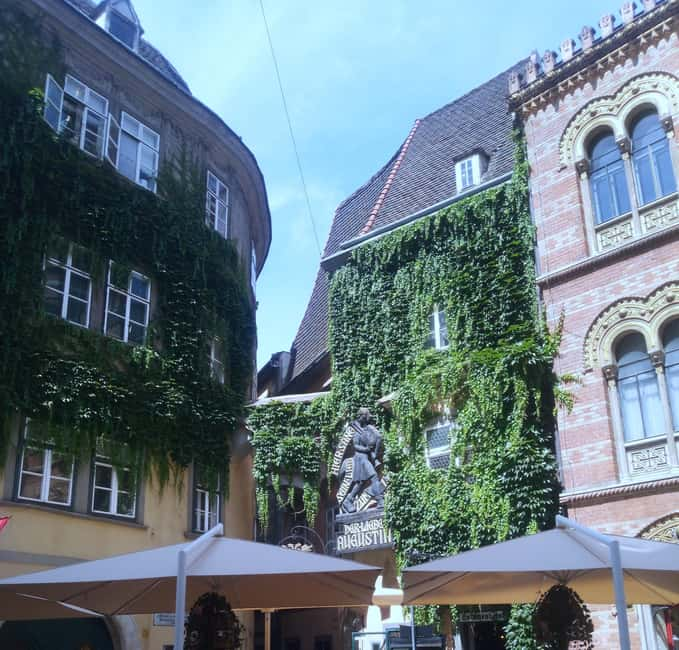
- Look up at overlooked Art Nouveau: Fleischmarkt offers striking early twentieth-century architecture that many city walks skip.
- The oldest residential tower adds a medieval note: This stop helps you picture how compact and layered old Vienna once was.
- Schönlaterngasse and Lugeck tie stories to streets: Expect legends about a basilisk, alchemists, printers, and the early Habsburg period.
- Private guiding keeps the route flexible: Nicole can answer questions in English, German, or Italian, and optional pickup can begin at your hotel or an agreed public transport station.
Why this short walk feels different from a standard Vienna tour
Most first-time visits to Vienna focus on imperial palaces, grand boulevards, and famous concert halls. Those sights deserve their place, but this walk takes you into a more compact and surprising part of the historic center.
The Greek Quarter is linked to Vienna’s past in several ways. Greek merchants and intellectuals were active here in the eighteenth century, and the area became connected with the road toward Greek independence. Earlier still, printing houses operated nearby, while legends about alchemists and medieval scientists added a more mysterious layer.
That combination is the main reason I would choose this tour. You are not simply told that a building is old. You learn how it fits into a chain of events involving trade, religion, science, music, publishing, and politics.
The tour also gives you a useful way to read Vienna. Look at the facade, then ask who lived there, who paid for it, what business took place inside, and which old story became attached to it. Nicole’s approach, as described for this experience, follows that pattern closely.
A few more Vienna days worth a look
- Vienna: Romantic Old Town 2-Hour Discovery Tour
★ 4.7 · 816 reviews - Vienna: 2 Hours Sightseeing Walking Tour
★ 4.8 · 332 reviews - Vienna: 2-Hour Historical Crimes Guided Walking Tour
★ 4.8 · 130 reviews
Meeting near Stubentor and choosing your start
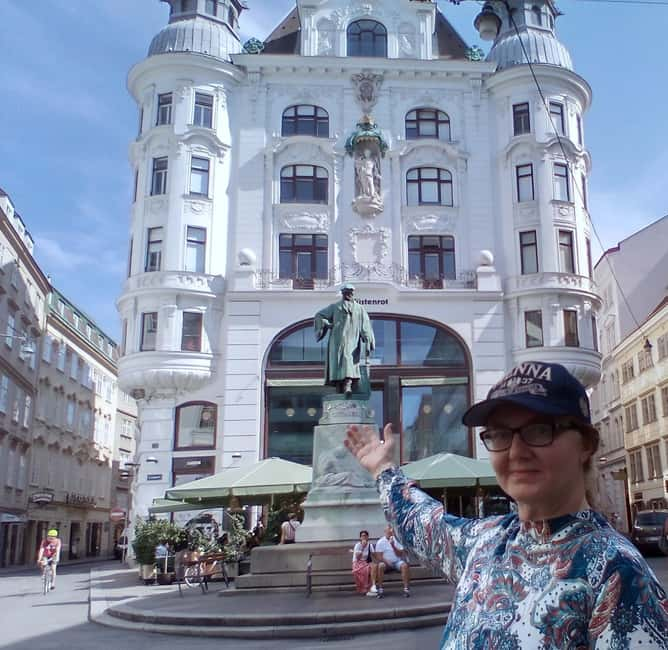
The usual meeting point is near the Dr. Karl Lueger monument, close to the Stubentor subway station. This is a practical place to begin because it puts you near the historic first district without forcing you to cross the whole city on foot.
There are two options for the experience, and the exact starting arrangement depends on the option you select. Pickup is also available, but it is not a private car or bus transfer. Nicole can meet you in your hotel lobby or at an agreed public transport station, then use Vienna’s public transport to reach the historic center.
That distinction matters. If you are expecting a vehicle to collect you, this is not that kind of service. The pickup option is best understood as a meeting arrangement combined with public transport.
Starting times vary, so check availability for the date you want. The tour lasts two hours, which makes it easy to fit between a museum visit, lunch, or an evening concert. It is also short enough for a first orientation on arrival day, provided you are comfortable using public transport to reach the meeting point.
Fleischmarkt and the Art Nouveau details above eye level
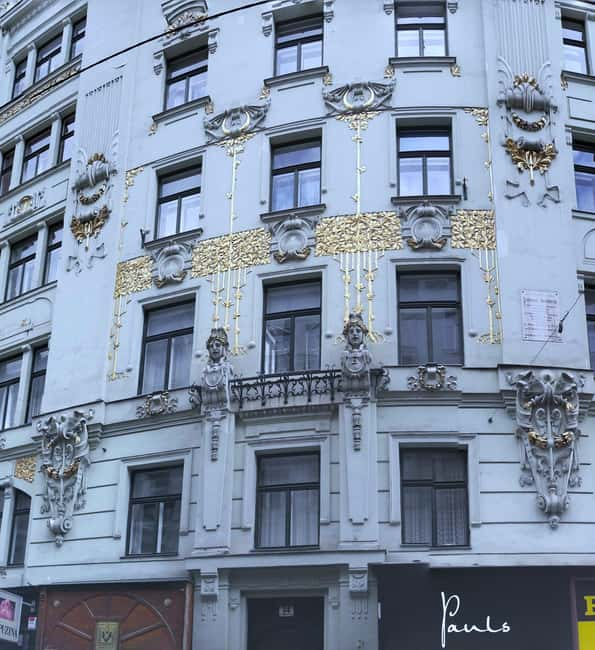
Fleischmarkt is one of the most rewarding parts of the route for anyone who likes architecture but does not want only the famous imperial buildings. Here, you examine Art Nouveau structures that are often missed by people hurrying toward better-known sights.
The value is not just visual. The facades are tied to the district’s earlier printing activity and to local legends. That gives you a reason to pause and look closely at details that might otherwise seem decorative or unrelated.
Art Nouveau in Vienna can be grand and polished, but this part of the city offers a more tucked-away version. The buildings belong to a street with older layers underneath, so the effect is not a single architectural period arranged neatly in a row. You are seeing a mixture of medieval traces, later commercial life, and nineteenth-century design.
Nicole uses a silent guide with headsets, which should help in a narrow or busy street. You will not need to crowd around her to catch every sentence. That is especially useful during a private tour, when questions can interrupt the normal flow without holding up a large group.
I would still bring comfortable shoes and dress for the weather. The route is described as easy and not strenuous, but it takes place outdoors and runs rain or shine.
Griechengasse and the Danube border story
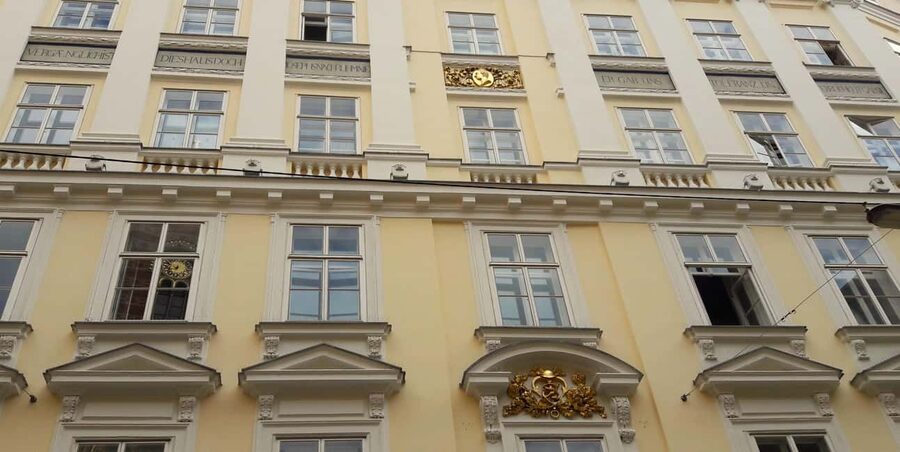
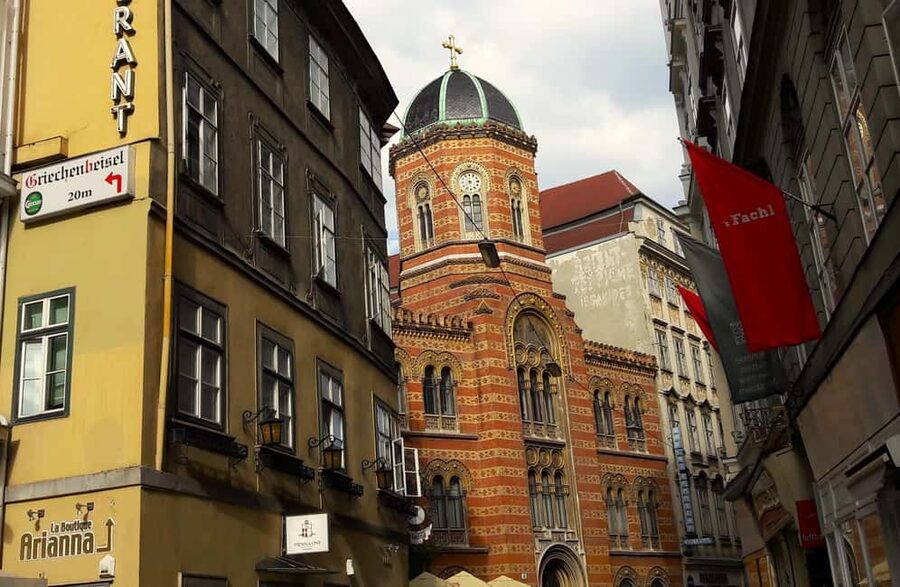
Griechengasse gives the walk its clearest connection to the Greek Quarter. The street recalls a time when Vienna’s relationship with the Danube mattered greatly to trade, movement, and the city’s edge.
The area is presented as a former border zone on the Danube. That helps explain why Greek merchants and intellectuals became active here. Vienna was not just an imperial capital looking inward. It was also connected to wider commercial and cultural routes.
You will hear about churches, taverns, and printing houses in this neighborhood. These are useful details because they make the Greek presence easier to picture. A church points to community life and worship. A tavern suggests conversation and trade. A printing house shows how ideas could circulate beyond the people who first discussed them.
The tour is particularly suited to you if you enjoy local stories that sit just outside the usual sightseeing route. It does not try to cover every major Vienna landmark. Instead, it uses a small district to explain how different communities and professions shaped the city.
A completely different way to spend a day here:
- Vienna: Vivaldi’s Four Seasons Concert in Karlskirche
★ 4.7 · 14,951 reviews - Vienna: Spanish Riding School Training
★ 3.9 · 9,281 reviews - Vienna: Skip-the-cashier-desk-line Giant Ferris Wheel Ride
★ 4.5 · 7,859 reviews - Vienna: Schönbrunn Palace & Gardens Skip-the-Line Tour
★ 4.7 · 7,739 reviews
Augustin, the plague, and the need for a good city legend
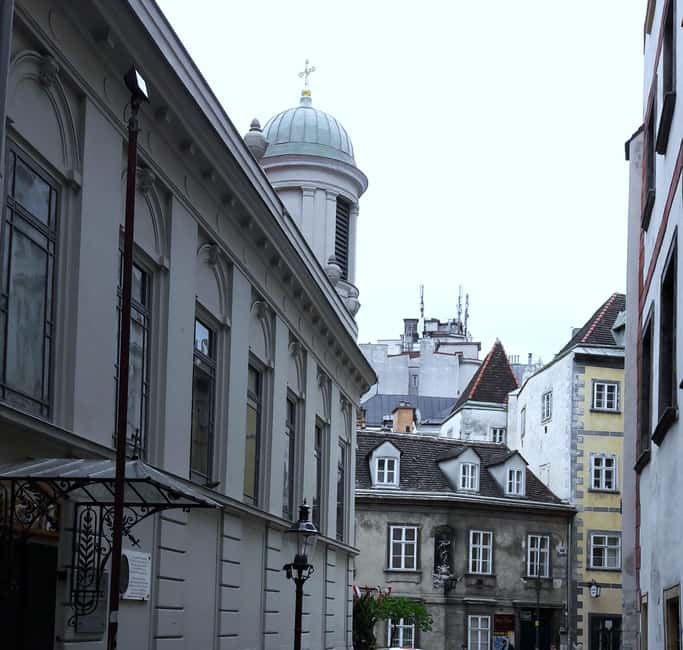
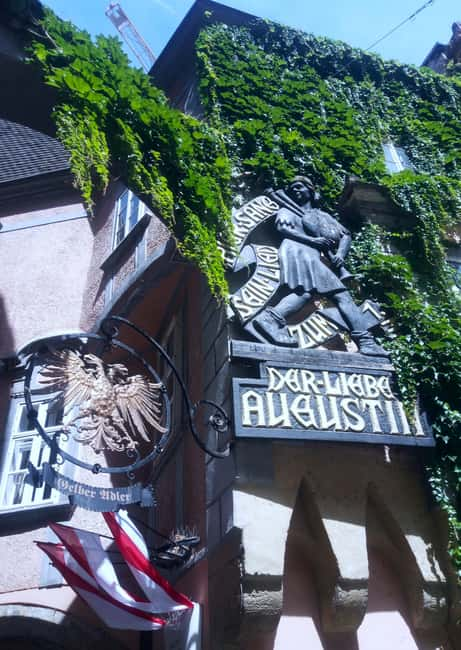
One of the tour’s central stories is the legend of Augustin. During the plague, Augustin became associated with giving people hope and helping them face a frightening period.
The important point is not simply whether every detail of the tale can be proven. Legends show what a community needed to remember about itself. In this case, the story brings warmth and humor to a period usually described only through death and suffering.
That makes Augustin a useful counterweight to Vienna’s formal imperial image. You move away from palaces and official portraits and hear about a figure remembered through popular tradition. It is one of the moments when the city feels less like a museum and more like a place where ordinary people built stories to survive hard times.
If you enjoy folklore, this part will likely stay with you. If you prefer only documented political history, you should know that legends are an important part of the route. Nicole connects them with streets and buildings, rather than presenting them as isolated fairy tales.
The oldest residential tower and medieval Vienna
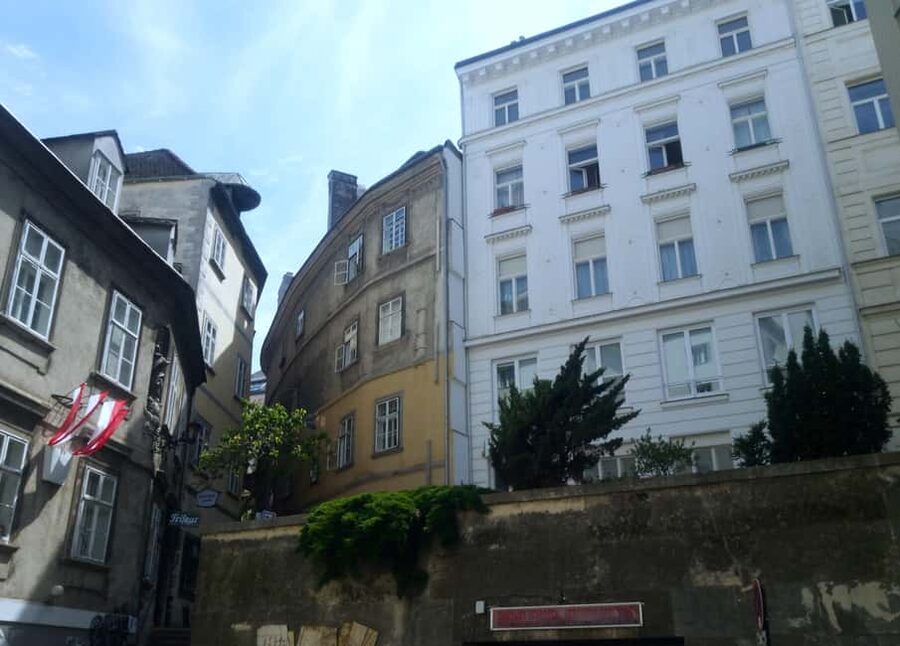
The route also points out what is described as Vienna’s oldest residential tower. That is a strong stop for understanding how the city developed before the broad nineteenth-century streets and grand public buildings most people associate with Vienna.
A tower built for residence gives you a different sense of medieval urban life. It suggests defense, status, limited space, and a city built upward as well as outward. You can compare that older vertical form with the later Art Nouveau buildings seen at Fleischmarkt.
The tour does not ask you to walk far between a long list of monuments. Instead, it places contrasting periods close together. In a short time, you can consider medieval housing, early printing, eighteenth-century Greek activity, and nineteenth-century design.
That is where a private guide earns the price. A guide can explain why a small feature matters, answer a question on the spot, and adjust the amount of detail to your interests. A self-guided walk can certainly take you through these streets, but it may not reveal the connections between them.
Schönlaterngasse and the basilisk legend
Schönlaterngasse adds another story-driven stop. The street is associated with the saga of the basilisk, one of Vienna’s better-known local legends.
The basilisk tale brings a touch of medieval fear to the route. Like the story of Augustin, it gives the old center a cast of characters and dangers that are easier to remember than a list of dates.
This is also a good place to notice the way legends cling to particular streets. A story becomes more vivid when you are standing in the setting connected with it, rather than hearing it in a classroom or reading it in a guidebook.
You should not book this walk expecting a theatrical performance or a staged attraction. The appeal is the guide’s interpretation of real streets, facades, and historical references. The experience remains a walking tour, with legends used to open up the past.
The route also touches on alchemists and medieval scientists. Those subjects add another mood to the walk. Vienna’s old center was not only a place of worship, trade, and government. It was also a place where people pursued uncertain scientific ideas, mixed observation with belief, and tried to understand the world with the tools available to them.
Lugeck, printing houses, and the Habsburg connection
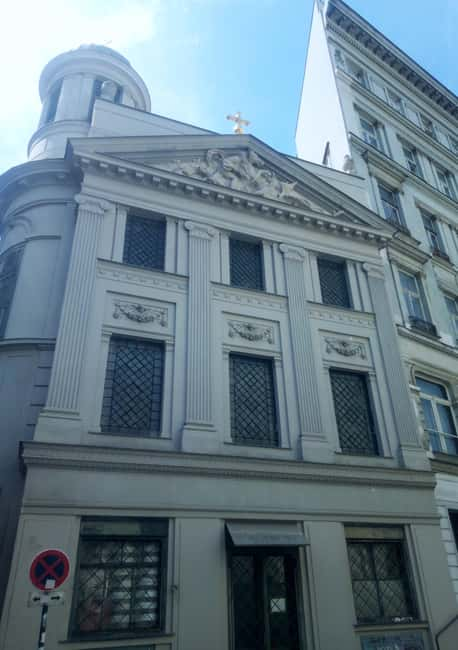
Lugeck helps tie the tour’s separate threads together. Here, the story of Vienna’s printing press connects with the early period of Habsburg rule and with local legends.
Printing changed who could share ideas and how quickly those ideas could travel. In a city shaped by monarchy, religion, commerce, and scholarship, printed material had serious cultural weight. You gain a better sense of why early printing houses matter when they are placed beside the city’s political development.
The route may finish at Lugeck 6 or continue toward the Austrian Parliament, depending on the selected option. The general meeting information also describes the activity as ending back at the meeting point, so check the exact route and end location when booking. This is a small but useful detail if you have a restaurant reservation or another timed activity afterward.
A stop at Lugeck also keeps the tour connected to the wider historic center. You are not left with a story about one isolated neighborhood. You see how this quarter links into Vienna’s larger civic and dynastic past.
The private format, headset, and walking effort
This is a private tour, so you do not share the guide with a large group. That gives you room to ask about a particular building, slow down for photographs, or request more detail about Greek history, architecture, printing, or legends.
A silent guide with headsets is included. The purpose is simple: you should hear Nicole clearly without standing shoulder to shoulder with her. I consider that a real practical advantage on city streets.
The walk is described as easy, with little walking and no strenuous sections. Still, it is not suitable for wheelchair users, and the tour takes place outdoors in all weather. Rain does not cancel the walk, so pack accordingly.
The experience is not an underground tour. If you are looking for tunnels, crypts, or subterranean chambers, choose a different activity. If you want an accessible surface walk with a slow pace, this may not meet your needs because wheelchair access is specifically excluded.
Is $24 a fair price for two hours?
At $24 per person, the price is reasonable if you value interpretation and a private format. You are paying for more than a route between streets. The guide connects the Greek Quarter, the plague legend, the basilisk, Art Nouveau, early printing, and Habsburg history into one manageable walk.
The value is strongest for first-time visitors who want context but have limited time. Two hours will not cover all of Vienna, but it can give you a clear sense of one district and help you notice details later when exploring alone.
It is also a sensible choice for repeat visitors who have already seen Schönbrunn Palace, the Hofburg, and the major museums. You will not get another broad survey of famous sights here. Instead, you get a narrower route with unusual subjects.
The price is less compelling if you only want landmark photographs or a fast introduction to Vienna’s imperial center. You could walk through many of these streets without a guide. The difference is the storytelling and the connections between places.
A useful extra is the illustrated map given at the end. It can help you recognize buildings and plan your own route around the historic center afterward. That makes the activity more useful than a pleasant walk that disappears from memory as soon as it ends.
Who should book this Vienna walk?
I would recommend it to:
- You, if you enjoy architecture that is easy to miss.
- Couples or families who prefer a private guide to a large group.
- History fans interested in printing, Greek communities, medieval science, and the Habsburg period.
- Visitors who want a gentle two-hour activity rather than a demanding walking tour.
- Repeat visitors looking for a less familiar side of central Vienna.
- Anyone who likes folklore and wants stories tied to real streets.
I would hesitate to recommend it if you need wheelchair access, want a vehicle pickup, or expect to enter underground sites. I would also choose a different tour if your main goal is to see Vienna’s grandest palaces and celebrated monuments.
English, German, and Italian are available. Free cancellation is offered up to 24 hours before the activity, and you can reserve now and pay later, which helps if your schedule is still shifting.
Should you book it?
Book this tour if you want Vienna explained through small streets, local legends, and architectural clues rather than through a checklist of major sights. The Greek Quarter, Augustin, the basilisk, the old residential tower, and the lesser-known Art Nouveau buildings give the two hours a clear identity.
I especially like it for a first or second day in Vienna, when a private guide can help you get your bearings before you explore on your own. Nicole’s illustrated map is a useful parting tool, and the gentle pace suits anyone who wants substance without a long march.
Skip it if you need an accessible route, a bus or car pickup, or an underground experience. For everyone else, $24 buys a focused slice of Vienna with plenty of stories to carry into the rest of your visit.
FAQ
How long does the Vienna highlights tour last?
The tour lasts two hours. Starting times vary, so check availability for your preferred date.
Where does the tour meet?
The usual meeting point is near the Dr. Karl Lueger monument close to the Stubentor subway station. Optional pickup can be arranged at your hotel or at an agreed public transport station.
Is hotel pickup included?
Pickup is optional and uses public transport to reach Vienna’s historic first district. The provider does not offer pickup by car or bus.
Which languages are available?
The tour is available in English, German, and Italian.
Is the tour suitable for wheelchair users?
No. The activity is not suitable for wheelchair users.
Can I cancel for a refund?
Yes. You can cancel up to 24 hours in advance for a full refund. You can also reserve now and pay later.
Just added around Vienna
- Vienna: UNESCO Schönbrunn Palace Guided Tour with Entry★ 4.5 · 94 reviews
- World War II History Vienna Old Town Private Walking Tour★ 4.8 · 9 reviews
- Vienna: Winery and Wine Tasting Tour with a Wine Expert★ 5.0 · 5 reviews
- Vienna: Wine Tasting E-Bike Tour★ 4.9 · 46 reviews
- Vienna: Wine Tasting at Schönbrunn Palace★ 4.3 · 71 reviews
- Vienna: Wine Tasting Tour★ 4.8 · 61 reviews
- Vienna: Wachau Valley Private Kayak and Wine Tour★ 5.0 · 3 reviews
- Vienna: Wiener Schnitzel and Strudel Cooking Class★ 4.9 · 126 reviews
2-Hour Experiences, compared.
Jewish Life in Leopoldstadt 2-Hour Walking Tour
Read our review →
Browse the lists this tour appears in