
Reviewed · WALKING TOURS
Graz Private Walking Tour
Graz’s appeal is its sharp contrast: a medieval center shaped by Habsburg power, then a leap into bold modern design at the Kunsthaus. This private walk ties those pieces together, starting near the Hauptplatz and reaching the old town, Landhaushof, and the Schlossberg view.
I like the private format, which lets your group focus on the subjects that matter most, and I like the mix of imperial history with modern architecture. Guide Leo is also singled out for interesting stories and practical suggestions for the rest of the day. The main drawback is time: 90 minutes goes quickly, and entrance fees are not included.
Key points to know before you book
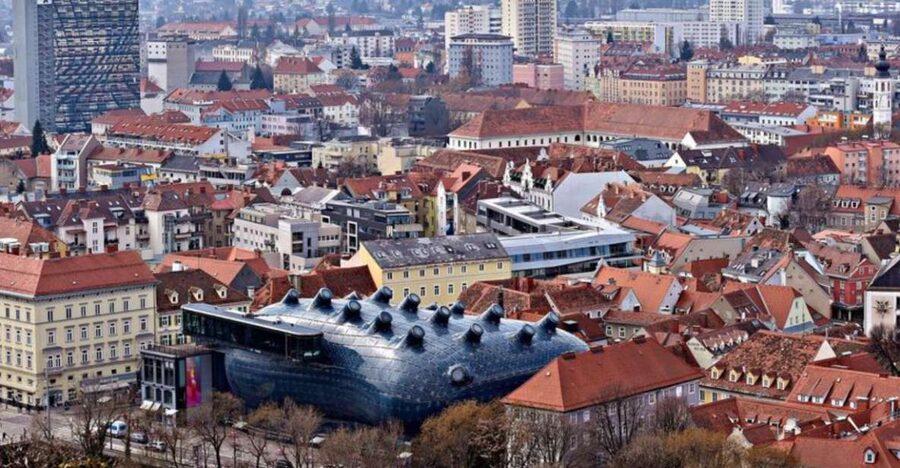
- Schlossberg sets the scene: Begin with a view toward the hill and Graz’s medieval roots.
- Hauptplatz packs in detail: The central square brings together the Town Hall, old merchant houses, a pharmacy, a palace, and Archduke Johann’s 1878 fountain.
- Landhaushof adds Renaissance drama: Its courtyard was the first of its kind in Graz.
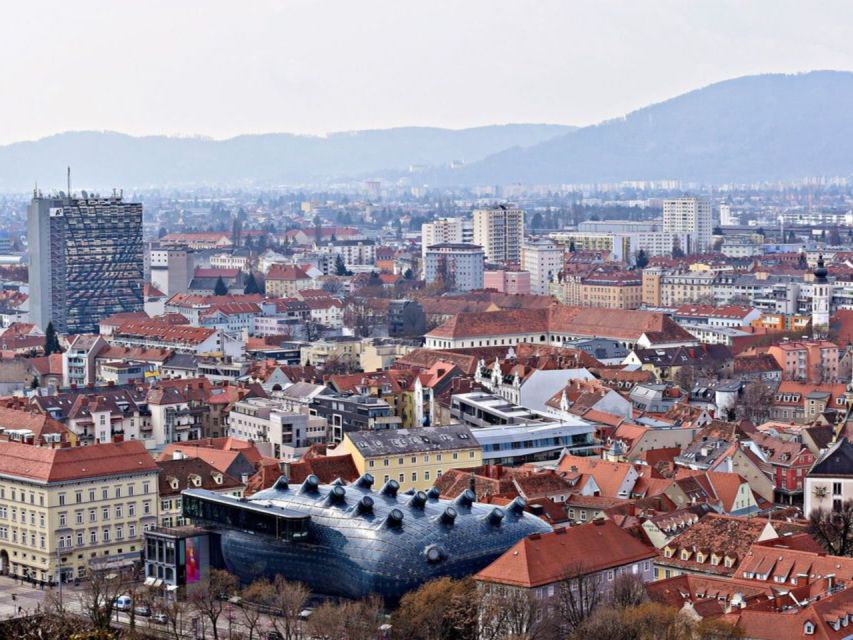
- Kunsthaus changes the mood: The blob-like building offers a striking modern counterpoint to the old town.
- Private guiding keeps it personal: One group of up to 15 people stays with its own local guide.
- Best for a first look: The tour gives you a strong historical framework, but not time for long interior visits.
Graz in 90 minutes: what this walk is really about
Graz can be hard to read at first. Its old center has narrow lanes, grand façades, religious landmarks, political buildings, and newer cultural spaces packed close together. This tour helps you see the connections instead of treating each building as an isolated photo stop.
You will look at Graz as a former Habsburg residence, a seat of Styrian political life, and a city that now takes design and culture seriously. That broad view matters because the city’s character comes from the tension between old and new.
The walk is also a useful introduction to local names and symbols. Graz’s name comes from an old Slavic word meaning small city, while its later role under the Habsburg dynasty gave it a much grander political and architectural profile. The tour brings both ideas into the same picture.
The guide speaks English or German, and the group is private. That is a practical advantage if your party has different interests. You can ask about religion, politics, architecture, music, or modern art without sharing the guide’s attention with strangers.
More Walking Tours in Graz:
- Graz: Old Town Highlights Private Walking Tour
★ 4.6 · 16 reviews - Graz Private Walking Tour With A Professional Guide
★ 5.0 · 5 reviews - Graz Old Town Highlights Private Walking Tour
★ 5.0 · 4 reviews
Meeting the city at Hauptplatz
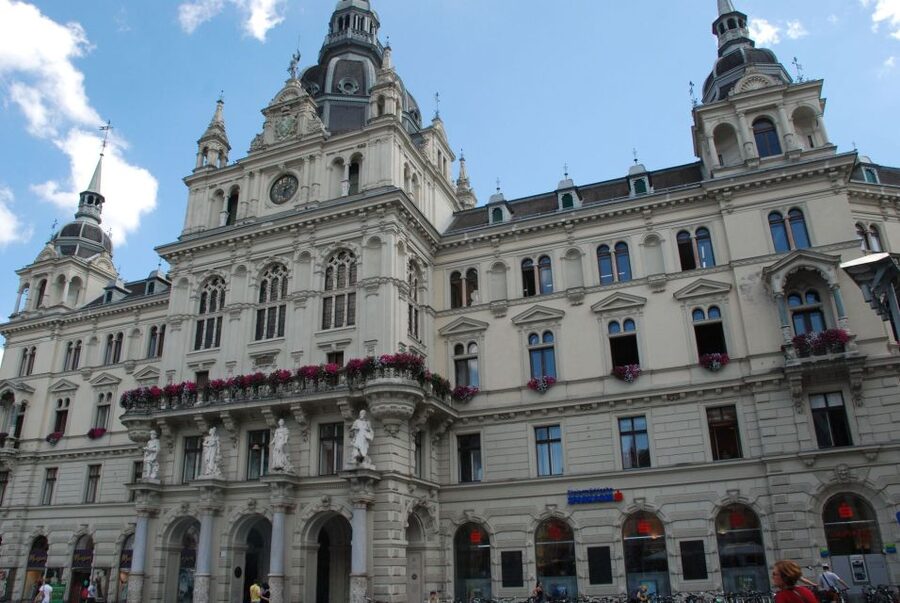
The meeting point is beside the fountain in the middle of Hauptplatz, at Hauptpl. 1. This is a sensible place to begin because the square gives you an immediate sense of Graz’s civic importance.
The Town Hall dominates the space today. Around it, several buildings reveal how trade, religion, government, and daily life once overlapped in the city center. You are not simply looking at a pretty square. You are seeing the place where Graz presents its public face.
The square’s details reward close attention. The 17th-century Luegg House is known for its elaborate stucco façade, while the five-story White House features a sandstone relief of the Virgin Mary. These buildings bring different layers of Graz together, from decorative urban wealth to religious imagery.
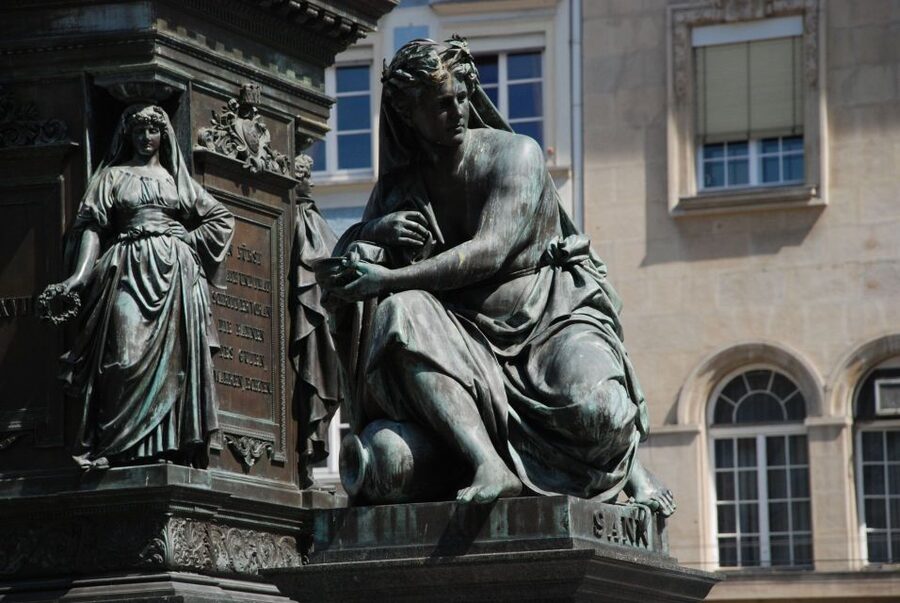
The fountain and statue of Archduke Johann date from 1878. His presence points to the city’s connection with Habsburg-era power and the later memory of important imperial figures. A guide can make this kind of monument easier to understand, especially if you are not already familiar with Austrian history.
Because the tour lasts only 90 minutes, expect an exterior-focused walk. You will see and discuss the buildings from the street rather than spend long periods inside them. That keeps the pace moving, but it also means this is not the right choice if you want detailed museum visits or extended architectural study.
Reading Graz through its Habsburg past
Graz’s time as an imperial residence is one of the main reasons its center feels more substantial than its size might suggest. The city was not just a local market town. It played a role in the political world of the Habsburg dynasty, and that role left its mark on public buildings, courtyards, monuments, and religious sites.
The tour also introduces the Styrian Diet and its influence. The Diet was tied to the political life of Styria, so this part of the walk helps explain how local government and regional power worked. You will get a better sense of why certain buildings look formal and imposing, even when the surrounding streets feel intimate.
Religion and politics are not treated as separate subjects here. The Virgin Mary relief on the White House, the presence of churches and religious references in the old center, and the city’s political buildings all belong to the same story. Graz’s architecture reflects the people and institutions that had money, authority, or spiritual influence.
I find this approach more useful than a simple list of dates. You learn to ask who commissioned a building, what it was used for, and why its decoration mattered. In a city with so many layers, those questions help turn façades into evidence.
The Eagle Pharmacy and Palais Sturgkh
The 16th-century Eagle Pharmacy is another reminder that the old town was a working city, not a preserved stage set. Its name and age connect everyday commerce with the long history of the center.
Nearby, the 14th-century Palais Sturgkh brings an earlier architectural layer into view. The palace helps show how Graz developed over time, with later periods added around older foundations and street patterns. The compact distance between these sites makes the walking format especially effective.
You will not need transportation between the main points described for the tour. The experience is built around seeing the center on foot, at street level, where you can notice façades, courtyards, narrow lanes, and changes in architectural style.
Wear comfortable shoes. Graz’s historic center is best understood by walking, and even a short route can feel tiring if your footwear is poor. The tour is not described as physically demanding, but the practical advice is worth taking seriously.
A few more Graz days worth a look
- Kunsthaus Graz Museum Entrance Ticket
★ 3.5 · 19 reviews - Universalmuseum Joanneum Pass in Graz
★ 4.0 · 14 reviews - Fun & mobile scavenger hunt through Graz
★ 4.5 · 12 reviews - Graz city tours
★ 3.5 · 9 reviews
Landhaushof and Graz’s Renaissance courtyard
Landhaushof is one of the most rewarding stops on the route. Its Renaissance courtyard was the first of its kind in Graz, giving the stop both architectural and local importance.
Courtyards often tell a different story from street façades. From the square, a building may look formal and defensive. Inside, the design can be lighter, more ordered, and more theatrical. Landhaushof gives you that change of mood without needing a long museum visit.
This is also where the political story of Styria becomes easier to picture. The building is tied to the region’s public life, and its Renaissance design reflects the ambitions of the people and institutions who used it. You get a sense of how architecture could signal status and authority.
For photography, the courtyard should be one of the more memorable locations on the walk. Still, do not expect a long pause designed solely for pictures. The guide needs to keep the group moving through the rest of the itinerary, especially with only 90 minutes available.
From old-world façades to the Kunsthaus
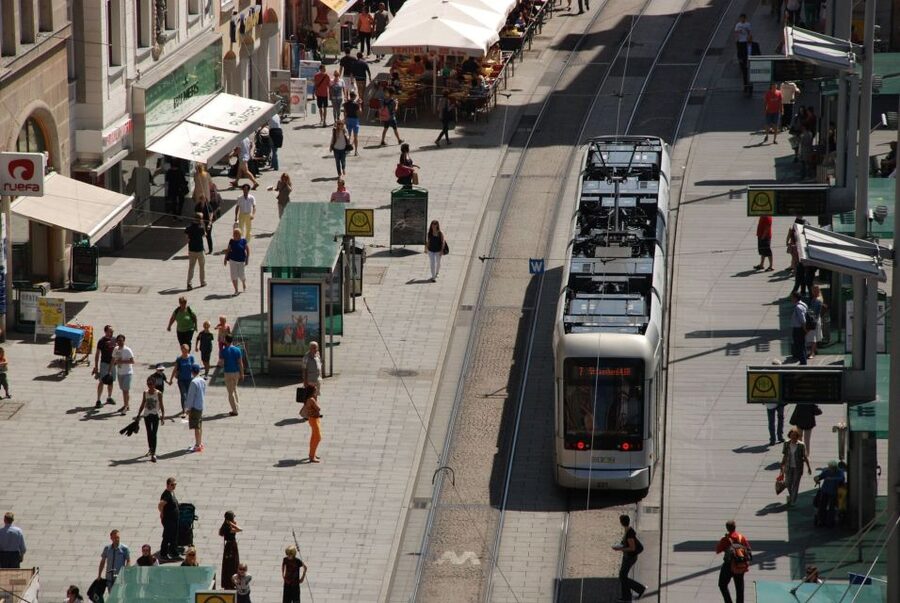
The Kunsthaus is the tour’s sharpest change of pace. After historic façades, Renaissance architecture, and Habsburg associations, you return to the 21st century at Graz’s newest exhibition venue.
Its blob-like ultramodern form is deliberately unlike the older buildings around it. That contrast is part of the point. Graz is not only preserving its old town. It is also using bold design to express its present-day cultural identity.
The Kunsthaus helps explain why Graz is known as a UNESCO City of Design. You do not need to be an architecture specialist to appreciate the visual argument: the old and new can share one city without becoming identical.
The stop is especially valuable for visitors who might otherwise assume Graz is mainly a historic destination. Its cultural life includes modern art and contemporary design, and the Kunsthaus gives that side of the city a clear landmark.
Entrance fees are not included, so check your priorities before booking. The walking tour can show you the building and explain its place in Graz, but any paid interior visit would be a separate expense. With limited time, you may prefer to admire the exterior now and return later if the exhibition program interests you.
Why the private group format matters
The tour costs $289 per group of up to 15 people. At full capacity, that works out to about $19 per person, though a smaller group will pay more per person. The price makes the most sense for families, couples traveling with friends, or a small organization that wants a guide to itself.
A private group can also make the history more relevant. If your group is interested in Habsburg politics, the guide can spend more time there. If modern design is your priority, you can ask about the Kunsthaus and Graz’s design identity. If you are traveling with children, shorter explanations and visual details may work better than a standard group script.
The trade-off is that a private tour is not automatically a better value for one or two people. If you are traveling alone or as a couple and mainly want basic orientation, the total price may feel high for 90 minutes. For a larger party, the same price becomes easier to justify.
The format is also useful at the start of a stay. Guide Leo’s suggestions helped one booking party plan the rest of its day, and that is exactly how you should use a short private walk: learn the layout, identify the places you want to revisit, then continue independently.
What this tour does well, and what it leaves out
The strongest part of the experience is its range. In a short time, you move from medieval Graz and Slavic merchants to Habsburg rule, the Styrian Diet, Renaissance architecture, religious symbols, public monuments, and modern art.
That range keeps the walk from becoming a narrow architecture lesson. You get political context, cultural background, and visual variety. The guide’s stories are important here, since the buildings alone cannot explain all of Graz’s religious and civic history.
The limitation is depth. You will not get a long examination of every site, and there is no included entrance to a museum or exhibition. The tour gives you a framework and a first look. You will need another visit if you want extended time inside the Kunsthaus or a detailed study of specific interiors.
The old town is a UNESCO World Heritage site, recognized in 1999, and one of the best-preserved historic districts in central Europe. That status explains why the walk feels rewarding even when you are simply moving from one street to the next. The setting itself carries a strong sense of continuity.
Graz also has modern identities beyond its imperial past. It is called a City of Human Rights and Austria’s Culinary Capital, as well as a City of Design. This tour focuses mainly on history, architecture, politics, religion, music, and art. It is not a food tour, so plan a separate meal if culinary Graz is high on your list.
Who should book this Graz walk
I would recommend it to first-time visitors who want a clear introduction without spending half a day on a formal sightseeing program. It also suits anyone who enjoys seeing how a city’s past shapes its present.
The tour works particularly well for:
- Families or friend groups that want a guide to themselves
- Visitors interested in Habsburg history and regional politics
- Architecture fans who like Renaissance courtyards and modern design
- People with only a short stay in Graz
- English or German speakers who prefer a live guide
- Larger groups that can share the $289 rate
You may want another option if you need wheelchair-specific details, long indoor visits, or a tour centered on food. Those points are not specified here, so ask the provider before booking if they affect your plans.
Free cancellation is available up to 24 hours in advance for a full refund, and you can reserve now and pay later. That gives you some flexibility, especially when your arrival time in Graz is not yet fixed. Starting times depend on availability.
Should you book the Graz Private Walking Tour?
Book it if you want a short, private orientation that connects Graz’s Habsburg past with its modern design culture. The route has enough variety to keep the 90 minutes interesting, and the city center provides plenty to see without transportation or complicated planning.
The value is strongest for groups of several people. You will get a local guide, a focused route through the historic center, and useful direction for exploring afterward. Guide Leo’s practical suggestions are a good reminder that the tour can serve as the first chapter of a longer day in Graz.
Skip it if you want museum entry, a food-focused experience, or a slow architectural study. For everyone else, especially a private group arriving in Graz for the first time, this is a sensible way to get your bearings and understand why the city feels both imperial and contemporary.
FAQ
Where does the Graz Private Walking Tour meet?
The meeting point is next to the fountain in the middle of Hauptplatz, at Hauptpl. 1, 8010 Graz, Austria.
How long does the tour last?
The walking tour lasts 90 minutes.
How much does the private tour cost?
The price is $289 per group of up to 15 people.
What languages does the guide speak?
The tour is available with a live guide in English or German.
Are entrance fees included?
No. Entrance fees are not included in the tour price.
Is the tour private?
Yes. It is a private group experience, and the guide is with your group only.
Can I cancel the booking?
Yes. You can cancel up to 24 hours in advance for a full refund. You can also reserve now and pay later.
Just added around Graz
- Graz city tours★ 3.5 · 9 reviews
- Graz Scavenger Hunt and Sights Self Guided Tour★ 4.0 · 9 reviews
- Graz Funicular Ride and Schlossberg Picnic Experience★ 5.0 · 5 reviews
- Graz Private Walking Tour With A Professional Guide★ 5.0 · 5 reviews
- Explore Graz in 60 minutes with a Local★ 5.0 · 7 reviews
- Graz Old Town Highlights Private Walking Tour★ 5.0 · 4 reviews
- Private Photoshoot Walk Old Town of Graz★ 3.0 · 3 reviews
- Graz: Funicular Ride & Schlossberg Picnic Experience★ 4.8 · 4 reviews
Walking Tours, compared.

Guided Walking Tour of City Center Highlights
Read our review →
Guided Walking Tour of City Highlights & Hidden Gems
Read our review →
Vienna Historic Center Small Group Walking Tour
Read our review →
Browse the lists this tour appears in