
Reviewed · JEWISH HERITAGE TOURS
Vienna: Private Jewish Walking Tour
Vienna’s Jewish story is not confined to a museum. It runs through the streets, squares, cafés, palaces, university buildings, and memorials of the city center. This private walk connects Salomon, the first Jewish person in Austria, with the artists, doctors, scientists, and thinkers who helped shape Vienna around 1900, then faces the forced expulsions and Holocaust that nearly destroyed the community.
I like two things right away. First, the route mixes major Vienna sights with Jewish history, so you are not spending 150 minutes in a single narrow subject. Second, a private guide can adjust the discussion to your interests. Lisa has been praised for her friendly, engaging approach, while Dr. Reinhard Travnicek and Horlando have led tours with clear, detailed explanations. The main consideration is time: two and a half hours gives you a strong introduction, not a full study of Jewish Vienna.
Key points to know before you book
- The story begins with Salomon: You learn how Jewish life in Austria reaches back hundreds of years.
- Vienna’s 1900s come into focus: The tour links Jewish doctors, artists, scientists, and intellectuals to the city’s cultural growth.
- Café Landtmann adds a personal detail: You see the coffee house associated with Sigmund Freud.
- Judenplatz and Seitenstettengasse bring the past into the present: These are among the most important Jewish sites on the route.
- It is a private group for up to 20 people: You pay $530 for the group, not per person.
- The subject turns serious: Expulsions, persecution, the Holocaust, and Vienna’s present-day Jewish community all form part of the story.
Starting at Helmut-Zilk-Platz
The meeting point is Helmut-Zilk-Platz, in front of the Memorial against War and Fascism. Look for a guide holding a red and white striped umbrella.
This is a useful starting place because the memorial immediately places the tour in Vienna’s difficult 20th-century past. You are not eased into the subject with a string of pretty façades and vague dates. The route begins near a public reminder of war, dictatorship, and the human cost of political violence.
From there, your guide sets the wider frame. Jewish life in Vienna stretches back hundreds of years, but it was never one steady story of acceptance and progress. Periods of settlement and achievement were interrupted by expulsion, discrimination, and violence. That back-and-forth is important. It keeps the tour from presenting Jewish Vienna as either only a story of suffering or only a story of cultural success.
You will hear about Salomon, identified here as the first Jewish person in Austria. That opening gives the tour a long historical reach. It also helps you understand that Vienna’s Jewish presence did not begin in the modern era, even though the most famous chapters came later.
More Walking Tours in Vienna
- Vienna: Guided Walking Tour of City Center Highlights
★ 4.7 · 4,989 reviews - Vienna: Vienna Central Cemetery Guided Walking Tour
★ 4.8 · 3,307 reviews - Vienna: Guided Walking Tour of City Highlights & Hidden Gems
★ 4.9 · 2,180 reviews
Vienna around 1900, seen through Jewish lives
The strongest part of this walk is its focus on people and ideas. Around 1900, Vienna was a major center of art, medicine, science, music, literature, and political thought. Jewish residents played a major role in that cultural life.
Your guide connects the city’s public landmarks with the Jewish doctors, artists, scientists, and intellectuals who worked and lived here. This makes the subject more useful than a list of dates. You begin to see Vienna’s famous cafés, institutions, and grand buildings as places shaped by many communities.
The University of Vienna is one of the important stops. The tour does not treat the university as an isolated monument. Instead, it becomes part of a wider discussion about education, professional life, and the place of Jewish scholars in Vienna. The same city that produced remarkable intellectual work also placed limits on who could study, teach, work, or belong. That contradiction is central to understanding Vienna.
Expect the guide to move between broad history and personal details. The strongest guides on this route, including Lisa, Dr. Reinhard Travnicek, and Horlando, have been described as clear, prepared, friendly, and open to questions. Those qualities matter here. The subject is serious, and you need someone who can explain it without turning the walk into a dry lecture.
Café Landtmann and the human side of history
Café Landtmann is included as Sigmund Freud’s favorite coffee house. You see the café as part of the route, not as a promised meal or coffee stop.
That distinction matters. If you expect a sit-down café visit, clarify the plan before booking. The value here is the association and the setting. A famous coffee house becomes a way to discuss Freud, Vienna’s intellectual circles, and the café culture that helped ideas circulate through the city.
This is one of the details I like most about the experience. Large historical subjects can feel remote. A coffee house connected with Freud makes the period easier to picture. You can relate the city’s intellectual life to a real place, rather than treating 1900s Vienna as a string of famous names.
The route also includes the Vienna State Opera and Joseph’s Square. These locations broaden the experience beyond Jewish landmarks alone. You get a sense of how Jewish life fitted into the larger civic and cultural center of Vienna, while also learning where exclusion and hostility cut into that belonging.
Palais Ephrussi and the city’s grand façades
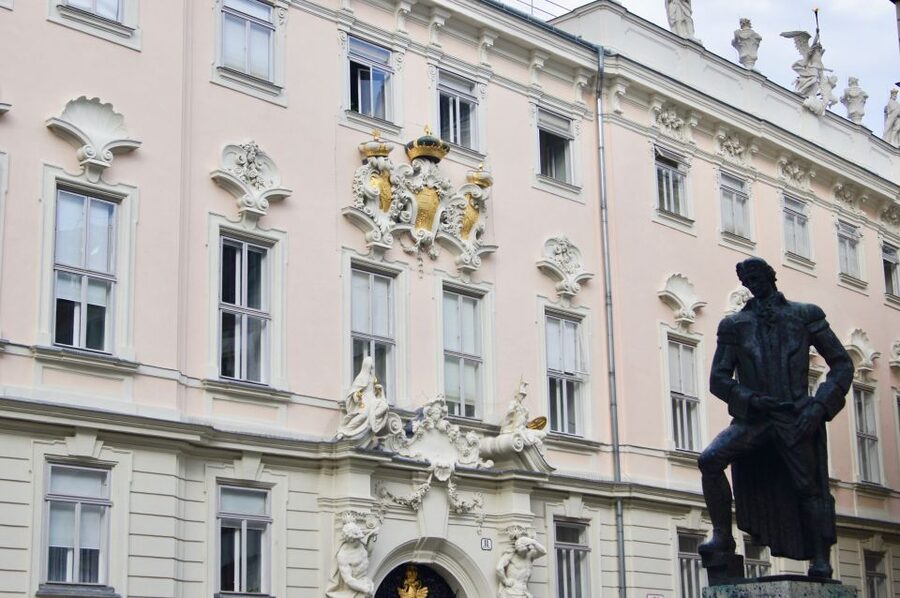
Palais Ephrussi gives the tour a look at the wealth, influence, and public presence of a prominent Jewish family. The building is an important reminder that Jewish Vienna included far more than religious institutions. Jewish families took part in commerce, culture, architecture, medicine, and public life.
A palace façade can tell only part of the story, of course. The guide’s explanation is what gives the stop its value. You should expect discussion of the Ephrussi family and the place of Jewish patrons and residents in Vienna’s upper social circles.
This stop also helps you read the city more carefully. Vienna’s grand center is full of impressive buildings, but architecture alone does not tell you who funded them, who lived inside them, or who was later forced out. A guided walk can connect those details in a way that a casual stroll usually cannot.
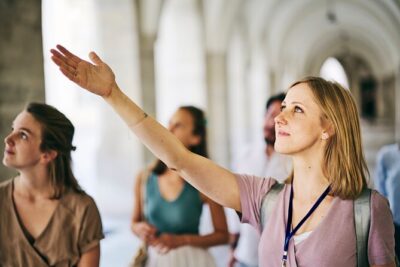
Because this is a private tour, you can ask for more background if a site catches your attention. You can also ask the guide to keep the focus on architecture, family stories, political change, or everyday Jewish life, depending on your interests. The tour has a set route, but the conversation can adapt.
More Jewish Vienna walks:
- Jewish Vienna: City Synagogue Guided Tour
★ 4.6 · 208 reviews - Vienna: Jewish Museum Vienna and Museum Judenplatz Tickets
★ 4.5 · 170 reviews - Vienna: Jewish Life in Leopoldstadt 2-Hour Walking Tour
★ 4.9 · 109 reviews - Jewish Vienna Walking Tour
★ 5.0 · 36 reviews
Judenplatz and the memory of medieval Vienna
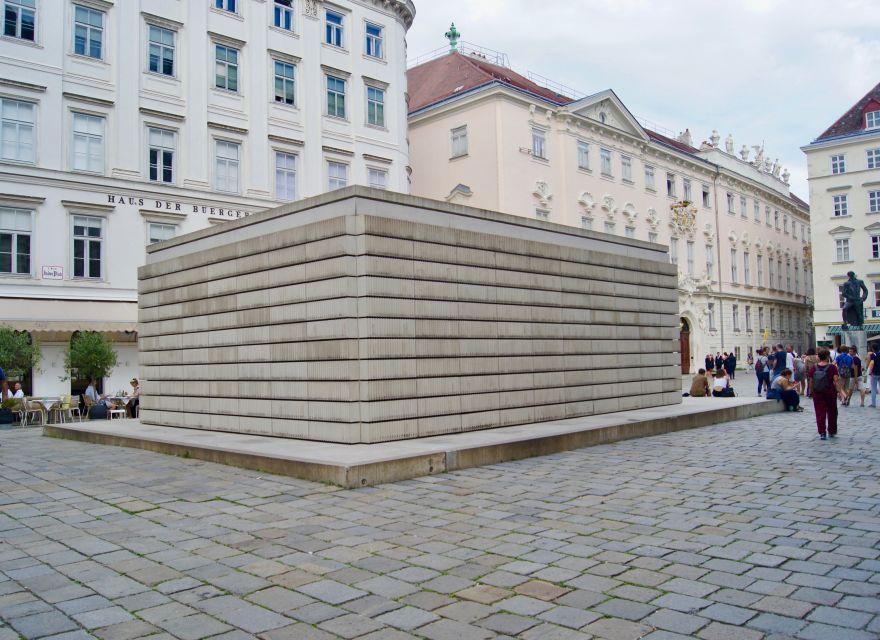
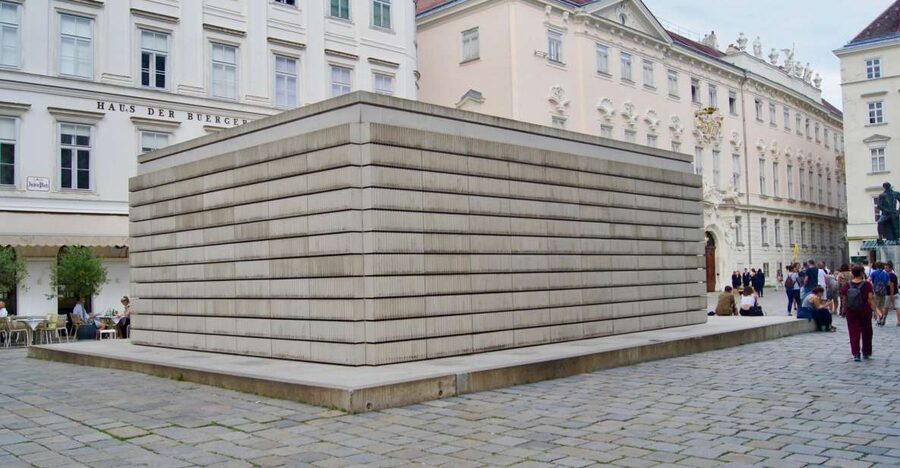
Judenplatz is one of the key stops. The square brings you back to an earlier chapter of Jewish Vienna and shows how the city’s Jewish story reaches well before the period of Freud and modern science.
This is where the changing fortunes of the community become especially clear. You learn about Jewish life in the medieval city, the presence of a Jewish community, and the periods when Jews were expelled from Vienna. The location makes the history tangible. You are standing in a public space connected to both community life and persecution.
Judenplatz is also a good place to consider how cities remember difficult events. The tour treats the square as part of a long story rather than as a single memorial site. That approach helps you connect the medieval past with the later destruction of Jewish life in the 20th century.
The guide’s role is particularly important here. The subject can easily become a rushed list of tragedies. A strong explanation gives you dates, people, and context while allowing the place itself to remain visible. That balance is one reason this tour suits visitors who want more than a standard sightseeing walk.
Seitenstettengasse Synagogue, seen from outside
The Seitenstettengasse Synagogue is included as an exterior stop. You should not book this tour expecting an interior synagogue visit.
Even from outside, the synagogue matters. It represents Jewish religious life in the city and provides a link between Vienna’s older community, its destruction during the Nazi period, and the Jewish community that exists today. The guide uses the building to explain continuity as well as loss.
This is a useful stop for putting the Holocaust section into a broader frame. Vienna’s Jewish community was not simply erased from the city’s story. People were murdered, expelled, or forced to flee, but Jewish life has continued. The synagogue helps make that present-day connection visible.
Since the visit is outside only, weather may affect your comfort. Wear shoes suitable for city walking and bring clothing for changing conditions. The route is wheelchair accessible, but the tour remains a walking experience over two and a half hours, so consider your group’s pace before booking.
From cultural achievement to persecution
The tour does not avoid the darker periods. It covers the banishment of Jewish people from Vienna, Nazi persecution, the Holocaust, and the destruction of much of the city’s Jewish community.
This section is essential because the earlier discussion of culture and achievement could otherwise feel like a finished golden age. Vienna’s Jewish residents were not protected by education, wealth, professional success, or contributions to public life. The same city that depended on Jewish talent also allowed persecution to grow.
The Memorial against War and Fascism helps frame this part of the walk. You return to the themes introduced at the start: political violence, public memory, and the way a city confronts its past. The route does not treat the Holocaust as a detachable chapter. It shows how it changed families, institutions, neighborhoods, and Vienna itself.
I would choose this tour for adults and older students who are prepared for a serious subject. It can work well for families, but the content is not light. If your main goal is imperial architecture or café culture, the Jewish history may feel more intense than expected. If you want to understand how Vienna’s public life was shaped by both Jewish achievement and persecution, the difficult material is necessary.
A private format with room for questions
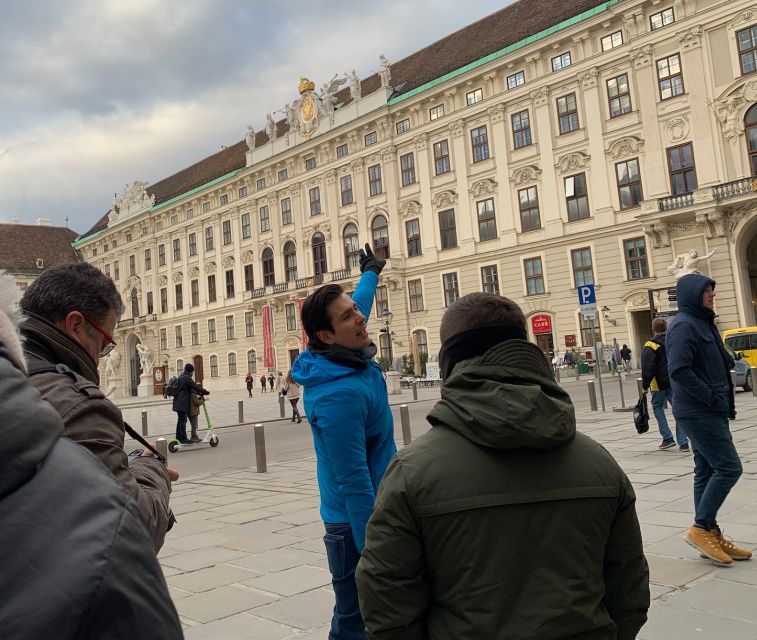
The tour is private for your group, with a maximum of 20 people. At $530 per group, the price looks high for one or two people. For a larger family or group of friends, the calculation changes quickly.
For example, a group of 10 pays the equivalent of $53 per person, while 20 people would pay $26.50 each. The private format gives you your own guide rather than placing you in a large public group, and it lets you ask questions without waiting for a crowd to move on.
The best value comes when you use that flexibility. Ask about a particular family, building, historical period, or connection to Vienna’s artists and doctors. Several guides associated with this experience have been praised for being open, articulate, and adaptable, so a question-led conversation should fit the format well.
Hotel pickup and drop-off are included within Vienna’s inner city. That is helpful if you are staying centrally, though the meeting point remains Helmut-Zilk-Platz. Confirm the pickup arrangement when booking so you know whether your guide will meet you at your hotel or whether you should go directly to the square.
The tour is offered in English or German. It lasts 150 minutes, or two and a half hours, with starting times depending on availability. Free cancellation is available up to 24 hours before the tour, and you can reserve now and pay later.
Who will get the most from this walk
I would recommend this tour if you want Jewish history tied to Vienna’s wider cultural life. You see the University of Vienna, Café Landtmann, Palais Ephrussi, Judenplatz, Joseph’s Square, the Vienna State Opera, the Seitenstettengasse Synagogue, and memorial sites in one connected route.
It also suits repeat visitors who have already seen the major imperial sights and now want more context. The familiar city center looks different when you learn who lived, worked, studied, worshipped, and suffered there.
The tour is a good fit for:
- Families or friends who want a private guide
- Visitors interested in Jewish culture, modern European history, or Vienna around 1900
- People who prefer discussion and questions over a fixed group script
- Groups that want some standard Vienna sights mixed with a focused subject
- Visitors who need an English- or German-language tour
- Anyone comfortable with serious material about persecution and the Holocaust
It may be less suitable if you want to enter a synagogue, spend time inside museums, or focus only on famous architecture. The Seitenstettengasse Synagogue is viewed from outside, and the experience is primarily an outdoor walking tour.
Should you book the Vienna Jewish Walking Tour?
Book it if you want to understand Vienna through the people and communities behind its famous buildings. The strongest reasons are the private format, the mix of Jewish landmarks and familiar city sights, and the guide-led connections between medieval Jewish life, the 1900s, Nazi persecution, and the present day.
The $530 price is easiest to justify for a family or larger group. For two people, it is a major expense, but the private attention may be worthwhile if this subject is central to your visit. Go in expecting a serious 150-minute walk, an exterior view of the Seitenstettengasse Synagogue, and a broad introduction rather than an exhaustive study.
If you want a clear, human account of Jewish Vienna, with room to ask questions and adjust the conversation, this is a strong choice. Guides such as Lisa, Dr. Reinhard Travnicek, and Horlando have been described as friendly, clear, and effective at linking past and present. Just allow enough time afterward to process what you have seen.
FAQ
How long does the Vienna Jewish Walking Tour last?
The tour lasts 150 minutes, or two and a half hours.
Where does the tour start?
It starts at Helmut-Zilk-Platz, in front of the Memorial against War and Fascism. The guide will hold a red and white striped umbrella.
Where does the tour finish?
The tour finishes in central Vienna at 1010 Vienna, Austria.
Which languages are available?
The tour is offered in English and German.
Is the tour private?
Yes. It is a private group experience for up to 20 people.
Is hotel pickup and drop-off included?
Hotel pickup and drop-off are included for hotels within Vienna’s inner city.
Just added around Vienna
- Vienna: UNESCO Schönbrunn Palace Guided Tour with Entry★ 4.5 · 94 reviews
- World War II History Vienna Old Town Private Walking Tour★ 4.8 · 9 reviews
- Vienna: Winery and Wine Tasting Tour with a Wine Expert★ 5.0 · 5 reviews
- Vienna: Wine Tasting E-Bike Tour★ 4.9 · 46 reviews
- Vienna: Wine Tasting at Schönbrunn Palace★ 4.3 · 71 reviews
- Vienna: Wine Tasting Tour★ 4.8 · 61 reviews
- Vienna: Concert by the Vienna Baroque Orchestra★ 4.6 · 56 reviews
- Vienna: Wachau Valley Private Kayak and Wine Tour★ 5.0 · 3 reviews
Jewish Heritage Tours, compared.
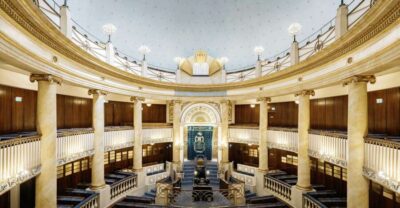
Jewish Museum Vienna and Museum Judenplatz Tickets
Read our review →
Jewish Life in Leopoldstadt 2-Hour Walking Tour
Read our review →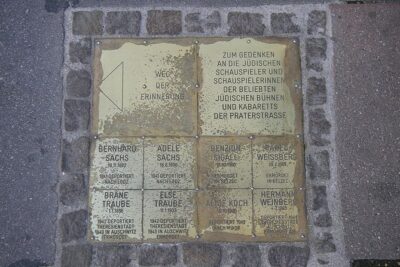
The Cultural Heritage of Jewish Vienna walking tour
Read our review →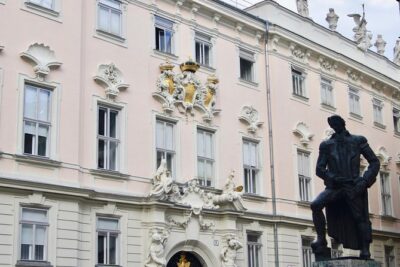
Browse the lists this tour appears in