
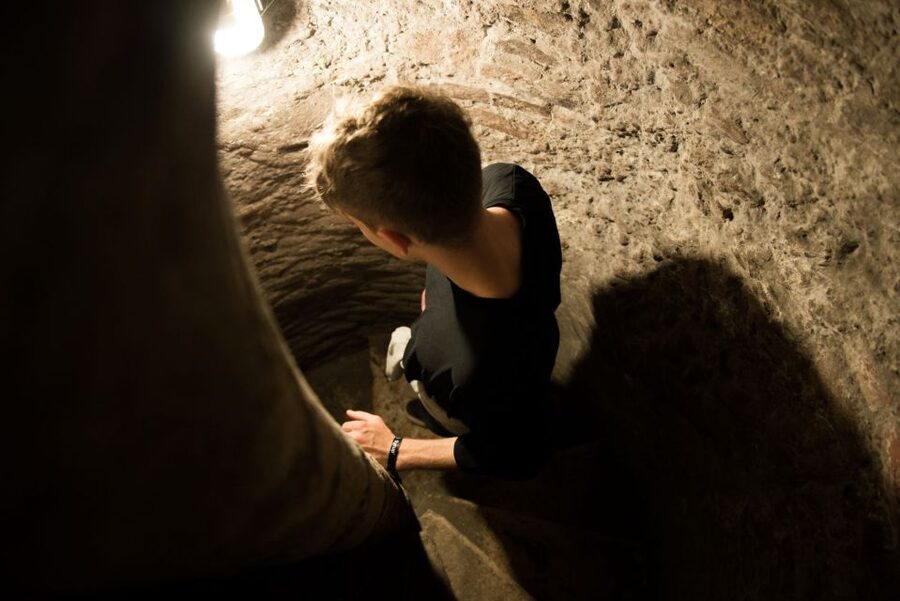
Reviewed · HISTORICAL TOURS
Vienna: Historical Pharmacy Cellar Guided Tour
Vienna’s underworld is not only grand crypts and wartime tunnels. Beneath a working pharmacy, you can enter a private cellar filled with old medical equipment, medicine storage areas, and traces of 160 years of pharmaceutical work. It is a small, unusual way to see a side of the city most people walk above without noticing.
I like the exclusive access and the compact one-hour format. I also like that the tour focuses on real pharmaceutical objects and a former medicine cellar, not just spooky storytelling. The main drawback is clear: you must manage many stairs, and the German-only guide makes this a weaker choice for anyone who needs English interpretation.
Key points at a glance
- A private pharmacy cellar: Enter through the side entrance of Schutzengel Apotheke in Taubstummengasse, opposite number 17.
- 160 years of medicine: See relics from pharmaceutical history, including an old laboratory and medicine cellar.
- Small group setting: The group is limited to 10 people, which leaves room for questions.
- One-hour visit: The tour gives you an unusual historical stop without taking half a day.
- German-language guiding: The live tour is offered in German, so basic German helps.
- Serious stair warning: There are no elevators, and the hidden cellars require many steps to descend.
Entering Vienna through a pharmacy side door
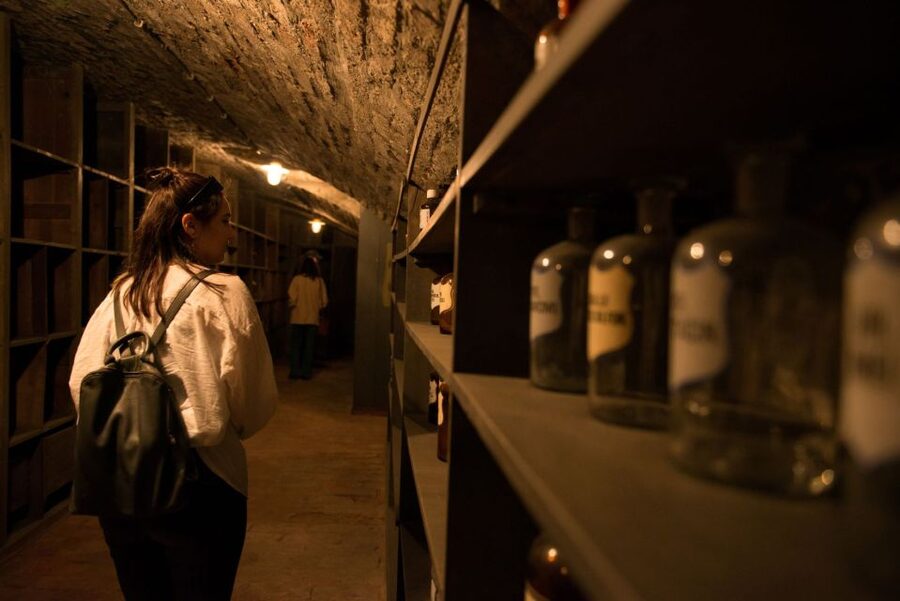
Your meeting point is the side entrance of Schutzengel Apotheke on Taubstummengasse, opposite Taubstummengasse 17. That detail matters. You are not meeting at a large museum or an obvious underground attraction, but at an old pharmacy with a separate entrance.
From there, the tour leads below street level into a private, non-public cellar. This is the heart of the experience. You are not simply looking at a display case in a city museum. You are entering the sort of working storage and laboratory space that once supported a pharmacy.
I like the change in scale. Above ground, Vienna can feel polished and formal, with palaces, churches, and grand avenues. Below ground, the setting is tighter, gloomier, and more practical. The cellar gives you a different view of how medicine was stored and prepared before modern pharmacies looked the way they do today.
The underground setting also adds atmosphere without needing theatrical effects. Corridors, shafts, and subterranean rooms form part of Vienna’s older hidden network. The tour presents both the attractive and unpleasant sides of this underground world, so you should expect a historical look at a working city rather than a simple ghost story.
More history walks around Vienna:
- Vienna: Time Travel and Magic Vienna History Tour
★ 4.6 · 3,879 reviews - Vienna: World War II Historical Walking Tour
★ 4.8 · 1,772 reviews - Vienna Historic Center Small Group Walking Tour
★ 5.0 · 1,746 reviews
The descent into the former medicine cellar
The descent is an important part of the experience, both physically and in terms of mood. You will go down many steps into hidden cellars, with no elevator available. Wear sports shoes or other closed-toe shoes, and do not treat this as a casual stroll through a flat museum.
The activity is not recommended for people with limited mobility. It is also not suitable for wheelchair users or children under 10. The instructions ask you to participate at your own risk, so take the warning seriously before booking.
For people who can handle the stairs, the descent helps explain why the cellar feels separate from modern Vienna. You leave behind the bright, busy street and enter a less polished setting where storage, medicine, and laboratory work once took place.
I would plan this tour for a time when you are not carrying bulky luggage. The supplied information does not specify the exact stair count or floor depth, so you should be ready for a genuine cellar descent rather than assume there are only a few steps.
The old laboratory and medicine storage areas
The tour centers on relics from 160 years of pharmaceutical history. Two especially important features are the unique laboratory and the former medicine cellar. These give the visit its substance.
The laboratory helps you picture the practical side of older pharmacy work. Instead of treating medicine as an abstract subject, the space connects it to tools, preparation, and daily professional routines. You might find the setting most interesting if you enjoy seeing how ordinary services operated before modern technology changed them.
The medicine cellar offers a second angle. It shows the importance of storage, organization, and underground space in an older pharmacy. The room is not presented as a modern medical exhibit, and that is part of its appeal. You are seeing a place tied to the pharmacy itself.
Relics from the past are displayed in their original underground context. That gives them more weight than isolated objects in a glass case. I find that this kind of setting can make a short tour feel more memorable, because the room itself carries part of the story.
The available details do not identify each object or explain the exact laboratory equipment you will see. Your guide supplies the interpretation, and the tour is designed as a guided look at the history of medicine rather than a self-guided collection.
A compact lesson in 160 years of pharmacy
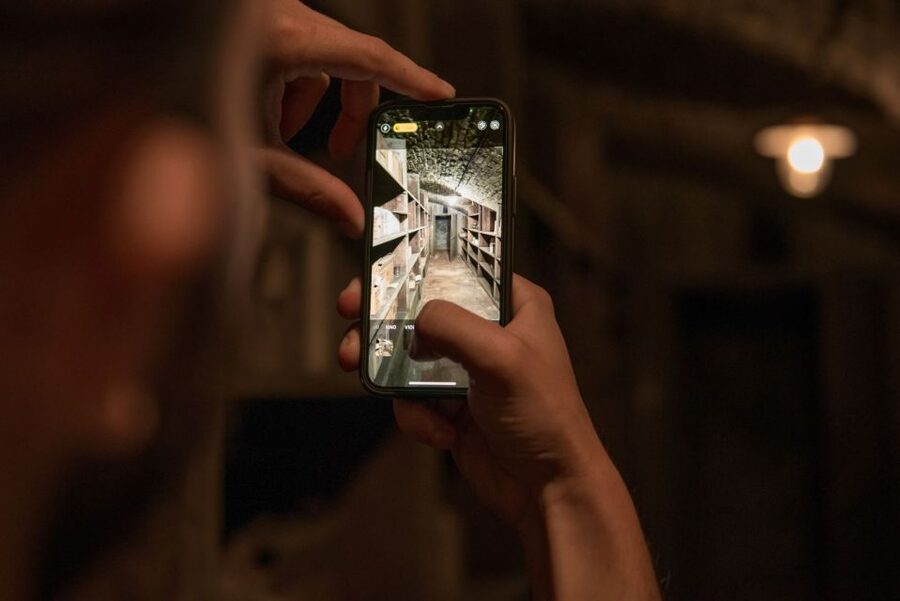
The historical span is broad enough to show change without turning the tour into a long lecture. Over one hour, your guide connects the cellar, its objects, and the history of one of Vienna’s oldest pharmacies.
That focus is useful. Vienna offers many grand historical tours, but this one deals with a smaller, more practical part of city life. It asks how medicine was stored and handled, and what older pharmaceutical spaces reveal about the people who used them.
The tour’s strongest educational point is the chance to ask questions. The experience is built around a live guide, and detailed answers are part of the appeal. A recent German-language visitor described the tour as interesting and educational, with questions answered thoroughly. That is a good sign for anyone who prefers explanation over a quick walk past old objects.
Still, language matters. The live guide speaks German, and no English option is listed. If you understand little German, you may appreciate the cellar and its objects but miss much of the historical explanation. I would book only if you can follow German or have a practical way to translate the content.
A few more Vienna days worth a look
- Vienna: Vivaldi’s Four Seasons Concert in Karlskirche
★ 4.7 · 14,951 reviews - Vienna: Spanish Riding School Training
★ 3.9 · 9,281 reviews - Vienna: Skip-the-cashier-desk-line Giant Ferris Wheel Ride
★ 4.5 · 7,859 reviews - Vienna: Schönbrunn Palace & Gardens Skip-the-Line Tour
★ 4.7 · 7,739 reviews
Why a group of 10 makes a difference
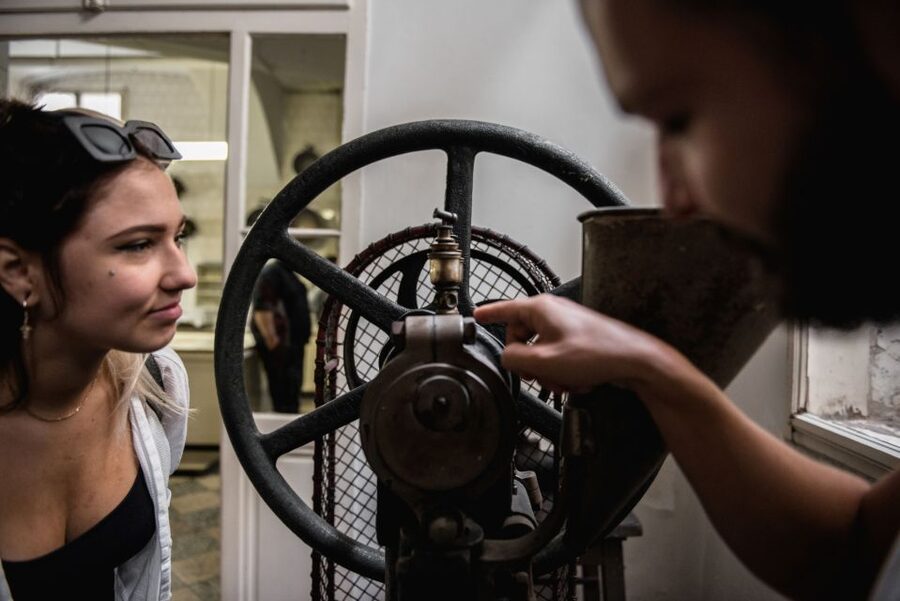
The group limit is 10 people. That is small enough to keep the visit more personal than a large city tour, especially in a confined cellar.
A small group also matters when the tour reaches the laboratory and medicine cellar. Tight underground rooms can become difficult when crowded, while a limited group should make it easier to see the objects and stay near the guide.
The size also supports questions. If you want to ask about a particular relic or clarify a point about medicine in Vienna, you have a better chance than you would in a large group. The tour is only one hour, so the guide cannot cover every part of pharmaceutical history, but a small group makes the time more useful.
There is one practical limit. A small group does not make the cellar spacious or remove the stairs. If you dislike enclosed historic spaces, the intimate setting may feel less comfortable than a regular museum gallery.
The value of a $37, one-hour experience
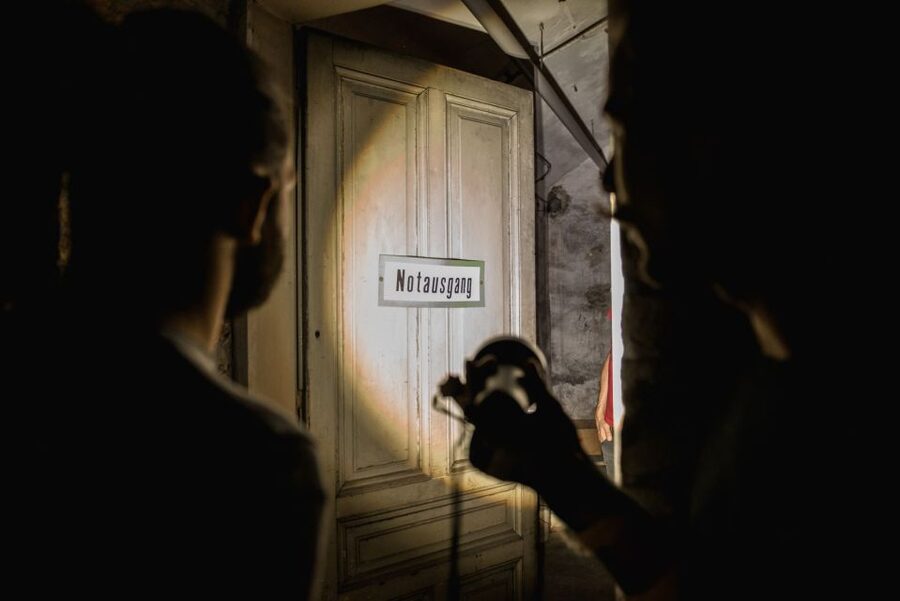
At $37 per person, this is not the cheapest way to spend an hour in Vienna. Its value depends on whether you want a standard city sight or a private space that is difficult to access on your own.
The price includes the guide and entrance fee. You are paying for access to the non-public pharmacy cellar, the live explanation, and the chance to see the laboratory and medicine storage areas. There is no food or drink included, but you do not need a meal service for a one-hour activity.
I see the price as reasonable for a specialized visit, particularly if you have already seen Vienna’s major palaces and museums. The tour adds something different rather than competing directly with a full museum ticket. It is less convincing if you are looking for a broad introduction to Vienna, because the subject is narrow and the tour ends after an hour.
The small group improves the value. Ten people or fewer means you are buying a more focused experience, not just access to a room. The private setting is the key reason to choose this over a general history stop.
You can also reserve now and pay later, which helps if your schedule is still changing. Cancellation is free up to 24 hours before the tour for a full refund. Those terms reduce the risk, but you should still check the available starting times before building the activity into a tight day.
Who should book this cellar tour
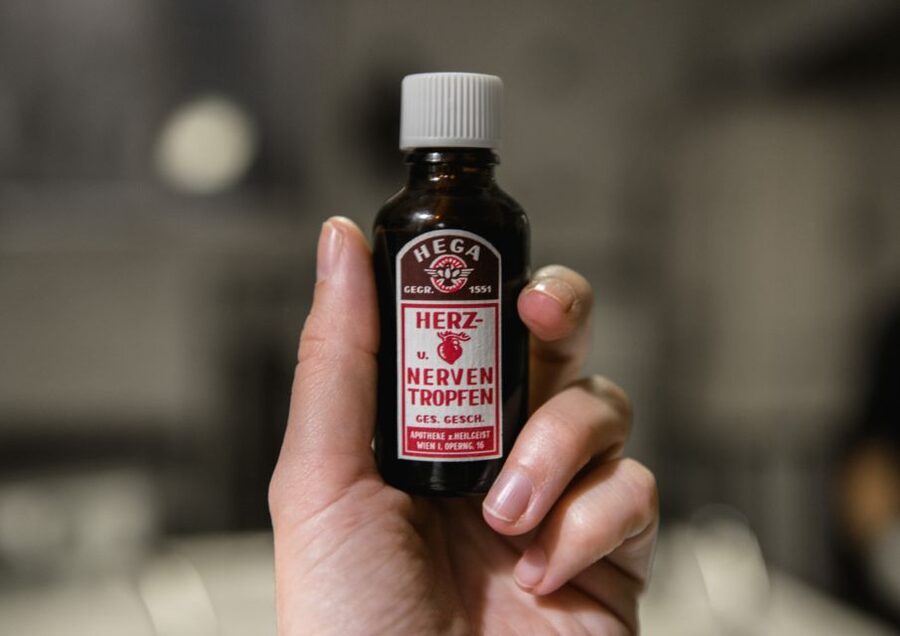
I would recommend it to you if you enjoy unusual historical places, old buildings, medicine, pharmacy, or the practical details behind city life. It is also a good match if you have already covered Vienna’s major sights and want an hour that feels more local and specialized.
The tour suits adults and children aged 10 or older who can manage the descent. Closed-toe sports shoes are the sensible choice. You should also be comfortable walking down many steps and taking part at your own risk.
German speakers will get the fullest experience. Since the tour is conducted in German, language ability is more important here than it would be at a visual attraction. If you cannot follow German, the physical setting may still interest you, but the educational value will be reduced.
I would skip it if you have mobility limits, use a wheelchair, dislike stairs, or want a broad overview of Vienna. I would also choose another activity if you need an English-language guide.
Planning the tour into your Vienna day
The one-hour duration makes this easy to pair with other central Vienna plans, though the supplied information does not give a precise walking time from other sights. Check the starting time and allow enough time to locate the side entrance of Schutzengel Apotheke.
Do not arrive dressed for a long day of formal sightseeing if your shoes are slippery or open. The instructions specifically call for sports shoes and closed-toe shoes, and that advice is tied to the cellar descent.
You will not need to plan a meal around the activity. Food and drinks are not included, and the visit lasts only an hour. I would eat before or after, depending on the starting time.
Keep the experience in proportion. This is not a tour of every underground site in Vienna, and it is not a full museum about medicine. It is a focused visit to one former pharmacy cellar, with a laboratory, medicine storage space, old relics, and a guide who explains their place in the story.
Should you book the Historical Pharmacy Cellar Tour?
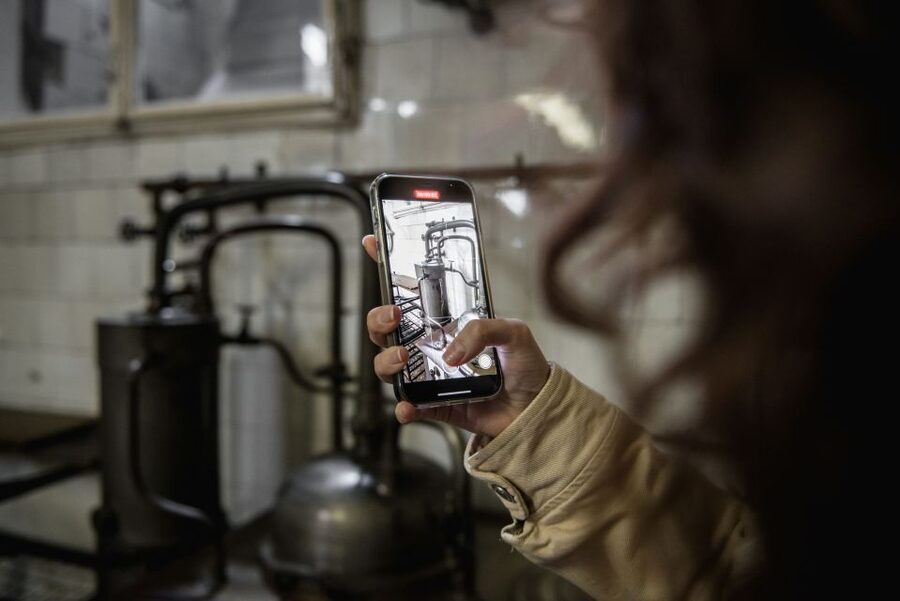
Book it if you want a small, unusual historical experience and can handle the stairs. The private cellar, old laboratory, and medicine storage areas give you access to a side of Vienna that standard sightseeing rarely covers.
The strongest reasons to go are the setting, the focused subject, and the chance to ask questions in a group of no more than 10. The strongest reasons to skip it are the German-only guiding, the many steps, and the narrow one-hour focus.
For a German-speaking visitor with good mobility, $37 is a fair price for a private cellar visit with a live guide. For anyone needing English, step-free access, or a general introduction to Vienna, spend your time and money elsewhere.
FAQ
Where is the meeting point?
Meet your guide at the side entrance of Schutzengel Apotheke on Taubstummengasse, opposite Taubstummengasse 17.
How long does the tour last?
The guided tour lasts one hour.
What language is the tour in?
The live tour guide speaks German.
Is the cellar accessible to wheelchair users?
No. The tour is not suitable for wheelchair users or people with mobility impairments. You must descend many steps, and there are no elevators.
What should I wear?
Wear sports shoes or other closed-toe shoes. The cellar descent requires suitable footwear.
Can I cancel or pay later?
You can cancel up to 24 hours in advance for a full refund. You can also reserve your place and pay later.
Just added around Vienna
- Vienna: UNESCO Schönbrunn Palace Guided Tour with Entry★ 4.5 · 94 reviews
- World War II History Vienna Old Town Private Walking Tour★ 4.8 · 9 reviews
- Vienna: Winery and Wine Tasting Tour with a Wine Expert★ 5.0 · 5 reviews
- Vienna: Wine Tasting E-Bike Tour★ 4.9 · 46 reviews
- Vienna: Wine Tasting at Schönbrunn Palace★ 4.3 · 71 reviews
- Vienna: Wine Tasting Tour★ 4.8 · 61 reviews
- Vienna: Wachau Valley Private Kayak and Wine Tour★ 5.0 · 3 reviews
- Vienna: Wiener Schnitzel and Strudel Cooking Class★ 4.9 · 126 reviews
Historical Tours, compared.
Vienna Historic Center Small Group Walking Tour
Read our review →

Skip-the-Line Schonbrunn Palace Guided Tour and Vienna Historical City Tour
Read our review →
Vienna Mozart Concert in Historical Costumes at the Musikverein
Read our review →
Browse the lists this tour appears in