
Reviewed · WALKING TOURS
Vienna: City of Music Private Walking Tour
Vienna’s musical past comes alive best when you hear the music where its creators lived, worked, performed, or found powerful patrons. This private walk connects St. Stephen’s Cathedral, Mozart’s former home, Beethoven’s monuments and apartments, the State Opera, the Hofburg, and other central sights with musical selections on headphones.
I like the personal guide and the way the tour makes room for questions instead of giving you a fixed speech. I also like the flat group price: at the maximum of 10 people, $564.72 works out to about $56 per person for three hours. The main drawback is that the cost is high for a couple or small family, and several sites are viewed from outside rather than entered.
Key points to know before booking
- Hear music during the walk: Selected Vienna masterpieces play through headphones as you move between the sights.
- A private group of up to 10: Your party has its own English-speaking historian guide, with room to shape the conversation.
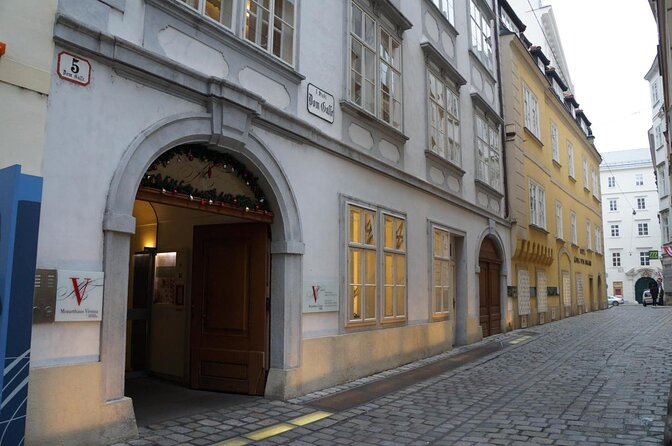
- Mozart’s former Vienna home: You pass Mozarthaus, where Mozart lived from 1784 to 1787 and wrote major works.
- Beethoven’s restless city life: The route explains his many Vienna residences, including the Pasqualati-House at Mölker-Bastei.
- Flexible starting arrangements: Pickup is offered at your hotel or holiday flat, or you can meet at Café Mozart.
- Best value for larger parties: The per-group fee becomes much easier to justify when shared by six to 10 people.
Why music works so well on a Vienna walking tour
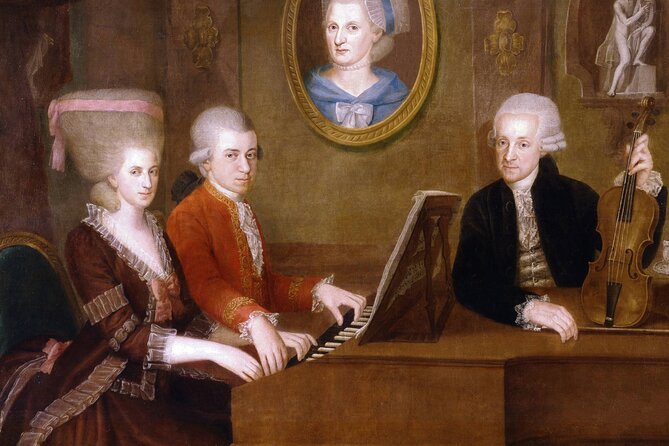
Vienna can feel like a museum of famous names. Mozart, Beethoven, Haydn, Salieri, Vivaldi, the Habsburgs, the State Opera, and the Vienna Philharmonic all compete for your attention. A music tour gives those names a clear route through the city.
The smart feature here is the use of headphones. Instead of only hearing a guide explain that a composer worked or performed nearby, you listen to selected pieces while standing in the same central streets. That simple pairing of sound and place helps you connect the music to real buildings and public spaces.
You do not need formal music training. One of the strongest points of the experience is its accessibility to people who know little about classical music. A good guide can explain the people, rivalries, patrons, and personal stories in plain language, then let the music do some of the work.
The private format also matters. You can ask why Beethoven moved so often, how Mozart’s career fit into aristocratic Vienna, or what makes the Musikverein important today. A larger public group rarely gives you that much freedom.
The walk lasts about three hours. Six stops receive roughly 20 minutes each, followed by about 45 minutes in Vienna’s inner city with musical pauses along the way. That is enough time for a strong introduction, but not enough for extended interior visits at every location.
More Walking Tours in Vienna
- Vienna: Guided Walking Tour of City Center Highlights
★ 4.7 · 4,989 reviews - Vienna: Vienna Central Cemetery Guided Walking Tour
★ 4.8 · 3,307 reviews - Vienna: Guided Walking Tour of City Highlights & Hidden Gems
★ 4.9 · 2,180 reviews
St. Stephen’s Cathedral, where sacred space met public performance
The tour begins at St. Stephen’s Cathedral, or Stephansdom, one of Vienna’s most recognizable buildings. Here, the focus is not only on architecture or religion. The cathedral also served as an important performance venue in earlier centuries.
Your guide connects the building with Haydn, Mozart, Salieri, and Vivaldi. That gives you a useful opening lesson: Vienna’s music was not confined to concert halls. Churches, aristocratic residences, public streets, and court settings all shaped the city’s sound.
You should expect about 20 minutes here, with admission listed as free. The stop is mainly about setting the scene and explaining the role of the cathedral in Vienna’s musical life. If you want a detailed architectural visit or time to explore the interior at leisure, you would need to plan that separately.
I like this first stop because it gives the tour a broad starting point. You are not beginning with one composer in isolation. You are starting with the city’s larger musical system.
Mozarthaus and the years of Mozart’s success
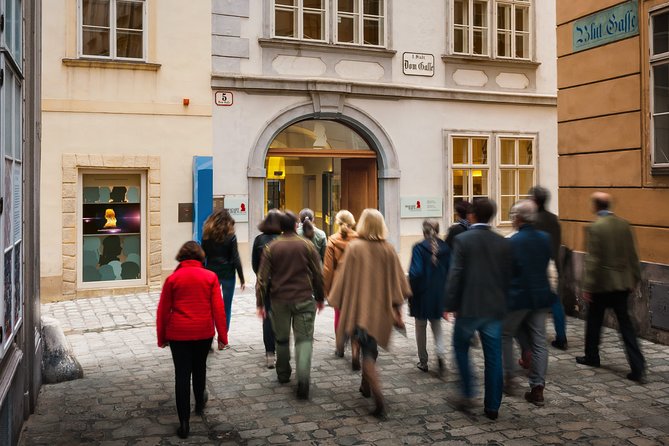
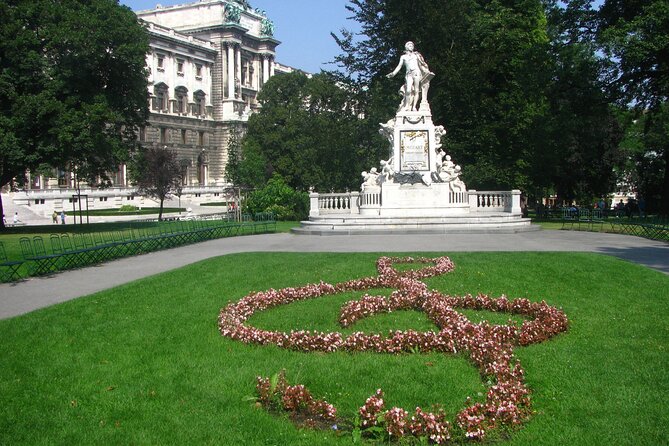
Next comes Mozarthaus Vienna, also known as Figaro House. Mozart lived here from 1784 to 1787, a particularly important period in his career. He wrote many of his best-known operas and instrumental works during these years.
The guide pauses outside the building, and the admission fee is not included. That distinction is important. You can learn about Mozart’s home and its place in his life during the walk, but you should not assume that a museum visit is part of the three-hour program.
If you already plan to visit Mozarthaus on your own, this tour gives you useful context before or after your museum time. If you want a full interior visit, set aside extra time and budget for the admission ticket.
This is also where a personal guide can make a real difference. Mozart’s Vienna life is easy to reduce to a few famous dates. A guide can instead explain the setting around his residence, his working life, and the connection between the house and his major compositions.
Beethoven’s monument and a life spent changing apartments
The Beethoven stop shifts the mood. Mozart’s years at Figaro House suggest a period of achievement and creative output. Beethoven’s story in Vienna is more unsettled.
At his monument, you hear about a composer who lived in roughly 60 different apartments throughout the city. That detail is more than a curiosity. It gives you a way to picture Beethoven as a working person moving through Vienna, dealing with practical problems, patrons, health, and artistic change.
The monument itself is passed by, and admission is free. This is a short interpretive stop rather than a museum visit. The value comes from the explanation and the connection to the nearby sites that follow.
I find this part especially useful for people who know Beethoven mainly through a few famous symphonies. The route presents him as a central figure in a changing Vienna, with music that helped carry the Classical period toward the Romantic era.
A completely different way to spend a day here:
- Vienna: Vivaldi’s Four Seasons Concert in Karlskirche
★ 4.7 · 14,951 reviews - Vienna: Spanish Riding School Training
★ 3.9 · 9,281 reviews - Vienna: Skip-the-cashier-desk-line Giant Ferris Wheel Ride
★ 4.5 · 7,859 reviews - Vienna: Schönbrunn Palace & Gardens Skip-the-Line Tour
★ 4.7 · 7,739 reviews
The State Opera and Vienna’s musical life today
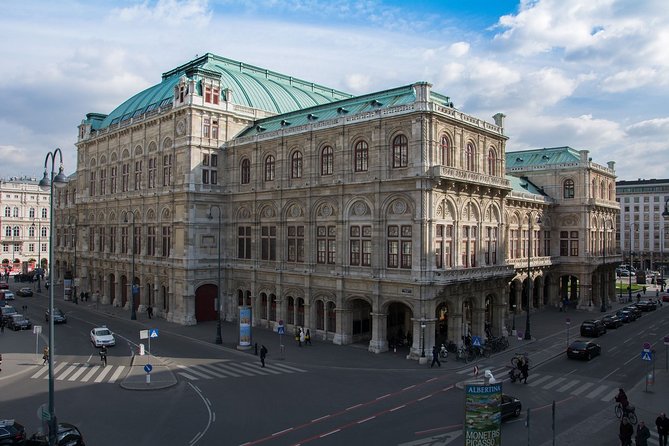
Outside the Wiener Staatsoper, the guide brings the story into the present. Vienna is not only important because of composers who lived centuries ago. The State Opera remains one of the world’s major opera stages, and the city continues to draw serious musical attention.
The discussion also includes the Musikverein, home of the Vienna Philharmonic. These institutions help explain why Vienna still feels tied to classical performance rather than treating music as a finished chapter in the past.
The State Opera stop is listed as a pass-by visit, and admission is not included. That keeps the walking tour moving, but it also means you will not get a backstage visit or a performance ticket through this experience.
The practical lesson is simple: this walking tour can help you decide if you want to attend a concert or opera during your stay, but it does not replace that evening program. Use the stop to understand the city’s current musical importance, then make separate plans if you want to go inside.
Mölker-Bastei and Beethoven’s Pasqualati-House
At Mölker-Bastei, the tour passes another Beethoven address, the Pasqualati-House. It sits directly opposite the University of Vienna and is tied to the composer’s many moves around the city.
The stop gives you a closer look at Beethoven’s working life. He changed residence almost 60 times, and that restless pattern helps explain why a simple list of addresses can become part of the story. The city was not a backdrop. Its homes, patrons, institutions, and social circles shaped the way Beethoven lived and worked.
Admission to the Pasqualati-House is not included. You pass by it rather than receiving a guaranteed interior visit, so check your expectations before booking. If seeing the inside is a priority, you will need to arrange that separately.
This part of the walk also benefits from the private format. You can ask about Beethoven’s relationship with Vienna’s upper classes, his personal habits, or the changes in his music. The supplied route specifically places his work at the height of the Classical period and near the start of major Romantic developments.
The Hofburg and Beethoven’s connection to Archduke Rudolph
The final major historic stop is the Hofburg, the former Habsburg residence. Here, the story turns from composers’ homes to aristocratic support and musical patronage.
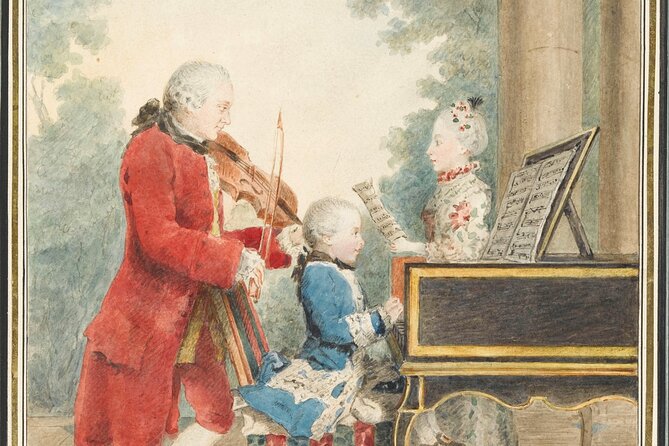
Beethoven’s relationship with the high aristocracy was not always easy, but he had a close bond with Archduke Rudolph, the youngest son of Emperor Leopold II. Rudolph took piano lessons with Beethoven and became one of his important supporters and patrons.
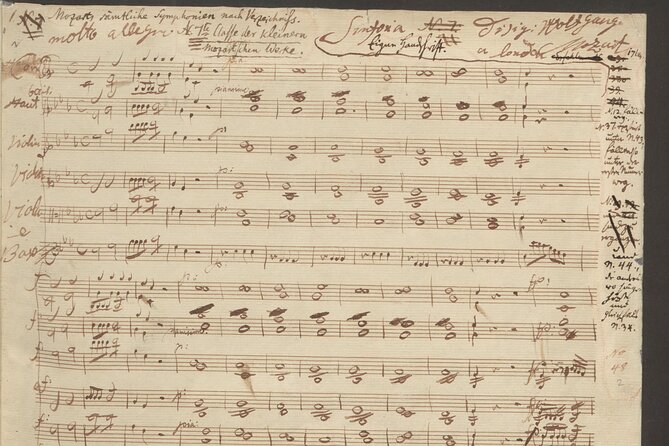
The guide links the Hofburg to that relationship and to Beethoven’s dedication of the Missa Solemnis to Rudolph. This gives you a clearer picture of how music depended on personal connections in 18th- and 19th-century Vienna. Great works did not appear in a vacuum. Composers needed students, patrons, commissions, places to perform, and access to powerful circles.
The Hofburg stop is another place where you should think of the tour as an outdoor history lesson rather than a palace admission. Admission is not included. You will see the setting and learn why it mattered, but the walk does not promise a full tour of the imperial rooms.
The Inner City, with music in your ears
The final stretch takes place in Vienna’s inner city and includes about 45 minutes of walking and musical pauses. This is where the experience’s main idea comes together.
As you move between major central sites, you listen to selections of Vienna’s musical masterpieces on headphones. The music is not just decoration. It gives you a chance to hear the style and mood connected with the people and places discussed earlier.
I like this approach because it breaks up the talk. Three hours of names and dates would be tiring, especially for anyone who is not already interested in classical music. Short listening moments give you a change of pace and help you remember the stories.
The route is still a walking tour, so wear comfortable shoes and expect to spend much of the experience outdoors. The supplied information does not promise extensive indoor seating or long visits inside the attractions. If you need a slower pace, tell your guide when you arrange the meeting details.
What the private format is really worth
The price is $564.72 per group of up to 10 people. That is a significant charge for two people, but the math changes for a family, reunion group, or group of friends.
At 10 participants, the cost is about $56.47 per person. At six, it is about $94.12 each. For two people, it is about $282.36 each. The tour becomes a much stronger value as your group grows.
You are paying for a private English-speaking guide, a three-hour route, and a conversation shaped around your group. The guide’s photo, phone number, and biography are sent after booking, which helps you know who to expect. One guide named in the supplied feedback is Annelie, who was praised for making the subject personal and for using photos to bring the composers to life.
That personal element is likely the biggest reason to choose this experience over a cheaper group walk. You can ask questions without worrying about slowing down a busload of strangers. You can also focus more on Mozart, Beethoven, opera, or the Habsburg connection, depending on your interests.
The tradeoff is clear. If you only want a quick overview of Vienna’s composers, the per-group price may feel steep. If you are splitting the fee among a larger party and want a thoughtful introduction rather than a checklist of statues, the value is easier to see.
Meeting points, timing, and practical details
Pickup is offered at your hotel or holiday flat. After booking, you receive the historian guide’s photo, phone number, and biography. That is useful in a city where central streets and large buildings can make a first meeting confusing.
If you prefer a central meeting point, the guide can meet you at Café Mozart at Albertinaplatz 2. The experience is offered in English, with morning or afternoon departure choices.
Public transportation may be needed to reach some tour sites, depending on your pickup location. Tram and metro tickets are not included, but the guide can help you buy them if you do not already have a pass.
Confirmation arrives at booking, and the tour is near public transportation. Most people can take part, according to the supplied information. Since this is a private activity, only your group participates.
You can cancel for a full refund up to 24 hours before the start time. Cancellations or changes made less than 24 hours before the experience are not accepted for a refund. The cutoff uses local Vienna time.
Who will enjoy this tour most
I would choose this tour for a group that wants more than a general city walk but does not want a full academic lecture. It works particularly well for:
- Families with different levels of classical music knowledge
- Friends traveling together who can share the group price
- First-time Vienna visitors who want a central orientation
- People who enjoy hearing music in the places linked to its creators
- Couples who value a private guide enough to accept the higher cost
- Visitors planning a concert or opera and wanting useful background first
You do not need to identify every instrument or know the difference between Classical and Romantic music. The experience is designed to make the subject approachable.
I would be more cautious if your main goal is to enter several museums or historic buildings. Mozarthaus, the State Opera, Pasqualati-House, and the Hofburg are discussed or passed, but admission is not included at the listed sites where a ticket is required.
Should you book the Vienna City of Music walk?
Book it if you want Vienna’s famous composers connected to real streets, homes, churches, patrons, and performance venues. The headphones, personal stories, and private guide make the three hours more than a parade of monuments.
Think twice if you are traveling as only one or two people and are watching your budget closely. The price makes the most sense for a larger group, and you will still need separate tickets for any interiors or performances you want to visit.
For a group of up to 10, this is a focused and flexible way to meet Mozart and Beethoven in the center of Vienna. For anyone worried about feeling lost in classical music, the guide-led format and plain explanations make the subject approachable without watering it down.
FAQ
How long does the Vienna City of Music Private Walking Tour last?
The tour lasts approximately three hours.
How many people can join the private tour?
The flat group price covers up to 10 people. Only your group participates.
What is the price of the experience?
The price is $564.72 per group of up to 10 people.
Is the tour offered in English?
Yes. The experience is offered in English.
Can the guide meet me at my hotel?
Yes. Hotel or holiday-flat pickup is offered. You receive the guide’s photo, phone number, and biography after booking.
Is there a central meeting point?
Yes. If you prefer to meet centrally, the guide can meet you at Café Mozart, Albertinaplatz 2.
Are public transportation tickets included?
No. Tram and metro tickets are not included, but the guide can help you purchase them if needed.
Are entrance tickets included?
Some stops are viewed from outside or passed by. Admission is listed as free at St. Stephen’s Cathedral, the Beethoven statue, and the Inner City portion. Tickets are not included for Mozarthaus Vienna, the Wiener Staatsoper, Mölker-Bastei, or the Hofburg.
Can I cancel for a full refund?
Yes. You can cancel at least 24 hours before the experience start time for a full refund. Changes or cancellations made less than 24 hours before the start time are not accepted for a refund.
Just added around Vienna
- Vienna: UNESCO Schönbrunn Palace Guided Tour with Entry★ 4.5 · 94 reviews
- World War II History Vienna Old Town Private Walking Tour★ 4.8 · 9 reviews
- Vienna: Winery and Wine Tasting Tour with a Wine Expert★ 5.0 · 5 reviews
- Vienna: Wine Tasting at Schönbrunn Palace★ 4.3 · 71 reviews
- Vienna: Wine Tasting Tour★ 4.8 · 61 reviews
- Vienna: Wine Tasting E-Bike Tour★ 4.9 · 46 reviews
- Vienna: Concert by the Vienna Baroque Orchestra★ 4.6 · 56 reviews
- Vienna: Wachau Valley Private Kayak and Wine Tour★ 5.0 · 3 reviews
Walking Tours, compared.
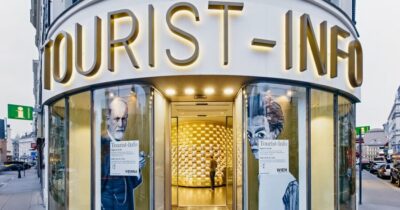
Guided Walking Tour of City Center Highlights
Read our review →
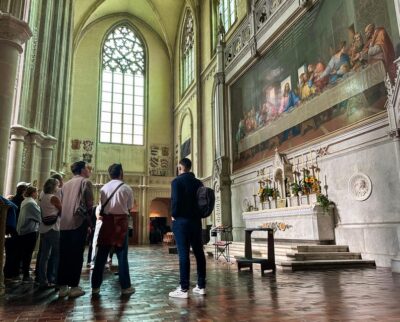
Guided Walking Tour of City Highlights & Hidden Gems
Read our review →
Vienna Historic Center Small Group Walking Tour
Read our review →
Browse the lists this tour appears in