
Reviewed · WALKING TOURS
Vienna: Meet Beethoven Life Private Guided Walking Tour
Vienna’s Beethoven story comes alive best in the places where the composer actually worked, argued, performed, and lived. This private walk links the Secession Building, the grand Ringstrasse, Beethovenplatz, the State Opera, and the Beethoven Pasqualatihaus, where the most focused part of the experience takes place.
I like the way the tour joins Beethoven’s life to Vienna’s architecture instead of treating the composer as an isolated museum subject. I also like the private format: guides such as Ingrid have adjusted the level for both a Beethoven expert and a family member who knows far less. The main caution is price, $264.50 per person, which makes the tour a better fit for a small group with a strong interest in music than for a budget sightseeing day.
Key points to know before booking
- Pasqualatihaus is the heart of the tour: Allow about two hours for Beethoven’s former residence and its collection of notes, instruments, images, and paintings.
- The private format lets you set the pace: Your guide can adapt the walk and may add Stephansplatz, St. Stephen’s Cathedral, Karlsplatz, or Karlskirche if time and interests allow.
- Beethoven is tied to major Vienna sights: You will see the State Opera, Theatermuseum, Hofburg, Burgtheater, Rathaus, Ringstrasse, and Volksgarten along the way.
- The extended version adds music after the walk: A separate evening concert usually begins between 5:30 and 8 pm, with the exact venue and time listed on your ticket.
- Guides can handle mixed interests: Ingrid was praised for keeping a Beethoven enthusiast engaged while making the subject accessible to someone new to the composer.
- Plan for an outside-heavy tour: Several stops are exterior views, and the Secession Building, Hofburg, Theatermuseum, and Karlskirche require separate admission if you want to go inside.
Why this private Beethoven walk works in Vienna
Vienna can feel like one enormous music museum. Mozart, Strauss, Schubert, and Beethoven appear on signs, concert programs, statues, and building plaques across the center. Without a guide, it is easy to see the sights without understanding how they connect.
This tour gives those connections a clear subject. You begin near the Secession Building, move through the historic center and Ringstrasse, pass important performance spaces, and finish at a place tied directly to Beethoven’s daily life. The walk is not only about dates and famous compositions. It uses Vienna itself as the setting.
The private format matters here. Your group alone takes part, and the guide can spend more time on Beethoven’s personal life if that is what interests you. If one person knows the Eroica well and another only knows Fur Elise, the guide can adjust the conversation. That flexibility was especially clear in the feedback about Ingrid, who kept a young Beethoven specialist interested without losing the family member who had less musical background.
The tour is offered in English and lasts approximately three to five hours. The exact length depends on the pace, questions, optional stops, and the time spent at Pasqualatihaus. The listed stop times add up to more than a simple three-hour stroll, so think of the schedule as an approximate framework rather than a minute-by-minute plan.
More Walking Tours in Vienna
- Vienna: Guided Walking Tour of City Center Highlights
★ 4.7 · 4,989 reviews - Vienna: Vienna Central Cemetery Guided Walking Tour
★ 4.8 · 3,307 reviews - Vienna: Guided Walking Tour of City Highlights & Hidden Gems
★ 4.9 · 2,180 reviews
Starting beneath the Secession Building’s golden dome
The meeting point is Friedrichstraße 12, by the Secession Building. You identify your guide by finding your name on a holding card. This is a convenient central starting point, near public transportation and within easy reach of the historic center.
The Secession Building makes a memorable introduction. Its white exterior and famous golden dome belong to Vienna’s late-19th-century art scene, and the guide explains its connection with Beethoven. The outside visit takes about ten minutes, and admission inside is not included. If you want to enter, the extra fee is listed as approximately €4.50 to €9.50.
That detail is useful because this first stop is mainly a meeting place and orientation point. If you have already visited the building, you can focus on the Beethoven connection and move on. If modern art interests you, ask whether there is enough time for the optional interior visit.
Walking through Vienna’s historic center and Ringstrasse
From the Secession, the guide leads you into Vienna’s historic center. This is where the tour broadens beyond Beethoven and gives you a working map of the city.
You will see the grand architecture associated with Vienna, including Baroque buildings, gardens, monuments, and the late-19th-century Ringstrasse. The walk from the Opera area toward Rathaus covers about an hour in the main schedule, with shorter stops along the way.
I like this part because Beethoven’s story gains scale. He was not simply composing in a quiet room. He lived in a major imperial capital, moved through streets shaped by court life and public ceremony, and worked in a city where music held a central place.
The Ringstrasse section takes about ten minutes as a dedicated stop, but it also appears in the walk between the opera and Rathaus. You will see a long run of civic buildings, parks, and monuments, with the guide pointing out facts connected with Beethoven and Vienna’s musical identity.
Beethovenplatz and the Vienna State Opera
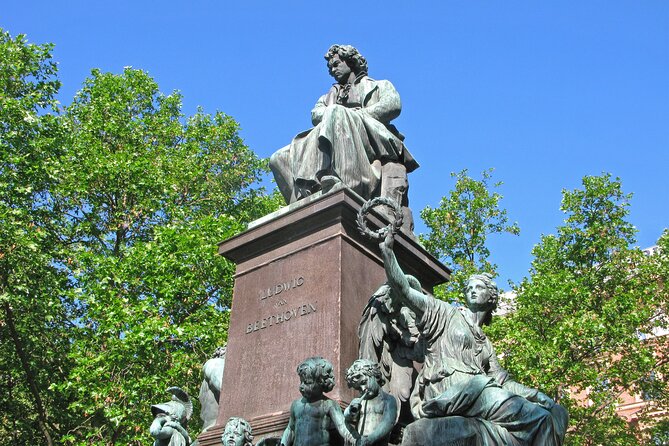
At Beethovenplatz, you meet Beethoven in bronze. The statue occupies its own public square, and the stop lasts about 25 minutes. That gives your guide time to discuss the composer and the way Vienna has chosen to remember him, rather than treating the statue as a quick photograph.
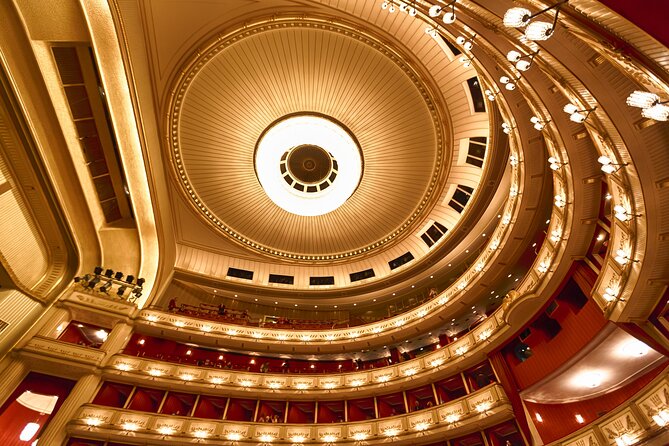
The Vienna State Opera follows. You see the building from outside and hear about the city’s performance tradition. No interior admission is included in this stop, so do not expect an opera-house tour as part of the walk.
The Opera is important context even if you are not attending a performance. Vienna’s reputation as a music capital is tied to places such as this, and the guide can explain how Beethoven fits into that larger story.
Next comes the Albertina, known for its art collection and the horse-rider statue above the building. The collection includes works associated with Leonardo da Vinci, Raphael, Michelangelo, Dürer, and Rembrandt, but the tour only schedules about ten minutes outside. If art is a major interest, note that the museum visit is not part of this experience.
A completely different way to spend a day here:
- Vienna: Vivaldi’s Four Seasons Concert in Karlskirche
★ 4.7 · 14,951 reviews - Vienna: Spanish Riding School Training
★ 3.9 · 9,281 reviews - Vienna: Skip-the-cashier-desk-line Giant Ferris Wheel Ride
★ 4.5 · 7,859 reviews - Vienna: Schönbrunn Palace & Gardens Skip-the-Line Tour
★ 4.7 · 7,739 reviews
The Eroica connection at Theatermuseum
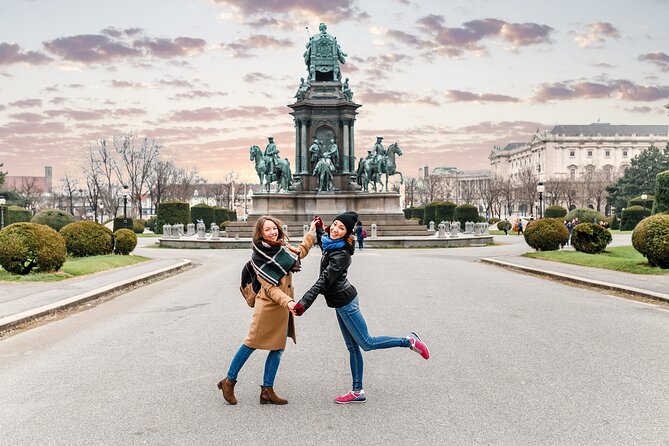
The Theatermuseum is one of the more specific Beethoven stops. This is where Beethoven conducted a private Viennese premiere of his Third Symphony, Eroica. The guide uses the building to connect Beethoven’s music with the city’s performance spaces.
The stop is short, about ten minutes, and the admission fee is not included. That is enough for an exterior explanation, but not for a museum visit. If you want to explore the interior, ask your guide how it would affect the rest of the schedule.
This is a good example of the tour’s approach. You are not only shown famous sights. You are given a reason to look at them through Beethoven’s life.
Hofburg, Volksgarten, Burgtheater, and Rathaus
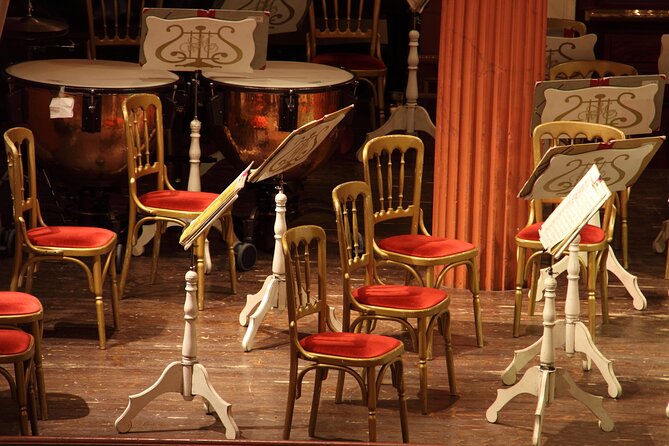
The Hofburg Palace appears from the outside. Its size and architecture make an immediate impression, but this tour does not include entry. A separate Hofburg visit would be needed if you want palace interiors or imperial collections.
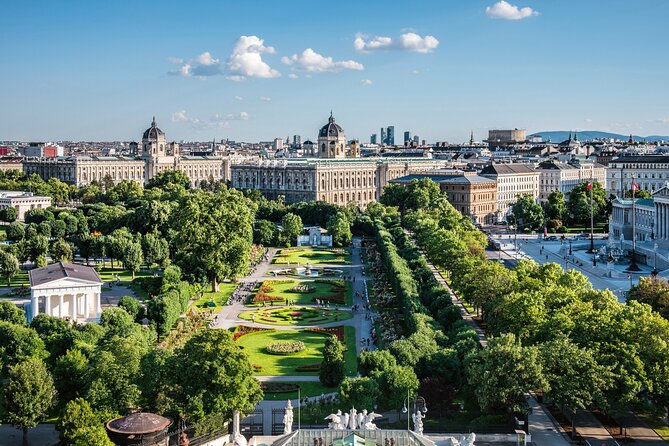
The walk then reaches Volksgarten, where the schedule allows about 25 minutes. This green space and rose garden offer a welcome pause after the large streets and formal buildings. I would especially value this stop on a warm day, when a short break makes the rest of the walk easier.
The Burgtheater comes next, with time to admire its exterior. It is one of the Ringstrasse’s major civic buildings, and its connection to Vienna’s theatrical life fits naturally with a tour about a composer who worked within the city’s performance world.
Rathaus provides another large architectural moment. The municipal building is described as using roughly 30 million bricks, a detail that helps explain its scale. Nearby, you can also see the Austrian Parliament Building and the University of Vienna.
These stops are mostly outside views, so the value comes from the guide’s explanation rather than admission access. If you prefer museums and interiors, tell the guide early. If you enjoy city walks and architecture, this section gives you a strong overview of central Vienna.
Spending the serious time at Beethoven Pasqualatihaus
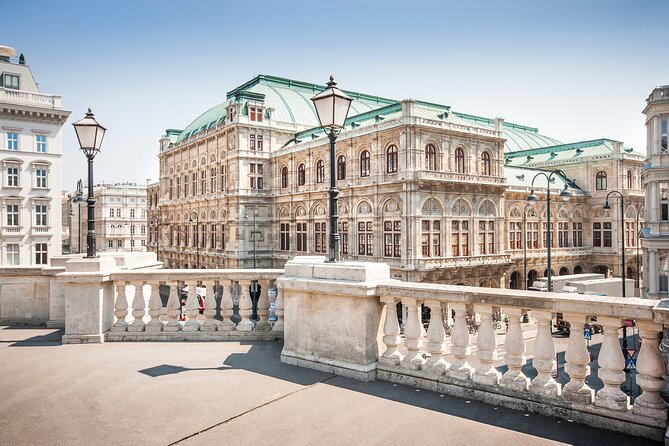
The Pasqualatihaus is the essential stop. The schedule allows about two hours here, and admission is included.
This is an authentic former residence connected with Beethoven and part of the remains of Vienna’s old city fortifications. Inside, you can see a collection of notes, piano-related material, photographs, and paintings. The setting gives the composer’s life a physical address, which is more useful than hearing another list of famous works.
The guide also discusses stories connected with Fur Elise and Fidelio. Those personal and creative details are likely to be the most rewarding part for anyone who already knows Beethoven’s music.
Allowing two hours here also changes the character of the tour. The earlier sections are a broad city walk with many brief stops. Pasqualatihaus is slower and more concentrated. You have time to ask questions and follow a particular subject instead of rushing from one exterior to the next.
If Beethoven is your main reason for visiting Vienna, this is where the price begins to make more sense. You are paying for a private guide, a focused subject, and entry to the one included site most directly tied to his life.
Optional additions around Stephansplatz and Karlsplatz
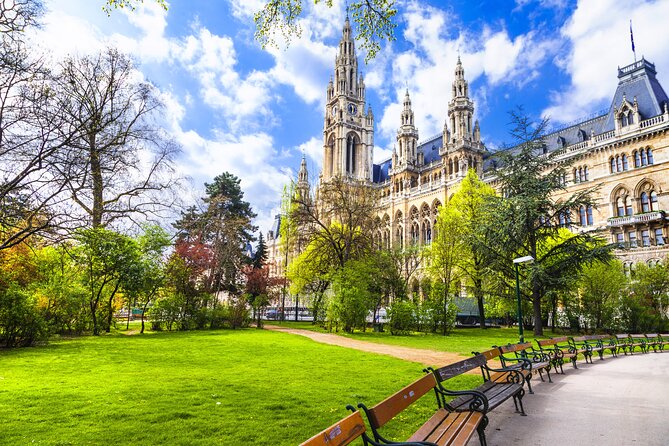
The standard theme centers on Beethoven and does not require a visit to every major landmark in the old town. Still, the route can be adapted.
If you ask, the guide may take you to Stephansplatz and St. Stephen’s Cathedral. Stephansplatz combines newer and older architectural styles and is a useful place to pause and watch central Vienna unfold. St. Stephen’s Cathedral is one of Austria’s best-known national symbols and among Europe’s tallest cathedrals.
The same applies to Karlsplatz and Karlskirche. The guide can include them if requested, but the tour does not include admission to Karlskirche. Because these additions may affect the timing, decide what matters most before the walk begins.
I would not try to force every optional sight into a single visit. If Beethoven comes first, protect the time at Pasqualatihaus. If this is your first visit to Vienna and you want a broader orientation, ask the guide to balance the Beethoven stops with one or two major landmarks.
The optional evening concert
The extended option includes a concert of music by Beethoven, Mozart, Strauss, or Schubert. This is a separate evening attraction, not a continuation of the walking tour.
Concerts take place at multiple venues in Vienna’s old town. The location depends on the group size, date, time, and availability. The usual start window is 5:30 to 8 pm, and the exact venue and start time appear on the concert ticket sent by email.
You need to plan carefully here. Do not assume the concert is at the end point of the walk or that you can arrive whenever convenient. Check the ticket and leave enough time to reach the venue.
For the right person, the concert upgrade completes the subject nicely. You spend the day seeing the city connected with Beethoven, then hear classical music in Vienna that evening. For someone who prefers museums or has an early dinner plan, the basic walking tour may be enough.
Price, group size, and practical value
At $264.50 per person, this is not an inexpensive way to see Vienna. The value depends heavily on your group size, your interest in Beethoven, and whether you choose the concert option.
The private structure is the main benefit. You are not following a large mixed group, and you can ask for more detail, request a slower pace, or adjust the optional sights. For a family or circle of friends who would otherwise book several separate activities, the cost may feel more reasonable.
The price is harder to justify if you mainly want a general introduction to Vienna. Many of the architectural stops are exterior views, and several attractions do not include entry. You should book this for the personal guide and Beethoven focus, not because it provides broad museum access.
The walk is near public transportation, and most people can participate. Wear comfortable shoes and plan for a few hours on city streets, with the exact balance of walking and indoor time shaped by the group.
Confirmation arrives when you book. Check your email the day before, especially if you selected the concert extension. Free cancellation is available up to 24 hours before the start time. Changes or cancellations inside that window are not refunded.
One practical point deserves attention. A comment about close-distance conversation and COVID precautions suggests that you should tell the guide in advance if personal space or health measures matter to you. The tour is private, so it is easier to discuss those preferences than it would be in a large group.
Who should book this Beethoven experience?
I would choose this tour if Beethoven is a major reason you came to Vienna, if you want a private guide, or if your group has mixed levels of musical interest. Ingrid’s ability to speak to both a serious young enthusiast and a less experienced family member is exactly the kind of flexibility that makes a private format useful.
It also suits visitors who want a city overview built around a clear theme. You get famous central sights, but each one is tied back to music, performance, architecture, or Beethoven’s place in Vienna.
I would skip it if you want a low-cost general walking tour, long museum visits, or a guaranteed interior tour of the Hofburg, Opera, Albertina, or Theatermuseum. You will see those buildings, but most are viewed from outside.
Should you book it?
Book this tour if you want Beethoven’s Vienna explained by a private English-speaking guide, with meaningful time at Pasqualatihaus and the option of an evening concert. The strongest features are the personal pacing, the link between music and city architecture, and the chance to tailor the experience for experts and beginners.
Before booking, be clear about the cost and the outside-heavy nature of the route. Ask for the optional sights only if they matter more to you than extra time at Pasqualatihaus. For a small group that truly loves Beethoven, this is a focused and useful way to meet the composer through the city that shaped his career.
FAQ
Where does the tour start?
The meeting point is Friedrichstraße 12, 1010 Vienna, Austria, by the Secession Building. Find your name on the guide’s holding card.
How long does the walking tour last?
The tour lasts approximately 3 to 5 hours. The timing can vary with the group’s pace, questions, and optional stops.
Is the tour private?
Yes. Only your group participates in the activity.
Is the tour offered in English?
Yes. The private walking tour is offered in English.
Is admission to Beethoven Pasqualatihaus included?
Yes. Entrance to Beethoven Pasqualatihaus is included.
Is entry to the Secession Building included?
No. Interior admission is optional and costs approximately €4.50 to €9.50.
Does the tour include a classical concert?
A concert is included only with the extended option. The program may feature Beethoven, Mozart, Strauss, or Schubert, and the exact venue and start time are shown on the concert ticket.
Can the route include St. Stephen’s Cathedral or Karlskirche?
The guide may add Stephansplatz, St. Stephen’s Cathedral, Karlsplatz, or Karlskirche on request. Karlskirche admission is not included.
Just added around Vienna
- Vienna: UNESCO Schönbrunn Palace Guided Tour with Entry★ 4.5 · 94 reviews
- World War II History Vienna Old Town Private Walking Tour★ 4.8 · 9 reviews
- Vienna: Winery and Wine Tasting Tour with a Wine Expert★ 5.0 · 5 reviews
- Vienna: Wine Tasting E-Bike Tour★ 4.9 · 46 reviews
- Vienna: Wine Tasting at Schönbrunn Palace★ 4.3 · 71 reviews
- Vienna: Wine Tasting Tour★ 4.8 · 61 reviews
- Vienna: Wachau Valley Private Kayak and Wine Tour★ 5.0 · 3 reviews
- Vienna: Wiener Schnitzel and Strudel Cooking Class★ 4.9 · 126 reviews
Walking Tours, compared.
Guided Walking Tour of City Center Highlights
Read our review →
Guided Walking Tour of City Highlights & Hidden Gems
Read our review →
Vienna Historic Center Small Group Walking Tour
Read our review →
Browse the lists this tour appears in