
Reviewed · WALKING TOURS
Vienna Secrets Walking Tour to Backyards and Mysterious Locations
Vienna’s grand sights are easy to spot. The pleasure here is finding what sits behind them: quiet courtyards, aristocratic homes, odd street names, and overlooked corners near Stephansplatz. In about two hours, you’ll learn why one alley is called Ballgasse, see the Franciscan Church, and hear how Mozart lived as a very wealthy man.
I like the tour’s efficient route and its local focus. I also like that guides such as Herbert Stojaspal and Dorothea explain the city in clear English, including places you might walk past without noticing. The main limitation is its brisk format: this is an introduction to Vienna’s secrets, not a full museum visit or a long historical walk.
Key points to know before booking
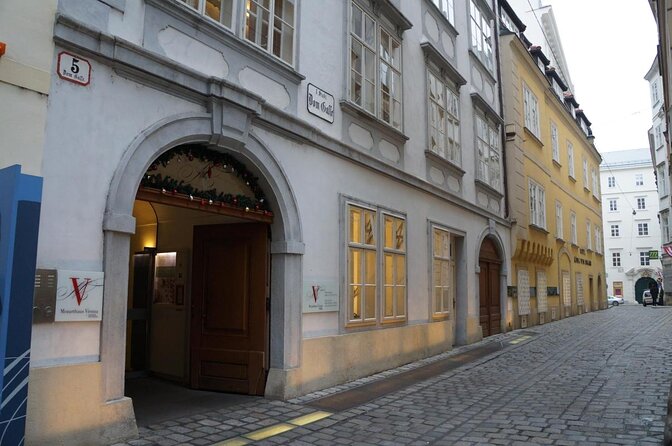
- Ballgasse explains Vienna through a street name: You’ll learn why this picturesque lane was once linked with a ball alley.
- Mozart’s former home adds a surprising money story: The tour looks beyond the composer’s music and explains why he could live at Vienna’s most exclusive address.
- Courtyards reveal aristocratic Vienna: You’ll see how noble families lived behind handsome façades.
- The route stays close to Stephansplatz: That makes it useful on your first day, especially if you want to get your bearings quickly.
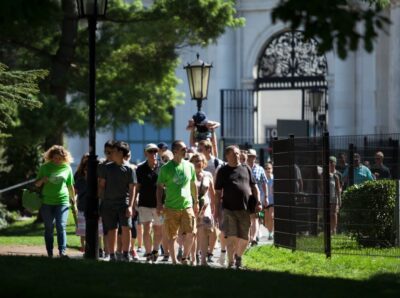
- A small group keeps the walk manageable: The maximum is 15 people, with a certified local guide leading in English.
- The two-hour length suits a busy schedule: At $36.04 per person, it offers a reasonably priced orientation, but it does not replace major palace or museum visits.
Why this short walk works near Stephansplatz
Stephansplatz is one of the easiest places in Vienna to find, and it gives the tour a strong starting point. You meet at the Lindt Chocolate Boutique at Stephansplatz 8A at noon, close to the city’s major pedestrian streets and the U3 subway line.
That location matters. You do not need a long transfer from a distant neighborhood, and you can pair the tour with other central sights before or after it. The walk ends at Dr.-Karl-Lueger-Platz 3, also in the first district, near a subway station. You finish in a useful part of the center rather than being sent back to the starting point.
I see this as an orientation walk with character. It helps you understand how the old center fits together while pointing out details you may miss on your own. One of the strongest practical benefits is that you can use the tour to choose what deserves a return visit later in your stay.
The route is on foot, so wear comfortable shoes. The experience calls for a moderate level of fitness. There is no hotel pickup, no included transportation, and no promise of an indoor visit at every stop. You are paying for the guide’s explanations and access to a more observant way of seeing central Vienna.
More Walking Tours in Vienna
- Vienna: Guided Walking Tour of City Center Highlights
★ 4.7 · 4,989 reviews - Vienna: Vienna Central Cemetery Guided Walking Tour
★ 4.8 · 3,307 reviews - Vienna: Guided Walking Tour of City Highlights & Hidden Gems
★ 4.9 · 2,180 reviews
Ballgasse and the stories behind ordinary streets
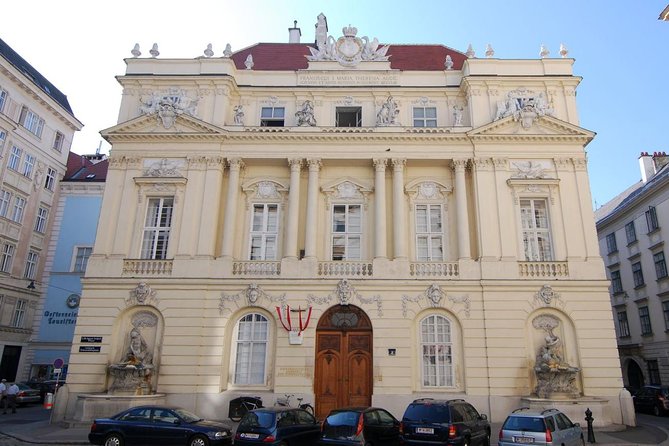
A useful city walk does more than take you from one landmark to the next. It tells you why the street in front of you looks and sounds the way it does. This tour makes that point early with Ballgasse.
The lane is picturesque, but the real interest comes from its name. You will hear why it was called a ball alley, turning a simple street sign into a clue about Vienna’s past. That is the kind of detail I value because it changes how you read the city afterward. Instead of seeing only façades, you start asking what happened here before the present shops and traffic.
Ballgasse also helps shift the mood away from the usual grand avenues. You are still in central Vienna, but the route draws attention to smaller passages and less obvious corners. The experience is not about covering a huge distance. It is about slowing down enough to notice the old city’s layers.
The tour also points out Vienna’s cat café and the façade of the Franciscan Church. Those details provide a pleasant mix of old and modern city life. You are not getting only dates and dynasties. You are seeing how historic streets function today.
Mozart’s address and the millionaire behind the music
Mozart is one of Vienna’s most familiar names, so a stop connected with him could easily feel predictable. Here, the angle is more surprising: you learn about Mozart’s most exclusive residence and why he was considered a millionaire.
That financial story gives you a different way to think about the composer. Mozart is often presented as a brilliant but struggling musical figure. The tour instead places him in the social and economic world of Vienna, where residence, status, and income mattered. The point is not simply that he lived in the city. It is that he could occupy an address associated with wealth and prestige.
You should not expect a full Mozart museum visit from this walk. The experience is an outdoor explanation within a larger route. That is useful if you want a quick piece of context, but less suitable if your main goal is an extended look at Mozart’s rooms, manuscripts, or personal objects.
I like this stop because it rewards curiosity. A familiar historical figure becomes less tidy and more human. You leave with a better question to carry into other Vienna sights: how did artists, patrons, and wealthy residents actually fit into the city’s social order?
Neupauer-Breuner Palace and the life behind the façade
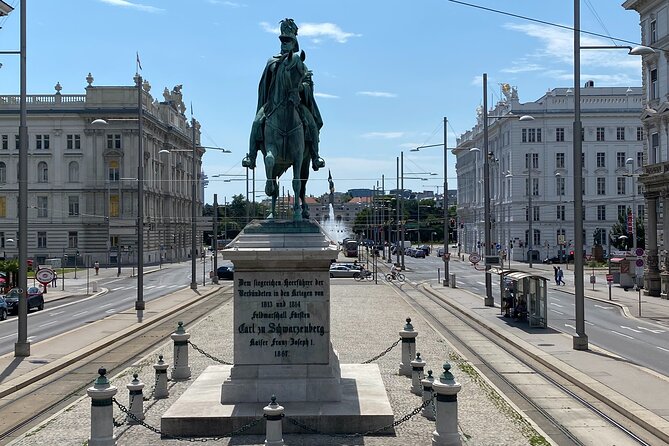
Vienna’s center is full of grand buildings that can blur together after a while. The Neupauer-Breuner Palace gives the walk a more focused look at how the nobility once lived.
The important part is not only the exterior. The tour leads you through beautiful courtyards and explains the relationship between public façades and private life. From the street, a palace can seem like a single formal block. Inside, its courtyards help you picture the people, servants, visitors, and daily routines that once occupied the complex.
This is where a local guide adds real value. Architecture alone can be admired in a few seconds. A guide can tell you what to look for and connect the building to Vienna’s class structure. You gain a clearer sense of how noble residences shaped the old center.
The courtyard portion may be especially appealing if you have already seen the obvious sights around Stephansplatz. It offers a change of pace from churches and major squares without requiring a long ride across town. Still, keep your expectations sensible. The tour is not advertised as a detailed palace interior visit, and access to particular areas can depend on what is open.
A completely different way to spend a day here:
- Vienna: Vivaldi’s Four Seasons Concert in Karlskirche
★ 4.7 · 14,951 reviews - Vienna: Spanish Riding School Training
★ 3.9 · 9,281 reviews - Vienna: Skip-the-cashier-desk-line Giant Ferris Wheel Ride
★ 4.5 · 7,859 reviews - Vienna: Schönbrunn Palace & Gardens Skip-the-Line Tour
★ 4.7 · 7,739 reviews
The Franciscan Church and a quieter side of central Vienna
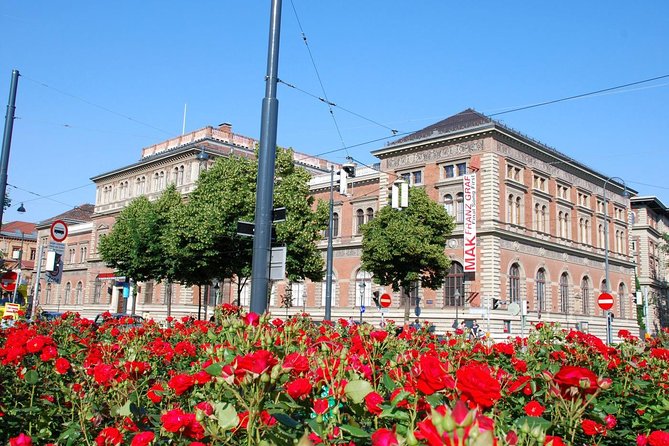
The Franciscan Church gives the route another strong architectural stop. Rather than treating it as a quick photo opportunity, the walk uses its façade as part of the story of the surrounding streets.
I like this kind of stop because it gives you a reason to look closely. A church façade can be easy to pass when you are focused on the larger attractions around Stephansplatz. With a guide beside you, you can pause, take in the design, and understand why the building belongs in the story of this neighborhood.
The church also fits the tour’s wider theme. The route does not try to collect Vienna’s most famous sights in one ambitious circuit. Instead, it shows how much character sits within a short walk of the main square. That makes it a good choice for someone who wants more than the standard cathedral-and-palace checklist.
If you want to enter every church or spend time inside each attraction, this may feel too brief. The strength is the connection between stops, not long independent visits at each one.
What the two-hour format gives you
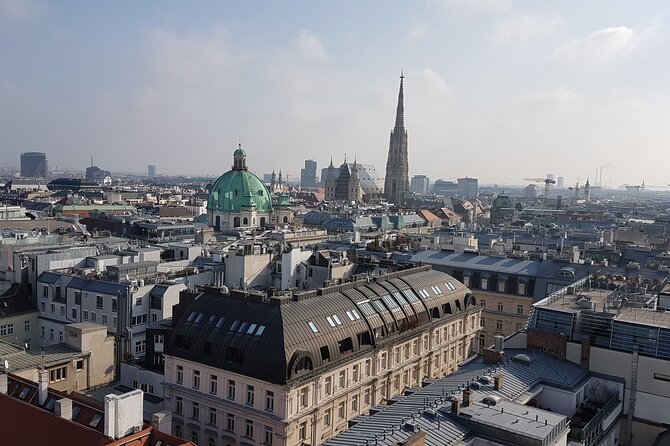
Two hours is enough time for a useful first look, but it creates a clear tradeoff. You get a focused route and several different subjects, including street history, Mozart, noble housing, church architecture, and local city life. You do not get lengthy stops, extensive free time, or a broad trip across Vienna.
That compact format is valuable on a first day. It can help you understand where the center’s streets lead and give you ideas for the rest of your stay. One particularly useful benefit is the chance to collect restaurant and food suggestions from the guide. Herbert’s recommendations were praised as practical enough to revisit on later days, which is exactly the sort of local help that can improve a short visit.
The tour is offered in English. The guide team includes Herbert Stojaspal, and Dorothea has also led the walk. The English explanations have been described as easy to follow even for people who are not native speakers. That makes the experience a reasonable choice for an international group with mixed language backgrounds.
With a maximum of 15 people, the group is not private, but it is smaller than a large coach-based outing. You should be able to hear the guide and stay together more easily. Group discounts are available, which may improve the price for families or companions booking together.
Is $36.04 good value for Vienna?
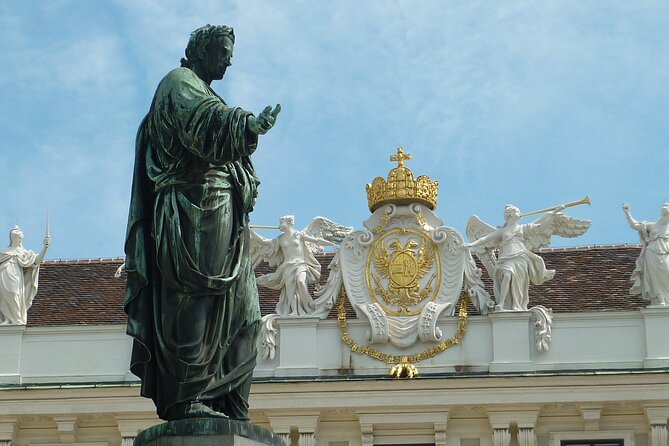
At $36.04 per person, the tour sits in a sensible range for a guided two-hour city walk. The value depends on what you want from it.
If you are new to Vienna, the price buys a quick orientation, a professional certified guide, and access to stories that are easy to miss when you walk alone. You also avoid spending half a day on a longer excursion when your schedule is tight.
The value is weaker if you want entry to major attractions, a private guide, or a detailed specialist tour devoted to Mozart, architecture, or church interiors. Those are not the main promise here. This is best understood as a compact introduction to central Vienna with several unusual stops.
A good way to use the tour is to schedule it near the beginning of your stay. Take notes on places that interest you, then return later when you have more time. At the same time, if noon is your only free slot on a crowded sightseeing day, remember that the walk ends around 2 p.m. and remains entirely on foot.
Who should book this Vienna walking tour?
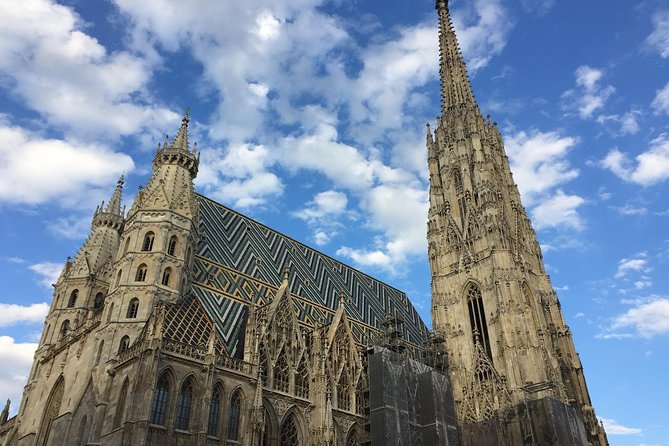
I would choose this experience if you are visiting Vienna for the first time and want to get oriented without committing to a full-day program. It also suits repeat visitors who have seen the major attractions and want a closer look at the streets around Stephansplatz.
It is a particularly good fit for you if:
- You enjoy local stories more than a long list of famous monuments.
- You want a short activity that leaves time for museums, shopping, or dinner.
- You like architecture, old neighborhoods, and city history.
- You appreciate a guide who can suggest food and restaurants.
- You are comfortable walking for two hours at a moderate pace.
- You are traveling with a small group and want a manageable English-language tour.
I would think twice if your children are 13 or younger, since the experience is not recommended for that age group. I would also look elsewhere if you need hotel pickup, included transportation, wheelchair-specific information, or a fully indoor activity.
Booking ahead is sensible. The tour is often reserved about 25 days in advance, and the group has a 15-person limit. You can cancel for a full refund up to 24 hours before the start time. If the minimum number is not reached and the provider cancels, you are offered another date or experience, or a full refund.
My booking verdict
Book this tour if you want to see Vienna through small details rather than only its headline sights. The Ballgasse story, Mozart’s wealthy address, the noble courtyards, and the Franciscan Church create a varied two-hour route close to the center.
I would treat it as a smart first-day introduction, not a substitute for Schönbrunn, major museums, or a dedicated Mozart visit. At $36.04, the experience earns its value through the guide’s local context and the chance to notice places you might otherwise pass without a second glance.
FAQ
Where does the Vienna Secrets Walking Tour start?
The tour starts at the Lindt Chocolate Boutique, Stephansplatz 8A, 1010 Vienna.
What time does the tour begin?
The listed start time is 12:00 p.m.
Where does the tour end?
It ends at Dr.-Karl-Lueger-Platz 3, 1010 Vienna, near the U3 subway station.
How long does the tour last?
The walking tour lasts approximately two hours.
What language is the tour offered in?
The tour is offered in English.
How many people can join the tour?
The maximum group size is 15 travelers.
Is transportation included?
No. Hotel pickup, hotel drop-off, and transportation to or from the attraction are not included.
Can I cancel for a refund?
Yes. You can cancel at least 24 hours before the start time for a full refund. Cancellations or changes made less than 24 hours before the start time are not refunded or accepted.
Just added around Vienna
- Vienna: UNESCO Schönbrunn Palace Guided Tour with Entry★ 4.5 · 94 reviews
- World War II History Vienna Old Town Private Walking Tour★ 4.8 · 9 reviews
- Vienna: Winery and Wine Tasting Tour with a Wine Expert★ 5.0 · 5 reviews
- Vienna: Wine Tasting Tour★ 4.8 · 61 reviews
- Vienna: Wine Tasting E-Bike Tour★ 4.9 · 46 reviews
- Vienna: Wine Tasting at Schönbrunn Palace★ 4.3 · 71 reviews
- Vienna: Concert by the Vienna Baroque Orchestra★ 4.6 · 56 reviews
- Vienna: Wachau Valley Private Kayak and Wine Tour★ 5.0 · 3 reviews
Walking Tours, compared.
Guided Walking Tour of City Center Highlights
Read our review →
Guided Walking Tour of City Highlights & Hidden Gems
Read our review →
Vienna Historic Center Small Group Walking Tour
Read our review →
Browse the lists this tour appears in