
Reviewed · WALKING TOURS
Vienna Art Nouveau Walking Tour
Vienna’s metro was designed as more than a way to move people. Otto Wagner treated it as a citywide work of art, using elegant stations, bold materials, and clear visual symbols to announce that Vienna had joined the modern age. I like the way this tour connects public transportation with urban history, and I especially like that it takes you beyond grand palaces to buildings you might otherwise walk past.
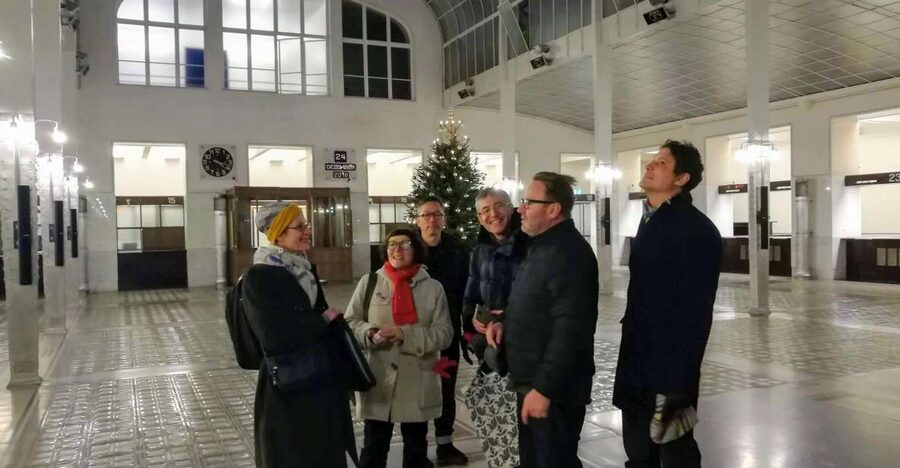
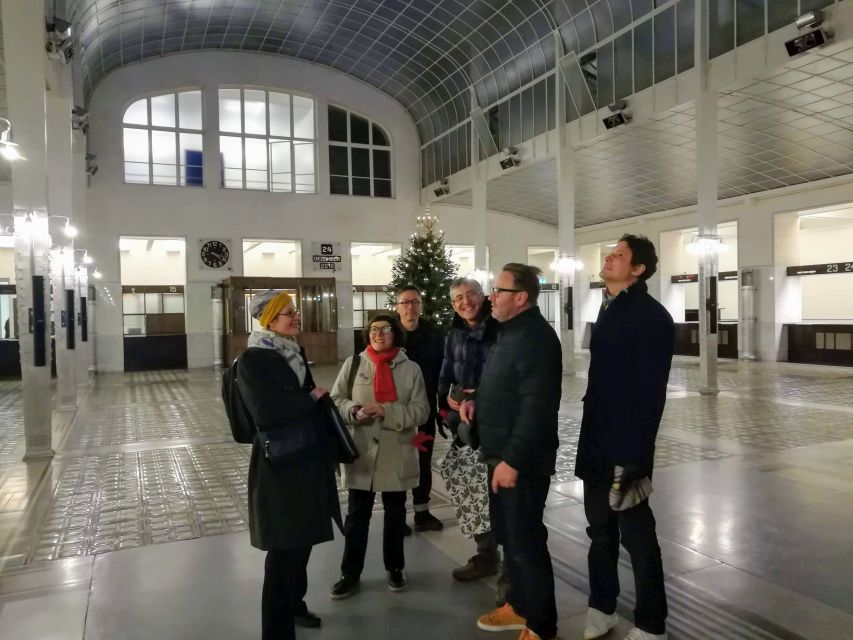
I also like the flexible format. Guides such as Wolfgang, Peter, and Guissepina have been praised for answering questions and adjusting the walk to the group. The catch is simple: this is a walking tour in name and in practice. You may cover several miles, and the advertised three-hour visit can feel brisk if you want to linger at every façade.
Key points to know
- Otto Wagner’s metro stations show how Vienna turned daily transport into civic design.
- Karlsplatz and Stadtpark offer some of the finest surviving examples of the original system.
- Secession House adds Klimt’s Beethoven Frieze, but its €9.50 adult admission is extra.
- The imperial station near Schönbrunn reveals how Art Nouveau was adapted for royal ceremony.
- Private and small-group options make it easier to ask questions and shape the discussion.
- A historian guide gives the architecture political and social context, not just dates and names.
Why Vienna’s metro became an Art Nouveau project
Late 19th-century Vienna was growing fast. People were moving into the expanding suburbs, while the historic center remained the city’s main commercial and political hub. A modern rail system was needed to connect these areas with the Ringstrasse and the central districts.
City leaders turned to Otto Wagner, who understood that the new railway would do more than solve a transport problem. It would change the way Vienna looked and felt. His stations needed to be easy to identify, practical for daily use, and worthy of a city presenting itself as a modern European capital.
Wagner chose the international Art Nouveau style, known in Vienna as Jugendstil. Its curves, plant forms, geometric patterns, and new use of materials offered a sharp break from old-fashioned historic imitation. The metro became a public lesson in modern design. You did not need to enter a museum to see the new Vienna. You could encounter it on the way to work.
That is the central idea of this tour. Instead of treating Art Nouveau as a decorative style, the guide explains the beliefs behind it. You’ll consider why designers favored certain materials, how symbols worked, and why Wagner’s stations were meant to be recognized as part of one great system.
More Walking Tours in Vienna
- Vienna: Guided Walking Tour of City Center Highlights
★ 4.7 · 4,989 reviews - Vienna: Vienna Central Cemetery Guided Walking Tour
★ 4.8 · 3,307 reviews - Vienna: Guided Walking Tour of City Highlights & Hidden Gems
★ 4.9 · 2,180 reviews
Starting at Café Museum and Karlsplatz
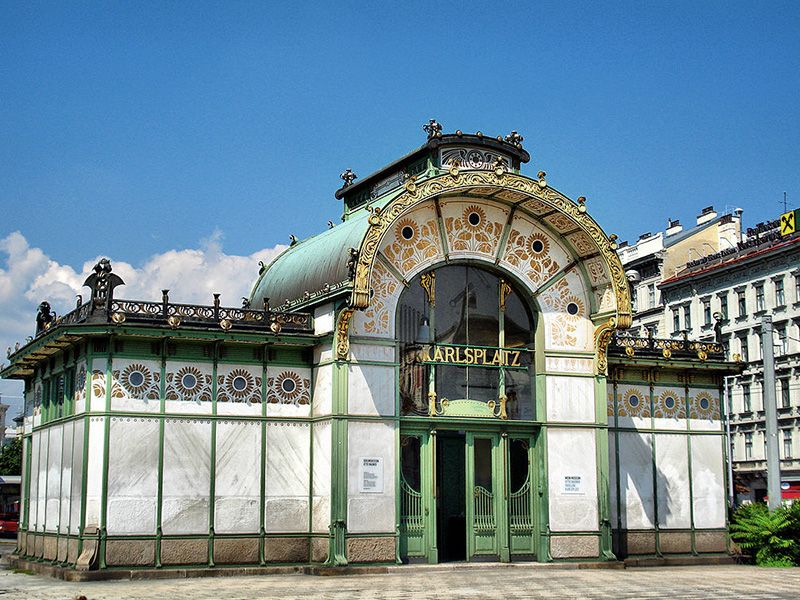
The usual meeting point is Café Museum at Operngasse 7, in Vienna’s first district. The selected starting option can vary, so check the exact details when booking. From there, the tour moves toward the Otto Wagner Pavilion at Karlsplatz.
The pavilion is one of Vienna’s best-known Art Nouveau structures. Its pale surfaces, metal details, and carefully arranged decoration make it easy to see Wagner’s wish for a clean, modern identity. It was designed as part of the metro system, yet it has the formal presence of a small monument.
Inside, the small Wagner Museum helps set the scene. Admission to the pavilion is not included, so you should budget for that separately. The tour still makes good use of the stop because the building gives you a clear example of Wagner’s design language before you see it repeated and adapted elsewhere.
Karlsplatz is also a smart opening point because it makes the connection between architecture and transport immediately clear. You are not looking at an isolated villa or an ornamental apartment entrance. You are looking at a station built for a growing city.
Stadtpark and the surviving metro design
The walk continues to Stadtpark station, described as the best-preserved original metro station still in use. This is one of the tour’s strongest stops for anyone who wants to understand how Wagner’s ideas worked in a real public setting.
The station was made to be seen quickly. Its design creates a clear identity for passengers approaching from the street, while its decoration gives an ordinary commute a sense of occasion. Your guide can point out how the materials and patterns work together rather than simply asking you to admire a pretty façade.
I find this kind of stop more useful than a quick photo visit. You begin to notice that Art Nouveau was not only about floral decoration. It was also about organization, visibility, and the belief that modern life deserved good design.
The station is still used, which adds a practical dimension. You can see how a structure created for Vienna’s 19th-century expansion remains part of the city’s daily movement. At the same time, an active station is not a quiet museum. Expect the guide to explain details while people come and go.
Secession House and Klimt’s Beethoven Frieze
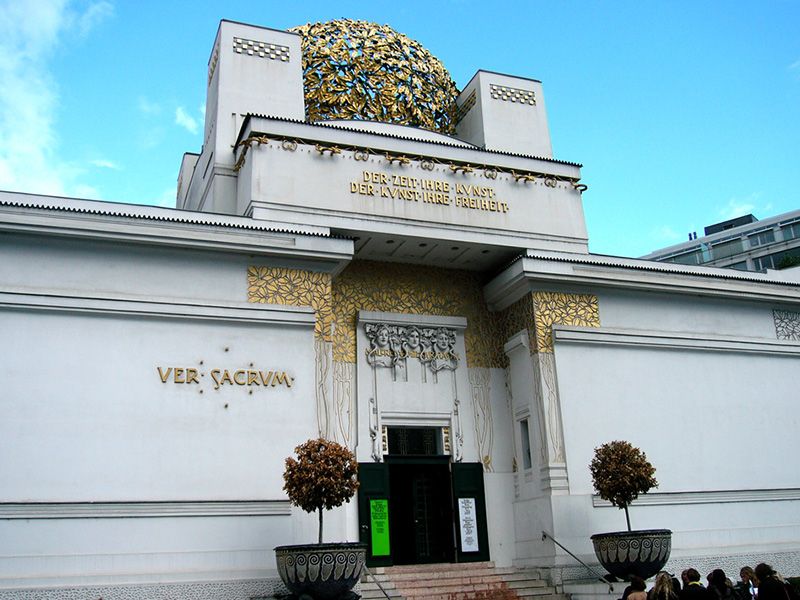
From the metro route, the tour continues toward the Secession Building, the best-known symbol of Viennese Jugendstil. Its dome of gilded leaves is hard to confuse with anything else in Vienna. The building was created by artists who wanted a new platform for modern work, outside the control of older institutions.
The exterior is only part of the reason to visit. From Tuesday through Sunday, the tour includes access to see Gustav Klimt’s Beethoven Frieze, one of Vienna’s most important Art Nouveau works. Admission costs €9.50 for adults and €6 for students and seniors, and the guide helps you pay.
This is a valuable addition because it puts Wagner’s architecture into a larger artistic setting. You can compare the building’s formal geometry with Klimt’s symbolic figures and lavish surface treatment. The two approaches are different, but both express the period’s interest in breaking with the past.
Keep the schedule in mind. The Secession visit adds an indoor art stop to a tour that also includes several exterior buildings and metro stations. If Klimt matters to you, this may be the part that justifies the added admission. If your main interest is engineering or urban planning, you may prefer to spend more time discussing Wagner’s transport system.
A completely different way to spend a day here:
- Vienna: Vivaldi’s Four Seasons Concert in Karlskirche
★ 4.7 · 14,951 reviews - Vienna: Spanish Riding School Training
★ 3.9 · 9,281 reviews - Vienna: Skip-the-cashier-desk-line Giant Ferris Wheel Ride
★ 4.5 · 7,859 reviews - Vienna: Schönbrunn Palace & Gardens Skip-the-Line Tour
★ 4.7 · 7,739 reviews
Otto Wagner’s apartment houses
Along the route, you’ll see two apartment buildings designed by Otto Wagner. These stops show how his ideas appeared in everyday residential architecture, not only in public stations and ceremonial buildings.
Apartment façades are especially useful for understanding the social side of Art Nouveau. A station had to serve the whole city, while an apartment house also had to attract residents and signal modern taste. Wagner used decoration, structure, and surface materials to give ordinary urban housing a distinct identity.
Your guide may also point out how Vienna’s architecture can conceal layers of religious and social history. One detailed tour account describes questions about the old city, including less obvious places of worship such as Jewish synagogues. That suggests this experience can extend beyond a narrow study of ornament, especially if you ask about the buildings and streets you pass.
The tour works best when you look up. Vienna’s grand façades are easy to photograph from street level, but the details often sit around entrances, windows, rooflines, and upper floors. A private or small group makes it easier to stop and ask why a particular shape or material was chosen.
Kettenbrücke and the final metro ride
Kettenbrücke station is another important surviving part of Wagner’s metro work. By this point, you have seen the system’s urban purpose and several related buildings, so the station becomes a chance to compare designs rather than view it alone.
The final stage involves taking the metro to the imperial station near Schönbrunn. The ride itself reinforces the theme of the tour: Wagner’s architecture is connected by the same transport network it helped define.
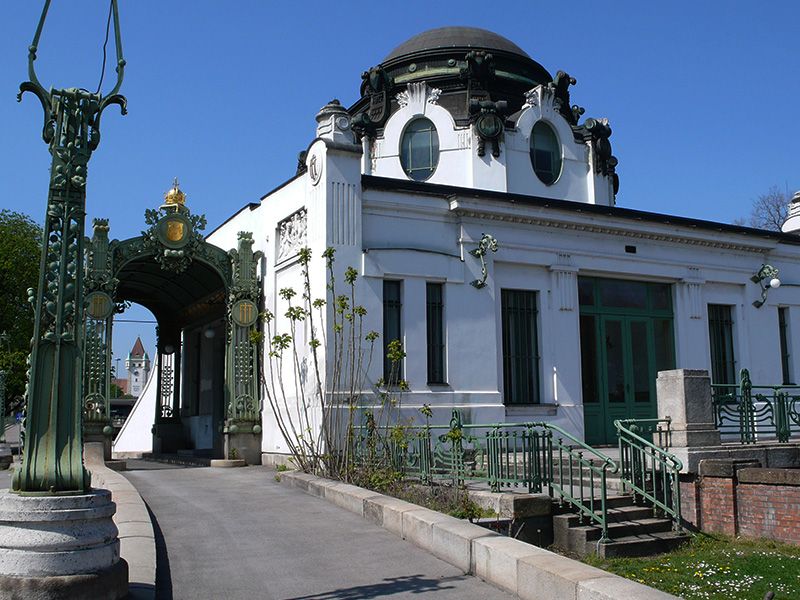
The imperial station was built solely for the emperor. That purpose explains its unusual scale and finish. It was not just a stop for passengers. It was a political statement, created to show critics that the emperor supported Vienna’s new metro line.
This station is the most striking example of Wagner adapting a generally bourgeois Art Nouveau style for imperial use. The forms and materials still belong to Jugendstil, but the effect is more formal and grand. The building shows how one design movement could serve both ordinary commuters and the monarchy.
The station is outside Schönbrunn, so this portion changes the rhythm of the tour. You move from central Vienna’s streets and apartment façades to a building tied directly to imperial ceremony. It is a fitting final stop because it brings together transport, politics, design, and royal image-making.
Österreichische Postsparkasse and Vienna’s modern side
The route also includes the Österreichische Postsparkasse, or Austrian Postal Savings Bank. This building is associated with Wagner’s later architectural work and gives you another way to see his interest in practical institutions.
A bank is not a palace, but it still needed to project trust, efficiency, and modernity. The building’s design shows how Art Nouveau could be used for a serious civic and commercial purpose. Your guide can help you compare it with the metro stations, where public movement was the main concern.
This stop is useful for travelers who want to see more than one Wagner project. It helps you track his development and understand that his work was not limited to one recognizable station style. The tour shifts between transport, housing, banking, and art, giving you a broader picture of Vienna’s modern design culture.
What the three hours feel like
The stated duration is three hours, though the detailed route is also described as about two and a half hours. Allow room for variation, especially if the group asks many questions or spends time inside the Secession Building.
The pace includes substantial walking. One couple described walking miles during a small private tour, which is useful advice even if the exact route varies. Wear comfortable shoes and think of this as an active architecture walk, not a short series of nearby photo stops.
The English-language guide is a major part of the value. Names noted for this experience include Wolfgang, Peter, and Guissepina. One guide tailored the route for a two-person group, another handled many questions about Austrian history and architecture, and Guissepina was described as warm, attentive, and well informed about Art Nouveau.
Those details matter because the buildings can be easy to admire without fully understanding. A good guide explains what you are seeing, then gives you a reason to care. The best discussions may range from metro planning to imperial politics, Klimt, hidden religious sites, and the changing identity of Vienna.
Is the $176 price worthwhile?
At $176 per person, this is not a budget sightseeing walk. The price makes the most sense for a private or small-group experience where you want direct access to a historian guide and time for questions.
The tour includes the three-hour guided experience, but admissions are separate. The Otto Wagner Pavilion and Secession House cost extra, with Secession listed at €9.50 for adults and €6 for students and seniors. Add those costs when comparing this tour with a general city walk.
For someone who already plans to visit the Secession Building, the extra admission is straightforward. The larger question is whether you value interpretation. If you only want to photograph stations, you can see several buildings on your own for far less. If you want to understand why Vienna built this system, how Wagner shaped its identity, and how Art Nouveau related to politics and society, the guide adds real value.
Small groups also change the experience. You can ask about a façade, request more detail on Klimt, or steer the conversation toward urban planning. The available format is particularly useful for architecture fans who do not want to be lost in a large crowd.
The booking terms are practical. You can reserve now and pay later, and cancellation is free up to 24 hours before the tour. Starting times depend on availability, so confirm the schedule before planning another major visit afterward.
Who should book this Art Nouveau walk?
I would choose this tour if you like architecture, urban history, design, or the story of how cities modernize. It is also a good choice if you have already seen Vienna’s imperial highlights and want to understand the less obvious structures that shaped daily life.
It suits curious first-time visitors who want more context than a standard sightseeing route provides. The focus on metro stations makes the subject concrete, while Secession House and the apartment buildings widen the picture.
You should think twice if you dislike walking, want a relaxed pace, or have little interest in architecture. The route covers several distinct stops, and the strongest moments come from listening closely to explanations of style, materials, and political meaning.
Final verdict
Book this tour if Otto Wagner, Klimt, and Vienna’s transition into a modern capital sound more interesting than another pass by the Hofburg. The combination of active metro stations, Art Nouveau buildings, Secession House, and the emperor’s private station gives you a clear story with plenty to look at.
Skip it if you want a cheap orientation walk or prefer to explore at your own pace. For architecture lovers and visitors who enjoy asking questions, the small-group format and strong guides make the $176 price easier to justify, especially when you treat the tour as a focused lesson in how Vienna was built for the modern age.
FAQ
Where does the Vienna Art Nouveau Walking Tour meet?
The stated meeting point is Café Museum, Operngasse 7, A-1010 Vienna. The selected tour option may affect the exact starting location, so check your booking details.
How long does the tour last?
The activity is listed as three hours. The detailed description also refers to a two-and-a-half-hour guided tour, so allow some flexibility.
What language is the tour offered in?
The live tour guide speaks English.
Is this a private tour or a group tour?
Private and small-group options are available.
Is admission to the Otto Wagner Pavilion included?
No. Admission to the Otto Wagner Pavilion is not included in the tour price.
Is admission to Secession House included?
No. Admission costs €9.50 for adults and €6 for students and seniors.
Can I see Klimt’s Beethoven Frieze?
If your tour takes place Tuesday through Sunday, the visit includes Secession House and the chance to see Gustav Klimt’s Beethoven Frieze.
What buildings are included?
The route includes Café Museum, the Otto Wagner Pavilion at Karlsplatz, Secession House, Otto Wagner’s imperial pavilion at Hietzing, and the Österreichische Postsparkasse. It also includes visits to metro stations and Otto Wagner apartment houses.
Can I cancel the booking?
You can cancel up to 24 hours in advance for a full refund. The reserve-now-and-pay-later option lets you book without paying immediately.
Just added around Vienna
- Vienna: UNESCO Schönbrunn Palace Guided Tour with Entry★ 4.5 · 94 reviews
- World War II History Vienna Old Town Private Walking Tour★ 4.8 · 9 reviews
- Vienna: Winery and Wine Tasting Tour with a Wine Expert★ 5.0 · 5 reviews
- Vienna: Wine Tasting E-Bike Tour★ 4.9 · 46 reviews
- Vienna: Wine Tasting at Schönbrunn Palace★ 4.3 · 71 reviews
- Vienna: Wine Tasting Tour★ 4.8 · 61 reviews
- Vienna: Wiener Schnitzel and Strudel Cooking Class★ 4.9 · 126 reviews
- Vienna: Concert by the Vienna Baroque Orchestra★ 4.6 · 56 reviews
Walking Tours, compared.
Guided Walking Tour of City Center Highlights
Read our review →
Guided Walking Tour of City Highlights & Hidden Gems
Read our review →
Vienna Historic Center Small Group Walking Tour
Read our review →
Browse the lists this tour appears in