
Reviewed · HISTORICAL TOURS
World War II History Vienna Old Town Private Walking Tour
Vienna’s grand center carries a darker story beneath its imperial surface. This private walk connects Morzinplatz, Hofburg, Heldenplatz, Jewish memorials, and the State Opera to the political choices and human suffering of two world wars.
I like the clear route through the Old Town and the chance to ask questions without a large group slowing things down. I also like the broad timeline, which links Franz Ferdinand’s assassination, Austrofascism, Hitler’s annexation of Austria, the Holocaust, and the bombing of Vienna. The main consideration is the price: at $214 per person for two hours, this makes the most sense for visitors who want a private, focused history lesson rather than a general city walk.
Key points
- Morzinplatz begins the story: Start beside the memorial marking the former Gestapo headquarters at the Hotel Metropol.
- The walk connects two wars: Learn how the First World War, Austria’s political upheaval, and the Second World War fit together.
- Major landmarks gain a darker context: See Hofburg, Heldenplatz, St. Stephen’s Cathedral, Burggarten, and the Vienna State Opera along the route.
- Jewish history is central: Pass the Holocaust Memorial and Remembrance Stones while learning about Vienna’s Jewish citizens under Nazi rule.
- A private guide keeps the pace flexible: Groups of up to 25 people are assigned one guide, with additional guides for larger parties.
- Language choice is unusually broad: Tours are offered in English, German, Italian, French, Spanish, Russian, Polish, Chinese, Japanese, Croatian, Portuguese, and Arabic.
Starting at Morzinplatz and the former Gestapo headquarters
The tour begins at the Memorial to the Victims of Nazi Terror on Morzinplatz, at Morzinplatz 4 in Vienna’s first district. This is not a soft opening with decorative palace facts. The first stop puts political terror and personal loss at the front of the walk.
The memorial marks the site of the former Hotel Metropol, which was used as the Gestapo headquarters in Vienna from 1939. Your guide can use this location to explain how Nazi control operated in Austria and how ordinary city streets became places of interrogation, fear, and persecution.
I find this a strong meeting point because it gives the rest of the tour a clear purpose. You are not simply ticking off famous buildings. You are learning to read the center of Vienna as a place shaped by dictatorship, war, and remembrance.
More Walking Tours in Vienna
- Vienna: Guided Walking Tour of City Center Highlights
★ 4.7 · 4,989 reviews - Vienna: Vienna Central Cemetery Guided Walking Tour
★ 4.8 · 3,307 reviews - Vienna: Guided Walking Tour of City Highlights & Hidden Gems
★ 4.9 · 2,180 reviews
The road from Franz Ferdinand to the First World War
A good two-hour history walk needs a firm timeline, and this one begins before Hitler. You learn about the assassination of Archduke Franz Ferdinand, the event that helped trigger the First World War, then follow the political and social consequences that shaped Austria afterward.
The tour covers causes and results rather than treating the war as a single isolated event. That matters in Vienna, where the end of the Habsburg era changed the country’s political identity and left Austria dealing with defeat, upheaval, and a difficult new order.
The guide also places Austrofascism in the story. This helps explain that Austria’s road to the Second World War was not simply a sudden outside takeover. The political climate inside Austria, the weakness of democracy, and the growth of authoritarian movements all form part of the background.
If you already know the major dates, you can use the private format to ask for more detail on a particular subject. If you are starting from scratch, the broad structure should help you keep the events in order.
Hofburg and Heldenplatz: power in the imperial center
The route continues through Vienna’s Inner Stadt, where the imperial Hofburg complex provides a striking contrast to the political violence discussed by the guide. You see the palace from the outside, not through a palace interior visit, so this tour is about the building’s public and political meaning rather than its rooms and collections.
At Heldenplatz, the guide discusses the memorial crypt dedicated to victims of the First and Second World Wars. This is a useful place to consider how a city remembers military death, national defeat, and political responsibility.
The square also connects to Adolf Hitler’s annexation of Austria. The tour examines his relationship with Austria and the events surrounding the country’s incorporation into Nazi Germany. That subject can easily be reduced to a few dramatic facts, but the setting allows your guide to connect national politics, propaganda, public ceremony, and the later consequences of the regime.
You will also see the monument to Emperor Franz Joseph I in Burggarten. It adds another layer to the timeline, taking you back to the imperial state before the world wars. The walk works best when you pay attention to these shifts in architecture and public space: imperial power, wartime memory, and Nazi rule all appear within a compact area.
Holocaust memorials and the fate of Vienna’s Jewish citizens
The Holocaust portion is not treated as a side note. As you pass the Holocaust Memorial and Remembrance Stones, the guide focuses on the tragic fate of Vienna’s Jewish population and the way Nazi persecution changed daily life.
The Remembrance Stones are small, personal markers. They direct attention away from broad numbers and toward individual lives, families, and addresses. You might find these stops especially affecting because they sit within normal city surroundings, close to shops, offices, and the steady movement of modern Vienna.
The Holocaust Memorial gives the subject a larger public setting. Together, the two forms of remembrance help you see how Vienna confronts its Nazi past: through a major memorial and through markers tied to particular people.
This section can be emotionally heavy, so the private format is useful. You can ask for clarification, slow the pace, or spend a little more time with a subject that matters to you. The supplied tour information does not promise a museum visit, and the listed stops are viewed from the streets, so do not expect an indoor exhibition or a long archive presentation.
More history walks around Vienna:
- Vienna: Time Travel and Magic Vienna History Tour
★ 4.6 · 3,879 reviews - Vienna: World War II Historical Walking Tour
★ 4.8 · 1,772 reviews - Vienna Historic Center Small Group Walking Tour
★ 5.0 · 1,746 reviews - Time Travel-Magic Vienna History Tour Ticket
★ 4.5 · 1,099 reviews
Adolf Hitler, Ernst Kaltenbrunner, and Austrian Nazi leaders
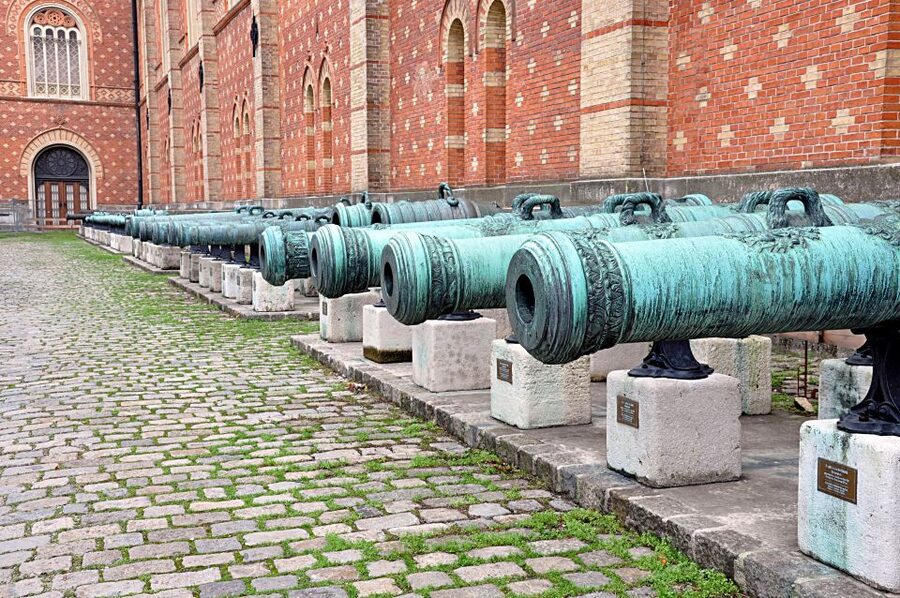
The tour gives attention to Adolf Hitler, Ernst Kaltenbrunner, and other Austrian Nazis. That focus is important because it avoids presenting Austria only as a passive victim of German rule.
Your guide explains the Austrian setting around Hitler’s annexation and the people who helped carry out Nazi policy. Ernst Kaltenbrunner, an Austrian-born senior Nazi official, represents the broader network of Austrian involvement in the regime. The point is not to turn the walk into a list of names. It is to show how power moved through institutions and how local participation affected the city.
This is also where your questions can make the private tour more useful. You might ask how propaganda appeared in public life, how the regime treated political opponents, or how the city’s Jewish citizens were targeted. The experience is designed to be tailored to your interests, within the limits of a two-hour walking route.
St. Stephen’s Cathedral and the Old Town setting
St. Stephen’s Cathedral is one of Vienna’s most recognizable landmarks, and seeing it within a wartime history walk changes the way you read the center. The cathedral is not presented as a separate religious sightseeing stop with an interior tour. Instead, it forms part of the Old Town route and the larger story of a city living through political upheaval and war.
The surrounding streets are valuable because they keep the history connected to daily life. The guide discusses propaganda and ordinary experience in German-occupied Austria while you move through the same central district that today feels orderly and elegant.
I would not choose this tour if your main goal is cathedral architecture, imperial interiors, or art history. The sights are used as historical reference points, and the guide’s attention stays on World War I, World War II, Nazi rule, the Holocaust, and Vienna’s wartime experience.
From wartime Vienna to the bombing and liberation
The final part of the route leads toward the Vienna State Opera and the Monument Against War and Fascism. The opera was heavily damaged by the 1945 bombing, making it a useful place to discuss the destruction of Vienna near the end of the war.
The route also addresses the bombing and liberation of the city. This gives the tour a closing movement: from the origins of conflict, through authoritarian rule and mass persecution, to the physical damage and political collapse of 1945.
The Monument Against War and Fascism near the opera is a direct final statement. It is not a decorative conclusion. It asks you to think about war, dictatorship, and responsibility before you return to the ordinary business of central Vienna.
Ending here is practical, too. The State Opera is a well-known point in the city center, so you can continue sightseeing afterward. The tour does not provide transport, and you should plan to walk back or onward from this final stop.
What the private format adds at $214 per person
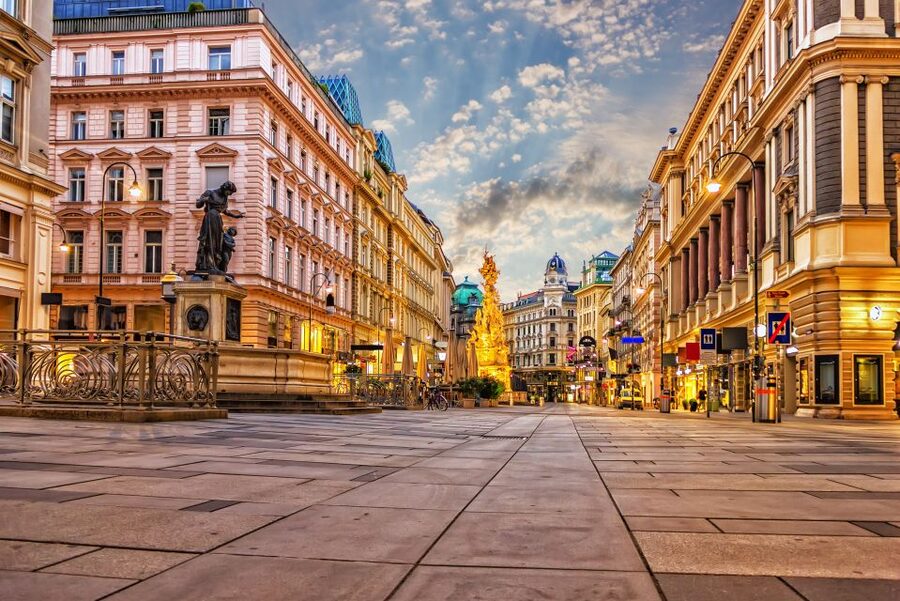
The price is $214 per person, which is high for a two-hour walk if you are comparing it with a large public group tour. The value comes from the private setup, the specialist subject, the language choice, and the chance to shape the conversation around your interests.
A group of one to 25 people is assigned one guide. That upper limit is worth noting. Twenty-five people is still a fairly large group for a walking discussion, though additional guides are arranged for larger bookings and the price rises.
For two people, the total cost may feel steep. For a family or small group sharing the experience, the per-person price can make more sense, especially if you want a language other than English or need a guide who can pause for questions.
The tour is also a better value for visitors who want context rather than just photographs. You see several important sights, but the real product is the explanation tying them together. If you would rather move quickly between famous landmarks, you may find the price harder to justify.
The guide makes the difference
This subject depends heavily on the guide’s ability to explain difficult material clearly. The available guides have included Peter, Sanda, Alexander, and Frau Heuberger. Peter was especially patient with a family traveling with a two-year-old, while Frau Heuberger adjusted the route and pauses during very hot weather.
Those details matter because a two-hour walk can become tiring when the topic is serious and the weather is poor. A guide who balances talk, movement, questions, and breaks will make the experience much easier to absorb.
Past guide assignments have also included strong professional feedback for Sanda and Alexander. You cannot choose a particular guide from the information provided, so treat the named guides as examples of people who may lead the tour, not a guarantee for your date.
The language list is one of the strongest practical features. English, German, Italian, French, Spanish, Russian, Polish, Chinese, Japanese, Croatian, Portuguese, and Arabic are available. Check your selected language and starting time carefully before booking.
Timing, clothing, and the practical side of the walk
The tour lasts two hours and takes place outdoors in Vienna’s Old Town. Comfortable shoes are essential, and you should dress for the weather.
The route is not described as an accessibility-focused tour, so ask the provider directly if your party has specific mobility needs. The tour is on foot, and the experience includes several outdoor monuments and streets rather than a seated museum visit.
Check your email the day before departure for important information. The meeting point is in front of the Memorial to the Victims of Nazi Terror at Morzinplatz, not at Hofburg or St. Stephen’s Cathedral. Arriving at the correct memorial matters, since the tour begins with the history of the former Gestapo headquarters.
The tour offers free cancellation up to 24 hours before the start time, and you can reserve now and pay later. Those terms are helpful if your Vienna schedule is still changing, but the main planning concern remains the walk itself: allow enough energy for two hours of standing and moving through the center.
Who will get the most from this Vienna history walk
I would recommend this tour to you if you want a serious introduction to Vienna’s twentieth-century past and prefer asking questions in a private setting. It suits couples, families with older children, and small groups with a shared interest in war history, Nazi Germany, Austrian politics, or Holocaust remembrance.
It also works well if you have only a short time in Vienna but want more than a general Old Town orientation. The route includes several major sights, so you can connect the history walk with other central sightseeing afterward.
Families should know that the subject is difficult. A two-year-old can be accommodated with patience and pauses, as one guide demonstrated, but the content is aimed at adults and older children who can engage with persecution, war, and mass death.
I would choose another experience if you mainly want palace interiors, art collections, cathedral architecture, or a light introduction to Vienna. This is a focused history tour, and its value depends on your willingness to spend two hours with serious material.
Should you book the World War II History Vienna Old Town Private Walking Tour?
Book it if you want a private guide to explain how Vienna moved from imperial power and the First World War into Austrofascism, Nazi annexation, the Holocaust, bombing, and liberation. The route is compact, the subject is handled across several meaningful locations, and the wide language choice helps many kinds of groups.
At $214 per person, I would book only if the topic is a priority or if your group values private guiding. For a quick list of sights, it is costly. For a carefully connected lesson in Vienna’s wartime past, with room for your own questions and interests, it can be a worthwhile use of two hours.
FAQ
Where does the tour begin?
Meet your guide in front of the Memorial to the Victims of Nazi Terror at Morzinplatz 4, 1010 Vienna. The memorial is near the former Hotel Metropol, which was used as the Gestapo headquarters in Vienna from 1939.
Where does the tour end?
The walk ends at the Monument Against War and Fascism near the Vienna State Opera.
How long does the tour last?
The walking tour lasts two hours.
Is the tour private?
Yes. It is offered as a private group tour. One guide covers groups of 1 to 25 people, and larger groups receive additional guides at a higher price.
Which languages are available?
The guide can lead the tour in English, German, Italian, French, Spanish, Russian, Polish, Chinese, Japanese, Croatian, Portuguese, or Arabic.
What places will I see?
The route includes Morzinplatz, Hofburg from the outside, Heldenplatz, the memorial crypt for First and Second World War victims, Burggarten, St. Stephen’s Cathedral, the Holocaust Memorial, Remembrance Stones, and the Monument Against War and Fascism near the Vienna State Opera.
Does the tour include indoor visits?
The stated route includes an exterior visit to Hofburg and outdoor sightseeing at monuments and historic places. No indoor museum or palace entry is included in the tour details.
What should I wear?
Wear comfortable shoes and dress appropriately for the weather, since the experience is a walking tour. It is also wise to check your email the day before for important tour information.
Just added around Vienna
- Vienna: UNESCO Schönbrunn Palace Guided Tour with Entry★ 4.5 · 94 reviews
- Vienna: Winery and Wine Tasting Tour with a Wine Expert★ 5.0 · 5 reviews
- Vienna: Wine Tasting E-Bike Tour★ 4.9 · 46 reviews
- Vienna: Wine Tasting at Schönbrunn Palace★ 4.3 · 71 reviews
- Vienna: Wine Tasting Tour★ 4.8 · 61 reviews
- Vienna: Concert by the Vienna Baroque Orchestra★ 4.6 · 56 reviews
- Vienna: Wachau Valley Private Kayak and Wine Tour★ 5.0 · 3 reviews
- Vienna: Wiener Schnitzel and Strudel Cooking Class★ 4.9 · 126 reviews
Historical Tours, compared.
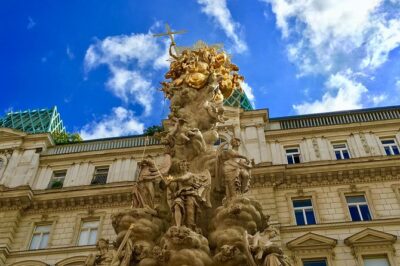
Vienna Historic Center Small Group Walking Tour
Read our review →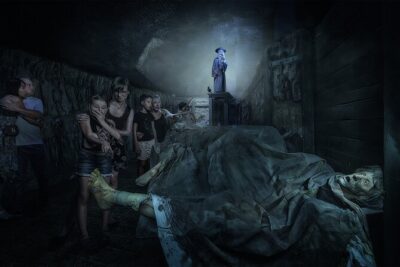
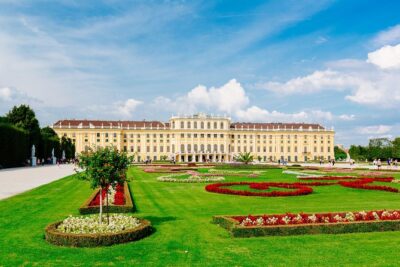
Skip-the-Line Schonbrunn Palace Guided Tour and Vienna Historical City Tour
Read our review →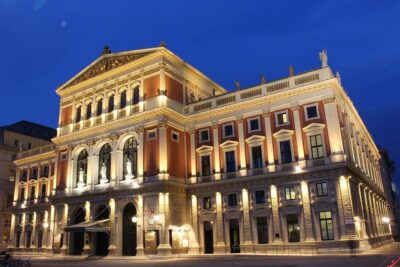
Vienna Mozart Concert in Historical Costumes at the Musikverein
Read our review →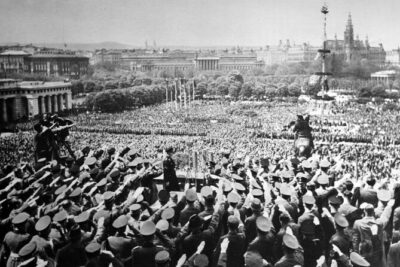
Browse the lists this tour appears in