
Reviewed · HISTORICAL TOURS
Highlights of Vienna in a Historical & Cultural 3h Walking Tour
Vienna’s great strength is how much history fits into a walkable center. This tour connects Mozart’s former home, St. Stephen’s Cathedral, the Habsburg palace, the Spanish Riding School, and the Opera, while adding coffeehouses, cake shops, and a few useful local pointers.
I like the clear city overview and the way guides such as Nikoleta and Giselle bring history to life with humor. I also like the practical advice, including which museums, cafés, restaurants, and venues deserve your time, plus the planned coffeehouse break.
The main drawback is pace. Thirteen stops in about three hours means most places are viewed from outside or discussed briefly, and the walk can feel hurried in cold weather or with children. Treat it as an orientation walk, not a series of full museum visits.
Key points to know before booking
- Mozart to the Opera in one route: The walk begins at Mozarthaus Vienna and ends at the Vienna State Opera, covering the heart of central Vienna.
- Habsburg history is the main thread: Hofburg, the Winter Palace, Maria Theresa, imperial life, and the Spanish Riding School give the tour its historical shape.
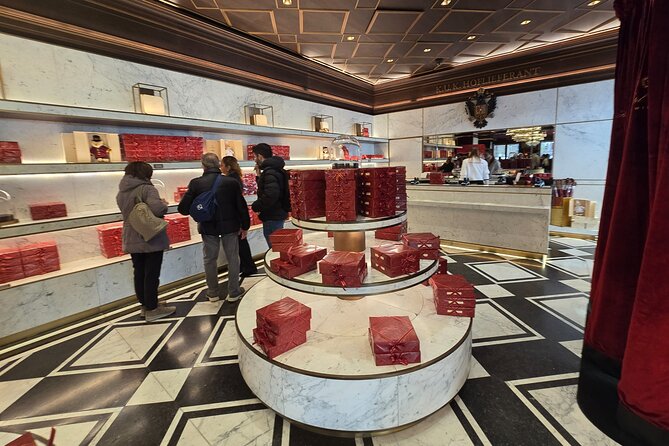
- Coffee and cake are part of the story: Julius Meinl, Café Central, Demel, Hotel Sacher, and the extra coffeehouse break connect Vienna’s food traditions with its past.
- Small group format: The advertised group size is 4 to 18 people, giving you a better chance to ask questions than on a large coach tour.
- Best early in your stay: The route and practical suggestions can help you decide which museums, cafés, and historic sites to visit later.
- Outdoor conditions matter: You need moderate physical fitness, and poor weather or an insufficient number of bookings can lead to a change of date or a refund.
A smart first look at Vienna’s old center
I see this as a city orientation with a strong historical focus. You are not simply ticking off landmarks. You are learning how Mozart, the Habsburg court, Catholic Vienna, imperial architecture, coffeehouse life, and grand performance venues fit together within a fairly compact area.
The starting point is Mozarthaus on Domgasse, in the 1010 district. The finish is in front of the Vienna State Opera on Opernring. That point-to-point design works well because you finish near one of Vienna’s most famous buildings rather than returning to your starting place.
The price is $66.37 per person. That is not the cheapest way to walk around Vienna, but it can be fair value if you want a guide who explains the city and helps you plan the rest of your visit. The value comes from the interpretation, small group setting, map, printed information package, and practical recommendations, not from paid admissions.
You should also understand the time plan. The listed stops add up to a fast-moving route, with many pauses lasting only five or ten minutes. The tour gives you a broad picture, while museums, palace rooms, cathedral interiors, and performances require separate time and entrance fees.
More Walking Tours in Vienna
- Vienna: Guided Walking Tour of City Center Highlights
★ 4.7 · 4,989 reviews - Vienna: Vienna Central Cemetery Guided Walking Tour
★ 4.8 · 3,307 reviews - Vienna: Guided Walking Tour of City Highlights & Hidden Gems
★ 4.9 · 2,180 reviews
Starting with Mozart at Mozarthaus Vienna
Mozart’s former Vienna home is a fitting place to begin. The tour uses this stop to explain his life in the city and the key moments of his career. You get context before moving into the wider center, which helps the later buildings feel connected rather than random.
The stop is scheduled for about 15 minutes. That is enough for an introduction, but not enough for a full museum visit. If Mozart is a major reason for your trip, plan to return to Mozarthaus independently and allow more time for its exhibits.
Starting here also gives the guide an easy way to explain Vienna as a place of music, court culture, and ambitious artists. The Mozart focus is one of the clearest themes of the walk, although the rest of the route shifts toward architecture, politics, religion, and daily life.
St. Stephen’s Cathedral and the medieval center
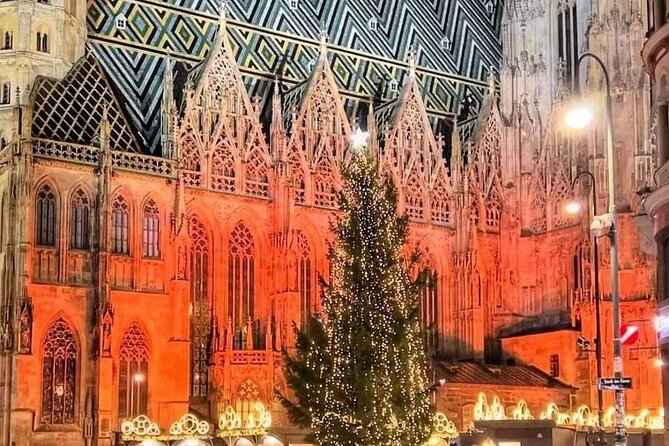
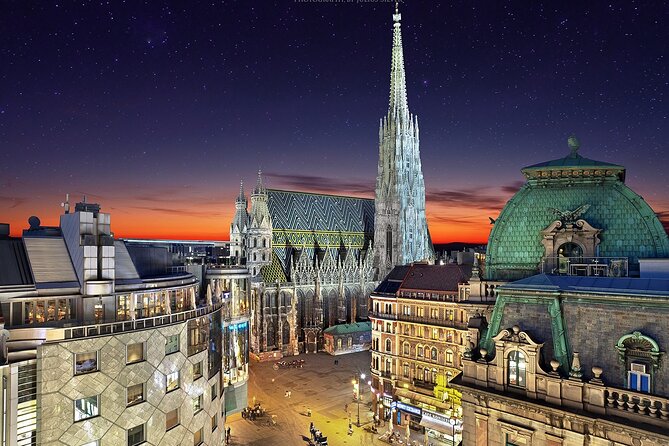
St. Stephen’s Cathedral is one of the strongest visual moments on the route. Its medieval architecture and long history give you a quick sense of how old Vienna is, especially when compared with the imperial buildings encountered later.
The stop lasts about 15 minutes and is listed without an admission fee. You should expect an introduction rather than a detailed interior tour. If you want to study the cathedral’s interior or spend time with its art and chapels, you will need to return on your own.
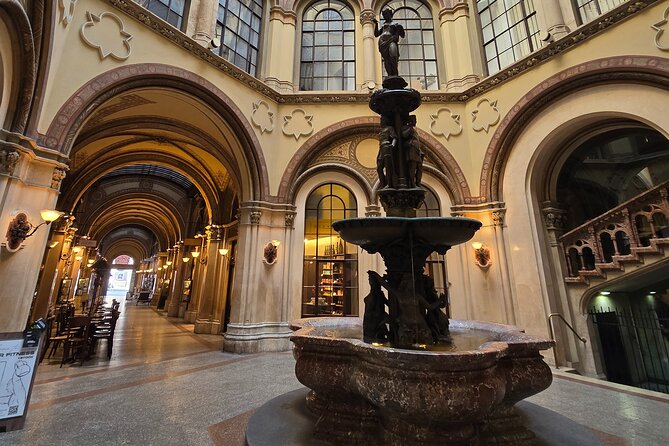
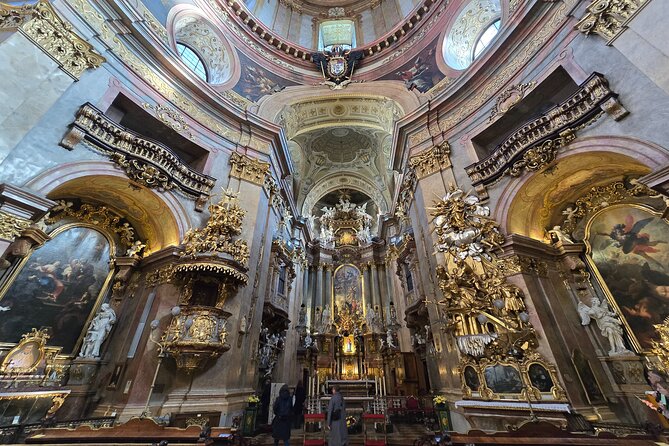
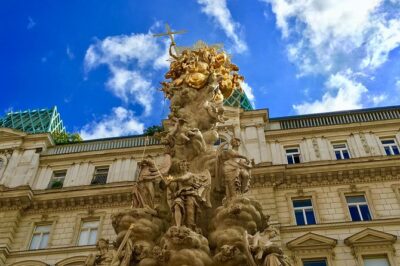
From there, the walk moves through the historic center. Saint Peter’s Church, the Plague Column, Demel cake shop, and other central sights help fill in the story of Vienna beyond its most famous palace. These short stops are useful because they show how religion, disease, trade, court life, and tourism all left their mark on the same streets.
The route is also a good reminder that Vienna is not just imperial. The center includes grand façades, but it also has passages, shops, churches, cafés, and everyday city spaces. A guide can point out details that are easy to miss when you are focused only on the largest buildings.
Coffee culture from Julius Meinl to Café Central
At Julius Meinl on Graben, the guide explains how Vienna’s coffee culture developed over more than 300 years. This is not just a food stop. Coffeehouses are part of the city’s social history, and the explanation gives you a better reason to pause for coffee later rather than treating every café as the same.
The ten-minute stop is brief, so do not expect a full tasting or a long café visit there. The tour includes an extra 30-minute break in a traditional Viennese coffeehouse, which gives you a more relaxed chance to rest, order a drink, and absorb the atmosphere.
Freyung Passage adds another pleasant change of scene. It is described as one of the most beautiful passages in the historic center, and Café Central sits at one of its corners. The stop itself is only about five minutes, but the guide can help you understand why these cafés matter and how they fit into Vienna’s public life.
You may also hear about Demel and Hotel Sacher, two names tied to Vienna’s dessert culture. The walk explains the background of Sacher-Torte and the history of Hotel Sacher. These are useful introductions, but the tour does not include cake, coffee, or entrance fees, so budget separately if you want to sample them.
More history walks around Vienna:
- Vienna: Time Travel and Magic Vienna History Tour
★ 4.6 · 3,879 reviews - Vienna: World War II Historical Walking Tour
★ 4.8 · 1,772 reviews - Vienna Historic Center Small Group Walking Tour
★ 5.0 · 1,746 reviews - Time Travel-Magic Vienna History Tour Ticket
★ 4.5 · 1,099 reviews
Parliament, Rathaus, and the city’s public face
The Austrian Parliament provides a change from medieval churches and imperial palaces. Its Greek-inspired design and the Pallas Athene Fountain reflect the way nineteenth-century Vienna borrowed symbols from ancient Greece to present ideas about democracy, law, and civic life.
The scheduled stop is about five minutes. That is enough to admire the façade and hear the main point, but not enough for an in-depth political or architectural visit. If you enjoy grand civic buildings, make a note to return when you have more time.
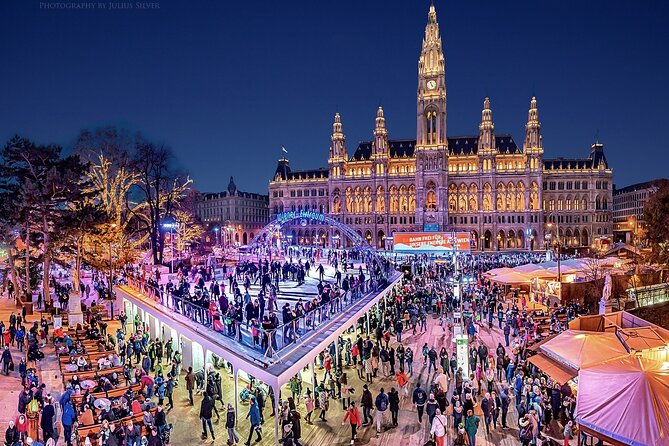
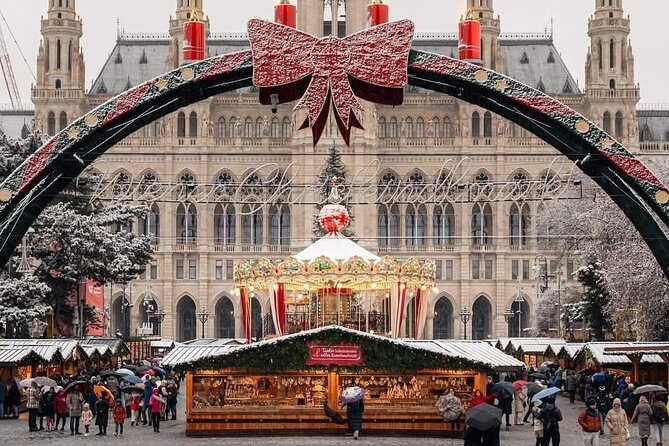
Rathaus, Vienna’s Gothic city hall, follows with another quick exterior stop. The building is especially appealing when seasonal events are taking place nearby. One tour group had a roughly 20-minute break at the Christmas market beside Rathaus, with time for a snack, a warm drink, and a restroom stop.
That kind of flexibility seems to be part of the tour’s appeal, although you should not assume a Christmas market break on every departure. The timing and detours can vary with the season, weather, and group. The planned coffeehouse break is the more reliable rest point.
Burgtheater continues the look at Vienna’s performance culture. Its Renaissance-style design and connection with the reign of Maria Theresa give the guide another chance to explain how theater and court life shaped the city. Again, the ten-minute stop is for orientation rather than a performance or backstage visit.
Understanding the Hofburg and Habsburg Vienna
The Hofburg is the historical center of the tour. This Winter Palace served as the residence of the Habsburgs from the thirteenth century, and the guide discusses important emperors and empresses who shaped Austria and much of Europe.
You will not cover every period or ruler in detail. Vienna’s imperial story is too large for a single afternoon, and the tour gives you a framework rather than a full course in dynastic history. That is useful because the Hofburg complex can feel confusing when you first see its many wings, courtyards, museums, and ceremonial spaces.
The nearby Kunsthistorisches Museum stop adds another practical layer. The guide explains what you can find in the 18 museums in and around the Winter Palace. That information may save you time later, particularly if you are deciding between imperial apartments, art collections, treasury displays, or other cultural sites.
The tour does not include museum admission. This is important. You are paying for the guided walk and explanations, then choosing separately which museums deserve your money and time.
Meeting the Spanish Riding School’s tradition
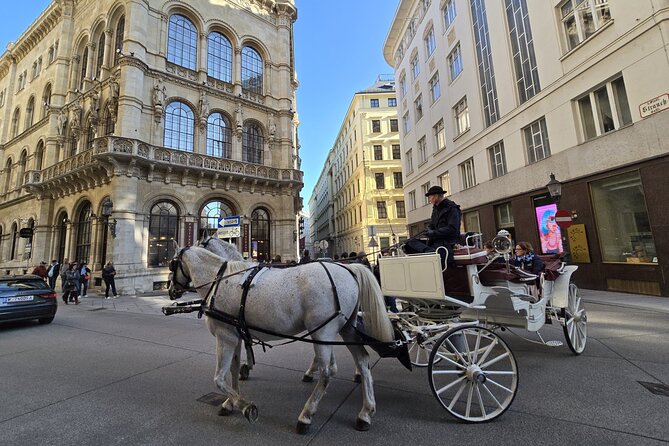
The Spanish Riding School adds one of Vienna’s most distinctive traditions to the route. Its roots reach back to the fifteenth century, and the tour includes a stop at the stables to see the horses.
This is a memorable contrast to the stone façades and political history around the Hofburg. The horses connect the palace to ceremony, training, and the old court world. The stop lasts about ten minutes, so it is an introduction rather than a full riding-school program.
You should not assume that this walk includes a performance, formal training session, or a full stable tour beyond the stated stop. Entrance fees are not included, and the tour description specifically lists museum fees as extra. If the Lipizzaner tradition is a top priority, check separate performance or training options before booking this walk.
Ending with cake, opera, and a useful final location
Hotel Sacher is the final stretch of the route toward the Opera. The guide explains how the historic hotel developed and why Sacher-Torte became Austria’s best-known chocolate cake. It is another short stop, but it gives you a practical cue for planning an indulgent break later.
The tour ends at the Wiener Staatsoper, one of Vienna’s grandest buildings. The guide explains why the emperor disliked the Opera when it was first completed and how that criticism had serious consequences for the architects. It is a good story to finish on because it links architecture, court opinion, public pressure, and Vienna’s love of music.
Ending at the Opera is convenient for independent plans. You can continue around the Ringstrasse, look for a performance, use public transport, or walk back toward the old center. The end point is clear: Opernring 2, in front of the Opera.
How the pace and group size affect the experience
A maximum of 18 people is a sensible size for a central-city walking tour. You are more likely to hear the guide clearly and ask questions than in a very large group. The tour is offered in English, and the guides described in the feedback, especially Nikoleta and Giselle, are praised for clear explanations, humor, and an easy way with families.
The tone appears to be lively rather than academic. You get stories, drama, historical context, and advice about places worth your time. One particularly useful feature is the guide’s willingness to explain which attractions are genuinely worthwhile and which may be more popular on social media than rewarding in person.
The walk requires moderate physical fitness. Even if the route is described as an easy city walk, you should expect several hours on your feet, changing weather, crowded streets, and limited seating between stops. Cold conditions have made the route feel hurried for some groups, while families with children have sometimes needed extra pauses.
The tour may run longer when the guide allows for slower walkers or children, but you should not build a tight appointment immediately after it. The three-hour estimate is the practical planning figure.
Who will get the most from this Vienna walk?
I would choose this tour early in a Vienna stay. The map, printed information package, food suggestions, museum advice, and route through the old center can help you plan the next few days with less guesswork.
It is a good match for first-time visitors who want a broad introduction, families who prefer stories to long indoor visits, and anyone who enjoys architecture, music, imperial politics, and cafés in equal measure. It also suits repeat visitors who have seen the headline sights but want the connections between them explained.
I would be more cautious if you want a museum-heavy experience, a detailed Mozart study, or a long visit inside the Hofburg. The stop times are too short for that. You may also prefer a private tour if you want a very slow pace or a custom route.
Booking value, weather, and cancellation terms
At $66.37, this is a mid-priced guided walk. I think the price makes sense if you use the advice to shape the rest of your Vienna visit and value a human explanation of the city’s major sights.
The tour is often booked well ahead, with an average lead time of about 38 days. That suggests you should not leave it until the last minute if the timing matters. Confirmation is provided at booking, and public transport is nearby.
Free cancellation is available up to 24 hours before the start time. Changes or cancellations inside that period are not refunded. The experience also depends on suitable weather and a minimum number of bookings. If poor weather or low numbers cancel the tour, you are offered another date or experience, or a full refund.
Should you book this Vienna walking tour?
Book it if you want a lively first orientation to Vienna, especially near the start of your visit. The route covers an impressive number of landmarks, and the mix of Mozart, Habsburg power, cafés, churches, horses, cake, and opera gives you a useful picture of the city.
Skip it if you want long interior visits or a slow photographic walk. For most people, though, the combination of a manageable group, a clear end point, practical recommendations, and an extra coffeehouse break makes this a sound introduction to central Vienna.
FAQ
How long does the Vienna walking tour last?
The tour lasts about three hours, with an extra 30-minute break in a traditional Viennese coffeehouse included.
Where does the tour begin?
It begins at Wien Museum Mozart apartment, Mozarthaus, Domgasse 5, 1010 Vienna.
Where does the tour end?
The walk finishes in front of the Vienna State Opera at Opernring 2.
What language is the tour offered in?
The tour is offered in English.
How large is the group?
The group size ranges from 4 to 18 people.
Are museum entrance fees included?
No. Entrance fees to museums are not included in the tour price.
Does the tour include the Spanish Riding School?
The route includes a stop at the stables of the Spanish Riding School to see the horses. Separate entrance fees are not included.
How far in advance is the tour usually booked?
The experience is booked an average of 38 days in advance.
What is the cancellation policy?
You can cancel up to 24 hours before the start time for a full refund. Cancellations or changes made less than 24 hours before the start time are not refunded. If poor weather or too few bookings cancel the tour, you are offered another date or experience, or a full refund.
More 3-Hour Experiences in Vienna
- Classic Vienna: 3-Hour Guided Bike Tour
★ 4.7 · 1,846 reviews - Vienna by Bike 3-Hour All-In-One City Bike Tour in English
★ 4.7 · 438 reviews - The unknown Vienna City- a guided walking tour in 3 hours
★ 4.7 · 137 reviews - 3-Hour Walking Tour of Vienna Central Cemetery
★ 4.7 · 71 reviews
Just added around Vienna
- Vienna: UNESCO Schönbrunn Palace Guided Tour with Entry★ 4.5 · 94 reviews
- World War II History Vienna Old Town Private Walking Tour★ 4.8 · 9 reviews
- Vienna: Winery and Wine Tasting Tour with a Wine Expert★ 5.0 · 5 reviews
- Vienna: Wine Tasting E-Bike Tour★ 4.9 · 46 reviews
- Vienna: Wine Tasting at Schönbrunn Palace★ 4.3 · 71 reviews
- Vienna: Wine Tasting Tour★ 4.8 · 61 reviews
- Vienna: Concert by the Vienna Baroque Orchestra★ 4.6 · 56 reviews
- Vienna: Wachau Valley Private Kayak and Wine Tour★ 5.0 · 3 reviews
Historical Tours, compared.
Vienna Historic Center Small Group Walking Tour
Read our review →
Skip-the-Line Schonbrunn Palace Guided Tour and Vienna Historical City Tour
Read our review →
Vienna Mozart Concert in Historical Costumes at the Musikverein
Read our review →
Browse the lists this tour appears in