
Reviewed · WALKING TOURS
Private Hidden Vienna Walk — Stories Behind Quiet Corners
Vienna reveals its best stories in the spaces between the famous sights. This private walk links massive old fortifications, a theatrical Jesuit church, Mozart’s former surroundings, a basilisk legend, Jewish history, grand palaces, and cafés tied to Freud and Vienna’s political past. The secret rooftop view adds a pleasant surprise.
I like the private format, which lets your guide adjust the route to your interests and starting point. I also like the mix of big sights and small discoveries, especially the Basilisk House on Schönlaterngasse and the Sala Terrena connected with Mozart. The main caution is simple: this is a real walking tour, averaging about 8,000 steps, so it is not a good fit if stairs, distance, or standing are difficult.
Key points to know before booking
- Start at Stubentor or arrange a Vienna pickup: You can meet at a hotel, restaurant, train station, pier, or another agreed location.
- See major sights without giving up side streets: St. Stephen’s Cathedral and Rathausplatz share time with courtyards, legends, cafés, and quiet lanes.
- Expect about 8,000 steps: The pace and route matter, especially for anyone with limited mobility.
- The private guide shapes the experience: Walter, Brigitte, Sabine, Hannes, Daniela, and other Austria Guides have led this walk.
- Best for a second look at Vienna: It works especially well after a first-day introduction or for a longer stay.
- The $344.80 price covers up to 10 people: The value improves sharply when shared by a family or group.
A Vienna walk built around stories, not just sights
This three-hour walk is designed to show you how Vienna fits together. You do not simply stop at a church, take a photo, and move on. Your guide explains the ideas behind the buildings, points out details you could miss alone, and connects music, politics, religion, food, and Jewish history.
The route includes famous places, but it does not stay on the most obvious path. You may pass through narrow streets, quiet courtyards, old passages, and café districts where the story is as interesting as the façade.
The private setup is important. You can ask questions, request more architecture, focus on music, or spend more time on Jewish Vienna. Several guides have adjusted routes for repeat visitors, families, and people who had already seen the main sights.
That flexibility does not remove the need for clear communication. Tell the operator before the day begins if you want an introductory route, a slower pace, or a focus on particular sights. One difficult experience came from a mismatch between the booked walk and the group’s mobility needs. The guide later acknowledged that a walking tour was not suitable for such severe limitations. Take that warning seriously.
More Walking Tours in Vienna
- Vienna: Guided Walking Tour of City Center Highlights
★ 4.7 · 4,989 reviews - Vienna: Vienna Central Cemetery Guided Walking Tour
★ 4.8 · 3,307 reviews - Vienna: Guided Walking Tour of City Highlights & Hidden Gems
★ 4.9 · 2,180 reviews
Starting at Stubentor and reading Vienna’s defenses
The walk may begin at Stubentor U, one of the old eastern approaches to Vienna. In roughly ten minutes, you get a sense of how imposing the city walls once were.
This is a useful opening because it puts the compact modern center in an older frame. Vienna can feel like a polished collection of palaces and churches, but the old city was also a fortified settlement with limited points of entry. At Stubentor, your guide helps you picture the scale of the defenses before the walk moves into more decorative parts of the center.
If you are picked up at a hotel, restaurant, train station, or cruise pier, the route may be adjusted. Cruise passengers can arrange a meeting at the A’Rosa pier at Handelskai 265, though the pier area itself can involve extra walking. For an afternoon start, meeting in central Vienna may be more practical.
The Jesuit Church and Vienna’s theatrical Baroque style
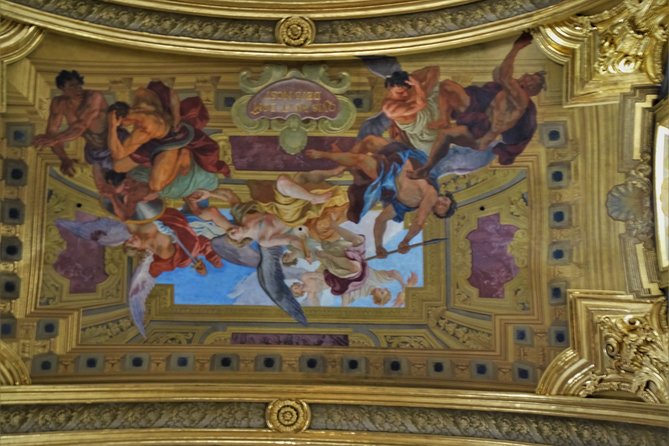
The Church of the Jesuits is a short stop, but it carries plenty of visual information. Your guide helps you read its architecture and decoration as a statement of faith rather than treating the interior as mere ornament.
This is one of the walk’s better features for anyone who wants help understanding Vienna’s churches. You learn to look for the spiritual message in the design, the illusion, and the decoration. The stop can also suit visitors who enjoy architecture but do not want a formal art lecture.
The church is free to enter, though access and time inside can depend on opening conditions and the pace of the day. If you want a longer look, say so early. A private walk gives you room to ask, but three hours still moves quickly.
The Basilisk House and a legend in a narrow lane
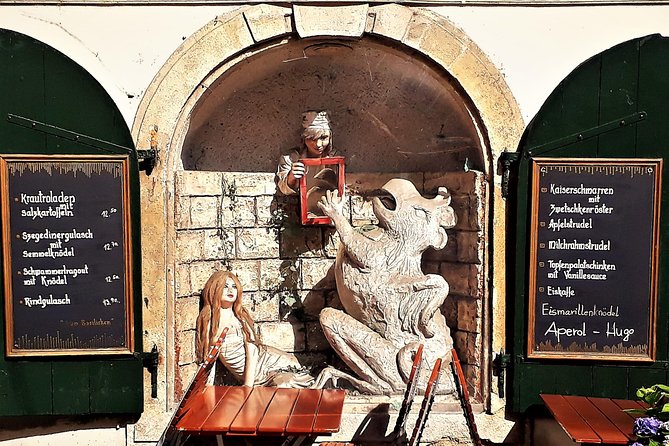
On Schönlaterngasse, the Basilisk House brings in one of Vienna’s stranger local stories. A mural illustrates the legend of the Vienna basilisk, the monster said to have frightened people in the area.
This stop shows why the tour is more than a checklist of major buildings. A guide can explain how a small painted detail, an old lane, or a local tale adds character to the city. You might pass the spot alone without knowing why it matters.
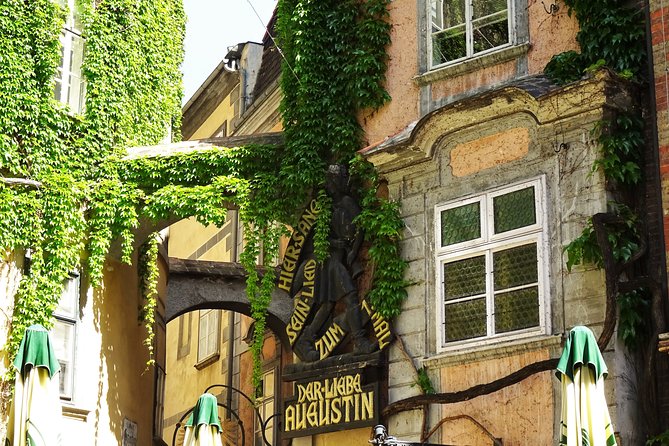
The route also points out the restaurant associated with Vienna’s famous schnitzel tradition since 1905. The information provided does not promise a meal or tasting, so think of this as a food-history reference rather than a dining stop. Still, it is useful if you want a recommendation for later.
A completely different way to spend a day here:
- Vienna: Vivaldi’s Four Seasons Concert in Karlskirche
★ 4.7 · 14,951 reviews - Vienna: Spanish Riding School Training
★ 3.9 · 9,281 reviews - Vienna: Skip-the-cashier-desk-line Giant Ferris Wheel Ride
★ 4.5 · 7,859 reviews - Vienna: Schönbrunn Palace & Gardens Skip-the-Line Tour
★ 4.7 · 7,739 reviews
Mozart at the Sala Terrena in the Teutonic Order house
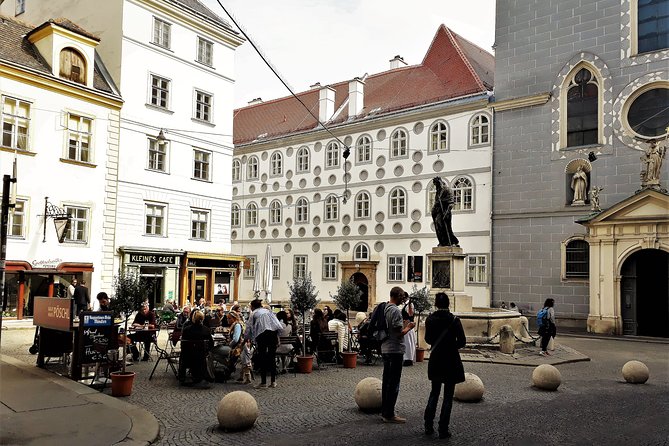
The Sala Terrena at the Deutschordenshaus connects the walk to Mozart’s Vienna. Mozart played there while living in the house of the Teutonic Order in 1781.
This is a compact but memorable music stop. It gives you a physical setting for Mozart’s life in Vienna, rather than presenting him only as a name attached to concert halls and souvenir shops. Your guide can place his time in the city within the wider setting of aristocratic and religious institutions.
The stop is listed at about ten minutes. That is enough for context and questions, but not a full Mozart program. If music is your main interest, mention it when booking so the guide can shape the conversation around Mozart and Beethoven.
St. Stephen’s Cathedral from the outside in
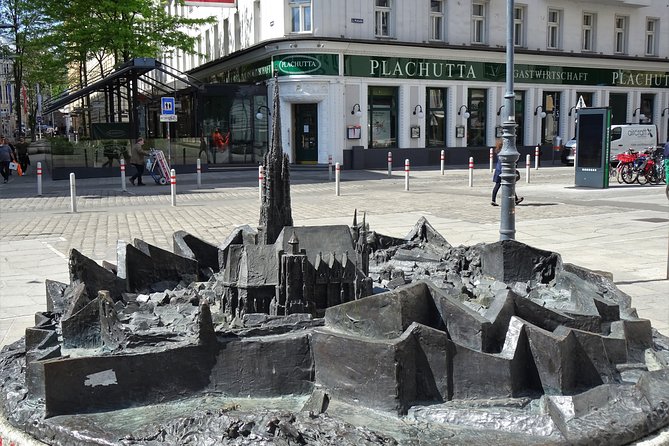
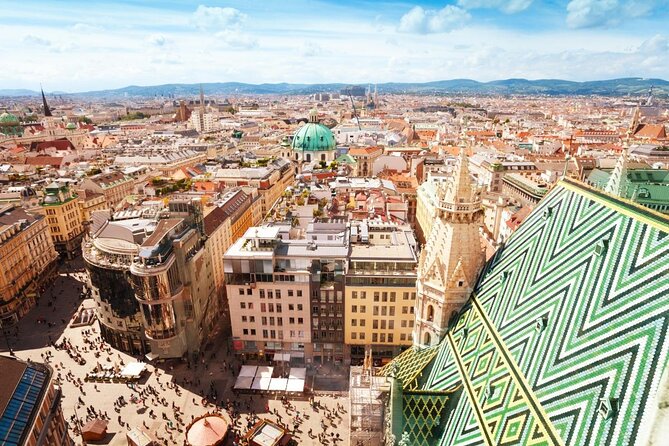
St. Stephen’s Cathedral is the biggest landmark on the route, with about fifteen minutes set aside for exterior details and a look inside. Your guide points out features you might otherwise walk past, then gives you a chance to enter.
The cathedral is an important test of the tour’s pacing. The route includes many stops, so you should not expect a long, unhurried interior visit. If you want to sit quietly, study the artwork, or attend a service, you may need to return on your own.
I like that the cathedral is included even though this is billed as a quieter-corners walk. A route made only of obscure lanes would leave out the city’s central symbol. The better approach is what this tour attempts: see the essential landmark, then place it beside less obvious stories.
This is also the part of the walk where the group’s walking ability matters. One group found the pace too quick and had difficulty with stairs and rest breaks. The tour description calls for moderate physical fitness, and the provider estimates about 8,000 steps. Be honest about what you can manage.
Judenplatz and seven centuries of Jewish Vienna

Judenplatz gives the walk its most serious historical pause. The square and its Holocaust Memorial tell the story of Vienna’s Jewish community across roughly seven hundred years.
This is not a decorative stop to rush through. The setting is atmospheric, and the memorial asks you to consider both the long presence of Jewish life in Vienna and the destruction caused by the Holocaust. A good guide can help you understand the square in relation to the surrounding old city.
Expect about ten minutes in the planned route, though the discussion may vary with your questions. If this subject is especially important to you, make that clear before the walk. A private guide can give the topic more attention than a large group tour, but the time limit still applies.
Café Central, Ferstel Passage, and political café culture
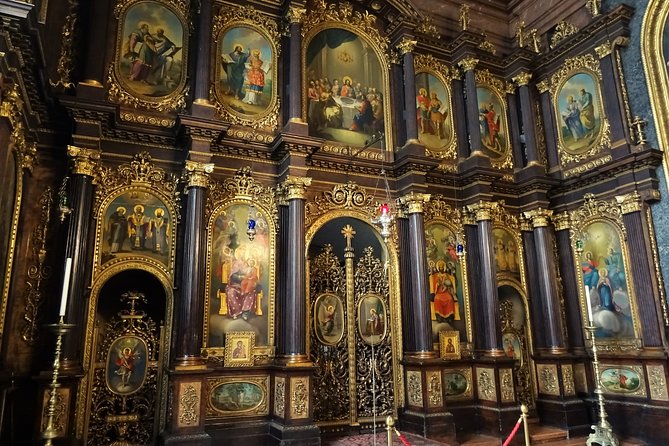
The walk continues toward Café Central and the Ferstel Passage. Along the way, your guide points out where Trotsky and Stalin were in Vienna without becoming friends.
This is a clever way to introduce the city’s café culture and political history. Vienna’s cafés were not just places for coffee and cake. They were meeting points for writers, intellectuals, political exiles, and people who helped shape modern Europe.
You will not necessarily sit down for a coffee during the tour. Instead, note the places you want to revisit later. Guides have also offered suggestions for coffee shops, bread shops, restaurants, and even a cat café. That practical advice can be one of the most useful parts of a private walk, especially when you still have several days in town.
Palais Daun-Kinsky and the city of aristocratic power
Palais Daun-Kinsky introduces Vienna’s grander Baroque side. Construction began in 1713 for Count Wirich Philipp von Daun under architect Johann Lucas von Hildebrandt. The palace also has a personal connection to Prince Józef Poniatowski, who was born there in 1763 and later became a Polish general and Marshal of France.
A short exterior stop can help you read the city’s palaces as signs of power, not just pretty façades. Your guide links the building to the people who commissioned, designed, and occupied it.
The listed stop lasts about ten minutes and does not include an admission ticket. That makes it a good fit for a walking overview, but not for anyone expecting a full palace tour. You may want to return later if the building catches your interest.
Rathausplatz and the café favored by Freud
The final listed stop is Rathausplatz, near Café Landtmann, associated with Sigmund Freud. The square adds another major civic space to the route, while Café Landtmann brings the discussion back to Vienna’s habit of mixing public life with café life.
By this point, you have seen religious buildings, music sites, memorials, palaces, old defenses, and cafés. That range is the walk’s main strength. It gives you several ways to understand Vienna instead of repeating one theme.
The route may also include a secret rooftop for city views. The rooftop is advertised as a highlight, but the supplied details do not specify its exact location or how long you stay there. Treat it as an appealing part of the planned experience, while understanding that the exact sequence may vary by guide and day.
What the guides add to the experience
The guide team is a real part of the value. Walter is repeatedly described as personable, funny, responsive before the walk, and strong on history, architecture, and local suggestions. Brigitte has adjusted routes for families and repeat visitors, while Sabine has been praised for her local knowledge and ability to avoid crowded streets.
Hannes has led a walk that mixed major buildings with small side streets. Daniela has helped with onward plans, including a boat suggestion for Bratislava. These details show the practical benefit of a private guide: you can turn the walk into a starting point for the rest of your stay.
The experience is offered in English. Confirmation is sent within 48 hours, subject to availability, and morning or afternoon departures are available. Pickup can be arranged at another location within Vienna.
Is $344.80 a fair price?
The price is $344.80 per group of up to 10 people. For one person or a couple, that is a serious expense. For a family or group of six to ten, the per-person cost becomes much more reasonable for three hours with a private licensed Austria Guide.
The value depends on how much you use the private format. If you want a fixed script and only the biggest sights, a group tour will likely cost less. If you want to ask many questions, avoid crowds, adjust the balance between famous places and side streets, or begin at your own doorstep, the private price makes more sense.
The tour includes the guide, but not transport to and from attractions. Most of the route is on foot, so budget separately for any taxi or public transportation you use before or after the walk.
Free cancellation is available up to 24 hours before the start time. Changes or cancellations inside that window are not accepted for a refund.
Who should book this Vienna walk?
I would choose this for a first-time visitor who wants major landmarks with more context, or for a repeat visitor who has already seen the standard palace circuit. It also suits a couple, family, or small group that values conversation and local recommendations.
You should be comfortable walking for three hours, with an average of about 8,000 steps and possible stairs. The tour is not the right choice for severe mobility limits, and you should explain any slower pace or rest needs before booking.
The walk can suit families, but the guide needs to know about young children in advance. Brigitte, for example, has adapted tours for families with two small children. That does not guarantee the same arrangement with every guide, so be specific.
Should you book Private Hidden Vienna Walk?
Book it if you want Vienna explained through connections: Mozart beside the Teutonic Order, a basilisk mural beside old lanes, Jewish history beside grand civic squares, and Freud’s café beside political exile. The private format and flexible guides are the strongest reasons to choose it.
Skip it if you want a slow cathedral visit, very little walking, or a formal inside tour of each palace and church. For the best result, tell the operator exactly what you have already seen, what you care about, and how far you can comfortably walk. With that preparation, this can be a lively way to get both Vienna’s famous center and its quieter stories in one morning or afternoon.
FAQ
How long does the private Vienna walk last?
The tour lasts approximately three hours.
How many people can join the private tour?
The price covers one private group of up to 10 people.
What language is the tour offered in?
The tour is offered in English.
Can the guide pick me up at my hotel?
Yes. Pickup can be arranged from a hotel, restaurant, train station, pier, or another location within Vienna.
Can cruise passengers arrange pickup?
Yes. A’Rosa passengers can meet at the pier at Handelskai 265, 1020 Vienna. Other meeting points can also be arranged.
Is transportation between attractions included?
No. Transport to and from attractions is not included. The experience itself is a walking tour.
What level of fitness is needed?
You should have a moderate level of physical fitness. The provider estimates an average of about 8,000 steps, and the route may include stairs.
Are morning and afternoon departures available?
Yes. You can choose a morning or afternoon departure.
What is the cancellation policy?
You can cancel up to 24 hours before the start time for a full refund. Cancellations or changes made less than 24 hours before the start time are not accepted.
Just added around Vienna
- Vienna: UNESCO Schönbrunn Palace Guided Tour with Entry★ 4.5 · 94 reviews
- World War II History Vienna Old Town Private Walking Tour★ 4.8 · 9 reviews
- Vienna: Winery and Wine Tasting Tour with a Wine Expert★ 5.0 · 5 reviews
- Vienna: Wine Tasting E-Bike Tour★ 4.9 · 46 reviews
- Vienna: Wine Tasting at Schönbrunn Palace★ 4.3 · 71 reviews
- Vienna: Wine Tasting Tour★ 4.8 · 61 reviews
- Vienna: Wachau Valley Private Kayak and Wine Tour★ 5.0 · 3 reviews
- Vienna: Wiener Schnitzel and Strudel Cooking Class★ 4.9 · 126 reviews
Walking Tours, compared.
Guided Walking Tour of City Center Highlights
Read our review →
Guided Walking Tour of City Highlights & Hidden Gems
Read our review →
Vienna Historic Center Small Group Walking Tour
Read our review →
Browse the lists this tour appears in