
Reviewed · WALKING TOURS
Vienna Art Nouveau Walking Tour
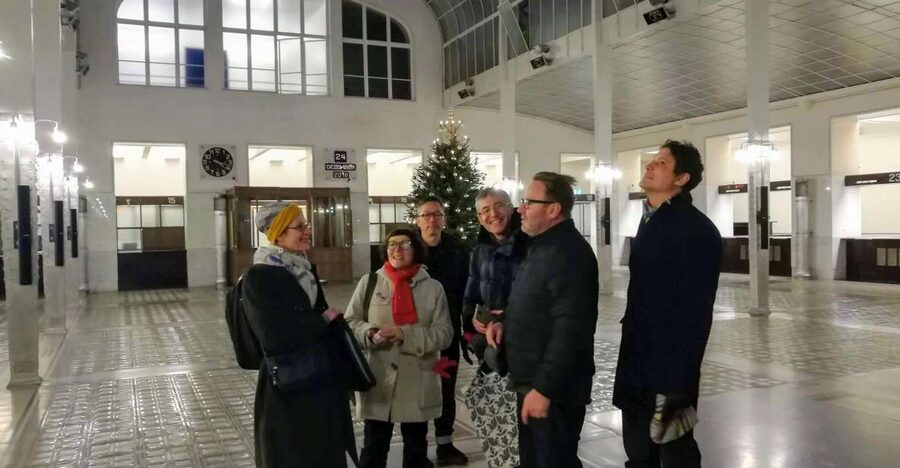
Vienna’s Art Nouveau is at its best underground and around the corners of busy streets. This small-group walk links Otto Wagner’s metro stations with Secession House, apartment buildings, and the imperial station near Schönbrunn, giving you a clear picture of how Vienna looked toward 1900. I especially like the original Stadtbahn stations and the chance to see how a style built for city life was adapted for an emperor.
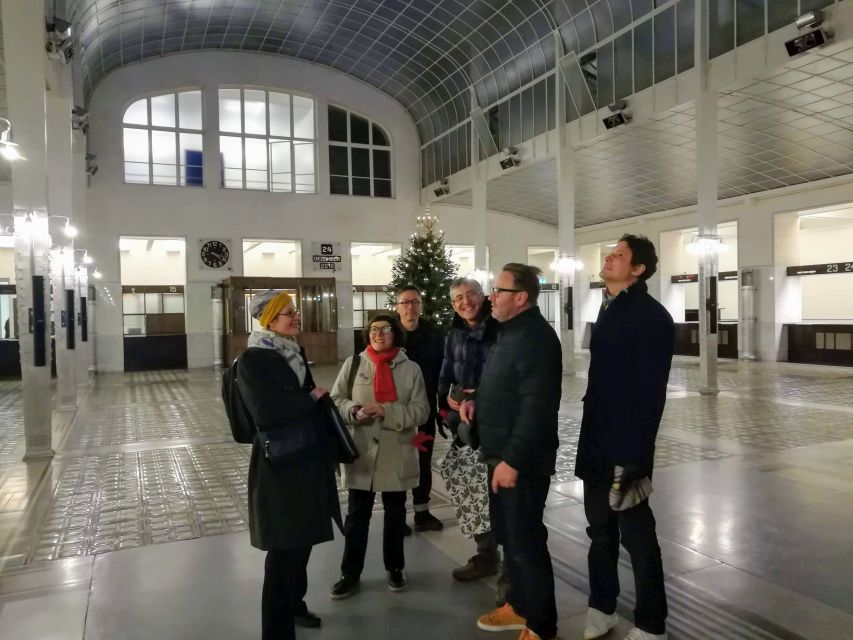
I also like the personal scale. With no more than eight people, guides such as Jan, Stefan, Suzanne, Ilse, and Angelina can answer questions and adjust the pace. The main drawback is cost: at $180.04 per person, this is a serious splurge for a 2.5 to 3-hour walk, and you still pay some admission fees.
Key points to know before booking
- See Otto Wagner’s metro work in context, from the Karlsplatz pavilion to the Stadtpark and Kettenbrücke stations.
- Visit Secession House, including Klimt’s Beethoven Frieze when the exhibition is open.
- Ride the metro to the imperial station, built for the Emperor outside Schönbrunn Palace.
- Expect a small group of up to eight people, with room for questions and changes to the route.
- Allow extra money for admission, including the Wagner Pavilion and Secession House.
- Plan for changing weather, since much of the experience takes place outdoors.
Why Vienna’s Art Nouveau works best as a walking tour
Vienna’s Art Nouveau, called Jugendstil here, is not limited to one grand museum. It appears in railway stations, apartment blocks, decorative façades, public works, and exhibition buildings. That makes a walking tour useful: you see the style where it was meant to function, not only behind glass.
Otto Wagner is the central figure. His work helped reshape Vienna as the city expanded and modern transport became essential. The metro stations were not treated as plain utility boxes. Their ironwork, tiles, stone, lettering, and proportions were part of the public view.
A good guide helps you notice the details without turning the walk into a list of dates. The strongest part of this experience is the link between design and politics. The stations served ordinary city life, but the final stop shows how the same architectural language could be given imperial weight.
The walk is also a useful introduction to Vienna around 1900. You hear about the artists connected with the Secession movement, the ideas behind Jugendstil, and the materials and symbols that made the style distinct. I would choose this tour early in a Vienna visit if art, architecture, or urban history matters to you.
More Walking Tours in Vienna
- Vienna: Guided Walking Tour of City Center Highlights
★ 4.7 · 4,989 reviews - Vienna: Vienna Central Cemetery Guided Walking Tour
★ 4.8 · 3,307 reviews - Vienna: Guided Walking Tour of City Highlights & Hidden Gems
★ 4.9 · 2,180 reviews
Karlsplatz Pavilion: a compact start with Otto Wagner
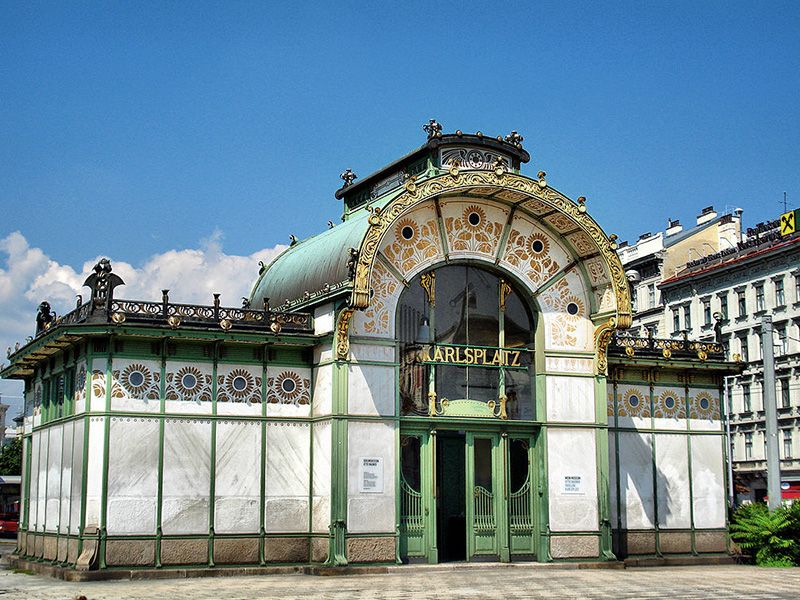
The tour begins at the Otto Wagner Pavilion Karlsplatz, at the provided meeting point on Operngasse 7. The pavilion is a small building, but it makes a strong opening because it brings Wagner’s design down to human scale.
Inside, when the museum is open, you can see the small Wagner Museum. This is not a long museum visit, and that is a benefit at the start of a walking tour. You get a focused introduction rather than an hour of labels and display cases.
The pavilion also shows why Wagner’s metro work deserves attention. A station could be practical and still have a strong visual identity. The decorative metalwork and carefully controlled surfaces make the building feel designed from every angle.
The museum is open from April through October. Admission is €5 for general visitors and €4 for senior citizens, students, Vienna Card holders, and people with disabilities. That fee is not part of the tour price, so keep some extra money available.
If you visit outside the museum season, the guide can still use the pavilion as the starting point for the discussion, but the indoor museum portion will not be available. This is one detail worth checking when you choose your date.
Stadtpark station and the Vienna River problem
From Karlsplatz, the walk continues toward Stadtpark station. This is one of the best preserved original metro stations still in use, so it gives you a direct look at Wagner’s approach to public transport design.
The interesting part is not just the decoration. The station is tied to the Vienna River, whose course had to be changed when the city railway was built. The altered waterway and the station had to fit into the same city plan.
That practical problem makes the stop more memorable. You are not simply looking at a pretty façade. You are seeing how transport, engineering, water management, and public design came together in a growing capital.
Your guide will point out design elements that may be easy to miss on your own. This is where the tour begins to move beyond sightseeing. You start to see repeated choices in form, surface, and structure, then connect those choices to Wagner’s larger approach.
Stadtpark also gives the group a change of pace after the opening discussion. Still, remember that this is an outdoor walk. Cold rain can affect the experience, and the tour may involve standing while the guide explains details. One guide offered a car ride during especially poor weather, but you should not assume that option is guaranteed.
Secession House and the ideas behind Jugendstil
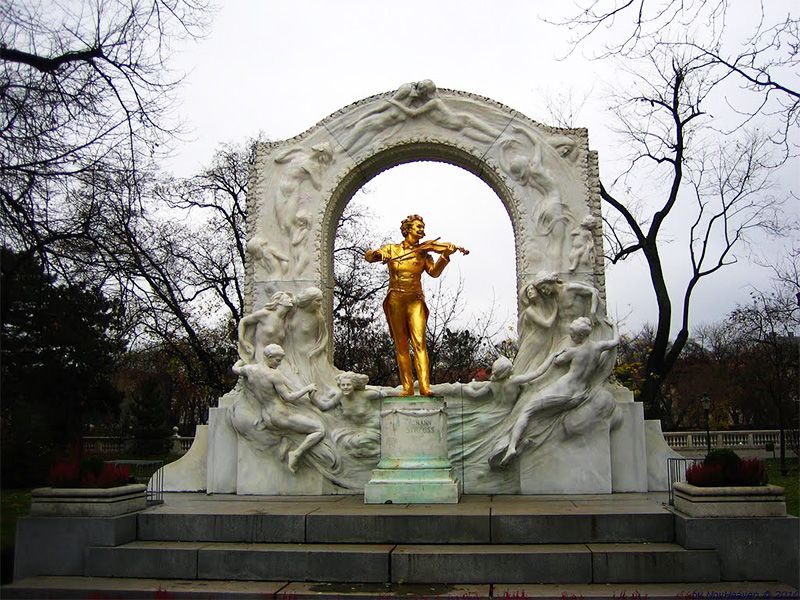
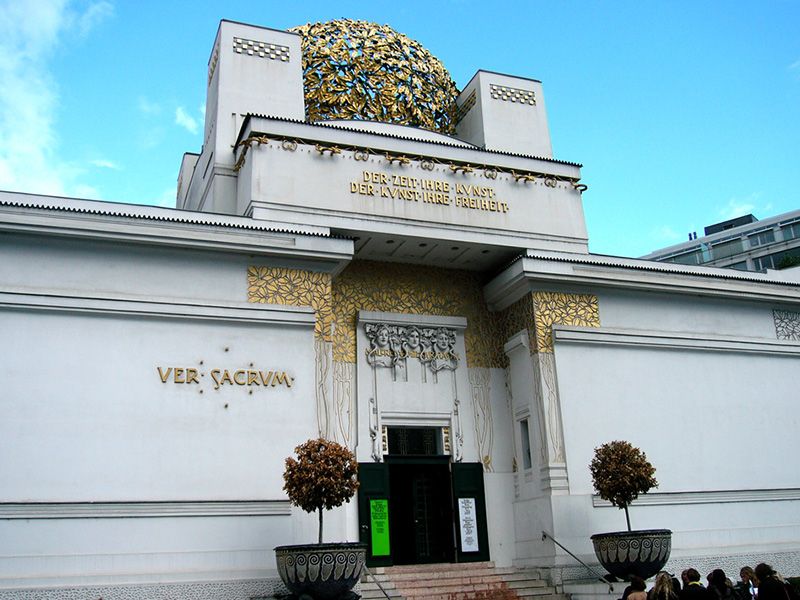
The route then heads toward Kettenbrücke station, with Secession House and two Otto Wagner apartment buildings along the way. This is likely the richest stretch for visitors who want to understand Vienna’s art and architecture rather than simply photograph it.
Secession House is the famous white exhibition building topped by its openwork dome of gilded leaves. It became a symbol of Viennese Jugendstil and of artists seeking new ways to work outside older academic rules.
The tour explains the movement’s ideas, symbols, and preferred materials. That context matters because the building can otherwise seem like an isolated oddity. With a guide, you can connect its decoration and purpose to the wider changes taking place in Vienna.
The optional highlight here is Gustav Klimt’s Beethoven Frieze. If you tour Tuesday through Sunday, admission is €9.50 for adults and €6 for students and seniors. The guide helps you pay, but the fee is extra.
The frieze is a strong reason for art lovers to choose this experience. It gives the Secession building an interior focus and shows how painting, architecture, ornament, and music could be joined in one ambitious work. If you are mainly interested in Klimt, this may be the most important admission on the route.
Secession House is not guaranteed to feel like a quick photo stop. The discussion can take time, especially if your group has questions. That is good for serious art fans, but people hoping for a fast sightseeing circuit may find the pace slow.
A completely different way to spend a day here:
- Vienna: Vivaldi’s Four Seasons Concert in Karlskirche
★ 4.7 · 14,951 reviews - Vienna: Spanish Riding School Training
★ 3.9 · 9,281 reviews - Vienna: Skip-the-cashier-desk-line Giant Ferris Wheel Ride
★ 4.5 · 7,859 reviews - Vienna: Schönbrunn Palace & Gardens Skip-the-Line Tour
★ 4.7 · 7,739 reviews
Otto Wagner’s apartment buildings and the private side of the style
The apartment buildings on the way to Kettenbrücke add an important counterpoint. Secession House was built as a public art building, but apartment architecture shows how new design ideas entered ordinary city life.
Here you can consider how decoration worked on residential buildings. The façades helped give city streets a modern look, while the buildings still had to function as homes. The contrast between public exhibition space and private housing helps explain why Vienna’s Art Nouveau is so varied.
This part also gives the guide room to compare Wagner’s buildings with the Secession artists. You may notice differences in ornament, materials, and purpose, even when the buildings belong to the same broad period.
The tour is especially useful if you have already visited Vienna’s major palaces and museums. It shifts your attention to the city outside the official monuments. One well-regarded guide also offered suggestions for other places to visit and eat, which can make the tour more useful during a longer stay.
Kettenbrücke station and the metro ride
At Kettenbrücke station, the tour returns to Wagner’s railway work. This station helps bring together the ideas introduced at Karlsplatz and Stadtpark.
The route then uses the metro for the final stop, the imperial station. That short ride is part of the story, not just a way to save your feet. You experience the transport system that made Wagner’s buildings necessary in the first place.
A guide also helped one private group learn how to use Vienna’s public trains and transport system. That is a practical bonus, especially if you are still getting oriented. Vienna’s metro can feel simple once explained, but a guide can show you how the route fits into the city you are visiting.
Your tour price includes the professional guide and the guided experience, but food and drinks are not included. The supplied details do not state that public transport fares are included, so it is sensible to have a valid ticket or confirm the arrangement before you ride.
The Emperor’s station near Schönbrunn
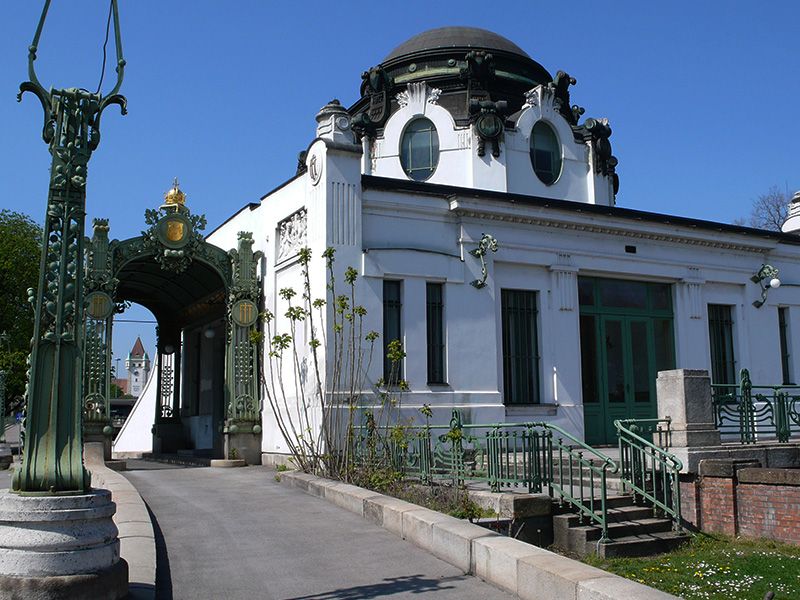
The final stop is the imperial station outside Schönbrunn Palace. Wagner built it solely for the Emperor, making it the most politically charged building on the route.
The station was more than a convenience. Its presence showed critics of Vienna’s metro that the Emperor supported the new railway. That gives the building a useful role in the story: modern public transport needed imperial approval, and architecture helped communicate that support.
The design also changes tone. The earlier stations express a modern, mostly bourgeois city style. Here, Wagner adapts the same general language for imperial use. The result is a smaller building with a more formal and ceremonial feel.
This is where the whole tour comes together. You can recognize design elements from the earlier stations, then see how they were adjusted for a royal setting. The building is compact, but its purpose gives it unusual weight.
The stop also helps you understand why the tour is more than a collection of Art Nouveau façades. It connects design to class, government, technology, and public opinion. For me, that political layer is one of the best reasons to take the tour.
How much value do you get for $180.04?
At $180.04 per person, the price is high. The value depends on how much you want explanation, access to a small group, and a focused route rather than general sightseeing.
The group limit is eight people per booking, which is a real advantage. A guide can respond to questions, adjust the walk, and spend more time on the parts that interest you. Several guides received praise for being flexible, including Suzanne, Ilse, Angelina, Stefan, and Jan.
The price makes the most sense for visitors who would otherwise struggle to connect the buildings. You are paying for interpretation, not simply for entry to a set of museums. Admission to the Wagner Pavilion and Secession House is extra, so add those costs before comparing the tour with a self-guided visit.
Group discounts are available, though the exact reduction is not provided. If you are booking for several people, check the final price carefully. A small private group can make the cost easier to justify because you get a more personal discussion.
For a budget-conscious visitor, the tour may be hard to defend. You can see several buildings from outside without paying a guide. But you would miss the explanation of the Vienna River project, the reasons behind the imperial station, and the connections among the buildings.
Timing, meeting point, and walking comfort
Plan on about 2.5 hours, while allowing up to three hours. The tour combines walking, outdoor explanations, museum time when available, and a metro ride, so the exact pace can change.
The meeting point is Operngasse 7, 1010 Vienna. The end point is listed simply as Vienna, so do not count on finishing at your hotel or at a particular major sight. Hotel pickup and drop-off are not included.
The route is near public transport, and most people can take part. Still, you should be ready for outdoor walking and periods of standing. Good shoes and weather protection will matter more than dressy clothing.
The tour is offered in English. Confirmation is provided when you book, and free cancellation is available until 24 hours before the start time. Cancellations or changes made inside that 24-hour window are not refunded or accepted.
Who will get the most from this tour?
I would recommend it most strongly to people who already enjoy architecture, art, or city history. It is also a good fit if you want a clear orientation to Vienna’s central districts and public transport.
Klimt fans should pay close attention to the operating days of Secession House. If seeing the Beethoven Frieze is essential, book Tuesday through Sunday and budget for the separate admission.
The tour can also suit repeat visitors. One guide helped people who had visited Vienna several times discover buildings and details they had missed. That is a good sign for anyone who has already seen the palaces and major museums.
I would be less likely to recommend it to a visitor who wants a broad introduction to all of Vienna. The subject is specific, and the guide spends much of the time on Jugendstil, Wagner, the Secession, and the metro. It is focused rather than general.
Should you book the Vienna Art Nouveau Walking Tour?
Book it if you want to understand why Vienna’s Art Nouveau looks the way it does. The combination of Wagner’s stations, Secession House, Klimt’s Beethoven Frieze, apartment buildings, and the Emperor’s station gives you a strong arc from public transport to imperial display.
The small group and flexible guides are the tour’s biggest strengths. The cost is steep, and admission fees are extra, but the experience can be worthwhile if you value clear explanation and personal attention.
For art and architecture fans, I would make room for it, ideally early in your visit. For everyone else, compare the price with your interests first. This is not a casual city walk. It is a focused lesson in how Vienna entered the modern age.
FAQ
How long does the Vienna Art Nouveau Walking Tour last?
The experience lasts approximately 2.5 hours, with the highlights describing it as a three-hour walking tour. Allow some flexibility for the pace and museum visit.
Where does the tour begin?
The provided meeting point is Operngasse 7, 1010 Vienna, Austria.
Where does the tour end?
The end point is listed as Vienna, Austria. Hotel pickup and drop-off are not included.
Is the tour offered in English?
Yes. The tour is offered in English.
How large is the group?
A booking can include a maximum of eight people, and the activity also has a maximum group size of eight travelers.
Are admission fees included?
No. The Otto Wagner Pavilion costs €5 for general admission and €4 for eligible reduced-admission visitors when the museum is open from April through October. Secession House admission is €9.50 for adults and €6 for students and seniors from Tuesday through Sunday.
Can I cancel for a full refund?
Yes, if you cancel at least 24 hours before the experience start time. Cancellations or changes made less than 24 hours before the start time are not accepted, and the amount paid is not refunded.
Just added around Vienna
- Vienna: UNESCO Schönbrunn Palace Guided Tour with Entry★ 4.5 · 94 reviews
- World War II History Vienna Old Town Private Walking Tour★ 4.8 · 9 reviews
- Vienna: Winery and Wine Tasting Tour with a Wine Expert★ 5.0 · 5 reviews
- Vienna: Wine Tasting E-Bike Tour★ 4.9 · 46 reviews
- Vienna: Wine Tasting at Schönbrunn Palace★ 4.3 · 71 reviews
- Vienna: Wine Tasting Tour★ 4.8 · 61 reviews
- Vienna: Wiener Schnitzel and Strudel Cooking Class★ 4.9 · 126 reviews
- Vienna: Concert by the Vienna Baroque Orchestra★ 4.6 · 56 reviews
Walking Tours, compared.
Guided Walking Tour of City Center Highlights
Read our review →
Guided Walking Tour of City Highlights & Hidden Gems
Read our review →
Vienna Historic Center Small Group Walking Tour
Read our review →
Browse the lists this tour appears in