
Reviewed · HISTORICAL TOURS
Vienna: World War II Historical Walking Tour
Vienna’s grand center hides a painful story, and this tour brings it into view. From the Albertina Museum, you follow the path of Hitler’s early years, Nazi rule, the destruction of Vienna’s Jewish community, wartime bombing, and the city’s unusual postwar division among four Allied powers. The most striking stops include the only synagogue in Vienna to survive the Nazi regime and the city’s somber Holocaust memorial.
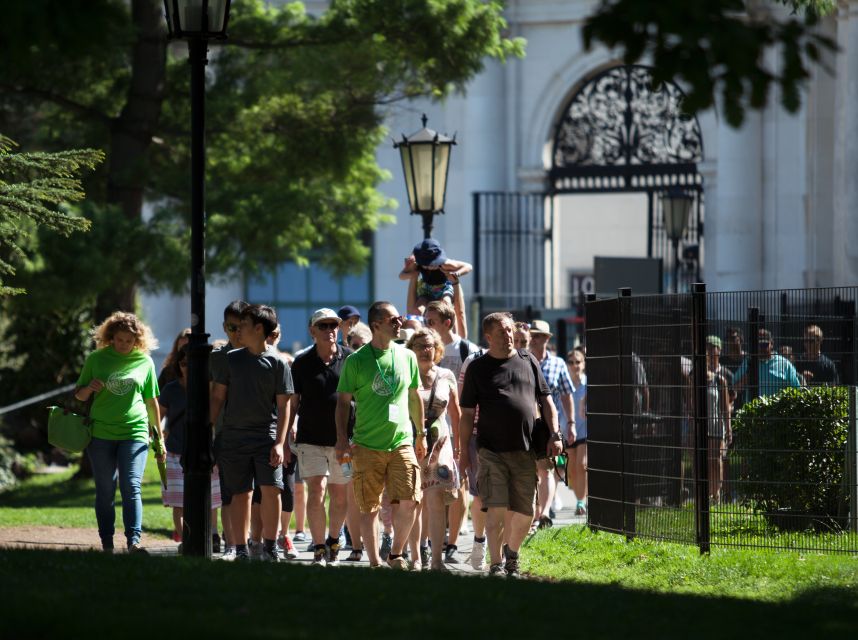
I like the tour’s clear Austrian viewpoint, which gives needed context instead of treating Vienna as a passive backdrop to Hitler’s story. I also like the practical setup: guides such as Dieter, Stefan, Michael, Wolfgang, and Siggi use headsets, photographs, questions, and regular pauses to keep a serious subject easy to follow.
The main consideration is simple: this is a history walk, not a sightseeing stroll with a few wartime facts added. You cover about 4 kilometers in 2.5 hours, mostly outdoors, and the emotional subject matter can be heavy. Wear good shoes and bring clothing for rain or cold.
Key points at a glance
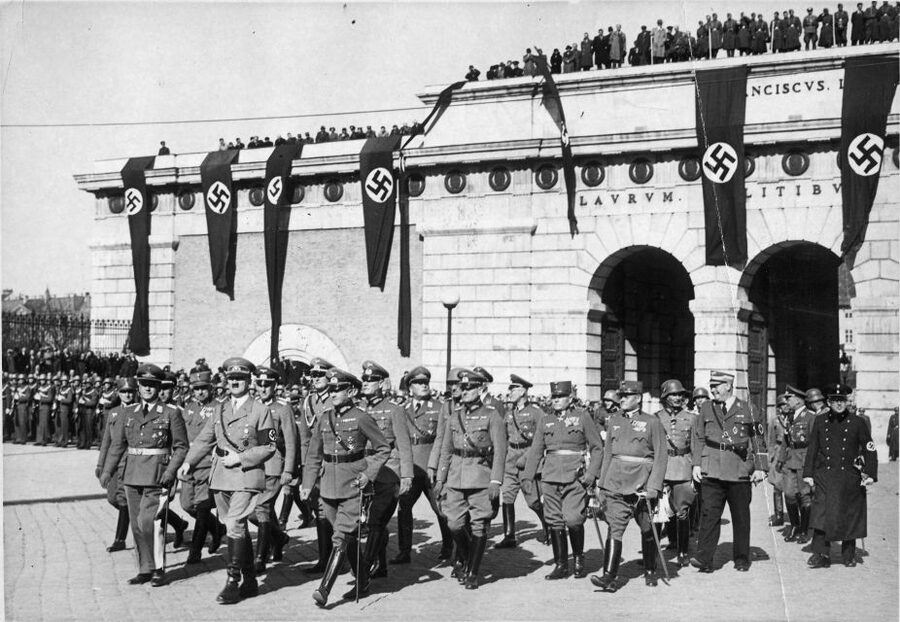
- Hitler’s Vienna in context: Learn how the city’s social and political climate shaped the young Adolf Hitler and helped form his ideology.
- A surviving synagogue: See the only synagogue in Vienna that survived the Nazi regime, an important reminder of what was lost.
- The Holocaust memorial: Pause at Vienna’s solemn memorial to Jewish victims of the Holocaust.
- Bomb damage and postwar division: Hear how more than 100,000 bombs affected Vienna and how the city was split among the Allied powers after 1945.
- A well-managed walking route: Expect about 4 kilometers, with sitting breaks, toilets along the route, occasional shelter, and headsets for larger groups.
- Strong guide-led storytelling: Dieter, Stefan, Michael, Wolfgang, Charles, Florian, Siggi, and other guides are praised for clear explanations, thoughtful questions, and personal family connections to the past.
Starting beside the Albertina and Vienna Opera House
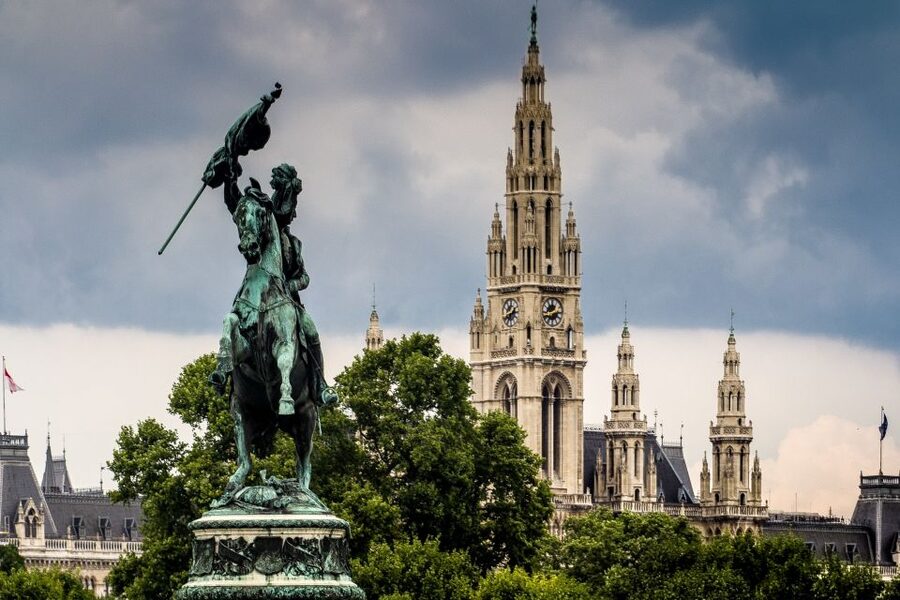
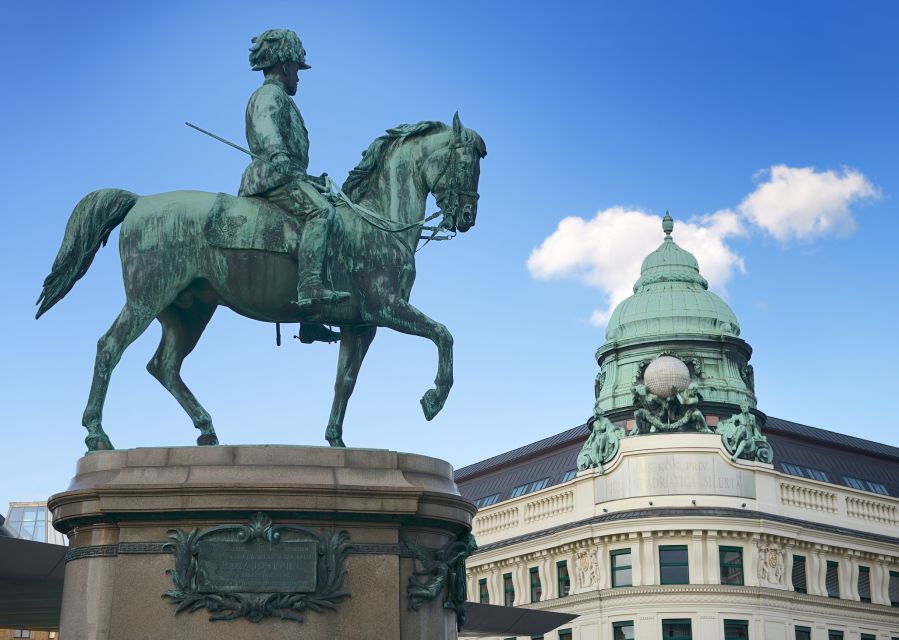
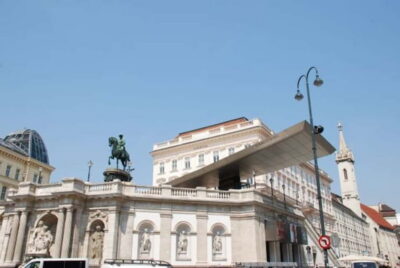
The meeting point is easy to find if you know what to look for. Meet by the green umbrella in front of Albrechtsbrunnen, the fountain below the Albertina Museum, beside the world-famous Opera House. Karlsplatz/Oper is the nearest subway stop.
This is a good place to begin because Vienna’s polished center quickly gives way to a more complicated story. You start among imperial buildings, museums, and grand public spaces, then learn how the same city responded to dictatorship, persecution, war, and occupation.
Your guide sets out the basic timeline first. The tour connects Hitler’s early years in Vienna with the wider political climate around him, rather than pretending one city alone explains his later crimes. That balance matters. You get a serious look at the forces around him without excusing his choices or turning the walk into a simple personality story.
Guides differ, but the strongest pattern is a teaching style that welcomes questions. Dieter is often described as especially good at connecting separate events, while Stefan is praised for broad subject knowledge and strong storytelling. Michael, Wolfgang, Charles, Florian, and Siggi also lead tours, so the exact tone can vary from one departure to the next.
More Walking Tours in Vienna
- Vienna: Guided Walking Tour of City Center Highlights
★ 4.7 · 4,989 reviews - Vienna: Vienna Central Cemetery Guided Walking Tour
★ 4.8 · 3,307 reviews - Vienna: Guided Walking Tour of City Highlights & Hidden Gems
★ 4.9 · 2,180 reviews
Following Hitler’s early years in Vienna
The first section focuses on Hitler as a young man and art student. The point is not to turn his early life into a tourist attraction. Instead, the guide explains the city he encountered and the political ideas that circulated there.
This approach gives you a more useful starting point than a list of buildings connected to Hitler. You learn how social tension, ethnic rivalry, fear, and political movements influenced Vienna before the Second World War. The tour also asks difficult questions about how ordinary people and institutions responded as those ideas gained ground.
A guide may use printed photographs to show how places looked in the past. That can make a major difference when you are standing in a modern street with few visible traces of the period. Siggi, in particular, is praised for using historical photographs to make events easier to understand.
The tour does not treat history as a string of dates. Good guides link places to decisions and consequences, then leave room for you to think. That is one reason the 150 minutes can pass quickly, despite the serious subject and regular stops.
Seeing Vienna’s Jewish history at the surviving synagogue
One of the walk’s most important stops is the synagogue that survived the Nazi regime. The significance is stark: Vienna once had a large Jewish community, yet only one synagogue remained standing through the Nazi period.
You should not expect this to be a full indoor synagogue visit. Attraction entrances are not included, and the experience is a guided walk. The value comes from hearing what happened to Vienna’s Jewish residents and seeing the surviving building within the city that once surrounded it.
The guide explains how ethnic rivalry and fear took hold, and how persecution changed daily life. This is where the tour moves beyond military history. You learn about people, community, identity, and the speed with which public hostility became organized oppression.
I appreciate that this stop is not treated as a quick photo opportunity. The surrounding story gives the building weight. You begin to see Vienna not only as the setting for Nazi decisions, but as a place where local reactions, participation, silence, and suffering all mattered.
Pausing at Vienna’s Holocaust memorial
The Holocaust memorial offers a quieter moment in the route. Its plain, solemn form is designed to make you stop and consider the scale of the murder of Europe’s Jews. The guide provides context, then allows the memorial to do some of the work.
This is a strong part of the tour because it brings the subject out of the realm of abstract numbers. Earlier explanations about persecution and the destruction of Vienna’s Jewish community gain a physical point of reference.
The experience can feel emotionally demanding, especially if you have already visited other Holocaust sites or museums. That is not a fault, but it is worth knowing before you book. This tour does not soften the subject with light entertainment. Guides are praised for handling difficult material with sympathy, care, and a clear moral sense.
You may also find the memorial stop useful as a pause in the walking rhythm. The route includes opportunities to sit, and guides have adjusted breaks for weather and the needs of the group.
More history walks around Vienna:
- Vienna: Time Travel and Magic Vienna History Tour
★ 4.6 · 3,879 reviews - Vienna Historic Center Small Group Walking Tour
★ 5.0 · 1,746 reviews - Time Travel-Magic Vienna History Tour Ticket
★ 4.5 · 1,099 reviews - Skip-the-Line Schonbrunn Palace Guided Tour and Vienna Historical City Tour
★ 3.5 · 940 reviews
Tracing bomb damage and wartime Vienna
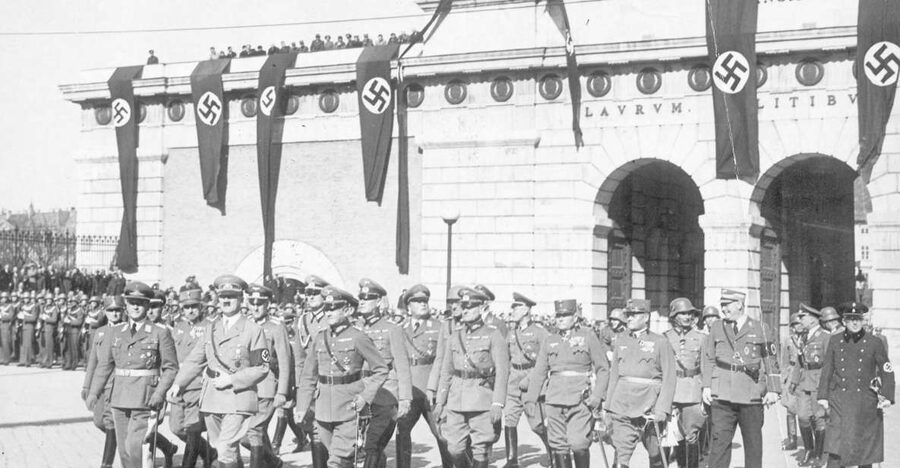
The tour also looks at the physical effect of the war. More than 100,000 bombs struck Vienna, and the guide points out scars and surviving traces that are easy to miss when you are focused on the city’s elegant facades.
This part works best when you look closely. Vienna’s center is famous for imperial architecture, cafés, museums, and music. Wartime damage can sit beside that beauty in less obvious forms. A guide helps you read the city as a document, not just as a collection of attractive buildings.
You hear how the war affected the city and what happened as Nazi control ended. The story includes the liberation of Vienna and the difficult years that followed. Printed images and location-specific stories can help you picture buildings, streets, and events that no longer look the same.
The walking pace is generally manageable. One guide-led route covered about 4 kilometers over the full 2.5 hours, with stops rather than nonstop marching. If you have mobility concerns, the distance is worth checking against your own comfort, but the scheduled pauses and places to sit make this easier than a fast city walk.
Understanding Vienna’s four-power occupation
The postwar section explains how Vienna was divided among the Allied powers. The city was unusual because it was the only city in the world where the Allied powers administered zones together.
That detail gives the tour a useful second act. The story does not end with the fall of Nazi rule. You learn how Vienna functioned after the war, how occupation shaped the city, and how its divided status affected everyday life and politics.
This also helps explain why some parts of Vienna feel historically layered. The city was not simply destroyed and rebuilt. It passed through dictatorship, war, liberation, and occupation, with each period leaving marks on its streets and institutions.
The route does not return to the starting point. Plan to finish elsewhere in central Vienna, with a metro stop nearby. That is convenient if you want to continue exploring, but you should not expect to end beside the Opera House.
Why the guide makes or breaks this walk
A serious subject needs a guide who can explain without showing off. The strongest guides on this tour use a mix of facts, location-based stories, photographs, and questions.
Dieter receives especially strong praise for his ability to join the separate pieces together. He also adjusted pauses for weather, found warmer places to stop, and answered questions in detail. Stefan is noted for being an engaging storyteller, while Wolfgang is praised for adding interpretation rather than simply reciting facts.
Charles is described as particularly thoughtful when handling complex and painful history. Siggi has used photographs and adapted explanations to the group’s interests. Florian has paused during heavy rain and kept the group comfortable. These details matter because the experience depends heavily on presentation.
Larger groups may receive headsets and an earpiece. This is one of the tour’s most useful practical features. You can hear the guide without crowding around him or her, even on a city street. It also means you can look at a building while listening instead of straining to catch every word.
The guide names are not fixed, so do not book solely on the hope of getting one person. The consistent strength is the format: a live English-speaking guide with time for questions and interpretation.
Price, pace, and practical value
At $31 per person, this is a fair price for 150 minutes with a live guide in central Vienna. You are paying for explanation and access to a carefully connected story, not for admission to museums or the synagogue. If you prefer to read plaques and follow a map on your own, you may find the cost harder to justify.
I think the price works well if you want a clear foundation early in your visit. The walk covers Hitler’s youth, the annexation of Austria, the persecution of Vienna’s Jewish community, bombing, liberation, and Allied occupation. Reconstructing that sequence on your own would take research and several separate stops.
The booking terms also reduce the risk. You can reserve now and pay later, and cancellation is free up to 24 hours before the tour for a full refund. Starting times vary, so check availability when choosing your date.
The tour is in English only. It includes the walking tour and live guide, but not transportation or attraction entry fees. Wear comfortable shoes, dress for the forecast, and bring water if you like. Toilets, sitting breaks, and occasional shelter are available along the route, according to the practical arrangements used during the walk.
Who should book this Vienna history walk?
I would choose this tour if you want more than a general introduction to Vienna. It suits you if you are interested in the Second World War, Nazi history, Jewish history, political movements, or the way cities remember difficult events.
It is also a good choice early in a Vienna stay. The route gives you context for buildings and memorials you may pass again later, and it helps you understand why the city’s graceful center carries such painful memories.
Families with older teenagers may find the discussion useful, though the subject is serious and parents should judge their children’s readiness. Students, history teachers, and anyone who already knows the basic wartime timeline can still gain something from the Austrian viewpoint and the location-based explanations.
I would skip it if you want a light sightseeing walk, a museum interior visit, or a tour focused mainly on architecture. You will spend much of the time listening, thinking, and walking between sober historical sites.
Should you book the World War II Historical Walking Tour?
Book it if you want a focused, well-paced explanation of Vienna during the Nazi period, the war, and the years of Allied occupation. The surviving synagogue, Holocaust memorial, bombing traces, and postwar division give the walk a strong structure, while the guides add the human and political context.
The best reason to go is not one famous sight. It is the way the tour connects places that you might otherwise see as unrelated. At $31, that connection is good value, especially near the start of your visit.
Just come prepared for a serious subject, about 4 kilometers of walking, and an ending away from the Albertina. With good shoes, suitable clothing, and an open mind, this is one of the more useful history walks you can take in Vienna.
FAQ
How long is the Vienna World War II Historical Walking Tour?
The tour lasts 150 minutes, or 2.5 hours.
What language is the tour conducted in?
The live tour guide speaks English.
Where does the tour begin?
Meet at the green umbrella in front of Albrechtsbrunnen, the fountain below the Albertina Museum beside the Opera House. Karlsplatz/Oper is the nearest subway stop.
Does the tour visit a synagogue?
Yes. The route includes the only synagogue in Vienna that survived the Nazi regime. Admission to attractions is not included.
Does the tour visit Vienna’s Holocaust memorial?
Yes. A stop at Vienna’s somber Holocaust memorial is part of the walking route.
How much walking is involved?
The route covers about 4 kilometers over 2.5 hours. It includes stops and opportunities to sit.
Are headsets provided?
Headsets and earpieces may be used, especially for larger groups, so you can hear the guide while walking through the city.
Does the tour return to the starting point?
No. The route does not return to the Albertina, but a metro stop is close to the finishing area.
Can I cancel the booking?
You can cancel up to 24 hours in advance for a full refund. You can also reserve now and pay later.
Just added around Vienna
- Vienna: UNESCO Schönbrunn Palace Guided Tour with Entry★ 4.5 · 94 reviews
- World War II History Vienna Old Town Private Walking Tour★ 4.8 · 9 reviews
- Vienna: Winery and Wine Tasting Tour with a Wine Expert★ 5.0 · 5 reviews
- Vienna: Wine Tasting E-Bike Tour★ 4.9 · 46 reviews
- Vienna: Wine Tasting at Schönbrunn Palace★ 4.3 · 71 reviews
- Vienna: Wine Tasting Tour★ 4.8 · 61 reviews
- Vienna: Concert by the Vienna Baroque Orchestra★ 4.6 · 56 reviews
- Vienna: Wachau Valley Private Kayak and Wine Tour★ 5.0 · 3 reviews
Historical Tours, compared.

Vienna Historic Center Small Group Walking Tour
Read our review →
Skip-the-Line Schonbrunn Palace Guided Tour and Vienna Historical City Tour
Read our review →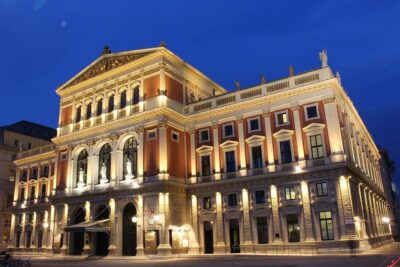
Vienna Mozart Concert in Historical Costumes at the Musikverein
Read our review →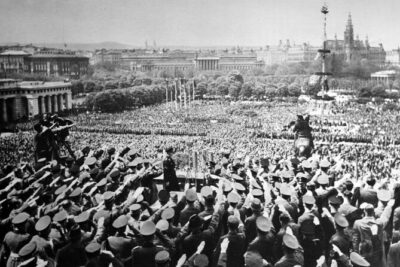
Browse the lists this tour appears in